Alaknanda · Bhagirathi · Floods · Ganga · Mandakini · Ministry of Environment and Forests · Uttarakhand

Two years of Uttarakhand Flood Disaster of June 2013: Why is state & centre gambling with the Himalayas, the Ganga & lives of millions?

Its two years since Uttarakhand faced its worst ever flood disaster during June 15-17, 2013. We remember such tragedies to ensure that we learn the necessary lessons. So that in future such tragedies are not repeated or their dimensions are reduced. One of the enduring debates since that the Uttarakhand tragedy has been about the role of existing and under construction hydropower projects in increasing the proportions of the disaster.

A lot of water has flown down the Ganga in these two years, so let us revisit the important milestones of that debate. Within two months of the disaster, a bench led by Justice Radhakrishnan gave an order on Aug 13, 2013[1], asking the Union Ministry of Environment, Forests & Climate Change (MoEF&CC) to appoint an independent panel to assess the role played by existing and under construction hydropower projects in the disaster. Continue reading “Two years of Uttarakhand Flood Disaster of June 2013: Why is state & centre gambling with the Himalayas, the Ganga & lives of millions?”

Dams · Karnataka · Ministry of Environment and Forests

Yettinahole diversion Project (literally) holds no water

Above: The modest Yettinahole Stream, close to location of proposed weir. Photo: Parineeta Dandekar

~~~

Debate over Yettinahole Diversion Project has been raging in Karnataka for more than two years now. While Dakshin Kannada has been rightly raising issues of unassessed social and ecological impacts of the project on this region, fresh information now available, including a study by scientists of the Indian Institute of Science – Bangalore, and other experts proves that Yettinahole Diversion Project just does not have the water that the project developers claim it does, taking out the very hydrological foundation of the project. Continue reading “Yettinahole diversion Project (literally) holds no water”

Ministry of Environment and Forests · Ministry of Water Resources

MoWR report on “Assessment of E-Flows” is welcome, needs urgent implementation

A three member committee set up by the Union Ministry of Water Resources, River Development and Ganga Rejuvenation (MoWR for short) has submitted a report in March 2015, which makes welcome recommendation on “Assessment of Environment Flows”. These recommendations on Environmental Flows (E-Flows) need to be implemented immediately for better health of our rivers. The committee members include Dr Vinod Tare of Indian Institute of Technology Consortium (IITC), senior officials of Union Ministry of Environment, Forests and Climate Change (MoEF for short, it was represented by Dr Shashi Shekhar, Special Secretary in MoEF) and MoWR (represented by Dr Amarjeet Singh, Additional Secretary, MoWR). Sushri Uma Bharti, Union Water Resources Minister[1] and even the recent meeting of National Ganga River Basin Authority (NGBRA) on March 26, 2015[2], headed by the Prime Minister referred to this committee. Continue reading “MoWR report on “Assessment of E-Flows” is welcome, needs urgent implementation”

Ministry of Environment and Forests

The High Level Committee Report on Environmental Laws: A Recipe for Climate Disaster and Silencing People’s Voice

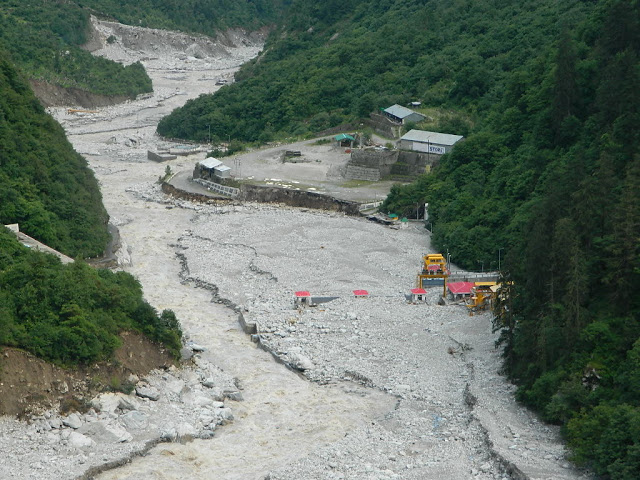
Above: 440 MW Vishnuprayag HEP post 2013 disaster in Uttarakhand. The project, its operation and location added significantly to disaster in the downstream. Photo: Matu JanSangathan

Post by- Ritwick Dutta, Lawyers  Initiative For Forest and Environment,                                             Debi Goenka, Conservation Action Trust,                                                                                                         Manoj Mishra, Yamuna Jiye Abhiyan                                                                                                   & Himanshu Thakkar , South Asian Network for Dams, Rivers & People

Continue reading “The High Level Committee Report on Environmental Laws: A Recipe for Climate Disaster and Silencing People’s Voice”

Ministry of Environment and Forests

HLC Report on Review of Environment Laws: Utmost Good Faith towards the Industry, Utmost suspicion towards the affected

In its initial pages, TSR Subramanian Committee Report (High Level Committee Report) comes across as a well-written, even eloquent document. That the environmental laws and governance needed streamlining and a strong, unbiased review was beyond doubt. Such a step was welcome and not an issue for environmentalists or rights groups to take umbrage to,in principle. In reality, overlooking the socio-political realm that infuses political and executive discourse is hardly possible or advisable. As pointed in this critique published in EPW, the report came at a time when environmental issues were abused and made to stand in judgment like no other.

The report has been lauded by the Env Minister who has taken pains to reiterate that his ministry will not be a roadblock to development anymore”. The report also comes at heels of PM’s affirmation at the overflowing Madison Square Gardens about dismantling old laws. Even the most unbiased observer cannot miss context in which the report is laid out.

Even so, looking at the implications of the report it deserves an unbiased analysis and this is our attempt at it [1]. (We have not dwelt too much on the structure or details of the report as these have been laid out clearly in other critiques.) The High Level Committee constituting of 4 members and 2 Secretaries[2] under the Chairpersonship of Shri T.S.R. Subramanian, Former Cabinet Secretary, was formed on 29th August 2014 vide OM No. 22-15/2014-IA.III. Terms of Reference of this committee were:

 (i)  To assess the status of implementation of each of the aforesaid Acts* vis-à-vis the objectives;

(ii)  To examine and take into account various court orders and judicial pronouncements relating to these Acts;

(iii)  To recommend specific amendments needed in each of these Acts so as to bring them in line with current requirements to meet objectives; and

(iv)To draft proposed amendments in each of the aforesaid Acts to give effect to the proposed recommendations.

The third objective of bringing “laws in line with current requirements to meet objectives” is unclear in the absence of stating what the current requirement pertain to: What requirement? Whose requirements? Environmental, Social or Economic requirements? What Objectives? Whose objectives? The committee did not even attempt to clear air about these issues, though questions were raised. The composition of the committee also raised serious issues. (See SANDRP blog and Ritwick Dutta’s guest blog.)

So we had a committee of 4 members and 2 secretaries with questionable credentials, with an unclear TOR and put together by a government which had taken a biased stand on environmental issues sitting in judgment on all 6 environmental laws of the country[3], related orders, institutions and mechanisms which would affect myriad communities, forests and ecosystems, in a period of initially 2 months, extended by a month. Unbelievably, in these three months the committee not only suggested radical changes in all of the above, but also recommended a brand new Law (strangely) called Environmental Laws (Management) Act or ELMA, which, they suggest, would prevail over all contrary judgments issued in past decades or provisions of any environment law promulgated till date!

The committee states in the preamble of the ELMA that conclusions were reached “after interacting with diverse groups of people in different parts of the country”. This may give an impression that the Law or the recommendations are based on wide consensus. This is not the case at all and the output has to be looked clearly as a 6-member committee’s recommendations.

Going through the report As pointed out by Shripad Dharmadhikary in his critique, the report does make a relatively sound diagnosis of the problems of environmental governance of the country. Anyone, either  from civil society or industry, who has experienced Forest Clearance or Environmental Clearance procedures, cannot but help be amazed at the entrenched bureaucracy, pathological reluctance to be transparent, colossal lack of accountability while taking decisions affecting ecology-social systems-industries, laziness to change any of the problematic entrenched systems and lack of respect for the people who are affected by decisions. Anyone who has made rounds to Pollution Control Board offices cannot miss the apathetic atmosphere, the couldn’t-care-less attitude of the officials.

So the diagnosis did detect the aching nerve when it states: “The legal instruments have really served only the purpose of a venal administration, to meet rent-seeking propensity at all levels. This impression has been further strengthened by waves of large scale ‘clearances’, coupled with major delays in approvals in individual cases” or “The state – arbitrary, opaque, suspiciously tardy or in-express-mode at different times, along with insensitivity – has failed to perform. The administrative machineries in the Government in the domain of Environment & Forests at all the levels, authorized to administer by Parliament’s statutory mandate, appear to have abdicated their responsibilities.”

“Environmental management is currently seen as an anti-thesis to development; development is seen as inimical to the habitat, natural assets, and in certain circumstances undermining peoples’ livelihood.” “Legislations are weak, monitoring is weaker and implementation is weakest.” And: “Our businessmen and entrepreneurs are not all imbued in the principles of rectitude – most are not reluctant, indeed actively seek short-cuts, and are happy to collaboratively pay a ‘price’ to get their projects going.”

Finally when the report evokes not only current challenges, but even inter-generational equity, it sounds too good to be true! “That environment is sacrosanct; that the purity of air, water and land has been inherited by a generation in mortgage for children of tomorrow; that it is implicitly imperative for each generation to leave the environment to the next generation in a better state than they found it.”

Where are the people? But as you continue reading through the lucid prose, you get that strange feeling of missing the elephant in the room. Where are the people? Where are the millions of people who live in forests or mountains or river valleys and islands or far flung villages, who are most affected by shoddy environmental governance? Why is the report not even mentioning the hardships faced by thousands of such fishermen who lost their livelihoods due to pollution of Vashishthi creek while the MPCB sleeps, or the cracks on the homes of people in Uttarakhand due to hydel projects which received clearances from MoEF CC, or the remote hilly settlements in Himachal who lost their sources of water due to tunneling and blasting for hydropower, or millions of fisherfolk who lost their rights to their rivers, or millions of tribals and others who are still awaiting rehabilitation after being driven out of their homes and their livelihoods?

Why are they not a part of this discourse on environmental management? The report spouts Upanishads and Vedas but does not seem to acknowledge that coexistence with nature has been a part of our eco-region for millennia.

Tribal women protesting against Lower Suktel Dam Photo: Down to Earth

Suddenly, one stumbles on sentences like “India’s growing prosperity is increasing demand for environmental quality”. This reduces environment to a consumable product, aspired by the upper middle class and negates the battles ongoing in the hinterlands of India, where environment equates with livelihood and survival.

As one reads on, the bias against communities and community protests gets clearer, starker and more disturbing. Along with communities, there is hardly any mention of impacts of destructive projects on forests, communities and wildlife. The lines are clearly drawn at compensatory afforestation, raised NPV, monitised afforestation, web-based monitoring, priced data bases, etc. But we are not to question the rationale behind several large scale destructive projects. To illustrate, in the case of Wild Life Protection Act, the report does not talk about habitat destruction due to development projects as one of the major threats to wildlife, but limits itself to hunting, poaching, man-animal conflicts and loss of corridors. Just to put things in perspective, in Arunachal Pradesh, Dibang Basin projects and Siang Basin projects can together submerge more than 23,000 hectares of prime wildlife habitat and affect several Schedule I species.

Some other issues too start getting too big to ignore. In the 113 page report, the word “speed” in context of speedy clearances gets repeated thirteen times. As we move from initial sagacious pages, the emphasis swiftly shifts from concern for environment to “time consuming clearance processes”. After notable recommendations in Forest Conservation Act, (succinctly critiqued here), the report seems to get down the business: Environmental and Forests Clearances. It is here that the superstructures NEMA (National Environment Management Authority) and SEMA (State Environment Management Authority) are introduced. Briefly, NEMA is proposed to be a full time board which will deal with a whole gamut of issues from Project clearances, monitoring, database creation, creation of standards  etc,. CPCB will be subsumed under NEMA and it will function under the central government. SEMA at the state level will appraise Category B and C projects, monitoring and compliance, etc,. SPCBs will be subsumed under SEMA which will be under the State Govt.

Public Hearings (PH) According to the report:

  1. Only environmental, rehabilitation and resettlement issues can be raised at the Public Hearing.
  2. Only “genuine local participation” is permitted. Mechanism to be put in place to ensure this.
  3. Public hearing can be entirely dispensed with if local conditions are “not conducive”.
  4. There is no necessity for holding a PH if project site is away from settlements, if the projects are in industrial zones or complexes, for power, mining and line projects, if the projects are of national or strategic importance.
  5. Appeal against NEMA SEMA approval has to be filed first with the Board formed under ELMA (which is without any subject experts), which can summarily reject the appeal and levy heavy costs against appellants for pursuing frivolous matters.
  6. Gram Sabha Consent for Linear Projects not required, Settlement of Forest Rights not a necessity for Stage I Forest Clearance, no site inspection required for stage I forest clearance!
Protest in Assam against Lower Subansiri Project in Arunachal Pradesh Photo: KMSS

Let us see how these provisions, if accepted, will play out in real life, for example in case of Assam, which faces downstream impacts of Hydropower projects in upstream Arunachal:

  1. Assam will not be a part of Public Hearing for dams like Lower Siang, despite the fact that impacts of Siang basin projects will deeply impact Assam. This is because PH is restricted to distance from Project Site, and is delinked from the impact of the project! Diurnal fluctuations from the Siang project will result in change in water levels by 22 feet near D’Erring Sanctuary, very close to Dhemaji District of Assam, every day in lean season, but affected people will not be able to participate in public consultations.
  2. Even population from downstream Arunachal or interested Ecologists, NGOs who have important points to make about the EIA will not be allowed as PH is limited to “Genuine Local Participation” (this violates NGT judgment about who is aggrieved by a project).
  3. The population of Arunachal, which finally does get to attend, will not be able to talk about social impacts, downstream impacts, impacts of having too many projects in a cascade, safety issues, impacts on their homes and drinking water sources etc., as the scope of their inputs is limited to “environment and rehabilitation and resettlement issues.”
  4. Requirement of Public hearing itself can be done away with, if the “Local conditions are not conducive”. So in places like Tawang where Monpas are leading nonviolent struggle against destructive dams, the public hearing can simply be cancelled and the project proceed!
  5. In fact there may be no public hearing for hydropower projects or for any power projects or river link projects!
  6. In case affected groups want to appeal against NEMA decision, they will have to file a complete case within 15-30 days of MoEFCC’s order, which is extremely difficult for rural communities
  7. If surmounting all obstacles, a case is filed, the petitioners better be wary as the board has powers to reject their appeal summarily and levy heavy fine on them.
Monks protesting against dams in Tawang Region in Arunachal Pradesh Photo: Urmi Bhattacharjee

Does this look like a conducive, encouraging environment to bring out accountability, transparency and inclusive environmental governance? On the ground, this may mess up issues further, fuel conflicts and delay projects, rather than fast tracking them!

Process of Project “Approval”: All in Three months: The Report has also recommended how the clearance process should be. This is possibly one of the most problematic areas of the report where all the focus is centered on getting the file move in full throttle. The report recommends Model TORs (Terms of Reference) for sections, which already exist. It also assigns just 10 days for the NEMA to work on a site specific TOR failing which the proponent will use the Model TOR. Laying down TORs for an Environment Impact Assessment Study is one of the crucial parts of the clearance process. Many stalemates we witness today have their roots in inadequate TORs. In fact in some developing countries, there is a Public Hearing at the TOR stage also so that affected communities and interested stakeholders can raise points to be included in the study. NEMA is supposed to recommend approval or rejection (with reasons) within two months of receiving the application. The basis of 2 months is not clear as the EIA study itself has to be at least a single season (one year) study!

Fast track clearances: On this Clearance express, there are some compartments which belong to the bullet train. Because nearly three months is too long a time to wait for projects which have the potential to change an entire eco region evolved over thousands of years, linear projects, projects of strategic importance and power and mining projects which are “engines of the nation’s growth” are put on a separate fast track. It is not clear how soon they will be appraised, or, approved, but imagination runs wild here..

Villagers affacted by Gosikhurd Dam in Vidarbha. The construction has faced huge corruption charges, cost escalation, lack of proper clearances, no rehabilitation of affected communities, and extremely poor quality work Photo: Aparna Pallavi

So what constitutes projects of national importance? As pointed by Shripad, much debated Polavaram Dam which can submerge nearly 300 villages in three states or the GosiKhurd dam which can submerge 100 villages, hundreds of hectares of forest land and is mired in deep corruption charges, can be fast tracked for being of National Importance as they already have the tag of being “National Projects”.

As for Monitoring, the committee stresses an ironically-named tool “Mandatory provision of voluntary disclosure”! Monitoring will be web-based, technologically assisted and with minimal need for site visits. This leaves absolutely no chance for any local affected community to be a part of monitoring, or be able to voice its concerns which may not show up on the hightech monitoring devises. The only place where committee mentions accountability is with reference to speed of clearance, failing which the Chairperson of NEMA will be held accountable. There is no accountability demanded either about failing to address impacts on ecology or on people.

Overreach of the Committee: ELMA: Hugely overstepping their mandate, the committee then proposes a new law for streamlining clearance and approval for projects at state and center by proposing Environment Laws (Management) Act, ELMA. As stated at the outset, this is no product of interactive discussions with civil society or general public, but is a part of a report by 4 individuals assisted by 2 secretaries in a period of 3 months.

Uberrima fides? It’s the environment we are talking about! According to the committee, ELMA is based on the principle of Utmost Good Faith or Uberrima Fides, used in Insurance Laws, as against Caveat Emptor, or Buyer Beware principle, where the NEMA, SEMA and the Ministry will put absolute faith in whatever studies, impact assessment reports, compliance reports that the proponent submits. According to the committee, “The law of insurance (Utmost Good Faith) supposes that the insurer knows everything about himself or about his activity to be insured; and the insurance company cannot be expected to know anything about the insured nor will it be able to verify all that is stated, speed being the essence. If the statements made by the insured turn out to be incorrect or if material facts were suppressed or concealed, the insurance company could avoid its liability.” (Emphasis added)

This stress in Insurance Law is entirely misplaced and non-applicable in the realm of environment!

Firstly, the Insurer owns his body, and there is a solid footing to believe him. In case of projects, say for example a dam about to submerge 5000 hectares of prime forest or displace lakhs of people, the proponent is making a claims about something he does not own, but which is public property on which many others depend and which will be irreversibly impacted by the proponent. While in case of Insurance laws the Insurer does not have any concern for the Insured, in case of environment, it is exactly the opposite. The MoEFCC’s prime duty is to safeguard the environment. If the project affects environment in a bid for quick clearances, it is the MoEF which would be (should be) deeply impacted. It cannot just “avoid its liability” like the insurance company as the Report suggests!

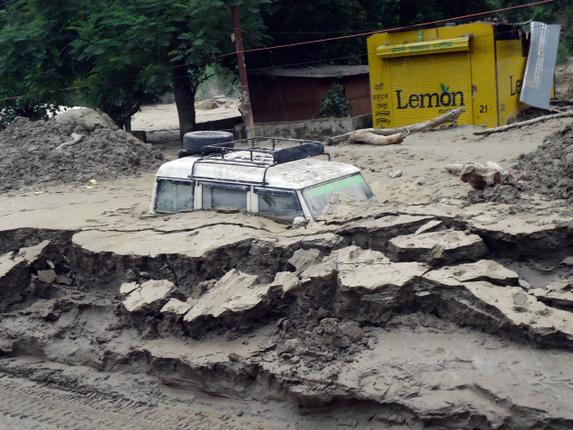
Vehicle drowned in muck, much of it dumped by Srinagar Dam in Garhwal, Uttarakhand Floods, 2013. Photo: Kavita Upadhyay, The Hindu
Vehicle drowned in muck, much of it dumped by Srinagar Hydropower Dam in Garhwal, Uttarakhand Floods, 2013. Photo: Kavita Upadhyay, The Hindu

There is absolutely no justification for using principle of Utmost Good Faith in the environmental realm, because most EIAs are fraudulent and compliances do not exist. Even currently, any false information provided at the time of appraisal process is a violation of Environment Protection Act and invites punishment. But there are examples by the dozen about how the MoEFCC refuses to take action even when clear evidence is presented to them about false information presented by proponent. This was violation of EPA 1986, how is this violation different than violation of ELMA?

We know that monitoring is the weakest link in environment governance and there no reason to believe that it will improve in any way by making it web-based. In the absence of this, taking proponent at his word about the information he provides at the time of clearance or monitoring is not workable, justifiable or acceptable.

Appeals against decisions of NEMA or SEMA: The primary space to file an appeal against decision of NEMA or SEMA is now taken by a board Chaired by a retired High Court Judge and two senior officials of the government and the National Green Tribunal is restricted to only judicial review. Merit-Based review and subject experts is one of the strongest assets of NGT, differentiating it from other courts and it is clear that this very role is being clipped by ELMA.

The ELMA will have an overriding effect on any judgments, orders of courts or tribunals under acts dealt with by ELMA.

ELMA also envisages Special Environmental Courts at district level which will take “Cognizance of the serious offences only on a complaint by the officers authorized by the NEMA or SEMA.” As an afterthought, these courts may also hear public only if they are satisfied that responsible authority failed to take action about their complaint in three working days. Taking action is a very vague term.

While the ELMA has provisions for “protecting officials acting in good faith”, it has a penal provision to scare litigation by a provision which says “Punishment for false or frivolous complaints”. So while the proponent will be treated in “Utmost Good Faith” aggrieved citizens will be treated with utmost skepticism and will have to: File appeal within 30 days, prove their bona fides, be wary and careful about filing as it may be deemed “frivolous” and they may be fined!

~~~~

The undercurrent of the HLC report is indeed that the environmental governance will have utmost good faith towards the industry and utmost suspicion towards the affected, the concerned or the civil society. There is no evidence till date to prove that this good faith in the industry is warranted without stringent checks and balances. Even in current compliance system the developers are supposed to voluntarily submit six monthly compliance report, but nothing happens if they do not and no one reads them if they do.This undercurrent overshadows some useful recommendations of the committee.

The HLC report cannot be accepted in this form. Any review of environmental laws needs a consultative and consensus-based process and not a rushed work of two months by a biased panel with unclear and open-ended TORs. The characteristic of ELMA, NEMA and SEMA of excluding participation and not attempting to address issues related to inclusive governance has the potential to polarize environment discourse rather than making it swift and accountable.

The remedy, unfortunately, seems more problematic than the illness. Reminds one of Sahir’s words, जो दवा के नाम पे जहर दे, उसी चारागर की तलाश है…

-Parineeta Dandekar, parineeta.dandekar@gmail.com

END NOTES:

[1] The report has already been critiqued excellently by various authors.

  • HLC – TSR Subramanian report: Climate blind or a climate disaster? Himanshu Thakkar, SANDRP https://sandrp.wordpress.com/2014/12/15/hlc-tsr-subramanian-report-climate-blind-or-a-climate-disaster/
  • T.S.R. Subramanian Committee’ is interested in “Management of Environment” and not in “Protection of Environment”.-Rohit Prajapati and Krishnakant (http://counterview.org/2014/12/16/tsr-subramanian-committee-is-interested-in-management-of-environment-and-not-in-protection-of-environment/)
  • Recipe for Dilution of Environmental Protection Regime: Report of MoEF’s Committee to Review Environmental Laws- Shripad Dharmadhikary (http://shripadmanthan.blogspot.in/2014/11/recipe-for-dilution-of-environmental.html)
  • Full Report of MoEF’s Committee to Review Environmental Laws Confirms Initial Apprehensions: Recipe for Dilution of Environmental Protection Regime– Shripad Dharmadhikary: http://shripadmanthan.blogspot.in/2014/12/full-report-of-moefs-committee-to.html
  • Executive’s Environmental Dilemmas: Unpacking a Committee’s Report: Manju Menon and Kanchi Kohli: http://www.epw.in/commentary/executives-environmental-dilemmas.html

[2] Members include: Shri Vishwanath Anand, Former Secretary, Justice (Retd.) Shri A.K. Srivastava Former Judge of Delhi High Court, Shri K.N. Bhat, Senior Advocate, Supreme Court of India. Secretaries: Shri Bishwanath Sinha Joint Secretary, MoEF&CC, , Shri Hardik Shah, Member Secretary, Gujarat Pollution Control Board

[3] [1] The Environment (Protection) Act, 1986, [2] The Forest (Conservation) Act, 1980; [3] The Wildlife (Protection) Act, 1972; [4] The Water (Prevention and Control of Pollution) Act, 1974; [5] The Air (Prevention and Control of Pollution) Act, 1981; [6] The Indian Forest Act, 1927.

As pointed out by Rohit Prajapati in his excellent critique, the HLC has also suggested changes to [1] The Forest Right Act, 2006 and [2] The National Green Tribunal Act, 2010, though these were not part of HLC’s TOR.

Environment Impact Assessment · Environmental Laws · Expert Appraisal Committee · Himalayas · Hydropower · Ministry of Environment and Forests

National Green Tribunal’s Fourth Foundation Day: Why such a pro hydro bias?

The National Green Tribunal, NGT marked its 4th Foundation Day on 18 October 2014, with an impressive fanfare. A full day function was organized at the Plenary hall of the capital’s iconic Vigyan Bhawan. NGT in this short span has acquired a formidable reputation as a unique, vibrant, active institute with independent & unbiased mind and forthright, quick redressal of petitions that come to it.

The function in two separate sessions, one in the forenoon and the other in the afternoon (a Seminar) was attended by large number of government officials, judicial officers, advocates, law school students, NGT petitioners and office bearers and members of the NGT Bar association.

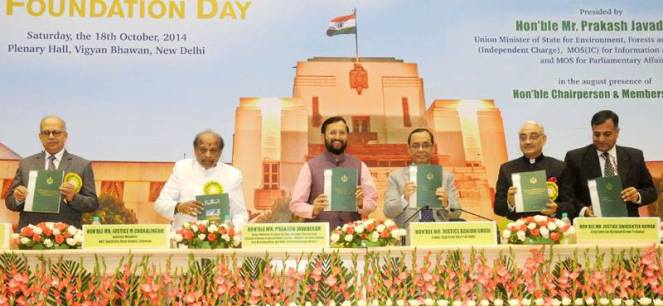
NGT  Foundation Function on Oct 18, 2014 (Source: FB page of Information and Broadcasting Ministry)
NGT Foundation Function on Oct 18, 2014 (Source: FB page of Information and Broadcasting Ministry)

Invited dignitaries included Mr Justice Ranjan Gogoi (Judge, Supreme Court), Prakash Javadekar (Union Minister of State for Environment, Forests and Climate Change) and Ashok Lavasa (Secretary, MoEF&CC) in the forenoon session and Mr Justice Sudhanshu Jyoti Mukhopadhaya (Judge, Supreme Court) and Piyush Goyal (Union Minister of state for Power, Coal and new and renewable energy). Mr Justice Swatanter Kumar, the Chairperson of the NGT, Mr Justice Dr. P. Jyothimani, Judicial Member, Principal Bench, NGT, Prof. R. Nagendra, and Dr. D.K. Agarwal, Expert Members at the NGT also spoke and graced the dais.

The function included, in addition to the addresses by the invited dignitaries, the release of 2nd issue of NGT International Journal; the launch of new NGT Website (in the first session) and address by invitee experts (in the second session).

In the first session Mr Javadekar informed the gathering about his political beginnings from a water pollution struggle activist against factory pollution and Mr Lavasa categorically stated that the NGT is playing an extremely crucial role and that there is no move to dilute its powers in any manner. It was in the second session that very controversially one Mr M.K. Pandit was invited to speak as an invited expert.

The Minister of State for Environment, Forests and Climate Change (I/C), Shri Prakash Javadekar lighting the lamp at the 4th Foundation Day function of the National Green Tribunal, in New Delhi on October 18, 2014. The Secretary, Environment, Forests and Climate Change, Shri Ashok Lavasa and the Judge, Supreme Court of India, Mr. Justice Ranjan Gogoi are also seen (Source: FB page of I&B Ministry)

Mr Pandit began with highlighting how recent and how fragile the Himalayas were and that a 8+ richter scale earthquake in central Himalayas was round the corner that could flatten Dehradun. Very soon in his almost 25 minute speech changed track as if on a cue to how great the hydropower dam projects in the Himalayas were for the power security of the country. The Union Power Minister had by then just joined the function to nod in full agreement with all that the Mr Pandit was narrating. The audience on the other hand was left perplexed as to what was happening?

An invited speaker was eulogizing the great merits of high dams receiving approving glances from the power minister on an NGT seminar whose topic was “Natural Disasters, Environment & Role of NGT with special reference to Uttarakhand, J&K, Assam & Himachal Pradesh”. Clearly something was amiss, somewhere?

Secondly, Mr Pandit is not a neutral expert, but an interested party. As leader of scores of pro hydro Environmental Impact Assessments that he has led as part of the CISMHE[1] team (Center for Inter-disciplinary studies of Mountain and Hill Environment) has earned them millions as they also continue to mint more money. Typical of Indian EIAs, no EIA done by CISMHE has ever raised any difficult questions for the developers. It has also never concluded that any of the projects is unviable. CISMHE EIAs are as shoddy, incomplete and inadequate as any other[2]. For example on Luhri HEP, the CISMHE EIA was so problematic that even the Ministry of Environment, Forests and Climate Change’s Expert Appraisal Committee on River Valley Projects and the World Bank found it inadequate and unreliable.

Interestingly, CISMHE website says: “Ministry of Power, Government of India established CISMHE as an R&D Centre in power studies in environment in recognition of its excellent past performance”. This means that there is also conflict of interest here in CISMHE doing EIAs, since it has been set up as an R&D Centre by Ministry of Power, that is itself a promoter and developer of hydropower projects. No wonder, Mr Pandit said what the Power Minister wanted to hear and Power Minister made no efforts to hide his approval of what Mr Pandit was saying.

Very strangely, Mr Piyush Goyal claimed that Tehri dam was an example of good project in the Himalayas that saved Uttarakhand in the floods of June 2013. Mr Goyal should know that this claim had absolutely no basis and even an Expert Body appointed by the Supreme Court of India has shown, after listening to THDC, CWC and others that such a claim has no scientific foundation. Mr Pandit did try to support the unfounded contention of Mr Goyal, but the minister asked him to keep quite.

It became clearer, when a pointed question asked by Shri Manoj Misra of Yamuna Jiye Abhiyaan about what would have been the Tehri dam scenario if the Uttarakhand high rainfall event had occurred in the peak monsoon months of July, August or September and not on 16 June 2013 (as in fact happened in Sept 2010, when Tehri created a havoc in the downstream, damaging its own Koteshwar project[3]), when the dam was almost empty and only beginning to get filled, elicited an evasive response first by the Union Minister (we cannot have structures planned for every 365 days in a year). And later when Pandit ji tried to answer, he was asked to shut without him being able to even respond to the other two questions relating to how does he reconcile to the fact of  a high intensity earthquake visiting a region where he had been advocating the dams; why was USA (as also some other countries), the mecca of large Dams bringing many of its dams down?

In any case, Mr Maharaj Pandit was contradicting himself, because he said something totally different in his article in The Hindu soon after the Uttarakhand disaster of June 2013: “Most downstream damage in otherwise flood-free areas is caused by dams and barrages, which release large volumes of water to safeguard engineering structures. Dam operators often release more water during rains than the carrying capacity of downstream areas, causing floods… Hydropower policy must consider building fewer dams and prioritise those that have the least environmental and social costs. Independent and serious monitoring of the catchment area treatment plans proposed by Forest Departments with funds from hydropower companies needs to be carried out and reported to the Green Tribunal.” In fact then in June 2013, he was on TV channels almost every night, talking about how Himalayas have the highest dam density in the world and that is such a big invitation to disaster! But he seems ready to change his stand to please the minister or the hydro project developers.

It seems as if Mr Pandit had been invited to justify the building of dams in the Himalayas in front of a large gathering of impressionable judicial officials and young student minds. It is possible that it was also intended to influence the minds of NGT members (judicial and experts) and other persons from judiciary in the face of a number of proposed dams being challenged before the various NGT benches and courts.

If a proper seminar was indeed planned on such an important matter, then there should have been several speakers on wide range of perspectives and topics and not just one speaker with conflict of interest and a clear agenda? The only other technical speaker, Dr R. Nagendran, an expert member with NGT southern bench spoke sensibly on how unscientific management of sanitary projects in hilly regions lead to parallel “Faeco-microbial disaster” which is difficult to tackle.

Mr Ritwick Dutta, secretary of NGT bar association said that the information about Mr Pandit speaking from NGT platform was not available in public domain and it is not clear how he was selected as a speaker.

Such blatant pro hydro bias in an NGT foundation day meeting is certainly unwarranted and out of place for an NGT function. An NGT platform should not have been allowed to be used for such biased presentation. We hope the bias apparent in this aberration is just that, an aberration and does not run deeper, considering that some hydropower professionals have been appointed on NGT benches.

We hope that at least in future the NGT, a statutory judicial body, otherwise doing a great job for the protection of environment, would be more careful in not letting its platform get used by the vested interests. The formidable reputation that NGT has acquired with a lot of remarkable orders should not be allowed to be affected by this one incident. NGT indeed needs to be strengthened in every way and not weakened in any manner.

It would also help if the NGT were to distance itself from this biased episode.

Pushp Jain, EIA Research and Response Centre (http://www.ercindia.org/, Pushp Jain pushp@ercindia.org) & SANDRP (based on interviews with those who were present at the NGT foundation day meeting)

END NOTES

[1] http://www.cismhe.org/

[2] For example, see: https://sandrp.wordpress.com/2014/04/11/the-world-bank-drops-funding-usd-650-m-for-the-luhri-hydro-project-victory-for-the-sutlej-bachao-jan-sangharsh-samiti/, https://sandrp.wordpress.com/2014/07/09/pauk-heo-tato-i-hydropower-projects-cismes-shoddy-eias-seven-big-hydro-on-third-order-tributary-of-brahmaputra/, https://sandrp.wordpress.com/2014/10/06/manipulating-environment-forest-clearances-for-dibang-project-deja-vu-lshp-history-repeated-will-it-be-tragedy-or-comedy/

[3] For details, see: https://sandrp.wordpress.com/2013/06/28/uttarakhand-floods-truth-about-thdc-and-central-water-commissions-claims-about-tehri/ and https://sandrp.wordpress.com/2013/08/07/is-thdc-preparing-to-repeat-the-disaster-tehri-created-in-sept-2010/

[4] https://sandrp.wordpress.com/2014/04/29/report-of-expert-committee-on-uttarakhand-flood-disaster-role-of-heps-welcome-recommendations/

[5] http://www.greentribunal.gov.in/

[6] http://www.greentribunal.gov.in/Writereaddata/Downloads/circular7Oct14.pdf

[7] http://www.thehindu.com/opinion/op-ed/nature-avenges-its-exploitation/article4834480.ece

Ministry of Environment and Forests

MoEFCC orders “Don’t Ask Additional information unless Inevitable” (Or: “Just clear the projects and don’t bother about informed decisions”)  

Even as the government is set to review 6 of the foundational environmental laws of India, the Union Ministry of Environment, Forests and Climate Change (MoEFCC, formerly MoEF) has been issuing a slew of orders, circulars and Office Memorandums (OM)[1] lately for “streamlining” Environmental and Forest Clearance process.

Having said that, there is no doubt that the system of Environment and Forest clearance needs to be made stronger, accountable, transparent, democratic and informed. Ironically, the only way the government has sought to do this is to make the system more industry-friendly. A vast majority of orders passed lately by MoEFCC are pro-industry and anti-environment. Drop by drop, such orders and circulars are making it impossible to rely on the original Environment acts and Notifications as the orders have interpreted Acts in convenient ways. At the same time, the misleading, non-compliance, hiding of information, willfully providing wrong information is rampant from project proponent side, with MoEF taking no firm action. We have illustrated this with very few examples below.

When this is a known case, accelerating clearance process, ignoring necessary studies and bypassing checks and balances is only accelerating our fall to the bottom.

Take an example of  OM issued on the 7th October, 2014 titled “Seeking additional studies by EACs/ SEACs during appraisal of project beyond the Terms of Reference (ToRs) prescribed under EIA[2] Notification 2006”(No. 22-A3/ 2O14-IA-III).[3]

In a nutshell, this OM states that “It has been brought to its notice” that Expert Appraisal Committees (EAC for short. EAC is at the center, considering Environmental Clearances for bigger projects) and State Expert Appraisal Committees ( SEAC for short. SEAC is at State level, considering smaller projects for Environmental clearance) have been asking for “additional studies which do not form a part of TOR” and this “delays the whole process and is against the spirit of EIA Notification (2006)” It further says that EAC/ SEAC should address all issues at the primary scoping clearance stage [4]itself, based on Form I submitted by the proponent and meeting of proponent with EAC and should ensure that “no fresh issues are raised later” and that additional information/ additional studies should be asked only if it is proved to be “inevitable”.

This OM clearly seems to be brought out due to pressure from project-related ministries state and industry lobby. We need to understand that EACs and SEACs were asking for Additional Studies in very rare cases. EACs like the one on River valley and Hydropower projects have a clearance record of 100% and rarely asks for additional studies. So what was the need for this specific OM?

This OM does not serve any purpose other than discouraging the committees from asking additional information or studies post TOR stage and is a regressive step.

In reality, the very need for asking such additional studies or information is due to severely compromised information provided by the proponents themselves at the Scoping Clearance stage.

Looking at the EC process it seems hiding information, providing false information, misleading the EAC and even committing blatant violations has become the norm rather than an exception. In very rare cases, when this is exposed before EAC, they have asked for additional studies (instead of taking any strong action, for example rejecting the application or postponing decision till the studies are done, as per the Law and prudent decision making norms). The OM is effectively stating that EACs should process applications based on any shoddy information they receive and should close their eyes even when critical issues surface later in the process. This is like accelerating a flawed process, in a race to the bottom.

Rather than passing such OMs, the Ministry needs to ensure that all the steps of EC process are complied with. That’s not the case today and that’s a more pressing problem than the additional studies. It is this non-compliance that is damaging the “Spirit of EIA Notification 2006” about which the MoEF seems to be least concerned. There is no need for any additional OMs to fix these issues, only real concern for spirit of EIA Notification and other related laws.

Below we give a few examples which indicate the gaping holes in the current system is and how “not asking for fresh information or additional studies” will result in severely flawed environmental decision making.

  1. Basic Project Information (Form I & PFR) has been incorrect, false or incomplete on many occasions:

The OM states that the EACs/ SEACs should base their TORs on basic project information (in the form of Form I & Pre-feasibility Reports – PFR) submitted by the proponent and a brief meeting with the proponent. (Note here that there is no role for any external agency and the Ministry is fully relying of the proponent for project information submitted at this stage.) Form I asks limited questions and a number of times, the answers provided by the proponent are incorrect, incomplete or misleading. Seems to be a sure way to make wrong decisions, doesnt it?

For example:

Sonthi Lift Irrigation Scheme in Karnataka, the Form I took the MoEF for a royal ride. The project was already significantly finished, in violation of the EIA notification and EPA (1986) when the officials approached MoEF for “Scoping” Clearance! And even after pointing out all the blatant violations, the MoEF accepted the project, with no action taken again the violators (Karnataka Neeravari Nigam Limited). We had pointed this out at many stages, see SANDRP’s submissions and notes: https://sandrp.in/Sonthi_Lift_Irrigation_Nov_2013.pdf

In case of 1750 MW Lower Demwe Project in Arunchal, which is part of a string of projects in Lohit Basin with huge cumulative impacts and downstream impacts on Assam, the Form I says “No cumulative impacts”.

In case of 72 MW Rolep project in Sikkim, Form I does not clarify that the project falls is a high landslide and flashflood zone, when landslides and flash floods have occurred at the site itself.

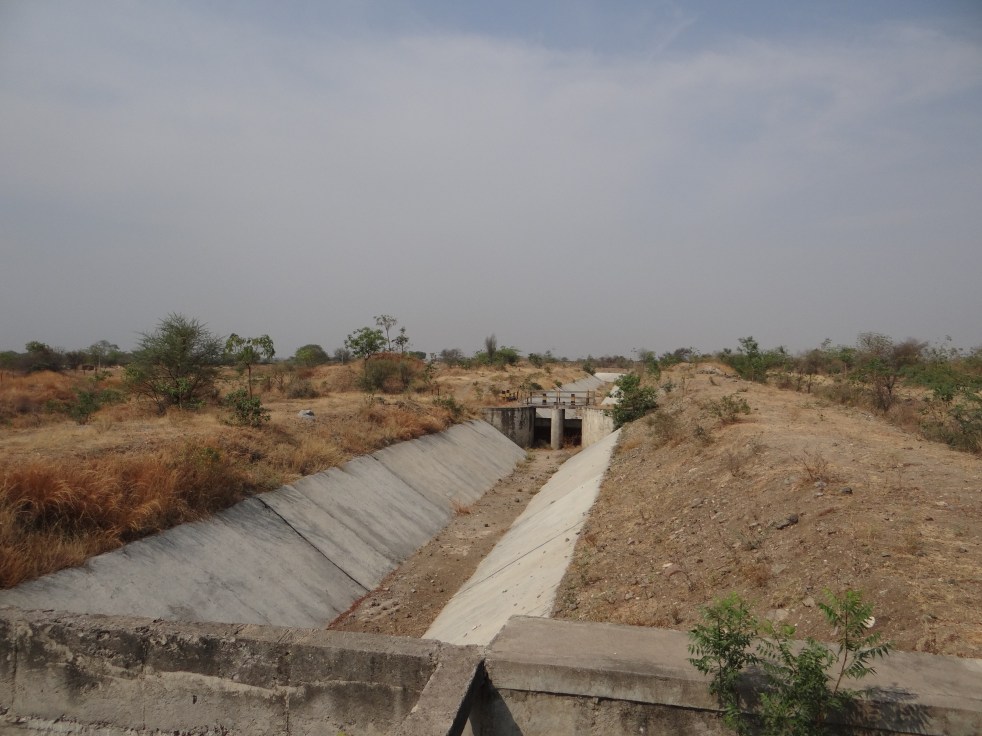
In case of Shirapur Lift Irrigation Scheme in Maharashtra, the Form I was a joke as the half-finished project with canals has been sitting idle for many years in Solapur, blatantly violating EPA,1986. Not only does the Form I hide that the project is nearly finished, is also states that the project “does not affect important ecological areas” or “areas for sensitive species”, when the canal of the project will take 92 hectares from Great Indian Bustard Sanctuary. Incidentally, the MoEF has a special plan for protection of the Great Indian Bustard! (See SANDRP’s submission at TOR Stage https://sandrp.in/irrigation/ShirapurLIS_SANDRP_Sbmsn_to_EAC_Jan2013.pdf)

These are only a few indicative examples and the violations are on a huge scale. We and others have pointed this out to the EAC and MoEFCC over the years, but no action was taken, thus encouraging the developers. We have not heard of a single instance when the MoEFCC has rejected the proposal based on problems with Form I/ PFR and as per the Clause 8 (vi) of EIA Notification 2006, which is reiterated in the present OM.

And now the Ministry wants EAC to take action only based on such information, and without any further studies!

  1. No action is taken when EIA is prepared violating granted Terms of Reference (TOR):

The Ministry is saying that asking for additional information is against the spirit of EIA Notification 2006. The same Ministry does not bat an eyelid when projects are recommended EC (Environment Clearance) by EACs even when they violate the TORs based on which the project received first stage clearance! Is that not against the spirit of EIA Notification?

Here too, SANDRP has pointed this out a large number of times, but this has not been acknowledged in most cases. Some examples:

EIA EMP of Kalai II Project in Arunachal Pradesh, major issues like hydrology, biology, geological aspects spelled out in TORs were not even addressed in the EIA EMP by none other than WAPCOS, Ministry of Water Resources enterprise, famous for shoddy studies. (See SANDRPs note: https://sandrp.wordpress.com/2014/01/15/eia-emp-of-kalai-ii-hydropower-project-doesnt-comply-with-its-terms-of-reference/)

TORs issues for the 3000 MW Dibang Project in Arunachal Pradesh, India’s largest capacity hydropower project, were not fulfilled and yet EAC recommended Environment Clearance, see: https://sandrp.wordpress.com/2014/10/06/manipulating-environment-forest-clearances-for-dibang-project-deja-vu-lshp-history-repeated-will-it-be-tragedy-or-comedy/.

TORs issued for the 660 MW Kiru and 560 MW Kwar HEPs in Jammu and Kashmir, were not fulfilled as pointed out by SANDRP (see: https://sandrp.wordpress.com/2014/05/10/massive-kwar-and-kiru-heps-on-chenab-j-and-kpoor-quality-cut-paste-eias-flawed-public-hearing/) submission.

TORs issued for Sach Khas Project in Himachal Pradesh had specifically asked for study of impact of sudden release of huge quantities of water for generating hydropower (Peaking) on biology of the river. This was not done by WAOCOS, but the EAC and hence the MoEF did not consider this point, even after SANDRP made a specific submission on it. See SANDRPs note: https://sandrp.wordpress.com/2014/08/19/sach-khas-hydro-project-in-chenab-basin-another-example-of-wapcoss-shoddy-eia/

Again this is just an indicative list, showing the extent of real problems.

  1. No action was taken when EIA was plagiarized

There have been multiple occasions when EIA is exceedingly shoddy and even plagiarized! In these cases too, although it has been brought to the notice of EAC/ MoEF, no action has been taken.

For example: In case of Mohanpura Irrigation Project in Madhya Pradesh, plagiarising in WAPCOS EIA was pointed out to the EAC by SANDRP and individual researchers (see : https://sandrp.wordpress.com/2013/11/15/mohanpura-dam-in-madhya-pradesh/) but the MoEF took no action against the agency.

In case of Sonthi lift Irrigation scheme, the entire EIA was so poorly plagiarized by WAPCOS that even the name of the original project (Kundalia major multipurpose project from Madhya Pradesh) was all over the EIA for a Karnataka Project! SANDRP pointed out this too, but there was no response on this point. https://sandrp.wordpress.com/2014/03/12/tragedy-of-errors-environmental-governance-and-the-sonthi-lift-irrigation-scheme/

These are again just indicative examples.

  1. No action was taken when EIA provided misleading information

There are several such examples but the most recent example, is 3000 MW Dibang Project in Arunachal. The EIA agency and Project Proponent has issued misleading information about the impact of the project on the downstream Dibru Saikhowa National Park in Assam. The report states that the water level rise or fall at Dibru Saikhowa due to sudden water release from all projects in the upstream Arunachal Pradesh will be less than one meter, when a different study also considered by EAC shows that this fluctuation when all upstream projects hold back and release water will be 7-8 feet (more two meters)! SANDRP had pointed this discrepancy, but the EAC did not even take a note of this in the meeting and actually recommended clearance to this project! (https://sandrp.wordpress.com/2014/10/06/manipulating-environment-forest-clearances-for-dibang-project-deja-vu-lshp-history-repeated-will-it-be-tragedy-or-comedy/)

In other cases, basic information like length of the river, location of the project, area of submergence, area of affected population has also been wrong in the EIA and yet the EAC has recommended clearance for the projects, despite these issues being pointed out.  Some examples in this regard include: Bansujara Project, (https://sandrp.wordpress.com/2013/11/12/bansujara-irrigation-project-in-mp/) and Chinki Multipurpose project (https://sandrp.wordpress.com/2014/02/22/chinki-major-irrigation-project-on-narmada-yet-another-evidence-of-mps-obsession-with-large-irrigation-dams-wapcoss-shoddy-reports/), both in Madhya Pradesh, EIA in both cases done by WAPCOS.

To reiterate, the above is a brief, indicative list. SANDRP and other organizations routinely look at the EC process, and we are overwhelmed at the level of non-compliance happening at the proponent end as well as EAC and MoEF level.

The affected communities see how their submissions are either misrepresented in the EIAs, or just not considered by the EAC even when objections are loud and clear in Public hearing reports (like in case of Dibang EIA).

  1. MoEFCC further denigrates the Public Consultation Process

By ordering that no additional information should be sought after TOR stage, the MoEF is deriding the importance of Public Hearing which take places as a part of the Environment Impact Assessment Study, after TORs have been granted. Like in the case of Dibang, major issues raised by affected people have not been raised either in Form I or in TORs or in the EIA and need additional studies.

Now by discouraging additional studies, the MoEFCC is suggesting that even public consultations are immaterial. No more studies, after TOR please! This is an insult of the public consultation process which should form the heart of appraisal and assessment process.

For the same reason, in many countries public hearing is conducted before granting Terms of Reference. In the absence of any such provision, simply stating that additional studies should not be recommended after TOR stage is a seriously regressive step.

  1. Project application documents not availalble in public domain

For basic transparency in Environment appraisal process it is necessary that all the documents (Form 1 and PFR at TOR stage & EIA-EMP and Public consultation documents at EC stage) that accompany the application for environmental clearance are put out in public domain well in advance ( at least ten days) before the projects are discussed by EAC.

Ironically, MoEFCC does not have any legal requirement in this regard and it was Central Information Commission that in 2012 directed the MoEFCC to ensure that. But this is not happening. In fact the projects that are on the EAC agenda are many times not even listed on the relevant environment clearance website (http://environmentclearance.nic.in/).

When this was brought to the attention of the MoEFCC’s concerned officials and EAC, they have taken no action in most cases. The situation has particularly worsened since June 2014, after the new BJP-led government came to power at the centre. It is on areas like these that we need MoEFCC to be pro-active. ( Pass some OMs here!)

In the end The system of Environmental Appraisal and Clearance today lacks accountability, transparency, democratic norms and compliance. Some of the major reasons for asking for additional studies is when the Form I, PFR and EIA do not adequately address issues.

In order to bring in speed and accountability in the appraisal process, there is a need to:

  1. Blacklist and debar EIA consultants which provide plagiarized, misleading or false data in EIA reports
  2. Reject applications based on false or misleading Form I – PFR
  3. Reject applications which do not conform with TORs granted
  4. Consider submissions received from civil society and affected groups at the time of TORs and EC process carefully and consider these as inputs and help for a holistic appraisal, not as adversaries. Invite organisations/ individuals in the EAC meetings when those specific projects are discussed.
  5. MoEFCC needs to ask EAC to show application of mind while appraising projects, submissions, public hearing processes and considering proponent’s response. This serious consideration by the part of EAC should be reflected unambiguously in the minutes of the EAC meetings.
  6. MoEFCC needs to appoint as members and chairpersons of EAC only such persons with a track record indicating knowledge, experience and independence on environment issues. A recent NGT order asked MoEFCC to do exactly, this, but MoEFCC has yet to implement this order.
  7. MoEFCC needs to ensure that all the relevant documents for projects on EAC agenda are put in public domain at least ten days in advance of the EAC meeting, as directed by the Central Information Commission. In absence of such documents in public domain, the EAC should not be considering the projects. (MoEFCC should in fact come out with a notification on this!)
  8. Reject projects which have violated EPA (1986) and EIA Notification (2006). Here too, the MoEFCC regularizes blatant violations by passing OMs.

Most of the above is enshrined in the EIA Notification (2006) and the Environment Protection Act (2006) and there is no need for passing any OM for this, but such steps will automatically make the EC process not only efficient and swift, but also responsive, pro-environment and pro-people.

And this should be the main concern of Ministry of Environment, Forests and Climate Change.

– Parineeta Dandekar ( parineeta.dandekar@gmail.com) 

with inputs from Himanshu Thakkar ( ht.sandrp@gmail.com)

END NOTES:

[1] http://www.moef.nic.in/circulars

[2] EIA: Environmental Impact Assessment

[3] http://moef.gov.in/sites/default/files/OM_EAC_SEAC_07_10_2014.pdf

[4] Scoping clearance stage is first stage of Environmental Appraisal Process when the EAC grants Terms of Reference (TOR) to the project based on which Environment Impact Assessment is carried out later

Environment Impact Assessment · Environmental Laws · Expert Appraisal Committee · Forest Advisory Committee · Ministry of Environment and Forests

Strengthen and not dilute Environment Laws: Submission to the MEF’s HLC to Review Environment Laws

Guest Blog by: Ritwick Dutta (ritwickdutta@gmail.com) Environmental Lawyer, Managing Trustee,

Legal Imitative for Forest and Environment, New Delhi

The review of Environmental Law is currently being undertaken by the High Level Committee (HLC) constituted by the Ministry of Environment, Forest and Climate Change. The task is huge and requires a much more detailed, comprehensive, real and effective consultative process than what is currently being done. The Committee is well within its right to say that such a task cannot be undertaken within such a limited and unrealistic time frame (2 months) and without the required expert composition.

The committee must give suggestions only on how to strengthen environmental law in India and not dilute environmental laws. Undermining environmental law is disastrous for the people, environment and even for economic development. It is pertinent to point out some events which have occurred in recent times which reflects on how the decisions on environment have had disastrous consequences both for the people and the economy.

Contrary to what is generally projected by the Industry Associations and a section of the press, environmental laws are not the cause of slow economic growth. Rather speedy and hasty approvals have been the cause of both environmental, social and economic loss and damage. It is imperative to focus on some facts which would be relevant.

  • The Ministry of Environment and Forest and its various expert committees never reject a project totally. Even if the approval is declined in one meeting it is presented in a subsequent meeting with minor modification. One can cite the recent case of Dibang Hydro Electric project in Arunachal Pradesh which was recommended for forest clearance despite being rejected twice by the Forest Advisory Committee.
  • An analysis of the approvals granted by the Regional Office of the MoEF based on recommendation of State Advisory group, the rate of approval is 78 Percent [See report of EIA Response Centre, study from January to April, 2014 at Annexure IIm, see the end of the blog]
  • The Expert Advisory Committee (EAC) constituted under the EIA Notification 2006 undertakes the task of appraisal at remarkable speed and hasty manner. It is worth quoting from the Judgments of Courts and Tribunals on the manner in which appraisal is done by the Expert Committees.

A. Samata Versus Union of India [National Green Tribunal , Appeal No 9 of 2011,] [Thermal Power Plant in Andhra Pradesh]

‘For a huge project as the one in the instant case, a thermal power plant with an estimated cost of Rs. 11,838 crore, covering a total area of 1675 acres of land, the consideration for approval has been done in such a cursory and arbitrary manner even without taking note of the implication and importance of environmental issues. On the same day the EAC took for appraisal not only the thermal power plant in question, but also other projects which would be indicative of the haste and speedy exercise of its function of appraisal of the project.

B. Utkarsh Mandal Versus Union of India[1]

“As regards the functioning of the EAC, from the response of the MoEF to the RTI application referred to hereinbefore, it appears that the EAC granted as many as 410 mining approvals in the first six months of 2009. This is indeed a very large number of approvals in a fairly short time. We were informed that the EAC usually takes up the applications seeking environmental clearance in bulk and several projects are given clearance in one day. This comes across as an unsatisfactory state of affairs. The unseemly rush to grant environmental clearances for several mining projects in a single day should not be at the cost of environment itself. The spirit of the EAC has to be respected. We do not see how more than five applications for EIA clearance can be taken up for consideration at a single meeting of the EAC. This is another matter which deserves serious consideration at the hands of MoEF.”

C. Gauraxa Hitraxa Pauchav Trust Vs Union of India [Appeal No 47 of 2012 of NGT] [Pipava port, Gujarat]

“The relevant observations in the EAC meeting reveal that the presentation made by the Project Proponent was accepted as “gospel truth””

D. Sreeranganathan K.P and ors Vs Union of India : [Appeal No 172 -174 of 2013] [Aranmula Airport, Kerala]

“The Tribunal is able to notice a thorough failure on the part of the EAC in performing its duty of proper consideration and evaluation of the project by making a detailed scrutiny before approving the same……The EAC is constituted consisting of a Chairman and number of members who are experts from different fields only with the sole objective of national interest in order to ensure establishment of new projects or expansion of already existing activity without affecting the ecological and environmental conditions. Thus, a duty is cast upon the EAC or SEAC as the case may be to apply the cardinal and Principle of Sustainable Development and Principle of Precaution while screening, scoping and appraisal of the projects or activities. While so, it is evident in the instant case that the EAC has miserably failed in the performance of its duty not only as mandated by the EIA Notification, 2006, but has also disappointed the legal expectations from the same.

The above list is only illustrative and there are many other judgments reflecting the situation with respect to haste with which approvals are granted.

While undertaking any review the Committee must keep into account the following facts, issues and ground realities.

  1. India’s Environmental law are a result of people’s struggle, international convention, commitments and judicial pronouncements and is aimed at ensuring sustainable development. Most provisions of the India’s environmental law have been an outcome of International Conventions pursuant to Article 253 of the Constitution eg, the Public Hearings and Environment Impact Assessment became part of India’s legal framework pursuant to the Rio Declaration of 1992 and the National Green Tribunal was set up pursuant to India’s committment to Principle 10 of the Rio Declaration.
  1. ‘Principle on Non-Regression’ has to be applied while undertaking review.

The principle of non-regression is understood as the requirement that norms which have already been adopted by states may not be revised in ways which would imply going backwards on the previous standard of protection.[2] This principle has been traditionally recognized in the area of human rights – that is, once a human right is recognised it cannot be restrained, destroyed or repealed. This theme is echoed in almost all the major international instruments on human rights, including the Universal Declaration of Human Rights. [3] Environmental rights are closely related to human rights as well, including cultural and social rights, and can be interpreted to apply in the context of environmental protection as well. In addition, the principle is increasingly being invoked in the context of environmental protection. The European Union has adopted this view through a resolution: [4]

97. Calls for the recognition of the principle of non-regression in the context of environmental protection as well as fundamental rights.

The Resolution of the UN General Assembly as the outcome document of the Rio+20 United Nations Conference on Sustainable Development reflects the acceptance of this principle as well:[5]

20. We acknowledge that since 1992 there have been areas of insufficient progress and setbacks in the integration of the three dimensions of sustainable development, aggravated by multiple financial, economic, food and energy crises, which have threatened the ability of all countries, in particular developing countries, to achieve sustainable development. In this regard, it is critical that we do not backtrack from our commitment to the outcome of the United Nations Conference on Environment and Development. We also recognize that one of the current major challenges for all countries, particularly for developing countries, is the impact from the multiple crises affecting the world today.

Therefore, the principle of non-regression applies as a human and fundamental right, as well as under the principles of environmental law – like “sustainable development” and precautionary principle”.

  1. The concept of Sustainable Development has to be comprehensively understood and cannot be equated only with economic growth. The Rio Declaration of 1992 has to be comprehensively understood and read not in isolation but as a whole. Public hearings (Principle 10), EIA (Principle 17) Precautionary Principle (Principle 15), Compensation and liability regime (Principle 13) are the core of Sustainable Development and have been incorporated as part of national law. The aim should be to further include these in various laws in a comprehensive manner. Rule of law, the right to participate effectively in matters which concerns one’s life.
  1. Expert Committees, Advisory Committees, Appellate Forums constituted of Bureaucrats do not inspire confidence. This Committee must recommend that any committee or appellate forums should not have any bureaucrats. The working of the National Environment Appellate Authority (NEAA) is a classic example of failure due to the fact that retired IAS and IFS officials were made vice chairman and member. The Delhi High Court in Vimal Bhai versus Union of India [CM No. 15895/2005 in W.P. (C) 17682/2005 has held:

“The list produced by the petitioners of appeals before the NEAA shows that most of the appeals disposed of thus far have in fact been dismissed, comprised as it is of retired bureaucrats, minus the Chairperson and Vice Chairperson. The NEAA is, therefore, at present neither an effective nor an independent mechanism for redressing the grievances of the public in relation to the environment clearances granted both either the State or the Central Government.”

Conclusion:

There is clearly a need to review environmental laws. Yet neither the objective and purpose is clear of the present exercise. The Environment (Protection) Act, 1986 has numerous notifications issued under it. It ranges from EIA Notification to rules regulating the use of Plastics and microorganisms. Will the present review cover all these? These are issues which needs clarity. In addition, the Committee has to genuinely interact with all concerned persons across the country. The present process cannot be called consultative at all.

India’s environment has already impacted negatively due to hasty decisions as evident from numerous decisions of the Courts, the least this HLC can do is not to prepare a hasty report based on limited one sided information and limited public interaction.

[Earlier Blog on HLC: https://sandrp.wordpress.com/2014/09/26/review-of-environment-laws-is-necessary-but-the-tsr-subramanian-hlc-lacks-credibility/]

Ritwick adds in post script: So far as ELMA is concerned, it is not even in a form that can be called as a Bill. The ELMA has many dangerous provisions and the sole aim is to manage the progressive provisions in all the other laws. ELMA gives overriding powers to the environmental authority to pass any direction. The thrust of ELMA is to ensure that those who approach the courts for redressal of their grievances face the threat of penalty.  I feel that one of the most problematic provisions of ELMA is the fact that it combines all clearances (CRZ, EC and FC) into one (Single window) with very limited scope for appeal. The Appeal will have to be filed within 30 days of approval and before a Board constituting of two serving or retired secretaries to the Government! The process without doubt was a hurried one.

I have recently got an RTI response stating that the HLC has not kept records of any of the public consultations which it undertook: Source: http://www.dnaindia.com/india/report-moef-has-no-minutes-of-30-panel-meetings-2053483

END NOTES:

[1] Delhi High Court, 2009 http://www.indiankanoon.org/doc/188721650 [Mining in Goa]

[2] The Future of Environmental Law – Emerging Issues and Opportunities, Issue Brief 3, United Nations Environment Programme (2012). Available at http://www.unep.org/delc/Portals/24151/IssueBriefTheme3.pdf

[3] Michel Prieur, “Non-regression in environmental law”, S.A.P.I.EN.S [Online], 5.2 (2012). Available at: http://sapiens.revues.org/1405

[4] Resolution on developing a common EU position ahead of the United Nations Conference on Sustainable Development (Rio+20). Document no. P7_TA-PROV(2011)0430. Available at: http://www.europarl.europa.eu/sides/getDoc.do?type=MOTION&reference=B7-2011-0522&format=XML&language=EN

[5] Resolution adopted by the UN General Assembly on 27 July, 2012. A/RES/66/288. Available at: http://www.un.org/ga/search/view_doc.asp?symbol=A/RES/66/288&Lang=E

ANNEXURE II

 State Advisory Groups (SAGs): Recommendations for Forest Clearance during January-April 2014

The Forest (Conservation) Rules, 2003 under the Forest (Conservation) Act 1980, provide that proposal involving forest land of more than forty hectare shall be sent by the State Government to the Secretary to the Government of India, Ministry of Environment and Forests (MoEF) while proposals involving forest land up to forty hectare shall be sent to the Chief Conservator of Forests or Conservator of Forests of the concerned Regional Office (RO) of the MoEF.

RO is empowered to scrutinize and sanction the proposals involving diversion of forest area up to 5 hectare.  In respect of proposals involving diversion of forest area above 5 hectare and up to 40 hectare and all proposals for regularization of encroachments and mining up to 40 hectare, the proposals are examined by the RO in consultation with State Advisory Group consisting the representatives of the State Government from the Revenue Department, Forest Department, Planning and /or Finance Department and concerned Department (User Agency).

State Advisory Groups (SAGs) are constituted by the Ministry of Environment & Forests, Government of India, under the Forest (Conservation) Act, 1980 for each State and Union Territory.

The view of the Advisory Group are recorded by the Head of the RO and along with the same, the proposals are sent to Ministry of Environment & Forests, Government of India, New Delhi for consideration and final decisions.

The meeting of the State Advisory Group (SAG) is normally held once in a month at concerned State Capital as per a pre-decided schedule for each State and Union Territory.

Agenda and minutes of SAG meetings are uploaded on the MoEF website.

In this report, we have analysed minutes of SAG meetings all over the country from January to April 2014. During the period, minutes of meetings in 10 states are available in public domain.

As per the information available on MoEF website, there were 16 meetings during this period of four months in which 541 ha area has been recommended for diversion. These meeting happened in Gujarat, Maharashtra, Madhya Pradesh, Uttarakhand, Andhra Pradesh, Karnataka, Kerala, Punjab, Tamil Nadu and Odisha. Gujarat leads with maximum diversion of 138 ha followed by Maharashtra with about 100 ha diversion.

It is interesting to note that Transmission Line is at top of the table taking maximum recommendation for diversion, 142 ha (26 %) closely followed by Roads with 138 ha (25 %). If we include Railways which takes 56 ha (11%), it is conspicuous that ‘linear intrusion projects’ are taking 62 per cent of the total recommended diversion.

The total number of projects considered by SAGs during the period was 41 of which 32 were recommended, i.e.78 per cent. It is alarming to note that not even one project was declined by SAG!

Environment Impact Assessment · Expert Appraisal Committee · Ministry of Environment and Forests

Review of environment laws is necessary – But the TSR Subramanian HLC lacks credibility

The Union Ministry of Environment, Forests and Climate Change (MEFCC) in the BJP led new government at the centre has, through Office Memorandum (OM no 22-15/2014-IA.III) dated Aug 29, 2014 constituted High Level Committee (HLC) under the chairpersonship of former cabinet secretary TSR Subramanian, “to review various acts administered by Ministry of Environment, Forests and Climate Change”. Let us try and look at this proposal on its merits.

Firstly, it should be noted that the HLC has a far-reaching mandate to review the core legislations that are supposed to protect India’s environment, including the Environment Protection Act (1986), the Forest Conservation Act (1980), the Wildlife Protection Act (1972), the Water (Prevention and Control of Pollution) Act (1974) and the Air (Prevention and Control of Pollution) Act (1981). Considering that these acts are the back bone of MEFCC’s environmental governance, the recommendations of this committee can have far reaching impact on India’s environmental governance.

Secondly, there are no doubts that India’s environmental laws and governance needs to be reviewed and strengthened. While the industry and vested interest lobbies have been claiming that MEFCC’s work is a hindrance to India’s development and growth, the reality is quite the opposite. MEFCC provides environment clearance (for projects covered under EIA notification of Sept 2006, which is the current notification and which excludes large number of projects from requirement of environment clearance), forest clearance, wildlife clearance, coastal zone clearance and also certifies if the projects applying for CDM (Clean Development Mechanism under the United National Frame Convention on Climate Change) are sustainable development projects.

The committee has been explicitly constituted for reviewing the five environmental laws. These laws need to be strengthened so that there is inclusive, democratic, bottom up process in which people have a decisive role. The governance related to the laws thus needs to be changed in this context so that there is greater transparency, accountability and participation and better compliance is achieved. This is what we mean when we say we need to improve the environmental governance.

MEFCC’s zero rejection rate With respect to giving any of these clearances, the MEFCC has almost zero rejection rate in most crucial sectors. For example a review[1] of the functioning of the Expert Appraisal Committee on River Valley and Hydropower project shows that the committee has not rejected almost any of the proposals that came its way in last seven years. The MEFCC has not rejected any of the proposals that applied for CDM status. Even in other sectors, the MEFCC has rejection rate below 3%, if at all and projects for which clearances have already been given like coal mining, are far from being implemented.

States already have enormous powers Some people have been claiming that states do not have sufficient powers in environmental decision making and hence the powers need to be delegated to the states. The fact is that the states already have enormous powers in environmental governance, including in all clearances. The pollution control regime is completely under the states. The states are empowered to clear several categories of projects in the context of all the clearances. The state pollution boards are supposed to give consent to establish and operate, before which no project can operate, they are also supposed to conduct public consultations even for projects requiring central clearances. Before National Wildlife Board clears a project, State Wildlife Boards need to clear the projects. Consent of Forest Officials from the states is mandatory before Forest Clearance application is processed to higher levels. Which state in India has shown exemplary conduct to inspire confidence that they are in a position to achieve necessary environmental governance? We do not know of any. Unless the capacity of states in this regard is increased, we cannot improve environmental governance in India only in the name of entrusting it in the hands of the states.

Is MEFCC responsible for delays? This is another bogey raised against the MEFCC. The fact is that the EIA notification has clearly defined timelines that says that if MEFCC fails to respond within the timeline, the project can be deemed to have secured the clearance. The fact of the matter is that no project has claimed or gotten such deemed clearance, since most project developers are uninterested in fulfilling even the minimalist demands of MEFCC. On the other hand, most dams and hydropower projects get delayed beyond the promised time frame even after getting the clearances! For any objective person, the claim that MEFCC is responsible for delays and lengthy procedures is clearly a bogey.

Do projects need too many clearances? Another argument made by some is that MEFCC needs too many separate clearances for the same project, which leads to delays. This is again not borne out by facts and clearances that are required now are bare minimum. Except environmental clearance, rest of the clearances do not need public consultation process. Even in case of environment clearance, except the projects covered under EIA notification, rest of them do not need public consultations. The five clearances that MEF gives as listed above are required under each specific law and it is completely justified that separate appraisal process is required for each of them as the issues considered and sectors affected are specific in each case, which cannot be clubbed. We need to strengthen each one of these appraisals, rather than weakening them or clubbing them together.

EAC lacks credible independent members or chairpersons It is public knowledge that most of the people who are appointed on the various committees that appraise the projects for clearances are those who are ready to toe the official line without raising too many uncomfortable questions. There are known cases when the chairman of the EAC or  member of FAC were found to have direct conflict of interest with their involvement in companies whose projects they were to consider for clearance. Recently, NGT has ordered that the chairs of the EAC cannot be generalist administrators but must have domain knowledge and experience. The lack of credible independent members in these committees is a major reason why the Ministry manages to clear almost anything that comes its way.

Poor quality impact assessments It is also well documented how most of the environment & social impact assessments, environment management plans or the cumulative impact assessments are shoddy, inadequate, incomplete, cut paste or dishonest efforts. Even media has reported several cases, environment groups have  repeatedly sent detailed analysis and critiques of these assessments, but the ministry and its committees have the distinction of not rejecting any of such assessments or recommending punitive action against the agencies that are submitting such dishonest or problematic reports.

Public consultations in name sake Under the EIA notification of Sept 2006, the projects are supposed to have public consultations which include public hearing at each of the affected project districts. Here again there have been several documented cases how the public hearings are hijacked by the project developers, they are conducted by partisan government officers and there is no application of mind from the MEFCC to ensure that the issues raised at the consultations are addressed. Several observers, including a former environment minister has accepted that these consultations are largely for namesake only, a box to be ticked. Even when all the people present at the public hearings have said that they do not want the project, it has no impact on the decision of giving clearance to the project.

Non-existent compliance All the clearances given are conditional, and the project developer is supposed to follow these conditions and implement environment management plan. However, how is compliance to these conditions and management plans, a very crucial aspect, to be achieved? The project developer is supposed to submit six monthly compliance reports, but there are no consequences if they do not do that for years! The officials at MEFCC or their regional offices do not have the time to go through these reports and check if these indicate adherence to the required measures and norms prescribed. Neither do these agencies take steps when the compliance reports do not follow the norms. They are never known to have taken any steps in this regard. The monitoring visits from regional offices of the MEFCC are always preplanned and the project developers get away with window dressing at best. There are no surprise visits. Even after monitoring visits, the MEFCC has never taken any steps when MEFCC finds lack of compliance.

We have narrated this list of known problems to show how lax is our environmental governance and how necessary it is to strengthen it rather weakening it. If the review is being done with a view to strengthen the environment governance, it would be welcome.

Review of functioning of institutional set up in environmental governance The review of functioning of institutional set up responsible for environmental governance also becomes imperative after such a long period since these institutions were set up. For example, state and central pollution control boards were set up under the Water Act of 1974, but we do not have experience of a single river or even a tributary of a river having been cleaned up because of the efforts of the pollution control institutions. This failure is a major reason for the state of our rivers today, including the Ganga.

New Issues In addition to the need for strengthening the environmental governance, the review of environmental laws and institutional architecture connecting with their implementation is also necessary in view of the emerging new issues. For example issues like climate change, need for cumulative impact assessments, need for environmental flows in the river, need to protect, preserve and rejuvenate rivers (a proclaimed priority of the current government) or assessment of impact of projects on disaster potential of the area were not as important and urgent as they were when these laws were formulated.

CURRENT REVIEW What I have written above provides sufficient ground for need for review of laws and institutional set up for environmental governance in India. For this we need a credible independent team with clearly defined terms of reference and transparent, participatory and confidence inspiring process. Let us see if the review set up under the HLC qualifies to achieve such a review.

Sinisterly ambiguous TOR Firstly, if we read the four Terms of Reference (TOR) given to this committee under the above mentioned OM, the first TOR says the review will assess status of implementation of the act vis a vis “the objectives”. But the TOR does not define what is meant by “the objectives”. The second TOR is not problematic as it says the review will “examine and take into account the various court orders and judicial pronouncements relating to these acts”. The Third TOR is the most sinister. It says the HLC will recommend specific amendments in the acts, “so as to bring them in line with current requirements and to meet objectives”. The trouble is, neither “current requirements” nor “objectives” have been defined. Without defining them, these are open to any interpretation that is suitable to the committee! Such ambiguous TORs which are open to manipulation are completely unacceptable and do not inspire any confidence in this exercise.

Constitution of HLC The committee chaired by former cabinet secretary T.S.R. Subramanian has four members (including the chair) and two secretaries (both government officials). The constitution of the committee and criteria for selection of the members has remained completely non transparent, which itself raises many questions.

Among the four members, two are former bureaucrats and two are with legal backgrounds. None of the members are either expert in environmental issues or environmental governance. None of the members (including the chair and the secretaries) are known to have fought for or campaigned for or worked for improving environmental governance in India. There are no credible, independent non-governmental members or independent experts here.

Viswanath Anand, one of the two former bureaucrat members of the HLC and former environment secretary, does not inspire confidence due to his track record either as environment secretary (1997-2000) or as Vice Chair of National Environment Appellate Authority (2002-2005). His tenure at NEAA was described by the Delhi High Court as “a one-man show” in the absence of a chairman and three technical members of the authority.[2] Media further reports: “Very few appeals were admitted by Anand during his three-and-a-half-year stint at NEAA. In the Loharinag Pala case, he drew sharp criticism from the Delhi High Court for “adopting a very hyper-technical approach in rejecting the petitions” and overlooking “that these petitioners deserve to be heard on merits”. The court quashed Anand’s order and reinstated the appeal.” That says a lot. There are several other narrations about the role played by Mr Anand at NEAA[3]. Mr Anand is also on Coca Cola India’s Advisory Council on Environment and Sustainability[4], which seems to be in conflict with his role in HLC.

Appointment of Mr Hardik Shah (one of the two secretaries) as the Member Secretary of Gujarat Pollution Control Board was challenged in Gujarat High Court by RTI activist Amit Jethwa before he was killed, as per Indian Express report, see link in End Note 2 bleow.

Considering the non-transparency in its appointment and known background of some of the members, the constitution of the committee too does not inspire any confidence that it will help improve environmental governance in India.

Process of participation The MEFCC has said that within a month, that is by Sept 27, 2014, people can send submission to the committee in less than 1000 characters (or an email)! This is completely ridiculous and shows how non-serious the government and the HLC is about the submissions. This article, with already more than 13000 characters would clearly disqualify for submission to the HLC! Besides the issue of length, there is not even a clearly defined process that tells the people what will happen to their submissions and how are they sure to know that their submissions will be even acknowledged and responded to or even read. The process of participation is completely unacceptable. The whole process limits the participation to only English speaking and writing people who have access to internet, leaving out vast majority of the people out of the review process.

Conclusion It is clear from all accounts that the HLC does not carry any credibility or inspire in any confidence for any objective person. The best course for the MEFCC is to dissolve the HLC and restart the process keeping in mind the comments from groups and individuals without vested interests. The government should in the first place institute a credible independent review of the experience with environment laws, institutions and governance in India. This has also been highlighted by organisations like ESG. The report of this exercise should then be made available to all the gram sabhas in local languages. It is only based on such a report that a review of the environmental laws, institutions and governance be taken up, in which then the people and groups on ground can participate. At least 50% members of the review process should be women, when today there are none.

We have looked at this process purely on its merit, without looking at what the new BJP led government at the centre has done over the last four months. The government has been very busy diluting and dismantling whatever little exists in terms of environmental governance in India. If we add that track record to this analysis, then the conclusion is loud and clear: The formulation of HLC is aimed at completely dismantling the laws and institutions related to environmental governance in India. This is not a good sign for the future of this country and her people.

Himanshu Thakkar, SANDRP

ht.sandrp@gmail.com

Another blog on this issue: https://sandrp.wordpress.com/2014/10/10/strengthen-and-not-dilute-environment-laws-submission-to-the-mefs-hlc-to-review-environment-laws/

END NOTES:

[1] For details, see: https://sandrp.in/env_governance/TOR_and_EC_Clearance_status_all_India_Overview_Feb2013.pdf

[2] http://indianexpress.com/article/india/india-others/the-six-minds-that-will-look-afresh-at-environment-laws/#sthash.RMohoCW9.dpuf

[3] See for example: http://infochangeindia.org/environment/analysis/national-environment-appellate-authority-puppet-of-the-moef.html and http://www.deccanherald.com/content/22796/tribunal-coming-justice-can-wait.html and http://indiatogether.org/neaa-environment

[4] http://www.coca-colaindia.com/sustainability/final-bios.html and http://www.coca-colaindia.com/sustainability/viswanath.html, accessed at 3.37 pm (IST) on Sept 26, 2014

POST SCRIPT 1:
Those who agree may send this to hlc.moef2014@gmail.com, Sept 27,  2014 is the last date for sending submissions, but we need to keep sending submissions on these lines even after that deadline.

Post Script 2: Press Release from Environment Support Group, Bangalore after the meeting with HLC in Bangalore on Sept 27, 2014:

Press Release : Bangalore : 27th September 2014
(Attached PDF with pictures)

High Level Committee of Ministry of Environment and Forests and Climate Change walks out of Public Consultation in Bangalore

The High Level Committee headed by Mr. T. S. R. Subramanian, former Union Cabinet Secretary, constituted by the Union Ministry of Environment and Forests and Climate Change to review environment, pollution control and forest conservation laws, invited the public at large for a consultation between 12 and 1.30 pm today (27th September) at Vikas Soudha, the high security office complex of the Government of Karnataka. Advertisements to this effect had been issued by the Karnataka Department of Forest, Ecology and Environment in various newspapers on 21st September 2014, followed up by various press releases inviting the public to interact with the Committee.

When various individuals and representatives of public interest environmental and social action groups turned up for the meeting, the police prevented their entry at the gates. It was only following a spot protest that the police consented to allow them to participate in the consultation. Despite this indignifying experience, all who gathered proceeded to the meeting hall with the intent of engaging with the High Level Committee.

The meeting commenced with introductory remarks by the Chairperson Mr. Subramanian. Broadly, he shared that the intent of the Committee was to hear views from across India on the type and nature of changes that were required in the environmental and forest protection laws. He stated that the Committee had the mandate of the Government to propose necessary changes that would help improve the quality of life and environment. But he said the need to ensure develop was primary, as the country was very poor (over 80% were poor he claimed) and thereby it is found essential to streamline environmental clearance processes that thwarted growth. Mr. Subramanian also shared that it was a matter of concern to the Government that several development projects were getting mired in litigation on environmental grounds, leading to needless delays. Concluding his introductory remarks he shared that the Committee is not in any manner guided by the Ministry and their recommendatory report would be submitted to the Union Government. The Committee’s proceeding, he clarified, were not open to the public, unless the committee decided to engage with the public. Responding to a question, Mr. Subramanian said that nothing that was submitted to the Committee would be shared with anybody, and that only the report would be submitted to the Government. Mr. Subramanian also said that the Ministry never proposed a public consultation exercise, but he had suggested this should take place.

Mr. K. N. Bhat, Senior Advocate and a member of the Committee, shared that there were a variety of submissions the Committee had received and each of this would be considered. He aired that environment and development should go side by side and the objectives of the laws if not found sufficient to address current needs, need for their review exists. The industry in particular, he said, had raised concerns over delays in environmental and forest clearances when the Committee met with them.

On these introductory notes Mr. Subramanian asked the members of the public to suggest changes to the existing environmental law framework. Officials assisting the Committee did not provide any rationale for the Ministry proposing changes to existing laws. The Committee also did not have any procedure, excepting online submissions of opinions on the Ministry’s website (limited to 1000 words).

When the turn of the public came, a submission was made by the Karnataka Planters Association about procedural difficulties in securing forest clearance and conforming with pollution control norms, and sought amendments for the benefit of plantations. Thereafter, Mr. A. C. F. Anand, an RTI Activist, suggested that all environmental laws must be translated so that it would be understood by all and thus the compliance rates improved.

Speaking next, Mr. Leo F. Saldanha of Environment Support Group requested the Committee to address the basis for its functioning, and whethere the TOR constituting the Committee was sufficient for such a massive and onerous task that involved fundamentally reviewing all environmental laws that were intricately linked to Right to Life, Clean Environment and Livelihoods. He sought to know what it meant, as is main TOR, ““(t)o recomment specific amendments needed in each of these Acts so as to bring them in line with current requirements to meet objectives”.

Mr. Subramanian responded that neither he nor any other members of the Committee were influenced by the TOR in any manner and that they worked per their own understanding of the mandate given to them by the Government. But when Saldanha pressed to know how a Committee consisting of high ranking former civil servants, a former Judge and a Senior Advocate could at all have agreed to such vague terms, Mr. Subramanian reacted dismissively. He claimed that this was a non-substantive issue and sought to move on to hear others. Saldanha argued that it is disturbing that Mr. Subramanian unilaterally rules a legitimate concern over vague and weak TORs as being of trivial concern, when, in fact, it would have been fit and proper for the Committee to have first explained in the interest of public accountability and transparency how they found the terms rationale and acceptable to them. And in case the terms were acceptable, then the High Level Committee, unshackled as it were by the bureaucratic norms of the Ministry, could have provided a clear note on the nature of the reforms being considered and also explicated on the procedure of consulting and receiving criticisms from various sectors, peoples, regions, geographies, etc.

Mr. Vinay Sreenivasa of Alternative Law Forum submitted that the process by which the Committee was conducting the consultation was rather opaque. The vague TOR and the fact that the Committee was constituted by a Government that sought to belittle the importance of the National Wildlife Board and rush pet projects through the clearance mechanism, seemed to suggest the entire exercise appeared to be merely ritualistic. Ms. Aruna Chandrasekhar of Amnesty International – India sought to know what specific amendments were being proposed or demanded by industry/corporate sectors, and requested the Committee put it all out. But Mr. Subramanian waved away this request too.

Prof. Puttuswamy wanted to know how a High Level Committee sought to improve environmental laws when notifications of Ministry were being issued to dilute the laws. To which Mr. Subramanian responded saying he is not a “Postman” for the Ministry. Ms. Priti Rao, meanwhile, asked for decentralised solid waste management. Mr. Vijayan Menon shared that even though he was not an official, he had walked into the Committee’s immediately preceding engagement with Government officials where a clear set of amendments were being proposed. He expressed surprise that this presentation was not being made for the benefit of the general public.

Ms. Bhargavi Rao of Environment Support Group wanted to know how law could be reformed when forest officials are unaware of biodiversity protection laws that had been passed over two decades ago and asserted that this rushed exercise in reviewing environmental laws had all the trappings of making light of people’s fundamental rights and concerns. Justice A. K. Srivatsav (Retd. Judge of the Delhi High Court) and a Member of the High Level Committee stated at this juncture that the public must have confidence in a Committee in which a senior retired Judge is a member. By which time Mr. Subramanian had remarked several times that the public was wasting the Committee’s time and there was no point continuing with this procedure. Several who had gathered protested such an assessment by the Chairman of the High Level Committee. Mr. Srinivas of Mavallipura sought to speak, saying he represents a community impacted by mal-development and waste dumping in his village, and he too was brushed aside.

At this point, Mr. Subramanian got up and said “We will end the joke here!” and walked out. He was followed by the rest of the Committee.

When Mr. Subramanian walked out, it was 1 pm. Members of the common public who had travelled great distances to engage with the Committee protested Mr. Subramanian taking them for granted and dismissing their views as of trivial concern. They demanded that the Committee return to hear the public and as advertised remained in the Hall till 1.30 pm. Neither did the High Level Committee return, nor did any official of the Ministry of Environment and Forests or Karnataka Environment Department come back to explain to the public why the High Level Committee had behaved in this manner. In fact, throughout the engagement with the public, not one Karnataka Government official was present in the Hall.

The undersigned are deeply disturbed by the manner in which the T. S. R. Subramanian headed High Level Committee has treated this public consultation process. The undersigned demand that the Ministry of Environment and Forests and Climate Change call off this exercise as it has all the markings of being a ritual exercise. In its place the undersigned demand that the Ministry must constitute a Committee that has a clear rationale for reform and Terms of Reference that are democratic, consultative and transparent. In particular, the following demands are made:

  1. Environment Ministry must first come out with a White Paper discussing the nature of the reforms that it proposes in environmental, forest conservation and pollution control laws.
  2. On the basis of such a Paper, an accessible Committee must be constituted that would hear peoples responses across the biologically, culturally and linguistically diverse country and also from various sectors equally.
  3. The membership of the Committee should be so constituted that it would reflect diverse concerns and sectos, and in particular ensure that members conversant with tribal and human rights, environmental management, conservation biologists, biodiversity, risk assessment, planning, etc., and not merely ex-bureaucrats or members of the legal fraternity were included Particularly important is the need to ensure there is adequate representation of women on the High Level Committee, which presently is constituted only of men.
  4. The process of the consultation to be followed has to be meaningful and conform with Principle of Prior and Informed Consent, even if this is not a consenting process.
  5. The timeline for the Consultation mechanism for such a critical review has to be reasonable as laws sought to amended, or tweaked, fundamentally affect theRight to Life and Livelihoods, and Right to Clean Environment.
  6. The entire process has to be transparent, all meetings must be recorded publicly, none of the deliberations must be in camera (as it appears to be the case now), and all proceedings, submissions, minutes and reports must be in the public domain.
  7. Adequate facilities must be made to ensure that anyone interested can participated with dignity and without being inhibited by language or geographical location. To ensure this, the process must be devolved by enlisting the support of State and Local Governments.

Signatories:

Mr. Leo Saldanha; Environment Support Group, leo@esgindia.org. Cell: 9448377403

Mr. Vinay Sreenivasa; Alternative Law Forum. Cell: 9880595032

Ms. Bhargavi Rao; Environment Support Group; bhargavi@esgindia.org Cell: 9448377401

Ms. Aarthi Sridhar; Dakshin Foundation, aarthi77@gmail.com. Cell: 9900113216

Mr. Vijayan Menon; menonvij@gmail.com

Mr. Davis Thomas; Environment Support Group; davis@esgindia.org. Cell: 9036180914

Ms. Swapna; sapna.sb@gmail.com

Ms. Priti Rao; priti007@yahoo.com

Ms. Padma Ashok; Save Tiger, padmaashok@gmail.com

Mr. Ashok Hallur; ashokhallur@gmail.com

dinnil@gmail.com

Mr. Rajeev Mankotia; rmanikoth@gmail.com

Mr. Sandesh Udyawar; sandeshudyawar@gmail.com

Ms. Marianne Manuel; Dakshin Foundation, marianne.manuel88@gmail.com

Ms. Shivani Shah; Greenpeace; shivani.shah@greenpeace.org

Mr. Sohan Pavulari; sohan_pavuluri@yahoo.com

Ms. Sangeetha Kadur; sangeetha.kadur@gmail.com

Mr. Bhaskar Bhatt; muggymach3@basejumper.com

Mr. Rohan Kini; rohan.kini@gmail.com

Mr. K.N. Somashekar; cmd_vilinfra@rediffmail.com

Mr. A.C.F. Anand; acfanand@gmail.com

Ms. Shashikala Iyer; Environment Support Group; shashi@esgindia.org

Mr. Leon Louis; Environment Support Group; leon@esgindia.org

Mr. Mallesh K.R; Environment Support Group; mallesh@esgindia.org

Mr. Prashanth; Environment Support Group; prashanth@esgindia.org

Post Script 3

Ramaswmay Iyer, Former Secretary, Union Ministry of Water Resources wrote this email letter to Chairman of HLC Shri T S R Subramanian, we are publishing this here with his permission:

On Sun, Sep 28, 2014 at 8:23 PM, Ramaswamy R. Iyer <ramaswamy.iyer@gmail.com> wrote:

Dear TSR,
I hold you in high regard and was pleased when you were appointed Chairman of the High Level Committee to review the enviromental laws. I hoped that you would save the environmental laws from decimation. I am beginning to lose that hope.
It is amply clear why the HLC has been set up.  This government and in particular Minister Javadekar (who is Minister not for environment butagainst environment) are firmly convinced that environmental laws are playing havoc with ‘development’. What is needed in their view is quick clearance. Both those words are important. The clearance must be quick in all cases, and it must be a clearance in all cases, not a rejection in any instance. In other words, the whole exercise should be reduced to a formality or a ritual. Of course a simpler way of achieveing the objective would be to scrap the clearance procedure altogether, and repeal all the environmental laws. However, that is not easy, and such a move may have a political cost. The next best thing to do is to extract all the teeth from the laws and weaken and dilute them to the point of virtual repeal. It is for such an exercise in emasculation that the MoEF has set up the HLC. I thought that you would not be a party to such an exercise in disingenuousness. I believed that you shared the environmental and ecological concerns of many of us to some extent, if not wholly, and that the environmental laws of the country were safe in your hands. I am not so sure now, after reading reports of what happened at the ‘Public Hearing’ at Bengaluru. It appears that your views on ‘Environment vs Development’  are the same as those of Minister Javadekar. I deeply fear that the report of your HLC will do immense harm to the country. Are you prepared to live with that possibility?
I can only hope that I am wrong. If I have misjudged your position, I am ready to aplogise without reservation.
I am copying this to a few friends.
Best Wishes.
Ramaswamy R Iyer
A-10 Sarita Vihar
New Delhi 110076
Tel: 91 11 26940708
41402709
E-Mail: ramaswamy.iyer@gmail.com
POST SCRIPT 4:
Source: The Times of India, Sept 29, 2014
Forum demands reconstitution MoEF’s committee
Correspondent : Vinobha KT
MANGALORE: Activists in Dakshina Kannada urged that the review of environmental laws must never be done in haste.

Activists expressed their views before the High Level Committee of Union ministry of environment and forests (MoEF) headed by former Union Cabinet Secretary TSR Subramanian during its meet to receive suggestions and objections at deputy commissioner’s office here on Sunday.

The Acts to be reviewed by the centre include Environment Protection Act, 1986, Forest Conservation Act, 1980, Wildlife (Protection) Act, 1972, Water (Prevention and Control of Pollution) Act, 1974 and Air (Prevention and Control of Pollution) Act, 1981.

Karavali Karnataka Janabhivriddi Vedike members said that they are deeply concerned about the haste with which the TSR Subramanian Committee has been set up by the Union Ministry to review five of India’s most important environmental laws.

In a memorandum, Vedike members urged the committee to undertake a study of the effectiveness of the existing laws and their proper implementation, not just from the perspective of obtaining speedy clearances for industrial projects, but from that of protecting the environment and the rights of the poor.

“As concerned citizens, we would like to assert that review of environmental laws must never be done in haste. Protection of the environment concerns is our very survival and must not be seen as an impediment in the drive for industrialisation. Any review must be done in a transparent manner, involving all the stakeholders. The MoEF has a duty to uphold the constitutional right of every individual to livelihood and a clean environment. Economic growth benefiting the rich at the cost of life-sustaining ecosystems must not be seen as development. In view of such concerns, we urge the Government to revamp the review process,” members stated in the memorandum.

Vedike coordinator Shreekumar said seeking to make changes in environmental laws, which are meant to protect important rights enshrined in the Constitution such as Right to Life, Clean Environment and Livelihoods in such haste under vague terms of reference is indeed disturbing. “Recent statements emanating from the Union Government as well as the MoEF have been displaying a dangerous haste with respect to granting environmental clearances for industrial projects with scant respect for environmental protection. Expediting clearances is serving only the interests of corporate powers. The haste and thoughtlessness with which the current review is being undertaken raises the apprehension that it is meant to facilitate such policies,” Shreekumar said urging reconstitution of the committee by including experts in the fields of environmental science, social sciences, natural sciences and environmental law, also giving adequate representation to various stakeholders such as farmers, fishers and tribals.

SOURCE : http://timesofindia.indiatimes.com/city/mangalore/Forum-demands-reconstitution-MoEFs-committee/articleshow/43747853.cms
Climate Change · Ministry of Environment and Forests

Climate Change and Rising Sea-Levels: Real Threats coupled with Govt’s inaction

Above: Child playing on the Ghormara island in Sunderbans, which is being increasingly affected by rising sea levels    Photo: Phys.org

Global ocean levels have risen by about 19 cms in the past century[i]. Over 1961-1993, the global average sea level rose at a rate of 1.4 mm per year. But in the recent past, the rate of rise has gone up.  Over 1993-2003, it was observed that the average rate of rise more than doubled to about 3.1 mm per year[ii]. As the earth gets warmer, the threat of land inundation due to sea level rise also increases.

So what is the cause of this rise? According to scientists, this is caused due to thermal expansion of the ocean water and due to melting of glaciers and of ice caps. The amount these have contributed to the above is only speculative as the data available for such estimations is spotty and does not date back far enough. But what is somewhat known is the loss this creates and might create in the future in terms of land inundation, though not really accounting for the loss  in the lives of various people, especially the ones living along coasts. The problem today is not that this is happening, the problem is that we do not seem to be doing enough to mitigate the impacts of the sea level rise, nor do we seem to do anything to adapt to it.

In the case of the Indian subcontinent, according to a report published by a group of ecologists led by Dr. M Zafar-ul Islam, there may be a loss of about 14,000 sq. km. of land in case the sea levels rise by one metre[iii]. The report also warns that marine intrusion might affect 18 of the 48 eco-regions in India. This report mainly assesses the losses in the case of sea levels rising by one metre and six metres. In the one metre scenario, which is the estimated rise by 2100, the Sundarbans may lose about half of their area, while the Godavari-Krishna mangrove region is estimated to lose about a quarter of its land. It is also estimated that seven protected areas – Bhitarkanika, Chilka Lake, Point Calimere, Interview Island, Lothian Island, Sajnakhali and Pulicat Lake- would be about 50% flooded in case of a 1 metre riseiii.

The Bhitarkanika Mangrove System is a rich repository of biodiversity, while providing shelter from coastal erosion Photo fro Vagabound images
The Bhitarkanika Mangrove System is a rich repository of biodiversity, while providing shelter from coastal erosion Photo from Vagabound images

In the Sundarbans part of the largest riverine delta of the world, the villagers are struggling to protect their lands as more and more land is being claimed by sea water, sinking villages. The people living on the banks of these islands have observed that the river has widened and is eating into the island on a regular basis, constantly reshaping them. A study by Professor Sugata Hazra, director of the School of Oceanography, Jadavpur University, found that the total land area of 6402.090 sq. Kms of Sunderbans in 2001 was found to be reduced to 6358.048 sq kms in 2009. This would mean an approximate loss of about 44.042 sq kms. This has led to the displacement of approximately 7,000 people in the last 30 years according to this study[iv], but this seems like an under-estimation. The MoEF’s (Union Ministry of Environment and Forests) Climate Change Assessment report, also called 4 X 4 report (since it looks at 4 Sectors in 4 most vulnerable regions), prepared by the Indian Network of Climate Change Assessment, quoted a 2000 study by Goodbread and Kuehl, which said that the rise in sea level can be attributed partially to the subsidence of the Ganga-Brahmaputra delta at the rate of about 4mm/year, as estimated by sedimentological studies[v].


From Peter Caton's remarkable Photo documentation of teh Sea Level rise in Sunderbans Photo: Peter Caton/ Greenpeace
From Peter Caton’s remarkable Photo documentation of the Sea Level rise in Sunderbans Photo: Peter Caton/ Greenpeace

Deltas as sinking as sediments are trapped by dams The sinking of deltas due to upstream interventions are also contributing to impacts felt in the coastal areas, in addition to the impacts due to rising sea levels. In many cases like the above, part of the driving force for effective rise in sea levels is the sinking deltas due to the absence of sediments from the upstream. According to a report by SANDRP earlier this year, the Ganga-Brahmapuptra delta, carrying one of the highest sediment loads of the world, has experienced a 30% reduction in sediment over the past century. Thus the impacts seen in case of the Sundarbans is a mix of two factors: rising sea level and delta sinking. The driving force behind sinking deltas is damming of rivers in the upstream, which blocks sediments from entering the river channel and effectively, the Delta. The reduction in water flow to the deltas due to upstream diversions adds to this.

pic1

Source: http://www.nature.com/news/floods-holding-back-the-tide-1.15013

These dams trap the sediment that should have come downstream with the river and deposited on the delta. Moreover, due to water diversions in the upstream, less and less water is flowing in the deltas, and less flow means less capacity to carry sediment to the deltas. Due to these reasons, the deltas are experiencing reduced silt deposit which then leads to their sinking and the sea eating away the remaining area. According to the report, in the last 50 years, the combined annual sediment flux of the large Chinese rivers has reduced from 1800 million tons (Mt) to about 370 Mt mainly due to the construction of a large number of dams[vi]. The Yellow river delta in China is sinking so fast that the local sea levels are effectively rising by upto 25 cms/year, nearly 80 times the global average.i

Deltas_Coverpage

It is also interesting to note that in places like Jakarta, Indonesia, which is home to almost 10 million people, the heavily populated areas have sunk by as much as six and a half feet as groundwater is pumped from the earth to drink[vii]. This increases their risk of flooding and even more so if the groundwater levels continue to drop. With this drop in groundwater levels, the river flow in downstream areas decrease. This reduces the capacity of the river to carry silt, thus making the condition even worse[viii].

An estimated half a billion people live on or near deltas, constituting the highly vulnerable populations. The government needs to alter its development plans to suit the vulnerabilities and needs of these people. With its constant imposition of building large dams and barrages without taking into account the impacts they are going to have downstream, the government is just adding to the existing impacts and threats faced due to climate change. Moreover the governmnet anyways refuses to acknowledge that large sections of Indian people, particularly the poor and weaker sections are suffering due to the impacts of climate change, it refuses to identify people who are vulnerable to climate change, it refused to compensate them when they suffer for no fault of theirs and it refuses to demand from the climate polluters in the west and within India to pay for the losses.

Pic2

Above: A woman wades across water in the Ganga Brahmaputra Delta. The dams hold back sediments crucial to the delta formation. Source: http://www.thethirdpole.net/dams-responsible-for-south-asias-sinking-deltas/

Reports: IPCC In the recent past, there has been much interest in sea levels rising and some research has gone into this direction. The Intergovernmental Panel on Climate Change has been assessing and publishing about the various impacts of climate change and through their assessment reports, but it is not the only body doing this. In fact, it has come under a lot of criticism lately with people outside the body, especially ones who use semi-empirical models for study, showing that the figures of the IPCC under estimate the risk at hand.

In the 4th Intergovernmental Panel on Climate Change (IPCC) report, 2007, global sea levels were observed to be on the rise with the projected rise being about 18-59 cms by 2100. After facing criticism for this figure seen as an underestimation, IPCC came out with a 5th report on climate change. In this, the predictions of global rise in sea level have gone up by 50% and now stand at 28-98 cms by 2100. This is the wide range. For high emissions, the IPCC predicts that there will be a rise by 52-98 cms, whereas, even with emission reductions, the rise is predicted at 28-61 cms[ix]. These projections are made for the global sea level for 2081-2100 relative to 1986-2005. This then puts a lot of low-lying areas at the risk of flooding. These estimates are speculative to some extent due to the complexities inherent to the models used for study and spotty data. These estimates are also likely to be under estimates.

Other reports predict higher sea level rise The models that the IPCC uses for study are process models. This range given by them is derived from these models in combination with climate projections and literature assessment of glacier and ice sheet models. Some other studies done using ‘semi-empirical’ models, give different results. These studies look at how temperatures have changed over hundreds of years and the way sea levels have corresponded to it. They extrapolate based on this and their figures have come to be almost twice as high as what the IPCC found. They argue that the sea levels will rise by as much as 2 metres, and cause floods affecting roughly 187 million people[x]. The IPCC has dismissed these models as divergent and inaccurate, perhaps themselves adopting a more conservative approach than they should.

Pic3

Maale, capital of the Maldives, an Indian Ocean archipelago that is the lowest, flattest country on Earth is now protected by a seawall. By 2100 rising seas may force Maldivians to abandon their home. Photo: George Steinmetz. Source: http://ngm.nationalgeographic.com/2013/09/rising-seas/steinmetz-photography#/08-maale-maldives-670.jpg

Not being able to put a finger on it: One of the problems pointed out about the IPCC is that it does not provide the upper limit for sea level rise. For instance, if the collapse of marine-based sectors of the Antarctic ice-sheet is initiated, then the sea level could rise by several times more than projected during the 21st century[xi]. Scientists have estimated that the ice caps in the poles and Greenland hold enough water to raise sea level by 65 metresi. In the case of Greenland, scientists have assessed that the entire island is losing weight. The warm shore water is causing glacier calving into the sea. In a recent press release on a study conducted on ice sheets in Antarctica and Greenland, Veit Helm, glaciologist at the Alfred Wegener Institute (AWI) in Bremerhaven said that ice sheets are losing volume at the rate of about 500 cubic km per year[xii]. This study found that the volume loss in Greenland has doubled since the year 2009. At the same time, the loss of the West Antarctic sheet has tripled. This then means that the estimated rise in sea levels needs to be relooked at.

It is the responsibility of the governing authorities to take measures to try and minimize the damage that is occurring and will occur from climate change and its own skewed development projects. The government needs to identify, acknowledge and safeguard the already vulnerable communities and not make them more vulnerable in the face of the dangers they face from climate change. There is a need to integrate these climate change warnings and mitigation measures into planning and development, especially in the coastal areas. This is clearly not happening. There is little effective steps from Indian government to protect mangroves, deltas, or  coastal areas either from dams and diversions in the upstream or from sea-level rise in the downstream. On the contrary, the government plans are for accelerating the dam construction in the upstream and destructino of mangroves due to coastal projects. India’s National Action Plan on Climate Change or the state Action Plans on Climate Change do not have any credible assessments or mitigation or adaptation plans in this context.

There have been increased instances and intensities of tsunamis, floods and cyclones in the recent past. In the case of rising sea levels and deltaic changes, the warnings have been there for a long time. It is not going to be a sudden catastrophe, but is a well established danger which lurks on our coasts. Therefore, there is no excuse to let it go unaddressed. There is no excuse for inaction.

Padmakshi Badoni, SANDRP,  padmakshi.b@gmail.com

The mud men of the Sunderbans, trying to repair their river banks. Photo Peter Caton


END NOTES:

[i] http://e360.yale.edu/feature/rising_waters_how_fast_and_how_far_will_sea_levels_rise/2702/

[ii] http://www.moef.nic.in/sites/default/files/fin-rpt-incca_0.pdf

[iii] http://www.thehindubusinessline.com/news/14000-sqkm-land-at-risk-with-rising-sea-level-report/article4826559.ece

[iv] http://economictimes.indiatimes.com/news/environment/global-warming/villagers-struggle-to-save-land-as-islands-shrink-in-sundarban/articleshow/27238842.cms

[v] http://www.moef.nic.in/sites/default/files/fin-rpt-incca_0.pdf

[vi] https://sandrp.in/Shrinking_and_sinking_delta_major_role_of_Dams_May_2014.pdf

[vii] http://timesofindia.indiatimes.com/home/science/Worlds-coastal-megacities-sinking-10-times-faster-than-rising-water-levels/articleshow/34389492.cms

[viii] For a recent update on the groundwater situation in India, see:  https://sandrp.wordpress.com/2014/08/11/groundwater-falling-levels-and-contamination-threaten-indias-water-lifeline-urgent-need-for-community-driven-bottoms-up-management/

[ix] http://www.realclimate.org/index.php?p=15875

[x] http://e360.yale.edu/feature/rising_waters_how_fast_and_how_far_will_sea_levels_rise/2702/

[xi] http://www.realclimate.org/index.php?p=15875

[xii] http://www.downtoearth.org.in/content/record-decline-ice-sheets-antarctic-and-greenland