Reports[1] indicate that Congress leader Rahul Gandhi is to lay foundation stone for the controversial Parwan Irrigation Project in Jhalawar district in Rajasthan (see the map above, taken from Down to Earth), before speaking at public meeting in Baran district on Tuesday, Sept 17, 2013. Detailed analysis of official documents and other reliable accounts indicate that this unnecessary dam is seemingly being pushed to supply water to some of the proposed thermal power projects in Baran and Jhalawar districts.
The project will require 12248 ha of land including submergence of massive 9810 ha of land as per conservative government estimates, displacing about 100 000 people[2] from at least 67 villages of Baran and Jhalawar districts in Hadauti region of Rajasthan. It will require at least 1835 ha of forest land, and will affect at least 2 lakh trees only on this forest land, lakhs of trees on non forest land will also stand destroyed. Most of the 1.31 lakh Ha of land in Baran, Jhalawar and Kota districts that is supposedly to get irrigation is already irrigated. These districts have average rainfall of 842 mm (Baran[3]), 923.5 mm (Jhalawar[4]) and 804 mm (Kota[5]), which is high by Rajasthan standards. If there is adequate harvesting of this rainwater, groundwater levels would certainly rise and remain sustainable with appropriate cropping pattern. This has happened in neighbouring Alwar and Jaipur districts.
This Rs 2000 crore dam with huge impacts is certainly not required for this purpose.
From all accounts, in reality the dam seems to be pushed for thermal power projects like the 1320 MW Kawai coal based thermal power project of Adani[6], 1320 MW coal based Chhabra[7] thermal power project of Rajasthan Rajya Vidyut Utpadan Nigam Ltd and the 330 MW gas based thermal power project of RRVUN at the same location. Very strangely, these projects applied for environmental clearance based on water supply from Parwan dam, even when Parwan dam does not have all the required statutory clearances, and when work its yet to start. The MoEF should have refused to sanction these thermal power projects before Parwan dam was in place.
This action of the MoEF speaks volumes about poor environmental governance due to which the TPS were cleared based on water from a project that is yet to see even foundation stone or all necessary clearances! The allocation for thermal power projects has increased[8] from earlier 40 Million Cubic meters (MCM) to 79 MCM to 87.8 MCM and this is likely to increase further considering these allocations did not take into account the transmission and evaporation losses.
Manipulated clearance process In fact the Parwan dam still does not have all the necessary statutory clearances. A quick look at the way Parwan got various clearances:
Þ Environmental Impact Assessment From the minutes of the 40th and 45th meetings of the Expert Appraisal Committee on River Valley Committee held in August and December 2010 it is clear that the EIA of the project did not have: Full social impact assessment, Full R&R Plan with Categories of Project affected persons and land for each category, Proper Dam break analysis, proper command area development plan with cropping pattern or necessary irrigation intensity (Only 14% kharif irrigation intensity provided as noted by EAC) and drainage plan, muck disposal plan. The basic facts in the EIA were wrong and the EAC should have rejected the EIA.
Þ Contradictions in EIA The EIA is full of contradictory information. For example it says the forest land coming under submergence is 1608.59 ha when the FAC form A[9] says that submerging forest land is 1731.48 ha. This is a very big difference by any standards.
Þ R & R Plan Firstly, there is such huge difference in the figures of displaced and affected people in various documents; it is clear there has been no credible social impact assessment. For example, EAC notes that 2722 houses to be submerged, 3002 (2142 in FAC factsheet in 0413) families to be affected, of which 461 tribal families. No R&R for non tribal families, which is completely unjust. Even for the tribal families there is no adequate provision of agricultural land. FAC sub committee accepts: “Most of these families do not belong to the notified Scheduled Tribes and also do not have any documentary evidence to prove that they are in possession of the forest land for a continuous period of minimum 75 years.” So most of the people will not even be eligible for resettlement or rehabilitation.
Þ How many people are affected? About 1401 families with population of 8650 persons will be displaced fully while 741 families with 4172 persons will be displaced partially. The ST population comprises 340 families with population of 1524 persons fully displaced and 121 families population 882 persons are partially displaced. However, independent sources are saying that the project will affect more than a lakh of people. This is a huge difference. Track record of past projects shows that official figures are always gross under estimates.
Þ EAC recommendation However, even when the responses to EAC’s fundamental concerns were not available, EAC recommended clearance to the project in December 2010. This showed how the EAC basically works as a rubber stamp.
Þ Environment clearance After EAC’s recommendation, the MEF is supposed to issue Environmental clearance. However, a visit to MEF website[10] on September 16, 2013 shows no information about clearance to the project. We learn from other sources that the MEF issued clearance to the project in 2011, but since it is not put up on the MEF website as required under EIA notification and NGT orders, the project will remain open to legal challenge with 30/90 days of MEF putting up the clearance letter on MEF website.
Þ Wildlife clearance The Standing Committee of the National Board of Wildlife in its 22nd meeting[11] held on April 25, 2011 considered the project. This was the infamous meeting[12] chaired by the then Union Minister of state (Independent Charge) of Environment and Forests Jairam Ramesh pushed 59 projects in two hours (average two minutes per project). He reportedly[13] said later that this was done under pressure, but the damage was done.
Þ Dr M.K. Ranjitsinh[14] and Dr Divyabhanusinh Chavda[15] submitted dissent notes, but the minister had predetermined objective and did not listen to any argument. The NBWL decided to clear the project even without knowing if the Shergarh wildflife sanctuary will be affected, how much water the downstream river will need, what will be the impact of the project on Jawahar Sagar Sanctuary, Rana Pratap Sagar Sanctuary or Chambal River Sanctuary or the project even had done basic options assessment or impact assessment.
Þ Location with respect to Shergarh WLS One of the key issues about this project is the location of the project with respect to Shergarh Wild Life Sanctuary. As noted by the FAC sub committee, the Parwan Doob Kshetra Hitkari and Jangal Bachao Samiti has been saying that the dam site is right inside the Sanctuary. However, if the project were to affect the WLS, it would require a Supreme Court clearance. To avoid this, manipulations have been going on.
The Site Inspection Report[16] of Forest Advisory Committee noted this issue and conducted a joint inspection in June 2012. The SIR said after this exercise that the proposed dam is 150 m in the upstream of the boundary of the WLS. However, the Parwan Doob Kshetra Hitkari and Jangal Bachao Samiti have contested this conclusion and said there was manipulation in this exercise.
But the EIA of the project, as noted by the 40th and 45th EAC meeting said that the project is five km away from the Shergarh WLS (this itself shows how poor is the EIA and how poor is the appraisal by EAC. Shockingly, even the Environment Clearance letter of 2011 also reportedly says that the project is 5 km away from the WLS, another reason why the EC will remain open to legal challenge.) In June 2013 there was another attempt at resolving this dispute, but again due to heavy rains could not be resolved. Funnily, the NBWL, which should be most concerned about this issue, has shown no concern. Until this issue is satisfactorily resolved, the project cannot go ahead, it will remain open to legal challenge.
Þ Recommendation of 25 cusecs release The NBWL condition that 25 cusecs (cubic feet per second) water should be released for the environment is not based on any assessment of water requirement for the river and biodiversity in the downstream, since such an assessment has never been done. It seems like another manipulation, based on the fact that Shergarh weir, 10 km downstream from the dam site, has storage capacity of 16 MCM, which is equal to release of 25 cusecs water!
Þ Gram Sabha resolutions The FAC factsheet[17] agrees that there are contradictory gram sabha resolutions, one set against the project and another submitted by the project authorities in favour of the project. The resolutions submitted by the opposing committee, which is without vested interests, is likely to be correct. There should be an inquiry about the correctness of the gramsabha resolutions by an independent body.
Þ Forest Advisory Committee The FAC considered the project in its meetings in Sept 2012 and April 2013 and recommended clearance in April 2013 meeting when all the fundamental issues remained unresolved.
Þ FAC sub-committee A sub committee of FAC visited the project in March 2013. Their report accepts a number of serious anomalies. For example, it says: “FAC sub committee report says: “It (is) a fact that a major part of the command area of the project is presently irrigated by using tube wells… Though there is no mention in the EIA report and other documents, about 79 MCM water from the dam is proposed to be utilized for 1,200 MW and 2,520 MW thermal power plants being constructed at Kawai and Chhabra respectively, in Baran district… It has been accepted by the project proponent that approach road to the historic Kakoni temple will be submerged. Submergence of the approach road will hinder free movement of devotees to the said temple, which may result in public resentment.”
Þ Forest Clearance After the FAC recommended forest clearance for the project in April 2013 in questionable circumstances, the MEF is supposed to issue in principle forest clearance and than after fulfillment of conditions in the in-principle clearance, it can issue final clearance. A perusal of the MoEF FC website[18] on Sept 16, 2013 shows that the site does not display any of the clearance letters. Our letter to the concerned MoEF officers on Sept 15, 2013 remains unanswered. We came to know through independent sources that in principle forest clearance has been issued in middle of August 2013, final forest clearance will take a long time.
Þ Compensatory Afforestation Plan Full plan and maps of CAP have not been submitted, says FAC factsheet. It is not even known if the land for CA is free of encroachment, the DFO says it will be ensured when the possession taken, as reported in Factsheet in April 2013. CA land is in 32 villages in at least 32 pieces, the DFO has not even visited all the lands to ascertain if it is suitable for CA and yet DFO has given certificate that it is suitable for CA. This seems like typical case where CA has no chance of success as noted by CAG audit report on CA in Sept 2013. It is completely illegal of CCF, PCCF, state forest department, FAC or MoEF to consider the project without full CAP with all the required details verified on ground.
Þ CWC clearance The Central Water Commission’s Technical Advisory Committee is supposed to clear all major irrigation projects. This TAC appraisal is supposed to happen only after all the final clearances are given as TAC recommendation is the basis for Planning Commission’s investment clearance. Since the Parwan project does not have the final forest clearance, it cannot be considered by the TAC of CWC. However, we learn that on Friday, Sept 13, 2013, TAC met and cleared the project.
Þ Planning Commission Investment clearance Project cannot have the Planning Commission Investment Clearance since it does not have all other clearances in place. Without this clearance no funds can be allocated for the project from state or central plans.
Þ Big irrigation projects not delivering As even Planning Commission and CAG has noted and as SANDRP has been showing through analysis for so many years, since 1992-93, net irrigated area by Major and Medium Irrigation Projects at National level has not seen any increase. There is little sense in spending massive amounts on such projects without understanding this reality. We hope Planning Commission, CWC, Rajasthan government and people concerned with this issue will take heed of this. Unless of course, if the intention is to create reliable reservoirs of water for thermal power projects, as seems to be case here, while pushing projects in the name of irrigation for Rajasthan farmers.
What all this means is that Rs 2332.52 crore project with Rajasthan’s fourth largest reservoir (after Bisalpur, Rana Pratap Sagar and Mahi Bajaj Sagar) is being planned without a proper appraisal or legally supportable clearances. Bull dozing ahead with such a project which has huge social, environmental and economic costs is not only bound to keep it open to agitations, legal challenges and delays, but is also not likely to have justification in public eye. It can even be politically counter productive. Nehruvian era of trying to win elections through such so called temples of modern era is gone, and our politicians need to learn this fast.
It is hoped that better sense prevails and Mr Rahul Gandhi will ask the project to go through due process rather than laying foundation stone of this controversial project that has more questions than answers.
[12]http://articles.timesofindia.indiatimes.com/2011-09-30/india/30229554_1_clearance-process-nature-conservation-foundation-nbwl: ““The NBWL members note that in their last meeting during Jairam Ramesh’s tenure as environment minister they were forced to clear most of the 59 proposals to start projects in protected areas – wildlife sanctuaries and national parks – in only two hours… Yet another fact of the same meeting was that 39 clearance proposals were received only two days prior to the meeting leaving very little time, and no working day, for the members to even glance through the proposals.” The NBWL members who have signed the letter include Biswajit Mohanty from the Wildlife Society of Orissa, Asad Rahmani of the Bombay Natural History Society, T R Shankar Raman of the Nature Conservation Foundation, Bivabh Talukdar of Aranyaak, M K Ranjit Sinh, Divyabhanusinh Chavda, Brijendra Singh, Valmik Thapar, Prerna Bindra, Bittu Sehgal, Mitali Kakkar and Uma Ramakrishnan.”
[14] “The Parvan major irrigation project, Rajasthan, which will submerge 81.67 sq.km. of the Shergarh Wildlife Sanctuary and what is more, will result in the destruction of approximately 186443 trees, in a tree deficit State like Rajasthan. Furthermore, even though 25cusecs of water is proposed to be continuously released into the Chambal from the proposed dam, this project will result in a major diversion of water from the Chambal, which has already been identified as deficient in water flow to support the last viable populations of the endangered Gharial and the Dolphin, in the April 2011 report prepared by the Wildlife Institute of India at the instance of the MoEF. The report specifically recommends that no further diversion of water from the Chambal should take place if the future survival of the endangered aquatic species mentioned above, is to be secured. There is also no EIA of the project, with regard to the impact upon the aquatic life and ecology of the downstream Jawahar Sagar Sanctuary, Rana Pratap Sagar Sanctuary and the National Chambal Sanctuary”.
[15] “With regard to Parvan major irrigation project in Rajasthan, please record that I had pointed out at the meeting that nearly 2 lac trees need to be inundated/chopped for the purpose. Though I did not mention it then, I feel very strongly that proper EIA of the project must be done.”
As the film ‘Damocracy’ will be featured in the upcoming travelling International Film Festival on Water “Voices from the Waters” in Bangalore on 30th August 2013, we thought it timely to reblog our earlier blog on the film.
Himanshu Thakkar from SANDRP will be delivering a keynote address at Voices from the Waters on ‘Governance of Rivers in India’.
As on March 2012, Rs 80,000 crores spent on the projects under Jalyagnam, which was launched in the year 2004 by the then CM Rajshekhar Reddy, involving 86 projects involving cost of over Rs 1.86 lakh crore.
Almost all test checked projects were taken up and contract awarded without obtaining necessary clearances such as investment clearance (24 projects) from Planning Commission, forest clearance (21 projects) and environment clearance (18 projects) from Ministry of Environment and Forests; in principle clearance (16 projects) from CWC and R&R clearance (14 projects) from Ministry of Tribal Affairs.
Out of 74 irrigation projects, 31 were Lift Irrigation Schemes. The power required for these schemes amounted to nearly 54.43 percent of total Installed Capacity of the state and around 30.93 percent of total consumption of the state.
Audit scrutiny revealed that state government was yet to approve the draft plan for R&R of over 50 percent of displaced from 546 villages. Out of 281 villages for which the draft R & R plan is yet to be submitted, 206 villages pertain the controversial Polavaram project.
CAG noted that while the state government show an extra ordinary commitment in expediting the task of awarding the contract for Spillway (in March 2005) and ECRF dam work (in August 2006) for Polavaram project, it had not even initiated the socio-economic survey of the submergence zone and not yet identified the PAFs.
Some of the contractors garnered most of the work packages, largely through cross-formation of Joint Ventures amongst themselves. CAG found several flaws in tendering process such as, awarding contract on single tender basis, keeping qualification criteria fixed for empanelment of contractors at less stringent levels etc.
Jalyagnam, the most ambitious irrigation scheme of Andhra Pradesh has come under severe indictment in a recent performance audit carried out by CAG of India. The report got tabled in Andhra Pradesh assembly on June 21st, the last day of the budget session. The program comprised 86 projects (44 major, 30 medium, 4 flood banks and 8 modernisation works) and was estimated to cost Rs 1.86 lakh crore. While 12 under implementation projects (with an approved cost of Rs 2139 crore) were brought under Jalyagnam with an express aim of expediting their completion, the rest of the projects got sanctioned between 2004-’05 and 2008-’09. The programme aimed at extending irrigation in an ayacut of 97.40 lakh acres and stabilise another 22.53 lakh acres of existing ayacut in parched and drought prone areas of Telangana and Rayalseema. It also promised to provide drinking water to 1/4th of the state’s population and generate 2700 MW of power.
CAG audits for Andhra Pradesh have been reviewing irrigation projects in Andhra Pradesh every year. During the period 2004-2010, it had examined 18 irrigation projects. Almost all of those projects formed a part of Jalyagnam and those audit findings are under discussion by Public Accounts Committee. Those earlier audit reports have raised mainly two concerns: i) the need for building safeguards in the EPC (i.e. Engineering, Procurement and Construction) mode of contracts with regard to variation in scope, specifications, design etc. and ii) the impact of non-acquisition of land and non-obtaining statutory clearances from CWC, MoEF and MoTA before awarding the contracts.
CAG carried out performance audit of 26 out of 74 major and medium irrigation projects, involving a capital outlay of Rs 1.43 lakh crore, taken up under Jalyagnam during June – December 2011 with a focus on irrigation benefits. As on March 2012, Rs 61,498 crore were spent on these projects. Some of these 26 projects had also come audit scrutiny earlier as individual projects or as part of performance audit of AIBP and Godawari Water Utilisation Authority. Those audit findings haven’t been repeated in the present report.
Audit scrutiny of project related documents around feasibility issues revealed that many projects were taken up without adequate planning on ensuring the availability of water and power (in the case of Lift Irrigation Shcmes), and inadequate delineation of the targeted ayacut in some cases. It was especially so, in respect of projects on river Krishna and Pennar, where the water required for successful implementation of the projects is far above the quantity available in these two river basins. The state government was conscious of this aspect and hence made a claim that it proposed to utilise the surplus/ flood flow in the two river basins. CAG audit observation noted that there was evidence in the records made available to audit that the flood data of these rivers were analysed to assess the average number of days that flood flows are available annually. There was also no uniformity in the number of flood days adopted for the designing of the projects that were supposed to use flood flows of Krishna.
National Park Area W Godavari District Photo: Anil Kumar
Where is water for the projects? CAG cites an opinion expressed by an expert committee constituted by the state government in July 1997, to examine the feasibility of implementing Galeru Nagari project. This expert committee had stated at that point almost 15 years ago that the number of flood days in Krishna was only 30 per annum that too with only 40 percent dependability. Examined alongside this observation, some of the projects taken up on river Krishna are not viable and this is corroborated by the fact that CWC has returned the project proposals of Galeru Nagari, Veligonda and Srisailam Left Bank Canal projects to state government, stating that the state government had failed to establish clear and firm availability of water on a long term basis for these projects. CAG audit scrutiny also underlined a Planning Commission stipulation that all projects that have inter-state ramifications should be cleared by CWC, but state government had not obtained for these projects as of September 2012. CAG also noticed that there was no evidence in the records produced for audit to show that the proposals in respect of Gandikota-CBR lift scheme and CBR Lingala canal were sent to the CWC at any stage for approval.
Contracts before statutory clearances Not only was it an issue of an abysmally poor planning of Jalyagnam projects, audit scrutiny revealed that four projects were taken up without even feasibility studies and another 11 projects were taken up without preparation of Detailed Project Reports. CAG’s audit scrutiny also revealed that almost all test checked projects were taken up and contracts awarded without obtaining necessary clearances such as investment clearance (24 projects) from Planning Commission, forest clearance (21 projects) and environment clearance (18 projects) from MoEF, in-principle clearance (16 projects) from CWC and R&R clearance (14 projects) from MoTA. The much touted Jalyagnam had clearly bulldozed its way through the environmental regulation regime. It would be informative to find out if Planning Commission, CWC, MoEF and MoTA ever tried to engage the Andhra Pradesh state government to abide by the laws of the land. If this is not an example of brazen disregard for laws unleashed by development intoxication, where else shall we look?
As per annexure 3.1 in the audit report even as of July 2012 the following projects had not received Forest Clearances even as contracts for works on the same were awarded for quite some time now: Uttar Andhra, Galeru Nagari, Somasila Swarnmukhi Link Canal, Somasila Project, Rajiv Dummugudem, Pranahita Chevella, Dummugudem NS Tail pond, Telugu Ganga, Handri Neeva, Veligonda, Komaram Bheem, Kanthanapally, Devadula and Yellampally.
The same annexure states that following projects had not received Environment Clearance as of July 2012: Venkatnagaram, Uttar Andhra, SomasilaSwarnamukhiLinkCanal, Gandhikota – CBR Lift, CBRLingalaCanal, Pranhita Chevella, Dummuguddem NS Tail pond and Kanthanpally.
55% of AP power for Lift Irrigation Schemes? Out of 74 irrigation projects, 31 are Lift Irrigation Schemes. The power required for these projects, taken up over the river Krishna and Godavari, works out to be nearly 54.43 percent of total installed capacity of the state, and around 30.39 percent of the total consumption of the state! Andhra being a power deficit state, providing the requisite power to operate these schemes would pose a big challenge for the state government and expose the wisdom of mad push for the Jalyagnam.
The Engineering Procurement and Construction (EPC) mode of contracting, currently the system followed by many governments for time bound execution of the project and minimising the risks to state, as adopted by state government did not ensure commensurate benefits to the State. Audit scrutiny noticed that several contracts were awarded on a single tender basis, and sufficient time was not given to ensure fair competition. Technical sanctions were obtained after the receipt and opening of bids in several cases. Audit also found cases where finalisations of Iinternational Bench Mark values were delayed and post tender changes to INMs were allowed.
MEIL Company got as many as 28 packages worth Rs 36,916 crore by entering into joint ventures with 23 companies. SEW construction company also garnered 51 packages worth Rs 25,369 crore by entering into JV with 20 different companies. Maytas, which was in the hands of Ramalinga Raju’s son Teja Raju during 2004-10, had successfully grabbed 28 packages worth Rs 23,186 crore by entering into joint venture with 17 companies. CAG also pointed that MEIL, AAG, BHEL and ABB companies were not in the original empanelled list but have teamed up with several empanelled firms to obtain contracts under open category.
No concern for Rehabilitation A program that was taken up and marketed all around in a mission mode to fast track the irrigation projects proceeded at snail pace when it came to ensuring resettlement and rehabilitation of affected people. Audit scrutiny revealed that state government was yet to approve the draft plan for R&R of over 50 percent of displaced from 546 villages. Out of 281 villages for which the draft R & R plan is yet to be submitted, 206 villages pertain the controversial Polavaram project. The Commissioner, R&R stated in a reply dated July 2012 that the government had prioritised 191 villages in different irrigation projects as of March 2012, and all the activities in this regard will have to be completed within the next two to three years. CAG was not quite convinced with this explanation and noted that “the reply confirms that Government is unable to complete even the planning process, despite expiry of the original agreement periods, for a majority of the projects”.
Photo: Tony Stewart
Further, provision of houses for the populated slated to be affected by the projects was abysmally slow, with just about 13 percent progress in constructing houses for these families. In respect of nine projects, namely Pulichintala, Veligonda, Bheema, Nettempadu, Tarakaram Tirth Sagar, Neelwai, Kalwakurthy, Handri Neeva and Devdula; as against 23166 houses contemplated, not a single house was completed as of March 2012! Further, in two projects, namely Polavaram and Yelampally involving five districts, the progress in completion of houses was only marginal.
Photo: Tony Stewart
Polavaram CAG indicted the controversial Polavaram project, which involved submergence of 277 villages, affecting 42,712 Project Affected Families with 131045 persons in 3 districts in Andhra Pradesh, apart from affecting 2335 PAFs with 11766 persons from 4 villages in Chhatisgarh and 1002 PAFs with 6316 persons from 8 villages in Odisha for visible delay in R & R activity. CAG noted that while the state government show an extra ordinary commitment in expediting the task of awarding the contract for Spillway (in March 2005) and ECRF dam work (in August 2006), it had not even initiated the socio economic survey of the submergence zone and had not yet identified the PAFs. Audit scrutiny also found out that the first phase of R & R activity, which was due for completion by June 2008, was not completed even as of March 2012. Even those 9 villages that are situated in close vicinity of the dam have not been shifted as noted by the audit. The state government has resettled only 277 families with 1136 persons so far despite incurring expenditure worth Rs 108 crore on R & R. Thus the progress on R & R front in Polavaram was a mere 5 percent during the last seven years. Isn’t it time for social scientists and researchers who have worked on the issue of displacement and rehabilitation to ask why is it that in projects after projects we witness that rehabilitation work is almost never carried out pari passu with civil construction work, let alone it being completed prior to embarking on the stages of construction!
Papi Hills National Park. Photo: Anil Kumar
However, when it came to acquire land for the projects the state government appeared to be trying to put up a brave performance! CAG audit revealed that out of 9.19 lakh acres of land required for projects, state government had acquired 5.97 lakh acres (i.e. almost 65 percent).
Common Command Area
CAG also noted that delays completion of projects, along with changes to the specification and scope of work pursuant to detailed study and investigation and designs, pushed up the costs by Rs 52,116 crores compared to the origination sanction.
This performance audit points at how Jalyagnam that was used by the successive regimes in Andhra Pradesh to build a grandiose image rang hollow on the issue of due diligence in planning, showing due regards to the environmental regulations and dealing with the displaced people sensitively. It drives home the message that citizens must probe into the lofty claims churn out by propaganda machinery of the state. Will citizens start asking some tough questions on what plagues irrigation sector in India?
Bigger than Maharashtra Irrigatoin scam? From the figures available so far, it seems to be larger than the irrigation scam of Maharashtra. Will the media take this up with equal zeal as they took up the case of Maharashtra irrigation scam and do persistent investigations into specific projects, specific irregularities, specific contracts, specific contractors, specific links of contractors with politicians, specific failure of regulatory agencies?
Himanshu Upadhyaya (He is a research scholar at Centre for Studies in Science Policies, JNU, New Delhi)
Pradeep Purandare, Retd. Associate Professor, Water and Land Management Institute, Aurangabad writes about the basic problems and limitations of the Special Investigation Team, under the Chairpersonship of Dr. Madhav Chitale, constituted by the Govenrment of Maharashtra to investigate the unprecedented Irrigation Scam in Maharashtra
Maharashtra’s infamous irrigation scam highlighted the agonizing state of Maharashtra’s water sector exposing the establishment, the government, the engineers and the numerous “Vikas-purush” who pulled irrigation projects (and not water!) for their constituencies. Drought that followed the scam highlighted the far reaching impacts of playing irresponsibly with water and rivers. Even the fraudulent White Paper on Irrigation Projects could not quell the huge discontent generated by the scam. Very reluctantly, state government constituted “Special Investigation Team” (SIT) on 31st December 2012, on the last day of such a commitment. The team was supposed to submit its report to the government within 6 months, i.e. till 30th June 2013. The committee has not submitted its report yet. Instead, it has asked for an extension of 6 months to the government which has been granted with alacrity. Thus, the Chitale committee has now become a “twelve monthly” committee, like the sugarcane which completes its cycle in 12 months! But looking at the constitution and the real motive behind forming this committee, it will not be surprising if this committee follows the eighteen month cycle like sugarcane in the state! In fact, looking at the remuneration and allowances given to the committee, it will not be a surprise if it even becomes perennial!
According to a leading Marathi Daily dealing with issues related to agriculture, (11th May2013), Dr. Chitale receives a remuneration of Rs. 1.50 Lakhs per month as the chair of the committee, while other members receive Rs. 1.25 lakh per month, with travel and related allowances being paid separately. Considering these details, I remember a washing powder ad, “Daag acche hai!!” In this context, it will be important to know exactly when officials like Dr. Chitale and Mr. Ranade retired, how many committees they worked on and how much of remuneration did they earn meanwhile. This information must also be made public.
Significantly, it cannot be forgotten that “Sinchan Sahayog,” [SS] an organization closely related with Chitale has been receiving tremendous government patronage since its conception. There has been a separate government resolution issued to facilitate government officers attending events organized by SS. Its office is in government premises at Aurangabad. All correspondences for SS take place through Godavari Khore’s e-mail id. Many government officers are office holders and/ or active members in SS. The questions like- whether government facilities are being used for programs organized by SS, whether the officers guilty of corruption/ scams are/ were part of SS, and whether SS receives government grants – are unanswered despite me raising them in a reputed newspaper (27th March 2013).
As an illustrious Engineer, Dr. Chitale is not known to have taken any position against corruption/ scandals and misuse of post/ power. In fact, other officers of Water Resource Department – like Shri. Mendhegiri, Shri.Kulkarni, Shri.Vandere, Shri.Upase etc. – who do not get attention like Chitale but are equally capable, have already highlighted engineering defects, gross corruption and serious issues about several projects through their reports. Keeping this in the context, what more can the SIT achieve? The only implicit mandate of the team seems to be to buy time and eventually justify the white paper. Dr. Chitale’s response, “Investigating any allegations does not fall under the mandate of the SIT” in response to a demand by opposition leader, Mr. Tawde, speaks volumes about the committee.
Immense corruption, intentional irregularities, and misuse of power have been the hallmarks of the irrigation scam. Most allegations are quite serious and do not only limit themselves to engineering related issues. Transparency, public participation and accountability are totally missing in Maharashtra’s water resource development and management policies. Inclusiveness and participation have been consciously sidelined. There has been too much of engineering arrogance in such policies. Adjustments and impractical conditions accepted by so called vanguards of economic development – just to push the project forward- are now back-firing. Adamant “supply side management” rationale of increasing water availability at any cost as well as criminal and blatant neglect towards “demand side management” involving equitable, efficient water distribution underline our pathetic water management. We are experiencing the cumulative impacts of this approach. Overemphasis on supply side management has been one of the main drivers of the irrigation scam and Dr. Chitale has been a staunch supporter of such supply side management. Keeping this in mind, what investigation would he indulge in?
Despite knowing very well that Maharashtra WRD does not measure either the exact volume of water used or the actual area irrigated, Dr. Chitale believes that the same department has been successful in publishing – with fraudulent figures of- water audit, benchmarking and status of irrigation report. While speaking to a newspaper on 6th July 2012 Dr. Chitale said, “WRD’s records of the area irrigated are based on water-bills and hence, compared to Revenue, and Agriculture department, Water Resource Department’s data are more reliable”. It would be appropriate that I objected the same statement on 7th July 2012.
“To verify the created irrigation potential & actual area irrigated and water used for non-irrigation purposes; to study the details of area irrigated (such as area irrigated on wells, farm ponds & that irrigated by Water Conservation Department & WRD) and to find out reasons behind less area irrigated” constitutes the very first point of Chitale committee’s mandate. The committee is yet to submit even its interim report. It will, therefore, be interesting to see which statistics in this regard have been used & reported by Chitale Committe to Kelkar Committee.[1] Dr. Chitale is member of Kelkar Committee too. If the data furnished by WRD has been simply passed on to Committees without unbiased and fair checking, then it is a serious matter & may adversely affect the reports of both the committees. This point needs to be clarified by all concerned.
Water audit for 2009-10 was published in 2011. I raised some critical objections to the report and the figures published under it. The WRD did not clarify these points. However, there has been no water audit, benchmarking and irrigation status reports published since then!
Maharashtra Water Resource Development Centre (MWRDC) is said to be helping SIT in daily technical matters. MWRDC had been publishing water audit and benchmarking reports for many years without measuring water used and actual irrigated area. Many experts say privately that the MWRDC did not cooperate with Kulkarni Committee which was constituted to investigate barrages on GodavariRiver. Kulkarni Committee reportedly has mentioned this fact in its report.
Above details are part of the current reality of water management in Maharashtra. However, complications in the situation are because of another reason too. Dr. Chitale has been a proponent of a certain school of thought and he has seldom concealed his political inclination. His opinions and actions bear a special strategic meaning. In fact, he appears to behave as if he is on a mission of his parent organization. Against this backdrop, his constant tie-up with ruling class for shaping its water policies while keeping close links with opposition party warrant a detailed political analysis. What is he suggesting? What are his two recent comments pointing at?
7th Annual Marathwada Janata Vikas Parishad was organized on 21st April 2013 at Aurangabad. As an inaugural speaker, Dr. Chitale said,“Our decisions are going wrong because our water discourse is clouded by the dark shadow of agriculture”
Dr. Chitale specially guided industrialists during water management conference organized by Confederation of Indian Industries on 27th June 2013, again in Aurangabad. He said, “Considering the economic growth due to agriculture (4%), industry (8%) & service sector (15%) parallel weightage to all sectors is required.” (Times of India, Aurangabad, 28 June 2013)
Treating water as an economic commodity and referring to agriculture as a ‘dark shadow’ bears disastrous implications for farmers in the state. It underlines the hidden mandate that the Chitale committee is following. Keeping irrigation projects incomplete and transferring water from agriculture to industries seems to be a strategy. It is important to keep a keen watch on the SIT under Dr. Chitale’s chairpersonship (and even Kelkar committee for that matter), its credibility has many question marks already. The issues range beyond corruption.
[Edited Marathi version of this article is published in Divya Marathi (all editions) on 6th July 2013.
Translated by Damodar Pujari, SANDRP, with the permission and approval from the author.)
[1] Kelkar Committee, Headed by former finance secretary Vijay Kelkar, was appointed in May 2011 by Government of Maharashtra to analyse regional development imbalance, especially for regions like Vidarbha, Marathwada and Konkan which are lagging behind in terms of irrigation facilities, road network and spread of education and health infrastructure as compared to regions of Maharashtra.
Select Independent persons with clean track report in transparent way:
Do not select any of the current EAC members
Over 50 individuals and organisations from 15 states all over India have written a letter to the minister and secretary in Union Ministry of Environment and forests about their concerns when the MoEF selects members of the Expert Appraisal Committee for River Valley Projects. The signatories include eminent persons like Prashant Bhushan, Akhil Gogoi, Ramaswamy Iyer, EAS Sarma, Vandana Shiva, Prof M K Prasad and Bittu Sehgal. At least eight organisations/ persons from the disaster affected states of Uttarakhand and Himachal Pradesh have endorsed the letter. The letter makes specific suggestions for the criteria of selection and has requested that none of the members of the outgoing EAC be selected, considering the track record of the outgoing EAC. The letter is self explanatory.
It is this EAC that considers all the dams and hydropower projects for environment clearance at initial (Terms of Reference of Environment Impact Assessment) and final (Environment Clearance) stage as also the adequacy of the EIAs, public consultation process and cumulative impact assessments. Selection of right kind of persons for chair and members of this committee is very important as past members and their conduct left a lot to be desired. Right selection of members of EAC can also go a long way in avoiding increased impact of the disasters like the one Uttarakhand is currently experiencing.
June 29, 2013
To
1. Union Minister of State (IC) of Environment and Forests
Paryavaran Bhawan, CGO Complex,
Lodhi Road, New Delhi11003
2. Secretary,
Union Ministry of Environment and Forests
Paryavaran Bhawan, CGO Complex,
Lodhi Road, New Delhi11003
Respected Minister and Secretary,
Sub: Reconstitution of Expert Appraisal Committee on River Valley Projects
We understand that the term of the current Expert Appraisal Committee on River Valley Projects has come to an end and the ministry is in the process of reconstituting the EAC. In this context, we would like to suggest that the ministry must follow some basic criteria while selecting the chair and members for the new committee. Firstly, the ministry must ensure that all the members of the new committee have credible track record on environmental and related social issues related to the River Valley Projects. This cannot be said to be the case of some members of the outgoing committee. In addition to sociologists, ecologists, hydrologists, the committee needs to have representation from tribal groups, members with proven work on services of the river as against hydrology, experts in climatology and disaster management. Secondly, all the members of the new committee must have a track record of unimpeachable integrity and professional independence, of taking position independent of government and developers. Thirdly, there should be no issues of conflict of interest for any of the members or their affiliated organisations with respect to the projects and sector they are dealing with.
The members of the EAC should be accountable for their actions. There should be a code of conduct for EAC members, and they should give an undertaking to the MoEF that they will adhere to it. The Code should include items such as a requirement for the members to read the EIA Reports and send it written comments before each meeting on what they consider are the significant issues, declaring conflict of interests, not taking on consultancy, etc.
Secondly, the committee has been at best inconsistent in applying:
basic parameters of the adequacy of EIA,
the adequacy of EMP,
need for cumulative impact assessment and carrying capacity,
adequacy of public consultation processes,
track record of the developers & EIA consultants,
adequacy of considering climate change issues,
adequacy of consideration of impact of the project on the disaster vulnerability of the area &
Most importantly, adequate application of mind to all these issues.
The committee has been sanctioning projects that have been rejected by other government bodies, without providing any reasonable case for rejecting such recommendations. This has in fact resulted in many of the projects that the EAC has cleared, but have remained stranded because of legal, regulatory interventions and people’s opposition. One of the direct consequences of what the EAC has done can seen in the hugely increased proportions of disaster that Uttarakhand is now facing. It was shocking to see the committee recommending final environmental clearance for the 108 MW Jelam Tamak hydropower project in one of the worst hit Chamoli district in Alaknanda basin in Uttarakhand. This was in spite of at least two government appointed studies recommending that the project should not be cleared, including the Wildlife Institute of India and also the Inter Ministerial Group headed by B K Chaturvedi and SANDRP & Matu jan sangathan writing to the EAC about this and also raising various concerns about the project. Media articles have also said that the current EAC members should be sacked, see: http://www.hindustantimes.com/India-news/NorthIndiaRainFury2013/Can-we-now-please-sack-these-experts/Article1-1081246.aspx.
MEF should realise that it can discharge its Constitutional obligation under Article 48A to conserve the ecology and ensure the sustainability of development only if the processes under the Environment (Protection) Act, 1986 are fully complied with. In this, the selection of the Chairman and the members of the EACs assume central importance.
We urge you in fact to set in place a transparent process of selection of EAC chair and members.
We hope you will take this into consideration.
Thanking you,
Yours Sincerely,
Endorsed by:
Himanshu Thakkar & Parineeta Dandekar, South Asia Network on Dams, Rivers & People, 86-D, AD block, Shalimar Bagh, Delhi, https://sandrp.in/, ht.sandrp@gmail.com, 09968242798
Legendary actor Naseeruddin Shah has extended his support and presence in the film Return of the Ganga, a bold new 3-part documentary film that explores the recent ongoing mad chaotic tension between conservation and exploitation of our land, water and people.
At the heart of the film is the river Ganga being dammed extensively and dried up. The film explores the options we have to save Ganga from over 600 hydro-power projects being built on her. It introspects why for the first time in the 5000-year history of our civilisation, we are facing the death of our very lifeline. Return of the Ganga also explores our choices against the backdrop of vast sweeping global changes. It makes a strong case for clean and renewable energy options and how we can get out and get our act together to ensure good sustainable sense prevails all around and especially in the corridors of power.
Naseeruddin Shah connected with filmmakers Marthand and Valli Bindana and agreed to anchor and narrate in the film. He was moved and affected by the issue and consistent with his effort to support new adventurous filmmakers, extended his involvement. Marthand and Valli are first-time filmmakers and have been working on the project since October 2012. A largely self-funded venture, the film made by this incorrigible 2-person crew, is heading towards completion the end of September. The filmmakers are looking for distribution channels.
Return of the Ganga brings people living by the river in remote regions of the Himalayas, environmentalists, scientists, renewable and solar energy experts, sadhus, politicians, Indian and international activists all together on a single platform discussing policies and demanding change. Change that will ensure conservation of our priceless natural habitats, and environments.
Featuring in the film are people who have been working in the field for decades – Himanshu Thakkar, Vandana Shiva, Rajendra Singh, MC Mehta, Harish Hande, GD Agarwal, Shivanand, Vinod Tare. International activists also throw in their weight behind this effort with Mark Dubois: River Activist, Tony Seba: author of Solar Trillions, Jason Rainey: Executive Director International Rivers and Brad Meikle: Expert on German clean energy policy. The crew is also trying to involve Union Ministers of Power, Environment and Renewables. Some have been reluctant to speak about this very hotly debated topic.
This is from, arguably, India’s most celebrated movie, where a reluctant, accidental swami is trapped into going on a fast-unto-death for bringing rains to a drought stricken place. His this fast achieves a string of miracles: uniting the swami with his mother (on the 6th day of the fast), his beloved Rosy (played by Waheeda Rehman, the most beautiful star of Indian Cinema. She falls to his feet just when a journalist asks swami if he has ever been in love) and his closest friend[1] and brings millions to a remote village temple.
It also brings rains.
In an interview to a foreign TV channel, the swami is asked if he believes it will rain due to his fast. The swami says, there are these thousands of people who believe in me and now I have started believing in their faith! This answer sounds a bit democratic, does it not?
Fact is, this reluctant swami did not even believe in God (at least till midway through the fast), as he says in one of his moments of self doubt. In another moment of self doubt, he grabs some bananas offered to the gods in the temple and is seen on verge of eating them.
Before the cruel drought and ensuing fast, swami narrates a story to the villagers, describing a drought that is akin to what the poorest in Maharashtra faced this summer: there has been thirst, hunger, riots, deaths and unrest. Politicians of Maharashtra are fond of saying (though rather incorrectly), that this drought is worse than the one in 1972, which was, not too long after the film was released.
Yes as you may have guessed it by now, the name of the film is Guide, one of the most remarkable films of Indian cinema worth recalling in this centenary year of Bollywood and name of this Swami in the film is Raju, played by the legendary actor Dev Anand.
The swami is in constant dialogue with Raju and in one doubting moment, Raju questions swami, do you really think there can be any relation between hunger of one person and the clouds? Have you too started believing in such things like these uneducated people? And the swami answers, “I do not know, Raju. I have started thinking of a lot of things that I never thought necessary. Question is not whether it will rain or not, question is not if I will live or die. Question is, is there someone who runs this place or not? If there is no one who runs this place, then it does not matter if I live or die. There is no point in living blindly in a blind world. And if there is someone, then it is to be seen if that some body listens to its poor subjects or not.”
This sounds like a search for a functioning and responding Maharashtra government, the search in real Maharashtra this year is yet to end. The drought, as we wrote earlier[2], is largely man-made and was completely avoidable, but there was no sign of a functioning or responsive government taking steps to avoid it. Like the Swami says, bigger question is if there is someone responsible for the avoidable disaster. It is this same question that has haunted drought stricken of Maharashtra.
In another sequence in the film, Rosy asks Raju, resting on her shoulder, have you gone to sleep? And he meaningfully answers, I was sleeping so far, but have started waking up.
The famous film of 1965 ends with the rains and death of the swami (even though it is unusual for a Hindi film hero to die).
Leaving the miracle (and other clichés of the film) aside, with monsoon round the corner, Maharashtra is close to that GUIDE moment which hopefully will end the misery of lakhs of people. However, this end of misery in Maharashtra will not be due to specific efforts from anyone. For there seems to be no one in sight, ready to take the trouble, leave aside an extreme step like fast-unto-death.
Like Raju’s answer to Rosy, let us hope that people and the administration have indeed woken up to ensure that another man-made drought does not occur. With climate change on us, the frequency of such calamities is only going to increase. But this hope of Maharashtra waking up seems pretty filmy at the moment.
It seemed that the Maharashtra Chief Minister Prithviraj Chavan wanted to be the messiah of Maharashtra when he promised investigation into the irrigation scam and Maharashtra’s deputy Chief Minister Ajit Pawar had to resign. However, Chavan proved to be a fake messiah seeing his refusal to launch any credible investigation into the massive Rs 70 000 crore scam or any noteworthy action against the corrupt. Chavan’s initiative on June 9, 2013[3], inaugurating 1497 cement check dams across the 15 taluksa in drought prone areas of the state and declaring that “small dams are key for drought free Maharashtra” is a welcome step.
His promise of participation and transparency in the scheme will be realized or not is yet to be seen.
And till then, Maharashtra will be waiting for a Raju Guide of its own..
-Himanshu Thakkar
ht.sandrp@gmail.com
[1] In a remarkable sign of secularism, the muslim friend of Raju is shown his namaaz in a temple, praying for Raju’s well being!
On 9 April, 2013, the Bombay High Court, in response to a PIL filed by Mohol Taluka Shetkari Sangh ordered the Water Resources Department (WRD) of the Government of Maharashtra to release ‘sufficient’ water to Ujani Dam (the largest dam in the Bhima Basin) within 24 hours to meet the drinking water needs of drought-stricken villages downstream Ujani.
In the 24 hours that followed, WRD zeroed in on the release of 3 TMC (Thousand Million Cubic Feet) water from Bhama Askhed and 1 TMC from Andra. The water releases from both the dams were ongoing as on 1 May 2013, when I visited the Bhama Askhed dam. By then, 2 TMC water had already been released. There are no credible reports about how much water from this release has reached Ujani, or how much will eventually reach. When the water was released on 10 April 2013, the Chief Engineer, Bhima Basin had reportedly said that it will take 6-7 days to reach Ujani backwaters, without mentioning the rate of release. 26 days later, the release is still on.
While water releases from a distance of over 205 kilometers for a region like Solapur, which has mismanaged its water to the hilt by using all its water for sugarcane and sugar factories even in this severe drought year, as well as the merits of the High Court decision can be debated, it is important to see the implications of such decisions from the perspective of those at the source: around Bhama Askhed Dam. The choice of Bhama Askhed and Andra Dams was not based on any participatory process, but was a closed-doors decision taken by the WRD, allegedly because it will be politically impossible to release water from dams reserved for Pune’s drinking water (Although Pune dams are still releasing water for downstream sugarcane).
How come the Bhama Askhed dam had 124 million cubic metres (57 per cent of live storage capacity) on April 8, 2013 (practically the end of the irrigation season) in a drought year? In fact, the live storage of the dam was filled up to 66 per cent on the same date in 2012 and 74 per cent in 2011. It seems the dam remains hugely underutilized. One key reason is that Bhama Askhed has no canals built for irrigation, as per the original plans even after 18 years of construction initiation.
Away from the media attention, the project-affected people of Bhama Askhed Dam were on a protest fast at the Dam wall for four days after the release of water from it for Ujani started. Their demand: they have not been rehabilitated even after 13 years of initiating dam filling in the dam. They should be rehabilitated first, should receive water for drinking and irrigation on priority and only then should the water be released for the downstream.
Let us take a look at Bhama Askhed as a representative of dam-centered water management in Maharashtra, a state with maximum dams in the country, to see the extent of fulfilment of the stated objectives of a dam and other underlying realities.
The Dam
Bhama Askhed Dam on Bhama River, a short tributary of Bhima River, received administrative sanction in 1992 with the explicit objective of providing irrigation to 37 villages in Khed, 18 villages in Haveli and 9 villages in Daund talukas of Pune district with a total command area of 29,465 hectares, as per the White Paper on Irrigation Projects brought out by the WRD. It was to have two canals: a right bank canal (RBC) of 105 kilometres and a left bank canal (LBC) of 14 kilometres. Construction on the dam started in 1995.
According to its last administrative sanction in 2012, the cost of the dam has now risen to Rs. 575.84 crore from its initial Rs 112.96 crores in 1992. The dam has a live storage capacity of 7.6 TMC. Canal-work has not been done even according to the claims of the WRD. Right Bank Canal is barely 18 kilometres complete, in patches. Left Bank Canal work is not even initiated. Of the intended 30,000 hectares to be irrigated, not a single hectare receives irrigation through canals, since the RBC work stops just about 200 mts from the dam site, before resuming after a distance, but this discontinuity means water cannot be taken to any of the command area.
Bhama Askhed Dam Pic: SANDRP
Tragedy of the displaced
Bhama Askhed Dam submerged 2,259 hectares of land, affecting three villages completely and nearly 20 villages partially, displacing 1414 landholders, approximately 7000 people in all. When we had a meeting with some of these affected people, the Sarpanch of Roundhalwadi (a fully affected village) said that of the 1414 landholders, till date only 56 landholders have been rehabilitated in the command area of the dam. When affected people were paid compensation, there was a clause that they have to pay back 65 per cent of the compensation amount within 40 days to be eligible later for land in the command area of Bhama Askhed. When a majority among the people signed the compensation papers, this clause was not pointed out to them and most of them being uneducated were unable to read this.
Even among the 111 landholders who paid 65 per cent of the amount, only 56 received land in the command. In every village, there are nearly 20 per cent people who neither received land, nor money for the land and livelihoods that they lost. They eventually moved to the High Court in 2007 and the case is still pending. We met farmers who had lost all their land: fields as well as homes without receiving land compensation till now, and have sent rehabilitation claims four times or more, but have received no response.
As in the case of most dam projects, the rehabilitated villages such as Roundhalwadi, Parale, Anawale, Waki lack basic amenities, do not have fully functional drinking water sources, irrigation schemes, assured electricity or proper roads. Some villages like Kasari are surrounded by water on three sides without a proper road.
Affected villages also supported 25-30 settlements of landless tribals: Thakars and Katkaris who mainly depended on the forests and fishing for survival, without owning any land. They received no compensation for losing their livelihoods from fishing and forests. Once the dam was built, fishing contracts were awarded to a city-based contractor in five-year cycles and locals were not allowed to fish in the dam. No one knows what happened to these tribal settlements; they just vanished in thin air!
18 years from initiation of dam construction, the problems of project-affected communities are far from solved. Local farmers have organised protests in 2009, 2010, 2012 and now in 2013. Every time they are given assurances, but the problems remain. In the words of Devidas Bandal, an affected villager fighting the HC case, “We do not say no to releasing water to Ujani, we only ask that we, who lost our lands and livelihoods, also be given water for drinking and irrigation and basic amenities in rehabilitated villages. Is that too much to ask for?”
Water to the industries
In 2005, Chakan MIDC started coming up in a part of the command area of Bhama Askhed Dam, we were told. This was also the same land promised to farmers for resettlement. Now, the land prices here have skyrocketed and affected farmers say that administration will never resettle them here, though this area lies in the command. Letting MIDC encroach upon the command area of a dam already underway, that too on land which has been promised for rehabilitation, is unjustifiable. In addition, Chakan MIDC lifts water directly from Bhama Askhed Dam. This water allocation was never planned. Now, with expanding MIDC and a huge real estate boom in Chakan, the development moves closer and closer to the land reserved for the canals, which should have been ready many years back.
So, for whom has this dam been built?
When quizzed about canals, the WRD officials say that there is resistance for land acquisition for building canals. Some of the farmers in the downstream are lifting water from 26 KT weirs built by the WRD on Bhama and Bhima Rivers for utilising water releases from Bhama Askhed Dam. They seemed to have been encouraged to use the water from the weirs built by the same irrigation department that has not built the canals. Now some of them are naturally resisting land acquisition for canals, since they already have irrigation from the KT weirs, and the irrigation department is using this as a reason for not building canals in the planned command area. In the regions irrigated by weirs, sugarcane flourishes, increasing inequity again. A large part of the area now irrigated thus was not even part of the original command area.
Water for Pune Municipal Corporation
A huge reservoir storing 7.6 TMC water without canals is an attractive proposition for many. According to a Government Resolution (GR) dated December 2011, 1.2 TMC water from Bhama Askhed has been allocated to Pune Municipal Corporation (PMC) for drinking water purposes. In its explosive growth, Pune city wastes and pollutes water with impunity, has unchecked leakages and huge inequity in water supply. But having a source like Bhama Askhed makes it easy for Pune to forget these worries and simply buy water from the water resource department.
According to the same GR, PMC is supposed to pay Rs. 48.76 crore to WRD for re-establishing irrigation infrastructure. This is at the rate of 1 lakh rupees per hectare, which means that irrigation for 4876 hectares of command area is losing this water. Again, this has been an entirely non transparent and non-participatory decision. While the White Paper laments the funds crunch to take up canal work, it does not mention these unplanned diversions or this added revenue and how it plans to use this for either rehabilitation or the command area.
A dam, which was sanctioned on its claimed potential to irrigate nearly 30,000 hectares in a semi-arid area, is already built at a huge economic and social cost and is storing water earmarked for the command area that should receive this water. But the reasons behind the delay in starting canal works of Bhama Askhed are incomprehensible. The contractors, engineers, politicians, industrialists and even fish contractor have profited, but no benefits accrue to recognised or unrecognised affected population or intended beneficiaries as per the original plans. While unplanned sugarcane, Pune Municipal Corporation and Chakan MIDC have emerged as the unplanned beneficiaries of these dams, the farmers in command, for whom the dam was justified, and the project-affected people have been the losers in this game.
Bhama Askhed is not an isolated example showing water diversions from irrigation projects to non-irrigation uses. Notable examples are Hetawane Dam in Pen and Surya Dam in Dahanu, among many others.
It seems as if the dams have become pawns in the hands of engineers, bureaucrats and politicians, to be used as and when required for whatever ulterior motive they might serve – anything but their stated purpose. It is not a coincidence then that despite spending 70,000 crore rupees on irrigation in Maharashtra for ten years, the irrigated area is showing no net increase and thousands of villages are parched despite building multiple dams in the vicinity.
While participatory, transparent and accountable water management is crucial in all years, its importance is particularly highlighted in a drought year like 2012-13. Let us hope that all concerned, including farmers, media, civil society as well as the High Court look at the complete picture and are able to take collective action on this.⊕
Summary A month after its submission to the Union Ministry of Environment and Forests, the Inter Ministerial Group on Upper Ganga basin Hydropower projects and Ganga river in general is yet to be put in public domain. A detailed perusal of the report shows that the report is hugely biased in favour of large hydropower projects, and has not done justice to the task given to it or to the Ganga river, people or environment. Out of the three non government members (out of total 15 members) on the Group, Dr Veer Bhadra Mishra expired during the working of the group. Rajendra Singh has given a dissent note, not agreeing with the report in its totality. The “alternative view” note from Sunita Narain, the third non-government member, is not much of an alternative and is not in the interest of the river, people or the environment. However, the fact that none of the non-government members have endorsed the report speaks volumes about the credibility of the report.
The recommendations of the IMG report are an exercise largely in supporting the interests of hydropower lobby in the name of balancing the power & development needs of the region and local people. The IMG has actually attempted to make 69 large hydropower projects in the Upper Ganga basin a fait accomplice when only 17 of them are under operation and 14 are under construction. In many cases IMG has reached unscientific and unfounded conclusions. Some of the recommendations are also contradictory in some fundamental nature. In many cases IMG has made statements, and implied recommendations that are bad in law. In general, the report shows that IMG has poor understanding of the science of the rivers. Even where the IMG has sought to make some seemingly environment friendly recommendations, it is generally not serious about these recommendations.
A broad conclusion is inescapable that the IMG report (except the dissent note by Shri Rajendra Singh) is largely an exercise in deception, with a pro-hydropower bias. While this note points out key negative aspects of the IMG report, the IMG report is not without some positive aspects. The report gives a list of positive aspects of the IMG report on which there is a lot of scope for positive action, which the MoEF should initiate, while rejecting the report.
FULL TEXT
1. The Inter Ministerial Group (constituted by the Union Ministry of Environment and Forests through an order issued on June 15, 2012) report has been submitted around April 22, 2013, but it is still not in public domain a month later. The report should have been promptly put in public domain as in the case of the HLWG report on WGEEP panel recommendation on the Western Ghats, which was made public the day after the submission of the report to MoEF. These comments[1] are based on the hard copy of the final report made available by a colleague[2].
2. The IMG final report has been endorsed by all members, except the dissent note by Rajendra Singh attached at Annexure X and a note on “alternate approach” from Sunita Narain, attached at Annexure XI. Shri Veer Bhadra Mishra, who was the third non-government member, expired during the period of functioning of the IMG group. The committee constitution was heavily loaded in favour of the government officers (ten of the fifteen members were government officials), so its independence was already in doubt. With none of the non-government members endorsing the report, the report has little credibility. This review tries to look at the report with an open mind.
3. While SANDRP as a group is critical of large, destructive and non participatory hydropower projects, it does not mean the group is against all hydropower projects. For example, if the projects were to be set up through a participatory and informed, decentralized, bottom up decision making process or if projects were to follow the recommendations of World Commission on Dams, such projects would certainly have greater public acceptance. That is not the case for any of the projects today.
4. The main TOR given to the IMG was to decide the quantum of environment flows for the upper Ganga basin rivers, keeping in mind the IIT (Indian Institute of Technology Roorkee, the report was basically from some individual of Alternate Hydro Electric Centre of IIT-R) and WII (Wildlife Institute of India) reports on cumulative impact assessment of the projects in these river basins. However, IIT (Roorkee) report has been found to be so flawed and compromised (for details see: http://www.sandrp.in/hydropower/Pathetic_Cumulative_Impact_Assessment_of_Ganga_Hydro_projects.pdf) that it should have been rejected by the MoEF and the NGRBA. Even the MoEF’s Expert Appraisal Committee on River Valley Projects has been critical of the IIT-R report. However, since a member of the IIT-R was present on the IMG, it may not have been possible for the IMG to take an objective view of the merits of IIT-R report. It is however, welcome that IMG has relied on WII rather than IIT-R report while accepting recommendations on e-flows. WII report was better in some respects, though still suffering from some basic infirmities. Moreover, to set up an IMG to decide on the course of action considering these two reports (and any other relevant reports) was compromised at the outset and was an invitation for further dilution of the environment norms, considering the track record of the most of the members of IMG.
Ganga river flowing through a channel, diverted for the 144 MW Chilla hydropower project
5. The recommendations of the IMG report are an exercise largely in supporting the interests of hydropower lobby in the name of balancing the power & development needs of the region and local people. The IMG has actually attempted to make 69 large hydropower projects in the Upper Ganga basin a fait accomplice when only 17 of them are under operation and 14 are under construction. In many cases IMG has reached unscientific and unfounded conclusions. Some of the recommendations are also contradictory in some fundamental nature. In many cases IMG has made statements, and implied recommendations that are bad in law. In general, the report shows that IMG has poor understanding of the science of the rivers. Even
where the IMG has sought to make some seemingly environment friendly recommendations, it is generally not serious about these recommendations. All of these points are further elaborated in this note.
6. Cancelled projects & those on Bhagirathi Eco Sensitive Zone shown as under development Shockingly, even the projects like the Loharinag Pala, Pala Maneri and Bhairon Ghati that have been officially dropped are shown as under development by the IMG, see Annex VID! In fact in Table 12 and 13 IMG even calculates the reduction in power generation and increase in tariff at Loharinag Pala (among others) if the IMG recommended e-flows are implemented! The 140 MW Karmoli HEP on Bhagirathi, on a stretch that the MoEF has been declared as Eco Sensitive Zone, and on which the GOI has said no large hydro will be taken up, the IMG has actually suggested that the project can be taken up! The 50 MW Jadhganga project, very close to the Gangotri, is shown to be project under development by the IMG! These examples show how the IMG has played a role of supporter of the hydropower lobby.
7. Wrong classification of projects as under construction and under clearance projects IMG has divided the 69 hydropower projects in Upper Ganga basin (leaving our the Kotli Bhel 2, since it is on Ganga river and not on Bhagirathi or Alaknanda) in four categorie
s: Operating projects, under construction projects, under clearance projects and under development projects. It is here that IMG has done its biggest manipulation by classifying a number of projects as under construction when they are not and cannot be under construction. IMG classification of projects under clearances is equally problematic. IMG and even the “alternative View” by Sunita Narian says all these projects in first three categories can go ahead without any change, except the e-flows recommendations. This manipulation shows the stark pro hydro-bias of the IMG.
Dry Ganga river after the river is diverted for Chilla HEP. Photos by SANDRP
8. Manipulations about percentage length of river that the projects can destroy On the one hand, the IMG has recommended that “projects may be implemented so that not more then 60% of the length (of the river) may be affected.” There is no mention how they have arrived at this magic figure of 60%, what is the basis or science behind that magic figure. At the same time the IMG has said that if all the 69 projects were to be implemented than 81% of Bhagirathi and 65% of Alaknanda will be affected. Firstly these numbers are not correct if we taken into account the full length of the reservoirs and the bypassed river lengths by the hydro projects, in many cases the length of the submerged reservoir behind the dam has not been counted. Here we need to add the fact that the reservoir of the 70th Project on its list, the Kotlibhel 2 project will submerge parts of both Bhagirathi and Alaknanda rivers, which has also not been counted by the IMG. WII had to recommend 24 projects to be dropped, and even after that, WII assessed that 62.7% of the rivers would still be affected. However, the IMG has made no recommendation as to which of the projects need to be dropped (except vague review of the projects in Annex VI-D) to achieve that magic figure of 60%. This again shows how non serious IMG is, making this recommendation meaningless.
9. IMG double talk on distance criteria The IMG has said that “There is a clear need to ensure that adequate river length is available to meet the societal needs and River gets adequate time during its flow to regenerate itself” (emphasis added). This sounds good. But IMG has shown no will or interest in ensuring that this happens. In fact IMG exposes its understanding on this matter when it says, “the distance between two hydro projects should generally be such as to ensure that over-crowding is avoided”. What is over-crowding, how do you define it? This is a funny word IMG has used, not even bothering to define it. However, when it comes to implementation, dumping all these requirements, IMG has justified smaller distance (read zero distance) between projects where gradient is high. Now let us understand this: where gradient is high, if the distance left between the projects is less, will the time the river flows between projects be smaller or greater than if the gradient is low? Clearly, if gradient is high, for the same distance, the river will have less time to travel then if the gradient were low. It is in fact the time of free flow that is a crucial driving parameter for river to regenerate itself. So if the river were to have the same amount of time to flow between two points, with higher gradient, river will require more distance, not less. This again exposes the poor understanding of IMG members about science of the rivers.
The IMG even goes on to say that “distance will have to be smaller in view of technical requirement of the hydro power. This could result in continuity in some cases.” Firstly it is clear here again that IMG is basically catering to the hydropower lobby, it is completely non serious about the environmental issues. That is why after all those great sentences, it goes on to say that it is the technical requirement of the hydropower project that will be the decider! If technical requirements means no distance between two projects, then river can disappear, environmental issues do not matter! In case of many projects where the distance of free flowing river between projects is very little or nil and where the construction has not started or has not progressed much, there is today scope for change. For example in case of Vishnudgad Pipalkoti HEP on Alaknanda: the Full Reservoir Level of the VPHEP is same as the Tail Water Level of the upstream Tapovan Vishnugad HEP. This means that there is zero length of free flowing river between the projects. VPHEP does not have all the clearances and its construction has not started. Even for the upstream Tapovan Vishnugad HEP, the construction has not gone far enough and there is scope for change in both projects to ensure that there is sufficient length of free flowing river between the projects. IMG should have recommended change in parameters in this and other such cases, but it has done no such thing, it has shown no interest in any such matter! Even the “alternative approach” note in Annexure XI has not bothered to recommend such changes even while recommending 3-5 km free flowing river between two projects.
The IMG makes another unscientific statement in this context when it says, “With the recommendation of IMG for environment flow which will be available and which would have traveled throughout the diverted stretch, any significant gaps and large distance may not be required.” This is an unscientific, unfounded statement. Firstly where is the evidence that the environment flows that IMG has suggested would take care of the need for river to flow on stretches between the projects? Secondly, the need for river to flow between the projects to rejuvenate itself will also depend on the length of the rivers submerged by the reservoirs, and also depend on the biodiversity, the social, cultural and religious needs in addition to the ecological needs. By making such ad hoc unfounded statements devoid of scientific merit, the IMG has exposed itself.
While the IMG talks about the rich diversity of fish species and other aquatic diversity of the river, it has no qualms in saying that e-flows alone will address all the problems caused by bumper to bumper projects. As many including Government of India’s CIFRI (Central Inland Fisheries Research Institute) have concluded, Dams have been the primary reason for the collapse of aquatic diversity in India, not only because of the hydrological modifications and lack of e-flows, but also because of the obstruction to migration they cause, destruction of habitat during construction, muck disposal, trapping of sediments, destruction of terrestrial (especially riparian) habitats. But these concerns are not even considered by the IMG while saying that recommended e-flows will be able to solve all problems caused by bumper to bumper projects.
Dry Bhagirathi downstream Maneri bhali HEP Photo: Peoples science Institute
10. WII recommendation of dropping 24 HEPs rejected by IMG without any reason The IMG notes that WII has recommended that 24 hydropower projects of 2608 MW installed capacity should be dropped in view of the high aquatic and terrestrial biodiversity. However, IMG decides to dump this WII recommendation without assigning any reasons. This again shows the strong pro hydro bias of the IMG. WII report says that even after dropping these 24 projects, at least 62% of the river will be destroyed.
It is shocking that projects like Kotlibhel 1B and Alaknanda HEP, which have been rejected by WII and Forest Advisory Committee, is considered as “under development” by IMG, when they should have been rejected. While the IMG Report talks of unique biodiversity of the Ganga Basin, Valley of Flowers and Nanda Devi National Parks, it still supports projects which will be affecting these National Parks like the 300 MW Alakananda GMR HEP, which was also rejected by the WII and FAC (twice).
As a matter of fact, of the 24 projects that WII report recommended to be dropped, the IMG has shown 8 as under construction and 4 as “projects with EC/FC clearances”. This is sheer manipulation, in an attempt to make them a fait accomplice. Strangely, the “alternative approach” note in Annexure XI does not say anything about this manipulations and in fact says the projects in Annexure VI-B and VI-C can go ahead!
11. Non serious recommendation about keeping six tributaries in pristine state IMG (Para 3.70) “recommends that six rivers, including Nayar, Bal Ganga, Rishi Ganga, Assi Ganga, Dhauli Ganga (upper reaches), Birahi Ganga and Bhyunder Ganga should be kept in pristine form and developments along with measures for environment up gradation should be taken up. No new power projects should be taken up in these River Basins.” This sounds good, but turns out to be like a joke, since firstly, IMG recommends construction of projects on these rivers that yet to be constructed! If these rivers are to be kept in pristine state then IMG should have asked for immediate stoppage of under construction projects and also time bound decommissioning of the operating projects on each of these rivers. In stead, the IMG report shows that projects are under construction on rivers like Assi Ganga (stage I and stage II projects each of 4.5 MW), Birahi Ganga (24 MW stage I project), Bal Ganga (7 MW stage II project listed in Annex VI B of IMG report, in addition to the 1 MW Balganga and 5 MW Balganga I project are also under construction as per IIT Roorkee report) and Bhyunder Ganga (24.3 MW stage II project) and IMG has (implicitly) recommended that these projects be allowed to continue, on rivers that IMG says it wants to remain pristine! Moreover, Rishi Ganga (13.2 MW project) and Birahi Ganga (7.2 MW) have operating projects on these rivers to be kept pristine! In addition, on Assi Ganga the 9 MW stage III project, is considered by the IMG as ready for development since it has some of the clearances.
Rishiganga HEP Photo: Ashish Kothari, Courtesy The Hindu
The IMG has noted that 70 MW Rishi Ganga Stage-1 and 35 MW Stage II Project are under development on Rishi Ganga (IIT-R report mentioned another project on Rishi Ganga, namely the 60 MW Deodi project, it is called Dewali project by WII report; WII report also mentions 1.25 MW Badrinath II existing project on Rishi Ganga) and 24 MW Birahi Ganga-II project is under development. But the IMG does not recommend dropping of these projects.
So at least five of the six rivers that the IMG claims it wants to stay in pristine state are no longer pristine! They have multiple projects, most of them under construction or yet to be developed and the IMG has not said that any or all of these projects should be stopped, cancelled and those under operation be decommissioned in time bound manner. Even on Nayar, the sixth small tributary that IMG said should be kept in pristine condition has a 1.5 MW Dunao project under development by UJVNL, as per the UJVNL website. It’s clear how non serious IMG is about its own recommendation. IMG has included Dhauli Ganga (upper reaches) in this recommendation, but has not even bothered to define which stretch of the Dhauli Ganga this applies to, again showing the non-seriousness of IMG.
In para 4.22 IMG says, “Specifically, it is proposed that (a) Nayar River and the Ganges stretch between Devprayag and Rishikesh and (b)… may be declared as Fish Conservation Reserve as these two stretches are comparatively less disturbed and have critically important habitats for long-term survival of Himalayan fishes basin.” If IMG were serious about this, they would have also said that Kotli Bhel II project should be cancelled since it is to come in this very stretch.
IMG’s claim that not having any more projects on these six streams will mean loss of generating capacity 400 MW is also not backed by any sort of information or list of projects to be dropped, it seems IMG is in the habit of making such claims and does not feel the need to back them.
12. IMG on environmental impacts of Hydropower projects One of the key TORs given to IMG was “to make a review of the environmental impacts of projects that are proposed on Bhagirathi, Alaknanda and other tributaries of river Ganga and recommend necessary remedial action.” What has the IMG done about this TOR? IMG wrongly claims (Para 4.18), “The environment impact of proposed 69 hydropower projects has been considered by IMG.” It has done absolutely no justice to this very crucial TOR. First thing IMG has done in this regard is to dump the WII recommendation to cancel 24 hydropower projects, without giving any justifiable reasons. The IMG has produced a set of guidelines for the hydropower projects, which have almost nothing new, they are certainly not comprehensive or legally binding. They miss the most important issues of inadequate environment impact assessment, inadequate public consultation process, inadequate appraisal, lack of accountable governance and compliance.
What is required is certainly not new set of guidelines. MoEF already has a long list of environment and forest clearance conditions, environment management plans and manuals. But there is no interest, will or willingness to achieve compliance in MoEF. IMG is obviously aware of this state of affairs. Yet they have happily prepared a new set of five page guidelines just to show they have done something about this TOR. The “alternative approach” in Annex XI also has nothing to offer on this score.
Muck Disposal directly into the Alaknanda river by Srinagar Project Photo: Matu janSangathan
13. Unwarranted conclusion about BBM methodology The IMG has said, “Considering environment, societal, religious needs of the community and also taking into account the status of river Ganga as national river, the IMG recommends adoption of Building Block Methodology (BBM) for assessing the e-flow requirement”. This is good and needs immediate and credible implementation.
However, IMG says this will be applicable only “in situation where the required conditions are satisfied and resources, time and data are available.” The only basis for this conclusion by IMG is the fact that WWF took three years to do a study of environment flow requirements of three sites along Ganga involving large number of experts. This is clearly an unwarranted conclusion since WWF was only doing it first time and has much less resources at its disposal than the government have. By arriving at this unjustified conclusion that has no basis, the IMG implies is that BBM methodology is required and is justified, but Indian rivers including the Ganga won’t get it since IMG (wrongly) thinks that “required conditions” are not satisfied. This is clearly wrong and unwarranted conclusion. The BBM can and must be applied in all cases immediately, including for all existing and under construction projects and cumulative impact assessments.
Also, while stating multiple times that BBM for three locations for Ganga took three years, the IMG does not go into the details of what caused this delay. One of the important reasons stated by WWF itself is that required data was not made available to them, which contributed to the delay. So it is the government itself that was part of the reason for the delay in WWF study, and now IMG uses that delay to suggest that BBM is not practicable for Ganga! If the Government has the will to implement a more holistic methodology like BBM, it can be done and IMG conclusion is unwarranted and wrong.
14. Unjustified pro hydro bias of the IMG The IMG has shown its pro hydro bias at several places. At one place it says that a balanced approach needs to be taken as “It is important to see that the flows do not result in exorbitant cost of power which the people of the region may not be able to afford. This would make these power projects uneconomic and un-implementable”. Firstly, as far as people in immediate neighbourhood of the projects are concerned, history of grid connected hydropower projects in India shows that local and particularly the affected people almost never get power benefits from projects but they surely suffer all the negative impacts. IMG is wrong as far as this section of the people is concerned.
Secondly as far as the people of Uttarakhand in general are concerned, where all the projects in Upper Ganga basin are situated, the state would get 12+1 % of free power. Since most of the projects are in central or private sectors, the rest of the electricity would mostly go outside the state. As far as this 13% free power is concerned, since it is supposed to be free, there will be no impact of e-flows on the tariff of such projects, except some marginal reduction in quantum of power.
Lastly, is it the bottom line of the IMG that projects must be economic and implemented at all costs, by hook or by crook, as is apparent from the above quoted sentence? How can that be the bottom line of IMG considering its TORs? Moreover, by making the projects economic and implementable by hook or by crook, the IMG seems to be saying that irrespective of the social, environmental, cultural, religious and even economic costs, the projects must go on. Thus what IMG is suggesting is that artificially low cost electricity must be produced for the cities and industries irrespective of any concerns of costs and impacts on people, environment, future generations and rivers including the national river! This is clearly a plea to export the water, livelihood and environment security of the people for the short term economic prosperity of far off city dwellers and industrialists. Is this acceptable?
15. What is environment flow? IMG should have provided a definition of what is meant by river and environment flow. Since it is linked with enabling the river to perform its various roles and services in the downstream area, it cannot be just limited to water flow downstream. The downstream river also needs silt and nutrition from the upstream and the biodiversity and geomorphology in the river crucially depends on such flows of nutrition and silt. However, IMG has said nothing on this count.
Dry River at Uttarkashi Photo: Open Magazine
16. Environment flows = aviraldhara? The IMG has said, “Environment flows in the river must lead to a continuous availability of water (aviraldhara) in the river for societal and religious needs.” This equation of aviral river with continuous flow of water is clearly flawed, since by that token even a pipeline has aviraldhara, but a pipeline is not the same as aviral River. For a river to be flowing aviral, continuous flow of water is a necessary but not a sufficient condition. A river means so much more.
17. No attempt at assessment of social, religious, cultural needs The IMG keeps talking about social, religious and cultural perspective and needs of the society from the river and so on. However, there has been no attempt to assess what exactly this means in terms of river flow, quality, content of flow across the time and space. More importantly, how is all this to be decided and who all are to be involved in the process. IMG just assumed that this has already been done by IITR and WII, which is flawed assumption, since WII or IIT-R has clearly not done any such assessment. So in stead of giving standard monthly flow release percentage across the rivers (releases to vary based on daily flow variations, this recommendation of daily changing flow is certainly an improvement from IMG), IMG should have asked for actual assessment of such needs across the rivers and IMG should also have given the process for arriving at such decisions. But while deciding social, religious or cultural needs, the IMG sees no role for the society, religious groups or cultural institutions.
In this context it may be added that the IMG has also not taken note of the legal stipulations like the order of the Allahabad High Court that says that no project can divert more than 50% of river flows existing at the point of diversion.
DevPrayag: Confluence of Alaknanda and bhagirathi Threatened by Kotli Bhel I A, IB and II Projects. Photo: Wikimedia
18. IMG recommendation during High Flow Season (May-Sept) The IMG has recommended 25% of daily uninterrupted (no clear definition is given how this will be arrived at) flow, with the stipulation that the total inflow in the river would not be less than 30% of the season flows. This is same as 30% of mean seasonal releases recommended by WII (para 8.3 of WII report, para 4.11 of IMG report) and also used by even Expert Appraisal Committee on River Valley Projects currently. The recommendation of releases based on daily flow is an improvement compared to the earlier situation, but its implementation is in serious doubt considering the weak compliance requirements from IMG.
It should be added here that IMG has not mentioned how the environment flow will be released. Just dropping it from the top of the dam won’t help, the flow must be allowed to flow downstream in an environmentally sound manner that is as close as possible to the flow of the river and helpful for the biodiversity in the river to link up from downstream to upstream and vice versa. Moreover, while deciding flows, IMG has largely followed the recommendations of the WII. However, WII conclusion of classifying Upper Ganga basin under EMC class C itself is flawed. IMG should have corrected this flaw, before concluding on environment flows.
19. IMG recommendation during Lean Flow season (Dec-March) The IMG has recommended (Para 3.48) release of 30% of daily uninterrupted river flows, this will go up to 50% where the average monthly river flows during lean season (Dec-March) is less than 10% of average monthly river inflows of the high flow season (May-Sept) and to 40% (however, Para 3.51 does not mention this 40% norm) where this ratio is 10-15%. While this is an improvement in the current regime, this remains weak considering that IMG has not done project wise calculations where 30, 40 and 50% stipulation is applicable, which it could have easily done at least for the existing and genuinely under construction projects.
20. IMG recommends lower flow for India’s national river compared to what India promises Pakistan in Jhelum basin The IMG has recommended 30-50% winter flows for all projects as described above. This in case of a river everyone recognizes as the heart and soul of India, a river that has such an important social, religious, spiritual significance and it has been declared as the national river. Let us compare this with what e-flows Indian government has promised to Pakistan downstream of the Kishanganga Project in Jhelum river basin in Kashmir. In a case before the Permanent (International) Court of Arbitration (PCA), Indian government has assured that India will release more than 100% of the observed minimum flow from the dam all round the year, and now in fact the government is considering even higher than 100% of the observed minimum flow all round the year. The PCA is yet to decide if what India has proposed will be sufficient or more water flow is required. So, as against the assurance of more than 100% of minimum flow at all times on another river, for the river flowing into another country; for the national river Ganga, for India’s own people and environment, all that the IMG recommends is 30-50%. On most winter days, KishengangaRiver downstream of the hydropower project, flowing into Pakistan, thus will have higher proportion of its daily flows than what Bhagirathi or Alaknanda will have.
Dry Ganga at Haridwar in August 2012 Photo: SANDRP
21. Monitoring and compliance of Environment Flows The IMG has said that effective implementation is cardinal part of its recommendations. This is good intention. However, by asking the power developer to be responsible for the implementation, the IMG has made the recommendations ineffective. IMG has chosen to ignore the fact that there is clear conflict of interest for the power developer in assuring e-flows, since the e-flows would reduce the power generation and profits of the developer. Its faith in IT based monitoring is also completely untested and there is no evidence to show that such monitoring will be free of manipulation. Secondly, to ask the MoEF to do annual review, that too only for first five years ignores the track record of MoEF in such matters where MoEF has shown no will, capacity or interest in achieving post-clearance compliance of the environment laws of the country. Thirdly, to require this only for projects above 25 MW shows the lack of understanding of IMG as to how important the smaller streams are for the water, ecology and livelihood security of the community in hills. Its recommendation of monitoring by an independent group is welcome, but lacks credibility in the absence of sufficient involvement of local community groups in such a mechanism.
22. Baseless assumption of low water requirement for fish in the Himalayan region The IMG has assumed that in the Himalayan region, the water requirement for fish in the river is less and hence the rivers here will not require as much water as the rivers do in the plains. This is completely unscientific, flawed and baseless assumption. The amount of e-flows needed has to be assessed not only based on the requirement of fish (IMG has not done even that assessment), but entire aquatic and connected terrestrial biodiversity across the seasons, in addition to the water needs of a river for providing the social and environmental services.
23. Suggestions that are bad in Law The IMG report shows several projects as “Under Construction” (Annex VI B) category, when they do not even have statutory clearances and hence cannot even legally start the work. This is a ploy to make these projects a fait accomplice when these projects are perfectly amenable to review and rejection since the project work has not started. In fact to categorise such projects without having all the statutory clearances (e.g. Vishnugad Pipalkoti does not have forest clearance) as under construction project is plain illegal.
24. Wrong representations The IMG has shown several projects in Annex VI C, as “Hydropower projects with EC/FC Clearances and others”, basically a ploy to push the projects that do not even have all the statutory clearances. None of these projects have all the statutory clearances and are certainly not in position to start construction and hence these projects are the ones where dropping of the projects or modifications in dam location, dam height, FRL, HRT length, e-flows, capacities etc are still possible. But IMG did not do it for any of the projects. As mentioned above, four of these projects have been recommended by WII to be dropped, and IMG should have recommended dropping these or should have categorized them as ‘to be reviewed’.
25. No mention of impact of peaking operation of hydropower projects The IMG has missed many crucial environmental impacts. One crucial one that it has missed is the issue of peaking operation of hydropower projects on the downstream people, environment, flood plains, geo morphology, biodiversity and other aspects of the river. This is very important since one of the Unique Selling Proposition (USP) of hydropower projects is supposed to be that they can provide peaking power. However, peaking operation means sudden changes of huge magnitude of flows in downstream river, having far reaching impacts including those on safety of people, flood plain cultivation, impacts on cattle and property, impact on ecology, amongst many others. The IMG has completely missed this, which is very strange since this is a huge issue being taken up by people and campaigns in the North East against large hydropower projects there.
26. IMG cannot see through poor work of IIT-R It is well known that IIT-R report on Ganga basin study is of poor quality. In the IMG report there is an attempt to respond to only a couple of the criticism of IIT-R report, but IMG could not even see through the wrong facts presented by IIT-R report. For example, IMG report says, “The requirement of flushing during monsoon is not required in both rivers as all hydro projects except Tehri reservoir are run of river types where silt is not stored.” This is completely wrong. All the projects, even if run of the river, have storage behind the dam where the coarser silt will settle down and will need to be flushed out periodically. The dams are being provided with bottom sluices to facilitate this. A quick perusal of the EIA reports of some of the hydropower projects in the region shows that Vishnugad Pipalkoti, Srinagar, Kotli Bhel 1-A, Kotli Bheal 1-B, to name only a few all have proposed to provide bottom sluices for periodic release of silt accumulated behind the dam. Thus the contention that most projects do not need flushing is wrong. In any case, for all projects, the de-silting chambers would be releasing silt laden water and there is no attempt to assess the cumulative impacts of such actions. IMG’s attempt to provide scope for some defense for the IIT-R has clearly back fired on IMG! Moreover, even in case of Tehri, the biggest project in the region under review, IMG report has nothing at all, about it social, environmental impacts and performance, about its power generation, irrigation, water supply, flood control performance or even its silt management performance.
The contention that all projects except Tehri are ROR is entirely wrong and misleading. Even as per the WII report, out of the 69 projects, a whopping 13 projects are storage projects. This includes the biggest and most problematic projects like Srinagar, KotliBhel IB, KotlibhelIA, Koteshwar, Vishnugad Pipalkoti, Devsari, etc.
27. IMG on Srinagar HEP and Dharidevi Temple The IMG was also asked to “review the impacts of the Alaknanda (GVK) Hydro Power Project on flow of the River and the issues related to the temple relocation.” The IMG gave an interim report on this issue, which was so disappointing that Rajendra Singh and Late Shri Veer Bhadra Mishra both members of the IMG, gave a dissenting note, Rajendra Singh also suggested shelving the project. The IMG rejected the suggestion of its own members without giving any justifiable reasons.
DhariDevi Temple threatened by submergence
28. Time bound action plan for E-flows from existing projects The IMG says that the existing projects should also follow the suggested e-flows and this should be achieved in three years (Para 3.52). However, IMG should have been more clear about the role of different agencies (MoEF, state government, developers, state electricity regulatory commissions and power purchases) and what is the legal backing such a step will have.
29. Lack of understanding of conflicting projects and public protests The IMG report, Annex VI B shows 12.5 MW Jhalakoti (wrongly) as under construction project. In fact the Jhalakoti project has been recommended by WII to be dropped. The IMG seems to have no clue that Jhalakoti project is being strongly opposed by the local communities and no work has started on the project. The under construction status given by IMG for this project is clearly wrong. If the Jhalakoti HEP comes up then the existing 40 KW Agunda micro HEP will no longer be able to function. Many of the other projects including the Devsari and Vishnugad Pipalkoti HEP are also facing strong opposition, but the IMG has not taken note of these or any of the social impacts of the projects in the Upper Ganga basin.
Peoples protests against Large dams on Ganga. Photo: Matu Jansangathan
30. IMG onTOR on pollution abatement in Ganga It is good to see that IMG has suggested that “all users must be forced to plan for water needs based on what the river can spare, not what they can snatch.” However this should not mean an advocacy for more big dams and storages on the rivers. This seems to be the case when we read the IMG recommendation that says, “The government then has a choice to build storages to collect monsoon water for dilution within its territory or to ‘release’ water to rivers and make other choices for use in agriculture, drinking or industry”. Storages can come in many forms and sizes and IMG should be careful not to recommend more big storages on the rivers. The suggestion that “there will be a clear conditionality in Central government funding, which is matched to the quantum of ecological flow released by the state in the river” is welcome. Linking of JNNURM-II and National Mission for Clean Ganga to the above norm, incentivisation of use of innovative bioremediation and in-situ drain treatment are also welcome. However, IMG has shown no interest in understanding or tackling the real problem in river pollution: Lack of participatory, democratic governance in urban water and pollution control regime.
IMG has recommended in Para 6.7(i), “Ecological flow will be mandatory in all stretches of the river.” This is welcome. IMG goes on to suggest some norm for the urbanized stretches of rivers, but no norms are suggested for the non urbanized stretches of river in the lower river basin.
31. Report does not reflect the discussions in IMG? The dissent note by Shri Rajendra Singh, a member of IMG says that on several aspects, IMG report does not reflect what transpired in the IMG meetings. This is a very serious charge that puts a big question mark on the IMG report and its recommendations, particularly since Rajendra Singh is the lone independent voice in the IMG after the sad demise of Shri Veer Bhadra Mishra[3].
32. Incomplete project list The IMG does not seem to have full information about the existing, under construction and planned hydropower projects in the Upper Ganga basin in Uttarakhand. Some of the projects not listed in the IMG report include:
A. Operating projects under 1 MW: According to the website of UJVNL (Uttarakhand Jal Vidhyut Nigam), the state has 12 such projects with total capacity of 5.45 MW, see for details: http://www.uttarakhandjalvidyut.com/cms_ujvnl/under_operation1.php. Most of these projects are in Upper Ganga basin, though it is not clear how many.
B. UJVNL has larger list of schemes under development by UJVNL including in the Upper Ganga basin, not all of them are included in the IMG list, see: http://uttarakhandjalvidyut.com/bd2.pdf.
D. There is another “full list” of hydropower under development in Uttarakhand including sub-MW size projects, see: http://uttarakhandjalvidyut.com/bd5.pdf. Some of the projects here in Upper Ganga basin do not figure on IMG list.
One would expect better information base of the IMG than what they have shown.
33. No specific recommendation to save the prayags There are five holy prayags (confluence of rivers) along Alaknanda river in Uttarkhand, including Deoprayag, Vishnuprayag, Karnaprayag, Rudraprayag and Nandprayag.
Vishnuprayag has already been destroyed by the 400 MW existing Vinshnuprayag HEP of Jaiprakash Associates, rest would be destroyed by the projects listed by IMG. The IMG keeps talking about cultural importance of the rivers, but has not said a word about how it plans to save these culturally important confluences and how it plans to rejuvenate the Vishnuprayag already destroyed.
34. “Alternative View” in Annexure 21: How much of an alternative is it? In Annexure XI of IMG report, a note authored by one of the IMG members, Sunita Narian of Centre for Science is given, it is titled: “TOR (ii): Alternative View: Environment flow”. The Annexure opens with the line “The recommendations of this IMG report are not acceptable.” It is not clear if this sentence applies to all the recommendations of the IMG or about environment flows mentioned in the title or it applies to TOR (ii) that applies to all environmental aspects, not just environmental flows. The Annexure also deals with some issues besides environment flows, so one assumes this “alternative view” is about environmental aspects of hydropower projects.
The Annexure XI seems to give an impression that, principles of distance between dams, ecological flow and limit on % of river than can be “affected” will lead to “sound hydropower development, balanced for energy and environment”.
One of the three principles listed in the note says: “Distance between projects: 3-5 km”. The note does not say how this distance has been arrived at or how this distance is to be measured, the least the note should have mentioned was that this is not distance between projects but distances of flowing river between the Tailwater level of upstream and full reservoir level of downstream project. No elaboration is given about this criterion at all. Most importantly, there is not even any attempt to apply this criterion to the projects that IMG is supposed to look into. On the contrary, the note says that “The projects under construction can be built” (point 7(ii)) and “projects with EC and FC clearances can be taken up for construction” (point 7(v)). So in fact there is absolutely no application of the criterion to the projects on hand. The conclusion that this is half baked and non serious criterion is inescapable.
Another of the three principles listed in Annexure XI is: “Maximum intervention allowed in river length: 50-60 per cent”. Again there is no elaboration as to how these figures are arrived at, why there is a range, what is meant by “intervention”, which lengths it will apply and so on. Again, the note does not bother to apply this criterion to the rivers under review and actually says in point 7(ii) and 7(v) described above, that projects in Annexure VI (B) and VI(C) can go ahead without even checking if in that case this criterion will be violated or not. Again the conclusion that this is also a half baked and non serious criterion is inescapable.
The whole of the Annexure XI is basically devoted to application of the third principle: “Ecological flow regime: 30/50 per cent (high and lean period)”. About this, the annexure says: “The engineering design of the uninterrupted flow would take into account the need for sediment and fish transfer”, not clear how this will be achieved. The Annexure does not suggest any new measure of achieving compliance with its recommendations. The note mentions “design changes incorporated to maximize energy generation during high discharge season” but does not elaborate what these would mean.
Annexure XI says that IIT-R tried to suggest that e-flows must be low and in this effort did “big and large manipulation of data”. This is good. However, it would have been better if the full data and notes from IIT-R were annexed here to illustrate how the manipulation was done.
Bullet point 3 in Annexure XI reads, “It is important to consider that water of a river is similar to the coal or gas as raw materials used in thermal plants”. This statement needed to be qualified that the impact of taking out coal or gas from its source is not comparable to taking out water from the river, the latter’s impact is much more severe, since river is not equal to just water flowing in it.
Since Annexure XI does not raise objection to any other conclusions and recommendations of the IMG except the three principles mentioned above, it would not be incorrect to assume that author agrees to the rest of the IMG report. This, when taken together with the fact that at least two of the three principles in the alternative view note have not been applied to the projects under review, leads to the conclusion that there is not much of an alternative in “alternative view” note and this won’t help the cause of the river, people, environment or even sustainable and sound development.
35. Conclusion A broad conclusion is inescapable that the IMG report (except the dissent note by Shri Rajendra Singh) is largely an exercise in deception, with a pro-hydropower bias. While this note points out key negative aspects of the IMG report, the IMG report is not without some positive aspects. One of the positive aspect of this report is that possibly for the first time heads of central organizations like CWC and CEA have sat with some non government members to discuss some important subjects that have remained contentious for these official agencies.
However, as noted above, on most positive aspects, while IMG has been less than sincere, there is a huge potential to take the environment flow movement forward.
The MoEF and NGBRA should, considering all the above points, take some positive aspects forward. Some of the positive retrievable aspects of the IMG report include the following, on each of which there is a lot of scope for serious action:
Ensuring at least 50% E-flows in non monsoon months in all rivers.
Keeping some rivers in pristine form, stopping all ongoing and planned projects on suggested rivers and time bound decommissioning of existing projects on such rivers that are to be in pristine form. This should be immediately implemented on the rivers recommended by IMG and also in other selected rivers in all river basins.
Rejecting planned and under construction projects which have high impact on terrestrial and aquatic biodiversity, as per score developed by WII Report as well as projects which irreversibly impact spiritual and religious places like rivers, prayags, places of worship and ghats.
Give deadline of one year and maximum of two years for all the existing dams, diversions and hydropower projects across the Ganga basin (& other rivers) to achieve the suggested e-flows with clear inbuilt mechanisms for monitoring and compliance with participation of river basin communities, as a first step.
Accepting BBM as the standard methodology for E-flows assessment, e-flows to mimic the river flows and involving communities as an important stakeholder in this methodology.
Ensuring Aviraldhara.
Ensuring rivers have adequate free flow time between projects to regenerate itself. Mandating at least 5 km free flowing river between any two projects as an immediate measure pending site specific studies and reviewing all under construction, under clearance and under development projects in the basin keeping this in mind.
Releases based on daily flows rather than monthly or seasonal averages in all rivers. Define uninterrupted flows to arrive at uninterrupted daily flows.
Monitoring of e-flows and other environmental compliance by independent group involving at least 50% of the monitoring group from local communities.
Assuring that e-flows through well designed fish passages (taking consideration of Guideline 7, Annex IX).
The IMG has recommended that a technical group may be made to study alternatives including the alternative suggested by Prof Bharat Jhunjhunwala that only partial dams across rivers may be allowed. This should happen expeditiously. The proposed projects should be stopped till this is done.
[3] One of the members of the IMG started discussing the report in public domain through her writings even before the report was in public domain, see: http://www.downtoearth.org.in/content/training-engineers-not-ganga and http://www.downtoearth.org.in/content/ganga-saga-part-ii-redesign-dams-not-rivers. This can create misleading impression about the report, when the readers do not have benefit of cross checking what the report is actually saying. The articles in any case are full of serious errors, for example it said: “Most of the proposed projects are run-of-the-river schemes, which are seemingly benevolent as compared to large dams”, not understanding that EACH of the so called run of the river schemes ALSO involves a dam, most of them are large dams as per international definition. It incorrectly said, “Run-of-the-river projects, which used flowing water as the raw material for energy”, in reality NONE of the so-called ROR projects generate power from flow of the water in the river, they all dam and divert the water away from the river to produce power. It also tried to dilute the impact of the projects on rivers (akin to killing of rivers) by saying projects “affect” rivers. It misleadingly wrote, “The hydropower engineers argued for 10 per cent e-flow” without mentioning that the EAC of MoEF is prescribing 20-30% of mean season flows. The article claimed that figures of water flow and tariffs were modified by IIT-Roorkee, but in the entire IMG report, (except the Annexure XI written by author of the articles), there is no mention of any of these. The article talks about engineers’ claims that “this source provides power during peak demand hours”, but as we noted above the IMG has not even looked at the impact of peaking generation. There is not even an attempt to understand how much of the current generation from hydropower projects is happening during peaking hours, or what is the generation performance of hydropower projects, issues that SANDRP has been raising for many years.
This post is based on a submission made by SANDRP and our colleagues on the HLWG Report on Western Ghats. 20th May 2013 is the last date to submit comments on this. Comments need to be sent to: amit.love@nic.in. We request groups and individuals to make as many submissions as possible.
Comments on HLWG Report with a focus on Water issues
SUB: Comments on the High Level Working Group Report with respect to water sector
This is in response to announcement posted on MoEF website about submitting comments on the HLWG report under the Chairpersonship of Dr. Kasturirangan. These comments mainly deal with water in Western Ghats: One of the most critical issues for Western Ghats States.
A lady collecting drinking water from a sacred grove in Western Ghats Photo: SANDRP
Unfortunately, we have to note that recommendations of the HLWG Committee in response to WGEEP Report as well as some of HLWGs omissions and commissions are detrimental to the well-being of rivers, wetlands and dependent communities in the Western Ghats and hence, for related sectors like ecology, water supply, irrigation, hydropower, etc. This is elucidated in the following points:
HLWG does not comment on any other issue related to water except hydropower:
While the Gujarat, Maharashtra, Goa, Karnataka, Kerala and Tamilnadu are facing multiple issues with respect to rivers, drinking water, irrigation, loss of biodiversity and livelihoods, dam-induced displacement, etc., the only issue HLWG report has commented upon is Hydropower. The WGEEP report has dealt with a number of issues related to the water sector from democratic community driven bottom up governance, watershed development, opposition to large dams in ESZ I and II, drinking water, fisheries, etc. However, the HLWG does not comment on any of these recommendations of the WGEEP, nor does it offer its own position on these. This is a serious lacuna in the HLWG Report.
In the absence of such recommendations, we request that MoEF adheres to WGEEP recommendations.
Fishing in Vashishthi Estuary, Western Ghats. Photo: SANDRP
HLWGs recommendations about Hydropower are ad hoc, unscientific and misleading
HLWG claims that all Hydropower is “renewable and clean.”
This is a completely incorrect statement and it’s surprising to see that it comes from HLWG. The world over, the myth of Hydropower as clean source of energy has been busted.[1],[2] Hydropower projects have huge impacts on environment, ecology, forests, rivers, biodiversity and livelihood security of the people. Studies have proved that methane emissions from reservoirs formed by hydropower dams in tropical countries can have significant global warming potential, methane being about 21 times more potent global warming gas than CO2. Dams emit methane at every draw down.[3] With tropical forests in the Western Ghats (WG) under submergence and otherwise destruction by such projects, this threat is even more serious. Already WG has some of the biggest hydropower plants in the country including the Koyna, Bhandardara, Ghatghat HEPs and three Tata HEPs in Maharashtra, Linganmakki, Gerisouppa, Bhadra, Tungabhadra, Upper Tunga, Talakalale, Kabini, Harangi, Chakra, Supa, Varahi, HEPs in Karnataka, Idukki, ldamalayar, Lower Periyar, Poringalkuttu, Sholayar HEPs in Kerala and Bhavani HEPs in Tamil Nadu. All these projects have not only contributed to greenhouse gas emissions, but have also adversely affected communities, forests, rivers and ecosystems in Western Ghats. There are numerous pending cases of rehabilitation from these dams (for example Koyna in Maharashtra) till date involving tens of thousands of people and communities in many areas are still suffering from erratic water releases from these projects (downstream communities near Jog Falls d/s Linganmakki).
Hydropower dams in WG are in many cases transferring water across the basin for power generation, making it unavailable of the original basin and its inhabitants (For example: Interbasin transfers from Koyna and Tata Hydropower dams in Maharashtra). Every hydropower project has finite life. Thus, for the basin dwellers and everyone else, Hydropower not much renewable either.
HLWG is not justified in giving a ‘clean and renewable’ certificate to hydropower.
Jog Falls on Sharavathy: Dried and diverted by the Linganmakki HEP in Karnataka Western Ghats. Photo: SANDRP
HLWG allows Hydropower projects in ESAs while not looking at performance of existing projects
While the WGEEP did not allow large dams and hydropower projects in ESZ I and II, HLWG has allowed hydropower projects in its demarcated ESAs. This is unacceptable. Western Ghats are already ravaged by dams and at least the areas of high biodiversity value should now be protected from the same onslaught. But the HLWG has rejected WGEEP recommendations about this. While doing so, they have not looked at the performance of the existing HEPs in WG. SANDRP has been studying performance of HEPS in India for some time now based on generation data from Central Electricity Authority. The performance of existing hydropower plants in WG is dismal as can be seen below:
In Koyna Basin, the per MW generation in 2010-11 has dropped by a huge 56.79% from the highest per MW generation achieved in the year 1994-95.[4]
In Kali Nadi projects, the per MW generation has dropped by 46.65% from the highest per MW generation achieved in 1994-95[5]
In Sharavathi Basin projects, per MW generation in 2010-11 has dropped by 37.60% from the highest per MW generation achieved in the year 1994-95[6]
Same situation is true for most other hydropower projects.
Most of these projects are performing far below the level at which the projects were given techno-economic clearances.
There is no assessment as to how much of the generation from such hydropower projects is during peaking hours. Nor is there any attempt at optimising the peaking power from these projects.
It is clear that there is huge scope to make the existing projects more efficient, rather than destroying ESAs in WG with more projects.
We request that in line with WGEEP report, large dams should not be permitted in ESAs of Western Ghats.
Recommendation about mitigating impacts of Hydropower are extremely weak
The HLWG has recommended 30 % of lean season flow as the minimum flow throughout the year as a conditionality for allowing hydro power projects in the ESA. This is contradictory to the recommendation for ecological flows by the HLWG. Ecological flows means trying to mimic the natural flow regime in the river as far as possible and that would include arriving at different seasonal flows based on studies and consultation with the river communities and other stakeholders, using the Building Block Methodology which even the Inter Ministerial Group on Ganga Basin has said is the most appropriate for India. Moreover, the IMG has recommended 50% releases in lean season flows, applicable for all existing projects. MoEF should accept these norms immediately for all existing projects.
The MoEF should be recommending ecological flows / environmental flows as in the WGEEP report and not minimum environmental flows and this should be determined through holistic methodologies like Building Block Methodology and local participation.
The HLWG recommendation of 3 km minimum distance betweendams is totally ad hoc, arbitrary and hence unacceptable. Firstly, the HLWG should have mentioned min 3 km of flowing river between projects. The minimum distance is river specific and would depend upon a basin level study of the river including the altitudinal profile of the river, the riparian forest status, the aquatic habitats and biodiversity, the present dependability and many such criteria. More significantly, the cascade hydropower dam menace which is destroying rives in Himalayas need not be replicated in western ghats. We would like to reiterate that no large dams should be allowed in the ESA of WG.
The MoEF should recommend for arriving at river specific studies while accepting 5 km of free flowing river between projects as minimum distance of free flowing river between projects. The best case is not to allow any further large dams in Western Ghats.
No flows in Sharavathy downstream Linganmakki Dam and Jog Falls. Photo: SANDRP
The HLWG does not stress the need for Environmental Clearance for Mini hydel Projects
Hydro projects less than 25 MW are currently exempt from Environmental Clearance due to a dangerous omission in the EIA Notification 2006. WG is currently facing a severe threat due to a flood of these unplanned cascades of Mini Hydel Projects. Ecosystems and communities in rivers like Netravathi, Kumaradhara, Krishna and Cauvery are facing impacts of these projects, many of which are fraudulent.[7] Netravathi has more than 44 mini hydel projects planned and under operation. Kerala has plans to set up around 100 mini Hydel projects on its rivers. The threat of these projects on river systems in Western Ghats is so high that in March 2013, the Karnataka High Court, has banned any new mini hydel projects in Karnataka Western Ghats[8].
WGEEP had recommended no mini hydel projects in ESZ I and II. HLWG has not done this. While the HLWG makes a rather vague statement “There is a need to redesign and reevaluate small hydropower projects – below 25 mw as these often have limited impact on energy generation and can lead to huge impacts on ecology’, it has not recommended that these projects should need an EIA and EC process, like it has said for Wind Energy. This is a very serious omission. SANDRP and many organizations have written about this to the MoEF several times.
The MoEF should amend the EIA Notification 2006 and include all hydel projects above 1 MW in its purview.
Pristine Forests set for submergence under the 24 MW Kukke Mini hydel Plant in Dakshin Kannada, Karnataka. Photo: SANDRP
The HLWG does not stress the need of Environmental Clearance (EC) for Drinking Water and Industrial supply dams
HLWG has not looked at water as a sector, but has only confined itself to hydropower. This has resulted in several loopholes. Many dams are being constructed in Western Ghats for Drinking Water and Industrial water supply. These are also exempt from EC process as per the EIA Notification 2006. Dams like Kalu, Shai, Balganga, Khargihill, Pinjal, Gargai are set to submerge more than 6000 hectares of forest in ESAs and Protected Areas in Northern Western Ghats in Maharashtra.
WGEEP Report had recommended no large dams in ESZ I and II, but the HLWG does not talk about these dams at all. Their impacts on WG forests and communities are entirely ignored. This is another serious lapse of the HLWG report.
The MOEF should amend the EIA Notification 2006 to include all large dams, irrespective of the purpose, including drinking and industrial water supply dams in its purview. No large dams should be planned in ESA of Western Ghats.
Ravines of Vaitarna already submerged by the Middle Vaitarna Dam near Mumbai Photo: SANDRP
HLWG does not recommend eflows from existing projects
Several hundreds of Irrigation, water supply, hydropower dams have transformed the nature of rivers and dependent communities in Western Ghats. While the WGEEP Report mentioned maintaining eflows from existing projects, the HLWG does not make any recommendation for eflows from existing projects.
Hydropower projects in Karnataka like Kali, Linganmakki have affected communities and ecosystems in the region, have driven some species to extinction. There is an urgent need to restore eflows in all WG rivers.
The MoEF should recommend that eflows should be assessed with holistic and participatory methodology like BBM and recommend e-flows for all dammed rivers in Western Ghats with time limit of one year.
HLWG does not apply its mind to dam decommissioning
The HLWG has chosen to ignore the recommendations on dam decommissioning. While the states have rejected the recommendation the MoP (Ministry of Power) and Central Electricity Authority has noted that dam decommissioning in a phased manner is worth considering.
There are several irrigation and hydropower dams in the Western Ghats which are severely underperforming or incomplete after two decades, or more than 100 years old, and/or unsafe. For example, several experts have opined than large irrigation projects in Konkan region of Maharashtra are severely underutilized. Tillari Interstate Project between Maharshatra and Goa which has come up affecting a wildlife corridor and which has still not rehabilitated its affected population, has a created irrigation potential of 7,295 hectares in Maharashtra of which farmers are utilizing just 162 hectares, according to the Govt Of Maharashtra’s 2012 White Paper on Irrigation Projects in Maharashtra. This underlines the redundancy of large irrigation projects in the WG.
The HLWG had an opportunity to relook at such projects, which it has not done. The HLWG could have noted that the state governments and the MoEF and MoP should start the process of evolving parameters / criteria towards the process of dam decommissioning.
The MoEF may please recommend the same.
Leaking Khadkhad dam Mahrashtra Western Ghats Photo: Pune Mirror
HLWG does not recommend free flowing rivers for WG
Rivers in Western Ghats are repositories of biological, ecological and cultural diversity. Rivers in WG harbor high endemism and diversity in freshwater fish. They also house several Sacred groves at river origins, river fish sanctuaries, etc., protecting rivers and fish. The freshwater biodiversity remains the most fragmented among all biodiversity and HLWG has taken no note of this state and further risks that freshwater biodiversity faces. The WGEEP had wisely followed a graded approach in tune with the ecological connectivity of river ecosystems. ln the HLWG approach, stretches of rivers would flow out of the natural landscape into the cultural landscape which is open to indiscriminate development and the chance for their restoration or protection would be completely lost out. A river cannot be protected in pieces like this.
Looking at the pressures from dams and water abstractions, there in an urgent need to conserve ecologically, culturally and socially important rivers in their free-flowing condition. This approach is well accepted globally and several countries have created specific legislations for protecting free flowing rivers[9]. It seems that the IMG Committee on Upper Ganga, in which Ms. Sunita Narain (Member of Kasturirangan Committee), was also a member has recommended that some six tributaries of Upper Ganga basin should be kept in pristine state. While rejecting WGEEPs recommendation about dam decommissioning or dam free rivers in the ESZs, HLWG has not recommended keeping even a single river in Western Ghats in its free flowing condition.
MoEF should identify ecologically, culturally and socially important rivers, based on community and ecological knowledge and conserve Heritage Rivers of Western Ghats in their free flowing condition for the current and future generations.
Seetha Nadi, free flowing river in Karnataka Western Ghats. Photo: SANDRP
HLWG allows Inter basin transfers in Western Ghats, without any justification or studies
The HLWG has agreed to inter basin transfers toeing the claims of some of the states. There are ample instances of failed interstate – inter basin transfers in the Western Ghats rivers which have turned into permanent scenes of conflicts like the famous Mullaperiyar, Parambikulam Aliyar, Siruvani interstate inter basin transfers between Kerala and Tamil Nadu. The HLWG while acknowledging the need for ‘ecological flows assessment’ in rivers has failed to note that in all these inter basin transfers, the river / tributary has been completely diverted and has lost its ‘ecological flows’. The HLWG could have recommended a cumulative impact assessment of the existing inter basin transfers which would reveal the ground reality.
HLWG seems to have accepted the contention of states like Maharashtra: “This (stopping IBT) would be a problem, they explained, as many regions of the Western Ghats lie in the rain shadow area and need water to be diverted for irrigation and drinking.”
Reality is that, ALL the interbasin transfers happening in Maharashtra currently (through Koyna and Tata Hydro power projects, an amount more than 4 Billion Cubic Meters Annually) are transferring water FROM the rain shadow area of Krishna and Bhima basins TO water surplus regions in Konkan. If HLWG was concerned about water supply for rain shadow regions, it would have at least recommended that this transfer from deficit area to high rainfall area be immediately reviewed and reversed in a time bound manner. It has chosen not to, showing its complete ignorance of ground reality or its completely pro government and pro vested interests bias.
The MoEF should retain the recommendation for no more inter basin transfers as in the WGEEP report and ask for immediate review of transfer of water from deficit basins to high rainfall areas.
HLWG allows hydro projects in first and second order streams
The HLWG has not said no to hydro power projects in first and second order streams in ESA. Meanwhile the MoP, CEA and WAPCOS all agree that hydro power projects should not be permitted in these highly ecologically sensitive areas which are the ‘origin’ of Western Ghats Rivers.
The MoEF should retain the recommendation for no run of the river schemes in first and second order streams as in the WGEEP report.
HLWG offers no comments of on several water sector recommendations of WGEEP which have been supported by State Governments
Kerala and Maharashtra have accepted many of the recommendations of the WGEEP in water sector (page 14 section 2.3 – point 9) like catchment area treatment plan, protection of high altitude valley swamps, water conservation measures, rehabilitation of mined areas, improved river flows etc. It is surprising to note that the HLWG is silent on these very important measures and has not even endorsed these acceptable recommendations which can significantly contribute towards improving water availability in the Western Ghats.
The MoEF should follow these recommendations of the WGEEP.
HLWG takes an extremely biased stand about Athirappilly and Gundia Hydropower projects, rejected by the WGEEP
The WGEEP had categorically stated that the Athirappilly and Gundia Hydropower project should not come up in Western Ghats, looking at their huge impacts on biodiversity, several studies by local organisations and local opposition. However, ignoring all these, the HLWG has taken a very pro project stand on these projects, stating that they can be considered with some vaguely due process, which the state government would be happy to show they have followed it on paper. This is entirely unacceptable.
The MoEF should not allow Athirappilly and Gundia HEPs looking their impact on ecology and communities and in face of the strong local opposition that they are facing.
Athirappilly Waterfalls on the Chalakudy River Photo; SANDRP
The WGEEP process and report initiated a robust discussion about the paradigm of development and conservation in Western Ghats. Water and Rivers is a cross cutting issue connecting ecosystems and communities, rural areas and urban centers, providing goods and services and supporting freshwater biodiversity, which is most threatened currently.
A proactive position on conserving rivers in Western Ghats will go a long way in protecting and conserving myriad livelihoods and ecosystems that thus depend of them.
We hope the MoEF considers the recommendations made above about the WGEEP and HLWG Reports and helps conserving rivers of the Western Ghats for people and ecosystems urgently. The HLWG Report cannot be accepted the way it stands presently. As a step in this direction, we also suggest that WGEEP should get a formal chance to respond to the points raised about it in the HLWG.
Thanking You,
Yours Sincerely,
Himanshu Thakkar, Parineeta Dandekar, South Asia Network on Dams, Rivers and People, New Delhi and Pune (ht.sandrp@gmail.com , parineeta.dandekar@gmail.com)
Dr. Latha Anantha, River Research Centre, Thrissur, Kerala (rrckerala@gmail.com)

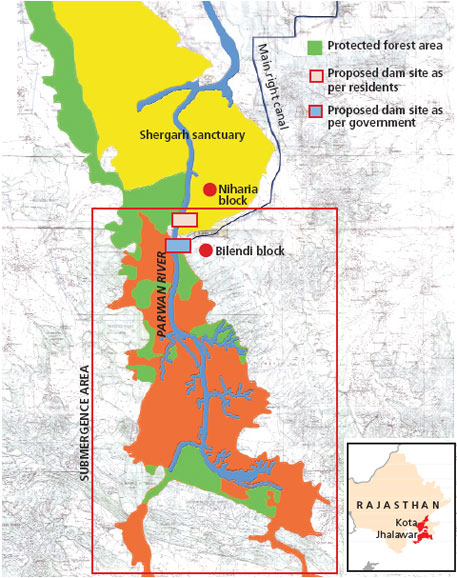


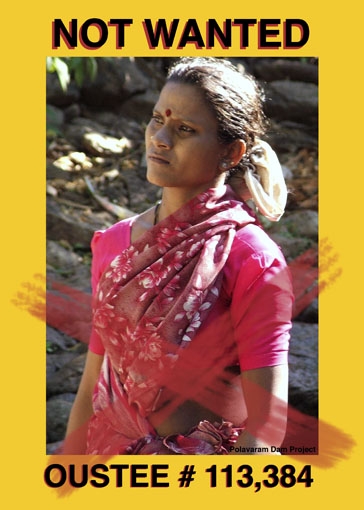


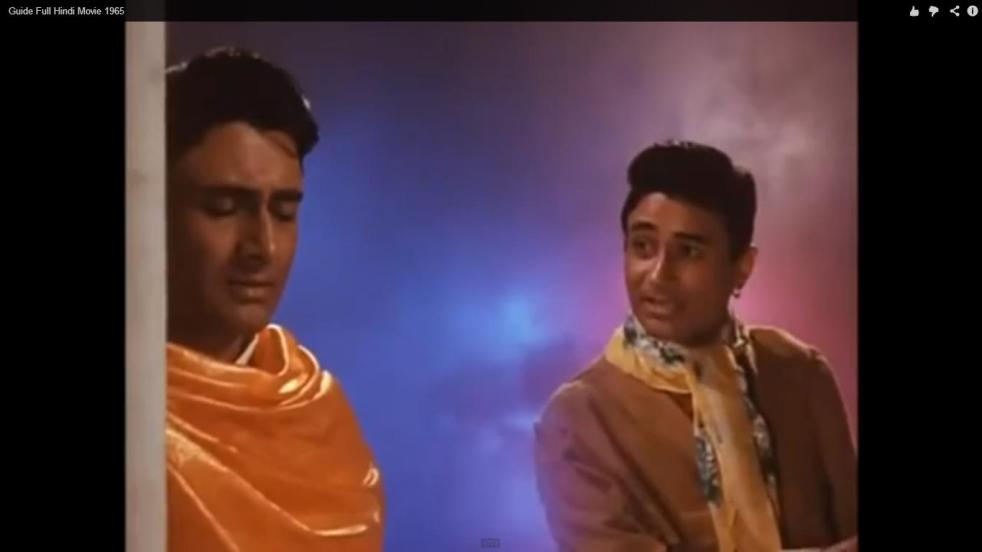



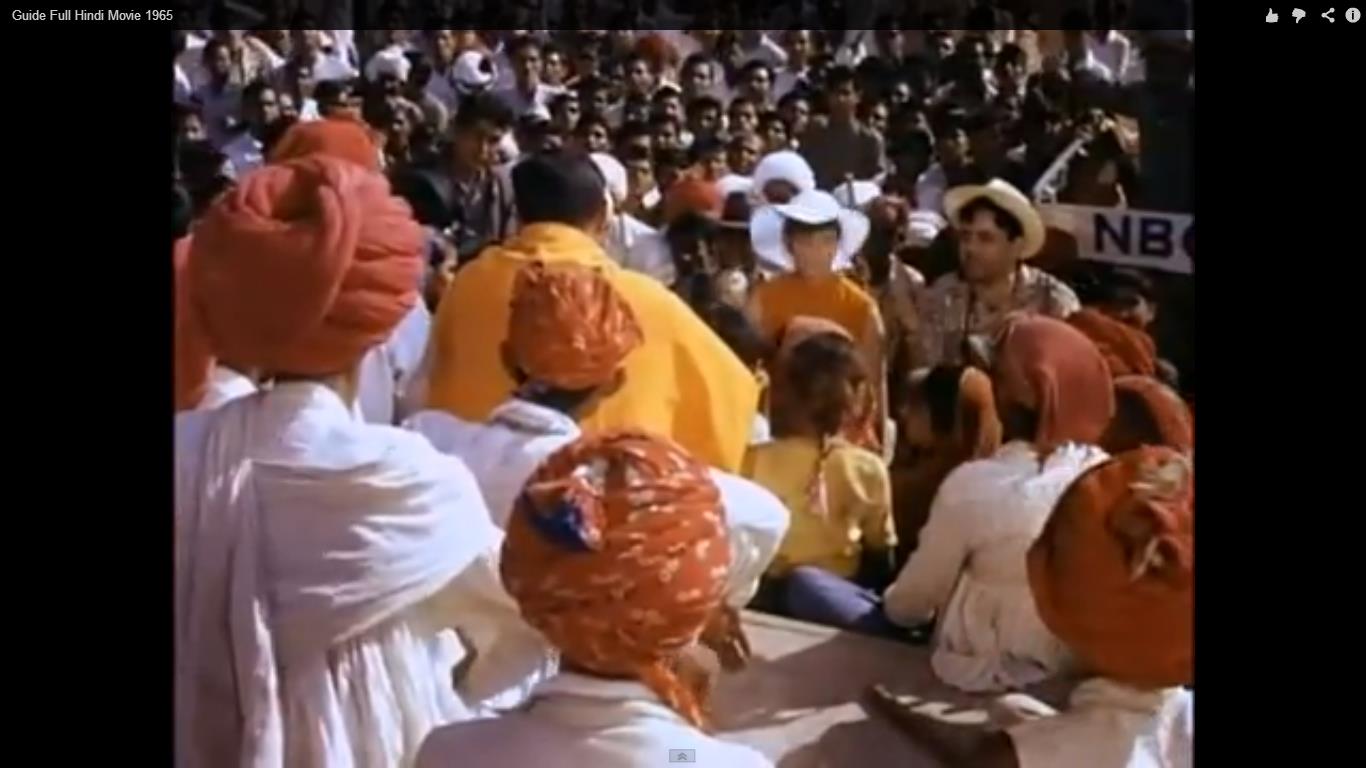
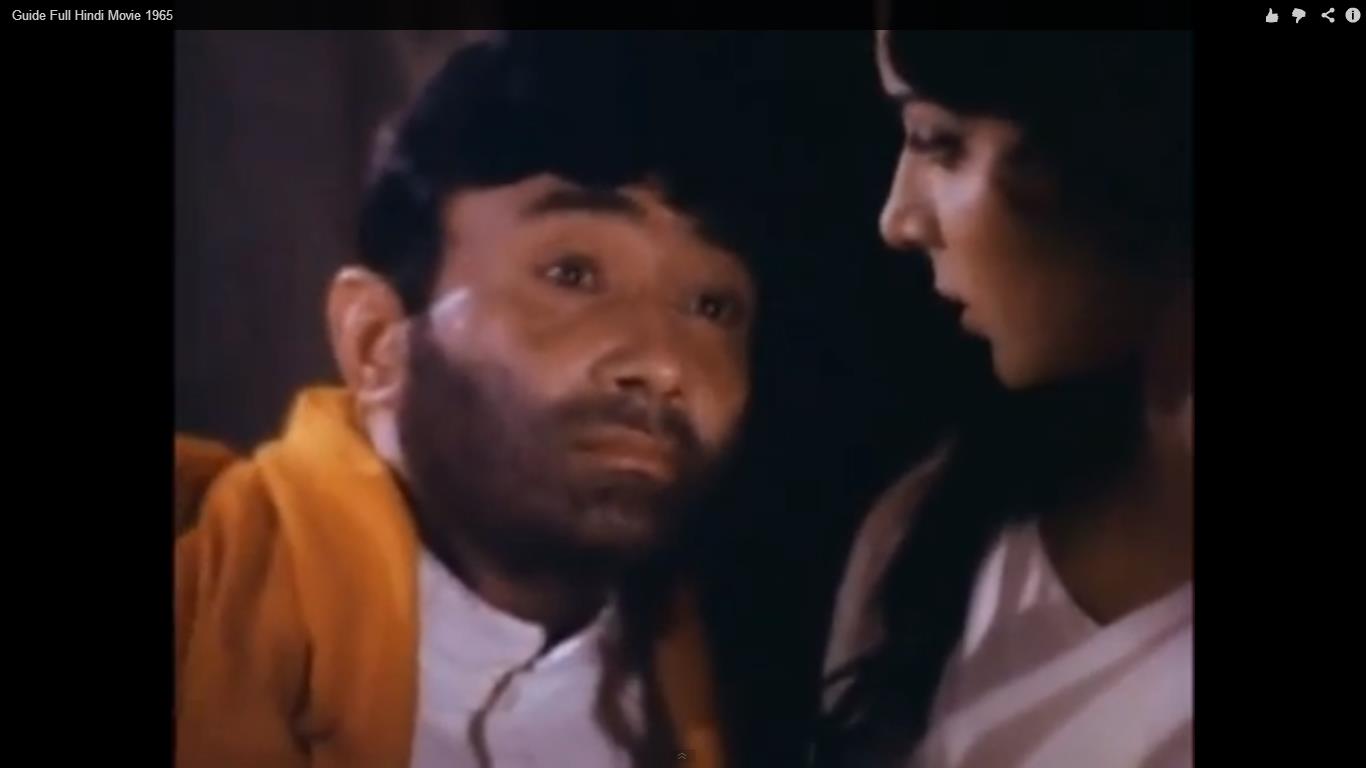
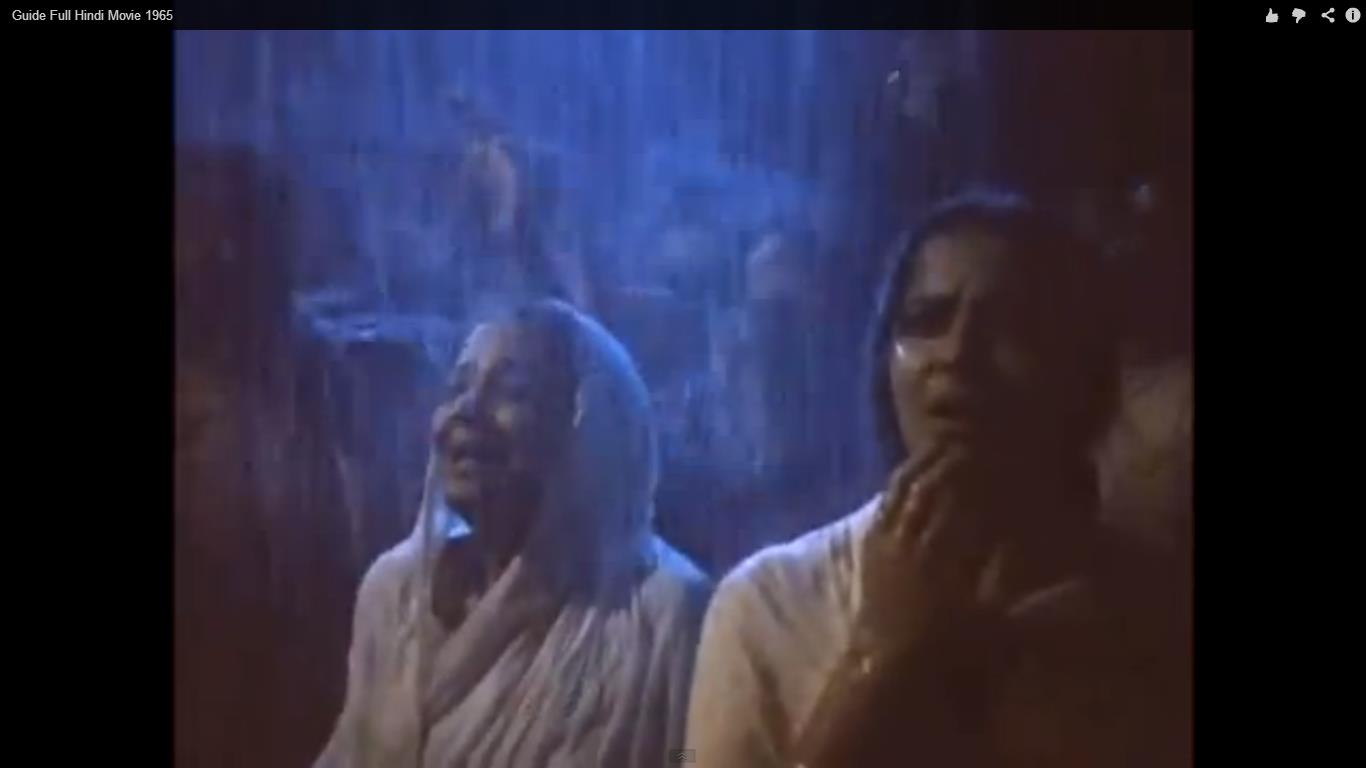
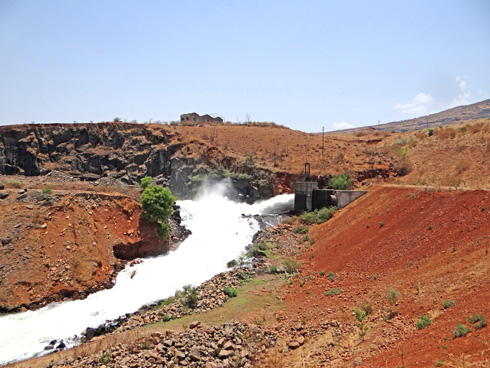


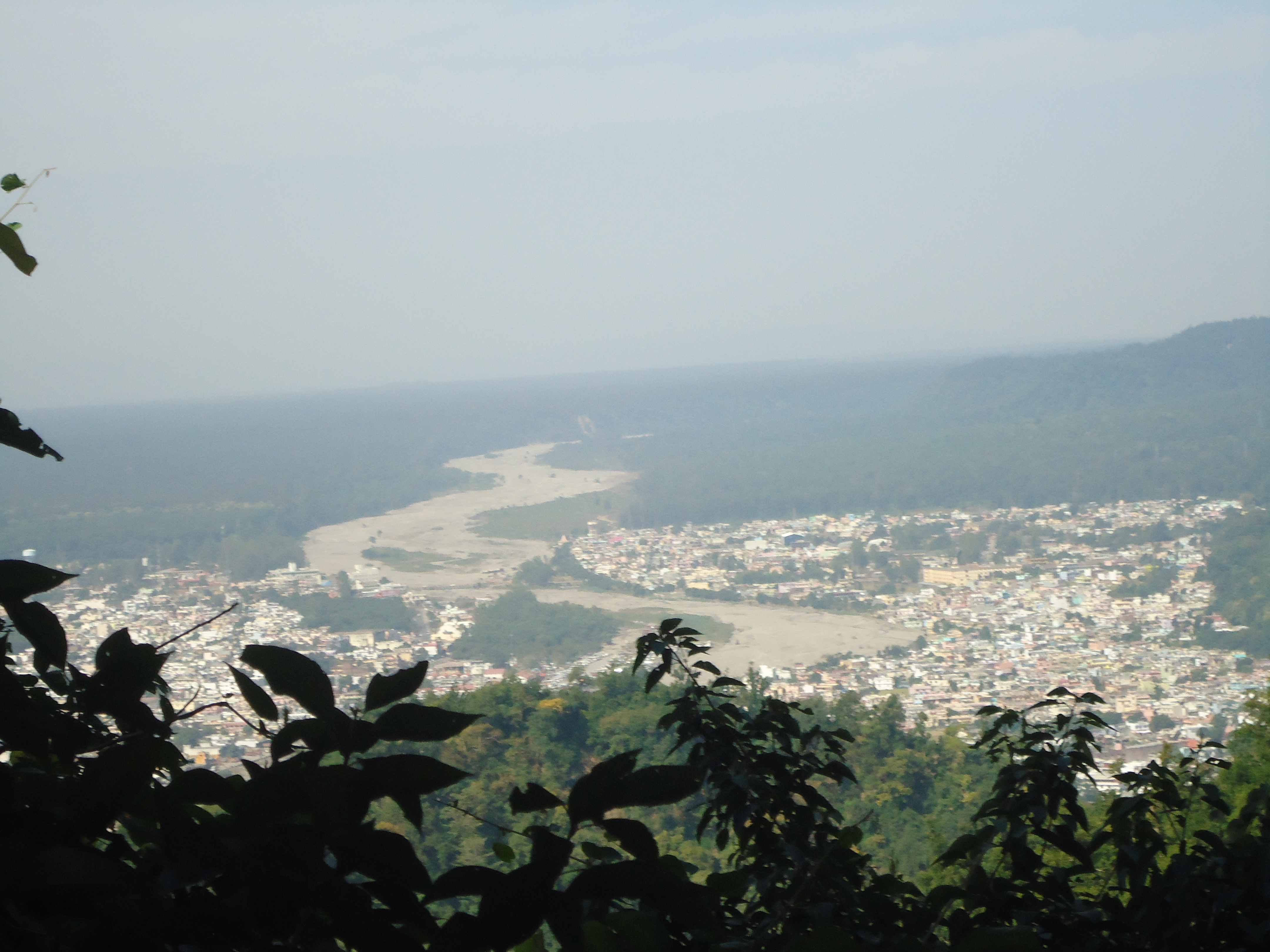


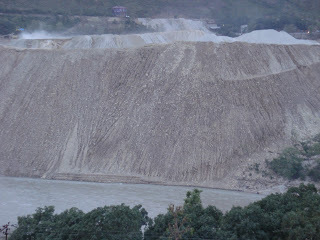



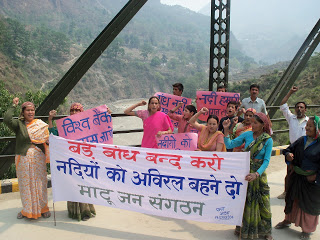




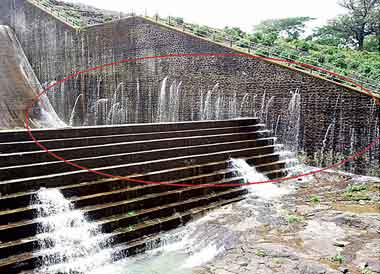
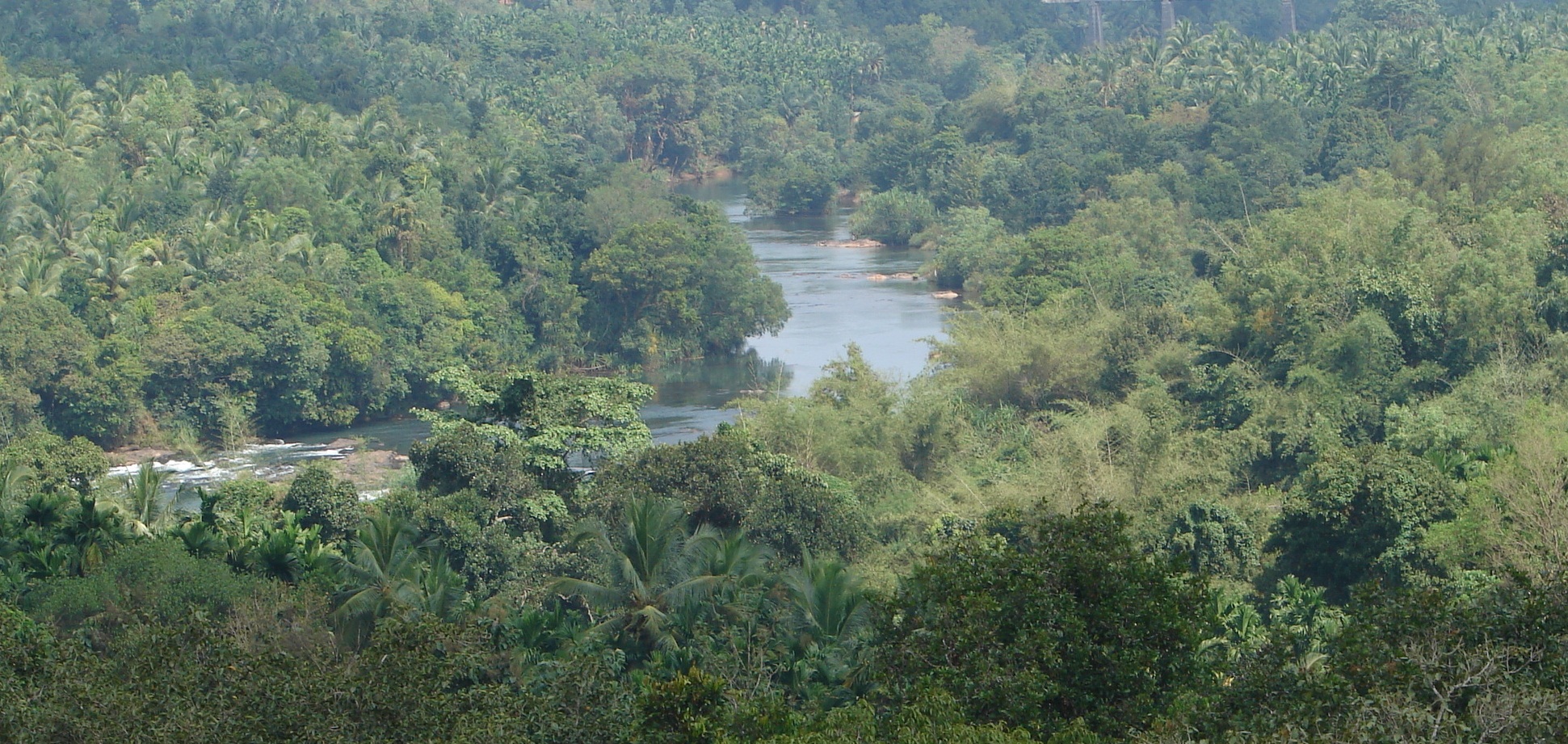
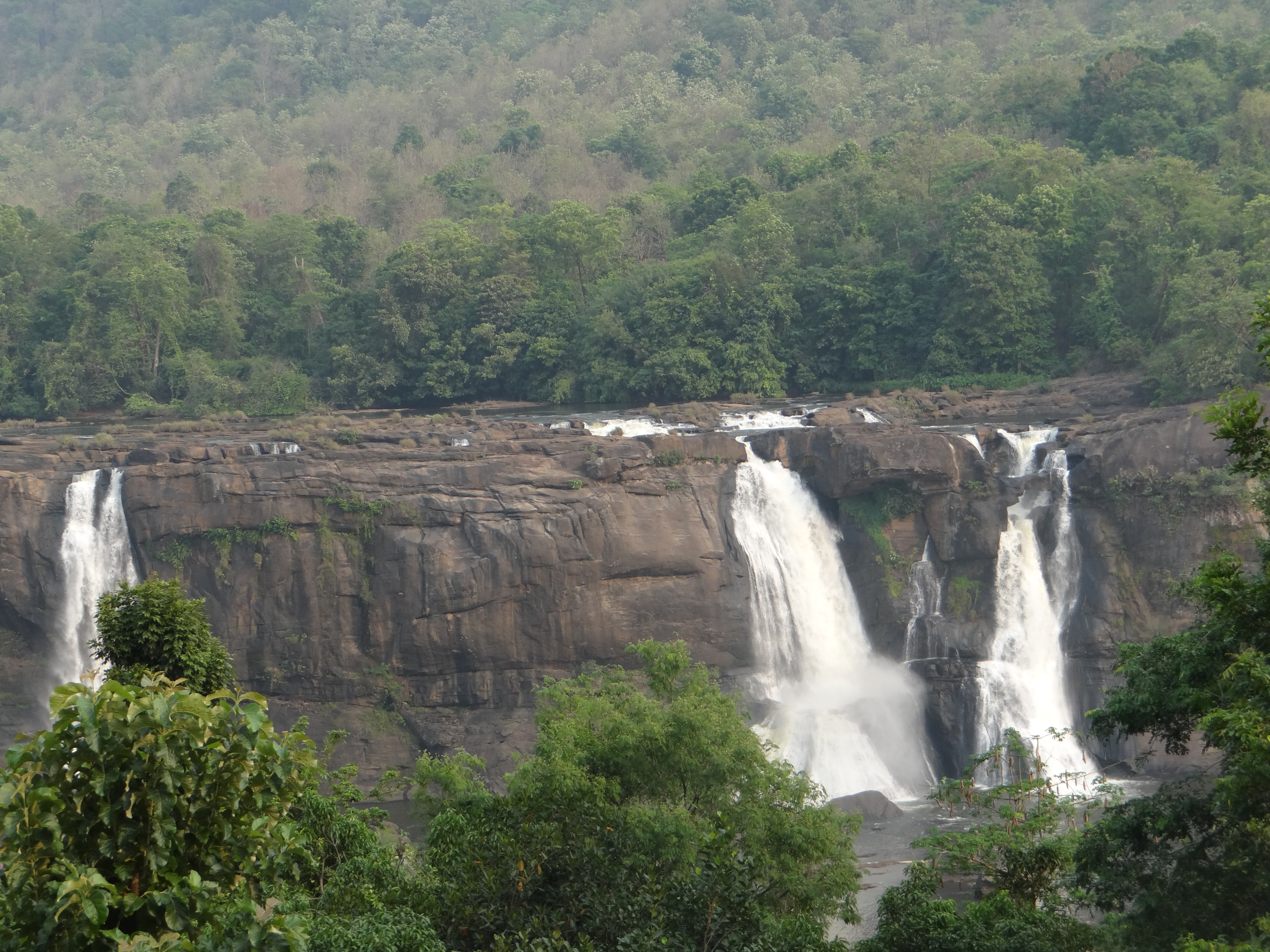
 SANDRP