“We deal with rivers with utmost unconcern and disrespect… India Rivers Week and India Rivers Forum is most welcome, will look forward to participate in it” says Jairam Ramesh at the India Rivers Week 2014 inauguration
Former Union Minister Jairam Ramesh, giving the inaugural address at the first ever India Rivers week emphasized “Ours is a paradoxical society. While we show a lot of respect for rivers socially, we deal with rivers with utmost unconcern and disrespect… India Rivers Week and India Rivers Forum is most welcome, will look forward to participate in it… If we want to save our rivers, the first step is to ensure that no untreated industrial effluent or sewage finds its way into our rivers.” Speaking on development objectives and the growing energy needs of India, he clarified, “Hydro projects may be a painful choice, but we cannot close our doors to it. What we can do is ensure stricter environmental regulations & their enforcement, a cumulative assessment at ‘basin’ and not ‘project’ level and the minimum environmental flow in the river itself.” He was critical of the current dispensation to dismantle all environmental regulations.
Former Union Minister Jairam Ramesh speaking at the India Rivers Week-2014
Ramaswamy R Iyer, former Secretary to the Government of India stressed in his keynote said that rivers are, ”more than just water, and an integral part of our social, historical and cultural fabric.” He spoke on how we obstruct river flow, encroach flood plains, inflict pollution, and hold a economical, cavalier attitude towards it. In other words, “As an American engineer rightly said, we enjoy pushing rivers around,” he added.
Over 125 River experts, planners, researchers, artists, enthusiasts and activists from different parts of the country have congregated at first ever India Rivers Week being held in Delhi during 24-27 November to discuss, deliberate and exchange their experiences and ideas aimed at the conserving, rejuvenation, restoration of rivers in the country. The event is being organized by a consortium of NGOs including WWF India, INTACH, SANDRP, Toxics Link and PEACE Institute Charitable Trust, with additional support from Arghyam (Bengaluru), International Rivers (Mumbai office), and Peoples Science Institute, Dehradun.
Recently the Union Finance Minister Arun Jaitley during his budget presentation pitched for inter-linking of rivers saying the move can yield “rich dividend”. Jairam Ramesh, former Minister, MOEF however stated “We seem to be indulging in the romance of ILR. We need to be more cautious in hurrying up the proposed Inter Linking Rivers projects,” he said, “and understand their ecological and environmental consequences better.” He urged for more debates on water agreement treatise and better co operation within states and also between the neighboring countries.
“Not only are our rivers misunderstood but mistreated and thoroughly abused”, said Manoj Misra, Yamuna Jiye Abhiyaan. “We need to move beyond the understanding a river simply in terms of water.” What makes this event significant is that the practitioners gathered here, through their experience sharing session and discussions, “will generate, adopt and present a Nation River Charter at the end of the meeting.”
Manoj Mishra, PEACE Institute, at the India Rivers Week-2014
This is the first of conclave to enable learning and promote river restoration skills and actions from sharing and exchange of ideas, experiences and practices. “There has been 76% reduction in aquatic biodiversity over the years. That figure is higher than the loss of terrestrial or marine biodiversity, showing the crisis rivers are facing and we need to act fast to address this crisis”, added Ravi Singh CEO, WWF in his welcoming opening remarks.
Lack of true understanding and appreciation – amongst planners, decision makers, various government departments as well as the common man – of rivers as ecological systems that provide a number of ecological and economic services is a major reason for the sorry state of our rivers. No wonder, there exists no national policy or law that could provide our rivers security from death, degradation and unsustainable and unfair exploitation.
Ravi Agarwal, Toxics link, reiterated, “Rivers are diverse eco systems, where water is just a common defining system”, and hoped this ‘unique meeting’ would debate thoroughly on this complex issue.
A recent appraisal has found that there is no river in any of the top 50 cities in the country that is not sick or dying with river Yamuna in Delhi-Mathura-Agra and Ganga in Kanpur-Varanasi-Patna leading the list. Widespread devastations in Uttarakhand (June 2013) and J&K (Sept 2014) and Assam-Meghalaya in North East (September 2014) bring home the fact that disturbed rivers can become dangerous and highly devastating.
Dams, diversions, bumper-to-bumper hydro projects, diverted natural flows, encroached flood plains, embanked river channels, degraded catchments, destruction of local water systems and pollution of various kinds are causing this. Climate change uncertainties are expected to further compromise the integrity of our rivers.
Ramaswamy Iyer observed, “Disputes rarely come in question when a river is free flowing. Only when water distribution come into play, as in the case of large projects, and issues of power crop in, do conflicts increase.” Speaking strongly against the ‘run of the river hydro projects’, and their ‘green’ tag , he wondered “Can we survive the death of our rivers?”
Rivers have been dammed, diverted, channelized, encroached and polluted no end. Rivers, as ecosystems, have been poorly appreciated. With ‘Rivers in crisis’ as the theme, the Conference endeavors to devise an India Charter for Rivers and initiate an India Rivers Forum for Restoration of Rivers.
The compilation ‘My River Journey’, containing river journey accounts of 47 of the participants has been prepared, published and distributed at the IRW-2014, conclave on 24 Nov, 2014.
Reliable data and information that is both correct and validated on ground, is a pre requisite to understand any feature or activity. And for a river, a constantly evolving and truly complex entity, it becomes even more crucial. The wellness quotient of rivers, their present health status, all these and more can only be understood, once we have the rudimentary knowledge of the river and the basins that they form.
A step in this direction has been taken up by the India WRIS (Water Resources Information System) project (A joint venture between Central Water Commission and Indian Space Research Organisation), that aims “to provide a ‘Single Window Solution’ for water resources data & information in a standardized national GIS framework”[i]. This project has generated 20 basin level reports that share important information on the salient features of the basin, their division into sub basins, the river systems that flow through it and the water resource structures, such as irrigation & hydro electric projects in the basin. Another crucial inclusion is the length of major rivers in each basin, which have been GIS calculated (Geographic information system)[ii] and in a few reports the place of origin of the rivers too is mentioned. (Ganga Basin Report). This is an improvement over the earlier documented river lengths that included the canal length along with the river lengths, in earlier CWC documents (e.g. water and related statistics)!
The Basin reports include basin level maps which also show the proposed inter basin transfer links and the major water resource structures & projects. Individual maps at the sub basin level mark the rivers & their watersheds. The report gives details on the topography, climate, the land use / land cover area , and also the information on hydro meteorological stations like groundwater observation cells, flood forecasting sites and even water tourism sites.
These reports can be downloaded from the WRIS site.[iii]
The reports are an attempt to document the water resources data & information for a better and more integrated planning, at the basin level. A table below tabulates some important parameters from the 20 basin reports.
Missing Dams! It can be seen from table on next page that total number of dams in all the 20 basins come to 4572. Assuming that this includes all the completed large dams in India by Dec 2013 (WRIS report is dated March 2014), if we look at the number of large dams in India as in Dec 2013 in the National Register of Large Dams (NRLD), the figure is 4845. This leaves a difference of 273 large dams, which are missing from the WRIS list! This seems like a big descripancy. Unfortunately, since NRLD gives only statewise list and does not provide river basin wise list and since WRIS list provides only river basin wise list and does not provide the names of districts and states, it is not possible to check which are the missing dams, but WRIS need to answer that.
Sub Basins These 20 basins have been further delineated into a number of sub basins. The sub basins details include the geographical extent of the sub basin, the rivers flowing in it, the states that they travel through, number and size range of watersheds and also the details of dams, weirs, barrages, anicuts, lifts & power houses, accompanied by maps at this level. The irrigation and hydro electric projects in the area are detailed and mapped for greater convenience. The sub basin list is given here to get a detailed picure.
Indus Basin Sub-basins:
River Dras in Indus Basin in Jammu and Kashmir (Photo by Sabita Kaushal)
Beas Sub Basin
Chenab Sub Basin
Ghaghar and others Sub Basin
Gilgit Sub Basin
Jhelum Sub Basin
Lower Indus Sub Basin
Ravi Sub Basin
Shyok Sub Basin
Satluj Lower Sub Basin
Satluj Upper Sub Basin
Upper Indus Sub Basin
S. No
River Basin
Major river
No. of sub basins
No. of watersheds
No. of water resource structures
No. of water resource projects
Irrigation
Hydro Electric
Dams
Barrages
Weirs
Anicuts
Lifts
Power Houses
Major
Medium
ERM*
1
Indus (Upto border)
Indus (India)
11
497
39
13
18
0
45
59
30
40
21
55
2a
Ganga
Ganga
19
980
784
66
92
1
45
56
144
334
63
39
b
Brahmaputra
Brahmaputra (India)
2
180
16
17
5
0
4
21
9
13
3
17
c
Barak & others basin
Barak
3
77
4
3
0
0
0
3
0
6
3
3
3
Godavari
Godavari
8
466
921
28
18
1
62
16
70
216
6
14
4
Krishna
Krishna
7
391
660
12
58
6
119
35
76
135
10
30
5
Cauvery
Cauvery
3
132
96
10
16
9
24
16
42
3
15
6
Subernarekha
Subernarekha & Burhabalang
1
45
38
4
12
0
0
3
5
34
0
1
7
Brahmani & Baitarni
Brahmani & Baitarni
2
79
61
5
4
1
0
1
8
35
4
1
8
Mahanadi
Mahanadi
3
227
253
14
13
0
1
6
24
50
16
5
9
Pennar
Pennar
2
90
58
0
1
2
0
1
7
14
0
1
10
Mahi
Mahi
2
63
134
0
4
0
0
3
10
29
3
2
11
Sabarmati
Sabarmati
2
51
50
2
10
0
0
0
9
11
4
–
12
Narmada
Narmada
3
150
277
2
2
0
4
9
21
23
1
6
13
Tapi
Tapi
3
100
356
8
11
0
13
2
13
68
2
1
14
WFR Tapi to Tadri
Many independent rivers flowing
2
96
219
0
3
0
1
18
13
15
1
12
15
WFR Tadri to Kanyakumari
3
92
69
6
6
4
0
29
19
12
7
21
16
EFR Mahanadi_ Pennar
4
132
64
5
12
12
0
0
12
46
10
0
17
EFR Pennar _ Kanyakumari
4
165
61
2
2
11
0
6
13
33
4
5
18
WFR Kutch _ Saurashtra
Luni
6
268
408
1
10
0
0
0
8
100
4
15
19
Area of inland drainage in Rajasthan
Many independent rivers flowing
–
–
1
0
0
0
48
0
11
1
1
0
20
Minor rivers draining into Myanmar(Burma) & Bangladesh
Many independent rivers flowing
4
54
3
5
0
0
3
–
3
4
1
–
Total
94
4335
4572
203
335
* Extension, Renovation and Modernization ** Data has been accumulated from the individual Basin Reports from India WRIS[iv]
Ganga Basin
Yamuna Lower
Yamuna Middle
Yamuna Upper
Chambal Upper
Chambal Lower
Tons
Kosi
Sone
Ramganga
Gomti
Ghaghara
Ghaghara confluence to Gomti confluence
Gandak & others
Damodar
Above Ramganaga Confluence
Banas
Bhagirathi & others ( Ganga Lower)
Upstream of Gomti confluence to Muzaffarnagar
Kali Sindh and others up to Confluence with Parbati
Brahmaputra Basin It is strange to see that the profile divides this huge basin into just two sub basins, when it could have easily divided into many others like: Lohit, Kameng, Siang, Subansiri, Tawang, Pare, Teesta, Manas, Sankosh, among others.
Brahmaputra Lower
Brahmaputra Upper
Barak & Others Basin
Barak and Others
Kynchiang & Other south flowing rivers
Naochchara & Others
Godavri Basin
Wardha
Weinganga
Godavari Lower
Godavari Middle
Godavari Upper
Indravati
Manjra
Pranhita and others
Krishna Basin
Bhima Lower Sub-basin
Bhima Upper Sub-basin
Krishna Lower Sub-basin
Krishna Middle Sub-basin
Krishna Upper Sub-basin
Tungabhadra Lower Sub-basin
Tungabhadra upper Sub-basin
Srisailam Dam on Krishna River (Source: Wikipedia)
Cauvery Basin
Cauvery upper
Cauvery middle
Cauvery lower
Subernarekha Basin No sub-basins.
Brahmani & Baitarani Basin
Brahmani
Baitarani
Mahanadi Basin
Mahanadi Upper Sub- basin
Mahanadi Middle Sub- basin
Mahanadi Lower Sub- basin
Pennar Basin
Pennar Upper Sub-basin
Pennar Lower Sub-basin
Mahi Basin
Mahi Upper Sub-basin
Mahi Lower Sub-basin
Sabarmati Basin
Sabarmati Upper Sub- basin
Sabarmati Lower Sub-basin
Narmada Basin
Narmada Upper Sub-basin
Narmada Middle Sub-basin
Narmada Lower Sub-basin
Tapi Basin
Upper Tapi Sub- Basin
Middle Tapi Sub- Basin
Lower Tapi Sub- Basin
West flowing rivers from Tapi to Tadri Basin
Bhastol & other Sub- basin
Vasisthi & other Sub- basin
West flowing rivers from Tadri to Kanyakumari Basin
Netravati and others Sub- basin
Varrar and others Sub- basin
Periyar and others Sub- basin
East flowing rivers between Mahanadi & Pennar Basin
Vamsadhara & other Sub- basin
Nagvati & other Sub- basin
East Flowing River between Godavari and Krishna Sub- basin
East flowing River between Krishna and Pennar Sub- basin
East flowing rivers between Pennar and Kanyakumari Basin
Palar and other Sub-basin
Ponnaiyar and other Sub-basin
Vaippar and other Sub-basin
Pamba and other Sub-basin
West Flowing Rivers of Kutch and Saurashtra including Luni Basin
Luni Upper Sub-basin
Luni Lower Sub-basin
Saraswati Sub-basin
Drainage of Rann Sub-basin
Bhadar and other West Flowing Rivers
Shetrunji and other East Flowing Rivers Sub-basin
Area of inland drainage in Rajasthan Due to very flat terrain and non-existence of permanent drainage network, this basin has not been further sub divided.
Minor rivers draining into Myanmar and Bangladesh
Imphal and Others sub basin
Karnaphuli and Others sub basin
Mangpui Lui and Others sub basin
Muhury and Others sub basin
Narmada Basin: Some details To understand the compiled information at the basin level, we take a look at the one of the basin level reports, the Narmada Basin Report[v] (dated March 2014) as an illustrative example. An overview of the basin area right at the beginning, gives its geographical location, shape, size, topography, climate & population. This basic relevant information is tabulated in a concise table for easy access, as given below:
Salient Features of Narmada Basin from WRIS Basin Report
River information The major river flowing in the basin, the Narmada River (also called Rewa) that flows through the 3 states of Madhya Pradesh, Maharashtra & Gujarat, its length (1333 km) and the length of its 19 major tributaries out of a total of 41 is given, based on GIS calculations. There is also a clear river network map of the Narmada basin that demarcates the 3 sub basins along with the watersheds, and shows the dams / weirs /barrages and the rivers in the basin.
Narmada Basin Report Cover Page (Source: WRIS)
Narmada Upper Sub-Basin, with 16 watersheds
Narmada Middle Sub-Basin, having 63 watersheds
Narmada Lower Sub-Basin, with 71 watersheds
The surface water bodies details include the size (less than 25 ha to more than 2500 ha) and type (Tanks, lakes, reservoirs, abandoned quarries or ponds) of existing bodies. Nearly 91.8% of these are tanks.
Irrigation Projects The water resource projects in the basin are as follows:
21 Major Irrigation Projects
23 Medium Irrigation Projects
1 ERM Project
6 Hydro-Electric Projects
Interestingly description is only of the major and medium irrigation projects, information on minor projects is completely absent. An attempt to include the details of minor irrigation projects would have made the report more useful. The reports seem to not understand the significance of the smaller projects and their importance for the people and in the conext of the River Basin too.
Water resource structures The number and type of big manmade structures in the basin is given. These are a total of 277 dams, 2 barrages, 2 weirs and 4 lifts, of which again the major structures are marked on a map, and details given as in table below. Dams are classified on the basis of storage and purpose they are used for, and the dam numbers are available at sub basin level.
Narmada Sub Basin details from WRIS Basin Report
The report gives tabulated data for each of the dams, which is supposed to have name of the river, height, length, purpose, year of commissioning, etc. Since GIS is the strength of ISRO, they could have easily given latitude and longitudes of each dam, but they have not. Shockingly, in case of 186 of the dams, name of the river on which it is built is given as ‘Local Nallah’, and in case of 10 they have left the column blank. This means for nearly 71% (196 out of 277) of the dams they do not even know the name of the river they are build on. This is actually an improvement over the performance of CWC. The CWC’s National Register of Large Dams[vi], we just checked, mentions Narmada only 13 times (for 12 dams of Gujarat and 1 dam of Madhya Pradesh).[vii]
It is well known that Narmada Basin is the theatre of India’s longest and most famous anti dam movement, Narmada Bachao Andolan. The movement involves opposition to Sardar Sarovar, Indira Sagar, Omkareshwar, Maheshwar, Jobat dams, among others. Such social aspects should also form part of any river basin report.
Surface water quality There are 19 surface water quality observation sites in the basin, that collect water data and the report spells out , “As compared to the other rivers, the quality of Narmada water is quite good. Even near the point of origin, the quality of river water was in class ‘C’ in the year 2001 while it was in class ‘B’ in earlier years. As was observed for most other rivers, in case of Narmada also, BOD and Total Coliform are critical parameters.” This shows that even in Narmada Basin, water quality is deteriorating. The statement also remains vague in absence of specifics.
Inter basin transfer links Details of the Par-Tapi-Narmada Link, which is a 401 km long gravity canal and its proposal to transfer 1,350 MCM (Million Cubic metre) of water from ‘surplus rivers’ to ‘water deficit’ areas is given, along with a map. How has the conclusion of surplus or deficit been reached? Does the assessment exhaust all the options including rainwater harvesting, watershed development, groundwater recharge, better cropping patterns and methods, demand side management, optimising use of existing infrastructure, etc? Is this is the least cost option? Does the water balance include groundwater? Who all will be affected by this or even how much land area will be affected by this proposal, there is absolutely no talk of this? No answers in the report.
India River Basins Map (Source – WRIS)
There’s more to a river There is no information in basin reports on the regulating or statutory bodies that have a say in the basin in the report. However, some information on the existing organisations and inter-state agreements at the various basin level is given at another WRIS location.[viii]
The Basin reports for 20 basins are clearly an asset for understanding and analysing water resource situation. However, there is no mention of the numerous ecological, social and environmental services these rivers provide us with. The demographic details of the basin are available, but there is no information on the flora and fauna, who also need and thrive on the river waters. A good navigation tool for water resource information and river management projects at basin level, nevertheless, for a broader and more comprehensive outlook these reports should have included the following essential aspects too:
River status: The present water quality & pollution level of the major rivers as well as their tributaries
River governance: The local committees, civil bodies and institutions that play a role in river basin development
River safety measures: Effect of the existing and planned river management projects on the state of the river, people and society.
River ecology: Status of biodiversity, and other ecological aspects of the rivers
By law, rivers in India belong to the government, however, government has no particular agency that governs our rivers. Our constitution or law does not provide any direct protection to rivers. A large number of entities at centre and state level take decisions that affect our rivers but they do not even seem aware of such impacts. That the decisions and working of a large number of agencies affect the rivers is expected considering the landscape level existence of rivers and society’s wide ranging needs for water and other services provided by the rivers. But the complete neglect of the rivers is certainly not expected. More importantly, people seem to have no role in governance of our rivers! There seems to be neither an understanding nor a recognition that lives and livelihoods of so many people depend on rivers. Nor an understanding as to what is a river and what are its role in the ecosystem, in current and future well being of the society. These blindspots about our understanding of rivers get reflected in our governance of rivers.
Environment Minister Prakash Javdekar at NGT Foundation Function on Oct 18, 2014 (Source: FB page of Information and Broadcasting Ministry)
India remains an agrarian country, and our water use practices have prioritised use of water for irrigation. Archaic water laws during the British rule looked at water as a resource to be exploited under the jurisdiction of the government. The 1873 Northern India Canal and Drainage Act, stated ‘use and control for public purposes the water of all rivers and streams flowing in natural channels’ as a right of the Government, without any credible and democratic way of deciding what is public purpose.[1] In the same vein the Madhya Pradesh Irrigation Act of 1931 asserted direct state control over water, which find an echo even today in the Bihar Irrigation Act, of 1997 that stresses that all rights in surface water vest with the Government.[2] In fact post colonial water governance did not see any break from the past and essentially the same paradigm prevalant during colonial times continued after independence.
Water in India, as per our constitution is a state (government) subject, and by the same logic water laws in the country too are mostly state based. Thus the state has the constitutional power to make laws, to implement & regulate water supplies, irrigation and canals, drainage and embankments, water storage & hydropower. However, there is nothing in the constitution or law that shows an understanding of what is a river, what services it provides or if there is anything worth conserving in rivers. There is no legal protection for rivers in India.
Moreover as most of the rivers flow through more than one states, the rivers become cause of major interstate disputes when they are seen as sites of big dams. Smaller projects are rarely the reason for intractable interstate disputes. Unfortunately, in post-indepednence India, politicians love big dams and they are seen as most important, if not the only saleable development projects.
The centre can intervene for any interstate differences by constituting a Water Dispute Tribunal for the mediation of the water dispute, but only if invited to do so by the state government. It is within the Central Government powers to regulate and develop inter-State rivers under entry 56 of the constitution, but these powers are rarely used. Entry 56 reads: “Regulation and development of inter-State rivers and river valleys to the extent to which such regulation and development under the control of the Union is declared by Parliament by law to be expedient in the public interest.”
Instead many different regulatory mechanisms have been harnessed and committees formed under various ministries for water management in inter state river basins.
Let’s take a tour of the various agencies involved in governance of rivers in India.
AT THE CENTRE:
Ministry for Water Resources, River Development and Ganga Rejuvenation
It is the apex body[3] at the union level responsible for the country’s water resources and its functions from the river perspective are:
Rejuvenation of Ganga River and also National Ganga River Basin Authority
To resolve differences relating to inter-state rivers
To oversee implementation of inter-state projects occasionally
To manage, monitor and sanction funds for centrally funded schemes like Accelerated Irrigation Benefits Program, Command Area Development, Rehabilitation of Water Bodies, Bharat Nirman, etc.
Operation of central network for flood forecasting and warning on inter-state rivers (CWC task)
Preparation of flood control master plans for the Ganga and the Brahmaputra
Talks and negotiations on river waters with neighbouring countries
Operation of the Indus Water Treaty with Pakistan, Ganga Water Treaty with Bangladesh, Mahakali, Kosi, Gandak and other treaties with Nepal, Water Cooperation with Bhutan, Exchange of Data with China under MoU, etc.
Sushri Uma Bharati, the current Minister, Ministry of Water Resources, River Development and Ganga Rejuvenation. Photo from : Jagran Post
There are a plethora of offices/bodies under the water resource ministry, who work under their control. These include the following:
Central Water Commission (CWC) Supposed to be a premier Technical Organization, the CWC[4] is responsible for schemes for control, conservation and utilization of all water resources for various purposes, which includes flood control & irrigation, and overall planning& development of river basins. It also monitors the river water quality at 396 stations located in all the major river basins of India.[5] It is also responsible for co-ordination with states for establishing River Basin Organisations [6], like
This gives a misleading picture that for practically every river basin there is a basin organisation. In reality, review of CWC annual reports show that there is hardly any activity of these organisations, they in any case do not work to protect the rivers.
A multidisciplinary scientific organization for the scientific & sustainable development and management of India’s ground water resources. A Central Ground Water Authority has been in 1996 through a Supreme Court order with powers under Environment Protection Act, 1986. On the face of it, CGWB and CGWA may not have any direct role in governance of rivers, the fact is they have a huge role. Firstly, destruction of rivers mean that the groundwater recharge that happens by flowing rivers would stop. CGWB and CGWA should be concerned about this, but have shown no such concern. Secondly, when there is over exploitation of groundwater, it has impact on flow of downstream rivers, particularly in lean season and in low rainfall areas.
Central Water and Power Research Station (CWPRS): A principal central agency that provides R&D, and deals with research, services and support pertaining to projects on water resources, energy & water borne transport including those related to rivers.
Central Soil and Materials Research Station (CMRS): It deals with field explorations, laboratory investigations and research in the field of geotechnical engineering and civil engineering materials, particularly for construction of river valley projects and safety evaluation of existing dams.
Set up in 1981-82, the main task of this organisation is to do studies related to inter-linking of rivers. In that sense, it is an anti-river organisation! An autonomous society, some of NWDA’s[8] river related functions include to:
Carry out detailed surveys about the quantum of water that can be transferred to other basins/States
Prepare feasibility report of the various components of the scheme relating to Peninsular Rivers development and Himalayan Rivers development
Prepare detailed project report of river link proposals
Prepare pre-feasibility/feasibility report of the intra-state links
NWDA has not been confident enough to put any of its work in public domain. Some feasibility reports are out following repeated Supreme Court orders in 2002. A perusal of some of these studies shows that it has no concern for the rivers or the services provided by the rivers. It sees all water flowing to the sea as a waste! Which means rivers are a wasteful resource! In its environment impact assessments or in its cost benefit analysis there is no accounting of the services of rivers that would be destroyed if the proposed project go ahead!
National Institute of Hydrology (NIH)
A “premier” Institute in the area of hydrology and water resources, it aids, promotes & coordinates work in the field of hydrology and water resources development.[9] However, it is not known to stand up or speak up for rivers. Its classification of rivers, as mentioned in an earlier blog[10], leaves a lot to be desired. The non participatory tendencies of NIH was apparent in the way it organised a workshop on Environment Flows in Oct 2013[11]. NIH did not find it necessary to invite even the Union Ministry of Environment and Forests for the workshop! NIH also parterned with CIFRI for a flawed assessment of e-flows for Teesta IV project, among other such studies[12].
Farakka Barrage Authority It is responsible for the operation and maintenance of the Farakka Barrage Project, (FBP), which regulate the flow of water to the Bhagirathi-Hooghly through the feeder canal to maintain navigability of the Kolkata Port.
National Water Academy Earlier known as Central Training Unit, it has been established to impart in house training to water resources personnel from government organisations. Its curriculum includes watershed management, flood forecast &management, environmental management for river valley projects and workshop on River Basin Organisations.
Technical Advisory Committee (TAC) The techno-economic appraisal of irrigation, flood control and multipurpose projects proposed by the State/ Central Governments or other organisations is done by TAC of Ministry for Water Resources, River Development and Ganga Rejuvenation, for Irrigation, Flood Control and Multipurpose Projects and thereafter make appropriate recommendation. Once found acceptable by the TAC, it is recommended for investment clearance by the Planning Commission and inclusion in the Five Year Plan/Annual Plan.[13] In the functioning of TAC, lack of transparency, participatory governance is the norm[14]. TAC has no member from outside the government, nor does it put up its agenda or minutes of the meeings in public domain. At the initiative of SANDRP, following a letter written to the government in April 2011[15], minutes of some of the TAC meetings were for the first time put up in public domain, but even that has stopped since July 2012[16].
Interstate River Basin Boards For several Inter State Basins, Boards have been set up for co-ordination and implementation and to deal with individual basins/ projects/ interstate disputes. Some of them are listed here.
Bansagar Control Board for execution of Bansagar Dam on Sone river and connected works
Betwa River Board for the execution of the Rajghat Dam Project
Upper Yamuna River Board (UYRB), which refers to the reach of Yamuna from its origin at Yamunotri to Okhla Barrage at Delhi and includes all the states in this basin.
The Brahmaputra Board: Its objective is planning & integrated implementation of measures for control of floods and bank erosion in Brahmaputra and for matters connected therewith
Narmada Control Authority (NCA): For proper implementation of the decisions & directions of the Narmada Water Disputes Tribunal. There are number of supporting statutory mechanisms: Environment Sub Group of NCA, Rehabilitation Sub Group of NCA, Review Committee of NCA and Sardar Sarovar Construction Advisory Committee.
The Tungabhadra Board: Regulates water for irrigation, hydro-power generation and other uses from the Tungabhadra reservoir
Ganga Flood Conrol Commission has been set up for specific tasks related to floods in the Ganga basin, including coordination with upstream Nepal.
Public Sector Enterprises under Union Ministry of Water Resources:
Water and Power Consultancy Services (WAPCOS) Limited: Provides consultancy services in Water Resources, Power and Infrastructure Sectors. The shoddy work of WAPCOS in doing environmental impact assessment and cumulative basin level impact assessment has been repeatedly highlighted by SANDRP[17]. WAPCOS is also involved in Water projects that India funds abroad including in Afghanistan, Bhutan, etc. During a recent visit to Bhutan, SANDRP heard similar complaints about shoddy EIAs and over charging by WAPCOS and also about Bhutan government having no option, but to give the work to WAPCOS, since India as a funder was dictating the terms.
National Projects Construction Corporation Limited (NPCC): Carries out infrastructure work and other related activities for development of the nation that includes dam construction
Ministry of Environment, Forest and Climate Change (MoEF & CC)
The nodal agency that plans, promotes, co-ordinates and oversees the implementation of the country’s environmental & forestry policies and programmes, its primary concern is implementation of policies and programmes relating to conserve our natural resources that includes rivers.[18]
The ministry also accords environment and forest clearance to hydropower projects and dams all over India. The Environment Clearnace is given by the ministry for hydropower projects above 50 MW and for irrigation projects with command area above 10 000 ha. For the environment appraisal of these projects, the ministry has set up Expert Appraisal Committee on River Valley and Hydropower Projects. The functioning of the ministry and EAC on this score is most shoddy, inadequate, inconsistent and far from any concern for rivers[19]. In fact if you pick up Environmental Impact Assessment of any project cleared by the EAC and the ministry, you would not find anything about the value of rivers in any of its reports.
The Forest Department (FD) under MoEF & CC governs rivers that flow through the forests. Since a huge about 23% of land of the country or about 76 million ha of land comes under this department a very large segment of India’s rivers come under the FD. However, there is no evidence of FD taking any action to protect the rivers or aquatic biodiversity. In fact we have been reading the FD proposals for diversion of forest land that come before the Forest Advisory Committee over the years and we see absolutely no concern or even recognition of the impact of such diversions on rivers or aquatic biodiversity, the FD does not even seem to acknowledge the existence of river and aquatic biodiversity.
The Wildlife Department (WLD) under MoEF & CC has powers under the Wildlife Act of 1972 to have their say whenever any activity or development project affects the aquatic life in protected areas or even flows into or out of any protected areas. However there is little evidence to show that WLD has used these powers to protect rivers, flows & aquatic life therein even as projects are well into implementation, without even taking consent of the Chief Wildlife Warden, State Board of Wildlife or National Board of Wildlife.
The MoEF & CC has been sitting for years over a proposal to notify River Regulation Zone for protection so that riverbeds and floodplains are protected.
It is well known how important are wetlands as part of the River Basins. However, the MoEF & CC has shown little genuine action to protect wetlands. Ramsar, International Convention for Protection of wetlands, includes rivers in the definition of the wetlands. India, in spite of being signatories, has excluded rivers from the definition of wetlands. The Wetlands (Conservation and Management) Rules 2010 of MoEF & CC are not helpful in protecting our wetlands. India’s wetlands, remain in peril.
Erstwhile Environment Minister Jairam Ramesh at MoEF Photo from The Hindu
National River Conservation Directorate (NRCD) The name is misleading here, as the name suggests it works for conservation of rivers, but its only focus is pollution. So either the name is misleading or it reflects poor understanding of the government when they equate river conservation with pollution control work. It is supposed to be governed by National River Conservaion Authority, chaired by Prime Minister, but that authority has never met during the 10 years of UPA government and now almost six months of NDA government. This shows how much of a priority rivers are for the government.
Under the MoEF & CC, NRCD[20] works for conservation of rivers, lakes and wetlands through 2 central schemes:
National River Conservation Plan (NRCP) : To improve water quality of rivers through implementation of pollution abatement schemes in identified polluted stretches of rivers
National Plan for Conservation of Aquatic Eco-systems (NPCA): To conserve aquatic ecosystems (lakes and wetlands)
Central Pollution Control Board (CPCB)
A statutory organisation, under MoEF & CC, the CPCB sets standards and regulations for prevention and control of pollution. It also monitors water quality of all important water bodies located on 206 rivers of the country. CPCB, along with state pollution control boards and the whole pollution control machinery were set up following the 1974 water pollution control act. 40 years after setting up of this elaborate bureaucracy, we have not heard of a single success story where this machinery has achieved a clean river. However, there are large number of examples of its failure and the machinery being a den of corruption. The Supreme Court of India on Oct 29, 2014 said[21]: “This is an institutional failure and your story is a complete story of failure, frustration and disaster.”
National Ganga River Basin Authority (NGRBA)
Set up in 2009 through a notification under Environment Protection Act (EPA) of 1986, it’s functions include development of a Ganga River Basin Management Plan, regulation of activities aimed at prevention, control and abatement of pollution, to maintain water flow and quality and to take measures relevant to the river ecology in the Ganga basin states. So far there has been absoltely no sign of impact of functioning of this authority on the Ganga. The authority met just three times during first five years of its existence and frustated independent members twice resigned. The NDA government at the centre that took office in May 2014 reconstituted it without either public process or even public information, in fact even the earlier members did not know they have been removed!
Water Quality Assessment Authority
Established under EPA 1986 in 2001, WQAA’s[22] functions include issuing direction and taking measures on the following matters:
Investigate and carry out research on problems of water pollution
Prepare manuals, codes or guides to prevent, control and for abatement of water pollution
Direct agencies to take measures to restore water quality of the river / water bodies
Restrict water abstraction of treated sewage / trade effluent on land, rivers and other water bodies to mitigate crisis of water quality
Maintain minimum discharge for sustenance of aquatic life forms in riverine system
Utilize self-assimilation capacities at the critical river stretches to minimise cost of effluent treatment
Review the status of quality of national water resources (both surface water & ground water) and identify “Hot Spots” for taking necessary actions
It is amazing that more than 13 years after constitution of WQAA, we see no sign of its functioning either on the state of our rivers or in governance of our rivers.
Ministry of Power
MoP is primarily responsible for the development of electrical energy in the country and all matters relating to hydro-electric power (except small/mini/micro hydel projects of and below 25 MW capacity). It also deals with matters relating to these agencies:
Central Electricity Authority
CEA accords techno economic clearance to hydropower projects under Electricity Act 2003. The Section 8(2) of the Act states, “The (Central Electricity) Authority shall, before concurring in any (hydropower) scheme submitted to it under sub-section (1) have particular regard to, whether or not in its opinion,- (a) the proposed river-works will prejudice the prospects for the best ultimate development of the river or its tributaries for power generation, consistent with the requirements of drinking water, irrigation, navigation, flood-control, or other public purposes, and for this purpose the Authority shall satisfy itself, after consultation with the State Government, the Central Government, or such other agencies as it may deem appropriate, that an adequate study has been made of the optimum location of dams and other river-works”. (Emphasis added.)
This provision could have been used for the protection of rivers, since it requires the Central Electricity Authority (CEA) to give concurrence to hydro projects only after satisfying that the proposal is optimum with respect to all other uses of the rivers. Unfortunately, as the South Asia Network on Dams, Rivers and People (SANDRP) found out through applications under the Right to Information Act, while giving concurrence to hydropower schemes under this Act, the CEA consults only two organisations, namely the Geological Society of India (GSI) and the Central Water Commission (CWC). GSI and CWC evaluate the scheme from specific parameters of geology and hydrology, but do not look at basin wide issues as required under the Act. The CEA itself is not capable of ensuring basin wide optimisation that the Act requires, nor does it consult the concerned stakeholders. Thus the Act is not being followed.
The Damodar Valley Corporation
The Bhakra Beas Management Board (except matters relating to irrigation)
National Thermal Power Corporation Limited
National Hydro-electric Power Corporation Limited
North Eastern Electric Power Corporation Limited
Tehri Hydro Development Corporation
Satluj Jal Vidyut Nigam Ltd.
Power Grid Corporation of India Limited
Power Finance Corporation Limited
Centra and state electricity regulatory commissions
All of these authorities, involved in sanctioning, developing, regulating, financing and operating hydropower projects have direct impact on rivers.
Ministry of Agriculture (MoA)
Agriculture remains the biggest user of water in India. MoA is the apex body for formulation and administration of the rules,regulations and laws relating to agriculture in India, it’s portfolio also includes research on matters relating to irrigation, flood control, anti-water-logging, drainage, soil and water conservation, watershed development and anti-erosion.
This department under MoA also looks at Riverine fisheries on which more than 10 million Indians depend directly. The Department or corresponding State Fisheries Departments in respective states have absolutely no interest in welfare of rivers, despite the fact that damming and pollution is directly affecting fish yield. We looked at the way how Maharashtra Fisheries Department functions vis a vis rivers and Riverine Fisheries and we were clearly told that rivers are not a part of their jurisdiction!
Department of Agriculture And Cooperation
It focuses on sustaining the current momentum by stabilizing food grain production to ensure food security. Its water related agenda includes increased availability of irrigation water leading to increase in the irrigated area, farm productivity and crop production.
Soil and Land Use Survey of India (SLUSI), a pivotal organisation under it carries out survey and soil conservation activities for catchment of river valley projects & flood prone rivers for demarcation of watersheds.[23]
Department of Agricultural Research and Education (DARE)
It coordinates and promotes agricultural research and education.
Ministry of Rural Development
Though this nodal Ministry is mainly responsible for most of the development and welfare activities in the rural areas, water supply & sanitation schemes involve the rivers as a water source or affects rivers directly or indirectly. In some areas, projects involve rivers, as in the case of the MGNREGS (Mahatma Gandhi National Rural Employment Guarantee Scheme) in Madhya Pradesh, which was to revive a river in Khargone district, and increase surface flows.[24]
Ministry of Urban Development
The apex body for formulation and administration of the rules and regulations and laws relating to the housing and urban development, of which urban water supply & sanitation is an essential division. Increasingly, Urban areas are dependent for its water sources on rivers from farther and farther areas and they are invariably dumping mostly untreated sewage and even solid waste into the nearby rivers without any impunity[25]. Urban areas are also destroying the water bodies in the cities and encroaching on the floodplains and even riverbeds.
National Environmental Engineering Research Institute (NEERI)
NEERI conducts research and innovations in environmental science and engineering to help find solutions to environmental pollution and natural resource problems. It has 5 zonal laboratories at Chennai, Delhi, Hyderabad, Kolkata and Mumbai.[26] NEERI is also into the Environmental Impact Assessment business and some of the EIAs it has done of hydropoer projects are pretty shoddy[27].
State Level Agencies
As per India’s constitution, water remains a state subject and hence state governmnet role in the fate of rivers is also very crucial. At each state level, the involved agencies related to Rivers include the following :
Environment Department: Responsibility includes environment protection, pollution monitoring, control abatement and awareness. The department is also involved in regulating and sanctioning hydropower projects of 25-50 MW capacity and also smaller irrigation projects through State Environment Impact Assessment Agency and State Environment Appraisal Agency.
State Pollution Control Boards
SPCBs have been set up in all states under the Water Pollution Control Act of 1974. At the State level, this board is responsible for implementation of legislations relating to prevention & control of environmental pollution, and conservation of natural resources. The SPCBs are also required to give consent to establish and consent to operate for all the major projects, including dams and hydropower projects. They also conduct public hearings required under the EIA notification of Sept 2006. As mentioned earlier, we do not see a success story in functioning of any SPCB in either achieving a clean river or protection of rivers.
Water Resources (or Irrigation) Department: Aim is to regulate water resources within the State (e.g. Department of Irrigation, Government of Punjab[28]) as per State Water Policy and to facilitate & ensure judicious, equitable and sustainable management, allocation and utilization of water resources. Some special state level agencies include the Maharashtra Water Resources Regulatory Authority.[29] Besides these, there are Irrigation Development Corporations, to accelerate the completion of irrigation projects in Maharashtra State.[30] Such corporations have been set up in a number of states including Karnataka, Gujarat, among others.
Power Department: Responsible for generation, transmission, distribution and despatching of electric power supply, including hydropower, for example Energy & Power Department of Sikkim and Power & Electricity Department, Mizoram. Some states have also set up state level corporations for hydropower development (e.g. Himachal Pradesh Power Development Corporation).
Judiciary, Media, Religion, Civil Society & Society at large All these agencies also have a big role in deciding the fate of our rivers and need to play that role effectively. Unfortunately, considering the state of our rivers, we can conclude that inspite of some notable exceptions in case of all these, in general, we have not succeedded in protecting our rivers.
As far as role of political parties & leaders are concerned, we do not seem to have even any positive exceptions in terms of achieving better state of our rivers.
Some rare bright lights in this scenario, apart from community efforts at coordination, communication and governance include the WRIS (Water Resources Information System of India), a joint venture between MoWR and ISRO. The site is indeed a useful reference for information about many basins in the country (although the claimed focus is on “Water Resources” and not rivers!). It also includes Watershed Atlas, River Basin Atlas of the country and individual basin profiles which look comprehensive.
In Conclusion: Rivers are more than just a water source We have a complex network of river systems in the country. The myriad government agencies listed here majorly affect rivers, and a close co ordination and involvement between these institutions is essential to implement any river policy or project to ensure continued existence and sustenance of rivers. River management and their judicious use encompasses a whole lot of diverse characteristics and these fall under the jurisdiction of many of the above mentioned agencies, who need to work in a together in a cohesive manner. The river governance need to be democratic and communities should have a key role in informed, participatory decision making. This is certainly possible if there is a will.
Even though humans have built homes and civilisations along river banks since time immemorial, and water has been vital for life and growth, used for drinking, irrigation, transportation and energy sources, our society and governance system seem to have failed to understand the true value of our rivers. Today, these rivers that are our lifeline seem to be more often misused than used.
The fact that a large number of entities are involved in governing the fate of the rivers should not be such a problem as long as each of them is aware that their decisions are affecting the fate of the rivers and that they are involved in governing the rivers. The second major problem is that there are no river specific, legally empowered coordinating agency that will ensure that rivers continue to survive and exist in a healthy state. In effect, while the government has monoploy over rivers, it is not bothered to ensure continued and healthy existence for rivers.
We may have created these techno legal frameworks for our short sighted priorities, but what would be a first step of help for rivers is recognition of rivers, its services, need for their continued and sustained existence and legal protection for the same. A legally empowered and participatory coordination mechanism that is willing to understand and speak from the rivers perspective, for each river could also help. An agency that will understand and appreciate rivers, rather than see it as a simple linear source of water, power or transport system.
Even though the new NDA govt at the centre since May 2014 has claimed that river rejuvenation is its priority, we see that the government so far has only indulged in tokenism and symbolism. On the contrary, in terms of deeds a large of their actions are against the interest of sustained existence of rivers.
Photo from NDTV
Himanshu Thakkar, SANDRP (ht.sandrp@gmail.com), Sabita Kaushal, SANDRP (sabikaushal06@gmail.com), with inputs from Parineeta Dandekar, SANDRP (parineeta.dandekar@gmail.com)
Who has not seen a river? And who has then, not been moved by a fierce emotion? The common man sees its life granting blessed form, the government or CWC engineer sees in it as a potential dam project, the hydropower developers a site for hydro project, a farmer his crop vitality, fisher folk, boatspeople and river bed cultivators a source of livelihood, the industry & urban water utilities view it as their personal waste basket, the real estate developer as a potential land grab site, a sand miner as a source of sand and the distraught villager his lifeline. In earlier days, film makers used to see it as site for filming some memorable songs, but these days even that has become a rarity.[1]
Song “Nadi Naare na jaao” from Film Mujhe Jeene do
Rivers truly are a complex entity that invoke varied emotions and responses!
A river shifts in colour, shape, size, flow pattern of water, silt, nutrients and biota, in fact all its variables seem to change with time and space. The perceptions differ as one moves from mountains to plains to the deltas. The same stream displays a wide variance of characteristics that depend upon the land it flows through and the micro climate along its banks. Rivers many a times seem to mirror the local flavour of the land they flow through. Or is it the local flavour that changes with river flow? Clearly both are interdependent.
Today, as we talk of rivers, their rejuvenation and try to figure out their ecological flow and their health quotient , a good beginning to understand the existing rivers would be their classification modules. What defines a river? Which factors are used for their classification? How do we actually classify our rivers?
As far as the first of these questions is concerned, none of the official agencies have tried to define a river!
Possiby, the first post independence classification of river basins was attempted in 1949 by precuser institute of current Central Water Commission (CWC). Since then various organisations have followed their own methodology and criteria for basin classification and arrived at different numbers.
Basin Map of Rivers by Central Water Commission
NIH (National Institute of Hydrology), Roorkee organises our 7 major rivers, that is the Brahmaputra (apparently this includes the Ganga and the Meghna), Godavri, Krishna & Mahanadi (that flow into the Bay of Bengal), and the Indus, Narmada & Tapi (which drain into the Arabian Sea) , along with their tributaries to make up the entire river system in our country.[2] This is clearly problematic and chaotic, since it leaves out vast areas of the country and the rivers that flow through them.
A quick look at the classification based on these 3 aspects –origin, topography and the basin they form.
Based on Origin or Source
Depending on the origin or where they begin their journey from, there are the Himalayan (perennial) rivers that rise from the Himalayas and the Peninsular rivers that originate from the Indian plateau. The Himalayan rivers include the Ganga, the Indus and the Brahmaputra river systems along with their tributaries, which are fed throughout the year by melting ice and rainfall. They are swift, have great erosion capacity and carry huge amounts of silt & sand. They meander along the flat land, create large fertile flood plains in their wake and their banks are dotted by major towns and cities.
The peninsular rivers, on the other hand are more or less dependent on rain. These are gentler in their flow, follow a relatively straighter path, have comparatively less gradient and include Narmada, Tapi, Godavari, Krishna, Cauveri and Mahanadi rivers, among many others.
Based on topography
The Himalayan Rivers flow throughout the year, are prone to flooding and include Indus and the Ganga-Brahmaputra-Meghna.
The Deccan Rivers include the Narmada and Tapi rivers that flow westwards into the Arabian Sea, and the Brahmani, Mahanadi, Godavari, Krishna, Pennar & Cauvery that fall into the Bay of Bengal.
The Coastal Rivers are comparatively small in size and numerous in number, with nearly 600 flowing on the west coast itself.
Rivers of the Inland Drainage Basin are centered in western Rajasthan, parts of Kutch in Gujarat and mostly disappear before they reach the sea as the rainfall here is scarce. Some of them drain into salt lakes or simply get lost in the vast desert sands.
Island Rivers Rivers of our islands: A&N islands & Lakshadip group of islands
Based on basin formed
On the basis of the basin formed, our rivers are distributed into 7 river systems. The Indus River System originates in Kailash range in Tibet, and includes Zanskar, Shyok, Nubra ,Hunza (in Kashmir) along with Jhelum, Chenab, Ravi, Beas and Sutlej as its principal tributaries. In the Brahmaputra River System, it was earlier assumed that the Mansarovar lake is the source of the Brahmaputra river, however, now it is confirmed that Angsi Glacier is the main source (see: See: http://www.thehindu.com/news/international/china-maps-brahmaputra-indus/article2384885.ece). Most of the course of the river lies outside the country. In India it flows through Arunachal Pradesh and Assam, where it is joined by several tributaries. For more information on this river, see: https://sandrp.wordpress.com/2013/07/17/brahmaputra-the-beautiful-river-or-the-battleground/.
Mighty Brahmaputra in Assam
The Narmada River System comprises of the Narmada River that represents the traditional boundary between North & South India and which empties into the Arabian Sea in Bharuch district of Gujarat. Tapi river of the Tapi River System rises in the eastern Satpura Range of Madhya Pradesh and then empties into the Gulf of Cambay of the Arabian Sea, Gujarat. Its major tributaries are Purna, Girna , Panzara , Waghur , Bori and Aner rivers.
Also called the Vriddh (Old) Ganga or the Dakshin (South) Ganga, Godavari of the Godavari River System, originates at Trambakeshwar, Maharashtra and empties into the Bay of Bengal. Summers find the river dry, while monsoons widen the river course. Its major tributaries include Indravati, Pranahita, Manjira, Bindusara and Sabari rivers.
The Krishna River System includes Krishna river, one of the longest rivers of the country,that originates at Mahabaleswar, Maharashtra, and meets the sea in the Bay of Bengal at Hamasaladeevi, Andhra Pradesh. Tungabhadra River, formed by Tunga and Bhadra rivers, is one of its principal tributary. Others are Koyna, Bhima, Mallaprabha, Ghataprabha, Yerla, Warna, Dindi, Musi and Dudhganga rivers.
The Kaveri River System has the Kaveri (or Cauvery) river whose source is Talakaveri in the Western Ghats and it flows into the Bay of Bengal. It has many tributaries including Shimsha, Hemavati, Arkavathy, Kapila, Honnuhole, Lakshmana Tirtha, Kabini, Lokapavani, Bhavani, Noyyal and Amaravati. The Mahanadi of the Mahanadi River System, a river of eastern India rises in the Satpura Range and flows east into the Bay of Bengal.
Broader definition: Catchment area size
River basins are widely recognized as a practical hydrological unit. And these can also be grouped, based on the size of their catchment areas (CA). This easy to understand river system classification divides them into the following categories as tabulated below:
River basin
CA in sq km
No. of river basins
CA in million sq. Km
% area
% Run off
% population
Major river basin
CA > 20,000
14
2.58
83
85
80
Medium
20,000<CA<2,000
44
0.24
8
7
20
Minor (Coastal areas)
CA< 2,000
Many
0.20
9
8
Desert rivers
Flow is uncertain & most lost in desert
–
0.1
–
Drainage System of Indian Rivers
Major river basins include the perennial Himalayan rivers- Indus, Ganga & Brahmaputra, the 7 river systems of central India, the Sabarmati, the Mahi, Narmada & Tapi on the west coast and the Subarnekha, Brahmani & the Mahanadi on the east coast and the 4 river basins of Godavri, Krishna, Pennar and Cauvery, which takes the total to 14. The medium river basins include 23 east flowing rivers such as Baitarni, Matai & Palar. A few important west flowing rivers are Shetrunji, Bhadra, Vaitarna & Kalinadi. The minor river basins include the numerous, but essentially small streams that flow in the coastal areas. In the East coast, the land width between the sea and the mountains is about 100 km, while in the West coast, it ranges between 10 to 40 km. The desert rivers flow for a distance and then disappear in the desert of Rajasthan or Rann of Kutch, generally without meeting the sea.[3]
A need for details
Under India-WRIS (Water Resources Information System) project too, the river basin has been taken as the basic hydrological unit, but the country has been divided into 6 water resource regions, 25 basins and 101 sub basins, which are an extension of the earlier 20 basins delineated by CWC, as detailed in the ‘River basin Atlas of India’. [4] The details of the individual catchment area of these 20 river basins is tabulated here:
S No
River Basin
CA (Sq. Km)
Major river
River Length, km
1
Indus (Upto border)
321289
Indus(India)
1114
2
Ganga- Brahmaputra-Meghna
a
Ganga
861452
Ganga
2525
b
Brahmaputra
194413
Brahmaputra (India)
916
c
Barak & others
41723
Barak
564
3
Godavari
312812
Godavari
1465
4
Krishna
258948
Krishna
1400
5
Cauvery
81155
Cauvery
800
6
Subernarekha
29169
Subernarekha
395
Burhabalang
164
7
Brahmani & Baitarni
51822
Brahmani
799
Baitarni
355
8
Mahanadi
141589
Mahanadi
851
9
Pennar
55213
Pennar
597
10
Mahi
34842
Mahi
583
11
Sabarmati
21674
Sabarmati
371
12
Narmada
98796
Narmada
1312
13
Tapi
65145
Tapi
724
14
West flowing rivers from Tapi to Tadri
55940
Many independent rivers
15
West flowing rivers from Tadri to Kanyakumari
56177
16
East flowing rivers Between Mahanadi & pennar
86643
17
East flowing rivers Between Pennar & Kanyakumari
100139
18
W flowing rivers of Kutch & Saurashtra includes Luni
321851
Luni
511
19
Area of inland drainage in Rajasthan
60269
Many independent rivers
20
Minor rivers draining into Myanmar & Bangladesh
36202
Many independent rivers
Note: 1. River Length is only for the main stem of the river, does not include tributaries, etc.
Area of inland drainage in Rajasthan is not given in this reference, it has been arrived at by inference.
Indus basin is constibuted by six main rivers: Sutlej, Beas, Ravi, Chenab, Jhelum and Indus itself. Some tributaries of this system form independent catchment in India (e.g. Tawi river in Chenab basin) as these confluence with the main river only in downstream of the border.
Of course these methods only classify rivers based on their physical & geographical attributes, their drainage area, river length, volume of water carried and tributary details. For a detailed study of a river, what is also needed is its ecological assessment. The methods for river classification may be varied and still evolving, but this information is fundamental to better understand and map the rivers that criss cross across the country.
And definitely a first step to try and understand our rivers!
Godavari is the second longest river in India after the river Ganges. It is popularly known as “Dakshin Ganga”. It originates at Bramhagiri hills in Tryambakeshwar of Nashik District in Maharashtra. 13 KM stretch of the river flows through Nashik City. About 1.25 KM of this stretch is of religious significance. Kumbh Mela is a mass Hindu pilgrimage in which millions of pilgrims gather on banks of Godawari in Nashik city to bathe in a sacred river. It is one of the world’s largest religious gatherings which happens every 12 years. Next Kumbh Mela is scheduled in JulySeptember 2015. About 1 crore pilgrims are expected to arrive[i].
The river that has a high cultural and religious significance has been routinely used as a dumping ground for city’s sewage and industrial effluent. There are around 20 locations where sewage and industrial effluent from 2 industrial estates is directly discharged into the river which have rendered the river water unfit for drinking and domestic use[ii].
A petition has been filed in the high court by few activists from the city against Nashik Municipal Corporation (NMC), Municipal Commissioner, Government of India (GoI), Government of Maharashtra (GoM), and Maharashtra Industrial Development Corporation (MIDC) for failure on their part to clean the pollution of the river[iii]. The court has acknowledged that the major factor contributing to the pollution is the human factor and that various religious and other activities are contributing to the pollution of the river for years. Court has appointed the National Environmental Engineering Research Institute (NEERI) for formulating a comprehensive action plan for the purposes of cleaning of the River Godavari and proper maintenance of the river. Considering the forthcoming Kumbh Mela in July-September 2015, the Court has directed NEERI to submit an action plan to tackle with Kumbh Mela. The court has also appointed a committee to examine the action taken by all the concerned Authorities as regards the implementation of the recommendations in the first two reports submitted by NEERI and the directions contained in the court order.
While NEERI has submitted the two reports about cleaning of Godavari and plans for Green Kumbh are being heavily discussed, NMC has undertaken projects which are in stark contradiction with the court order.
Concretization of river bank in the name of ‘Goda Park’
As SANDRP had highlighted in its article on Riverfront Development projects in India (https://sandrp.wordpress.com/2014/09/17/riverfront-development-in-india-cosmetic-make-up-on-deep-wounds/), NMC has taken up ‘Goda Park’ a riverfront project on Godavari flowing through municipal limits[iv]. Earliest version of Goda Park was implemented some 4 to 5 years back and consisted of a 2.5 KM walkway along the river. This project has been a failure on multiple grounds. The stretch of the walkway lined up with paved concrete blocks is severely underutilized as a result of less dense population. The walkway has also become a platform for host of illegal activities. “Citizens are facing safety issues as a result of these activities” says Mrs. Prajakta Baste, principal of College of Architecture Nashik. The walkway falls within the flood line. During monsoon it is completely under water. As a result it has been damaged at several places. Pipelines that discharge untreated sewage in Godavari run from bellow the walkway resulting in stench and filth.
While the earlier version of Goda Park has failed, the project has been revived this year with a fresh blue print. As experts and activists say it has been a dream project of Maharashtra Navnirman Sena (MNS) chief Raj Thackeray and MNS ruled NMC has resolved to materialize it. The 13.5 km long project (on both the banks making it 26KM in total) will be developed from Ahilyadevi bridge to Gangapurgaon, having facility of laser shows, musical fountains, rope-way, multi-purpose meeting hall, garden, place for exercise including yoga, water sports and plantation of herbal plants and a canteen. Due to lack of adequate funds with NMC the project has been handed over to Reliance India Foundation (RIF) for execution[v]. Apart from small coverage in print media, no information about the project is available in the public domain.
Not many people are aware that work for first 500 m stretch of Goda Park on left bank at Anandwalli has already been taken up by RIF and is in progress. This stretch includes Gym (Phase I: 60m x 18m, Phase II: 45m x 18m) and garden. The project is problematic on many fronts.
Constructions proposed within the blue line: Flood lines along Godavari in Nashik city have been re-demarcated after the city faced heavy downpour on 28th August 2008 and houses & buildings constructed within 125 to 200m from the river channel were under water for upto 10 to 15 hours[vi]. These newly defined lines which according to local people have been already tampered with and brought closer to the river channel so as to facilitate the real estate development are completely violated by the project.
The circular dated 21st September, 1989 issued by the Assistant Secretary, Irrigation Department; Government of Maharashtra prohibits any construction within blue line due to possibility of floods any time[vii]. The project readily violates this norm proposing structures for gym phase I & II within the blue line. The project thus is an illegal encroachment on the river bank. The project talks about several such features including multi-purpose meeting hall, restaurants, yoga centre, recreational centres etc.
Goda Park set to destroy the riparian zone: Riparian areas which are naturally vegetated lands along rivers and streams act as natural filters of nonpoint source pollutants, including sediment, nutrients, pathogens, and metals. It is important to preserve the riparian areas because these areas can play a significant role in managing adverse water quality impacts. These areas also act as buffers during floods and play an important role in flood absorption.
Riparian vegetation of full 18 M width of river bank has been cleared for length of 500 M for construction of gym and landscaped garden. Concretization of the cleared patch is in progress. Deputy Engineer from Construction Department of NMC Mr. Rajput said that stretch of 18 to 30M width will be ‘developed’ for entire 13 KM on both the banks. Goda Park is thus set to destroy the riparian area along the entire river. River has been fighting poor water quality and destruction of the riparian vegetation will only worsen the case.
Addressing water quality issues is not a part of the project: The city has around 20 locations where untreated sewage is discharged directly into the river. And shockingly one such discharge point is located barely 200 m from raw water sourcing location. NMC has not taken any action against this and has continued lifting this contaminated water.
At certain locations along the river water quality is in poorest condition. Godavari River has been designated as an A2 class river which means that the river is a source of drinking water. Water quality standards prescribed by CPCB for the A2 class river state that the permissible limit for Biological Oxygen Demand (BOD) is 2mg/l or less. In reality at certain locations along the river BOD is as high as 51mg/l. Similarly Dissolved Oxygen (DO) at certain locations is as low as zero to 3.5mg/l when the water quality standards demand it to be 6 mg/l or more[viii]. The high value of COD is indicator of pollution due to discharge of domestic and industrial effluent in the river water.
Cleaning up the river and restoring its water quality which is the prime need has gone unaddressed in Goda Park. While the project plan talks about several urban features; it does not talk of treatment of sewage. Petitioners of the ongoing PIL regarding the degraded water quality of the river are disappointed with the Goda Park. Activist Rajesh Pandit, one of the petitioners expresses his concern over the project saying “Godavari River is like our mother who is in ill health and is in intensive care unit (ICU). Instead of treating her and getting her out of ICU, NMC is trying to put some make up and beautify her. That is definitely not what she needs right now!” The group of petitioners has also corresponded with NEERI to obtain their views about the project. The reply is awaited.
Goda Park is in violation of the court order: The order issued by the High Court essentially directs the NMC to restore the health of the river back to the water quality standards prescribed for A2 Class River. The project will only cause further damage to the river and is far from compliance with the orders issued by High Court for rejuvenation of Godavari River. The petitioners in fact highlight the fact that implementing any project which causes damage to river is a punishable offence as per Indian Penal Code Section 431.
NMC ignorant of the impacts: Mr. Vanjari of Environment Department of NMC when contacted to discuss the environmental impacts of Goda Park project told SANDRP that he does not have any information about the project. It is shocking that the environment department does not have any information of a project that is set to alter character of 26KM bank of the river. Dy Engineer of Construction Department Mr. Rajput when contacted for discussing the environmental impact of the project was of opinion that the project causes no damage to the river and is very much in line with the court order. When asked if there has been any study to assess the impact of the project on ecology of the river the answer was negative and Dy Engineer was also of opinion that there was no need for such a study. He also said that the stretch which is being developed is under flood water only once or twice a year and thus it is not much of a problem.
This only shows that NMC is completely ignorant about the impact of the project and does not realize the seriousness of the issue.
While recommendations by NEERI are being discussed and debated with no concrete action taken as of now, Goda Park has been expedited both by NMC and RIF. There are several other grounds on which the project is unjust. The fertile and ecologically important land on the river banks has been handed over to a corporate without public consent. Both NMC and RIF have taken the public for granted. The citizens are being misled with promise of riverfront development on lines of Sabarmati. Public at large is unaware of these issues. Profit making by a corporation at the cost of natural resource stands clearly unjustified.
[vi] “Analysis and Mapping of Flood Line in Godavari River Basin within the Nasik Municipal Corporation Area” published in International Journal of Research in Social Sciences Volume 2- Issue 2 (ISSN: 2249-2496)
[vii] Bombay High Court order issues on 07/03/2014 for PIl-176.12
[viii] “Water Quality Assessment of Godavari River at Nashik, India: Impact of Sewage and Industrial Wastewater” Published in Universal Journal of Environmental Research and Technology 2013 Volume 3, Issue 4: 452- 457
Ganga is hotter but Yamuna is hot too, with a number of suitors now trying to chase it, thanks to Prime Minister Modi’s often expressed desire for a rejuvenated Ganga.
But Sinya Ejima, the JICA (Japan International Cooperation Agency) chief in India takes the cake, when he expects to swim and drink the Yamuna waters in Delhi in 2017 (thanks to JICA’s assistance to the Yamuna Action Plan, YAP) [1].
But is there more to this public declaration of bravado by Mr Ejima than that meets the eye? Let us try and decipher..
It was way back in 1993-94 when Government of India launched Yamuna Action Plan with an objective to “bring the water quality of the river back to bathing level” with JICA’s (then called the JBIC) assistance. In popular scientific ‘pollution’ parlance, it meant achieving a BOD level of 3 mg per liter all through the length of the 1376 km river from Yamunotri till Allahabad.
Yamuna Action Plan was implemented like its predecessor Ganga Action Plan (GAP) as primarily a pollution abatement effort in 21 cities in Haryana and UP and the National Capital territory of Delhi and claimed to have created a total sewage treatment capacity of 753 MLD at a total cost of Rs 682 crores (1 Crore = 10 million).
Listless and dying river in Delhi Photo: Yamuna Jiye Abhiyan
YAP II began, again with JICA assistance, in 2003 at a total cost of Rs 624 crore for abatement of pollution of river Yamuna in Delhi, UP (98 towns) and Haryana (6 towns). It claims to have created additional sewage treatment capacity of 189 MLD.
Yamuna Action Plan III, again with JICA assistance with a projected life span of 7 years is currently underway since 2012 and is aimed again at the pollution abatement in the city of Delhi. The cost estimate of YAP III is Rs 1656 crores and its components include rehabilitation of damaged trunk sewers in the Kondli and Rithala catchments; rehabilitation and modernization of STPs at Okhla, Rithala and Kondli in tune with the under preparation sewerage master plan for the city.
Against all the above mentioned efforts, tall claims and money spent (largely national debt), the Central Pollution Control Board, in response to the Supreme Court of India, reported in March 2012:
“River Yamuna is not conforming to the desired levels from Panipat downstream to Agra downstream due to higher concentration of one or the other criteria pollutants.” The report added that “efforts of state governments of Haryana, Uttar Pradesh and the National Capital Territory of Delhi for collection and treatment of waste water are not showing improvement in the water quality of river Yamuna.”
Clearly, all the past efforts at the ‘cleaning’ of river Yamuna mostly with JICA assistance (read loan) have failed.
Wroshipping the polluted Yamuna. Photo from Daily Mail. co.uk
So, what could have prompted this new found source of energy and bravado as shown by Mr Ejima, the JICA chief in India at a presentation the other day at the India-Japan joint working group meet on Urban Development on ‘JICA’s Operations In Urban Sector in India’ in Delhi?
It is no longer a secret that following Prime Minister Modi’s clarion call from the ghats in Varanasi for the rejuvenation of river Ganga (and by implication its other tributaries like Yamuna), there has been a sudden and newly-found interest in rivers of India by countries like Holland, Germany, France and Australia (to name but a few) and a regular stream of experts/visitors (read consultants) there from can be found making the rounds of the corridors of power in New Delhi.
All this could be unnerving and a turf threat to any ‘established’ provider of goods and services in the name of river cleaning in India, say the likes of JICA, and possibly thus the said show of bravado by its chief in India.
However, the so-called river ‘cleaning’ route focused on pollution abatement as the primary means of river ‘rejuvenation’ is in our understanding fundamentally flawed and hence destined to fail. Results of all past similar efforts validate our stand.
If only we could begin practicing the basic principle of a ‘River’ and ‘Sewer’ not meant to mix, and that all sewerage improvement works (main component of JICA assistance) in cities of India be treated and planned as a strategy of ushering in a sound urban management, rather than river rejuvenation?
Sine qua non for any river rejuvenation is the restoration of its flow in its most natural state.
However, if true to his words, Mr Sinya with his tested and failed (unfortunately) primarily pollution abatement efforts can still manage to restore the Yamuna enough to swim and drink its waters in the year 2017, we would love to toast him as a national river restoration icon. AMEN.
A recent appraisal has found that there is no river in any of the top 50 cities in the country which is not sick or dying with river Yamuna in Delhi-Mathura-Agra and Ganga in Kanpur-Varanasi-Patna leading the list.
Widespread devastations in Uttarakhand (June 2013) and J&K (Sept 2014) and Assam-Meghalaya in North East (September 2014) bring home the fact that disturbed rivers can become dangerous and highly devastating.
Dams, diversions, bumper-to-bumper hydro projects, diverted natural flows, encroached flood plains, embanked river channels, degraded catchments, destruction of local water systems and pollution of various kinds are some of the reasons for the above.
The uncertainties associated with the phenomenon of climate change are predicted to further compromise the integrity of our rivers.
Lack of true understanding and appreciation – amongst planners, decision makers, various government departments as well as the common man – of rivers as ecological systems providing a number of ecological and economic services is a major reason for the sorry state of our rivers.
No wonder, there exists no national policy or law that could provide our rivers security from degradation and exploitation.
With an aim to remedy the above situation, a consortium of NGOs including WWF India, INTACH, SANDRP, Toxics Link and PEACE Institute Charitable Trust, are organizing with additional support from Arghyam (Bengaluru), International Rivers (Mumbai office), and Peoples Science Institute, Dehradun, the first ever India Rivers Week, 2014 as a national event in New Delhi from 24-27 of November 2014.
The venue for the Conference is the WWF India secretariat in Delhi. Sri Ramaswamy R. Iyer, former Secretary, Ministry of Water Resources and a leading expert on rivers in the country is chairing the consortium partners.
Over 100 River experts, planners, researchers, artists, enthusiasts and activists from different parts of the country shall congregate in Delhi for 4 days to discuss, deliberate and exchange their experiences and ideas aimed at the restoration of rivers in the country.
With ‘Rivers in Crisis’ as the theme, the Conference shall endeavor amongst other things to devise a National Charter for Rivers, promote a National forum for restoration of rivers and reward an individual and an organization with remarkable track record of work on rivers with the “Bhagirath PrayasSamman”.
Advice and expertise from river experts and activists from different parts of the country has been solicited in form of a National Advisory Committee to make the event productive and successful.
Above:Respecting public opinion and expectations about their city center and their river. This includes people from all economic and social strata Photo: http://www.asla.org
As India attempts to tackle the huge and growing problem of Urban water pollution and Urban rivers, there are repeated attempts to look outwards and try to learn from experience of successful cases from other countries. While replication of such cases is never easy and most of the times not possible, one can learn lessons from such examples. Here is one such case from North African Country of Morocco.
Fez River – A River of Trash as Aziza says Source – TED
Architect and Professor at Toronto University, Aziza Chaouni narrates in her TED talk how the Fez River flowing through the City of Fez in Morocco (Northern Africa) is being cleaned up and uncovered and the role she played: “The Fez River winds through the medina (city) of Fez, Morocco—a mazelike medieval city that’s a World Heritage site. Once considered the “soul” of this celebrated city, the river succumbed to sewage and pollution, and in the 1950s was covered over bit by bit until nothing remained. TED Fellow Aziza Chaouni recounts her 20 year effort to restore this river to its former glory, and to transform her city in the process.”[1]
Fez River Crusader Aziza Chaouni Source – TED talks
Her narration of the city and the river has striking similarities with Indian rivers and cities: “The Fez medina has about 250,000 inhabitants, and all their untreated sewage went straight into the narrow river that runs through it. The river was also heavily contaminated by nearby crafts workshops and tanneries — with chemicals such as chromium 3, which is lethal. People working in the tanneries were getting skin cancer, and some of them were dying. It was terrible. Obviously the river started to stink, so people started building walls to block the view. Then, because it became a health hazard, they covered it with concrete starting in 2002. And because it was covered, people began using that open space as trash yard.”[2]
Her description of how government functions is also applicable here: “Environmental protection is almost seen as a luxury in developing countries… you have high levels of environmental pollution, but you just don’t know about it as there is not much control or accountability”.
Fez River: How it was erased over the years Source – TED talk
The interventions she proposed were relevant for the specific location and situation and the strategies are more generally applicable: “So we proposed three main interventions: a pedestrian plaza, a playground and a botanical garden. We used four main strategies: precisely placed interventions strategically phased to enhance water quality, remediate contaminated sites, create open spaces, and build on existing resources for economic development. These interventions had to benefit the population on several levels — social, environmental, economic, urban — and be resilient, so that it would still function regardless of changes in budget, political climate, and so on. At the wider city scale, we needed to prevent the newly cleaned river water inside the medina from getting polluted upstream, so we recommended measures for improving regional water quality, too. Depending on soil geomorphology, levels of water pollution, adjacent urban fabric and ecological systems, we purposefully located various rehabilitation tactics like canal restorers, constructed wetlands, bank restoration and storm-water retention ponds.”
Fez River: Rejuvenating step by step. Source – TED talksState of Fez River Source – Tedconfblog
This is something which is entirely missing in our ‘Riverfront Develoment Projects” which lately are only about real estate and propose to do nothing for the river itself.
Her observation about difficulties of a municipal project are relevant for us too: “As some of my colleagues have observed, any municipal project around the world is the most complex project you can possibly work on, especially on a large scale. Because there are just so many variables, there are so many changes in the sociopolitical landscape, and so many commercial and economic interests colliding.”
About Chaouni’s background: “Born and raised in Fez, Morocco, Chaouni has long found herself fascinated with the Fez River, which winds through the city’s ancient Medina. Once considered the city’s soul, sending water to both public and private fountains, in the 1950s, the stream started to become a toxic sewer because of overcrowding, over-development and pollution. The city responded by covering the river over with concrete slabs, bit by bit, in the process destroying houses and creating dumping grounds. When Fez received a grant to divert and clean the river’s water, Chaouni proposed the Fez River Project to uncover the river, restore its riverbanks and create pedestrian pathways. Her vision: to reclaim these areas as public spaces and reconnect them to the rest of the city.”
“A project that Chaouni has been working on for two decades, her mission to transform the Fez River began with her thesis in graduate school and has continued throughout her career. Over the course of years, the river is gradually being uncovered—illegal parking lots are being transformed into playgrounds, trees and vegetation are being planted to create public spaces. Overall, the project is revitalizing Fez as a living city.”[3]
Community-centric plans for resuscitating the famed pits of the Fez Photo: holcimfoundation.org
This example of Fez city and River is still work in progress, but what has been achieved there is certainly impressive. It can provide some lessons for us, provided we are ready to listen: It is possible to truly rejuvenate an urban river: and Sabarmati is not even the right example. In her TED talk, Aziza at one stage says that they could achieve some things only when they put on the ‘Activist’ hat, shedding the ego of the Architect.
Indian Government has no role for activists, unfortunately.
SANDRP
Impression of the resuscitated Fez River in the heart of the city Photo: Aziza Chaouni Projects
Above: Hilsa fishers in Bangladesh setting out for their journey Photo: with thanks from Arati Kumar-Rao
In addition to the Gangetic Fisheries Primer, SANDRP will shortly publish a Primer documenting the Impacts of dams on Riverine Fish and Fisher Communities. One of the most profound impacts of dams on fish is blocking migration routes and perhaps no other fish symbolizes this impact as dramatically as the Hilsa: the Silver Queen of the River.
Glimpses of the impacts of dams on Hilsa in South Asia.
Arguably, Hilsa is not just a tasty and healthy fish species that migrates from the sea up the river to spawn. It is a cultural icon that binds Bengalis, whether from West Bengal or Bangladesh, together in their shared love for Ilish Machch. Pohela Baishakh or the new year day’s meal is not complete without Ilish. Though Hilsa is celebrated fervently by the Bengalis, it is prized in all estuaries of South Asia, from Narmada, Mahanadi, Godavari, Cauvery to Indus and Irrawaddy and takes the name of Chaski, Palva, Ilishii, Palla, Pulasa, etc. It is also found at confluence of Tigris and Euprates in Iran, where it is as prized and known as Sbour. The fish flavours several poems, folklore, songs and phraseologies of the entire South Asia. In cultural terms, the significance of Hilsa is comparable only to Salmon and Mahseer.
Ilish fish and rice, a religious offering and cultural fare on Pohela Baishakh Photo: Flickr
Tenualosa ilisha, Hilsa or Indian Shad belongs to the sub family Alosinae of Family Clupeidae. Commercially, it is the most important fisheries in the estuaries, especially in the Ganga-Hooghly region.It occurs in marine, estuarine and riverine environments and is found in Indus of Pakistan, Irrawaddy of Myanmar and Indian rivers like Ganga, Bhagirathi, Hooghly, Rupanarayan, Brahmaputra, Godavari, Narmada, Cauvery, Tapti, coastal rivers like Padma, Jamuna, Meghana, Karnafuly and others in Bangladesh. It is seen to migrate up smaller estuaries like Pennar too.
Hilsa, by habitat, is a marine fish but migrates in estuaries and rivers for spawning, normally inhabiting the lower region of the estuaries and the foreshore areas of the sea. Hilsa ascends the rivers for spawning and the spent fish and their progeny migrate down the river towards lower estuaries and coastal areas, moving in shoals. The peak upstream migration of Hilsa in most of the rivers of the country is generally in the monsoons months of July and August and continues upto October or November. The spring spawners that enter the river for spawning in January-March return to the sea during July-August when these are caught in good numbers. The monsoon spawners that enter the river during September- October return to the sea after spawning and these spent fishes are caught in good numbers during January- March. Similarly, the off springs of spring-spawners make journey for the sea from the river during November- January, whereas the off springs of monsoon spawners return to the sea from the river during July- September. (Bhaumik et al, CIFRI, 2012)
Obstruction to undertaking this spawning migration by dams and barrages has been singled out as the primary reasons for the fall of Hilsa fisheries in India as well as Bangladesh. The trade of this commercially important fish species constitutes upto 1.5% of Bangaldesh’s National Gross Domestic Product and about 2 million fishers are estimated to depend on Hilsa fisheries in Gangetic estuaries. Till August 2014, Bangladesh has stopped Hilsa exports to India to contain astronomic price rises in Bangladesh as the costs of the fish are becoming uncontainable due to its cultural importance on one hand and dwindling supply on the other. India has requested Bangladesh to lift the ban of Hilsa export, but it is yet to relent, due to a number of socio-political reasons. [2]
Fishers setting off for Hilsa from the Bangladesh Sunderbans Photo: With thanks from Arati Kumar-Rao
One of the main reasons for the phenomenal fall of Hilsa in Gangetic delta has been the Farakka Barrage built by India in the 1970’s, just a few kilometers upstream the India –Bangladesh border, to divert water from Ganga into the Hooghly river, to keep the Kolkata Port at the mouth of Hooghly, free of sediments.
Prior to commissioning Farakka Barrage in 1975, there are records of the Hilsa migrating from Bay of Bengal right upto Agra, Kanpur and Delhi covering a distance of about 1400 kms. Maximum abundance was observed at Buxar, near Allahabad, at a distance of about 650 kms from river mouth. Post Farraka, Hilsa is unheard of in Yamuna in Delhi and its yield has dropped to zero in Allahabad, from 91 kg/km in 1960s. Studies as old as those conducted in mid-seventies[3] single out Farakka’s disastrous impacts on Hilsa, illustrating a near 100% decline of Hilsa above the barrage post construction.
Migration route of Hilsa, Pre Farakka Barrage spanning about 1400 kms Source: CIFRI 2012Highly restricted range of Hilsa post Farakka Source: CIFRI
An obligatory Fish lock provided in Farakka Barrage is non-functional and tagging experiments reveal that Hilsa cannot move across the barrage due to obstruction of three-tire sluice gates.[4] For more on how Farakka has failed its objective and continues to impact livelihoods: https://sandrp.wordpress.com/2014/11/25/lessons-from-farakka-as-we-plan-more-barrages-on-ganga/
Fishers who live off the Ganges strongly feel the pressure of dams, personified by Farakka. In north India, ‘Farakka’ –the word doesn’t mean a village on the Bangladesh border anymore, but means destruction by dams. The local Hindi dialects have borrowed new phraseology: “Farakka hua, tabse hilsa toh bas bhabis” (Farakka happened, and then Hilsa exist only in imagined future)”. The same phrase repeats up to the Yamuna River! In a recent status survey of Gangetic fisheries almost 75-80% of fishers singled out ‘Farakka’ as the root cause of all their miseries. They actually referred to multiple barrages built on the respective rivers. But destruction had a common name: Farakka.[5]
Bangladesh has been making several serious attempts to revive Hilsa fisheries and implements a strict fishing ban in certain months to avoid fishing “jatkas” or small Hilsa. It has also declared several Hilsa Sanctuaries to protect the fish and is witnessing small and steady improvements in the population. India has hardly taken any steps to protect this specie. IUCN has led a program called Ecosystems for Life: A Bangladesh-India Initiative and Hilsa fisheries is a part of this project. There is also a Norwegian project on Hilsa Aquaculture [7] ( All prior efforts of Hilsa Aquaculture have failed). However, the primary need to address the giant problem of the Farakka Barrage is being unaddressed. The barrage and reduced freshwater in the downstream is also exacerbating other stressors like sedimentation of the river mouth, high fishing pressure on limited stocks, concentrated pollution, etc.
Hilsa in other Rivers (would taste as sweet!) Hilsa is found not only in Ganges delta but most of the estuaries in India. In all of these places, Hilsa fishery is primarily affected by dams and barrages near the estuaries, blocking spawning migration and reducing freshwater from upstream.
Hilsa in Cauvery: A century of impacts In Tamizh, Hilsa caught at Sea is Kadal Ullam and the one in the River is the Aattu Ullam. Here, the impact of Mettur dam on valuable Hilsa fisheries in the Cauvery has been recorded as early as 1939 in an issue of Current Science, where it is stated: “Unfortunately the effect of the dam (Mettur on Cauvery) on the fisheries below was disastrous. The number of valuable Indian Shad or Hilsa, the most important sea fish ascending the Cauvery for breeding purposes, declined as the high floods which enabled them to ascend the rive no longer occur. The serious decline of fisheries in Cauvery would be evident from the fact that the fishery rental of the river below the dam which used to amount to 80000 Rs. annually has steadily declined since the formation of the dam to about 42,900 rupees.”[8]Puntius species also disappeared in Cauvery post dam, which formed 28% of the landings prior to dam construction.[9]
As per the Report “Fishing the Cauvery: How Mettur Changed it all,” by Ramya Swayamprakash published by SANDRP[10], It was Sir Aruthur Cotton himself, way back in 1867 who alerted the erstwhile government about the damages wrought by weirs on river fisheries. Immediately, Dr. Francis Day was commissioned to investigate the impact on fisheries and subsequently appointed Inspector-General of Fisheries in India. In his report on the fisheries of India and Burma, Day condemned dams as insurmountable barriers to fish passage; he designed a fish passage which was on the Lower Anicut on the Kollidam. The pass was primarily designed for the Hilsa who could not ascend it, as it was too wide. According to the Madras Fisheries department in 1909, the fish pass did not ensure Hilsa migration because of various practical and technical difficulties; in the first place, the expenses for the construction of a fish pass were not commensurate with the expected results and secondly, sufficient water could not be provided for the efficient working of the pass. Interestingly, Hilsa was sought to be cultivated and exported along the lines of the Salmon in north-western United States. So important was the Hilsa that a stuffed specimen made its way into the exhibits sent to the Great Exhibition from the Bombay Presidency, in 1851!
Fishing at the Lower Anicut on Cauvery Photo: Wikimedia Commons
Today, the Hilsa is unknown on the Cauvery. According to fish biologists, the Hilsa ascended the anicuts on the Cauvery up to Mettur to spawn overcoming the low anicuts. But the coming of the Mettur Dam formed an impassable barrier.
Hilsa in Godavari is known as Pulasa when caught i the river and Vilasa when caught n the sea! Here too, the fish is declining and main reasons are said to be declining water levels and the Dowleswaram Barrage [11] (Arthur Cotton Barrage). In Andhra villages too Pulasa has a huge cultural significance.
This author made a presentation to the Standing Committee of the Lok Sabha, the lower house of Indian Parliament in June 2012 about the impacts of dam on riverine fish and discussed Hilsa, when an MP from Coastal Godavari district in Andhra Pradesh said, “I know Pulasa! My constituency depends on riverine fisheries like Pulasa, and not marine fisheries, but we end up talking only about marine fish and not river fish and Pulasa and the impacts of upstream projects on livelihoods of river fishers”
Pulasa/ Hilsa of the Godavari Photo: The Hindu
In Mahanadi, Orissa, Hilsa has been hit by dams and is recording a declining trend[12]. Paradip recorded about 500 tonnes Hilsa, but prices have increased astronomically.[13]
Hilsa in Narmada, Sardar Sarovar and the proposed Bhadbhut Barrage The narrative of damming the Narmada by the Narmada Valley Projects is one of the most significant stories of an on-going struggle against modifying a river and way of life of her people. Although there are many facets to the story ranging from displacement, false benefits and true costs, forest loss, non-existent rehabilitation and an all-pervasive insensitivity of the government towards weaker communities, the impacts of this project on riverine fisheries have been equally profound. Narmada River system experienced a nearly 70% decline in Hilsa catches in just a decade between 1993 to 2004 ( From 15319 t to 4866 t ) and this decline was prominently recorded from 1998-99 onwards.[14] As per CIFRI, the most stressed species after Sardar Sarovar Project (SSP) construction is the Hilsa and Macrobrachium prawn (Jumbo River Prawn). CIFRI made some prediction about impacts of the dam after 35 years, calling it a ‘critical period’ when fisheries will be nearly lost. Shockingly, these conditions are already being witnessed in Narmada Estuary in Bharuch which records nearly 30% Inland Fish production. More than 12,000 people from 21 villages in Bharuch alone depend on Narmada Estuary for fisheries.
Assessment of impact of commissioning of Sardar Sarovar dam and other projects in 2009 by CIFRI revealed that SSP will retain 96% of the sediment, adversely affecting biological productivity of the downstream including Narmada estuary.[17] However, already the Sardar Sarovar and upstream dams in Narmada Basin have already resulted in retention of about 95% sediment, cutting off the delta from nutrient rich silt. Historical sediment discharge of Narmada was 61 million tonnes and the current sediment discharge (average of last ten years of the study) was found to be 3.23 million tonnes.[18]
According to CIFRI, “While the annual inflow is 23.68 MAF (1981-1990), it will be reduced to 15.9 MAF after 10th year of SSP, to 4.34 MAF at the 30th year and will cease at the 45th year. This freshwater decline will severely affect Hilsa fishery and prestigious fishery contributed by M rosenbergii (Jumbo River Prawn)”. As freshwater declines, there will be “Steep hike in salinity regime with tidal ingress. Fishery not tuned to such enhanced salinity will succumb to such pressure. Mangroves will also be affected and this will impact marine fish production as Mangroves are nurseries of many marine fish.”
Gujarat Government has agreed to release 600 cusecs water from Sardar Sarovar and Bhadbhut Barrage as environmental flows. There is no study as to whether this amount is sufficient for estuarine balance, for ecological needs of Hilsa or other species, for spawning migration, etc. Also, there is no guarantee that Gujarat will release this meagre quantity. Ironically, the minimum flows of 600 cusecs agreed to be released by Gujarat through SSP come to 532. 9 Million Cubic Metre (MCM) water annually and CIFRI’s warning of a sharp fisheries decline at 30th year was for 4.34 MAF or 5353.4 MCM! So, 532.9 MCM released now as minimum flows is barely 10% of a dire scenario predicted at 30th year of commissioning SSP[i]!
It is hardly a wonder that Hilsa is falling sharply in Narmada Estuary and fishers are directly blaming the Sardar Sarovar for this decline.[19]
Last Straw for Narmada Hilsa: Bhadbhut Barrage: Gujarat Government is planning to build Bhadbhut Barrage about 17 kms from Bharuch, directly affecting the Narmada estuary and the Hilsa and Prawn fishery. The Barrage is planned for SEZ and also water sports and is a part of an infeasible scheme known as the Kalpasar project which plans to dam almost all rivers as they meet the Gulf of Khambat.
Slogans against Bhadbhut Barrage say: “The Dam will kill the fishers: This government is killing people”
The Bhadbhut Barrage is being fiercely opposed by fishers in Bharuch because of its serious impacts on their livelihoods and Hilsa fisheries. Public Hearing of Bhadbhut Barrage was held in July 2013, wherein the fisher community staged a walk out, stressing that the EIA had under-reported Hilsa fisheries in the region, number of fishers and their dependence on the Estuary for fish. The walkout took place immediately after Pravin Tandel, the fisherfolks’ local leader, spoke saying the project would “adversely affect the fish catch, especially Hilsa, once it is implemented. Currently, Hisla fetches Rs 1,200 per kg, and is our main source of livelihood.”[20]
Fisherfolk protesting against Bhadbhut Barrage Photo: Counterview.org
Hilsa in the Indus: In the Indus too, Hilsa fisheries, known as Palla are the main stay of local fisher communities. Hilsa fish is a highly contested territory due to declining catches.
Before the construction of the Sukkur Barrage, the Palla used to reach to Multan as per records of 1907. The Sukkur Barrage and then later the Kotri Barrage severely restricted Palla’s range, affecting the fish and its fishers. According to M. R. Quereshi, ex-Director of Marine Fisheries Department of Pakistan, the Palla used to ascend the river (Indus) to spawn in the middle of June but its ascent is now delayed by at least one month owing to late freshets. Kotri Barrage near Hyderabad has severely restricted its breeding range. Like the Cauvery, in Kotri too the fish ladders do not work due to faulty designs and Hilsa is unable to ascend them, consequently prevented from going up to the upper reaches of the river. As a result the Hilsa fishery is being depleted and immediate action is imperative to increase its production. “Failing this, the fish will eventually disappear from the river.”
Palla/Hilsa fishers at Kotri, on the banks of Indus circa 1890. Photo from British Library, UK
To conclude, the fate of this silvery fish hangs in a fine balance. Not only does the Hilsa enjoy huge cultural significance, it also supports millions of livelihoods. In the United States, several dams, like the recent Glines Canyon Dam on the Elwha, have been decommissioned for their impacts on migrating fish and dependent communities. Elwha river dams came down in a biggest decommissioning effort because the indigenous Klallam tribe asserted its rights on traditional Salmon fisheries which were blocked by these dams. In Japan too, Arase Dam was decommissioned because of its impact on Ayu fish and fishers.
What has happened in India to the Hilsa fish and fishers is far more serious.
Hilsa has a striking ecological, economic and cultural significance. Till date, ranching or farming of Hilsa has not worked. Till date, fisher communities continue to face conflicts, hardships and risks, go deeper and deeper in the sea to gather a few Hilsa. Till date, dam operations have not changed, nor have the fish passes been designed, built, operated or monitored to help the fish. Till date, none of the fisher communities who suffered colossal losses when a dam affected Hilsa, have been compensated for their loss.
Is it not time to rethink these dams, to help the fish and our fishers?
Hilsa as a sacred offering Photo from Flickr, with thanks to Arup Kanjilal
[1] Dugan, 2008, Quoted in FAO Report No. 7, Sustainable Fisheries and Aquaculture for food security and nutrition, 2014
[2] Chief Minister Mamata Banerjee refused to share the Teesta waters with Bangladesh, the neighbouring country has imposed a ban on export of the silver-scaled fish.
[3] Ghosh, 1976 quoted in Review of the biology and fisheries of Hilsa, Upper Bengal Estuary, FAO, 1985
[4] Bhaumik and Sharma, Present status of Hilsa in the Hooghly Bhagirathi River, CIFRI, 2012
[14] Milton, STATUS OF HILSA (Tenualosa ilisha) MANAGEMENT IN THE BAY OF BENGAL: AN ASSESSMENT OF POPULATION RISK AND DATA GAPS FOR MORE EFFECTIVE REGIONAL MANAGEMENT, Report to FAO Bay of Bengal Large Marine Ecosystem Project , 15 February 2010
[15] CIFRI, River Narmada, Its Environment and Fisheries, 2009
[i] While we do not know the schedule through which Gujarat Government plans to release this water, the fact remains that this figure of 600 cusecs is not supported by any studies.
Some highlights from SANDRP’s latest Publication on Riverine Fisheries of the Ganga
The government is discussing Ganga not only as ‘Ganga Mata’, but also as a ‘navigational corridor’ with plans to build barrages after every 100 kilometers with funding from World Bank. At her origin, hundreds of hydropower dams are changing the ecological character of the Ganga. However, as a rich ecosystem, the Ganga also supports about 10-13 million riverine fisherfolk and about 300 freshwater fish species! Riverine fisheries have been a blind spot in Independent India, despite the fact that they provide nutritional and livelihood security to millions of people.In the post independence water management discourse, river has been equated to water and water to irrigation, water supply, and hydro power. The profound impacts of irrigation, water supply and hydropower dams on sectors like riverine fisheries have been entirely ignored.
Nachiket Kelkar looks at the status of riverine fisheries and fisher communities in the Gangetic Basin of India and highlights the devastating impacts of dams, barrages and water abstractions on this. Nachiket’s study on Gangetic Fisheries is based on long term engagement with fisher communities in the basin as well as robust scientific studies.
SANDRP has published this work in the form of a Primer which will soon be available online. What follows are some glimpses from the Primer. Please write to us if you are interested in receiving a full soft copy of the Primer.
Riverine fisheries of the Gangetic basin support one of the largest fishing populations of the world. However, its fish resources are rapidly declining due to large dams, barrages and hydropower projects, severely altered river flows, fragmentation of hydrological connectivity between rivers and wetlands, alarming levels of pollution, riverfront encroachment, rampant sand mining and unregulated overexploitation of fish resources.
Across its range, the fisheries show indications of economic unviability and ecological collapse, with violent social conflicts as an outcome of the contest over scarce and declining resources as well as politics and access. A major factor behind the serious fisheries-related problems is severe alteration of river flow volume and seasonal dynamics by large dams, barrages and hydropower projects. The state of river fisheries directly indicates the declining biophysical, ecological and social integrity of the river basin. The existing in-river fisheries contribute merely about 10% of the overall inland fish production. Even this production is highly unsustainable today and has all the indicators of serious levels of overfishing. For instance, river fisheries in Bihar now even glean small-sized fish fry for markets in northern West Bengal (Siliguri) and Assam, where eating small fish is a delicacy (F.pers.comm).
To understand the situation in Gangetic Basin clearly, a detailed, large-scale interview survey was conducted by the author in 2012 across 372 fishers in 59 fisher groups spread over 17 rivers in 5 north Indian states. The survey objective was to document perceptions of traditional fishing communities about issues and problems in fishing in the Gangetic basin. Of the respondents, c. 90% singled out “large dams and poor river flows” as the main causes for a near-total decline in fisheries and fish resources over the past 4 decades. About 90% people mentioned low water availability and stoppage of fish migratory routes by large dams as the main cause for fish declines. Almost 45% (from eastern and northern UP, and Bihar) singled out the Farakka barrage as the main problem.
The Canvas of Gangetic River Fisheries
The Ganga River, from her headwaters to the delta, along with hundreds of her tributaries drains an area of approx. 0.9_1 million km2 across northern and eastern India, flowing through 10 states in India and also in Nepal and Bangladesh. These rivers form one of the largest alluvial mega-fan regions of the world, and deliver huge quantities of sediment from the Himalayas to the northern Indian plains and to the Bay of Bengal in the Indian Ocean. The Gangetic floodplains shape not only landforms but also complex human cultures that attempt to stabilize themselves and adapt to the constantly changing riverine forces. Biodiversity, hydrology, geomorphology and social dynamics influence each other through constant interaction and multiple feedback mechanisms.
The major rivers of the Gangetic Basin (Based on ‘hydro1k-rivers-Asia.dbf’).
The dynamic balance of these factors triggers opportunities for spawning, reproduction, population dynamics and viability, migration and movement of freshwater species, including fishes, river dolphins, otters, crocodilians, turtles, invertebrates as well as terrestrial biodiversity.
In floodplain rivers, as floodwaters recede post-monsoon, fishers record the highest catches in October and November, as large post-breeding and migrating adult fishes (e.g. major carps, clupeids, mullet) become catchable. Winters, from December to early February, generally record low catches because many fish show slowed behavior and limited movement. But in spring fisheries of minor carps and catfishes record high production. With water levels reducing, fishes become more concentrated in specific river habitats like deep pools, where they are easy to fish. Summer fish catch biomass is also reasonably good due to the overall low water availability.
In the Gangetic basin, fisheries are practiced in a range of diverse freshwater habitats including natural and man-made, lentic (stagnant water) and lotic (flowing water) ecosystems. Natural freshwater areas include large floodplain rivers, non-perennial rivers, perennial and seasonal streams, cold-water rivers and streams, glacial lakes, estuaries, tidal rivers, floodplain wetlands, oxbow lakes, grassland swamps and marshes. Manmade habitats include dug or built-up wetlands, ponds, man-made reservoirs, dam reservoirs and canals. To the fisher, flow velocity, depth profile, substrate type, vegetation structure, current patterns and habitat stability are key indicators for fishing effort allocation and logistical decisions.
Fish Diversity in the Gangetic Basin
The overall species pool of the Gangetic fish assemblage is estimated at around 300 species (53+ families, 150+ genera; 250 species). The floodplain fisheries are dominated by major and minor carps (Cyprinidae), catfishes (Siluriformes: 6-7 families), Clupeidae, Notopteridae and a mix of many other families. Major carps and the Clupeid fish, Hilsa (Tenualosa ilisha) and some large catfishes form the most valued catches across most parts of the Gangetic floodplains.
Major carps, the most preferred freshwater food fishes, include species like Catla, Rohu, Mrigal, Mahseer etc. exhibit potamodromous (along freshwater upstream-downstream gradients) migration. Though these fishes have suffered serious declines due to overfishing, pollution and dams, they have been mass-produced through artificial rearing in pond aquaculture. Farmed large carps form the major proportion of fish eaten anywhere in India today. In wild fisheries, catfishes come lower in the preference order, but with the decline of carps, medium and small catfishes have become the main fishing targets. Further, as most catfishes are sedentary and do not show long-distance movements, the fisheries have completely switched from carp- to catfish-targeting fisheries. Other deep-bodied, highly sought after fishes include the Chitala and Notopterus, or the featherfishes, and mullet.
Various fish species in Ganga Basin. Refer to the Primer for more information.
The estuarine fishery in the Hooghly and Sunderbans tidal rivers in West Bengal is dominated by shellfish (prawns, mud crabs and shrimp), Clupeidae and Engraulidae, Sciaenidae, catfishes of the Ariidae and a far more diverse set of families compared to truly inland fisheries. Other important components of the commercial fisheries include 5-6 species of shellfishes (mainly prawn and shrimp).
Coldwater fisheries specialize on large-bodied, rapids-loving potamodromous migrant fishes such as Mahseer and Snow Trout. These fishes are of high commercial importance and are in high demand by professional sport fishers and anglers, apart from being highly prized as food locally. Mahseer in particular, have recently led to the opening of new markets of luxury wildlife tourism that is based on angling and recreation in the Western Himalaya.
Dam reservoir fisheries are almost entirely based on managed stocking and breeding of commercial fishes in hatcheries, of major carps Catla, Rohu and Mrigal, catfishes like Pangasiodon, and minor catfishes. The state of river fisheries in the Gangetic basin has been affected over the last few decades by several threats described in the next section.
Dams and Riverine Fisheries in India Fisheries across India have been severely affected by dams, flow regulation and associated human impacts, which have substantially altered ecological requirements of fisheries and biodiversity together. If one clinically investigated the fisheries’ decline, they would find it to coincide with the period of maximum dam building (1970s-80s) in India. Most commercially valuable fish species, especially major carps and Hilsa, have shown population-level collapse and even commercial extinction over large inland waters. Reduction in harvested fish size-class distributions, a classical indicator of overexploitation by fisheries, points to poor fish recruitment and adult survival, which may be further brought down by flow regulation by dams. Dams have acted as the major factor of disruption by blocking migratory routes of upriver or estuarine spawning fishes such as Hilsa and Anguilla eels. Dams have also caused loss of genetic connectivity between fish populations, most notably seen in major carp stocks. Erratic water releases, nutrient and sediment trapping behind dams and barrages, failure of breeding in carp and catfish species due to siltation, erosion, poor water availability, modified thermal regimes required for breeding (increase in temperatures due to low river depth/flow), and exceptional levels of hazardous pollution (again, magnified due to the poor flows reducing dilution capacity of river water), are other fallouts that adversely affect fisheries. The fact that there is just not enough water in the river must form the bottom line of any causal investigation of riverine fisheries. Lack of appropriate policy measures and pollution receive dominant mention as threats to fisheries by government research agencies, but they are mere outcomes of much larger shifted baselines because of dams. Dams, barrages and hydropower projects through flow regulation have increased uncertainty about fishing and driven fishing to desperate levels: fishers often resort to destructive practices, or even worse, exit the fishery altogether. Such exit does not solve the problem of existing fisher folk: water is critical to sustaining not just fisheries but the river and the people dependent on it. Detailed understanding of the lives of fishing communities of the Ganges is therefore critical.
Ganga made completely dry at Haridwar by the Bhimgouda barrage Photo: SANDRP.
Fisher communities in Ganga: Around 10-13 million people in the Gangetic floodplains are estimated to be dependent on fish resources for their livelihoods, directly or indirectly. However, accurate estimates of active traditional and non-traditional fisher populations are still wanting. It is important for any discussion on fishing communities to clearly separate traditional fishing communities from ‘non-traditional fishers’, who may be practically from any other local community and with the possession of other livelihood options, but also opportunistic fishing, due to unrestricted access to imported nets and gear available in markets to anyone. Traditional fishing communities were always the craftsmen of their own nets and gear, and also possess remarkable ecological knowledge about rivers, fish and biodiversity, their breeding biology, ecology, seasonality, and distribution. Of course, with the degradation of fisheries throughout the Gangetic plains, the traditional knowledge and practices of fishing are eroding fast. Hence such knowledge needs to be documented well, especially from old fishers with whom it still persists, to identify historical baselines of river fisheries with a different, past ecological reference (pers.obs.; F.pers.comm).
Traditional fishing communities today form a highly marginalized, politically unorganized and socio-economically impoverished people. Caste discriminations and political history form the chief reasons for their poverty and subjugation over centuries of fishworking. But the present condition of rivers does not seem to offer hope to any improvement in their economic position unless and until there is collective voicing of their concerns, especially against large-scale water engineering projects that threaten their livelihoods.
Author in discussions with fishers
Their livelihoods, one may argue, confined them to the river’s water,albeit the fact that they never owned the waters legally. However, they always have stated cultural claims of temporally confined territory, following their foraging preferences and site usage. But depending on the nature of the river’s hydrological dynamics, there may be variable maintenance of fixed ‘territories’ by fishers adopting a roving mode of fishing, and neither legal nor cultural claims can be reconciled to a level that the conflicting parties can reach mutually. With regards to their economic viability and status, a large proportion of the traditional fishworkers fall Below the Poverty Line (BPL), and are recorded as Economically Backward Castes, and also have been assigned the status of Scheduled Castes. Annual incomes from fishing alone, according to the few estimates available, range from INR 25,000/- to INR 50,000/- (pers.obs., F.pers.comm.).
Large dams, flow regulation and Gangetic basin fisheries : The singular key problem of fisheries today is that it lacks water in the dry-season, because of flow regulation by dams, barrages and hydropower projects. More water flow releases are needed for the protection of riverine fisheries in the Gangetic basin. Widespread river habitat degradation, industrial, agricultural and domestic pollution, altered flows and modification of sediment and nutrient fluxes by dam projects, and resource overexploitation (by fisheries, agriculture or industry) have had major consequences for the unique biodiversity and fisheries of floodplain rivers across Asia. Obstruction and fragmentation of river flow, habitat destruction, accelerated erosion and siltation, long-distance water diversions (involving huge amount of transmission losses and waste) and poor flow releases are the major direct threats of dam-canal systems in the Gangetic plains.
Flow volume problems: Lower-than-minimum flows have been consistently recorded across the Ganga, Yamuna, Chambal, Kosi, Sone, Ken, Betwa, Ghaghra and Gandak rivers. Along with these large rivers, almost all others (Rapti, Baghmati, Mahananda, Teesta, Kamla, Burhi Gandak, Punpun, Gomti and others) have been highly regulated64,69. The reduction of freshwater discharge reaching the Sunderbans because of the Farakka barrage has led to high degree saline ingress throughout the estuary, causing die-offs of considerably large tracts of mangroves and aquatic vegetation, as well as severe losses to the upstream fishery. Downstream, fishing practices suited to brackish and fresh waters now have to adapt to saline intrusion into the estuary’s waters. Globally, fragmentation and flow regulation have caused the most severe impacts through drastic alterations to riverine biota and ecology. Low flows and fragmented connectivity of river channels lead inevitably to fish population declines and breeding failure. Over time, dams have probably led to genetic isolation of fish populations as well as river dolphin / crocodile populations, destruction of fish breeding habitats and spawning triggers and loss of valuable wild fish germplasm. These losses are so large in their ecological value and opportunity costs that they cannot be recovered with artificial fish culture techniques or hatcheries.
Aggravation of pollution effects: The Ganges basin is one of the most polluted large river basins in Asia, especially with regards to domestic sewage and agricultural runoff. Poor flows reduce the dilution and self-purification capacity of river water to reduce concentration of pollutants and local impacts on fishes. . Agricultural fertilizers (organophosphates, organochlorines, nitrates etc.), heavy metal pollution from industrial effluents, thermal power plants, oil refineries, distilleries and tanneries, and nitrogen-rich sewage, waste-water and non-biodegradable substances such as plastics, mercury, radioactive compounds and hospital wastes can cause fish kills or even worse, lead to high levels of toxicity in tissues. Pollution problems are especially acute in highly regulated river reaches, especially around Delhi (Yamuna River), and the Gomti at Lucknow, Yamuna until Panchnada in UP and Ganga River at Kanpur, Allahabad, Varanasi, Patna, Barauni, Bhagalpur and Farakka.
Polluted Ganga at Allahabad Photo: National Geographic
Siltation in dam reservoirs and barrage gates: Excessive siltation in the Ghaghra barrage has led to, as per local fishers, breeding failure in Labeo angra (Ghewri), a preferred spring-fisheries target in the region. The fishers claimed that over the past 5 years they have not captured a single fish with eggs inside it, and also added that catches have plummeted heavily (F.pers.comm). Siltation of gravel/sediment in reservoir or storage zones is a problem of huge magnitude for fisheries, especially through breeding failure. Accumulated silt in reservoirs is estimated to be so high (in tens of meters height) that it cannot even be easily flushed out, and leads to nearly 60-90% reductions in sediment fluxes of rivers in monsoon and non-monsooon seasons. Siltation adds to obstruction of flow release through barrage gates. In the Farakka barrage, sediment load accumulation is leading to breakage of gates every year, adding to maintenance costs.
Habitat destruction and alteration of erosion-deposition dynamics: Soil erosion by erratic and sudden releases before floods can potentially lead to alteration and destruction of fish breeding habitats and stock depression. Changes in depth and flow velocity lead to fish not being able to receive natural physiological cues for movement and spawning that are otherwise provided by variability in discharge. Flow alteration also alters hydrological connectivity and sediment transport with wetlands and confluence channels during flooding. As a result these productive breeding habitats often become unavailable for catfishes and carps. These factors together become a problem for pre-settlement fish juveniles and recruits, which move into the main channels.
Threats to cold-water and foothills fisheries from Hydropower Dams: Overall, despite their projected low impact situation, hydropower projects can have serious large-scale effects on mountain streams as well as rivers downstream. Globally, despite mitigation measures in hydropower constructions, fish migration and development have largely been deemed as failures. In India, hydropower projects, especially run-of-river projects in higher altitudes, often have disastrous effects on natural thermal regimes, cause sediment blockages and perturb natural flow variability at diurnal timescales through releases varying across several orders of magnitude. These changes severely affect not just breeding and migration in higher-altitude cold-water fisheries of snow trout and Mahseer in Himachal, Sikkim and Uttarakhand, but also downstream fisheries of catfish and carps in the foothills and plains due to altered flows. Their cumulative downstream impact can also potentially risk fisheries-based uses of river water without being exposed to the risk of sudden flow releases every day.
Globally, through extreme perturbation of natural flow dynamics, dams have homogenized and altered many crucial river-floodplain processes, and have had disastrous impacts on biodiversity and fisheries. There is an urgent need to ensure ecologically necessary, adequate and natural flow regimes in all rivers of the Gangetic basin. The current water scarcity is so severe that projects such as river interlinking, apart from their ridiculous proposed costs, are simply impossible to conceive of, water itself being the limitation. There is no doubt that further water developments will prove disastrous for a whole section of people and their livelihoods, and must be scrapped. Rivers that need urgent attention in this respect are the Chambal, Yamuna, Ken, Betwa, Alaknanda, Bhagirathi, Mandakini, Sone, Damodar, the Ganges at Farakka and Allahabad, Sharada, Ghaghra and all other rivers especially in Uttar Pradesh, Uttarakhand, Madhya Pradesh and Bihar0. Run-of-river hydropower projects, flow diversions and links, pumped irrigation, embankments, agricultural intensification, groundwater depletion and sand mining are highly destructive threats that will affect not just fisheries but the whole social fabric of river users in the near future.
Despite the demonstrated folly of not allowing rivers to flow from headwaters to estuaries and deltas, engineers, technocrats and politicians talk of “rivers flowing wastefully into the sea”. This statement would imply that the thousands of species and millions of fisher livelihoods that need flowing water in rivers are of no value to the state policy on water resource development. Such statements are ignoring important societal needs and hence are evidently irresponsible.
No post dam-construction compensation schemes exist for fishers, who may lose their entire livelihood because of flow-regulation and loss of hydrological connectivity due to dams. Downstream fisher populations must be ideally compensated for the lost fishing catch and livelihood opportunity, but in general there has been scant attention towards the communities’ livelihoods (F.pers.comm). Downstream water allocations through on-ground consultations with fisher communities are urgently needed (F.pers.comm). In India, water resources development is so strongly irrigation-focused (and now strongly focused on industry and hydropower), that, in comparison, riverine fisheries are not even acknowledged as legitimate and in need of conservation and livelihood protection. These biases mean that only pond aquaculture receives any attention. If river conservation and development groups can actively work with fishing communities in order to develop an informed and aware constituency or interest group, fishers will gain political voice in making negotiations about water availability in river basins.
Fisherfolk of Ganga Photo: Gangapedia
Fisheries incur ‘colossal losses’ every season due to irregularities in dam operations, and always fall severely short of demand. But now, through the boom of artificially managed pond aquaculture and wetland fishing especially in Andhra Pradesh and West Bengal, the nature of supply itself has radically changedThis boom has contributed to India becoming one of the largest producers of inland freshwater fish in the world. But such ranking hides a lot of miserable facts about river degradation. Although net production shows increases, the collapse of river fisheries that still support millions of poor people who don’t get access to aquaculture, get totally ignored under such swamping. This is why farmed fish in fish hatcheries can barely replace riverine fisheries despite the fact that they have cornered the attention of fisheries development.
The failure of river fisheries has led to large-scale outmigration for labour from the Indo-Gangetic plains (F.pers.comm.). This might be a significant contributor to the magnitude of labour-related migrations from the Gangetic plains, which has been a rising exodus. Today, fisher folk from Uttar Pradesh, Bihar and Bengal provide a large proportion (20-40%) of construction and manual labor force across India (F.pers.comm). Others who stay behind have to take to menial jobs such as rickshaw-pullers or servants (F.pers.comm; pers.obs). Some are forced to take to crime to be able to feed themselves and their families. These factors can weaken the social resilience of production systems and create poverty, disparity and community breakdown. It has been argued that ethnic conflicts between local Indian populations and illegally immigrated Bangladeshi refugees are linked to poor water releases from the Farakka barrage in West Bengal, to downstream floodplain reaches in Bangladesh.
Mitigation measures like Fish ladders and hatcheries
There is little existing research on the construction design, functioning and efficiency of fish ladders in tropical and subtropical large floodplain rivers. Across the tropics, monitoring studies on fish ladders do not show positive results. A handful of barrages in India have constructed fish ladders, but owing to numerous problems they have been largely a failure. These problems are all related to the extremely low discharge rates from the dams – as there is simply not enough water volume allocated for migrating fishes, which therefore cannot access the ladders and fish lifts. Other problems are linked to siltation in reservoirs and turbulence of flows near the fish passages. For instance, the Farakka fish lifts do not seem to have been of any help due to the extremely low outflow of the Ganga River from it, and the commercial extinction of the Hilsa fisheries both upstream and downstream is clear with an estimated 99.9% decline. Fish passes constructed at barrages on the Yamuna River (Hathnikund barrage) and the Ganga barrage at Haridwar have been monitored by CIFRI and the results suggest that they have had very low success for migration of cold-water species like the Golden Mahseer Tor putitora. Similar structures on the Beas River and Mahanadi River (Salandi dam, Orissa) have found to be ineffective in buffering the adverse impacts on fisheries production in these rivers. India has dominantly followed reservoir hatcheries development, and therefore consideration for effective fish ladders has always been low priority. However, as we have seen, hatcheries themselves bring about several problems for native fish populations – and are not an ecologically viable solution, despite being economically profitable to certain interests. Given the poor success of existing fish passages, it is important to consider modern designs in existing and proposed dams that are suited to the ecology of our own fishes. A whole body of interdisciplinary research – spanning engineering and ecology, is needed to address the significant gaps in our understanding of making fish passages work. We need to monitor existing examples well to assess reasons for their failure. Again, just the act of allowing higher dry-season flows and timely adequate releases in the river could be a far more effective strategy for fisheries improvement than other intensive technology-driven practices to enhance fisheries production (F.pers.comm)
River restoration and alternative livelihoods: Given the current state of riverine fisheries, there is an urgent need to consider possibilities for large-scale ecological restoration of rivers by modifying dam operations and improving ecological flows. Alongside restoration, it is crucial to consider alternative livelihoods to fishers, which regard their traditional knowledge and provide them with clearly defined user rights and responsibilities over management of wild-caught or cultured fish resources. Ecological restoration of all major and minor rivers in India needs to be undertaken urgently, to ensure ecologically adequate, naturally timed flow releases, consistent dry-season flow regimes, hydro-geomorphological habitat maintenance, flood maintenance and reduction in pollution. Dam re-operations to ensure adequate flows and variability in river discharge remain a neglected aspect of river management in most regions today. Flow restoration can lead to improved health, numbers and availability of native commercial carps and preponderance of larger fish sizes through improved juvenile recruitment, along with other advantages to surface hydrology and local groundwater availability. Large-scale scientific research and monitoring programs must be instituted to study the response of inland wild-capture fisheries and take further steps to mitigate local threats. Restoration also needs to involve stringent restrictions on release of untreated domestic and industrial effluent, especially in urban belts such as Kanpur, the National Capital Region of Delhi, Allahabad-Varanasi, Mathura-Agra, Lucknow in Uttar Pradesh; Patna, Barauni in Bihar and the Durgapur and Kolkata regions in West Bengal. Strict restrictions are needed on sand-mining, riverfront encroachment and embankment construction, especially in the Chambal, Ghaghra, Gandak, Baghmati, Rapti and Kosi Rivers. In this regard, more judicial interventions, such as seen recently in the case of sand-mining closures from river beds based on a review by the National Green Tribunal, are critical in reducing wanton and unregulated destruction of riverfronts, when implemented effectively. In terms of reducing the most direct impacts, there is a need to regulate fishing pressure and completely curb destructive fishing practices like dynamiting, use of mosquito-nets, beach seines, and gillnets below allowable mesh-sizes, poisoning, use of long-lines etc. Traditional fishers must be involved directly in monitoring and banning the use of destructive practices by the government monitoring agencies.
Finally, the quest for sustaining fisheries in the Ganga River basin in the long-term will require rethinking of current dominant paradigms to move towards ecological restoration of rivers, their biodiversity, as well as socially just, rights-based and equitable socio-political restoration of traditional fisher communities and fisheries management systems.
-Nachiket Kelkar
Ashoka Trust for Research in Ecology and the Environment, Srirampura Royal Enclave, Jakkur, Bangalore 560064, India. (The views expressed are of the author and do not belong to the institution where the author currently works)
Twelve-point recommendation from traditional fisher communities for sustaining riverine fisheries and livelihoods in the Gangetic basin.
Rank
Need
Recommendations
1
Water
Provide enough water, adequate natural flows in all rivers. Allow fish movements upriver, currently blocked by large dams and barrages. STOP new dams and mindless, high-cost, destructive and unsustainable engineering projects such as river interlinking.
2
Ban on destructive fishing practices
Curb destructive practices of fishing, especially mosquito-netting, poisoning, dynamite-fishing, trawling and beach-seine netting everywhere.
3
Poverty alleviation and social security
Fishers are in need of government dole or loans, technical know-how, permits and I-cards, housing, education and displacement packages. It is alleged that these benefits are hardly reaching them, although the allocations of funds reach farmers easily. Fishers need government security from criminals / mafia / anti-social elements / pirates that harass them and grab fish catch.
5
Define fisher rights and responsibilities
Clearly define fishing use and access rights across all riverscapes, provide clear guidelines on multi-objective management of fisheries amidst other economic activities
6
Reduce pollution and mass fish-kills
Urgent need to reduce the presently excessive river pollution, especially industrial but also domestic wastes.
7
Alternative livelihoods
River fisheries are currently in a state of ecosystem-level decline or collapse. Trash fishes have become the most common catch, replacing many commercially viable carps and catfishes. People require alternative livelihoods in situ, to check problems related to migration and exodus to work as construction laborers or rickshaw-pullers. Community-based, cooperative pond carp-culture fisheries seem highly promising. Other alternative livelihoods include working with river management authorities, conservation agencies, ecotourism, agriculture etc.
8
Fishery co-operatives
Focus on community-based management of river fisheries and help it develop in an ecologically friendly and sustainable manner. Replace the systems of private contracts and free-for-all fishing by power-equitable, social dignified resource-sharing arrangements
9
Ensure compliance of fishers towards biodiversity conservation and monitoring
Needs to be ensured through continued monitoring of fishing activity and behavior, including by-catch or hunting of species. This will help safeguard endangered wild species such as gharial, turtles, river dolphins, birds etc. This can also help the spread of exotic food fishes that are rapidly invading our rivers (the worst examples are Tilapia species, Chinese and Common Carps, and more recently, Red-bellied Piranha.
10
Use of Food Security Act, Rural Labor Programs
Can facilitate daily incomes by which fisheries losses could be offset; while also providing a solid community-level incentive to regulate and monitor fishing.
11
Restoration of native riverine fish communities
Very important given the huge decline in native carp species of high commercial value. Fisheries need to protected not only by revival of stocks, facilitating better fish recruitment, but also by protecting fish breeding habitats from
12
Adaptive management of water tenure in fishing areas
Owing to natural uncertainty linked to flow regimes and channel course changes, new flexible systems of tenure in fisheries are required. Such systems would fit in well with providing a clear definition to fishing rights in any riverine stretch.

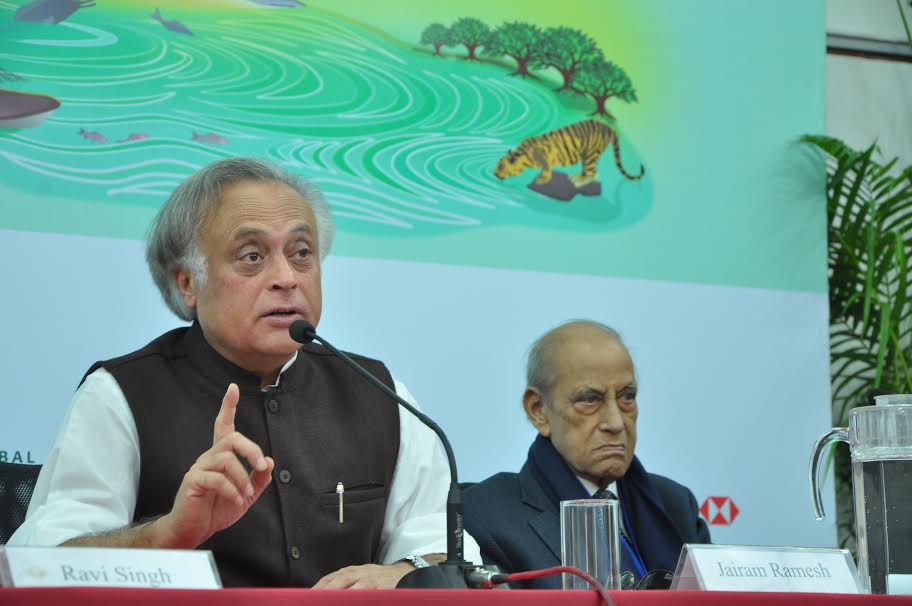 Former Union Minister Jairam Ramesh speaking at the India Rivers Week-2014
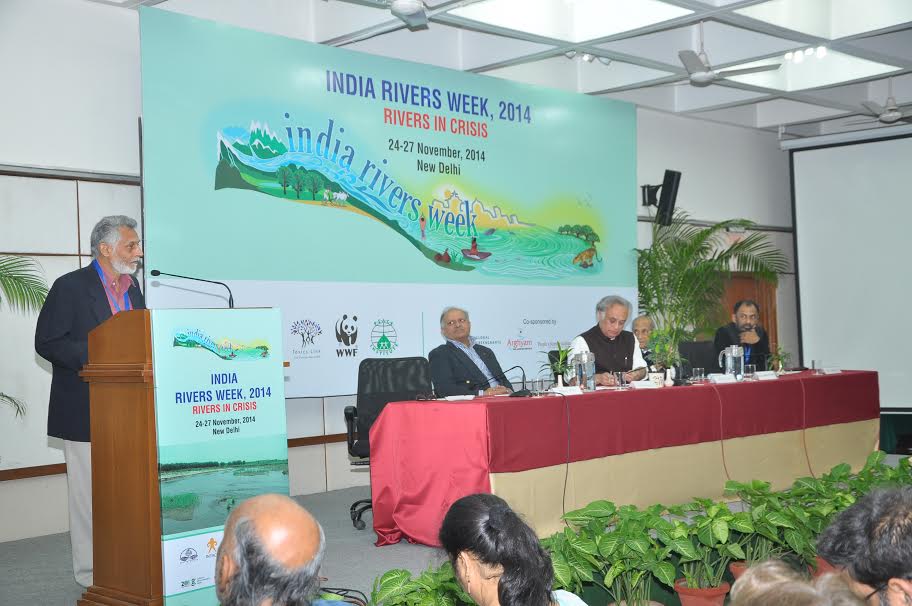 Manoj Mishra, PEACE Institute, at the India Rivers Week-2014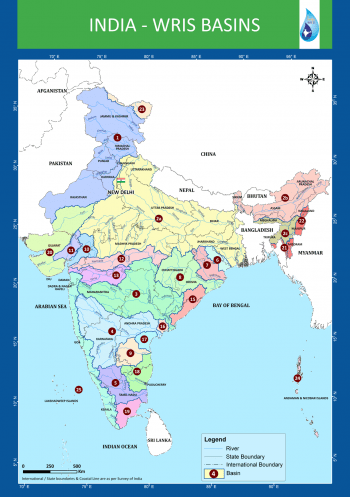
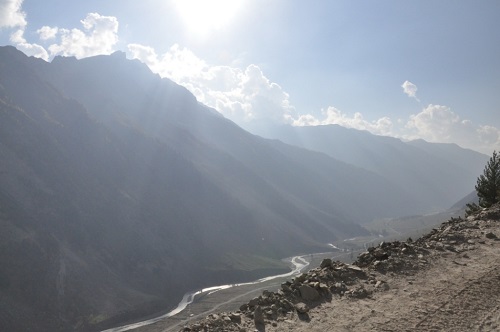
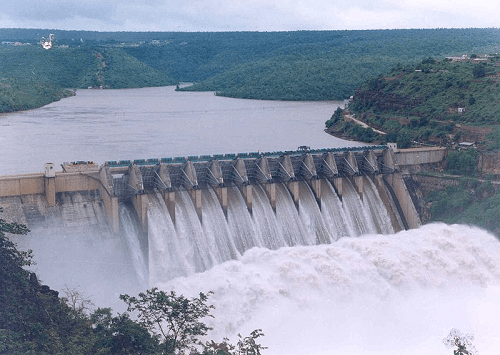
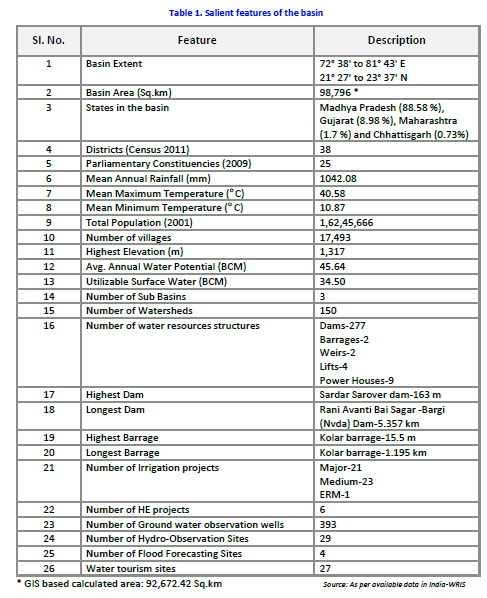
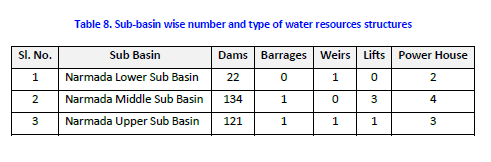
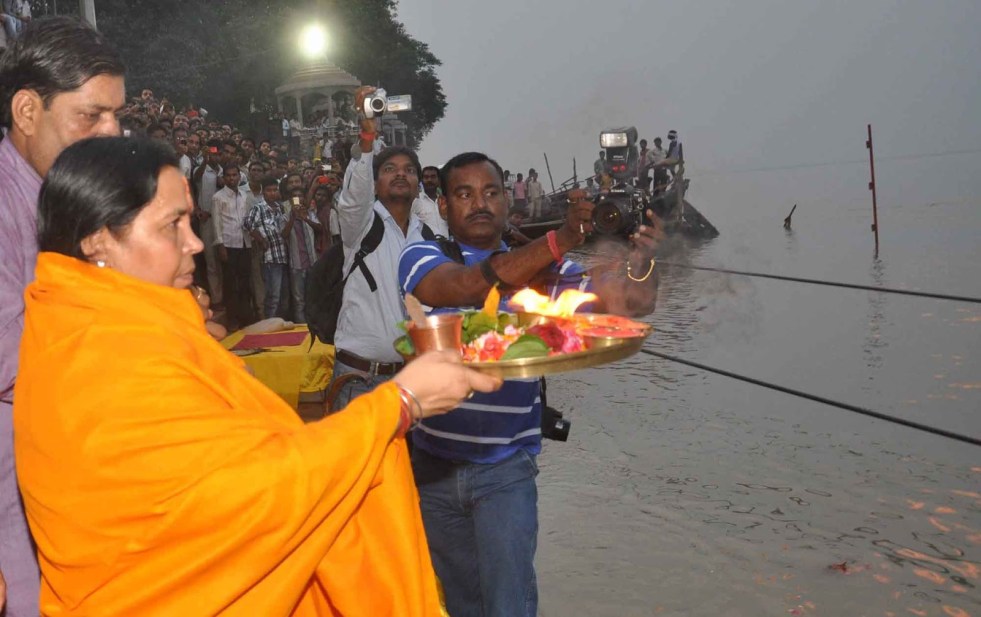
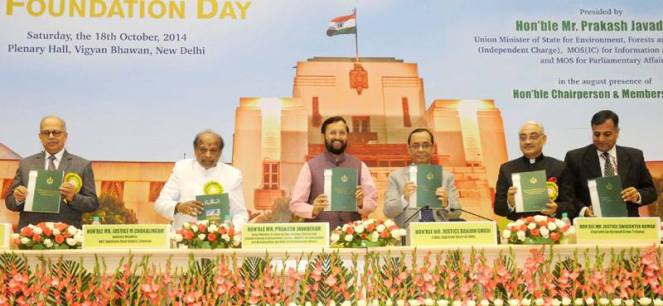



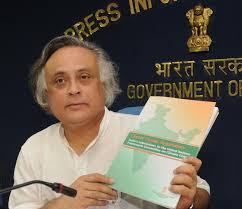
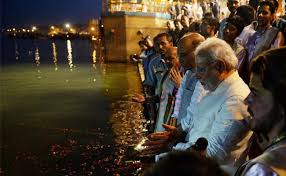

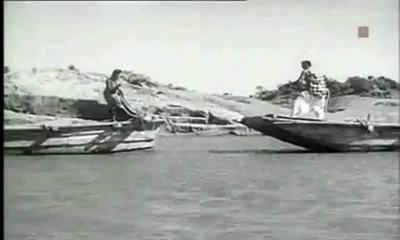
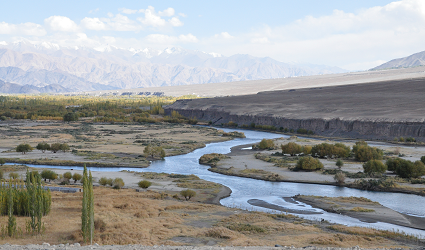


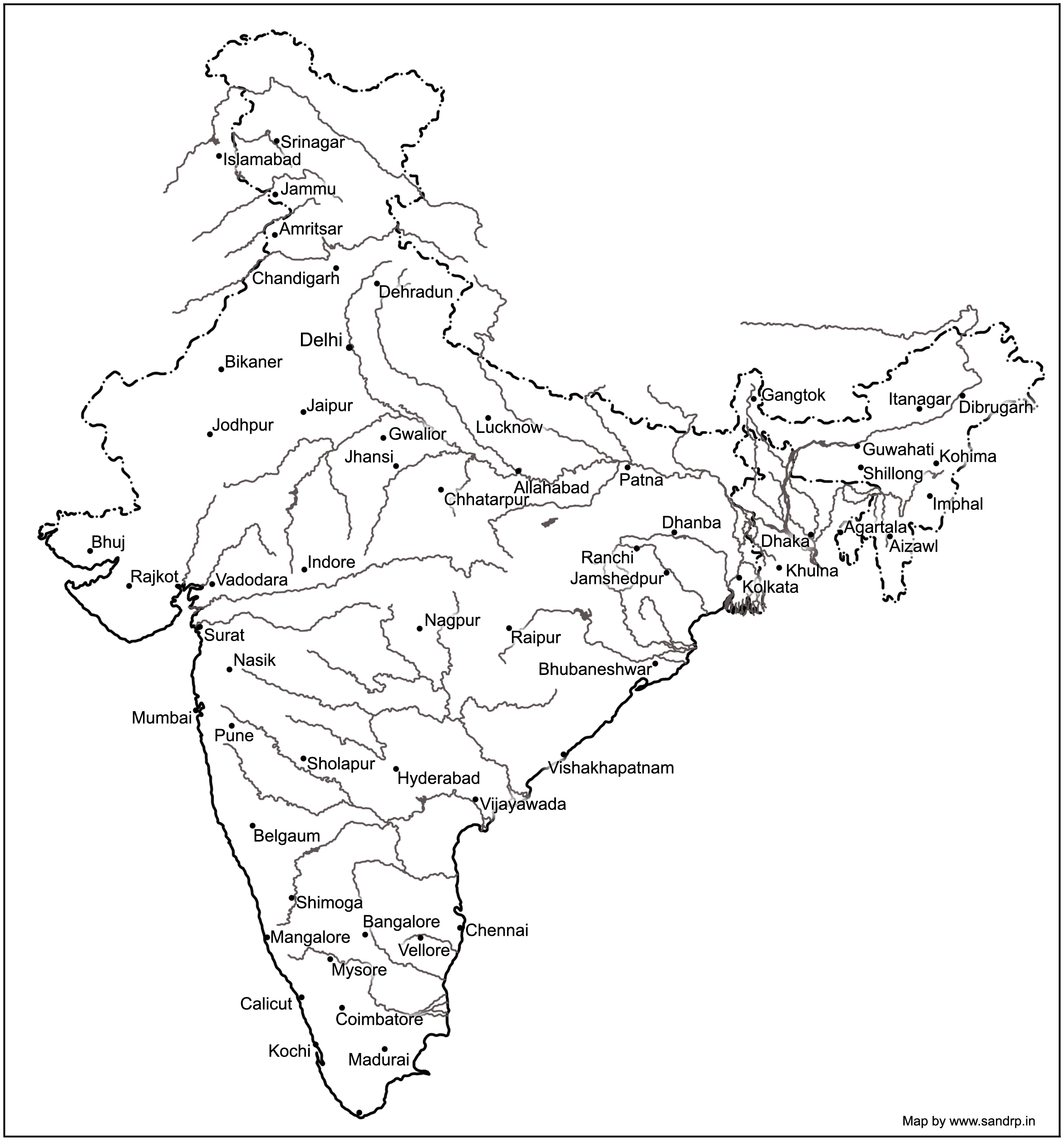
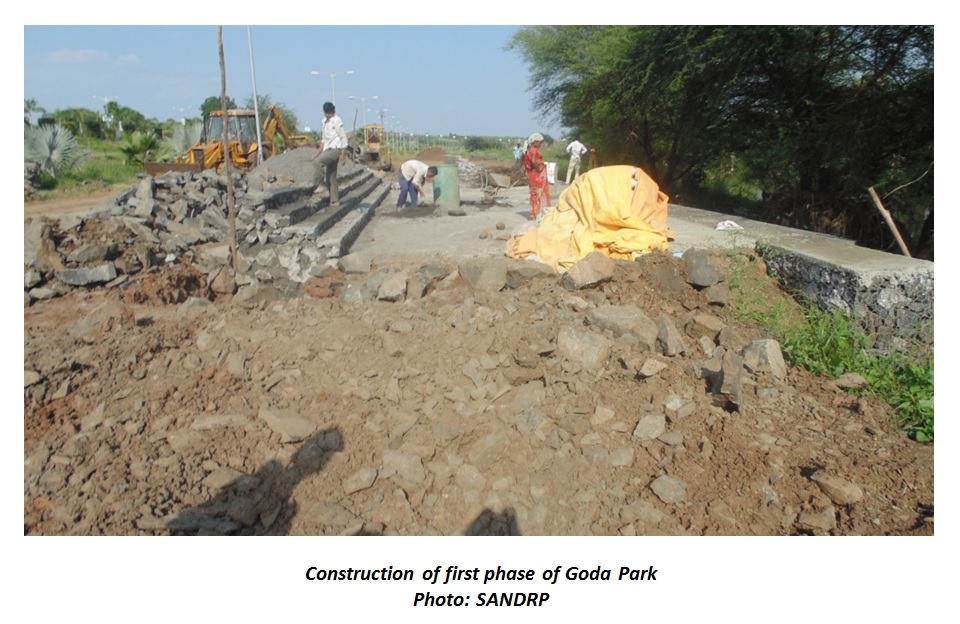


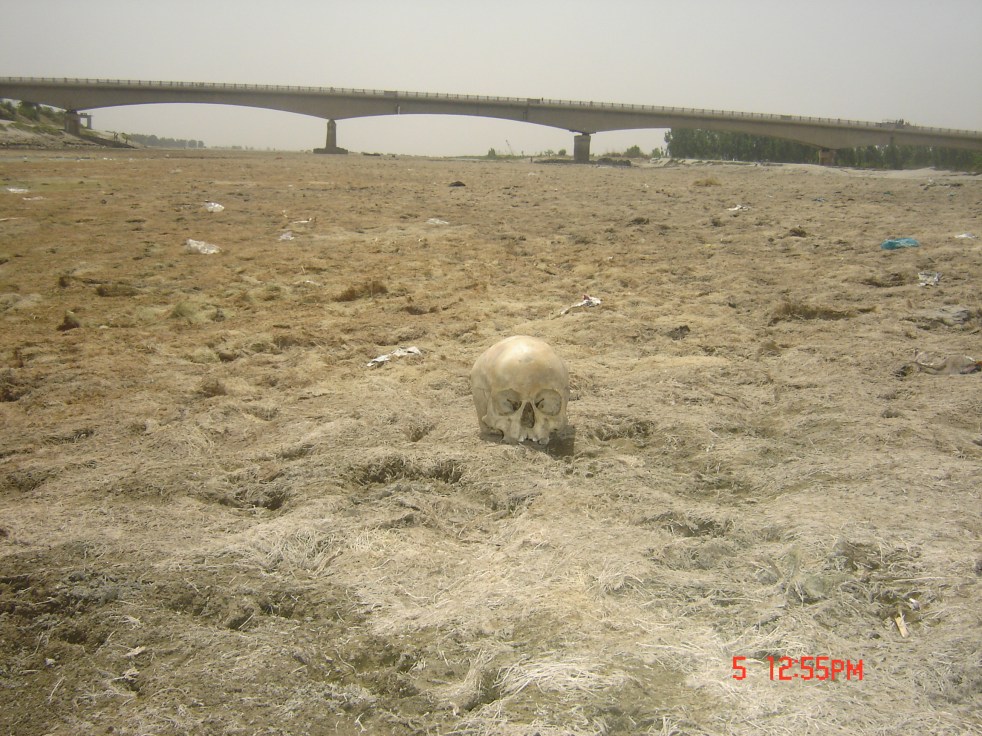
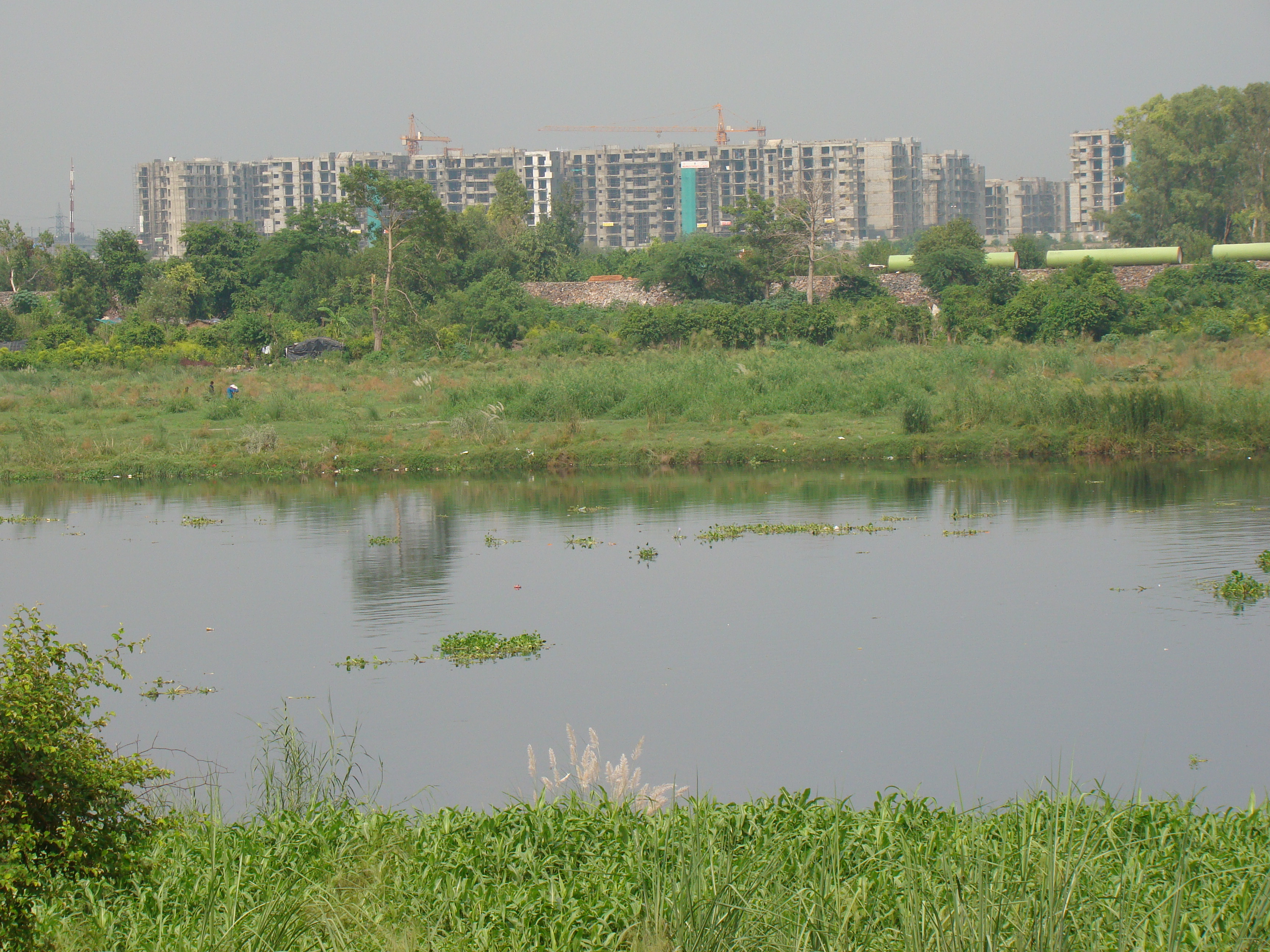
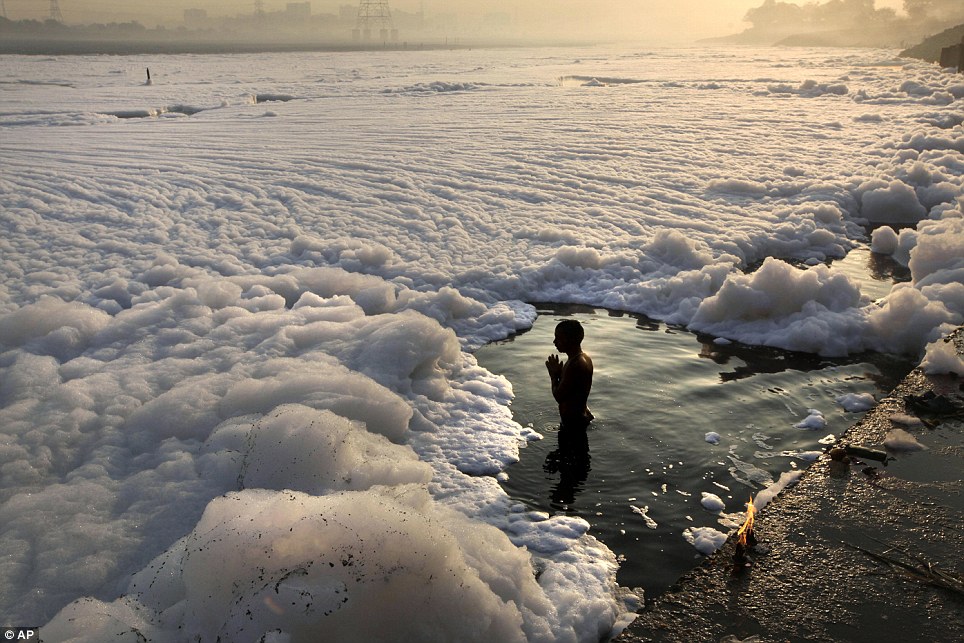
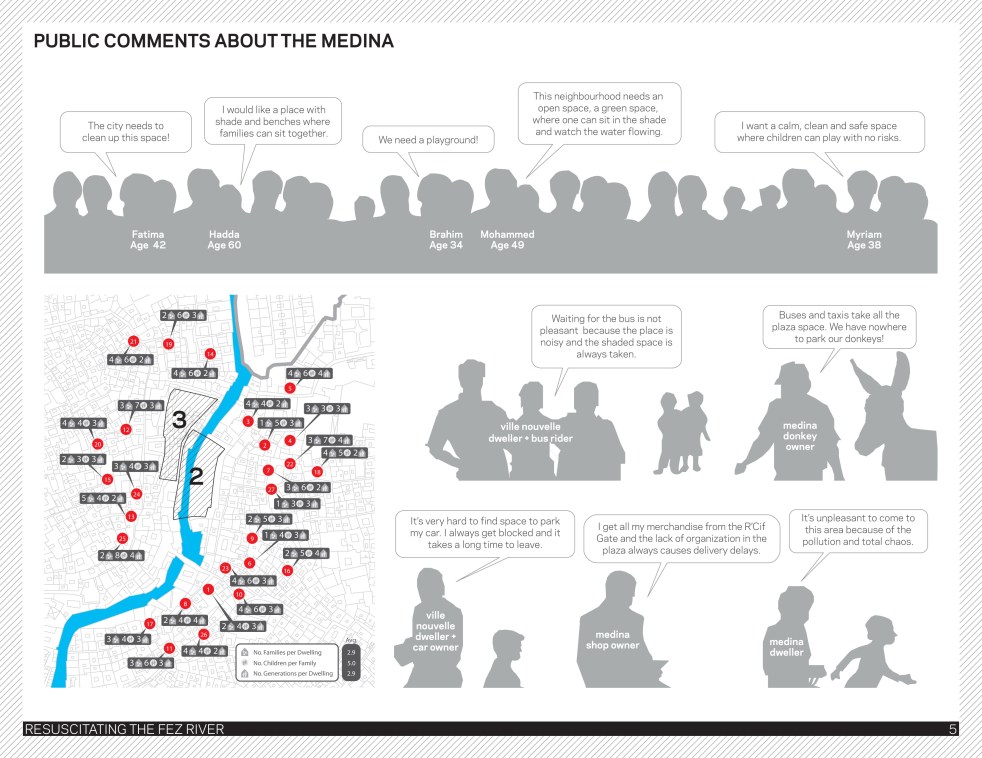
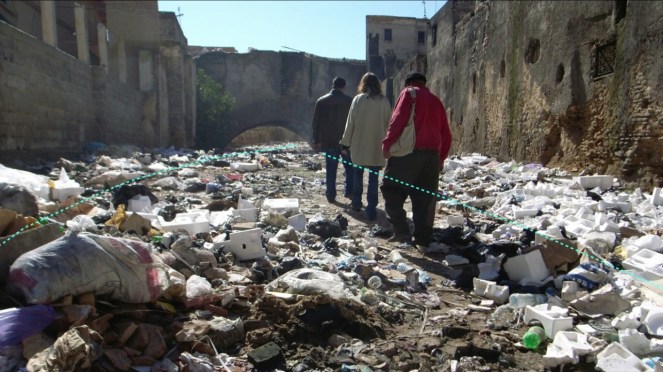

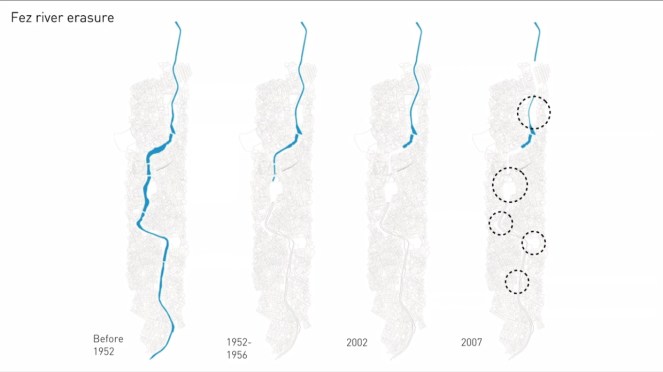


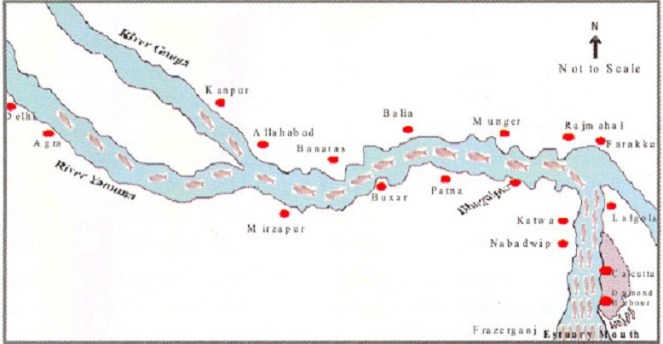
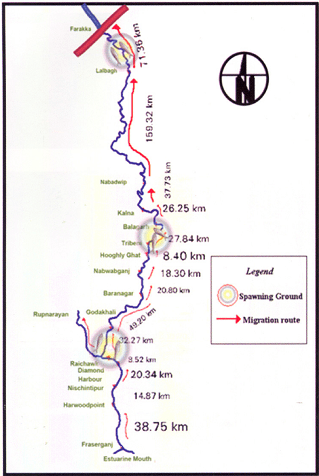
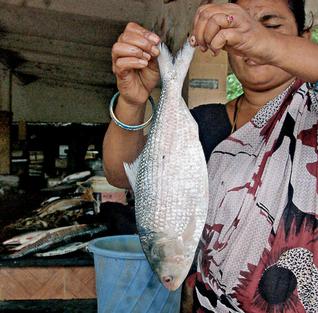
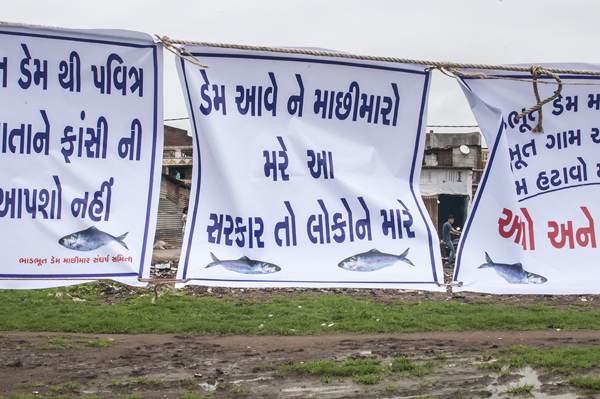
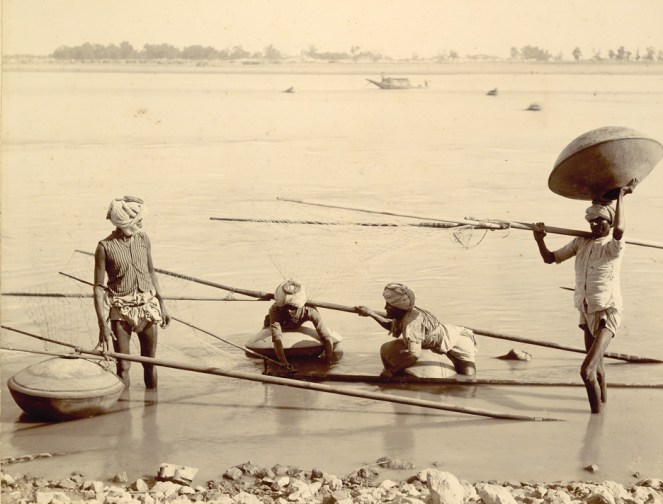
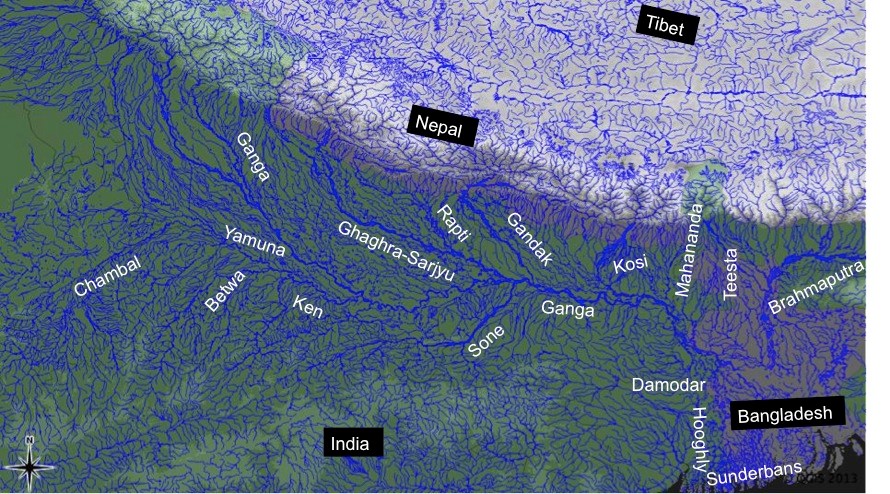
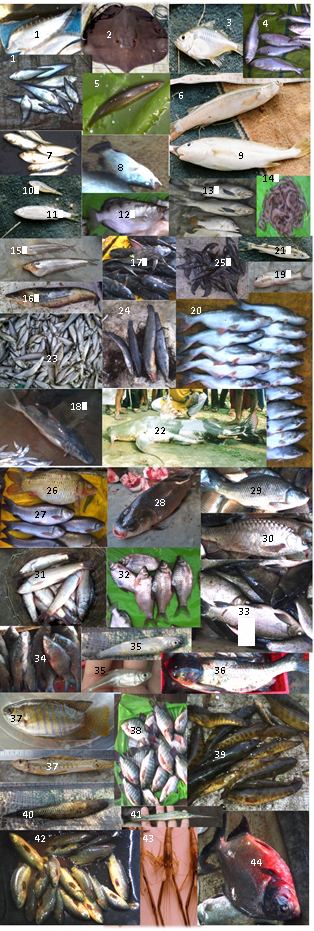
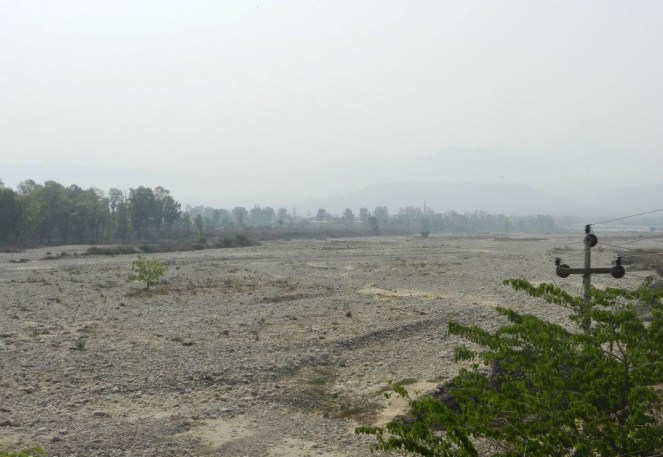
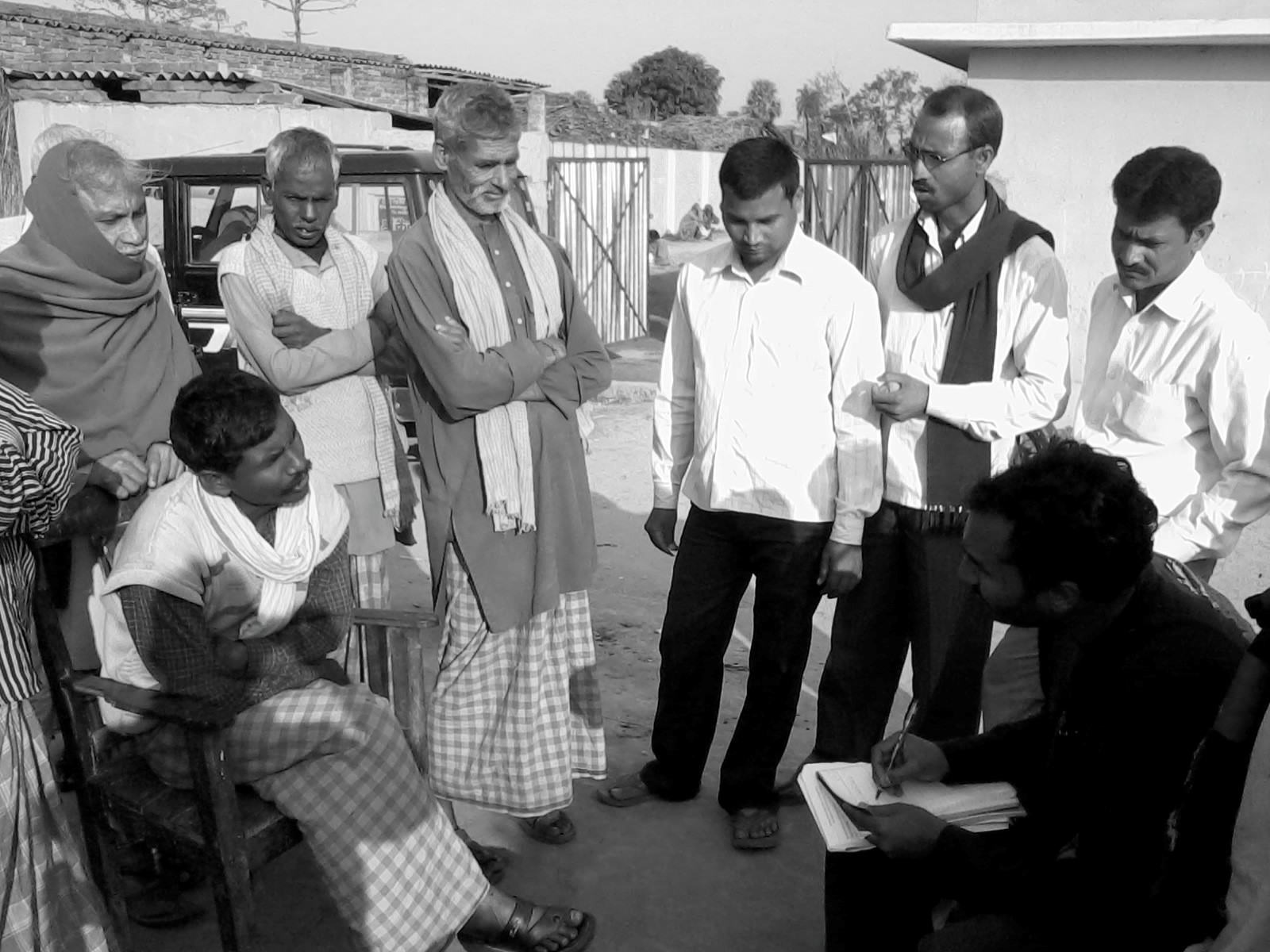
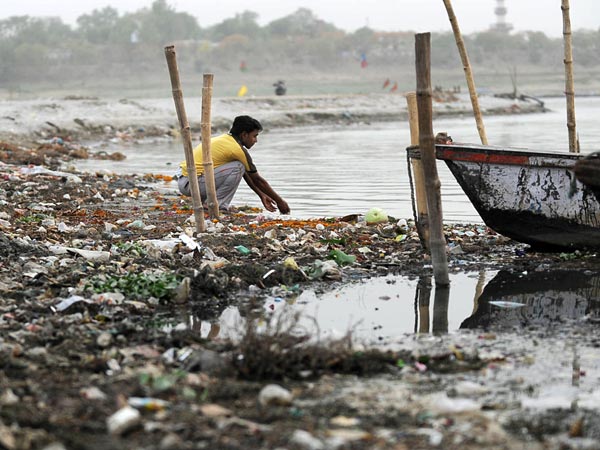
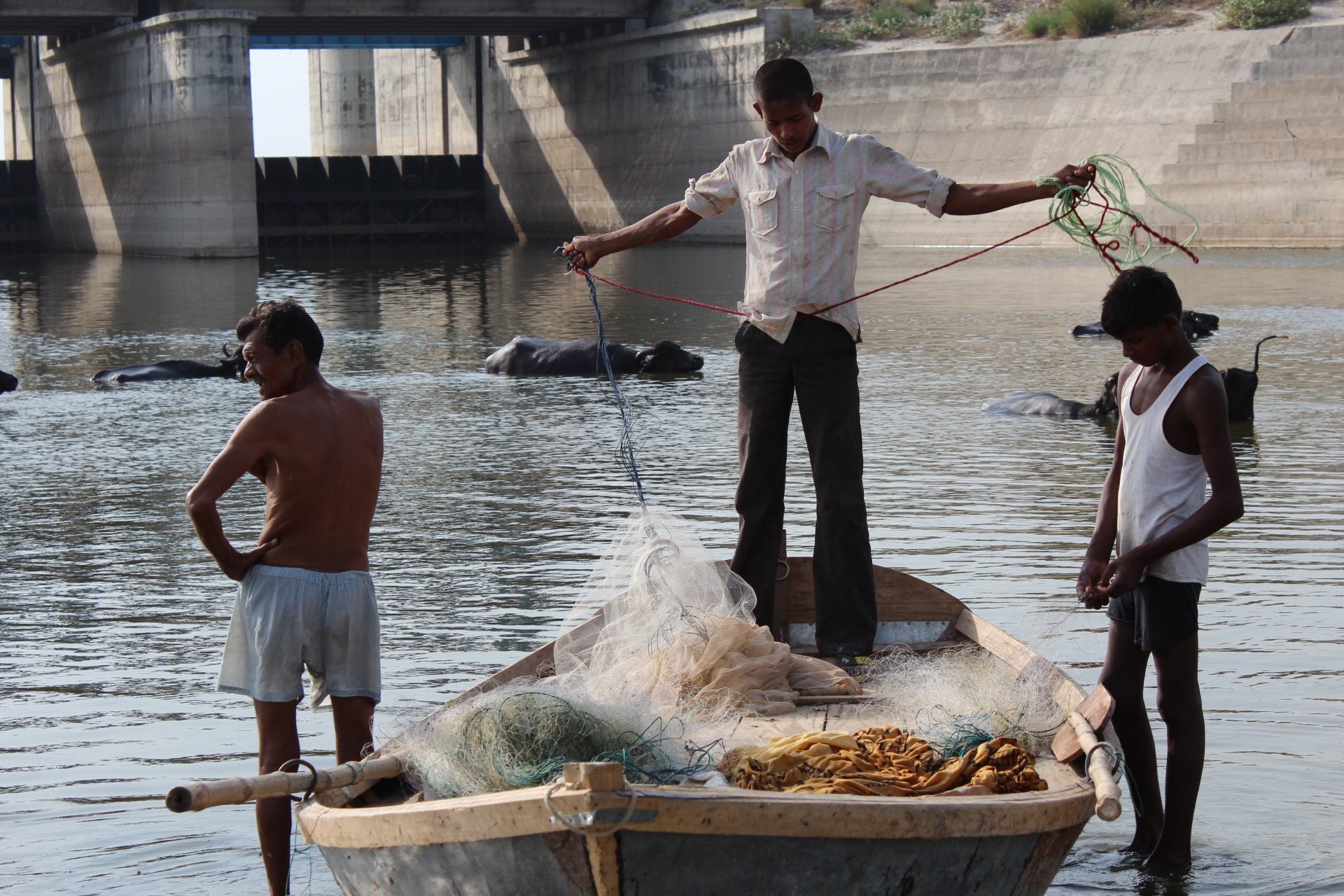
 SANDRP