Lohit River

Photo Journey along free flowing Lohit River in Arunachal Pradesh

Guest Blog by Nivedita Khandekar

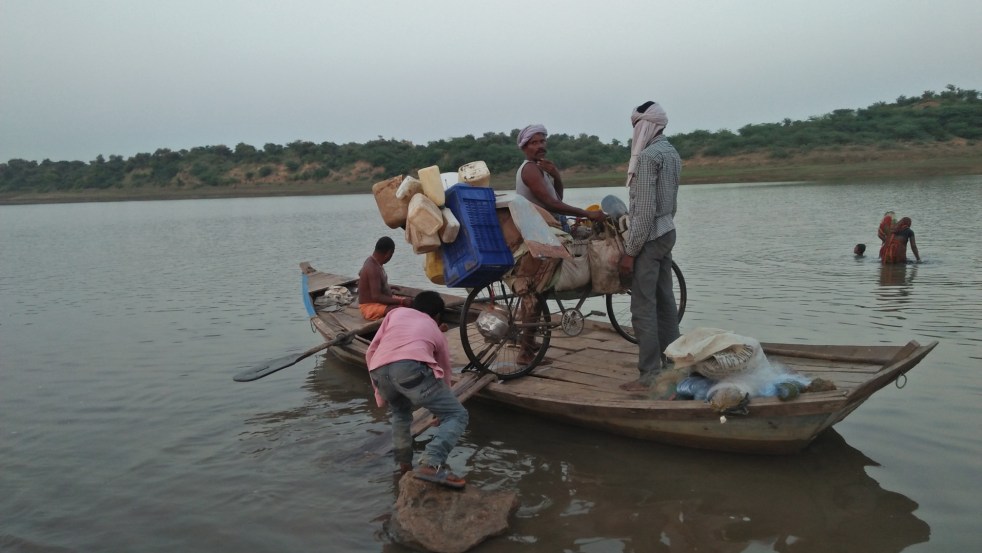
An abundance of a river and fast diminishing forests This photo-story chronicles the various moods of Lohit river from the point it enters India to the point where it is joined by two equally big rivers to form the mighty Brahmaputra. All photographs taken by Nivedita Khandekar during various journeys over the last decade, mostly in winters.

From references in Indian mythology to the location for proposed cascade of hydro-power projects, Lohit river of Arunachal Pradesh in north-eastern India is unique in many ways. It enters India at the juncture of Tibet, Myanmar and India at the easternmost point. It is as if this free-flowing, almost tempestuous river, cutting across the Himalayan hills, draws its tenacity from the people abounding its path. It would not be wrong to say that the unpretentious Meyor and the Mishmi communities lend their character to the river they call their own. After meandering through the Mishmi Hills, it traverses a short distance at the foothills as if freed from hilly prison only to assimilate its huge volume of waters with two other giant rivers to form the colossal Brahmaputra. Continue reading “Photo Journey along free flowing Lohit River in Arunachal Pradesh”

Dams · DRP News Bulletin

DRP: 16 July 2018: For Dam Safety, Can We Depend On CWC Engineers Alone?

India certainly urgently needs credible measures to achieve both structural and operational safety of dams. As the HINDUSTAN TIMES editorial emphasizes, we need much greater transparency, accountability and participation of independent, non government experts at every level of functioning of Dam Safety mechanism. Current Dam Safety Bill draft falls far short of that. This is also underscored by many of the news we bring in this July 16, 208 issue of DRP News Bulletin.

The Tamil  Nadu CAG report, as Indian Express reports, has clearly said that the Chennai floods  of Dec 2015 were majorly due to the wrong decision of dam operators to release 29000 cusecs of water for 21 hours, in violation of all safety norms, but no was punished for this wrong decision. The same has always been the case.

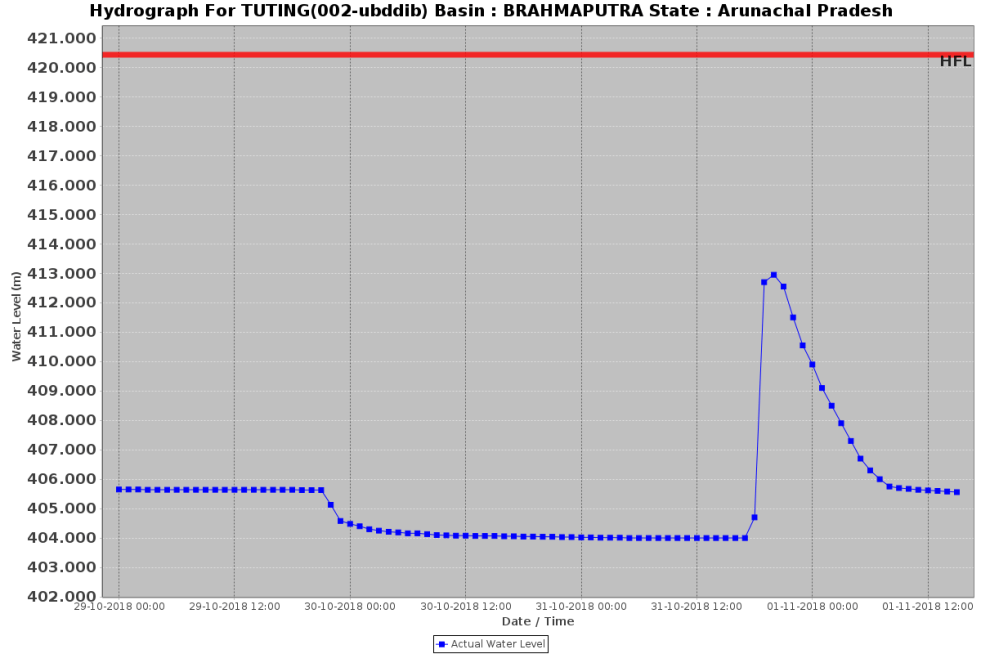
The Bulletin also brings the warning from, no less than Chief Minister of Assam to NEEPCO that if NEEPCO, the operator of the 405 MW Ranganadi Dam releases water from the dam without warning and when downstream areas are facing  floods, they will have to bear the losses people suffer.

Continue reading “DRP: 16 July 2018: For Dam Safety, Can We Depend On CWC Engineers Alone?”
Dams · Dams, Rivers & People

How India Measures Water Storages

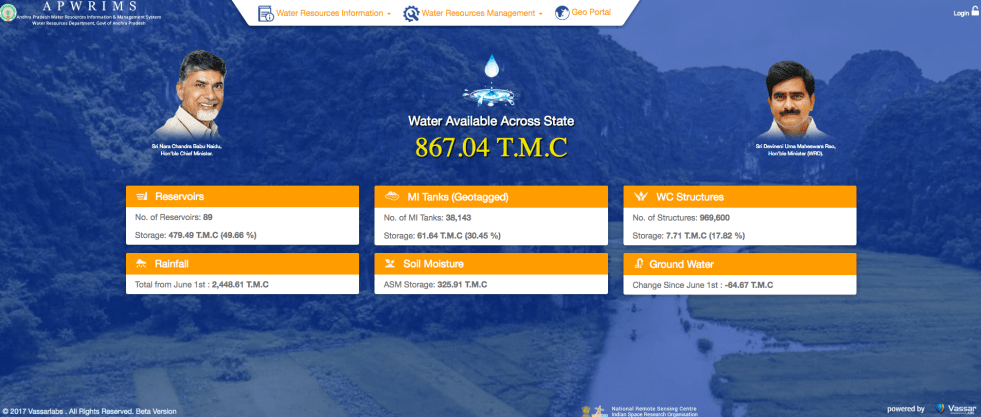
Govt and media typically report the status of water storage in India using the CWC’s Weekly Reservoir Storage Bulletin, which contain information about just 91 reservoirs in India. In this article we show that the state websites provide information about huge 3863 reservoirs, which even if not sufficient, is a huge improvement over just 91 reservoirs that CWC bulletin includes. We hope all concerned will try to improve the reservoir storage reporting.

It should be added here that this measures only surface water stored in some of the large reservoirs of India. This excludes large number of big reservoirs, lakhs of smaller reservoirs, groundwater aquifers and soil moisture storage. In spite of these limitations, this provides more accurate picture than just the 91 reservoirs of CWC that everyone in India, including media, govt monitoring and policy makers look at.

Continue reading “How India Measures Water Storages”

Water

A tale of two National Water reports: NITI and USGS

Within a span of a week, two interesting reports on National Water situation were made public. Indians have heard of NITI Ayog’s first ever report on Composite Water Management Index, trying to put together state of water management in India. Not many here would have heard of the United States Geological Survey (USGS)’s once in five year report on water consumption for various activities and states in USA[i]. The US report was published on June 19, 2018, five days after NITI Ayog report was launched on June 14 by Union Water Resources Minister Nitin Gadkari.[ii] Continue reading “A tale of two National Water reports: NITI and USGS”

Dams · DRP News Bulletin

DRP: 9 Jul 2018: National Meeting on Inland Fishworkers in Delhi

The NATIONAL PLATFORM FOR SMALL SCALE FISH WORKERS (INLAND) is convening a Consultative Meeting on Livelihood Issues of Inland Small Scale Fish Workers 10thJuly 2018, Gandhi Peace Foundation, New Delhi.

The Invitation letter says: “India is gifted with vast and varied inland water bodies bearing rich fish resources.Rivers and canals, reservoirs, ponds and tanks, oxbow lakes, wetlands, backwaters and estuaries yield 7.21 million tonnes of fish which is more than 66% of total fish production of the country. The sector sustains about 4 million fish workers and a total population of around 2 crores.Fish provides good quality animal protein rich in minerals and vitamins. About 800 million Indians eat fish. After milk, fish is the largest source of our animal protein.These huge resources are under severe stress. Rivers are poisoned with heavy pollution. Diversion of water from rivers is harming their ecological flow.

Continue reading “DRP: 9 Jul 2018: National Meeting on Inland Fishworkers in Delhi”
Dams · DRP News Bulletin

DRP: 2 July 2018: Punjab Cabinet Meets To Discuss Water crisis

In a rare event, Punjab Cabinet met to discuss water crisis on June 26, 2018. The reports before the meeting seemed to give hope that may be Punjab will look at the water crisis in a fundamental, holistic way. https://indianexpress.com/article/cities/chandigarh/punjab-government-to-firm-up-water-conservation-plan-5233826/ (June 26, 2018)

But the cabinet ended up setting up a committee to assess the ground water situation in the state and submit a detailed proposal for water conservation.

– Punjab has the highest rate of groundwater exploitation and had on average withdrawn 28.2 million acre feet (MAF) water yearly during 2008-2013. However, the yearly average replenishment of water was only 18.9 MAF.

– 73% of Punjab’s irrigated area uses groundwater for irrigation, while only 27% uses surface water. The number of tubewells had gone up exponentially from 2 lakh in 1971 to 12.50 lakh in 2015-16, with 41% of these have water availability beyond the depth of 60 metres. https://timesofindia.indiatimes.com/city/chandigarh/5-member-committee-to-assess-punjab-ground-water/articleshow/64770186.cms  (28 June 2018)

Continue reading “DRP: 2 July 2018: Punjab Cabinet Meets To Discuss Water crisis”
Dams · Free flowing rivers · International Water Issues

Mississippi and the Singing River

Mississippi is a phenomenon. A large body of water flowing down a slope towards the sea is perceived as so many disparate things by different people at different times and places.

Some say that if you want to understand the continent, you have to understand this river. Some say this is no river, it is an Ocean. Some say its a Strong Brown God. Continue reading “Mississippi and the Singing River”

DRP News Bulletin

DRP: 25 June 2018: Himachal HEPs remain stalled: Big Hydro no longer viable

Private Hydro remain in stalled Himachal The State Govt has sought the revised completion schedules of 21 stalled hydropower projects (above 5 MW capacity) having a capacity of 684 MW. Additional Chief Secretary (Power) Tarun Kapoor on June 19, 2018 held a meeting with independent power producers to take feedback from them on the hurdles being faced in completion of the 10 stalled projects on which work has not begun. In the remaining 11 projects also, the progress is extremely slow. “We have asked the power producers to expedite work on these 21 projects and also cancelled the Joiner-II (8 MW) in Kinnaur,” revealed Kapoor.

Continue reading “DRP: 25 June 2018: Himachal HEPs remain stalled: Big Hydro no longer viable”
USA

USA manages to reduce 2015 water use to below 1970 level

Water use across US has been decreasing since 2005, has now reached pre 1970 levels, says the U.S. Geological Survey (USGS) study[i] published on June 19, 2018. According to a new USGS report[ii], 445 BCM (Billion Cubic Meters, all BCM figures are annual figures) of water were withdrawn for use in the United States during 2015. This represents a 9 percent reduction of water use from 2010 when about 489 BCM were withdrawn and the lowest level since before 1970 (511 BCM). Continue reading “USA manages to reduce 2015 water use to below 1970 level”