
(Feature Image: Former SC judge N. Santosh Hegede, environmentalist Suresh Heblekar and other activists stage a protest urging the govt to abandon the Sharavati PSP on Nov. 29. Source)
2025 has seen increase in concerns and protests against pump storage projects (PSP) across the country. While citizens and experts have criticized Sharavathi PSP in Karnataka, Sillahalla PSP in Tamil Nadu, Shahbad PSP in Rajasthan, Bargi PSP in Madhya pradesh and numerous PSPs in western ghats in Maharashtra for their potential adverse impacts on forest, environment, endangered animals, the Sileru, Pedikota and Yerravaram PSPs in Andhra Pradesh faced resistance for undermining tribal and forest rights. Indeed, most of the PSPs are being proposed in sensitive region of Western Ghats and tribal dominated population endangering both the wildlife and vulnerable population.
Meanwhile, in the name of just transition the construction companies continued painting environment and forest clearance as hurdles and lobbying for even more PSP friendly policy including relaxation in govt land, exemption in stamp duty, discount in transmission, easing debt to equity ratio etc. The power ministry too behind the pretext of net zero emission targets appeared favoring the private PSPs and the regulators EAC and CEA continued ignoring the necessity of credible impact assessments & viable PSP requirement. Our 2024 overview on PSP developments in India can be seen here.
Karnataka: Sharavathi PSP Analytical Review of EIA This presents an analytical review of the EIA document, highlighting its critical gaps and shortcomings. It shows serious and systematic omissions, including lapses in biodiversity impact assessment, hydrological studies, mapping of project context, and compliance with statutory requirements, as well as its superficial treatment of critical threats such as habitat fragmentation, landslide vulnerability, hazardous material management, and cumulative basin-wide effects. The main Environment Impact Assessment (EIA) document can be found here. Kannada Executive Summary is here. English Executive Summary is here.
This report by Nirmala Gowda examines how the diversion of evergreen forests and critical wildlife habitat violates key environmental laws, highlights governance failures at both state and national levels, and debunks the project’s claim of being green, clean, and renewable. (Nirmala Gowda, Mapping Malnad) Here, she explains how Karnataka’s rush for peak power undermines foundations of climate resilience, can drive species to extinction.
Feb. 2025: Site Visit report During 16th meeting on Sept. 27, 2024, the Environment Appraisal Committee (EAC) had decided that prior to granting environmental clearance (EC) or making any recommendations, all pumped storage projects (PSP) in Western Ghats that have been granted ToR by the Ministry, a site visit shall be carried out. Following this a EAC team made a visit to Sharavathy PSP site on Jan. 26, 2025 as mentioned in EAC meeting minutes dated Feb. 27, 2025. The Report mentioned that the PSP was granted ToR on Dec. 14, 2023.
In specific observations and recommendations, the site visit report mentioned that the project is situated within the Eco-Sensitive Zone (ESZ) of the Sharavathy Wildlife Sanctuary, obtaining Wildlife Clearance from the National Board for Wildlife (NBWL) is a prerequisite and must be prioritized. The report also stated that the claim of project that there is no requirement for forest land for submergence, reservoir expansion, or muck dumping, as these activities will be carried out entirely on non-forest land must be independently verified and confirmed.
March 2025: The project ignited fierce debate with environmentalists and locals warning of irreversible ecological damage to the fragile Western Ghats ecosystem. Despite mounting opposition, the state govt was pushing ahead with the Rs 8,000-crore project. The govt started land acquisitions for the project, even as the project lacked the wildlife or the forest clearances. The environmentalists announced plans for a large-scale demonstration in Shivamogga on Mar 19 to oppose the projects.
May 2025: In its site visit (May 7-9) inspection report, a MoEF&CC team stated that the project cannot be cleared as the compensatory land offered is not adequate. Moreover, the project will lead to major landslides and destruction of the Western Ghats. The report came at a time when the Karnataka State Disaster Management Authority has listed Shivamogga as one of the districts vulnerable to landslides and floods with increasing development activities.
July 2025: At its 84th meeting on July 9, the NBWL gave in-principle approval to the PSP inside the Sharavathi Valley Lion Tailed Macaque (LTM) sanctuary. Two members of the NBWL, H S Singh and R Sukumar and director of WII expressed concerns about the project during the meeting. The approval brought the project before the Forest Advisory Committee.
Aug 2025: Noting that crucial details were missing, the FAC sought explanation from state and central authorities over the proposal. “It (the proposal) does not highlight the cumulative impact of the projects, existing and upcoming hydro-power projects in the basin and carrying capacity of the river basin. Further the FAC said the EIA by WAPCOS failed to provide details. “In that particular report the impacts of the project on aquatic flora & fauna is deliberated. But in the report, the impacts are not discussed in detail,” seeking a mitigation plan. The PSP requires diversion of 133.81 acre forest, clearing of 16,041 trees in an area home to rare and endangered species.
Sept. 2025: The residents of Sagar taluk, environmentalists and politicians opposed the PSP at the environmental public hearing conducted by the KPCL on Sept. 16. Objecting to holding the hearing without sharing the contents of the DPR with them and not publishing the Environmental Impact Assessment (EIA) report in Kannada, they demanded cancelation of the hearing. The DC refused to put off the hearing and said the Kannada copies of the DPR would be provided soon. Villagers and environmentalists who participated in the hearing expressed strong views about the harm that the proposed project would cause to the Western Ghats. The next public hearing was scheduled for Sept 18 at Gerusoppa in Uttara Kannada.
Oct. 2025: Citizens including former SC judges, activists, pontiffs from various mutts and students on Oct. 11 expressed strong resistance against the project. Experts pointed out that both the Sharavathi and Varahi PSPs are located within legally notified wildlife sanctuaries, violating key provisions of the Wildlife (Protection) Act. Justice Gowda questioned why the govt was not making the DPR public. Justice Hegde said the project is not in public or environmental interest. Researchers also contested the claims of KPCL that the project won’t have negative ecological consequences.
In a letter sent to the MoEF&CC and CM on Oct 24, National Alliance for Climate & Ecological Justice and the All-India Rivers Forum of NAPM urged the authorities to refuse clearance to the PSP considering the serious ecological, social, archaeological & cultural impacts.
On Oct. 27, meeting seeking more information the FAC deferred the proposal. The FAC took into consideration ‘false and outdated data’ while deliberating on the project during its meeting on Oct 27, it is said. However, the FAC ignored the blatant errors made by KPCL and the corrections made after the errors were pointed out by the MoEF&CC. The biggest of the errors pertains to the cost benefit ratio calculated by the KPCL.
In July 30 meeting, the FAC had asked the state govt to respond to the NBWL suggestions on reducing the number of trees proposed to be felled as well as the observations made by the DIG forests, MoEF&CC regional office. Meanwhile, the NBWL standing committee asked a committee comprising its two independent members to visit the project site & submit a report.
Rajasthan: Shahbad PSP Protest against plan to fell trees A group of environmental activists, concerned citizens and the villagers in April 2025 appealed to save more than one lakh trees and shrubs from being axed in the biodiversity-rich Shahbad forest situated in Baran district for the Shahbad PSP. They travelled to Delhi and submitted a memorandum to local MP, PM Narendra Modi and Lok Sabha Spear Om Birla on the subject. The memorandum stated that the PM had given a message on the World Wildlife Day for coexistence between ecology and economy. “We do not believe in conflict between ecology and economy, but give importance to coexistence between the two,” Mr. Modi had said. The locals pointed out that the felling of trees would destroy the forest and adversely affect the ecology of the area, besides depriving the region’s tribal population of its livelihood.
Concerns over Shahbad PSP The project proposes diversion of 408 ha Shahbad forest land for 1800 Mw PSP being built by Greenko Energies Pvt Ltd. Over 1.19 lakh trees are to be cut.
In Shahbad, the forest is not just land. It shields the villages from punishing heat, nourishes groundwater and provides food, shade and grazing land for both people and wildlife. The Shahbad forest is also home to many endangered species listed in Schedule 1 of the Wildlife Protection Act, including leopards, sloth bears, striped hyenas, vultures, wolves, jackals, porcupines and pythons. Even the EIA report says the project will fragment the landscape, disturb biodiversity & likely increase conflict between animals and humans. The Moondiyar villagers recently called a meeting to oppose the project. Losing the forest means losing food, income and identity.
Drown a forest, grow a dam Additional 216 ha of land outside the forest is needed for roads, housing, transmissions and project offices. The habitats of many wildlife species will go, and a proposed cheetah corridor – linking Kuno National Park to Gandhi Sagar sanctuary – will end pretty much near its starting point. Thousands of Sahariya Adivasis & Dalits who depend on the forests will lose their livelihoods. EC to project was given in Aug 2024. It has since been deferred and was currently (Sept 2025) being challenged in the Jodhpur High Court.
“But even existing hydropower at peak hours is not being optimized or monitored,” says scientist Himanshu Thakkar of SANDRP. He goes on to add that there is no scientific basis for PSPs being projected as ‘environmentally friendly’. On the contrary, a major infrastructure intervention like PSP will have significant social and environmental impacts, he adds.
What does this mean for the future of cheetahs? Currently, Kuno has a population of 13 cheetahs and the project aims to establish a stable population of 50-60 cheetahs by 2035. However, wildlife experts believe that without a wide corridor, the range of cheetahs will remain limited, which could endanger the long-term success of this ambitious project. The proposed hydro power project in Shahabad will further increase this risk, as it is an important link for the movement of cheetahs. The 2024 report of the National Tiger Conservation Authority (NTCA) also underlines the need for this corridor as cheetahs have started moving from Kuno to the borders of Rajasthan and Uttar Pradesh.
Madhya Pradesh: Bargi PSP Farmers ask water for whom For decades the 95 Bargi dam displaced villages in Mandla have not received irrigation water. The same is true for the 885 villages of Rewa and Satna, where not a single drop has reached through the Bargi Diversion Project. And yet, water from the Bargi reservoir is now being allocated to a third power project. The newest proposal—costing ₹4,689.89 crore -would create a 1,000 MW open-loop pumped-storage system across villages in the Narayanganj and Bijadandi blocks. Water will be pumped from Bargi (the lower reservoir) to an upper reservoir to generate electricity during peak hours.
Serentica Renewables received the state allocation letter in August 2025 and central clearance (TOR) in November 2025. The project requires: 381.50 hectares of land, 271 hectares of dense forest (including teak and mixed forest) and has potential displacement of five villages. The company has not yet applied for forest clearance. Serentica claims the project will bring employment, greenbelt development, and renewable power. But the reality is troubling: 271 hectares of dense forest will be cut, More than 22 million cubic meters of debris will be generated, 12.37 MCM debris will be dumped on 100 hectares of non-forest land, impacting local ecology.
Water expert Shripad Dharmadhikary asks: “If water is already going to Jhabua Thermal Plant, if pumped storage will need over 25 MCM initially and 2.75 MCM annually, and if the dam also generates 90 MW hydropower, what remains for farmers? Will water ever reach our fields?” Rajkumar Sinha, who has fought for the rights of Bargi oustees for decades, says: “Now four entities want Bargi’s water—irrigation, hydropower, thermal power, and nuclear power. Farmers are the weakest claimants. They have no lobby, no political clout.”
In the rehabilitation plan, 81 families from five villages will be directly affected. They will receive only cash compensation through ‘direct negotiations’ and mutual agreement. Affected farmers say this is inadequate for securing a stable livelihood. “Displaced families will not receive land in exchange for land, but only cash compensation. This goes against the spirit of the 2013 Right to Fair Compensation and Transparency in Land Acquisition, Rehabilitation and Resettlement Act,” says Sinha.
Mandla is a Fifth Schedule district, which means that under Act, 1996 and the FRA, Gram Sabha consent is mandatory. But the project documents declare the FRA process as “NO.” Despite this, the allocation letter was issued on August 11, 2025. Advocate Rahul Singh of the Jabalpur High Court asks: “How can the process move forward without the consent of affected Gram Sabhas?”
Maharashtra: Bhavali PSP Pushing Sahyadri People into deep waters In Maharashtra’s Western Ghats, plans for 1500 Mw Bhavali PSP threatens to submerge farms and forest land, and displace families, raising questions on the nature of India’s clean energy transition. The Rs. 9,000 crore PSP is a part of the Indian govt’s commitment to increase the country’s renewable energy capacity to 500 Gw by 2030. The Bhavali dam near Jamunde village in Igatpuri, Nashik, will be the upper reservoir for this project while the lower reservoir is to be constructed near Ladewadi in Thane.
The residents of Ladewadi learnt of this project in 2022, a year after the MoU for it was signed. The project requires 35.18 ha of private property and 243.74 ha forest land. The PSP will displace 10 families and affect another 130 from Kalbhonde, Kothale and Jamunde villages. In Aug 2024, the EAC deferred its EC until the proponent Energy PSP Two Ltd could provide additional information on soil samples, water availability and wildlife conservation plans. The company was also asked to submit an undertaking to ensure that water flows will not be stopped or blocked for filling the reservoir during monsoons.
“But will the company follow their own undertaking?” Kashinath is skeptical. Other residents of the area have also brought up issues. “If the information is provided by JSW, will the project then be approved?” asked Baban Harne, Shahapur-based farmer and social activist. “And this is a Scheduled Area; yet, seeking approval of villagers is not even under consideration.”
The expert committee also decided to conduct a site visit before further consideration of the proposal. “But that seems to be a formality again,” says Himanshu Thakkar (SANDRP). “See EAC has always been like that. It is a rubber-stamping authority more or less. Its rejection rate is practically zero,” he says. “Even Adani’s Warangi-Warasgaon PSP in Pune; we had written to them [EAC] saying that this has a serious impact including on the community fishing conservation zone. They still approved it. It’s very careless, the way they appraise the project, the way they look at the impacts.”
Andhra Pradesh Closer look at PSPs From 2022 to 2025, the state has sanctioned PSPs with a total capacity of 8,700 Mw. These approvals have come under two successive govts. The YSR Congress govt gave the green light to six major projects: Kurukutti-1,200 Mw; Kurukutti2-600 Mw; Karrivalasa-1,000 Mw in Parvathipuram Manyam Dist, Raiwada-1,000 Mw in Vizianagaram District; Pedakota-1,500 Mw; & Yerravaram-1,200 Mw. Later the current NDA administration cleared two more – Gujjili-1,400 Mw & Chittimvalasa-800 Mw in ASR Dist.
These projects are situated in the tribal-dominated Agency areas – regions protected under the Fifth Schedule of the Constitution. Here, the transfer of land to non-tribals is explicitly restricted under the Andhra Pradesh Scheduled Area Land Transfer Regulation of 1970. The Supreme Court’s landmark ruling in the Samata case further upheld that government land in Scheduled Areas cannot be leased or transferred to private entities comprising non-tribals.
Despite this, the state govt has decided to hand over vast stretches of land to private developers – a total of 3,387 acres in both the Scheduled Areas and tribal-dominated Sub-Plan areas, including individual and forest lands – triggering widespread opposition from tribal organizations and legal experts. Water use, another critical aspect, has also raised alarms. Local tribal communities & downstream farming populations rely heavily on the water bodies.
A petition has been filed before the NHRC against the Yerravaram project, which is projected to displace 32 tribal villages. It also warns of irreversible damage to local biodiversity and forest ecosystems.
Tribals oppose PSPs in Vishakhapatnam The Tribals of Ananthagiri mandal in Alluri Sitarama Raju district on July 2, demanded the immediate cancellation of the govt order permitting construction of hydro power plants in Pedakota area. They expressed anger over the decision by the New & Renewable Energy Development Corp of AP Ltd (NREDCAP) to increase the project capacity in the Pedakota area from 800 Mw to 1800 Mw. They said that between 2019 and 2025, the state govts approved several PSPs with a capacity of 900 MW in areas between Rayavada, Chintalapudi & Marika in Pedakota region of Raghavapalem.
CPI(M) seeks cancellation of PSPs In a letter to CM on Oct. 9, CPI(M) State secretary V. Srinivasa Rao alleged that the government’s decision to sanction PSPs in the Fifth Schedule areas of Alluri Sitharama Raju, Parvathipuram-Manyam and Anakapalli districts violated tribal rights and environmental laws. He said the G.O.s (51, 13, and 2) issued to companies such as Navayuga, Megha, Adani, and Sri Shirdi Sai were issued without the consent of the local tribal gram sabhas, contravening the PESA Act, Forest Rights Act, and the 1/70 Land Transfer Regulation. These projects, he warned, would submerge nearly 20,000 acres of land across 250 villages, displacing around 50,000 tribals and threatening forest ecosystems.
Mr. Srinivasa Rao recalled that two Adani-linked projects in Parvathipuram-Manyam had been cancelled in July following protests, yet others continued despite strong opposition. He demanded the immediate cancellation of all related G.O.s, legal action against companies intimidating tribals, and independent inquiry by the NHRC and NCST.
Aranya Garjana against PSPs A massive “Aranya Garjana” (roar for the forests) rally was held in Paderu late in Oct 2025 Alluri Sitarama Raju district, opposing proposed hydropower projects in tribal regions. Organized by the AP Girijan Sangham, the rally began at the govt junior college grounds & moved through the ITDA office to the district collectorate. Thousands of tribals and local leaders participated, raising slogans against forest land diversion. At the protest meeting near the collectorate, CPM central committee member K Lokanadham demanded cancellation of hydro agreements & immediate revocation of GO Nos 51 & 1302.
Tamil Nadu: Sillahalla PSP NDC seeks Unesco intervention The Nilgiris Documentation Centre (NDC) in April 2025 sought the intervention of the regional head of UNESCO, New Delhi and the director and member secretary of Indian National Man and Biosphere Committee, New Delhi, to investigate the proposed Sillahalla PSP in the Nilgiris on a priority basis and take up violations of the biosphere norms and conditions, if any, with the officials or institutions concerned. According to the NDC, the proposed sites fall in the core zone of the Nilgiris Biosphere Reserve, where activities such as hydroelectric projects are prohibited.
The NDC pointed out that the Nilgiris district, being the topmost tourist destination in the country, was the most advanced area of the biosphere. “This tiny district contributes around 850Mw of hydroelectricity to the state through 14 dams, which are mostly located within the biosphere reserve. It has long been agreed that the Nilgiris has saturated its hydro power capacity.” “Now, suddenly, there is a rush to proceed with a 1000 Mw Sillahalla PSP in two stages in the Kundah ranges on the south-western part of the Nilgiris. More projects are proposed in the western parts, mostly in protected areas, amidst huge public protests,” the NDC said and urged the authorities to investigate the matter.
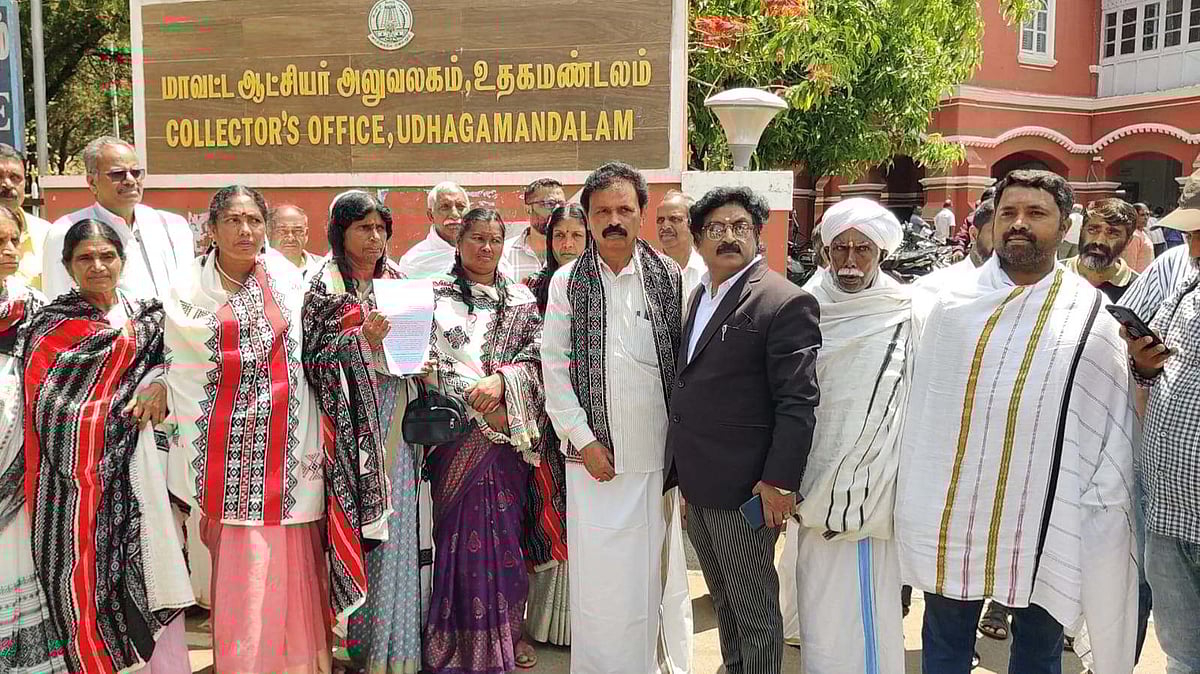
Later in the month, the local residents came out to protest against the PSP, fearing the impact of such a large-scale project on their lives and livelihood. Following this, the PSP was reportedly put on hold. Earlier, after the release of the EIA report on the project, Tamil Nadu Generation and Distribution Corp (Tangedco) started the groundwork like blasting of rocks and quarrying of earth at the project site, which falls under the Kundha taluk.
The project aims at building two dams and connecting them with a 10km tunnel. It would be developed in the middle of around 25 villages. The past months saw several protests by the villagers and environmentalists against the project. Several petitions were sent to the govt and CM M K Stalin by the Save Sillahalla Movement and environmentalists.
The Tamil Nadu Pollution Control Board (TNPCB) indefinitely postponed a public hearing on the project scheduled on March 20. The project was yet to get NOCs from various authorities like MoEF at the Centre and environment clearance at the state level, besides a NOC from the forest department. None of the procedures had taken off.
People in the Nilgiris were upset over the EIA report, which was silent on the cultural significance of the indigenous people of badagas and tribes such as todas, irulas, kotas and others who inhabit the proposed area for the hydro project. Kundah PSP, which was underway in the Nilgiris, is likely to be operational next year.
Upper Bhavani PSP EAC grants preliminary nod The EAC in May 2025 granted permission to carry out an EIA study for a proposed 1,000 Mw Upper Bhavani PSP in the Nilgiri Hills in the ecologically fragile Western Ghats. Developed by NTPC Tamil Nadu Energy Company Limited, a joint venture of National Thermal Power Corp Ltd and Tamil Nadu Generation and Distribution Corp Ltd (TANGEDCO), the PSP aims to harness the waters of the Upper Bhavani Dam and Avalanche-Emerald reservoirs in the Nilgiris. Despite the State Forest Dept taking efforts in recent years to protect and conserve the Nilgiri Tahr, the State animal, the ₹5,000 cr Upper Bhavani PSP could cut through the heart of the Tahr’s domain in the upper Nilgiris.
Govt & Industry Steps in 2025
April 2025: The CEA concurred DPRs of 6 PSPs of about 7.5 Gw in record time during 2024-25 including Upper Indravati (600 Mw) in Odisha; Sharavathy (2,000 Mw) in Karnataka; Bhivpuri (1,000 Mw) & Bhavali (1,500 Mw) in Maharashtra; MP-30 (1,920 Mw) in Madhya Pradesh & Chitravathi (500 Mw) in Andhra Pradesh.
The EDF India launched a new white paper titled “Strengthening India’s PSPs Framework: EDF’s Recommendations for Attracting International Investment”. The report outlines policy recommendations to enhance PSP development and attract global investors.
May 2025: Brainstorming session concludes The day-long event focused on the growing role of PSPs in supporting India’s renewable energy transition and achieving the national target of net zero emissions by 2070. The event featured four focused panel discussions that covered critical themes, including the “Policy, Planning, and Regulatory Framework for PSPs”, “Geological, Civil, and Material Considerations in PSP Development”, “Environmental and Forest Clearance Framework- Challenges & Streamlining”, and “Implementation Challenges & Way Forward for PSPs in India”.
Shri M.G. Gokhale, Member (Hydro), CEA highlighted the vast potential of PSPs in India, emphasizing their critical role in achieving the country’s Net Zero targets through reliable energy storage. He noted that, around 3 Gw of PSP capacity is expected to be added in 2025-26, including the commissioning of the 1000 Mw Tehri PSP in the coming months.
As per the CEA data Adani Green, Greenko and JSW Energy are set to develop nearly two-thirds of India’s planned 51 Gw PSP capacity by 2032. Of the total capacity expected to come online, over half – 57% – will be located in Andhra Pradesh and Maharashtra. Meanwhile, the regulators proposed exemption for PSPs from electricity duty and ISTS charges.
In a report, the Forum of Regulators proposed introducing a renewable energy certificate (REC) multiplier for PSPs (e.g., 3x-4x) as a policy measure to facilitate the demand growth for PSP development. Constituted under the Electricity Act, the forum consists of the chairpersons of the Central Electricity Regulatory Commission and State Electricity Regulatory Commissions. Among other recommendations, the forum suggested measures such as leasing govt land at nominal costs and exempting stamp duty to lower project capital costs for PSPs and hydropower projects. It also proposed adjusting the debt-to-equity ratio for public sector PSPs from 70:30 to 80:20 to lower generation costs and improve financial viability.
June 2025: The Power Ministry granted a 100% interstate transmission system (ISTS) waiver for PSPs for which construction works were awarded on or before June 30, 2028. The ministry had extended the waiver multiple times since 2016. The last waiver extension was issued in 2022 for projects to be commissioned by June 30, 2025. After this deadline, 25% of the applicable ISTS charges will be levied on renewable energy projects, including solar, wind, PSPs and projects with BESS commissioned during Jul 1, 2025 to Jun 30, 2026.
Sept. 2025: The govt is looking to add up to 13 Gw of hydro PSPs annually, over four-fold from current levels of addition, to have 50 Gw of such capacity by 2032, Ghanshyam Prasad, Chairperson of CEA. As of FY25, the capacity of pumped hydro projects was around 4.7 Gw.
Relevant Reports
DRP PSPs facing increasing opposition The EAC has been indiscriminately rubber stamping approvals for PSPs across the country without any credible environmental and social impact assessments and in complete absence of cumulative impact assessment or carrying capacity studies and without any real options assessment study or even considering CEA’s assessment of how much PSP capacity is viable and needed in India. The EAC really need to wake up before considering any further PSPs for TORs or Environment Clearances.
The CEA also needs to come out with assessment as to how much PSP capacity is needed across India in different time scales and communicate the same to the EAC and MoEF. The kind of pain the PSP projects are bringing across the country is something that the MoEF, CEA or EAC seems to have absolutely no clue about and a lot of that may be completely avoidable. The kind of frauds, displacements and deforestation that these projects are bringing is shocking, particularly when these projects are not even location specific.
Report CEA approval of 6 PSPs disregards ecological impacts Power and climate policy analyst Shankar Sharma wrote to the Chairperson of NITI Aayog and the PM, & criticized the CEA’s approval of 6 hydro PSPs totaling 7.5 Gw in FY25.
Sharma argues that the CEA’s approval of hydro PSPs demonstrates a disregard for ecological impacts, particularly in biodiversity hotspots like the Western Ghats and Himalayas. He asserts that no comprehensive public policy paper addresses the significant environmental costs associated with these projects. “It is highly unlikely that scores of such hydro pumped storage project proposals, which are all likely to be in the river valleys, have even been considered from the perspective of the huge ecological damages on the associated biodiversity and on the riverine ecology,” he stated.
SANDRP

 SANDRP