Since 1997, March 14 has been observed as an International Day of Action for Rivers across the world. This year the 29th event on the topic will be celebrated with the theme ‘Our Rivers, Our Future’. Marking the day, SANDRP through this account highlights the exemplary work being done by activists and organizations in protecting the rivers from destructive riverbed mining practices in India.
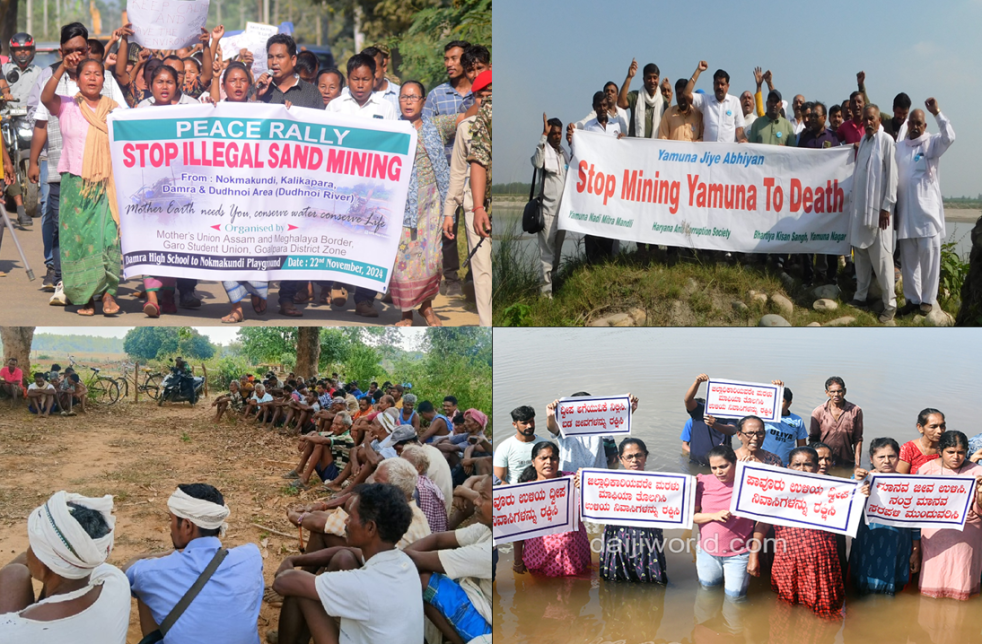
One of the most significant agitations in 2024 against the illegal extraction of riverbed minerals in the country is by local women groups called Mothers’ Union of Assam & Meghalaya Border in Northeast India. Alarmed over the adverse impacts of mining operations threatening their livelihoods and the river eco-system, the Mother’s Union supported by several other community groups raised strong voices against illegal sand mining in Dudhnoi river known as Manda in Meghalaya.
Another important development in 2024 has taken place in Goa where during hearing the petition filed in the National Green Tribunal (NGT) by the Goa River Sand Protectors’ Network (GRSPN), the state government in August 2025 withdrew environment clearances for mining in four rivers. As per the GRSPN the ECs were granted without District Survey Reports (DSR). For past many years, the group has been fighting legal battels against riverbed mining menace in Gaon rivers.
In Jammu & Kashmir, the impressive activism and advocacy work of Dr. Raja Muzaffar Bhat in safeguarding the Himalayan streams from mechanized and unsustainable mineral mining is going on. The river crusader despite facing resource constraint has halted brazen, illegal mining operations in Doodh Ganga, Shaili Ganga, Rambiara, Sasara, Sukhnag rivers.
In Odisha, the legal acumen of Advocate Sankar Prasad Pani has been instrumental behind remarkable NGT orders throughout 2024 dealing with various aspects of sustainable sand mining rules. The advocate argued over 50 cases on the issue in past one decade successfully contesting the legality of sand mining leases being granted in Subarnarekha, Baitarani and Brahmani rivers in Baleshwar, Jajpur and Mayurbhanganj districts without DSRs.
Similarly, Advocate Waryam Singh in Haryana has been constantly exposing the corruption nexus between miners and government officials and illegalities in sand mining leases severely damaging Yamuna River eco-system in Yamuna Nagar district.
Like Mothers’ Union in Northeast, Samana Manaska Sanghatanegala Janti Vedike in Karnataka has spearheaded a successful public protest against destructive sand mining in Netravati River islands in 2024. In Kerala, while one of the longest protests in the country against coastal sand mining in Thottappally has been going on since June 10, 2021, the recent push for deep sea mining in state has stirred multiple protests fearing its adverse impact on fisherfolks and local environment.
There are also some small but outstanding efforts by the common people in Telangana, Tamil Nadu, Arunachal Pradesh, Assam, Madhya Pradesh & Jharkhand. While the people’s resistance is important, there are two common elements in all the example shared here which include brazen violations of norms and collusion of local govt officials. This suggests that the custodians of the public resource have themselves become a reason behind river damaging illegal mining in India.
1. Mothers’ Union of Assam & Meghalaya Border
The spontaneous protest by the Mother’s Union against sand mining in Dudhnoi River along the Assam Meghalaya border has brought to focus the serious implications of unsustainable sand mining, whether legal or illegal. The campaign has highlighted that due to use of motorized equipment to extract sand, the water level in the Dudhnoi river is dropping hugely, including during rainy season. The campaign has also pointed out that the forest, mining, transport and police departments have been allowing over loaded sand laden dumpers with or without proper challans.

In late November 2024, hundreds of frustrated villagers, including women carrying babies joined a protest rally led by the Mothers’ Union of Assam & Meghalaya, along with the Garo Students’ Union (GSU), demanding an immediate halt to the destructive practice. Mothers’ Union President Soma Marak highlighted the severe environmental impact of sand mining. “The water level in the Dudhnoi River has been decreasing drastically, even during the rainy season. Sand smugglers use motorised equipment to extract sand, causing massive erosion from Dudhnoi in villages in Meghalaya,” Marak said.
Soma Marak also said, “State govt of Assam planned to decrease erosion in the rivers and therefore Assam state minister Pijyush Hazarika also visited many river side places in Dudhnoi area along with the RHAC Chief Tankeswar Rabha and ordered the department to work for stopping erosion. What is the point of spending unnecessary money on these things when sand mining continues in the river day and night?”
The move came after Assam failed to stop what residents termed an illegal exercise, where more than 200 dumper trucks are plying regularly. Despite repeated objections to the Goalpara DC and DFO against sand mining from the river, the acts continued. We want this menace to stop when everyone knows it is illegal but is still being allowed for reasons best known to them, said a resident of Kasumari, Brayan Marak.
Echoing the concerns, Marak of GSU warned that the unchecked mining could lead to fatal consequences, as witnessed in the Boko River area, where two lives were lost due to mining. The GWC President called for unity, stating, “We must stand united against sand mining, whether it is legal or illegal.”
A similar massive protest march was held in first week of November 2024 to put a stop to illegal sand mining from the river that is threatening the lives of people in the area in both Assam and Meghalaya, their crop and their homes. The protestors vowed to continue their demonstrations until concrete actions are taken to halt the illegal mining activities, which they believe are not only damaging their environment but also threatening their future.
2. Goa River Sand Protectors’ Network (GRSPN)
GRSPN has been doing exemplary work in checking adverse impacts of unsustainable and illegal sand mining in Goa rivers. This interview with Adv. Viraj Bakre, one of group’s key members, highlights the impact of the network’s work, struggle, successes and suggestions for river activists fighting against riverbed mining menace in the country.
The group’s sustained legal battle achieved a major success in August 2024, the Goa government in NGT agreed to withdraw ECs to four sand mining leases along Chopra river as they were granted without a DSR. The appeal filed by the Network challenged the ECs, all dated 12-10-2021, issued by the SEIAA. Based on the ECs, the Collector was empowered to sublet leases to individuals for sand mining. The appeal was filed on 17-11-2021. While this may sound like a temporary respite based on some technical violation, the fact is most sand mining clearances across India are given without a credible DSR, but it has not been possible to stop such violations elsewhere.
In this article by lawyer Norma Alvares who has been supporting the GRSPN efforts appreciates the judges who recognised the importance of protection of the rivers which had already been mined for sand far beyond their capacity and which would be permanently damaged if the illegal sand mining continued that this nefarious activity could be finally brought to a complete halt with a standard operating procedure in place for dealing with future cases of illegal sand mining.
As per Alvares, it was a long and hard-won battle, the success of which was possible due to the persistence of the activists, who regularly provided updates either on the progress or the setbacks they encountered but more significantly due to the willingness of the judges to carefully address these grievances and admonish the authorities, compelling them to find ways to uphold their obligations to society.
3. Dr Raja Muzaffar Bhat, Jammu & Kashmir
Dr. Raja Muzaffar Bhat effectively uses the social media platforms to highlight the ground realities of destructive riverbed mining impacting water structures, farming, fisheries & livelihoods of manual miners. He also writes letters to administration, articles in local and national media platforms, files RTI applications and cases in NGT to ensure mining is done in a sustainable manner.
On Mar 2, 2025, following his post on social media, the District Mineral Officer (DMO) of Budgam issued a notice to NKC Projects Pvt. Ltd. for allegedly engaging in “unauthorised extraction” of minor minerals from Shali Ganga Nallah at Lanilab Basant Wooder in Khansahib Tehsil in Budgam. In Jan 2025, following Dr. Bhat’s petition on illegal & unscientific riverbed mining in the Sukhnag, the NGT directed the deputy commissioner of Budgam district to appear before it.
Here Dr Bhat explains the tricks used by illegal miners in Budgam district. As per Dr Bhat everyday riverbed material worth Rs 25 to 30 lakhs is looted from Sukhnag and not even Rs 1 lakh per day goes into Govt treasury. “Additionally, the environmental loss if calculated would be more than Rs 800 Crores.”
In December 2024, following another petition by Dr Bhat’s, the NGT issued notices to concerned govt officials regarding continuous illegal mining in Sasara Nallah, a tributary of the Rambiara River in Pulwama. As per the petition the contractor was using heavy machines for the mining in the stream in violation of rules.
On Dec 02, 2024, the Dy CM responded to his social media post Dr Raja Muzaffar Bhat highlighting the illegal mining work being carried out in Romshi nallah in spite of NGTs direction to stop it. He has already filed a petition in this case in NGT last year in November and a notice had already been issued to DC Pulwama and SEIAA by NGT. Next hearing on March 28, 2025.
In this February 2025 article, Dr. Raja Muzaffar Bhat highlights how the illegal Riverbed Mining has not only caused environmental disaster and huge loss to state exchequer but has also led to drying up of springs known as naags in the region. An article in Jul 2024 by Dr Bhat advocates for application of technology to curb rampant riverbed mining. In this video interview in March 2024, Dr. Bhat details on impact of unsustainable mining in Kashmir’s rivers and how he has been fighting for the cause.
4. Advocate Sankar Prasad Pani, Odisha
In most significant decision, the NGT imposed a fresh ban on sand mining in Mayurbhanj district without the approval of the SEIAA. The mining operations can only proceed after the DSR is reviewed by the State Expert Appraisal Committee (SEAC) and approved by the SEIAA; the bench ordered. The existing interim DSR, which was being used to justify sand mining, was invalid as it had not been submitted to SEIAA for approval, the NGT said. The case was argued by advocate Sankar Prasad Pani.
Hearing the matter, in August 2024, the NGT had imposed an indefinite ban on mining of minor minerals in Mayurbhanj due to the lack of a final DSR. The petition sought intervention against issuing of auction notice for a five-year lease of Budhabalang river sand bed allegedly without the approval of SEIAA for mining at Belonapura, Madhunanda and Demphouda under Betanoti tehsil. It was also alleged that the interim DSR does not address any concerns about ecological impact and sustainable sand mining. Earlier in July 2024, the NGT sought the state govt’s response on a plea seeking intervention against an auction notice issued for five-year lease of a sand bed in the Budhabalang river in Mayurbhanj district.
In another remarkable decision in Sep 2024, the NGT banned sand mining in the Subarnarekha river at Rayan Ramchandrapur in Balasore district and stated that no sand mining shall be carried out there in the absence of a DSR approved by SEIAA. Making submissions on behalf of the petitioner, Advocates Sankar Prasad Pani & Ashutosh Padhy mentioned that though the DSR had not identified the source of sand, a private leaseholder continued sand extraction from the riverbed. The tribunal issued the final order on the petition after getting the allegations probed by a joint inspection committee constituted by it on Aug 4, 2023.
In July 2024, the NGT banned sand mining from Subarnarekha river in Balasore district while quashing the order of SEIAA approving the DSR for mining of minor minerals for 2023-2028. The tribunal said since no replenishment study has been carried out in Balasore district, SEIAA approval of the DSR issued on April 26 last year “is liable for revocation and cannot be acted upon”. Hearing a separate plea in the same month, the NGT directed the state govt to file fresh affidavit giving specific reply to an appeal alleging unholy nexus between authorities and private lessee behind inaction in case of violation of EC norms granted for the Subarnarekha river sand quarry at Rajnagar in Balasore district’s Jaleswar area.
In May 2024, the NGT directed the state authorities to file fresh affidavits giving specific replies to a petition alleging unchecked extraction of sand by a lessee from the Kusei riverbed at Deogaon in Keonjhar district. The bench took note of the additional affidavit by petitioner’s counsel Advocate Sankar Prasas Pani which mentioned that the calculation of 4,869 cubic metres of illegally extracted sand, compared to the total mining of 7,365 cubic metres arrived at by the inspection committee, is too low. Advocate Pani also pointed out that the affidavits filed by SEIAA and SPCB had not given specific replies to the allegations made in the petition.
In the same month, the NGT imposed restriction on further extraction of earth/morrum by the contractor engaged for construction of earth bed for the third line railway track from Bhadrak to Nirgundi after the SEIAA’s affidavit categorically stated that no EC was issued in favour of the private contractor. Advocate Sankar Prasad Pani appeared on behalf of the petitioners. Earlier, the NGT committee had confirmed illegal extraction of the minor minerals and recommended recovery of penalty of Rs 42.45 crore and environmental compensation of Rs 1.20 crore for illegal extraction of morrum and laterite from the private construction company.
In a Mar 2024 case represented by the Advocate Sankar Prasad Pani and Advocate Ashutosh Padhy, the NGT constituted a fact-finding committee to examine allegations of mining beyond lease area and excess extraction by the lessee of Utteipur sand quarry 2 in Baitarani river under Dhamnagar tehsil of Bhadrak district. The petitioners alleged use of machines (excavators) when permission is only for manual mining (only through labour and no machine to be used for mining the sand and mining during monsoon season while the same is banned).
5. Advocate Waryam Singh, Haryana
For past many years, Advocate Waryam Singh who is also president of Haryana Anti-Corruption Society has been highlighting the brazen violations of sustainable sand mining norms in lease allotted to mining companies in Yamuna Nagar and Karnal districts of Haryana. He has filed several RTIs and initiated couple of legal cases in Punjab & Haryana High Court.
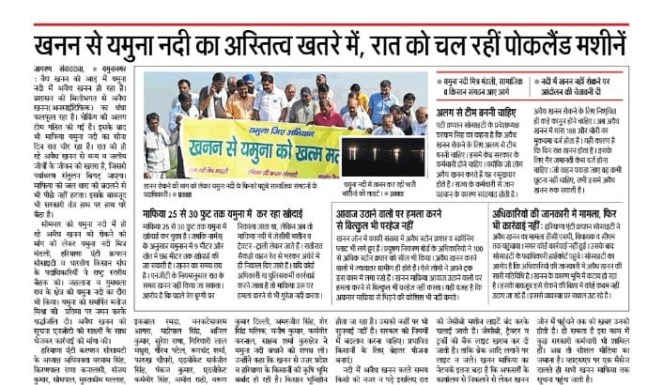
He has exposed mechanised instream mining in Yamuna during night hours, non-stop convoy of overload sand dumpers passing through police check posts, brazen mining activities posing threats to river embankments and a newly constructed bridge. He has also revealed the miners getting WhatsApp alerts about potential raids by complicit officials. While there has been routine action over his complaints, the government machinery has largely been ineffective in deterring the corruption and violations in sand mining leases.
In October 2024, he used drone images to draw attention towards mechanised instream mining in Yamuna river. He advocates for a minimum five year long ban on mining activities to let Yamuna replenish the minerals which has excessively and continuously mined from the river in last few years. This video report from the area shows the ongoing illegal mining activities in the river there. As per this Hindi report, Waryam Singh complained to CM regarding riverbed mining in close proximity to under construction bridge posing a potential threat to structural safety of the bridge. The bridge was being built at Nangli between Yamuna Nagar and Saharanpur costing about Rs. 140 crore.
This Jan 2025 report mentioned about his 2020 complaint regarding illegal miners using WhatsApp to monitor the activities of concerned govt depts. As per the report an SIT formed to probe the matter have taken no action on the issue. While the authorities claimed that they have been taking strict actions against illegal miners, Waryam Singh alleged that officials have turned a blind eye while heavy machines routinely extract sand during nighttime in the area.
7. Samana Manaska Sanghatanegala Janti Vedike-Karnataka; Catholic Sabha-Mangaluru
Like Mothers’ Union in Northeast, Samana Manaska Sanghatanegala Janti Vedike (SMSJV) in Karnataka has spearheaded a ssuccessful public protest against destructive sand mining activities in Netravati River islands in 2024.
As per Jun 2024 report, Pavoor Uliya Kudru, a small riverine island in the middle of the Netravati River has been shrinking due to illegal sand mining. Local residents said that despite repeated complaints, the dist administration & police dept have failed to take any action.
In 2014, the then DC of Dakshina Kannada, A B Ibrahim, had banned all types of sand mining within a 1km radius of the island in response to continuous complaints. However, illegal sand mining resumed in the area, allegedly with the tacit support of local police. Those who filed complaints have reported that their details were leaked to the perpetrators by the police.
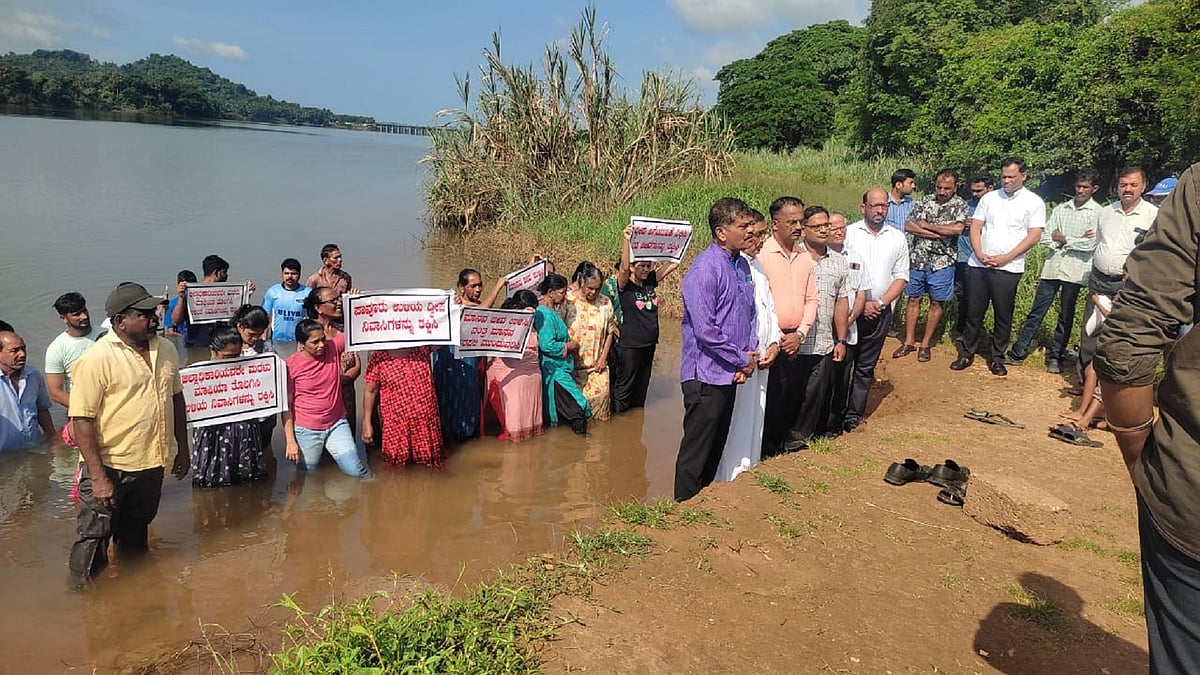
Responding to the locals’ plea, the Catholic Sabha Mangalore Pradesh, along with a coalition of like-minded organizations, visited Uliya Kudru inspected the affected site and called for immediate intervention by the district administration to halt the sand mining. During the visit, they raised “Save island, protect people’s life” slogans.
After this, the deputy commissioner (DC) formed a committee to investigate the matter & submit a report in a week. In following days, the local people expressed strong outrage on social media when the mining and geology dept (M&G) issued a press release rejecting these allegations.
Early in July 2024, the representatives of SMSJV urged Dakshina Kannada district in-charge Minister Dinesh Gundu Rao to save the Pavoor-Uliya Kudru from the onslaught of illegal sand extraction. SMSJV also demanded stringent action against M&G officials for allegedly joining hands with the sand mafia. During an official meeting chaired by the District Minister, the elected representatives also called for a complete ban on sand extraction near Pavoor-Uliya.
In late Sept 2024, to express solidarity with the affected residents, the members of Catholic Sabha, Mangaluru, and other pro-people organisations took out a march protesting unabated illegal extraction of sand from the Netravathi threatening the existence of Pavoor-Uliya Kudru (river island). Following this, the DC asked the concerned govt department officials to protect Pavoor-Uliya island by checking illegal sand extraction.
In 2nd week of Oct 2024, the Assistant commissioner (AC) Harshavardhan issued an order prohibiting all forms of sand excavation within a 2 km radius of Uliya Island, effective immediately. The order stated that except for public transportation by boat, all other activities such as sand transportation by boat or machinery, as well as the stocking and distribution of sand on riverbanks, are banned within the designated area.
Late in Nov 2024, the NGT have taken a suo moto case against illegal sand mining on Pavoor Uliya Island. Locals have alleged that the dist administration and police dept have failed to act against the illegal sand mining mafia, which is reportedly excavating the island’s land.
In Mar 2025, the residents of Kottaru Kudru and Gatti Kudru islands, located within the Harekal and Amblamogaru villages of Ullal taluk have expressed fear over rampant illegal sand mining. Addressing a protest organized by the ‘Save the Islands Committee’ in front of the M&G office, Furtado highlighted that nearly 40% of the families residing on these islands for generations are now at risk as half of the land has already vanished due to illegal sand mining.
8. Karimanal Ghanana Virudha Ekopana Samithi-Kerala & Green Kerala Movement
Probably the longest protest in the county, being staged under the aegis of the Karimanal Ghanana Virudha Ekopana Samithi (KGVES) against the sand removal in coastal area of Thottappally in Alappuzha district has completed 1,000 days on Mar 4 2024. In Aug 2024, the residents said that though dredging had not yet begun, measures were afoot to transport mineral-rich sand that had already accumulated on the land. We will oppose mining & transportation of mineral sand with all our strength,” said KGVES chair Suresh Kumar S.
Meanwhile another stiff protest against the deep-sea mining has just begun in Kerala. In Jan 2025, the fishing community organized a protest in the city against the move by Union ministry of mines to auction coastal and offshore mining sites of Kerala. The state govt has also expressed opposition to the Union govt’s move to carry out sand mining off the state’s coast.
The Green Kerala Movement too has strongly condemned the plan without conducting an environmental or social impact study. Despite the significant scale of the project, no ecological factors have been assessed. It warned that sand mining poses a long-term threat to the fisheries sector and the already fragile river dynamics. The Kerala Region Latin Catholic Council (KRLCC) has joined several groups, including fishers’ unions, to demand rolling back the Union govt’s plan.
While various fishers’ unions have threatened to launch a united agitation, the state govt has conveyed its disapproval, stating that it will affect the livelihood of the fisherfolk. “Kollam Bank is one of India’s regions rich in aquatic life, primarily due to its 1.5 meters of deep mud, which supports biodiversity. However, the mining process will remove the surface mud, potentially harming the fish,” said the president of Kerala forum of traditional fishermen.
9. People’s Efforts in Telangana & Tamil Nadu
Telangana: In May 2024, hearing the plea by ‘Manair Parirakshana Samithi’, the NGT termed the sand mining in Manair river illegal and imposed a fine of Rs 25 crore each on irrigation and mining depts and directed them to deposit the fine to the Godavari River Management Board as interim environmental compensation within three months. Formed by a techie, a retired librarian and a village secretary, the samiti had launched a public campaign against the illegal sand mining in the river in Peddapalli district. As part of their campaign, samithi members distributed pamphlets to residents highlighting the importance of protecting the river. It educated the villagers about the potential impact on the groundwater & irrigation facilities in the villages & enlisted the support of farmers, environmentalists & youth in its fight against the sand mafia.
Fed up with the official apathy, the residents of Nadigadda village under Telkapally mandal on in January 2025, staged a protest demanding stern action against those involved in illegal sand mining and transportation from River Dundhdhubhi.
Tamil Nadu: The Madras High Court in Jan 2025, directed the state govt to initiate immediate action to prevent illegal sand mining from govt and patta land on the Kosasthalaiyar river basin in Tiruvallur district while disposing of a petition filed by the Kosasthalai Aaru Matrum Kanimavala Pathukappu Sangam. The petitioner alleged that large-scale illegal mining is being conducted on govt land in the river basin, and mining is exceeding the permissible limits in these villages. The plea added that such illegal activity is being carried out with the active collusion of government officials, as no action has been taken to prevent illegal mining.
10. People’s Efforts in Assam, Arunachal Pradesh, Madhya Pradesh & Jharkhand
Assam: A complaint sent to the Central Empowered Committee (CEC) in July 2024, flagged the severe adverse impact of widespread sand mining and stone quarrying with heavy machinery in the Deithor and Rangsali rivers in Assam, violating of Supreme Court’s orders. These rivers play a vital role in maintaining the ecosystem of the region adjoining the rivers: Kaziranga National Park and Tiger Reserve and Kaziranga – Karbi Anglong Elephant Reserve.
In a letter, environmentalist, Mukrang Engleng wrote: “The impact of sand mining through machinery in the rivers has led to habitat destruction, erosion of riverbanks, alteration of river flow patterns, and disruption of aquatic ecosystems. It has also resulted in loss of biodiversity, the drastic decline the fish populations, and degradation of water quality posing health risk to both human and animal lives. Furthermore, sand mining has exacerbated flooding, as it alters the natural sediment balance of the river. Socially and economically, it has affected communities that rely on rivers for livelihoods, such as fishing and agriculture”.
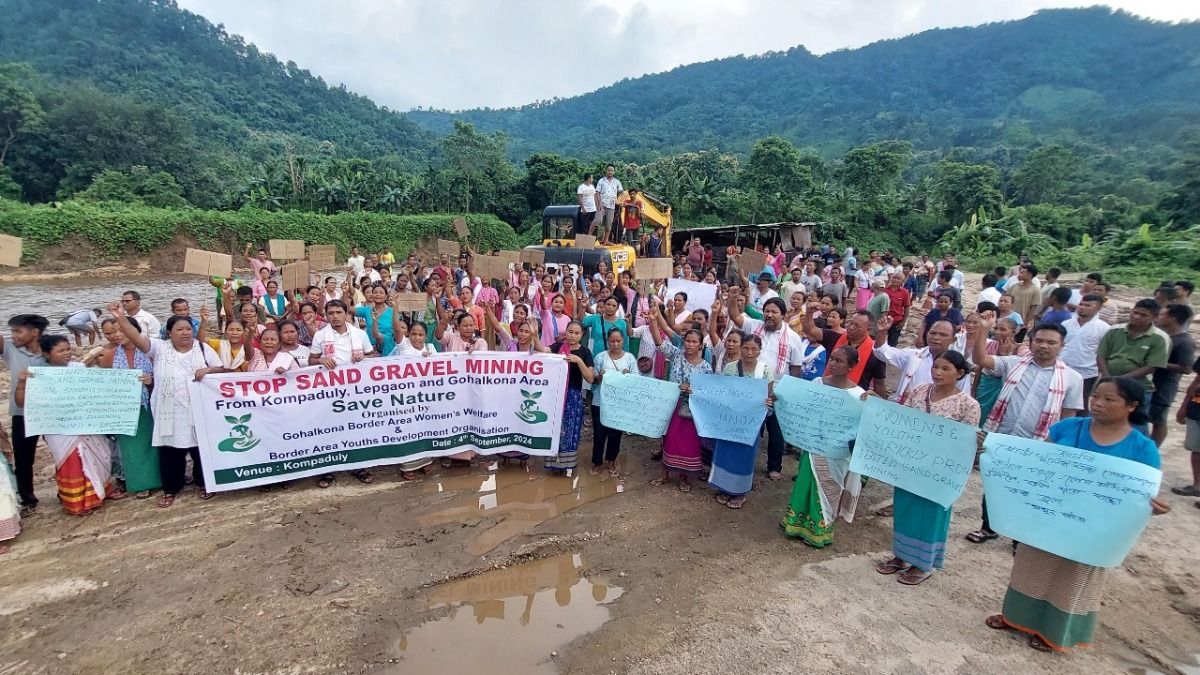
In September 2024, villagers from Kompaduli and surrounding areas raised objections to govt approved Gohalkona Sand Gravel Mining on the Boko River, alleging that the mining has caused pollution and a significant drop in the river’s water level. Protesters claim these changes are adversely affecting local agriculture and the environment. “The water levels are decreasing every day, and this is disrupting our cultivation and damaging nature,” one protester stated.
Arunachal Pradesh: In Arunachal Pradesh, the Mebo Dolung Yameng Kebang (MDYK) in July 2024 staged a protest in front of the East Siang DC office, demanding a complete ban on quarrying in Siku riverbed in Mebo reserve forest. The protesters said that collection of boulders and minor minerals from the Siku riverbed has been responsible for frequent change of the river’s course, causing massive soil erosion on its right bank every year. They said that the local villagers had donated their lands for creation of the reserve forest to protect environmental degradation.
Madhya Pradesh: During a public hearing, the Mehra village panchayat in Saikheda block of Narsingpur district, Madhya Pradesh in May 2024 unanimously resolved to not allow sand mining in villager rivers.
Jharkhand: Realising that NGT orders and administration efforts have turned futile in stopping illegal sand mining activities from Karo river, the villagers of Jariyagarh area in Khunti district in June 2024 started night patrolling and seizing scores of hvya trucks transporting illegally mined sand but the despite the effort and written complaints the local police failed to take action against the illegal miners.
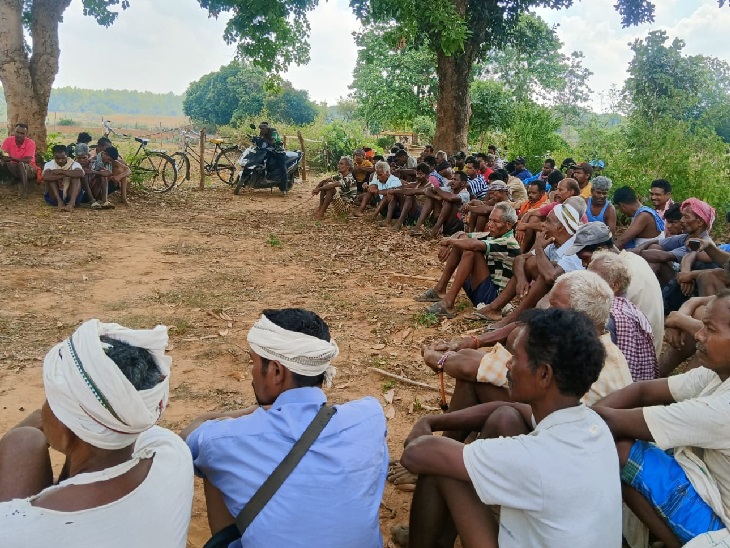
This report also throw lights on how the local policemen were supporting the sand mafias and in turn making lakhs of rupees on daily basis while the villagers and rivers were being adversely impacted.
Compiled by Bhim Singh Rawat (bhim.sandrp@gmail.com)

 SANDRP