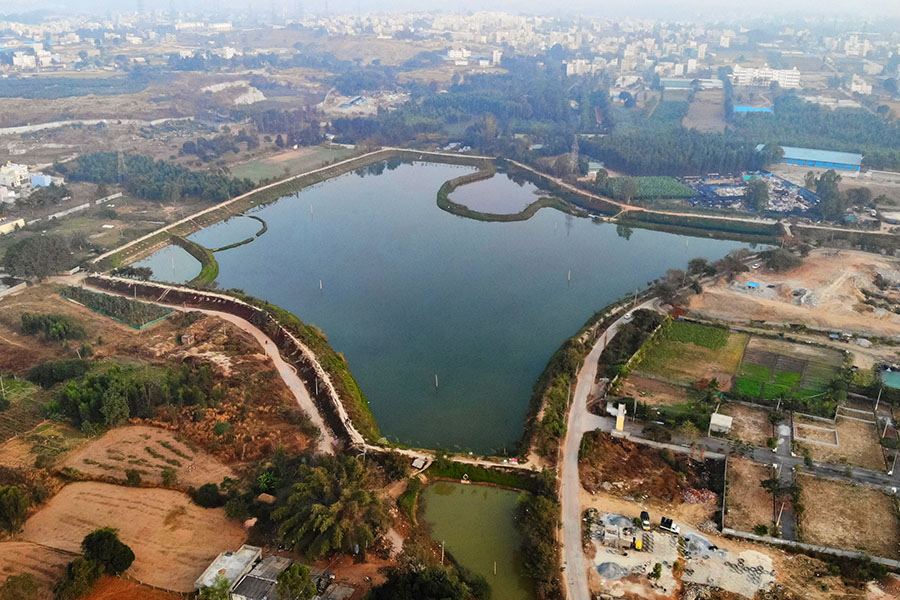
(Feature Image: An arial view of restored Bingipura lake in Bengaluru. Image: Idrees Mohammed/AFB, Source: Forbes India)
Marking World Water Day 2024, this report compiles top ten positive actions and initiatives by resident groups, organizations and local government bodies on water issues in urban India during the past one year. The report shows that joint and persistent efforts by citizen activists, experts and urban local bodies for protection and revival of water bodies including lakes, ponds, step-wells; optimum rain water harvesting and effective treatment of sewage can greatly resolve the water problems in Urban India. Undoubtedly, the most pressing issue is abysmal condition of waste water treatment and reuse of treated waste water in urban areas.
1. ‘Lake man’ helps “Lakes are lungs of the earth,” said the 43-year-old mechanical engineer Anand Malligavad, known to some as the “lake man” for his campaign to bring scores of them back to life. He began by studying the skills used during the centuries-long rule of the medieval Chola dynasty, who turned low-lying areas into shallow reservoirs that provided water for drinking and irrigation. The lakes stored the monsoon rains & helped to replenish groundwater.
He first drains the remaining lake water and removes the silt and weeds. Then he strengthens the dams, restores the surrounding canals and creates lagoons, before replanting the site with native trees and aquatic plants. His initial success eventually led him to work full-time in cleaning lakes, raising cash from company corporate social responsibility funds. So far, the report claims, he has restored 80 lakes covering over 360 ha, and expanded work into 9 other Indian states.
Malligavad visited 180 ancient lakes. He said he saw the “simple cost” they had taken to construct. The lake developers used only “soil, water, botanicals (plants) and canals”, he said. He persuaded his company to stump up around $120,000 to fund his first project, the restoration of the 14 ha Kyalasanahalli lake. Using excavators, Malligavad and his workers took around 45 days to clear the site back in 2017.
Malligavad said his work has carried some risk — he has been threatened by land grabbers and real estate moguls, and was beaten by a gang wanting him to stop. But the sight of people enjoying a restored lake gave him his “biggest happiness”, he said. “Kids are swimming and enjoying it”, he said, beside a restored lake. “More than this, what do you want?” https://www.forbesindia.com/article/lifes/anand-malligavad-indias-lake-man-cleans-up-critical-water-supplies/91385/1 (12 Feb. 2024)
Anand Malligavad has been invited by govt of UP and Odisha to revive their lakes. https://timesofindia.indiatimes.com/india/lake-man-relies-on-ancient-methods-to-ease-water-crisis/articleshow/103916870.cms (25 Sept. 2023)
2. Chennai Wells help apartments manage without water tanker Rain Centre, a voluntary organisation advocating rainwater harvesting, has been helping more apartments to use water from open wells to supplement the supply by Chennai Metropolitan Water Supply and Sewerage Board (CMWSSB) to meet the shortfall in their daily requirements. Residents of an apartment in R.A. Puram draw nearly 90,000 litres of water daily from the open well that has a groundwater within a depth of 10 feet. “We have been using water from the open well for eight years since Rain Centre desilted it. We didn’t turn to water tankers even during the 2019 drought,” said A.K. Subramanian, resident of R.A. Puram.
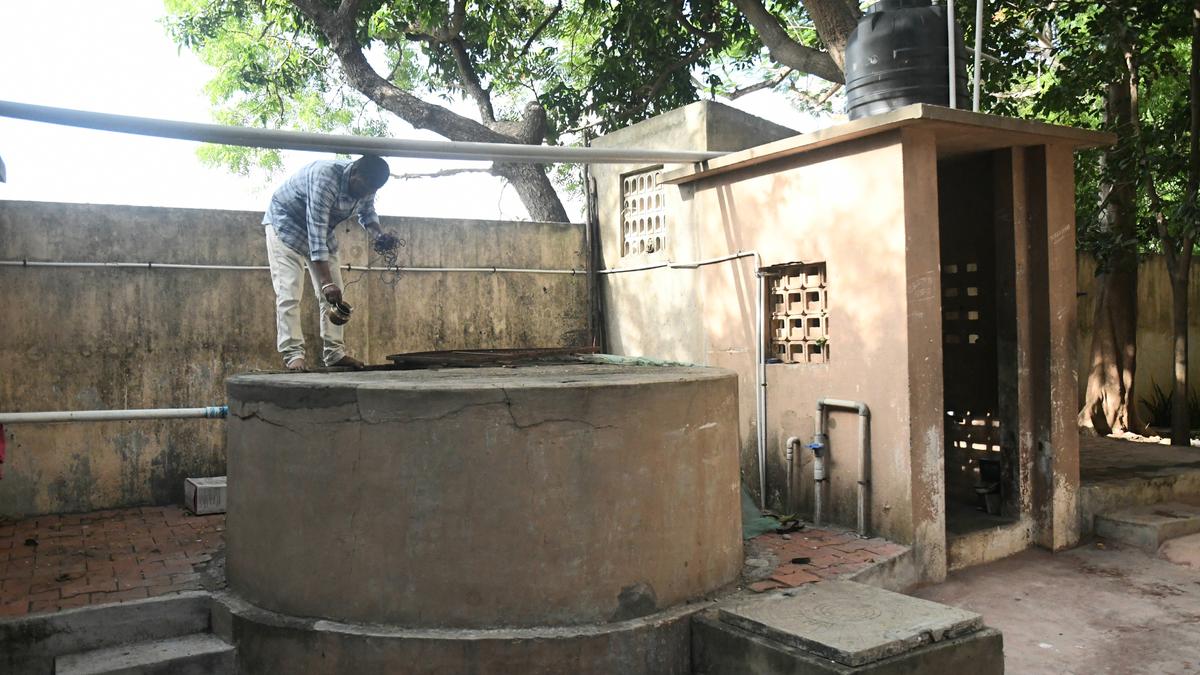
Similarly, some large apartments in MRC Nagar, Besant Nagar and Alwarpet are reaping the benefits of the shallow aquifer through the open wells. Six open wells in residential complex in MRC Nagar are yielding nearly 1.6 lakh litres of water daily to feed about 300 flats. Rain Centre (ph: 9677043869), which has been assisting residents in digging and desilting the open wells, found that some residential complexes in Rajiv Gandhi Salai have opted for open wells. The centre has dug 23 open wells in the past few months. https://www.thehindu.com/news/cities/chennai/open-wells-help-many-apartments-in-chennai-manage-without-booking-a-water-tanker/article67023972.ece (29 June 2023)
Apartment’s self-sustaining STP a model to emulate An apartment in Chennai’s Sholinganallur – The Central Park South, has set up a 135 KLD STP in a way that they do not have to rely on the tankers to remove the sludge. The sludge is also recycled in-house making the apartment complex self-sustaining when it comes to sewage management. Notably, the STP also functions in a way that it is free from foul odour. https://chennai.citizenmatters.in/stp-chennai-sholinganallur-apartment-building-rules-sewage-water-gcc-74297 (17 May 2023)
Residents to launch comprehensive audit for flood mitigation strategies To gain insight into flood mitigation measures – Citizen Platform’, an initiative from 2016- has been revived to address the effects of Cyclone Michaung. The forum is to conduct fieldwork to prepare an audit on the effects the incessant rain and inundation have on the city and its surrounding areas at a meeting on 30 Dec. https://www.thehindu.com/news/cities/chennai/chennai-residents-take-initiative-launch-comprehensive-audit-to-uncover-causes-effects-and-flood-mitigation-strategies/article67690503.ece (30 Dec. 2023)
3. Bengaluru Biome Env Trust: Reclaiming vanishing waters Apart from the Million Wells Campaign, Biome has impacted the water and commons landscape of Bangalore in other ways too. Their collaborations with research institutes in the sphere of sanitation and health, their work on water literacy with educational institutes as well as corporates, their expertise in helping communities adopt better water management methods, their insights to policymakers, are just a few highlights of their work. Their work in the areas of rainwater harvesting and water literacy in government and private schools within and around Bengaluru has been particularly impactful. One of the major outcomes of their efforts has been their recent association with the Central government’s Atal Mission for Rejuvenation and Urban Transformation (AMRUT) scheme. Biome is a technical partner in running a pilot project for tapping shallow groundwater as a water source in 10 cities including Patiala, Agra, Tumkur, Kochi and Surat. This initiative will eventually be implemented in more than 500 cities across the country. Biome is bringing water back to the surface, literally and figuratively. https://blog.rainmatter.org/biome-environmental-trust-reclaiming-vanishing-waters/ (24 March 2023)
Water scarcity is a governance crisis Excellent interview of Vishwanath Srikantaiha on Bangalore water issues. Great to see him also say that Bangalore does not need Mekedatu and needs to take its responsibility not only for water within the city, but far beyond its boundaries, including Cauvery catchment, western ghats and also Kolar, Chikballapur etc. Fantastic clarity of thought.
https://www.youtube.com/watch?v=FTywNe1Bl-0 (15 Feb. 2024)
4. Delhi-Hyderabad Collaboration revived crumbling Mughal ‘baolis’ The Nizamuddin baoli is the only stepwell in Delhi that still has underground springs. It was taken up for revival as part of the Nizamuddin Urban Renewal Project in 2007 by the Aga Khan Trust for Culture, the ASI and Delhi Municipal Corporation. After many rounds of talks with the dargah committee and the local community, work began on the collapsed portions, along with efforts to clean the step well of debris and 700 years of accumulated dust. Over 40 ft of sludge had to be de-silted. “The manual lifting of sludge required over 8,000 man-days of work,” stated the website.
The Aga Khan Trust for Culture and the Telangana government joined hands with Tata Trusts to take on restoration work at the 106-acre Qutb Shahi Complex near Golconda Fort in 2012. Here, the team discovered six stepwells that served as water-collecting chambers. The trust used traditional Indian techniques for conservation, carried out over 8 years. Some of these 16th century step wells were filled with earth over time, while others crumbled. Take the Badi Baoli, for example. According to a Tata Trusts article on the restoration work, another major challenge was removing 450 cubic meters of stone debris and silt from the Badi Baoli complex. It was lifted manually from a depth of about 21 metres and took 4,000 days to complete. Today, the step well collects over 33 lakh litres of rainwater, which is used to continue conservation work and helps save annual water carriage costs to the site.
From the deserts of Rajasthan to the gardens of Hyderabad, step wells built to collect runoffs and rainwater centuries ago may offer solutions to a world battered by depleting groundwater levels and climate change-induced drought. https://theprint.in/feature/around-town/eight-step-wells-2-cities-10-years-how-collaboration-revived-crumbling-mughal-baolis/1692848/ (31 Jul 2023)
Of the 3,000 stepwells documented by experts in India, only around 400–500 are in usable condition. But the long-overlooked architectural wonders are making a comeback, as a growing number of conservation architects, historians and urban planners fight to restore them. Their aim is to preserve the stepwells’ architecture and history — and provide a solution to India’s growing water crisis. https://www.dw.com/en/can-indias-ancient-stepwells-solve-its-water-crisis/a-67091265 (13 Oct. 2023)
5. Hyderabad A template to restore historic step wells A social enterprise led by a designer-turned-environmentalist in Hyderabad is charting a new course in restoring the most neglected historic masterpieces — step wells. The Rainwater Project founded by Kalpana Ramesh with the help of the Telangana government and a few corporates had taken the same template of rejuvenated 17th century Bansilalpet step well after 3 yr long effort to other places in Telangana. Until now, The Rainwater Project has restored at least 20 step wells across Telangana. 30 more are undergoing restoration. The water level in aquifers around the rejuvenated Bansilalpet step well has come up, its quality has improved, it has helped moderate flood and has provided a natural place for the people. https://www.deccanherald.com/india/telangana/a-telangana-template-to-restore-historic-step-wells-2707922 (08 Jan. 2024)
Stepwells in Kamareddy, Gadwal to get facelift Kalpana Ramesh, known for her efforts in restoring the stepwell at Bansilalpet, has taken up the initiative to restore the stepwells in the town. As part of it, three stepwells in Gadwal are all set to be given a facelift by removing garbage, vegetation, desilting, structural restoration and beautification. She signed a MoU for the first phase of restoration of three stepwells in Gadwal with the district collector Kranthi Valluru on May 9. Bangalore-based NGO Say Trees has extended its support for the rejuvenation, she said. https://telanganatoday.com/telangana-stepwells-in-kamareddy-gadwal-to-get-facelift (15 May 2023)
Historic stepwells to get a facelift Two historic stepwells of Osmania University are set for a facelift. On Apr 2, over 100 students and volunteers from various organisations joined hands in cleaning the periphery of the stepwell. The restoration is being carried out under the guidance of ‘The Rainwater Project’ team. “The well near Adikmet bus stop has a lot of waste being dumped by fruit sellers. The other well inside University College of Education is secluded but filled with vegetation. Firstly, the waste will be removed, de-vegetation & de-silting will be done with the help of HMDA. After that the structure will be restored,” said Kalpana Ramesh.
About two tonnes of legacy waste was removed in and around the two stepwells on Apr 3 by the Lions Club, St Francis college, Clean Green team and Fenko Matt. “The biggest challenge will be architectural restoration and mobilising funds. But we are hopeful that organisations will come forward in restoring these heritage structures,” said Ramesh. Apart from these two stepwells in OU, there is also a plan to restore two more in the adjacent EFLU campus. https://timesofindia.indiatimes.com/city/hyderabad/two-historic-stepwells-on-osmania-university-campus-all-set-to-get-a-facelift/articleshow/99226450.cms (04 April 2023)

The historical stepwell at the College of Education was built as a source of water during the arid season as well as a meeting place for artists and scholars, but it was neglected for several years by the successive governments. https://www.deccanchronicle.com/nation/in-other-news/030423/mah-laqa-bai-stepwell-restoration-begins.html (03 April 2023)
After completing the restoration works of the Mah Laqa Chanda Bai stepwell, the varsity administration is planning to revive two more stepwells in the campus. https://telanganatoday.com/reviving-historical-bowlis-telangana-govt-takes-up-restoration-of-stepwell-on-ou-campus (04 April 2023)
6. Gurugram Revival ponds raises water table Groundwater level in villages of the district has increased considerably in the past three years. Thanks to the “GuruJal” initiative, which aims to address the issues of water scarcity, groundwater depletion, flooding and stagnation, dry ponds in 27 villages of the district have been revived and, as a result, the average water table has increased by 100 per cent.
About 80 per cent of the ponds have been revived with treated water. The district administration has so far revived 27 ponds. The work is in progress to revive 33 more ponds, while the authorities have shortlisted 18 more water bodies that will be reclaimed.
Deputy Commissioner Nishant Yadav said, “The revival of ponds has been a game-changer for the city. The city was in the dark zone and struggling to treat waste water. The revival of ponds not just ended water table woes in many areas, but also helped the authorities design a model for treating and reusing waste water.” The GIS mapping by the Gurugram Metropolitan Development Authority has identified 320 ponds on panchayat land and 18 water bodies in urban areas that can be revived. https://www.tribuneindia.com/news/haryana/revival-of-ggram-ponds-raises-water-table-494976 (07 April 2023)
7. Pune PMC provided 16cr litres of treated sewage for construction activities PMC has provided 16 crore litres of treated sewage water for construction activities in the last year, with 16,714 tankers dispatched to various stakeholders. The water is tested and can be used for this purpose. The solid waste department instructed contractors and builders to use treated sewage water last year. Aniruddha Pawaskar, chief superintendent engineer of the water supply department, said action has been taken against 25 people for using drinking water for vehicle washing and other activities. https://www.hindustantimes.com/cities/pune-news/pune-municipal-corporation-provides-16-crore-litres-of-treated-sewage-water-for-construction-activities-in-last-year-101683394604527.html (06 May 2023)
8. Puducherry Mandatory for govt offices to use treated water Keen on saving 17 MLD of treated sewage water from draining into the sea, the Puducherry government has made it mandatory for all government offices in Puducherry to use treated water for toilet flushing and watering gardens, among other non-potable purposes. The PWD has laid pipelines from its STP in Dubrayapet for use of the ultra-filtered water for gardening in Bharathi Park and the Government Botanical Garden, located in the Boulevard.
All govt offices have been directed to utilise the ultra-filtered water from Dubrayapet STP to the maximum extent possible and to recommend all stakeholders under their control for efficient use of treated sewage so as to conserve water. The executive engineer of the public health division of PWD has been appointed as the nodal officer for this purpose, an official said. The PWD is also coming up with a waste water management policy, aimed not only at treatment of water but also its utilisation. As part of the policy, the PWD would be closing all open drains & shifting to underground drainage. https://www.thehindu.com/news/cities/puducherry/puducherry-makes-it-mandatory-for-government-offices-to-use-treated-sewage-water-for-bathrooms-gardening/article67653335.ece (19 Dec. 2023)
9. CEEW Study Reusing treated wastewater in irrigation could’ve reduced emissions The study by ‘Council on Energy, Environment and Water (CEEW)’ found that reusing treated wastewater in irrigation in India could have reduced GHG emissions by 1.3 million tonnes in 2021. “Our analysis suggests that the available treated wastewater would have irrigated 1.38 Mha in 2021, which would have reduced pumping in 3.5 per cent of the groundwater-irrigated area. Further, this would have led to a reduction of 1 million tonnes of GHG emissions. Additionally, on account of the inherent nutrient value of treated wastewater, fertiliser consumption would have reduced, resulting in further reduction of GHG emissions by 0.3 million tonnes,” it said.
The market value of the total available treated wastewater in 2021 was Rs 630 million if there was a mechanism in place to sell the treated wastewater to different sectors for reuse. “The market value will substantially increase to over Rs 830 million in 2025 and Rs 1.9 billion in 2050 at the current market rate,” the study found.
The study said nine times the area of New Delhi could have been irrigated using the treated wastewater available in India for the irrigation sector in 2021. “Further, about Rs 966 billion would have been the revenue generated from the agricultural yield produced from this area of land,” it said. Over 6,000 metric tonnes (MT) of nutrients could have been recovered from the available treated wastewater in 2021, generating savings of more than Rs 50 million on account of the corresponding reduction in synthetic fertiliser use, it said.
India, presently, treats only 28 per cent of the total sewage it generates per day from the urban centres (CPCB 2021). “Out of the 72,368 MLD of sewage produced in urban centres, the actual treatment is of only 20,236 MLD (CPCB 2021). Class I cities (those whose population is above 1,00,000) and class II cities (with populations of 50,000 to 1 lakh), which represent a major share (72 per cent) of the total urban population, produce an estimated 38,254 MLD of sewage, of which only 30 per cent is actually treated (CPCB 2021). The untreated wastewater is then discharged into freshwater bodies such as rivers. https://www.business-standard.com/india-news/reusing-treated-wastewater-in-irrigation-could-ve-reduced-emissions-study-123032800673_1.html (28 March 2023)
Surat & Bengaluru lead in used water management The CEEW report introduces the Municipal Used Water Management (MUWM) Index, assessing 503 ULBs in 10 states that have implemented treated used water reuse policies. This index evaluates ULBs across five criteria: Finance, infrastructure, efficiency, governance, and data and information, categorising them as Aspiring, Promising, Performing, Leading, or Outstanding.
As per CEEW analysis, the formulation of a dedicated action plan for used water management at the ULB level is a key enabler of their noteworthy performance. For instance, Surat has developed an action plan for the treatment and reuse of used water, which sets reuse targets for the city. Similarly, Bengaluru has formulated a comprehensive vision document for water management in the city, with quantitative and qualitative targets for sewage management. https://www.indiawaterportal.org/articles/surat-and-bengaluru-lead-used-water-management (12 March 2024)
This report talks about how treated sewage is recycled in cities of India, including for drinking water in places like Bangalore, Chennai, Delhi, Devanhalli and Surat. https://www.hindustantimes.com/india-news/water-conservation-in-era-where-flooding-drought-collide-101703788059661.html (30 Nov. 2023)
10. Report India has potential to treat & reuse 80% of wastewater The central govt released the National Framework on Safe Reuse of Treated Water (SRTW) in November 2022. The Framework expects states to set targets for treatment and reuse of water generated by households and commercial enterprises in both urban and rural settings. It has given recommendations on setting up a technical cell to support SRTW projects, drafting a locally relevant policy on reuse that must be reviewed regularly, planning and financing conveyance (pipelines, tankers, aqueducts and other modes of transporting water), and so on.
It also addresses challenges that may be faced in both rural and urban areas while implementing SRTW projects. It also outlines different types of business models that may be adopted by stakeholders according to the end-use. The Framework recommends that Treated Waste Water (TWW) can be utilised for municipal uses like landscaping, parks, toilet flushing and firefighting with appropriate quality norms. For groundwater recharge it advises stringent quality standards, monitoring and compliance measures. https://india.mongabay.com/2023/06/indias-potential-to-address-water-scarcity-through-wastewater-treatment-and-reuse/ (23 June 2023)
Some Relevant Reports
MoJS Catch the rain 2024 campaign launched The Union Minister for Jal Shakti, Shri Gajendra Singh Shekhawat launched the fifth edition of “Jal Shakti Abhiyan: Catch the Rain” campaign on 9th March, 2024, at the NDMC Convention Centre in New Delhi. The campaign, themed “Nari Shakti se Jal Shakti,” emphasises the integral role of women in water conservation and management. The campaign comes under the National Water Mission, Department of Water Resources, River Development & Ganga Rejuvenation in collaboration with Department of Drinking Water & Sanitation. The Union Minister also virtually launched two books namely “Jal Shakti Abhiyan 2019 to 2023- The Journey for Sustainable Water Future” and “101 glimpse of Women Power: Through the prism of Jal Jeevan Mission”. https://pib.gov.in/PressReleaseIframePage.aspx?PRID=2013162 (10 March 2024)
Report India’s first project to tackle urban floods approved PM Narendra Modi has sanctioned an ambitious urban flood mitigation project for Chennai, with a budget allocation of Rs 561.29 crore under the National Disaster Mitigation Fund (NDMF). The ‘Integrated Urban Flood Management activities for Chennai Basin Project’ represents a proactive measure to address the challenges posed by urban flooding. It is designed to enhance Chennai’s resilience to such natural disasters by implementing comprehensive flood management strategies. The project will focus on improving the city’s infrastructure to better manage excessive rainwater, thereby reducing the risk of flooding and minimizing the impact on residents’ lives and livelihoods. https://www.indiatoday.in/environment/story/chennai-deluge-urban-flood-mitigation-project-cyclone-michaung-2473115-2023-12-07 (7 Dec. 2023)
Chennai Resident groups make Chitlapakkam flood-free The Chitlapakkam Rising Team and RWAs in the area diligently record flooding observations, properly identify sources of floods and work out technical solutions that are put forward to the State government every year. Their efforts have borne fruit, as during the recent heavy rainfall caused by Cyclone Michaung, the area did not get flooded. On Dec 5th, the day after record rainfall caused havoc in Chennai, Chitlapakkam remained largely flood-free — even after 50 centimetres rainfall was recorded within 48 hours in the locality. What would have earlier taken a week to drain, this time within 12 hours of the downpour, the most flood-prone streets were free of inundation.
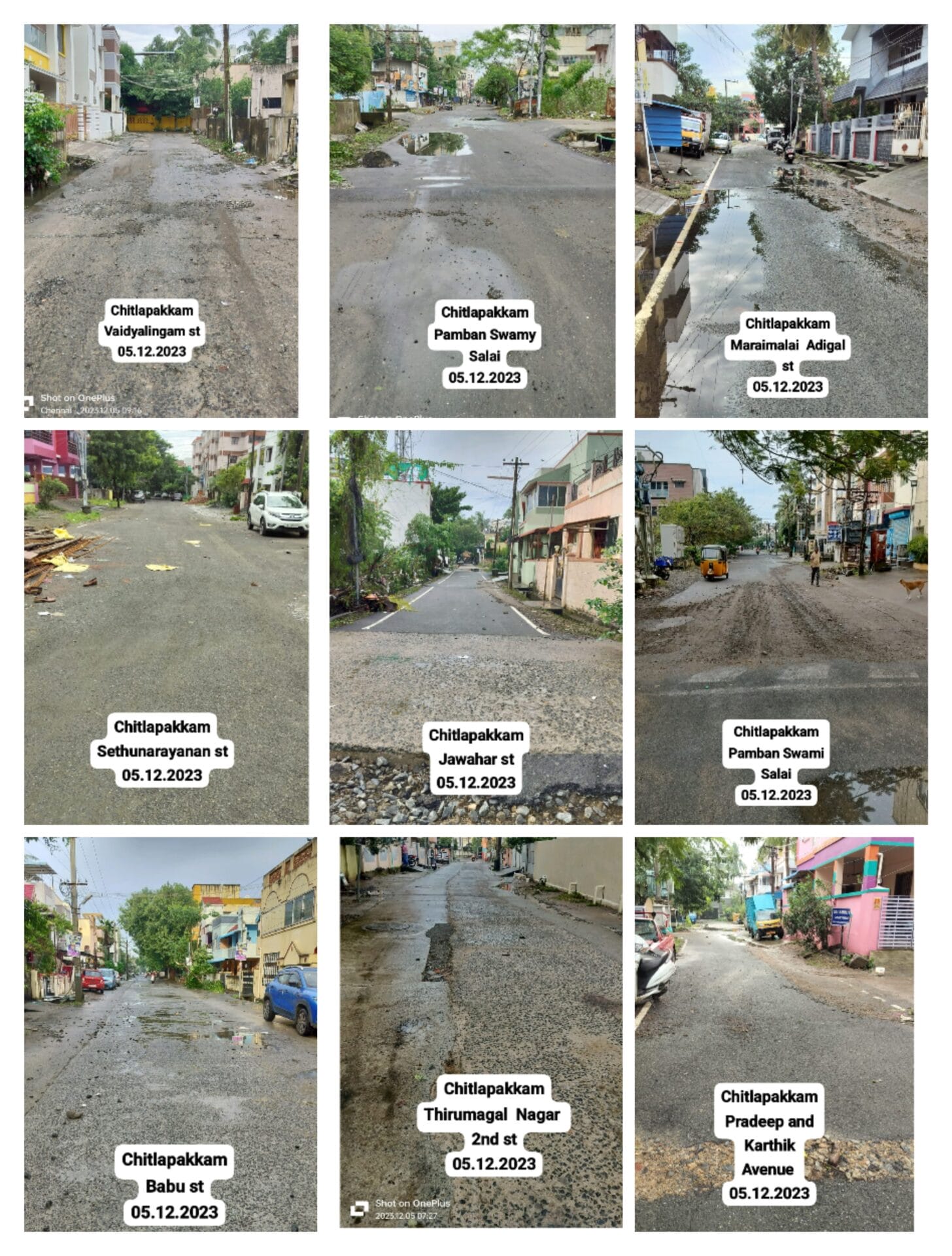
With its persistent efforts, the Chitlapakkam Rising team and more than 15 RWAs have shown how community participation in active governance can produce amazing results. The goal is to work with the government to make our town 100% water-resilient and flood-free. https://citizenmatters.in/chitlapakkam-flood-mitigation-chennai-floods-lake-rejuvenation-38414 (22 Dec. 2023)
The residents of Chitlapakkam have shown great care and concern for the lake’s preservation over the years. Almost all Chitlapakkam residents have contributed Rs 100 each to construct a bund around the lake. Without the bund, the lake could have been lost to encroachments a long time ago. Despite such efforts, the lake has shrunk in size and has been affected by pollution and encroachments over the years. Ironically, the first encroachments were by the govt itself. https://chennai.citizenmatters.in/chennai-rwa-chitlapakkam-ngo-tn-government-bund-preservation-79383 (20 July 2023)
Between 2017 and 2019, when Chitlapakkam Rising gave a call for action, lake volunteerism grew. Lake volunteers would clean the lake, submit petitions to government departments concerned, and also knock on the doors of the judiciary to have the unit removed from the lake. Looking back, the mass cleaning drive on June 2,2019 — ‘Saving Chitlapakkam Lake’ — was a watershed event. https://www.thehindu.com/news/cities/chennai/chitlapakkam-lake-festival-an-exercise-to-showcase-a-peoples-movement/article66900255.ece (27 May 2023)
Bengaluru As water crisis rages, well-diggers sought-after With the city residents trying everything— from digging borewells to water rationing— to tide over the present water crisis, traditional well-diggers are busy. People have shifted to traditional methods to find water and improve the groundwater table. Well-diggers are in demand for not just digging wells and desilting them but even for setting up rainwater harvesting units & recharge pits. A section of residents who are drilling borewells, including BWSSB engineers, are seeking the help of well-diggers to know the availability of water before sinking borewells. https://www.newindianexpress.com/states/karnataka/2024/Mar/20/as-bengaluru-water-crisis-rages-well-diggers-most-sought-after (20 March 2024)
Start-ups turn wastewater into a resource Experts and start-ups alike are working on water management and distribution in a mission to save groundwater and leave enough for lakes and water bodies to be recharged. https://www.moneycontrol.com/news/opinion/how-bengaluru-start-ups-turn-wastewater-into-a-resource-11611381.html (27 Oct. 2023)
WELL Labs has partnered with the Swiss Federal Aquatic Institute of Science & Technology to research decentralised wastewater treatment and reuse and enable their adoption in Bengaluru. https://welllabs.org/bengaluru-water-systems-cost-effective/ (22 Dec. 2023)
The author of this article advocates use of tap aerators, that can reduce the flow of water from a tap from 12-18 LPM to 3-6 LPM (3 for handwash tap & 6 for kitchen tap) on mass scale, making it compulsory. https://www.deccanherald.com/india/karnataka/bengaluru/a-million-litres-a-day-solution-to-bengaluru-s-water-crisis-2920215 (04 March 2024)
Mangaluru Padre suggests building RWH tanks to address scarcity in urban areas Rain water harvesting crusader and Executive Editor of Adike Pathrike, a Kannada farm monthly, Shree Padre suggested that water scarcity in urban areas in the coastal belt can be solved in two years by harvesting rain water on a mission mode by adopting site specific methods. The senior journalist reiterated the need to open ‘rain centres’ in each district to enlighten people on rain water harvesting and display success stories. They should include demonstration units. The centres should be able to guide people on rain water harvesting. They can be set up in public-private partnership. https://www.thehindu.com/news/cities/Mangalore/shree-padre-suggests-building-rain-water-storage-tanks-in-urban-areas-to-address-scarcity/article66746928.ece (17 April 20223)
Hyderabad 5 parks selected to tackle urban flooding In novel initiative, five strategically selected parks in Hyderabad have been identified to be part of a pilot project that aims to conserve rainwater and find innovative solutions to the urban flooding. In collaboration with GHMC, the initiative is undertaken by The Rainwater Project and is expected to be completed by the end of March. Kakatiya Park in Habsiguda, KLN Yadav Park, Indira Park, GHMC Park in Sainikpuri, and Techno Park are the five chosen parks for the project where different interventions according to the terrain of the parks will be used to set up RWH systems.
The Ministry of Housing and Urban Affairs (MoHUA) under AMRUT 2.0 rolled out a Shallow Aquifer Management (SAM) project with the National Institute of Urban Affairs. They selected 10 cities to fund new ways of tackling this problem. Apart from the Rs 20 lakh sanctioned by MoHUA, Commissioner Ronald Rose has arranged for additional funds to enhance the efforts. A detailed project report has been submitted by The Rainwater Project and work is underway. https://telanganatoday.com/hyderabad-parks-as-urban-flooding-solution (10 Feb. 2024)
Pune RWH keeps tankers at bay Three societies on the Baner-Pashan Link Road which had installed rainwater and surface water harvesting systems are now tanker-free despite the intense summer this year in which many other societies had to call for such water supply. They have urged more societies to also implement such water systems while asserting that most systems require annual cleaning of the filters without which they can stop functioning. Prabhudattsinh Rana, a resident of Kumar Sahwas, urged members of other societies to install the systems in pre-monsoon season. https://timesofindia.indiatimes.com/city/pune/rainwater-harvesting-keeps-tankers-at-bay-this-summer/articleshow/91730493.cms (23 May 2022)
Delhi ₹5L fine on properties without functional RWH system The Delhi government has proposed slapping an environmental compensation of up to ₹5 lakh on property owners with an area of at least 100 square metres who fail to maintain a functional rainwater harvesting system. In a report submitted to the NGT recently, the AAP government in the national capital said the penalty could be increased by 50 per cent for non-residential units. The Delhi govt had made RWH systems mandatory in 2012 and non-compliance attracts a penalty of one-and-a-half times the water bill amount. A 10-per cent rebate is given on the water bill if an RWH system is installed. The city govt also said the DJB has been asked to withdraw the rebate given on water bills to the societies and institutions that do not have a functional RWH system. https://www.hindustantimes.com/cities/delhi-news/delhi-govt-suggests-fine-of-up-to-rs-5l-on-properties-without-functional-rainwater-harvesting-system-101688559219865.html (5 Jul 2023)

Delhi PWD has constructed 82 rainwater harvesting pits over the last one year to curb waterlogging during the monsoon as well as to recharge groundwater. https://indianexpress.com/article/cities/delhi/delhi-pwd-rainwater-harvesting-pits-curb-waterlogging-groundwater-8676692/ (21 June 2023)
Una Rainwater finds its natural course With its simple solution of ‘deepen and widen the drain before rain’, the Una town shows how to overcome waterlogging problem. https://indianexpress.com/article/cities/chandigarh/in-una-rainwater-finds-its-natural-course-locals-an-end-to-their-woes-8953463/ (24 Sept. 2023)
Opinion Decentralisation is solution to sanitation crisis Tikender S Panwar The CPCB in 2022 reported about the gaps existing in treatment capacity within different cities based on their population size and tier. In Class I cities, with a population exceeding 1 million, the treatment capacity gap stands at approximately 67 per cent. Similarly, in Class II towns, with a population range of 50,000 to 100,000, the treatment capacity gap is notably higher, at around 95 % — highlighting a significant disparity.
Urban planning models are top down and inherently flawed. The solution is not adding more water to the toilet, rather treating faecal matter in a decentralised manner. One of the ways could be small faecal sludge treatment plants. In addition, local governments must be empowered and the water and waste utility should be under their control, instead of parastatals running them. The STPs, instead of privatising them, should be run by the city governments. Last, but the most important is the people who are engaged in the city sanitation process. Rather than privatising and outsourcing their services, they must be embedded in the city development process. https://www.deccanherald.com/opinion/world-toilet-day-the-solution-to-the-sanitation-crisis-is-decentralisation-2776196 (18 Nov. 2023)
Integrating rainwater into groundwater management is an important strategy. https://www.freepressjournal.in/business/integrating-rainwater-into-groundwater-management (09 June 2023)
Study Researchers develop nano-powder to purify water The team adopted a ‘green chemistry’ approach to synthesise the material without producing any by-product that can be hazardous to the environment. The research work, published in the peer-reviewed Journal of Sol-Gel Science and Technology, discovered that the size of the nanopores plays a critical role in controlling the speed of nanomaterials in purifying water. This occurs especially when the semiconductor Indium Sulphide is made in the form of nanopowder containing nanopores.
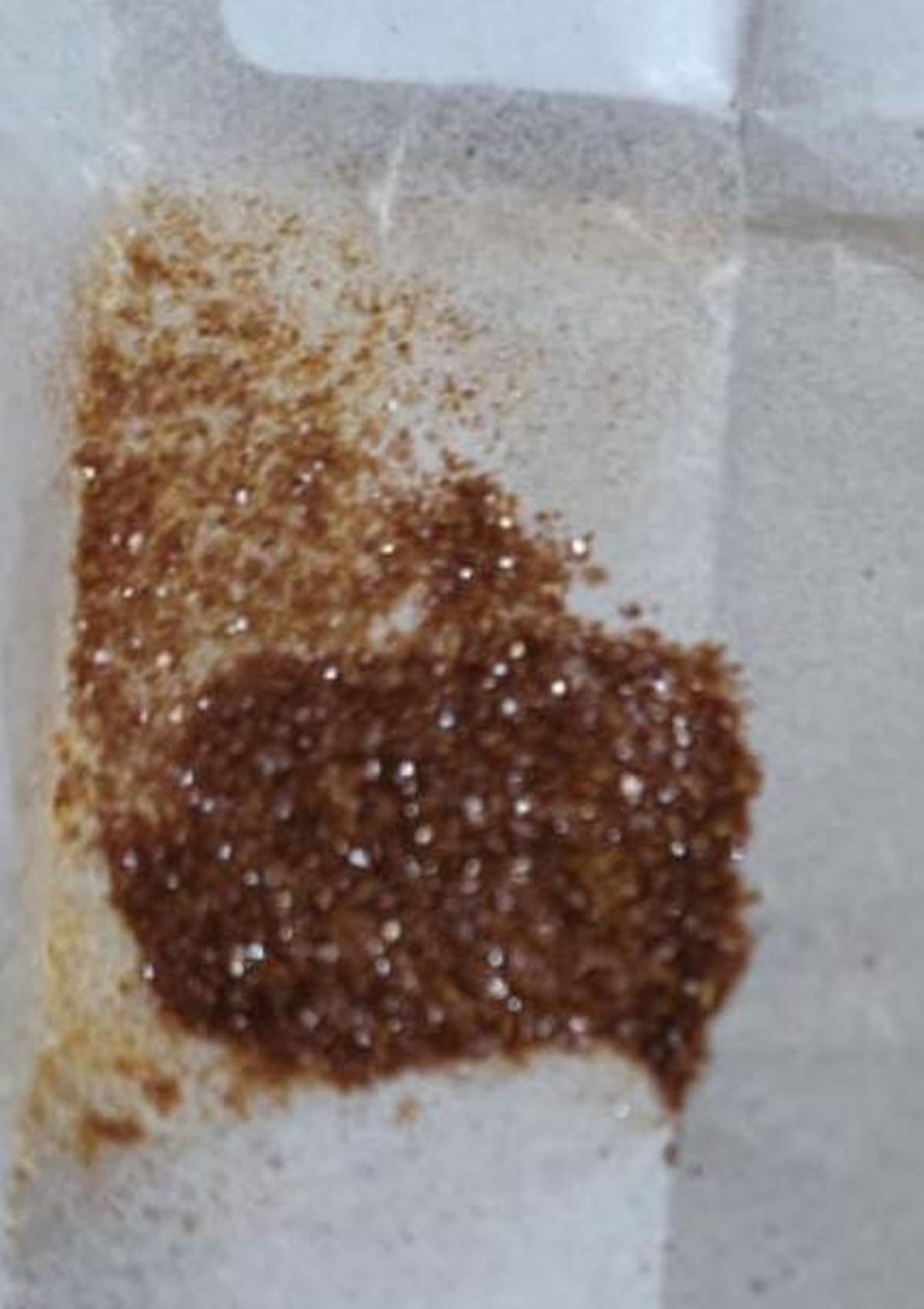
The team could achieve 94% efficiency while purifying a water sample contaminated with Sulforhodamine B, a bio-refractory aromatic pollutant widely used for cancer testing. An efficiency of 92% was recorded during purification of water contaminated with dye molecules from the textile industry. The researchers have also developed a process to remove the absorbed pollutant from the nanomaterial and reuse it for water purification. However, repeated use could retard its efficiency. https://www.thehindu.com/news/national/kerala/kerala-university-researchers-develop-nanopowder-to-purify-water-without-electricity/article67730813.ece (15 Jan. 2024)
New method of extracting chemicals from wastewater Chinese scientists have proposed a new method of transforming wastewater contaminants into valuable chemicals using sunlight. The study by researchers from the Shenzhen Institute of Advanced Technology of the Chinese Academy of Sciences, Harbin Institute of Technology and other institutes, was recently published in the journal Nature Sustainability.
In the study, the researchers set out to convert pollutants from wastewater into semiconductor biohybrids directly in the wastewater environment. The concept involves utilizing the organic carbon, heavy metals and sulfate compounds present in wastewater as the raw materials for constructing these biohybrids, and subsequently converting them into valuable chemicals using sunlight. https://news.cgtn.com/news/2023-12-16/Scientists-identify-new-method-of-extracting-chemicals-from-wastewater-1pzD6p8Q2hq/index.html (16 Dec. 2023)
Complied by Bhim Singh Rawat (bhim.sandrp@gmail.com)
You may also like to see: –WWD 2024: Top Ten Positive Actions from Rural India

 SANDRP