Dams · Ganga

Haryana Rivers Profile: (Part-II – Ganga Basin)

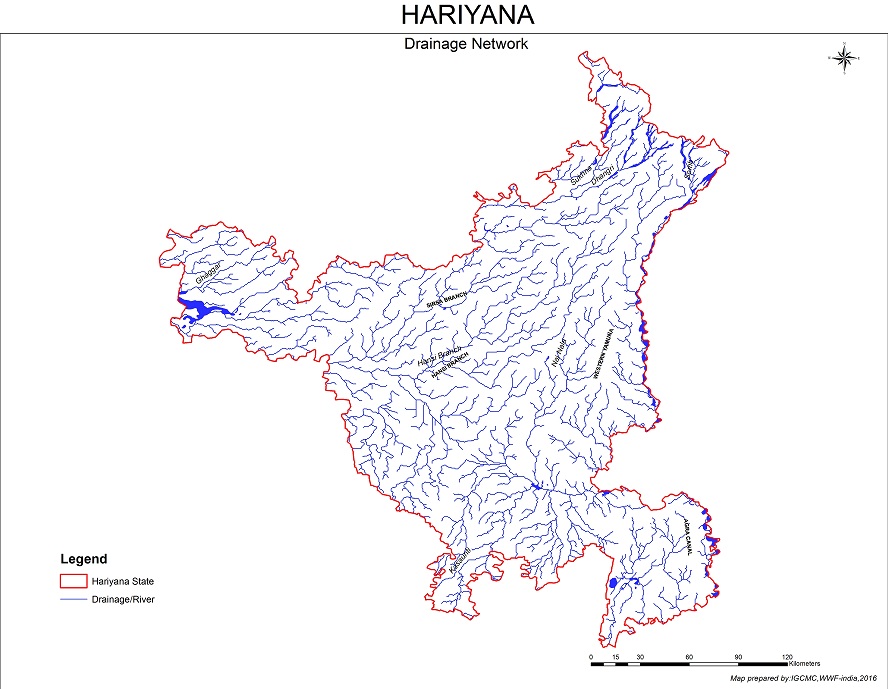
Yamuna Basin:  River Yamuna[1] accounts for 7.10 % of the total geographical area of the country. The Haryana state forms 6.5%[2] of the river basin. It drains an area of 366,223 square km in the Gangetic plain and constitutes 40.2% of Ganga Basin. The river annually carries 10,000 cubic billon meters (CBM) of water of with 4400 cbm is used for irrigation.  Yamuna river basin forms the upper sub-basin of Ganga river[3] the total area of which is 35798.19 square km comprising of 47 water sheds. 

Yamuna river originates from Bandar Punch glacier in Uttarkashi district of Uttarakand. The river flows through about 200 kilometers before reaching Haryana State at Shivalik Hills in Yamuna Nagar district. In the same district the river is trapped in Hathini Kund Barrage located in Kalesar National Park.

Continue reading “Haryana Rivers Profile: (Part-II – Ganga Basin)”

Dams · Indus

Haryana Rivers Profile: (Part-I – Indus Basin)

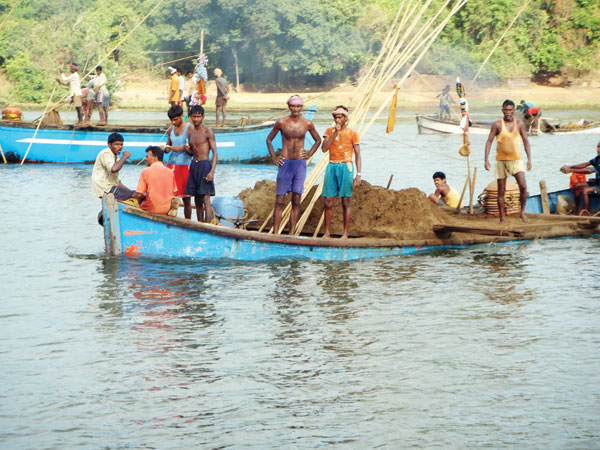
India is a land of several great rivers[1]. Haryana[2] the 20th Indian state has also been enriched by numbers of rivers, streams and rivulets.  These rivers only strike public discourses during monsoon when they flood human habitations although pollution and sand mining incidents are routinely covered. Moreover there is no Government Department in the State which is in control or possession of complete information on the rivers of the State, as the various State Government Agencies in limited manner deal with specific issues affecting the rivers and there are Government Agencies also whose plans or projects impact the rivers in adverse manner. This two part blog report from SANDRP strives to present a picture on the rivers of Haryana. The State is broadly divided by two basins: Indus and Ganga. This first part of the blog mainly focuses on rives which are part of Indus basin. The second part will bring information of other rivers in the State which join the Ganga basin.  Apart from putting together the basic facts, the blog series also highlights the key issues and present day status of these river systems.

Continue reading “Haryana Rivers Profile: (Part-I – Indus Basin)”

Dams · DRP News Bulletin

DRP News Bulletin 14 Nov 2016 (Northeast Monsoon Failing, Water Crisis in South India to Become Worse)

To provide much-needed succour to those reeling under severe drought and facing acute drinking water shortage, as part of temporary drought-mitigation measures, the district administration has established helplines in all seven taluks.

A look at impacts of failing Northeast Monsoon on 4 South Indian States 

South India Northeast Monsoon Failing; Water Crisis To Become Worse Andhra, Tamil Nadu, Kerala & interior Karnataka generally receives good rains during the Northeast Monsoon period that commences from Oct until Dec. However, this year, rains have remained scanty over entire Southern India region. Northeast Monsoon has also set in quite late during Oct end. As of now excluding scattered rain events, Monsoon like heavy rains are still far from coming to the southern region of the country. This is a clear indication of possibility of drought-like conditions that might prevail over south peninsula during Northeast Monsoon. In a nutshell, the picture is not very encouraging for next few days and also any significant increase in rains are not foreseen over the southern regions of the country.

Continue reading “DRP News Bulletin 14 Nov 2016 (Northeast Monsoon Failing, Water Crisis in South India to Become Worse)”

Dams · DRP News Bulletin

DRP News Bulletin 07 Nov 2016 (India Rivers Week 2016 – Presenting the Positive & Beautiful side of India’s Abused Rivers)

India River Week-2016 to focus on State of India’s Rivers Since time immemorial, rivers have held a coveted place in the mindscape of Indians. Rigveda has dedicated suktas on mighty rivers like Sindhu describing not only the river, but its tributaries, its flow, its myriad paths, the glaciers and lakes which feed it. Across India, local cultures are replete with evocative river stories, river festivals and several rituals which bring rivers in the homes and hearts of people. And yet, Indian rivers remain some of the most abused in the world.

It’s natural for rivers to be in the news during the monsoon or a drought, but that is not the only reason why rivers are being discussed these days.

Rivers are indeed grabbing headlines, be it Cauvery or the Indus or the mindless plan of River Interlinking. But while that happens, are we discussing rivers at all? We are discussing conflicts and interstate issues, even geopolitics, but we have very successfully cut our rivers and the hydrological systems including the catchment, headwaters, groundwater, wetlands, lakes and estuaries into convenient pieces: water supply, water sharing, irrigation, hydro-power, drinking water supply, sanitation, pollution, flood control. It seems, most of the time, rivers are in the news for all the wrong reasons!

For example, the Cauvery is in the news for the never-ending dispute between Karnataka and Tamil Nadu on sharing of its waters, a conflict that keeps rearing its head whenever there is a deficit year. Unfortunately, the dispute is about the Cauvery, but the poor river’s condition is on no one’s radar. Everyone is only talking about its water!

Similarly, Mahanadi is in the news for interstate water disputes. But none of states is particularly worried about the condition of the river. In the case of the Mahadayi, again, the states seem least bothered about the river itself, with Goa planning to allow navigation on it without any assessment of its impact on the river. Telangana and Andhra are locked in Krishna and Godavari water-sharing disputes, which are bound to spill over to Maharashtra and Karnataka, among other basin states.

Continue reading “DRP News Bulletin 07 Nov 2016 (India Rivers Week 2016 – Presenting the Positive & Beautiful side of India’s Abused Rivers)”

Dams · DRP News Bulletin

DRP News Bulletin 31 Oct. 2016 (North to South India: Pharma Firms’ Waste Poisoning Rivers, People & Animals)

National The cost of cheap drugs The Bollaram-Patancheru region in Hyderabad, Telengana is famous for being one of the most polluted industrial areas in India. The periphery around the area has become so toxic one that 2001 article recommended that “most of the soils should be removed from agricultural production” in Patancheru. There is an increase in higher abortion rates to birth defects and stunted growth in children, as well as greater incidence of skin diseases in the region. In the district of Medak in the state of Telangana, Greenpeace in its several reports has identified that people, animals, crops and land have been afflicted by the pollution of industrial waste. Villagers report many serious health issues, including miscarriages, skin disorders, cancers and intestinal problems. The livestock suffer from the same problems. Most, not to say all, food grown in the village is unfit for human consumption. An inspection report published by CSE in November 2015 noted that most companies in Pattancheru-Bollaram were manufacturing pharmaceutical ingredients for which they did not have permission; using more water than the permitted limit and dumping more hazardous waste than allowed. Two of the units were operating without clearance from authorities.

In the case of the Ghaggar river in Punjab, all along its river course, one can witness foul smell, contamination of subsoil water, spread of water borne diseases and chances of damage of crop due to the presence of industrial chemical waste due to industrial waste from the industries in Punjab and Himachal. Media reports report similar occurrences around the Bhiwadi belt, where pharmaceutical companies discharge untreated effluents into drainages which then seep into the groundwater, making way into drinking water supply and agricultural land, resulting in environmental and health risks of unimaginable proportions.

In many low and middle income countries, weak laws and ineffective regulatory bodies have led to rising incidences of industrial waste flowing into ponds, lakes and rivers. If we examine the causes, the role of the pharmaceutical industry is similar to printing, chemical and paint industries. Pharma effluents contain hazardous chemicals which are leading to antimicrobial resistance or AMR where the human body is resistant to antibiotics, and thus, becomes susceptible to common infections. The very same ingredients used to manufacture antibiotics get mixed up with the bacteria during waste disposal, through our waters. Studies have shown that high levels of antibiotics are found in streams and lakes in the area close to many plant than in the body of human beings. The phenomenon is such that it is assuming the form of a serious public health issue in developing as well as developed countries. Over 700,000 people die every year because of antimicrobial resistance (AMR) all over the world. If this trend persists and resistance continues, McKinsey studies has shown that by 2050, around 10 million people globally will die because of AMR (Antimicrobial Resistance)

It is pertinent to note that New Delhi metallo-beta-lactamase superbug (NDM-1), a bacteria, first found in New Delhi’s public water supply in 2008, is resistant to almost all known antibiotics and has spread to over 70 countries in the world.

On the other hand, scientists from multiple institutes having done a detailed study on river pollution concluded that arsenic in the study areas poses potential health risk to the residents and indicates that the “ingestion of water over a long time could magnify the probabilities of cancer.  They collected and assessed concentrations of 27 trace elements in surface water samples from 48 sites of waterways (lakes, canals, and tributaries of major rivers) in four states: Karnataka, Tamil Nadu, Kerala, and Telangana. Analysis revealed that elements such as chromium, selenium, arsenic, iron, and manganese are the major pollutants, as their concentrations exceeded the acceptable national and international water quality standards in several sites of Vrishabhavathi, Ennore, Adyar, Cooum and Periyar rivers. Further, statistical analysis revealed that the Cauvery, Ennore, Adyar, Cooum and Periyar river basins are affected by various anthropogenic activities, leading to moderate-to-high pollution by arsenic, chromium, manganese, iron, and selenium. According to the scientists, potential pollution sources are industrial waste, sewage intrusion, paint industry waste, and automobile runoff. 

Continue reading “DRP News Bulletin 31 Oct. 2016 (North to South India: Pharma Firms’ Waste Poisoning Rivers, People & Animals)”

Dams · DRP News Bulletin

DRP News Bulletin 24 Oct 2016 (Big Dams Ineffective, Will Help Villagers Build Small Check Dams: CM Jharkhand)

Big Dams Ineffective & Destructive, Will Involved Villagers In Building Small Check Dams: CM Jharkhand On Oct 21 making an important statement during a meeting in Jharkhand CM Raghubar Das has said that State Government will not construct big dams and will go for smaller check dams. While addressing the Asanpahari villagers in naxal affected Kathi Kund, the CM also said that he was against big dams as they entail catastrophic and cascading impact on environment and local people. Admitting that big dams have not benefited the farmers, he criticized the former Congress Government for allowing construction of big dams.

The CM has also made another important announcement that villagers would be involved in the construction of smaller check dams to meet water need for irrigation. Announcing funding of 15 small water recharge ponds in every village, he also stated that villagers will be be financially assisted to develop their own plan for construction of check dams. He also urged villagers to produce electricity from Bio-Gas and use its by-product the sludge as manure in fields. 

Jharkhand CM here is making an interesting CLEAR statement that big dams have not helped Jharkhand  and they would prefer to go for smaller dams.

Continue reading “DRP News Bulletin 24 Oct 2016 (Big Dams Ineffective, Will Help Villagers Build Small Check Dams: CM Jharkhand)”

Dams · Monsoon

Welcome development: River basin wise rainfall maps from IMD!

We have noticed during just concluded South West monsoon season that IMD (India Meteorological Department) has started a new and welcome feature in rainfall data reporting[i]. The Data is available in maps, on daily, weekly and seasonal basis. We are not sure when this practice started, we noticed it only during 2016 monsoon season.

This is most welcome development, since getting rainfall data at basin level is most appropriate and useful, since basin is the hydrological unit that will experience the impact of rainfall or lack of rainfall in the basin, in form of floods or droughts. It can also be very useful for flood forecasting and preparedness, among many other uses. We hope IMD will develop and refine this further.

In each map, the actual rainfall for the given period is given for each basin, as also the normal rainfall & % departure from normal. Usual colour code is used to show the basin as blue if rainfall is more than 120% of normal rainfall, green if rainfall is 81-119 %, brown if rainfall is 60-80% of normal and yellow if rainfall is below 60% of normal rainfall.

Continue reading “Welcome development: River basin wise rainfall maps from IMD!”

Dams · DRP News Bulletin

DRP News Bulletin 11 Oct 2016 (Is there any justification for DESTRUCTION of Panna Tiger Reserve?)

Is there any justification for DESTRUCTION of Panna Tiger Reserve? Can we save our Natural Heritage like the Panna Tiger Reserve (PTR) from being destroyed in the name of baseless, questionable, non transparent, undemocratic and manipulated projects like Ken Betwa inter linking ? It will facilitate export of water from Bundelkhand to OUTSIDE Bundelkhand. Whatever little benefits are claimed, some of them are already available and much more can become available at much lower costs, faster and without destroying the Forests and Tiger Reserve. The project will actually lead to destruction of Ken catchment and hence the Ken River itself. Watch this FASCINATING, AWESOME story of tigers of PTR. This BBC film where Raghu Chandawat is the story teller and Pradip Kishen is lending his voice, tells the story of Tigers of Panna till 2003, it seems. Please watch and let us all try to save it from destruction that is now writ large in terms of Ken-Betwa Link Project (KBLP). One more short film by wildlife biologist Koustubh Sharma illustrates how the Daudhan Dam under KBLP will submerge and destroy the PTR.

Meanwhile, a new analysis of rainfall data reveals that monsoon shortages are growing in river basins with surplus water and falling in those with scarcities, raising questions about India’s Rs 11 lakh crore plan to transfer water from “surplus” to “deficit” basins. According to Himanshu Thakkar of SANDRP river basin interlinking should be considered only after exhausting the local potential for harvesting rain, recharging groundwater, watershed development, introducing better cropping patterns (non water-intensive crops) and methods (such as rice intensification), improving the soil moisture-holding capacity and saving and storing water. Raising alarm over significant increase in ground water use, increasing reliance and fast declining ground water table, he warns that inter-basin links would actually reduce groundwater recharge because forests would be destroyed, the river flow stopped and the local systems neglected.

Continue reading “DRP News Bulletin 11 Oct 2016 (Is there any justification for DESTRUCTION of Panna Tiger Reserve?)”

Dams · DRP News Bulletin

DRP News Bulletin 03 Oct 2016 ( Role of Uttarakhand Hydro Projects in Kedarnath Disaster 2013)

Book Review:  Rage of the Rivers: Role of Uttarakhand hydro projects in Kedarnath disaster 2013 by Hridayesh Joshi Rage of the River reads not unlike a gripping thriller. Thing is, it is not fiction. It is a true ‘story’ of a cataclysmic event, exacerbated by greed, and twisted notions of development manifested in blasting fragile hills, tunneling rivers, denuding forests, and encouraging illegal encroachments and mindless construction and tourism infrastructure. This is an important chronicle of one of the worst disasters of our times. Joshi has thoroughly analysed the role of endless, ill-planned hydel projects, but inexplicably fails to take into account the wreckage wrought by unrestrained tourism. Joshi points a finger at the unethical practices of construction companies, contractors and operators of hydel dam projects, even in the face of this monumental disaster. The officials of the Vishnuprayag project refused to listen to the pleas of the villagers to open the dam gates and allow the excess water to flow safely from under the barrage. The advice was ignored, either in ignorance of the gravity of the situation, or with an eye on the opportunity to generate more power. The rising waters broke the barrage flooding the valley and its villages.  

Continue reading “DRP News Bulletin 03 Oct 2016 ( Role of Uttarakhand Hydro Projects in Kedarnath Disaster 2013)”

Dams · DRP News Bulletin

DRP News Bulletin 26 Sep 2016 (Victory to tribals protest; Jispa HEP calls back staff)

Finally, tribals struggle wins, sends Jispa HEP company packing up Facing stiff opposition from the tribal community against the construction of 300 MW Jispa Dam in Lahaul-Spiti valley has forced the Himachal Pradesh Power Corportaion Ltd (HPPCL) to suspend the project for the time being. The dam which was declared a project of national importance now has residents from 14 villages oppose it. HPPCL has invested Rs 3 crore and has stated that it would begin study work only when locals extend their support.

Since 2009, people from the Todh valley in Lahaul-Spiti district were opposing the Jispa Dam project proposed over Bhaga river, a tributarJy of Chenab at Jispa village. The government had sanctioned Rs 7,000 crore for this project but local residents did not allow officials to work in smoothly for three years now.

Confirming the development, managing director, HPPCL, D K Sharma told that some people were continuously opposing the project without realizing that construction of project could have ushered development in the area. He said constant opposition of local people had resulted into wastage of limited human resource so HPPCL board had decided to withdraw the manpower as project was only at investigation stage.

Continue reading “DRP News Bulletin 26 Sep 2016 (Victory to tribals protest; Jispa HEP calls back staff)”