DRP News Bulletin

DRP 30 May 2022: Govt not serious about Rain Water Harvesting

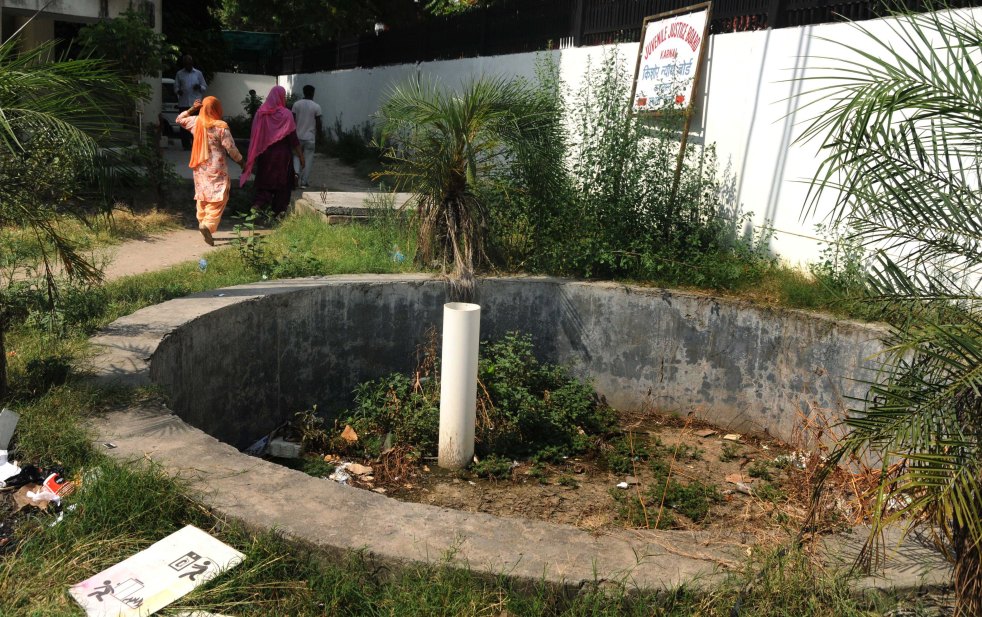
(Feature image: Condition of a RWH structure in Karnal. The Tribune)

As India Meteorological Department (IMD) declared onset of 4 month South West Monsoon in Kerala on May 29, 2022 and published map of monsoon onset in rest of the country, key highlight of the news this week is how callous, non-serious is the govt in harvesting the rain where it falls. This is in spite of all the sloganeering about harvesting rain where and when it falls right from Prime Minister to downstairs. As they say, our actions speak louder than our words. The news came from Delhi and Karnal (Haryana) that in both states the rainwater systems even in government premises are lying defunct if all built.

The story would be similar from rest of the country. This also shows how serious is the government in working towards sustaining groundwater, India’s water lifeline as the biggest help GW can get is from harvesting rain where it falls, when it falls. This is particularly pertinent in the context of changing rainfall pattern with changing climate. If we had systems in place to harvest rain when and where it falls, it would also help reduce the flood peaks significantly. But until the government shows it is serious through demonstrable evidence of functioning rain water harvesting systems all across the river basins across India, there will be little morale authority in government pushing rest of us working to harvest rain, where and when it falls.

Continue reading “DRP 30 May 2022: Govt not serious about Rain Water Harvesting”
DRP News Bulletin

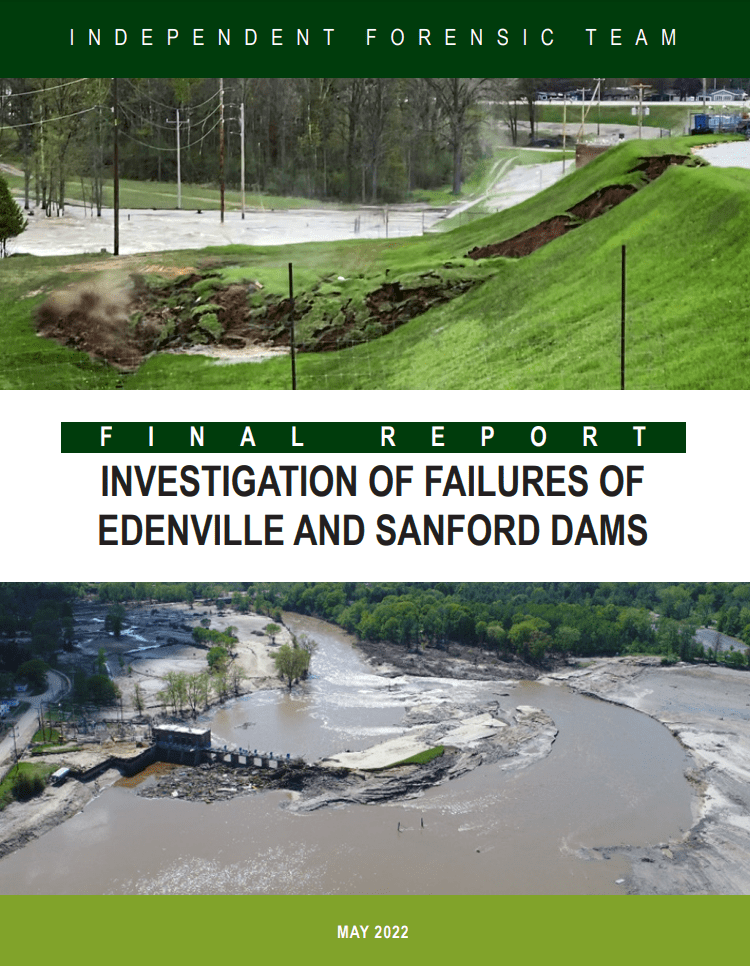
DRP 09 May 2022: Forensic Team report: Michigan 2020 Dams failures were preventable

A Forensic engineering Team appointed by the USA’s Federal Energy Regulatory Commission post the May 19, 2020 failure of Edinville and Sanford Dams in Michigan state of USA has published a 502 page comprehensive report on the dam failure within less than two years of the disaster. The full report published on May 4, 2022 is in public domain and has concluded that the dam failures were foreseeable and preventable.

There are a number of things we can learn from this. Firstly that there are such credible independent assessment of dam failures, we have none in India even after multiple dam failures each year. Secondly, such assessments are promptly in public domain. Thirdly, the reports are completed in less then two years. We have none of these. Even the Dam Safety Act passed by the parliament does not have provisions for any of these.

There are a lot of implications for India here. It means for example that we will never know the real reasons for the dam related disasters. Secondly, we won’t be able to learn any lessons. Thirdly we will never be able to improve the governance of our dams and rivers. Fourthly, we won’t be able to fix accountability.

There is so much at stake related to governance of our dams, but we seem completely unconcerned about it. There is a lot we can learn from others here.

Continue reading “DRP 09 May 2022: Forensic Team report: Michigan 2020 Dams failures were preventable”
DRP News Bulletin

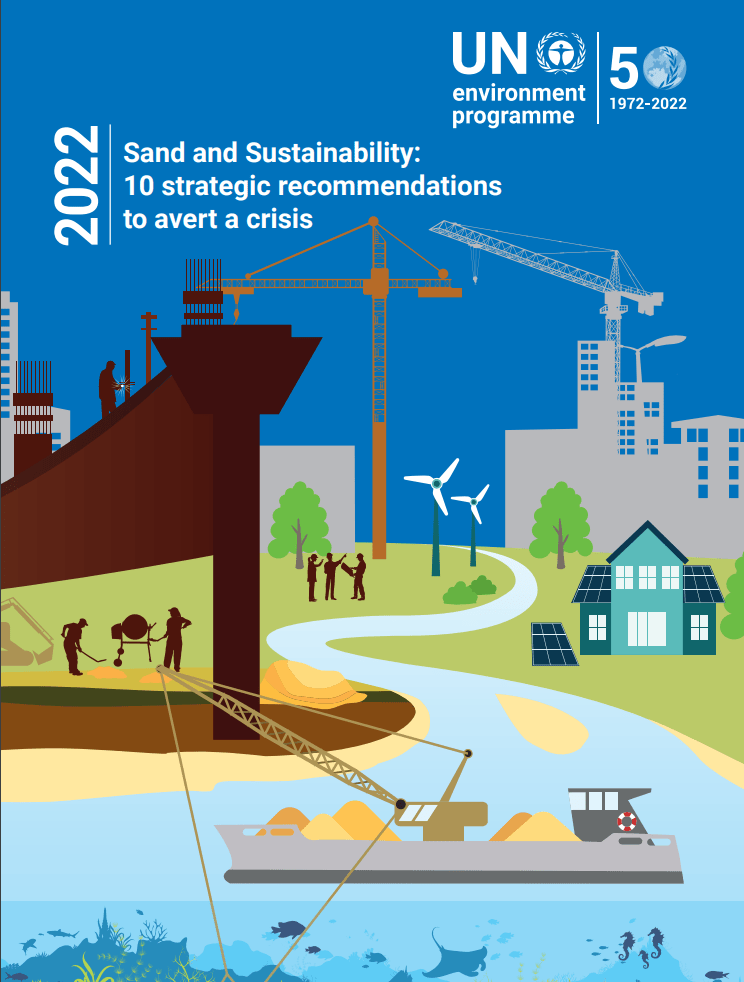
DRP 02 May 2022: Sand a strategic resource like water, rethink its exploitation: UN

A United Nations report released this week on Apr 26, 2022 has recommended that river sand needs to be considered by the governments as a strategic resource like water for its multiple roles in the environment and its extraction and use needs to be rethought. The UNEP report says sand is the second most exploited resource. And yet there are no credible governance guidelines or policies for the exploitation and use of this report, nor assessment of impact of unsustainable exploitation.

The report says: “Extracting sand where it plays an active role, such as rivers, and coastal or marine ecosystems, can lead to erosion, salination of aquifers, loss of protection against storm surges and impacts on biodiversity, which pose a threat to livelihoods through, among other things, water supply, food production, fisheries, or to the tourism industry.”

Continue reading “DRP 02 May 2022: Sand a strategic resource like water, rethink its exploitation: UN”
DRP News Bulletin

DRP 18 April 2022: Clean Hydro does not make much sense in India: Experts

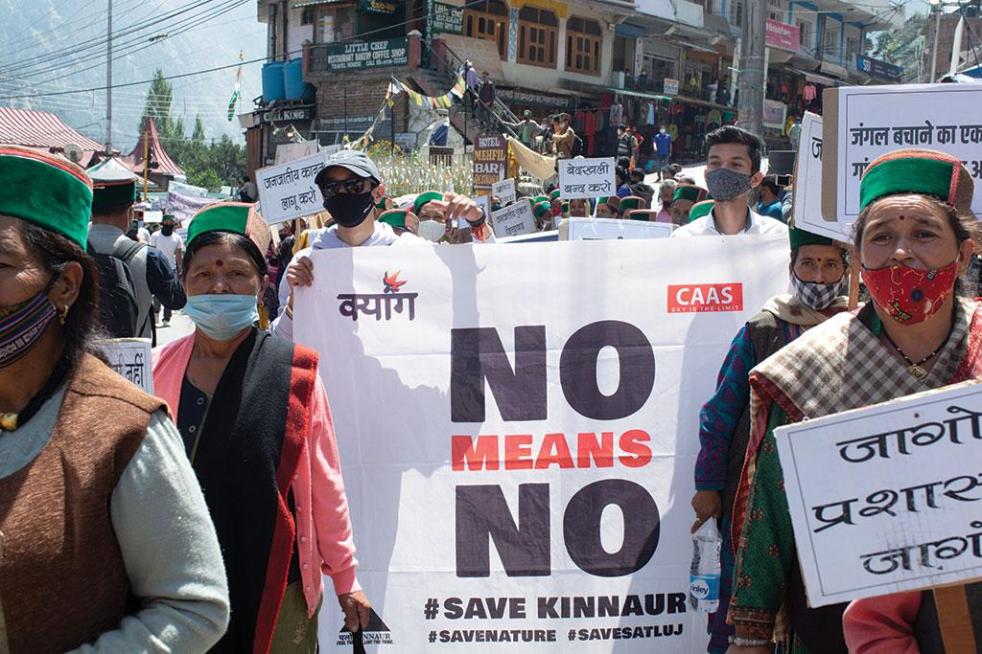
(Feature image:- Following massive landslides in Kinnaur, Himachal Pradesh sees growing protests against hydropower projects. DTE)

As the following report from Energy Monitor this week says, according to international experts, the idea that hydro is clean does not make sense. They say that for a number of reasons including for the social risks, environmental risks and the increased emissions of methane due to rotting of organic matter flowing in the river and settling in the reservoirs. In spite of some apparent inherent misconceptions, this part of the report is sound and should be a wakeup call for the supporters of big hydro in India. As the report suggests this is particularly true in the context of climate change. Indeed, this has been our own experience in India with increasing disasters related to hydro projects and the increasing unviability of the hydro projects in India.

Continue reading “DRP 18 April 2022: Clean Hydro does not make much sense in India: Experts”
DRP News Bulletin

DRP 11 April 2022: Ken Betwa Affected people protest land acquisition

The residents of about 15 villages affected by the Ken Betwa link project are opposing the land acquisition process being initiated in violation of all norms have opposed the move. The notices have not been pasted in the affected villages, gram sabhas have not been conducted and the information promised in the notice is not available at the designated places. When question, the Madhya Pradesh officials have responded arrogantly. The history of manipulations and violations that has been the norm every step of the way in Ken Betwa Project continues. In fact the project does not have final forest clearance, its wildlife clearance has been questioned by the Supreme Court appointed Central Empowered Committee and its Environment clearance is under challenge before the National Green Tribunal. In absence of the clearances, the land acquisition should not even be started if there is any place for prudent norms in such projects. It would be best if the government stops the process and starts it only if and when it gets all the clearances and after taking all the concerned into confidence through a prudent confidence inspiring process.

Continue reading “DRP 11 April 2022: Ken Betwa Affected people protest land acquisition”
DRP News Bulletin

DRP 04 April 2022: Gujarat Tribals unite to stop Par Tapi Narma

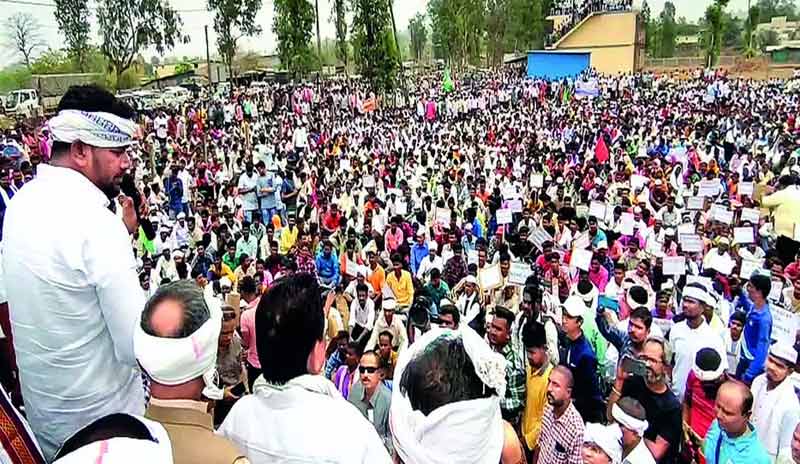
(Feature Image:-Tribals protesting against Par-Tapi-Narmada Project. The Indian Tribals)

The amazing unity and fight shown by Gujarat Tribals in their protest against the Par Tapi Narmada Link has led to both Gujarat govt and Central govt agreeing to suspend the project. However, the tribals are rightly not satisfied with the word of play indulged in by the Gujarat and Union govt so far. The central govt has said that the project will not go ahead as long as there is no consensus among the party states, but that statement is true even with or without the campaign launched against the project. The Maharashtra govt in any case is not in agreement with the project. Gujarat govt has not taken a clear decision to permanently cancel the project and without such a decision, Gujarat govt can again revive the project any minute. Same is true about the Central govt. So until both Gujarat govt and Central govt decide to cancel the project and come out with official notification to that effect, the tribals are right to continue the protest and not believe in either of the govt.

Continue reading “DRP 04 April 2022: Gujarat Tribals unite to stop Par Tapi Narma”
Dams, Rivers & People

DRP 28 Mar 2022: Is Climate Change making big dams MORE dangerous?

That big dams are dangerous, disaster prone is well known, the parliament having passed the Dam Safety Act is just one of the clear evidence of it. However, are big dams becoming even MORE dangerous in changing climate? All the science and also practical evidence seems to suggest that. This is also what the SCROLL report mentioned below concludes.

What is shocking is that the CWC (Central Water Commission), India’s premier technical body on dams and water, when asked about this through an RTI, is in slumber. CWC told the journalist that there are no such cases! This should be worrying for everyone concerned including those in the risk zone of the dams, the beneficiaries of the dams and also the dam operators. This also exposes how weak is the mechanism set up by the Dam Safety Act passed recently by the Parliament is. This is because under the act, CWC Is the main organisation responsible dam safety in India. Can CWC really save us from unsafe dams, structurally unsafe or operationally unsafe? The SCROLL article illustrates through the example of Andhra Pradesh dams that CWC has not. It also quotes the compilation of SANDRP where to the frequency of disasters are only going up and there is again no confidence inspiring role from CWC.

Continue reading “DRP 28 Mar 2022: Is Climate Change making big dams MORE dangerous?”
DRP News Bulletin

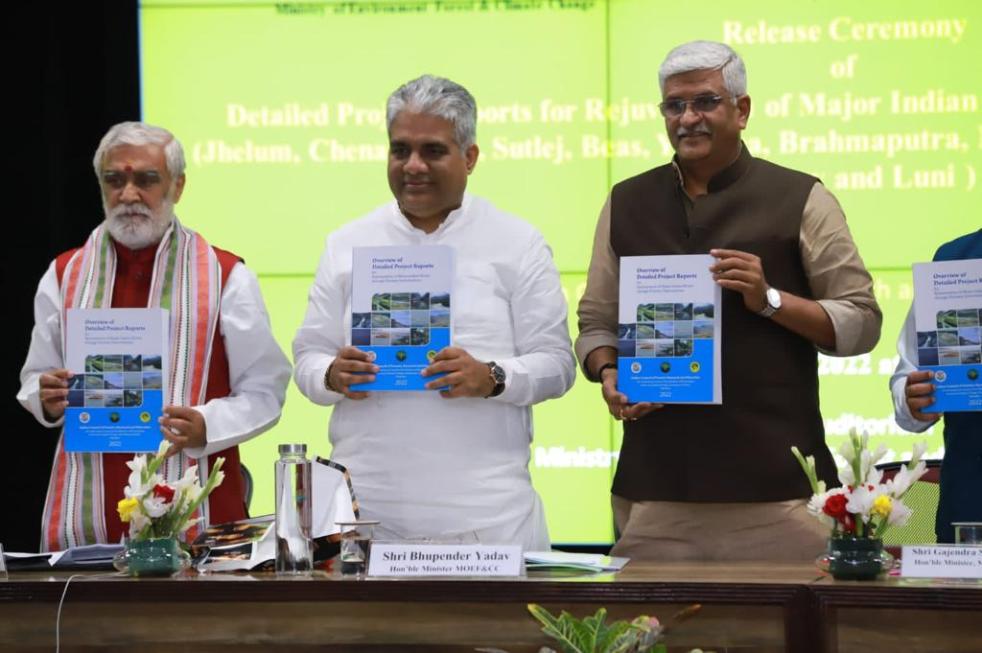
DRP 21 Mar 2022: Centre’s unconvincing Plan to rejuvenate 13 major rivers

The government of India, through joint announcement of Union Ministries of Jal Shakti & Environment and Forests (such joint addresses are rather rare events) this week announced its plans to rejuvenate 13 major rivers of India (excluding Ganga but including some of the key Ganga tributaries!) through the limited activity of plantations is not every convincing on many counts. Firstly it is welcome to see that the government sees a role of forests as a hydrological asset. Unfortunately, this is clearly and completely absent in government’s forest management, both in policy and practice. If we see the forest governance of India through the functioning of the Forest Advisory Committee of MoEF, we see absolutely no sign of acknowledgement of this reality that forests are major hydrological assets. So for example when a decision is taken to allow diversion of major chunks of existing forests, there is never any discussion, assessment or counting of hydrological eco system services that forests provide. This is apparent in many cases, but most recently in the case of Ken Betwa project where the Supreme Court’s Central Empowered Committee too has acknowledged this reality. So again it seems government’s mind or heard does not seem to know what the tongue is conveying!

Continue reading “DRP 21 Mar 2022: Centre’s unconvincing Plan to rejuvenate 13 major rivers”
DRP News Bulletin

DRP 14 March 2022: 25th Anniversary of International Day of Action for Rivers!

14th March is celebrated as International Day of Action for Rivers since 1997 after the resolution at the 1st International meeting of People Affected by Dams in Curitiba, Brazil. At this meeting of Dam affected people from 20 countries (including India) it was decided to celebrate this day as the International Day of Action Against Dams and For Rivers, Water and Life. It is thrilling to see the celebration continuing and spreading on 25th anniversary of that meeting. The focus this years is on Rivers for Biodiversity. To illustrate how the celebration of this day has spread, in 2021, even during pandemic, the day was celebrated with over 120 events in 32 countries. For details, see: https://www.internationalrivers.org/take-action/international-day-of-action-for-rivers/.

Continue reading “DRP 14 March 2022: 25th Anniversary of International Day of Action for Rivers!”
Hydro Disaster

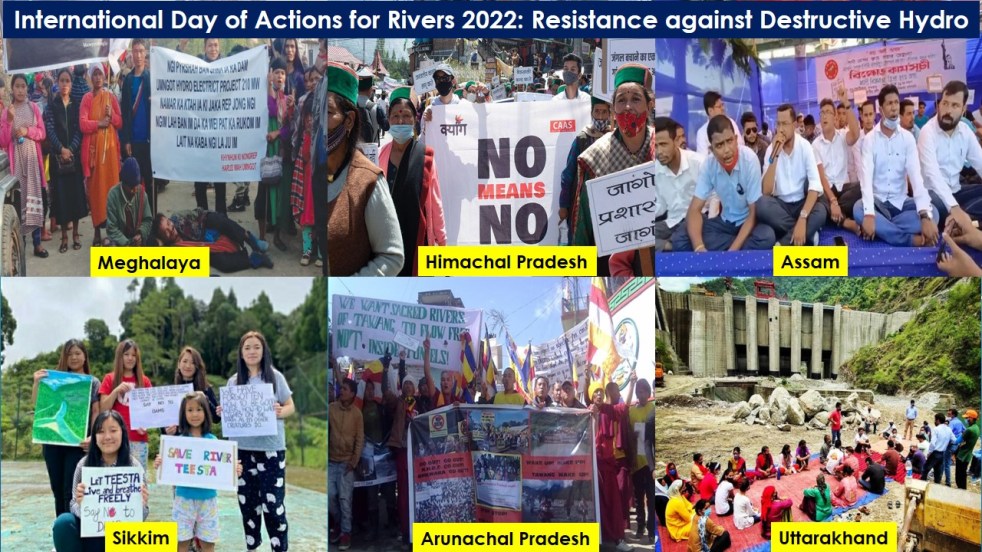
International Day of Actions for Rivers 2022: Resistance against Destructive Hydro

March 14 marks 25th anniversary of International Day of Actions for Rivers, a unique campaign dedicated to indigenous communities striving to protect and preserve their rivers from a whole range of destructive anthropogenic activities. The Hydro Electric Projects (HEPs) are among key threats affecting rivers eco-system and riverine communities greatly, in multiple ways.

The resistance against destructive, unviable HEPs growing stronger in India. Over the past one year there has been several protests against hydro projects across the country particularly in Himalayan states. On the occasion of International Day of Actions for rivers celebrating people’s resistance, SANDRP has compiled top ten stories of such community led opposition during the year, along with relevant additional stories. .

Continue reading “International Day of Actions for Rivers 2022: Resistance against Destructive Hydro”