Dams · DRP News Bulletin

DRP News Bulletin 07 August 2017 (MANIPUR GOVT DEMANDS DECOMMISSIONING OF LOKTAK DAM & HYDROPOWER PROJECT)

In an interesting development, Biren Singh the Chief Minister of Manipur on August 01, 2017, has urged Prime Minister Narendra Modi to have a review of the Loktak Dam (Ithai barrage) and Hydropower Project, leading to decommissioning to the dam.  https://thenortheasttoday.com/manipur-cm-biren-singh-apprises-pm-modi-of-worst-man-made-ecological-disasters-faced-by-state/  

Mentioning that Ithai barrage has become the main cause of frequent flood in the State, the CM has also demanded Prime Minister to figure out a permanent solution to the frequent floods in the state. Stating that Manipur is facing one of the worst man made ecological disasters and the floods have severely affected the socio-economic life of the people, the CM asserted that the Ithai barrage should be removed so that natural course of water could be maintained. . He mentioned that at present, the state is having sufficient power resources from other sources.  http://www.easternmirrornagaland.com/modi-urged-to-review-manipurs-loktak-project-ithai-barrage/

Before this, on July 27, in a very significant statement, M. Asnikumar, the vice chairman of Manipur Infrastructure Development Agency (MIDA) and also the state vice president of BJP Manipur has said that the Loktak Hydro Electric Project and Ithai dam have been disastrous projects and they must be decommissioned. The people of Manipur can live better without the Loktak Project. But we cannot develop without the Loktak. The statement Ithai dam has been the main reason for flash flood in an around the Loktak lake.  http://www.ifp.co.in/item/2247-time-to-decommission-loktak-hydro-electric-project

Since the commissioning of Ithai Barrage in 1983, there have been disastrous flash floods in and around the lake. These floods have severely affected the socio-economic life of the people of Manipur. Since the construction and commissioning of this dam, there have been drastic overnight changes in the hydrological path of Loktak that have in turn adversely affected the environment and socio-economic condition of the people of Manipur, Loktak dwellers being the most affected.

Continue reading “DRP News Bulletin 07 August 2017 (MANIPUR GOVT DEMANDS DECOMMISSIONING OF LOKTAK DAM & HYDROPOWER PROJECT)”

Dams · DRP News Bulletin

DRP News Bulletin 06 Feb. 2017 (MSPCB Directs Reduction in Water Supply to Polluting Industries)

Maharashtra SPCB cuts 40% water supply to Taloja industries After the pollution board identified that chemical effluents from common effluent treatment plant (CETP) at Taloja were polluting the Kasadi river, the Maharashtra Pollution Control Board (MPCB) have directed to Maharashtra Industrial Development Corporation (MIDC) to cut 40 per cent of the water supply to industrial plants from February 1.

According to the letter issued to the industrial plants, earlier they were receiving 24-hour water supply but after MPCB’s directive, the plants would not receive water from 12am to 8am, effective from February 1.

Last year fishermen from the local Koli community had complained of decline in 90 per cent of fish catch from Kasadi river due to pollution. They had also alleged of inaction by authorities despite several complaints.

To highlight their plight, the fishermen then collected water samples in August 2016 from the Taloja CETP pipeline areas discharging treated waste and samples from the banks of the Kasadi river, and submitted them for a water quality test at Navi Mumbai Municipal Corporation’s (NMMC) environmental laboratory.

The samples were found failing several crucial parameters and having high levels of chloride , which is toxic to aquatic life and impacts vegetation and wildlife. Several reports had also mentioned that the pumping of industrial waste into the river had raised pollution levels 13 times higher than the safe limit. 

Taking cognizance of the complaints, MPCB issued a notice to MIDC highlighting the pollution problem on Jan. 31 2017 and informing the MIDC that until the Taloja industrial area does not start online pollution monitoring, adequate water supply would not be provided to them. The plants have two months to comply or else further action would be taken.

Continue reading “DRP News Bulletin 06 Feb. 2017 (MSPCB Directs Reduction in Water Supply to Polluting Industries)”

Dams

Yamuna River Developments in 2016-2- Other River Interventions

(During monsoon the polluted river cleanses itself allowing migrant fishermen to move in and seek out their livelihood through fishing ;  Photo by Burhaan Kinu)

The exploitation of Yamuna Rivers that starts in upper basin comprising Uttarakhand (UKH) and Himachal Pradesh (HP) gets worse as the river is dammed at Hathini Kund Barrage (HKB) while passing through Shivalik Hills located at the border of Haryana and Uttar Pradesh (UP), the barrage has severely compromised lean season (8-9 months) water flow in the river downstream.

As a result, the waterless riverbed resembles a desert till Delhi’s potable water is released back into the river at Palla village, the border of Delhi and Haryana. The absence of flow facilitates intensive illegal riverbed mining for sand and boulders for longer periods in a year which further destroys the river’s eco-system. More over industrial and domestic effluents in great volume from nearby towns reach the river via tributaries, storm water drains. Amid all this successive State Governments show no will to achieve even basic flow of freshwater in the river, even as they keep pushing more dams.

Here is an account of the projects planned and launched in 2016 related to the River Yamuna. 

Continue reading “Yamuna River Developments in 2016-2- Other River Interventions”

Wetlands

An undiscovered wetland thriving under looming threats

In April 2016, the Central Government presented Wetland (Conservation and Management) Draft 2016 for comments which has been vigorously contested by leading experts as deliberate attempt to weaken key steps of Wetland (Conservation and Management) Rule 2010. Various organizations, community groups, NGOs including SANDRP has objected to the dilution of key norms and urged the government to discard Draft 2016 Rules and fully implement the 2010 Rules till new effective wetland protection rules are formed.  

Now, highlighting the neglected state of our wetlands, SANDRP again urges the responsible authorities to come forward and take steps to protect a thriving wetland which is facing threats from none other than Government itself.

Naya Bans Wetland The Holambi Kalan and Khera Khurd are among several villages dotting North West Delhi’s agriculturally dominated landscape. Between the Railway Station of these two villages lies a flourishing wetland spread on the either side of the railway track which has intercepted two local storm water drains passing though the area.

Whether the area was originally a wetland or the interception of rain water carried during laying down of railway lines has resulted in accumulation of waste water is unknown. Yayati Bhardwaj a resident of nearby Alipur village recalls his childhood days when he used to frequent the area to have a glimpse of Lotus like flowers blooming in the wetland which now has disappeared. The 32 years old youth raising voice for local environmental issues still remembers his father talking of the marshland on few occasions. So the marshy land may or may not be artificial but over the time it has evolved into a living wetland in concretized capital providing refuge to large numbers of flora and fauna.

Continue reading “An undiscovered wetland thriving under looming threats”

Dams

Shimla Gujran in Yamuna basin: Journey from a flourishing village to a living hell

13062397_229254640763663_9110494485550268065_n

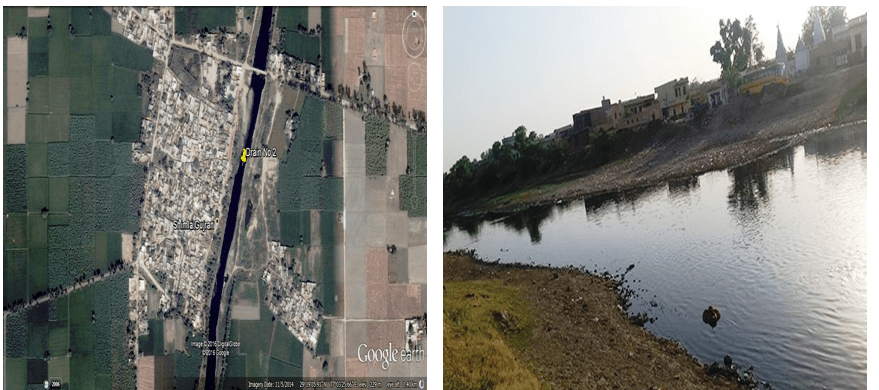
Shimla Gujran village on the other side of DN-2 (Photo by Vikas Sharma, village doctor who had to fix an air tight aluminimum framed glass door at his clinic to avoid to deadly stench)

The news of ammonia laden pollution entering Delhi’s water supply via Yamuna River has become more of a routine. The periodical nuisance forces closure of Delhi Jal Board (DJB) water treatment plants for few days, leading in disruption of water supply to lakhs of people. But as usual, within couple of days things fall back to normalcy until the cycle strike back.

The source of pollution remains undisclosed with only hint that the origin presumably a drain carrying pollutants from Haryana sneaks into river somewhere upstream of Delhi. Much is not talked or heard about the mystic drain and the problem largely remains unfixed. Haunted time and again Delhi Government has now installed one Ammonia-Neutralizers and planning to buy more as a remedial measures.

Continue reading “Shimla Gujran in Yamuna basin: Journey from a flourishing village to a living hell”

Dams

Yamuna Jayanti : An Unforgettable River Journey Through Pictures..

Tomorrow on 12th April is Yamuna Jayanti the birth anniversary of River Yamuna. The festival is also known as Yamuna Chhath  and is celebrated on Shashthi sixth day of Shukla Paksha in Chaitra month that falls during Navratri.  The auspicious day commemorates the decent of Goddess Yamuna on Earth and is therefore celebrated with great pomp and show in the city of Mathura and Vrindavan, Uttar Pradesh.

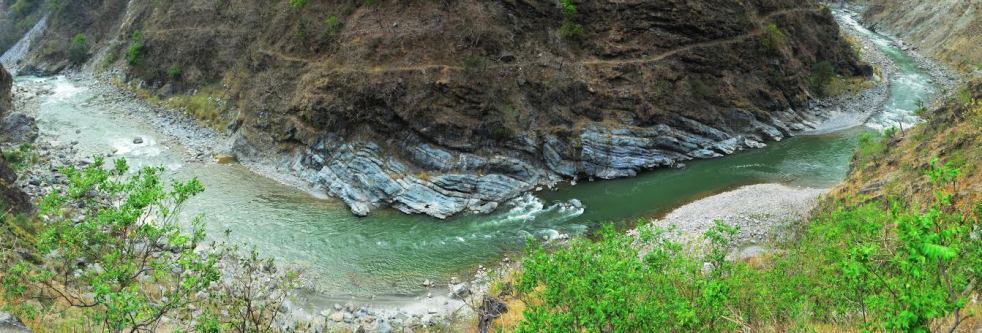
While thousands of devotees and dependents seek Yamuna’s blessing and wish the river to flow eternally and keep providing sustenance and livelihoods to millions on the occasion to celebrate the day SANDRP has managed to collect the latest pictures of the River all through its entire 1376km length right from Yamnotri the origin place till it merges into Ganga at Allahbad. The pictorial report clearly shows the bleak future of the river which is also the largest tributary of our national river the Ganga.

Continue reading “Yamuna Jayanti : An Unforgettable River Journey Through Pictures..”

Dams

Unabated Riverbed Mining in Saharanpur, UP, Puts Delhi’s Water Supply under Threat

Delhi water supply from Yamuna River through Munak canal has been severely impacted by Jat quota stir as the violent mob has damaged the Munak canal. As a result thousands of Delhiites are facing great difficulty in securing potable water.  By the time the canal based water supply is restored which may  take about a month, the discharged of industrial effluents in Yamuna upstream by Haryana has forced shutting down of two water treatment plants further jeopardizing the already wrenched out water supply in Delhi.  

Delhi water supply has become so vulnerable to causalities that experts have been rightly suggesting development and conservation of Delhi’s own water resources in terms of wetland protection, rain water harvesting etc. to deal with such crisis. 

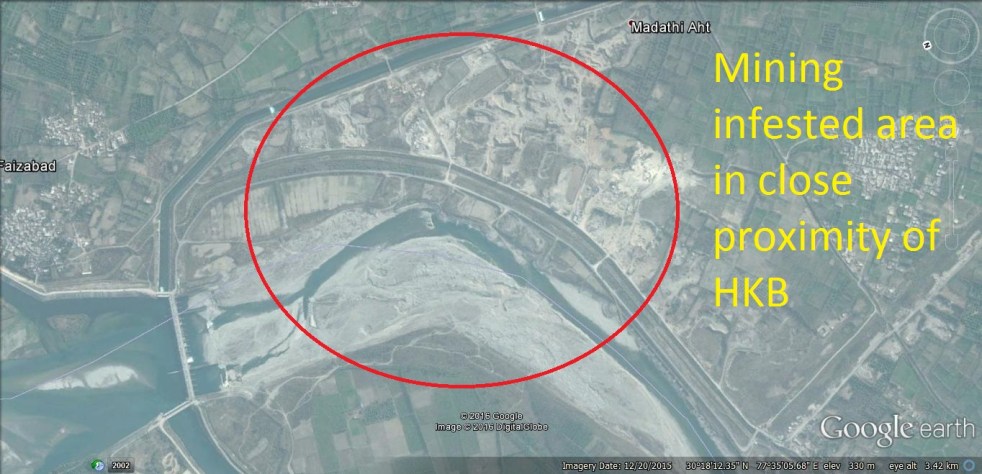
Apart from these two reasons there is a third bigger and still not known reason ignoring which may cause severest of water crisis in national capital and that is rampant mining of riverbed material around Hathini Kund Barrage (HKB). SANDRP in this blog try to highlight how the uncontrolled mining around HKB is endangering the barrage structure which in turn will surely lead to suspense of Delhi water supply for many months.

Continue reading “Unabated Riverbed Mining in Saharanpur, UP, Puts Delhi’s Water Supply under Threat”

Dams

Yamuna River Story

River Yamuna is fifth longest river of India. For past many centuries the river has been integral part of Indian culture. It has been sustaining means of livelihoods to millions. Many, in pursuit of spiritual inspiration venerate it with great hope. But at present, the river is more in news for its highly polluted state. In this blog SANDRP attempts to presents the picture of the River Yamuna. The blog also briefly mentions the places of cultural, religious, historical and environmental significance on and around the river, pointing out the various factors which has led to present state of the river.  Continue reading “Yamuna River Story”

Small Hydro

Kharadi in Yamuna Basin: when Small Hydro unleashes big destruction

Beyond Barkot (first small urban town on Yamuna river) Yamuna Valley opens into Ranwai Ghati, inhabited  by typical mountain community. Kharadi is one such place located 12 KM farther from Barkot on National Highway (NH) 123 in Uattarkashi district. The small marketplace but major ‘Char Dham’ pilgrim’s halting point 35 KM before the Yamnotri Shrine is divided into three parts (Upper, Middle and Lower Kharadi).   Kharadi still cherishes much of the fast vanishing pristine charms and hardships of hill life. Notably, the word Kharadi itself is derived from ‘Kharad’ a traditional skill of harnessing kinetic energy of water to produce wooden products. Continue reading “Kharadi in Yamuna Basin: when Small Hydro unleashes big destruction”