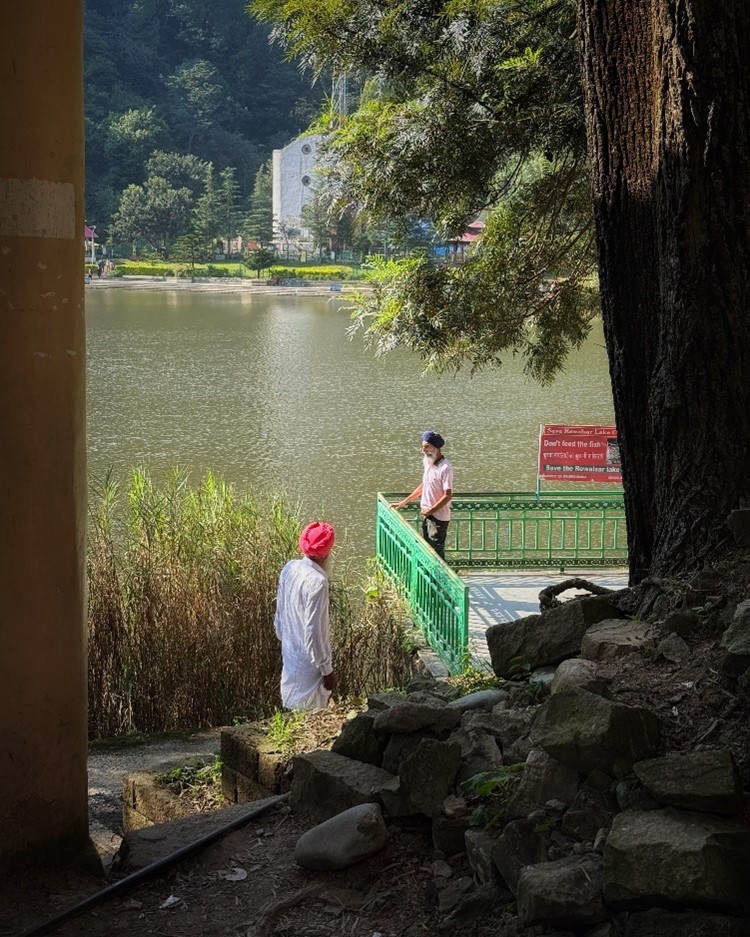
Rivers and lakes of the Indus basin have been at the crossroads of civilizations, trade routes, and ecosystems for centuries. They are surrounded by stories and songs from many religions, languages and tribes. One such river is Beas, celebrated as Vipash[1] or the ‘breaker of chains’ in the Rigveda, circa 1500 BC. Beas originates at 4361 meters near Rohtang Pass[2] and flows through the Himalayan state of Himachal Pradesh before meeting River Sutlej in the plains of Punjab, literally “the land of five rivers’. Beas flows for about 470 kms to water some of the most fertile valleys in the world.
Continue reading “Rewalsar Lake: Where Faiths, Ecosystems and Communities Meet”Tag: wetlands
World Wetlands Day 2025: Govts Projects, Apathy Damaging Ramsar Wetlands
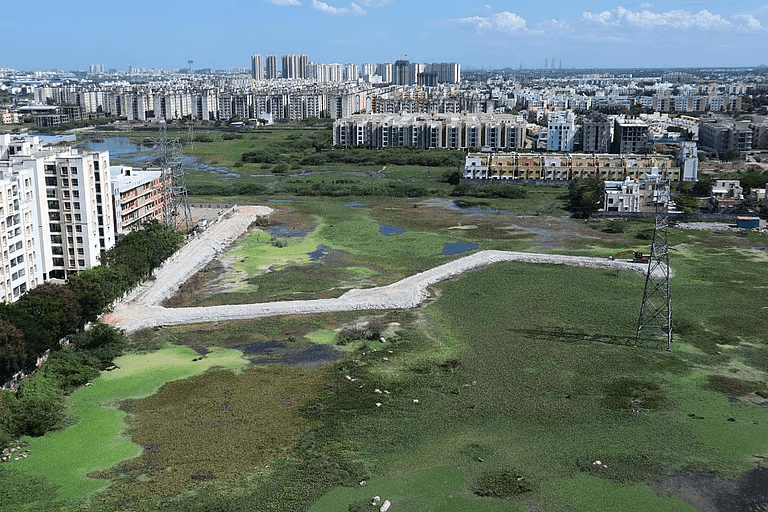
(Feature Image: A road is being laid allegedly by a private realtor inside the Perumbakkam marshland. Photo Credit: TNIE, June 2023)
‘Protecting Wetlands for Our Common Future’ is the theme for World Wetlands Day 2025. Wetlands are ecosystems, in which water is the primary factor controlling the environment and the associated plant and animal life.
Indian government seems focusing more on increasing Ramsar wetlands number than ensuring the protection and conservation the existing Ramsar sites in country. Over the past one decade the numbers of Ramsar wetlands in India have sharply gone up from 26 in 2014 to 89 as of January 2025. Amid the thrust to increase the number, several existing or even recently declared Ramsar wetlands across the country have been facing multiple threats mainly due to governmental projects and constant negligence from the concerned authorities as can be seen from the reports from 2024 in this annual overview.
Continue reading “World Wetlands Day 2025: Govts Projects, Apathy Damaging Ramsar Wetlands”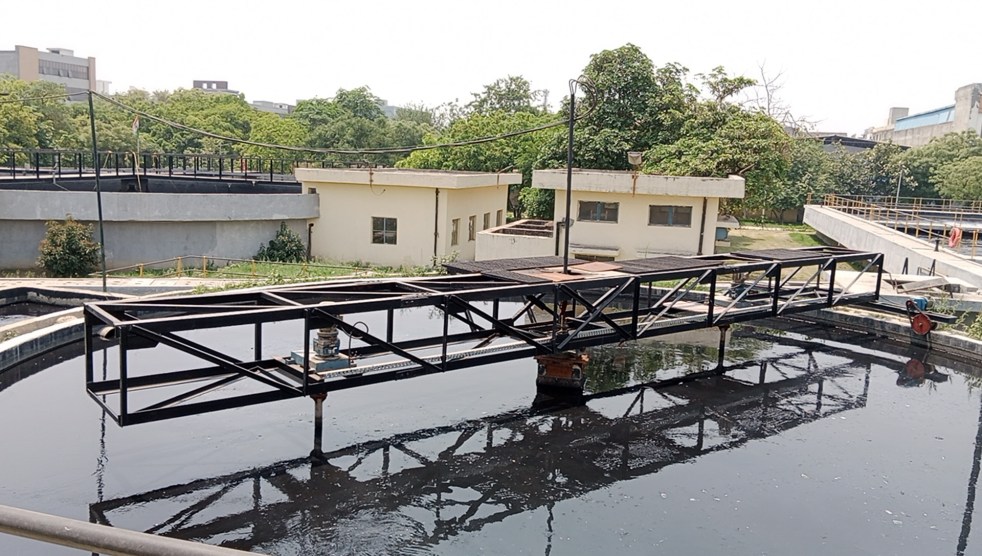
DRP 270125: India’s non-functional Sewage Treatment Plants
(Feature Image: 10 MLD Kundli CETP in Sonipat. BS Rawat/SANDRP/May 2023)
A detailed report in this week’s DRP News Bulletin below shows how India’s Sewage Treatment Plants (STPs), Govt’s main weapon against pollution of rivers in Urban areas, have been a failure for decades. It is pertinent to note that this is the golden jubilee year of Water Pollution Control Act of 1974, that led to the formation of Central, state Pollution Control Boards, and the whole water pollution control bureaucracy, institutions and legal architecture. There should be little doubt that whole architecture has abysmally failed in achieving basic objective for which it was created, including ensuring proper treatment of urban sewage.
India has spent thousands of crores of rupees on these STPs, mostly, mega, centralized projects. But there has been little effort to address governance of the STPs, to ensure that they function as required and provide the results that they have been set up for. Whether they function or not, qualitatively or quantitatively, year after year and decades after decades, there are no consequences! In fact, if treated properly, sewage can become a asset rather than nuisance that it now is. The Judiciary too, right up to the apex court, have badly failed in achieving any improvement in this eminently justiciable issue.
Continue reading “DRP 270125: India’s non-functional Sewage Treatment Plants”
DRP 200125: Whither Env Clearance Rejection rate from Expert Appraisal Committee or MoEF?
A detailed review of functioning of Union Ministry of Environment and Forests’ (MoEF) Expert Appraisal Committee (EAC) on River Valley Projects (RVP) for 2024 by SANDRP shows that the committee or for that matter MoEF has almost non-existent rejection rate. Even when a project is not cleared, when it applies again, it gets clearance, whether the application if for stage I (Terms of Reference) or Stage II (Environment Clearance- EC) clearance. Even in some cases like Pump Storage Projects (PSP) in Western Ghats or the Hydropower projects in disaster prone Himalayas, including the disaster-stricken projects like the 1200 MW Teesta III projects in Sikkim, the scrutiny including field visits by the EAC Sub committees is minimal, not worthy calling even scrutiny.
Continue reading “DRP 200125: Whither Env Clearance Rejection rate from Expert Appraisal Committee or MoEF?”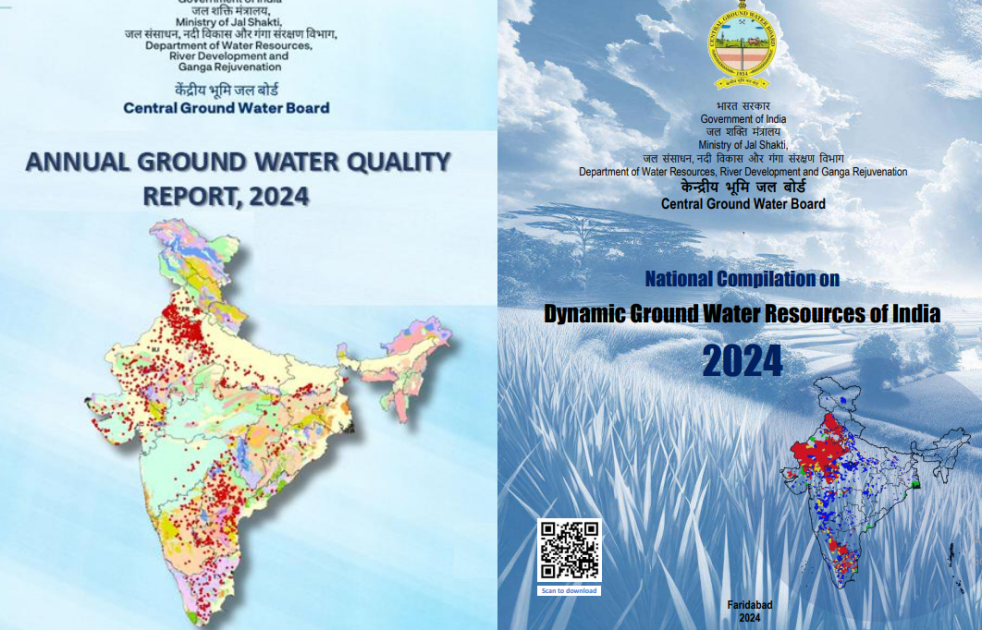
DRP 060125: Concerns about & Contradictions in CGWB’s Reports
The Central Ground Water Board (CGWB) released two important reports last week. While the Annual Ground Water Quality Report 2024 reveals rise in nitrate fluoride, arsenic and uranium contimination of groundwater resource in India, the Dynamic Groundwater Resource Assessment Report 2024 claims substantial rise in annual groundwater recharge and decline in extraction of the resource.
As per the first report, the number of districts affected by high nitrate levels in groundwater has gone up to 440 (near 56% of all 779 districts in country) from 359 found in 2017 assessment which means in 7 years 81 more districts have been found having excessive nitrate levels in groundwater. This should concern us from a number of points of view.
Continue reading “DRP 060125: Concerns about & Contradictions in CGWB’s Reports”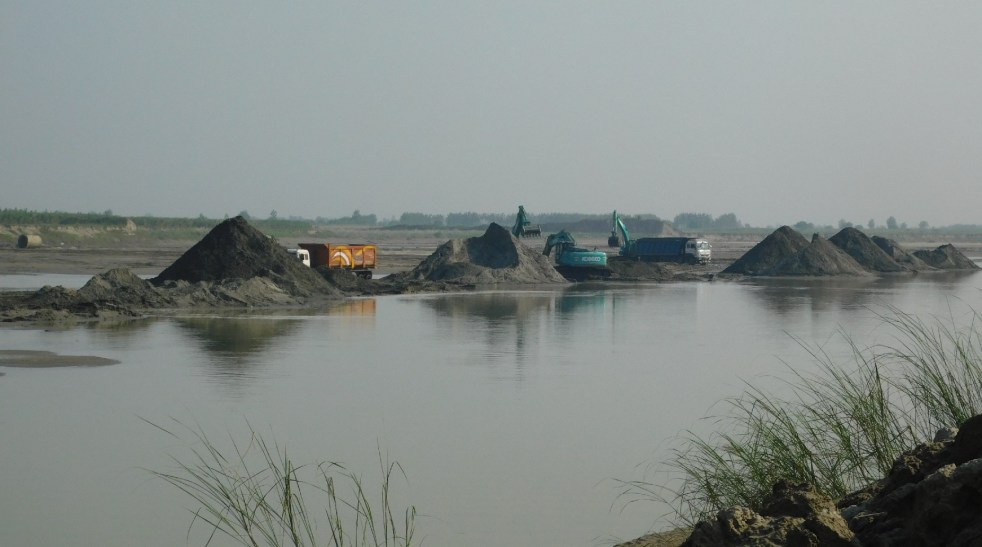
Yamuna Manthan 020125: River Dying by Design or Default?
(Feature Image: Instream mechanized mining going on in Yamuna river at Gumthala Rao near Karnal-Yamuna Nagar border in Haryana in Oct. 2024. Source: Yamauna Nadi Mitra Mandli)
This twelfth edition of monthly Yamuna updates and the first one of the new year 2025, rounds up the critical issues impacting the river eco-system during the past year. The updates of the past one month only hint towards the bleak future the river is heading to. Without addressing the adverse effects and exploring cost effective alternatives, foundation stones of two massive river interlinking projects namely Ken-Betwa and Parbati-Kalisindh-Chambal have been laid. The work of unjustifiable Renuka and Lakhwar dams in climatically sensitive and geologically fragile region of Himalaya is going on.
Continue reading “Yamuna Manthan 020125: River Dying by Design or Default?”
DRP 301224: We are not studying our rivers, Global North is studying
(Feature Image: Ramganga river at Marchula, Uttarakhand. Bhim Singh Rawat/SANDRP/Sept. 2024)
Exactly three months back, on Sept 30 2024, we had highlighted the urgent need for credible river studies in India (https://sandrp.in/2024/09/30/drp-nb-300924-focus-on-river-studies/). A new research report published last week in Nature has corroborated this, showing that volume of research across global south is disproportionately small compared to need based on basic population, water withdrawals and water consumption.
Based on review of 4237 publications using machine learning and desk review of 325 publications, analysis of 4713 case studies across 286 basins, it shows that river research currently in global south is predominantly led by global North institutions, thus the river research is shaped by selection of theme and locations done by such institutions.
Continue reading “DRP 301224: We are not studying our rivers, Global North is studying”
DRP 161224: Arunachal Pradesh needs dialogue on dams
(Feature Image: Resident in upper Siang protesting agaisnt SUMP on Dec. 15. Image source: Ebo Milli @Ebo_Mili_Linggi on X)
Hundreds of People of Siang, East Siang and Upper Siang Districts of Arunachal Pradesh came out in peaceful protests on Dec 14 2024. They opposed the govt effort to deploy armed central and state police forces for a pre-feasibility study for the 12500 MW hydropower project on Siang River, a tributary of Brahmaputra River.
Indeed, as remarkably articulate report by in Arunachal Times said, Siang needs dialogue not guns. In fact, the Chief Minister recently and even the Prime Minister and Union Home Minister had earlier promised to the people of the state that if they do not want big dams, such projects will not be taken without people’s consent as there were options for power and development.
Continue reading “DRP 161224: Arunachal Pradesh needs dialogue on dams”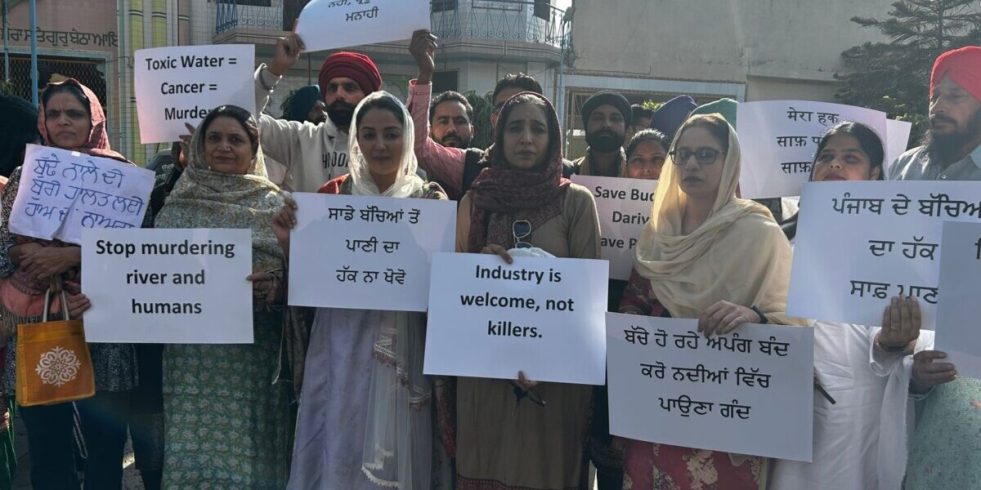
DRP 091224: “Kale Pani Da Morcha”: A Landmark people’s movement
(Feature Image: Women activists who were standing and displaying placards were detained by the Ludhiana police during the protest. Photo: By special arrangement/The Wire)
‘Kale Pani da Morcha”, the people’s movement against Pollution of Buddha Nallah, a tributary of Sutlej River in Ludhiana (Punjab) is a landmark movement in more than one sense. Firstly, while severe pollution of rivers is the usual story from across the country, a courageous people’s movement to address is the issue is such a rare event.
The fact that the industries association actually threatened this movement with a counter from the industries and their workers is shocking and shows the impunity of these industries. While the state government has to take quick action to address the issue, there is also a huge role for the central government, which has abjectly failed to perform its basic duty of providing credible governance of rivers, including their pollution in India. They including CPCB and MoEF know since decades that CETPs are completely failed model, and no worthwhile action has been taken to address the failure, including by the World Bank which has funded many of them. The filthy rivers all over India are violating the fundamental rights of millions of people, without any credible action even by the judiciary.
Continue reading “DRP 091224: “Kale Pani Da Morcha”: A Landmark people’s movement”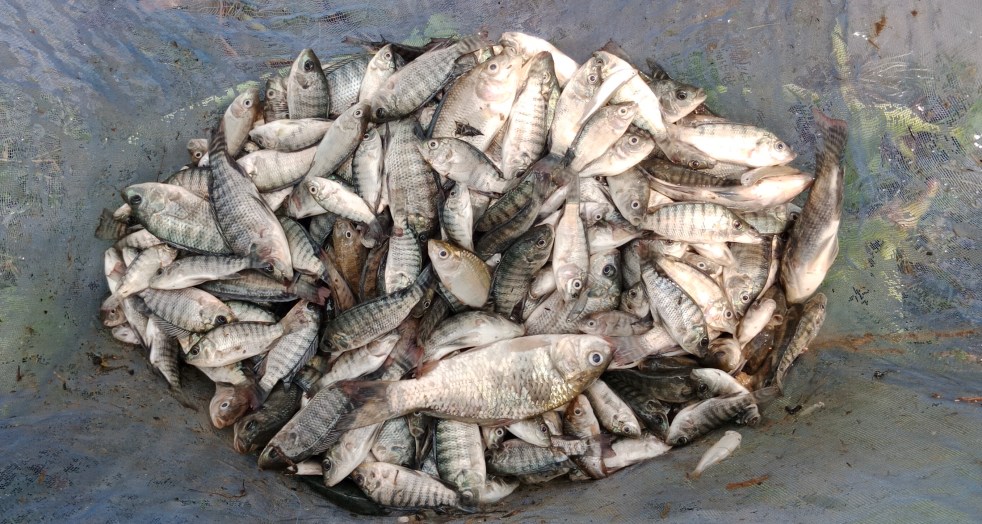
Yamuna Manthan 051224: Native River Fish Species Facing Extinction
(Feature Image: A fish catch comprised mostly of invasive Tilapia species downstream Wazairabad barrage in Delhi in June 2023. Bhim Singh Rawat/SANDRP)
A recent CIFRI (Central Inland Fisheries Research Institute) report submitted to NGT is an eye-opening official document about the fish diversity in Yamuna. The report says that overall native fish species have declined sharply in the river not only in number but in size also due to habitat degradation, pollution and increasing presence of invasive fish species.
The report admits that construction of Farakka barrage has led to complete elimination of Hilsa fish in lower segment of river since 2010. Among other recommendations the report has suggested maintenance of continuous flows in the river and addressing sources of pollution.
Indeed, the freshwater fish species are key indicator of health of a river eco-system and the fish diversity in Yamuna has been pushed to brink by the water abstraction, unsustainable riverbed mining activities and ever-increasing pollution of river waters besides other factors.
Continue reading “Yamuna Manthan 051224: Native River Fish Species Facing Extinction” SANDRP