DRP News Bulletin

DRP 230123: Welcome decision of FAC to deny clearance to Etalin HEP

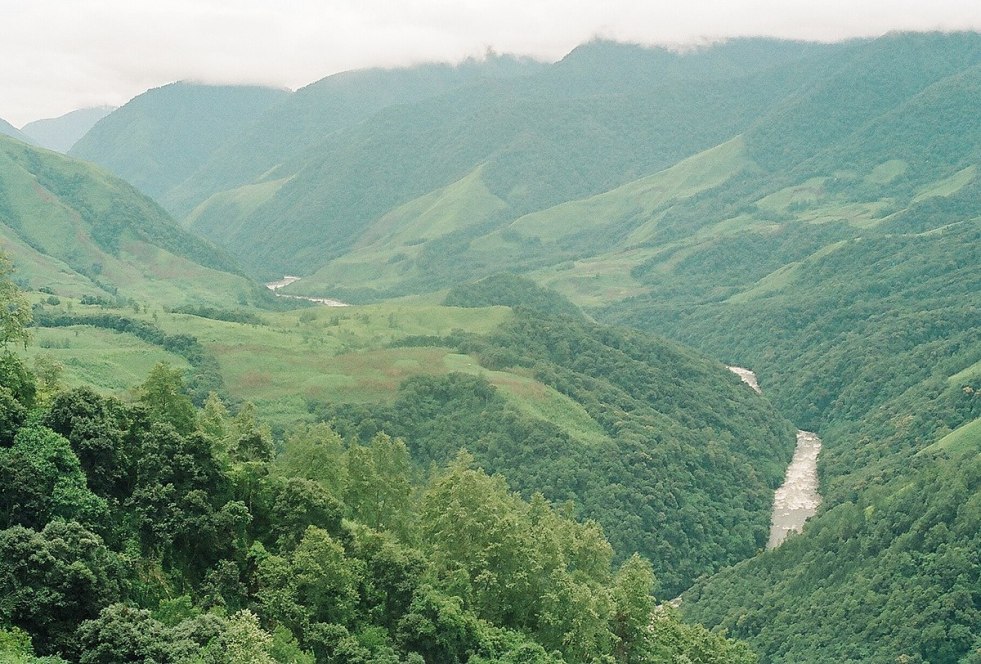
(Feature Image:- Upper Dibang Valley District, Arunachal Pradesh, India (Source: Wikipedia Commons/IWP)

It’s rather rare that we get a hydropower project related decision from official decision makers that can be welcomed. It has happened this week when the MoEF’s (Ministry of Environment, Forests & Climate Change) Forest Advisory Committee declined to give forest clearance to the controversial 3097 MW Etalin Hydropower Project in Dibang sub basin of Brahmaputra basin in Arunachal Pradesh and North East India. The project was under consideration for this clearance since 2014 and finally in the meeting on Dec 27, 2022, FAC conveyed that the current proposal cannot be considered for the clearance and revised proposal may be submitted. It is not a blanket rejection of the project, but considering the history of consideration of this project in FAC, it is closest we can come to that.

It is also welcome to know that the FAC has also looked at the poor track record of compliance of conditions of earlier forest clearances for the hydropower projects in Arunachal Pradesh among the many reasons why the project is rejected in current form. Arunachal Pradesh may do well to improve its track record before applying for forest clearance to any new projects in the state.

This decision is also a lesson for the MoEF’s Expert Appraisal Committee on River Valley Projects and also for MoEF itself for not even looking at the track record of compliance of the conditions of environment clearances that the EAC and MoEF give to the river valley and hydropower projects. They also never look at the implementation of the Environment Management Plans. Same is the case with the MoEF’s National Board of Wildlife.

Continue reading “DRP 230123: Welcome decision of FAC to deny clearance to Etalin HEP”
Groundwater

2022: Some positive reports on groundwater management 

This second part of yearend overview, SANDRP highlights some positive reports and steps taken by various state governments in India for management and conservation of groundwater in 2022. In first part of the overview, we have tracked the situation of groundwater depletion and contamination in the country and in third part covered some remarkable judicial interventions regarding groundwater conservation in 2022.

Centre Recharge wells to power multi-city groundwater project. A pilot project on shallow aquifer management, initiated by the Union Ministry of Housing and Urban Affairs for 10 cities, under the Atal Mission for Rejuvenation and Urban Transformation (AMRUT), has identified recharge wells as key to improving groundwater availability. Experts have cited the non-availability of space to allow the percolation of rainwater as a major hurdle to recharging Bengaluru’s groundwater table. The Million Wells programme was launched by Biome Environmental Trust in 2015 to encourage citizens and communities to dig and maintain their own recharge wells. It also opened up employment for the traditional well-digger community, the mannu vaddars.

In Bengaluru, the Bruhat Bengaluru Mahanagara Palike (BBMP) will be the nodal agency for the project. Biome Environmental Trust and Advanced Centre for Water Resources Development and Management (ACWADAM) will be technical partners in the project, which is led by the National Institute of Urban Affairs, a national think-tank on urban planning and development. The pilot project also covers Chennai, Dhanbad, Gwalior, Hyderabad, Jaipur, Kolkata, Rajkot, Thane, and Pune. https://www.deccanherald.com/city/recharge-wells-to-power-multi-city-groundwater-project-1157262.html  (28 Oct. 2022)

Continue reading “2022: Some positive reports on groundwater management “
DRP News Bulletin

DRP 160123: Top Court appeals for EIAs for Urban Development: Welcome, but…

The Supreme Court of India, while disposing of a petition related Chandigarh, in its order on January 10, 2023 has said: “Before we part with this judgement, we observe that it is high time that the legislature, executive, and the policymakers at the centre and state levels take note of the damages to the environment on account of haphazard development and take a call to take necessary measures to ensure that the development does not damage the environment… We therefore appeal to the Legislature, the Executive and the Policy Makers at the Centre as well as at the State levels to make necessary provisions for carrying out Environmental Impact Assessment studies before permitting urban development.”

This is most welcome. And urgently required. That India’s urban development is happening at the cost of life sustaining environment resources including rivers, water bodies, forests, wetlands among others is well known. That the government sees all requirements of environmental scrutiny as road blocks is also well known. The consequences of this are clear for all concerned, not only in case of Bangalore as cited by the Supreme Court Bench, but also in case of Ahmedabad, Bhopal, Chennai, Delhi, Ernakulam, Faridabad, Gurugram, Hyderabad, Indore, Joshimath, Kolkata, Lucknow, Mumbai and so on. So is there a good chance that the apex court suggestion will be followed either in letter or in spirit? Unlikely. So what is clearly required is that the apex court emphatically directs the centre and states in this regard and follows it up with ensuring its implementation.

Continue reading “DRP 160123: Top Court appeals for EIAs for Urban Development: Welcome, but…”
DRP News Bulletin

DRP 020123: Looking Back to Look forward to 2023

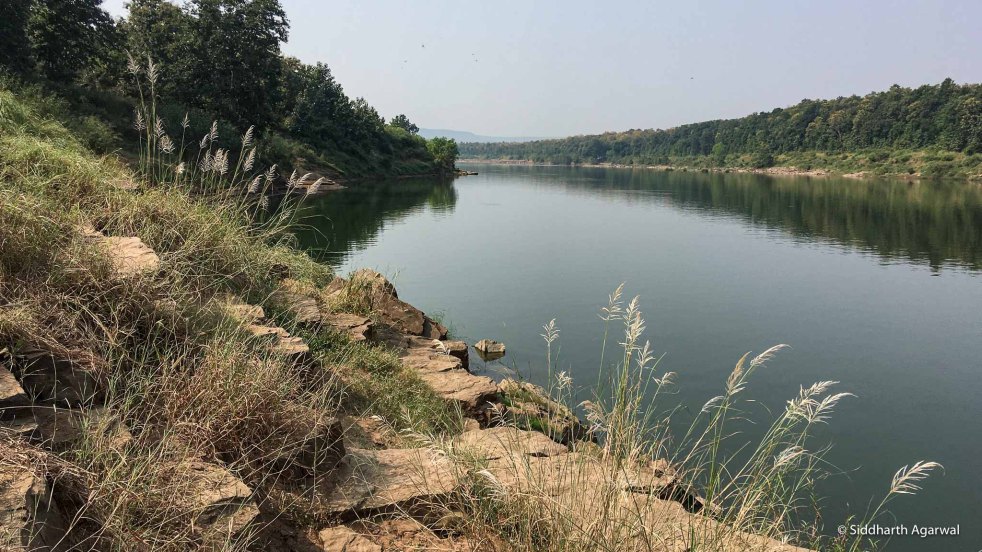
(Feature Image:-River Ken inside Panna National Park from River Stories, Walking Across India-I by Siddharth Agarwal)

This is the first DRP bulletin of 2023 and we would like to begin on a positive note. But to remain grounded in reality we also need to look back at the events in 2022. We see a number of positives in 2022 and we hope that trend continues. The number of new dams and hydropower projects being started has remained on a declining trend. People and civil society has continued its protests against destructive projects and for more decentralised projects and governance.

Continue reading “DRP 020123: Looking Back to Look forward to 2023”
DRP News Bulletin

DRP 261222: People on roads against hydro projects that govt is pushing

(Joshimath residents staging protest against land sinking and damages to their homes demanding rehabilitation & halt in NTPC’s Tapovan Vishnugad HEP tunnel work on Dec. 24, 2022. Image source: Atul Sati, Joshimath)

People of at least four states are opposing hydropower projects that the central and state governments are pushing, ignoring all the ground realities. In Uttarakhand, the Joshimath residents are on roads to wake up the government that seems deaf to their protests due to their houses cracking and land subsiding due to the tunnels being blasted for hydropower projects and Char Dham highway being built ignoring the voices of not only the affected people, but also the experts.

In Arunachal Pradesh, people have been writing to the central govt authorities against the Etalin and Dibang projects being pushed in Dibang valley of Brahmaputra basin.

In Himachal Pradesh, the people of Kinnaur and Lahaul Spiti districts have made it an election issue the destructive hydropower projects being pushed there both by the state and central governments.

In Andhra Pradesh too people have been protesting against the pump storage projects being given permission in schedule tribe areas without their prior informed consent and ignoring the statutory requirements.

2022 is thus ending with people’s active protests across the country against destructive, disaster prone and unviable projects being pushed against their wishes and in violation of any proper consultations or even any credible impact assessments. In the escalating impacts of climate change, these projects are even more problematic as they not only worsen the adaptive capacity of people and invite more frequent, intense and spread of the disasters, but they also destroy the mitigation tools like forests and flowing rivers. This when all these projects are not even economically viable, and when better, cheaper options are available. It would be best if sooner the government listens to the people and stop pursuing such projects.

Continue reading “DRP 261222: People on roads against hydro projects that govt is pushing”
DRP News Bulletin

DRP 191222: Question marks over viability of pump hydro projects

(Feature Image: 1772 Mw PSHPs Spain. Photo courtesy of Iberdrola/ ENR)

The question marks over viability of huge number of pump storage hydro projects (PSHP) being pushed forward in India currently were flowing in the rivers for long. This week, Moody’s investors Service (MIS) seems to have strengthened this after it downgraded Greenko Energy Holdings’ corporate family rating. It may be noted that Greenko is the biggest investor in PSHPs in India from private sector and a major part of Greenko’s new investments are in PSHP.

This makes the implications of MIS’s downgrade all the more interesting. MIS has noted that PHSPs are capital intensive and each PHSP will generate cash flow only after at least 2-3 years of construction (in reality it can be much longer than 2-3 years, the operative phrase here is at least). It also noted that the additional debt to be raised from Greenko’s capital spending, coupled with a rising interest environment will put further pressure on “GEH’s already weak financial metrics” and that Greenko’s high financial leverage due to its substantial capital spending program will keep its financial metrics below its downgrade trigger “for an extended period of time”.

Continue reading “DRP 191222: Question marks over viability of pump hydro projects”
DRP News Bulletin

DRP 121222: Green Hydrogen from Hydropower is false solution

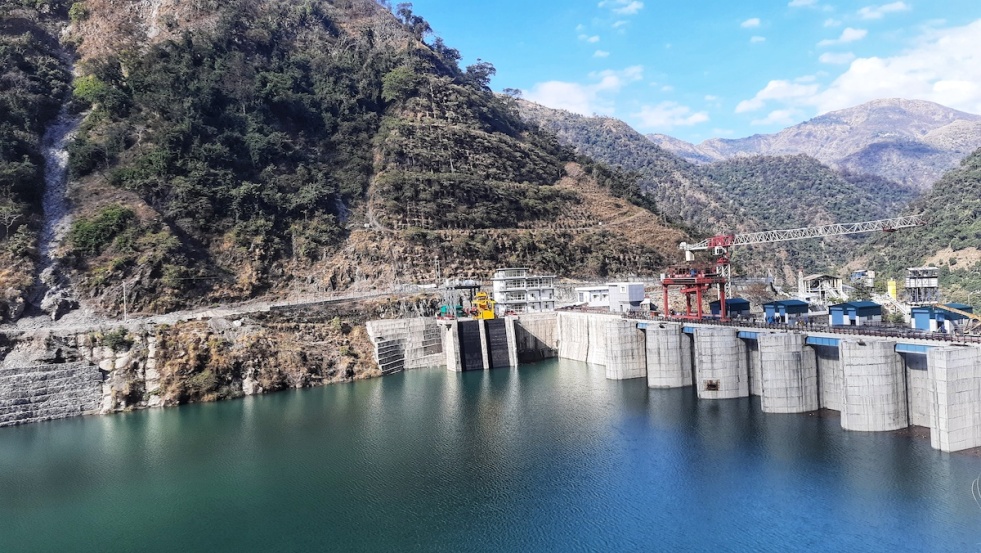
(Feature Image: Reservoir of Vyasi hydro project dam on Yamuna river in Dehradun. Credit: Varsha Singh/The Third Pole.)

A section of the hydro lobby has been trying to push hydropower in the name of producing green hydrogen as an alternative energy source. However, it has been known for a long time that this is a false solution. There cannot be green hydrogen when sourced from hydropower as not only hydropower projects have huge social and environmental footprint, they also have huge carbon footprint as the following article shows. It would be best to out rightly reject any such claim of green hydrogen when sourced from hydropower project.  

Continue reading “DRP 121222: Green Hydrogen from Hydropower is false solution”
DRP News Bulletin

DRP 051222: World Soil Day 2022: Soil where food begins

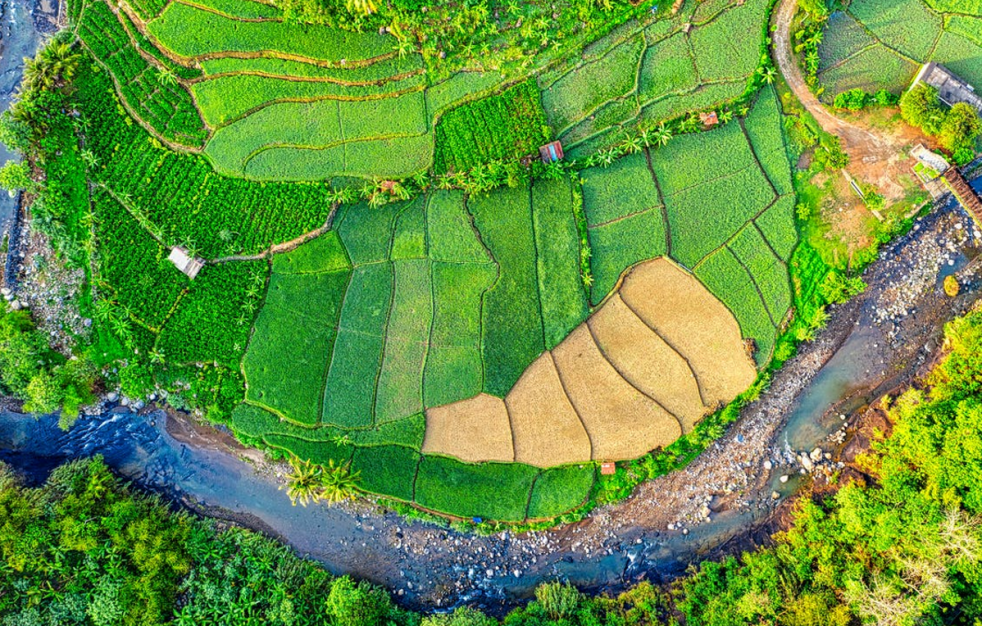
(Feature Image:-Several practical principles for soil and water conservations are important to be understood and combined. Source Wiki Farmer)

United Nations is celebrating today, i.e. Dec 5, as the World Soil day, the theme this year is “Soils: Where food begins”. The World Soil Day is held on Dec 5 each year since 2014, following the recommendation the International Union of Soil Sciences (IUSS) in 2002. The FAO Conference unanimously endorsed World Soil Day in June 2013 and requested its official adoption at the 68th UN General Assembly. In December 2013, the UN General Assembly responded by designating 5 December 2014 as the first official World Soil Day as a global awareness raising platform.

In the context of climate change, the soil organic content assumes additional huge significance. While the organic content in soils is decreasing globally, it can be reversed. If we can increase the soil organic content, it will not only help in mitigation of climate change by helping reduce the carbon in the atmosphere, it can also help in adaptation as soil with higher organic context has much greater capacity to store soil moisture, which can then be helpful in both flood mitigation (as more of the rain water is stored in the soil), and drought mitigation (soils with most moisture storage will help crops survive longer dry spells).

Continue reading “DRP 051222: World Soil Day 2022: Soil where food begins”
DRP News Bulletin

DRP 281122: Justice Lokur at IRW 2022: We need to be vocally more aggressive to make a difference

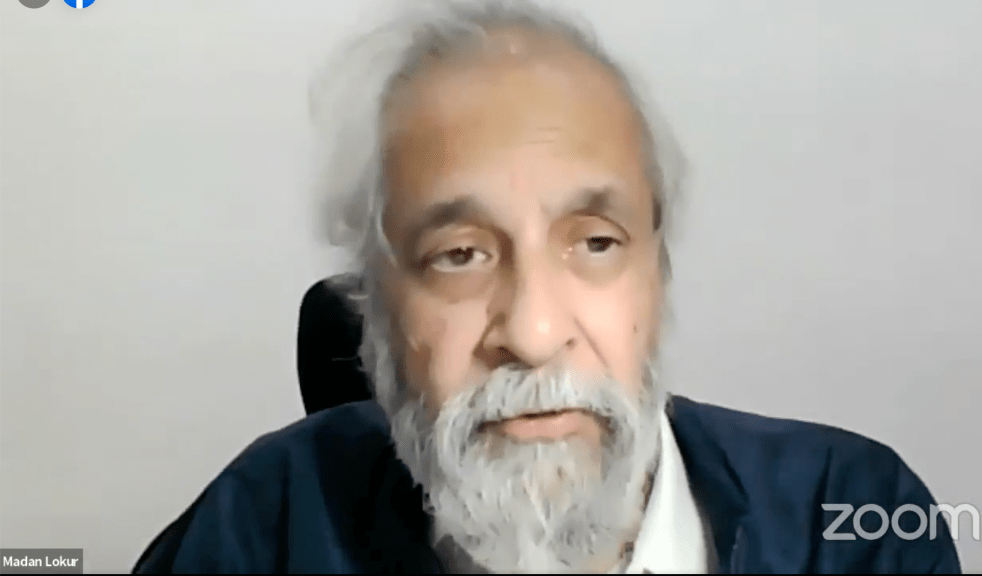
In his key note address at the final session of India Rivers Week 2022, Justice Madan Lokur, former judge of Supreme Court of India said, “Time has come we need to be a little more active and aggressive vocally to ensure that we are listened to about the problems we all are facing. Farmers struggle, the CAA amendment etc. are good examples. There is need for a political will to bring about any change. How do we generate such a political will is the issue.”

Among other messages Justice Lokur gave in his key note address at the final session of India Rivers Week 2022 on Nov 27, 2022 included: “Rivers belong to all, not a select few… We need to ensure that we are effective in our work, our messages.”

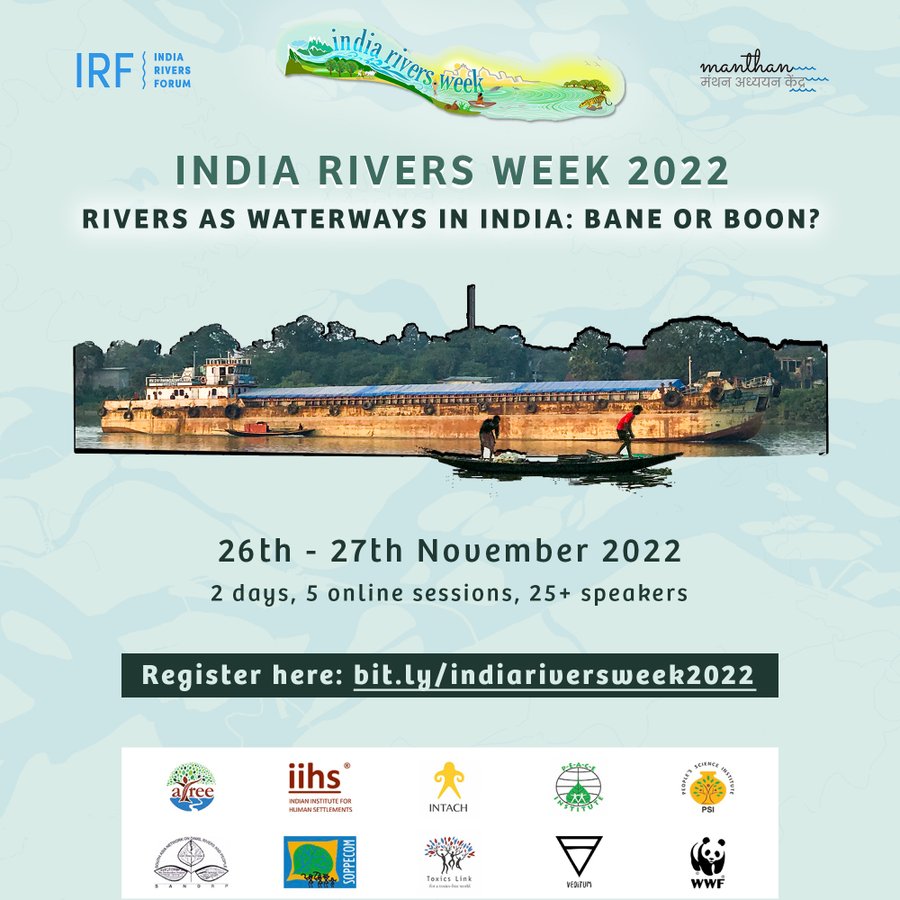
The two day, five session India Rivers Week 2022 function focused on use of rivers as waterways, organized in collaboration between India Rivers Forum (IRF is constituted by ten organizations now) and Manthan Adhyayan Kendra ended on Nov 27, 2022. The IRW 2022 sessions had a number of highlights, we will try to bring them to you in separate articles.

Continue reading “DRP 281122: Justice Lokur at IRW 2022: We need to be vocally more aggressive to make a difference”
DRP News Bulletin

DRP 211122: IRF focus on Rivers as waterways as the World celebrates Fisheries Day

As the World Celebrates Fisheries day today, the India Rivers Forum (IRF) focusses this week on use of Rivers as waterways in its annual program. Spread over five sessions, the online event on Nov 26-27, 2022 is co-organised by Manthan Adhyayan Kendra and IRF. Riverine fisheries and fisherfolk are adversely affected by the current waterways program of the government, and as usual, the government does not even find it necessary to assess the impact of the program on these poorest, weakest, most neglected and most vulnerable section of our population, leave aside the question of compensating them or involving them in the program. The IRF program “Rivers as Waterways in India: Bane or Boon?” will highlight this and many other aspects of the waterways initiative of the government, which aims to include 111 rivers across the length and breadth of the countries.

The five sessions of the IRF program will be titled: “Overview of Indian Inland Waterways”, “Viability of Indian Inland Waterways”, “Impacts of Indian Waterways”, “Governance of Indian Waterways” and “Rivers as Waterways in India: Bane or Boon?”. The two event will have more than 25 speakers. The final session will be chaired by former judge of Supreme Court of India, Justice (Retired) Madan Lokur. Justice Lokur will also give away the Bhagirath Prayas Samman awards of 2022 and Anupam Mishra Medal 2022, the names of the recipients this year will be shared in that final session on Nov 27, 2022.

Continue reading DRP 211122: IRF focus on Rivers as waterways as the World celebrates Fisheries Day