Wetlands

Top ten Judicial actions on India Wetlands-2021

Feature image: Deepor Beel boundaries still await proper demarcation (27 Dec. 2021) by G Plus.

This third part of Wetlands Overview 2021 provides details of top ten judicial interventions in India in 2021 regarding wetlands. The first part presented top ten stories about current situation of wetlands in the country and the second part covered top 10 actions by the state and central governments that affected the wetlands in positive and adverse manner. 

Continue reading “Top ten Judicial actions on India Wetlands-2021”
Wetlands

Top ten India Wetlands stories about Govt actions in 2021

Feature image: UNDP mission to restore 9 wetlands in Andhra beings (The Hindu, 05 May 2021)

Here we highlight the top ten Wetlands India stories about Government actions in 2021 from media reports, including some positive and some adverse decisions taken by various state governments and centre. The first part has presented current situation of wetlands in the country through top 10 reports. The next part would present top 10 judicial interventions in India in 2021 regarding the wetlands.

Continue reading “Top ten India Wetlands stories about Govt actions in 2021”
Wetlands

India’s Wetlands Overview 2021: Gross Misuse of even Ramsar sites

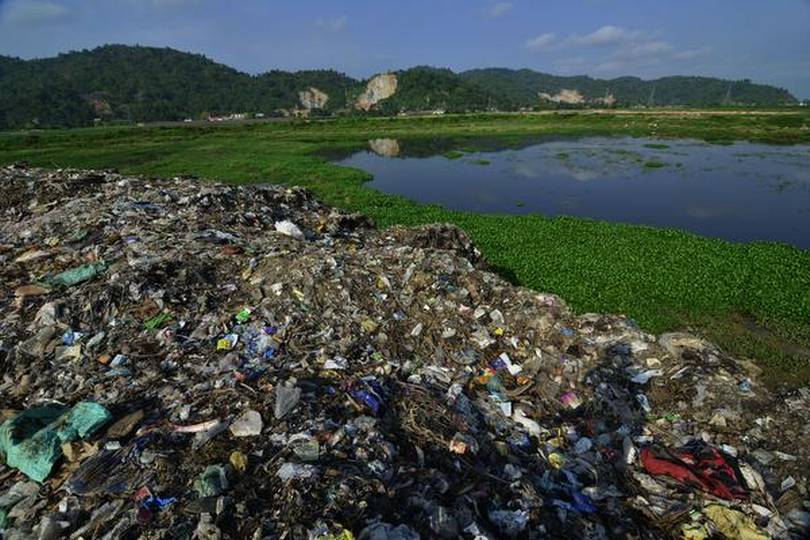
(Feature image:- Deepor Beel wetland area has been suffering from environmental degradation due to continuous encroachment and waste dumping. The Guwahati Municipality dump yard, located at Boragaon, lies in the eastern corner of Deepor Beel. Photo: Ritu Raj Konwar/Front Line)

Wetlands are important part of hydrological cycle and play critical role in water purification, climate moderation, biodiversity conservation and flood regulation apart from offering innumerable environmental services to aquatic, wildlife and human beings for which they are also referred as ‘kidneys of the earth’. There are more than 2 lakh wetlands in India covering nearly 4.6 per cent of its geographical area. Despite their essential services and significance, the already neglected wetlands eco-system have been facing multiple existential threats.

As part of its annual overview for 2021, SANDRP in three part series attempts to highlight the state of wetlands in India during past one year. This first part compiles the 10 top critical reports representing the present day status of wetlands across the country. The second part would cover various actions and initiative taken by the state governments and central government all through 2021 impacting the wetlands. The final part would deal with the judicial interventions on wetlands.

Continue reading “India’s Wetlands Overview 2021: Gross Misuse of even Ramsar sites”
Wetlands

World Wetlands Day 2021: Five new Ramsar sites in 2020 but threats remain

On the Feb 2 2021, the World Wetlands Day, the Ramsar Convention on Wetlands would also complete its 50 years. The global treaty popularly known as Ramsar Convention was adopted in 1971 and came into force in 1975 following decades of negotiations.

The main objective of the treaty is to promote conservation and wise use of all wetlands through regional actions and international cooperation. Currently, the treaty has been accepted by 171 nations including India. There are 2414 Wetlands of International Importance under Ramsar treaty spreading over 254,540,512 ha of lands across the globe.

Continue reading “World Wetlands Day 2021: Five new Ramsar sites in 2020 but threats remain”
Wetlands

Maharashtra Wetlands Overview 2020

[The feature photo of Flamingos at NRI colony in Navi Mumbai above is by Vidyasagar Hariharan, from The Guardian Dated March 26, 2019.]

In 2020, Maharashtra has seen some interesting developments around wetlands, driven by initiatives by activists like D Stalin among many others, and at times supported by judiciary. After an example of some individuals’ courage to save an 80 ha of wetland, we look at state level wetlands issue, followed by some interesting developments around some specific wetlands like Dhamapur Lake (Sindhudurg dist) and Lonar (Buldana dist). Maharashtra govt claimed in High Court that in three districts of Nandurbar, Nagpur and Parbhani, there are no wetlands at all. The flip flops here is tragic as the ISRO report had shown over 2000 wetlands in these districts. Next is the Mumbai wetlands, Uran wetlands, Panje wetland and two other wetlands where CIDCO has been pushing real estate projects. The overview ends with some Supreme Court petitions. There is lot of action, but no very optimistic trends in spite of some individual actions and positive developments at some individual wetlands.

Continue reading “Maharashtra Wetlands Overview 2020”
Wetlands

Wetlands Review 2019: East & North East India

ODISHA

HC asked govt to start demolishing illegal prawn gheries in wetlands In a remarkable order the Odisha High Court on Jan. 21, 2019 directed the govt to start the demolition process of illegal prawn farms in Bhitarkanika National Park and the Chilika Lake under the supervision of the committee formed for the purpose. The high court has set March 18 as the date for taking stock of the work. It has also directed the govt to lodge criminal proceedings against the offenders.

The Supreme Court had on April 3, 2017, asked the chief justice of high courts in 15 states to take up the issue of conservation of important wetlands. Of the 26 major wetlands in 15 states, two are in Odisha. The high court had taken up the issue by suo motu registering a PIL in Sept 2017 for restoration of two wetlands – Bhitarkanika in Kendrapada district and the Chilika Lake, encompassing areas in Puri, Ganjam and Khurda districts.

Continue reading “Wetlands Review 2019: East & North East India”

Wetlands

Wetlands Overview 2018: North India – No Land for Wetlands

Wetlands are critical part of hydrological systems. They provide multiple ecological services to people living in proximal areas. The invisible contribution of wetlands in saturating aquifers and checking groundwater depletion is essential given the growing water scarcity. Additionally, wetlands are home to a variety of plants and animals species making them fully functional and self-sustaining eco-system. Despite the environmental significance and associated support services, wetlands have been subjected to degradation for past many decades.

As part of annual exercise, SANDRP is presenting overview on the status of wetlands over past one year. The overview focuses on incidents of abuse and threats to wetlands across the country. The report also highlights the details of central and state governments’ initiatives and administration actions taken aiming at wetlands protection. Apart from this, there is attempt to throw some light on judicial intervention and ongoing court cases regarding wetlands conservation.

Continue reading “Wetlands Overview 2018: North India – No Land for Wetlands”

Dams · DRP News Bulletin

DRP News Bulletin 05 February 2018 (J&K Shows The Way To The Nation: To Assess The Viability Of Big Hydro Pojects)

In a remarkable development, Jammu & Kashmir Govt is reviewing its Hydro policy to assess whether the Hydro Electric Power Projects (HEPs) are still viable. As per sources, this is for the first time that the Govt is discussing the viability of generating hydro power.

An empowered committee led by the Chief Secretary has started this discussion by calling for an “approach paper” that will give an overall picture of the hydropower industry in India. Top sources in the State Power Development Corporation (SPDC), a government-owned company, told Kashmir Reader that the empowered committee wants to lay a roadmap for power generation in the state. “It will reflect the vision of the government. It will give the picture of hydropower generation in India, its rates, market, demand and supply. It will also lay down a roadmap for large power projects,”

The approach paper will be part of a new hydropower policy which will be submitted before the same committee, and then before the cabinet for approval. The SPDC had submitted a hydro policy draft in April last year, which was returned to it in December. Sources said the approach paper has to be submitted in two months’ time.

At present, India has a surplus generation of hydropower, which has plummeted its rate. This has led to losses for SPDC as it invested in projects whose generation costs were high. The blunt example is that of the 450-MW Baglihar II. SPDC has failed to lure any buyer for more than a year as its selling cost of per unit of energy, Rs 4.4, is nearly Rs 2 higher than the market rate. The SPDC has finally managed to sell the power at about Rs 4 per unit to the Uttar Pradesh government but for one year only. The SPDC may have to struggle again next year if the state of UP does not continue the contract.

Another example is that of Nimuno Bezgo, and Chutak hydropower projects, which sell energy at Rs 13 per unit. The SPDC also buys power from Dulhasti project at Rs 7, when the available rates for power in the market is around Rs 2 and Rs 4. https://kashmirreader.com/2018/02/02/cs-led-panel-to-lay-roadmap-for-power-generation-in-jk/ (Kashmir Reader. 2 Feb. 2018)

As per another report, facing a growing demand for electricity and unable to tap its vast potential for generating hydroelectric power, the state government is looking to boost solar power generation. Given the long gestation period of hydel projects, it is unlikely the generation of hydroelectric power will expand significantly in the near future, said. Hence,  the focus on solar power. Indeed, when solar power potential exists, with lower installation and operation costs and impacts, why States continue after destructive, expensive hydro projects? https://scroll.in/article/866058/kashmir-can-generate-a-lot-more-hydel-electricity-than-it-requires-why-is-it-eyeing-solar-power (Scroll.In, 30 Jan. 2018)

There is one more interesting hydro power development in which the state cabinet of Bihar has approved closing 3 and cancelling the development of 2 others in addition to handing over of 8 hydropower projects to neighboring Jharkhand.

Continue reading “DRP News Bulletin 05 February 2018 (J&K Shows The Way To The Nation: To Assess The Viability Of Big Hydro Pojects)”

Dams · Wetlands

India Wetlands Review 2017: Important Governments Decisions

Central Government Decisions

Environment ministry notifies new wetland rules In a major decision, the union environment ministry notified the new Wetland (Conservation and Management) Rules 2017 on 26 Sept. 2017 replacing the 2010 version of the rules. The draft of the Wetland Rules was first presented by the Ministry of Environment, Forest and Climate Change (MoEF&CC) in March 2016. But they were severely criticized by conservationists who had alleged that the draft rules don’t mention anything about a national regulator and don’t list specific activities prohibited in these ecologically sensitive areas.

The new rules stipulate setting up of a State Wetlands Authority in each State and union territories that will be headed by the State’s environment minister and include a range of government officials. They will also include one expert each in the fields of wetland ecology, hydrology, fisheries, landscape planning and socioeconomics to be nominated by the state government.

The State authorities will also need to prepare a list of all wetlands of the State or union territory within three months, a list of wetlands to be notified within six months, a comprehensive digital inventory of all wetlands within one year which will be updated every ten years.

To oversee the work carried out by States, the rules stipulates for setting up of National Wetlands Committee, which will be headed by the MoEFCC Secretary, to monitor implementation of these rules. The Committee will also advise the Central Government on appropriate policies and action programmes for conservation and wise use of wetlands, recommend designation of wetlands of international importance under Ramsar Convention, advise on collaboration with international agencies on issues related to wetlands etc. http://www.livemint.com/Politics/y6Tr3tkrr3q28AmGKaBFII/Environment-ministry-notifies-new-wetland-rules.html  (Live Mint, 28 Sept. 2017)

Continue reading “India Wetlands Review 2017: Important Governments Decisions”

Dams · Wetlands

India Wetlands Review 2017: Important Court Orders

SUPREME COURT The Supreme Court of India is hearing a matter Writ Petition(s)(Civil) No(s). 230/2001 in which there have been several orders of consequence this year (e.g. 8 Feb 2017 & 16 Aug 2017) for protection of wetlands.  In spite of several directions for identification, preparation of brief documents, implementation of rules 4, notification of wetlands under the Wetlands Rules 2010, hardly any progress has happened.

Rule 4 of Wetlands Rules 2010 applicable to Wetlands of size ≥2.25 ha 

 “National Wetland Inventory & Assessment” was filed in SC. This Brochure indicates on page 11 that 2,01,503 wetlands have been mapped at 1:50,000 scale. All these wetlands have ‘an area of more than 2.25 hectares’. As a first step, the ‘Brief Documents’ with regard to these 2,01,503 wetlands should be obtained by the Union of India from the respective State Governments in terms of Rule 6 of the Wetlands (Conservation and management) Rules, 2010.

Continue reading “India Wetlands Review 2017: Important Court Orders”