DRP News Bulletin

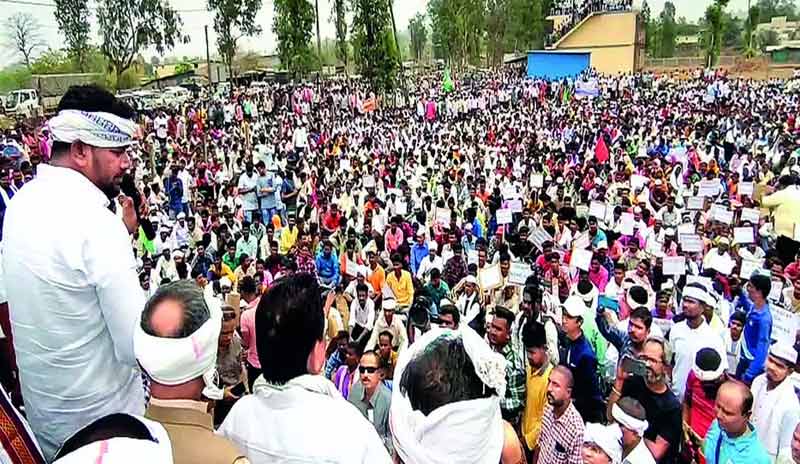
DRP 04 April 2022: Gujarat Tribals unite to stop Par Tapi Narma

(Feature Image:-Tribals protesting against Par-Tapi-Narmada Project. The Indian Tribals)

The amazing unity and fight shown by Gujarat Tribals in their protest against the Par Tapi Narmada Link has led to both Gujarat govt and Central govt agreeing to suspend the project. However, the tribals are rightly not satisfied with the word of play indulged in by the Gujarat and Union govt so far. The central govt has said that the project will not go ahead as long as there is no consensus among the party states, but that statement is true even with or without the campaign launched against the project. The Maharashtra govt in any case is not in agreement with the project. Gujarat govt has not taken a clear decision to permanently cancel the project and without such a decision, Gujarat govt can again revive the project any minute. Same is true about the Central govt. So until both Gujarat govt and Central govt decide to cancel the project and come out with official notification to that effect, the tribals are right to continue the protest and not believe in either of the govt.

Continue reading “DRP 04 April 2022: Gujarat Tribals unite to stop Par Tapi Narma”
Sand Mining

North India: 136 people killed in sand mining violence & accidents in 16 months

(Feature Image: 1 killed, 17 injured after a sand truck toppled in mine pit in Kosi river, Ram Nagar. Source Amar Ujala, 30 Jan. 2021)

Among the many issues affecting Riverbed sand mining is the issue of violence of various types. Stories of such violence keeps coming up from all across the country all the time. However, there is no comprehensive picture emerging about this violence. SANDRP has been trying to compile available information about instances of various types of violence related to river bed mining since last few years.

Tracking the issue, this year we have prepared detailed accounts along with summary reports in a Zone wise format. This first part is a summary report of the detailed account on North Zone states including Uttar Pradesh, Haryana, Uttarakhand, Punjab, Delhi, Jammu & Kashmir and Chandigarh and covers sand mining violence and deaths that took place between December 2020 and March 2022, following after our earlier report that carried the figures for period upto Nov 2020. The successive parts will cover East & North East, West and South Zones. SANDRP’s previous report detailing nearly 193 human deaths between January 2019 and November 2020 on account of illegal sand mining activities can be seen here.

Continue reading “North India: 136 people killed in sand mining violence & accidents in 16 months”
Dams, Rivers & People

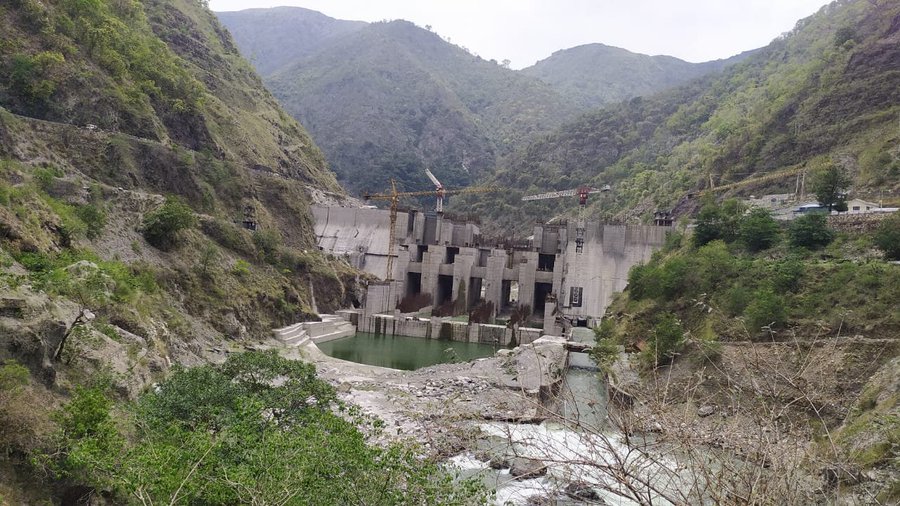
DRP 28 Mar 2022: Is Climate Change making big dams MORE dangerous?

That big dams are dangerous, disaster prone is well known, the parliament having passed the Dam Safety Act is just one of the clear evidence of it. However, are big dams becoming even MORE dangerous in changing climate? All the science and also practical evidence seems to suggest that. This is also what the SCROLL report mentioned below concludes.

What is shocking is that the CWC (Central Water Commission), India’s premier technical body on dams and water, when asked about this through an RTI, is in slumber. CWC told the journalist that there are no such cases! This should be worrying for everyone concerned including those in the risk zone of the dams, the beneficiaries of the dams and also the dam operators. This also exposes how weak is the mechanism set up by the Dam Safety Act passed recently by the Parliament is. This is because under the act, CWC Is the main organisation responsible dam safety in India. Can CWC really save us from unsafe dams, structurally unsafe or operationally unsafe? The SCROLL article illustrates through the example of Andhra Pradesh dams that CWC has not. It also quotes the compilation of SANDRP where to the frequency of disasters are only going up and there is again no confidence inspiring role from CWC.

Continue reading “DRP 28 Mar 2022: Is Climate Change making big dams MORE dangerous?”
Water Options

World Water Day 2022: Positive Water Stories from India

This report on World Water Day 2022 highlights the positive impacts of initiative taken by individual, communities, civil societies and government schemes towards revival and protection of water sources in India over the past one year. These efforts show how conservation, restoration and management of water resources including springs, step-wells, ponds, lakes, tanks etc. at local level are far better, cost effective and efficient solutions in comparison to big water projects which in immediate and long term cause more damages than benefits to hydrological cycle, local community, environment apart from incurring huge construction and operating costs. SANDRP has also published media compilation on positive groundwater stories and urban water options on World Water Day 2022 occasion.

Continue reading “World Water Day 2022: Positive Water Stories from India”
Urban Water Sector

World Water Day 2022: Urban Water Options

Feature Image: Bengaluru, second highest in rainwater harvesting in Indian cities. https://bengaluru.citizenmatters.in/rainwater-harvesting-in-bengaluru-webinar-64351

On World Water Day 2022, here are some positive water reports from urban India. Two reports on Positive Groundwater and Water stories from India over past one year have been separately published.

Mumbai BMC scarps Gargai dam, goes for alternatives In a wise move, the Brihanmumbai Municipal Corporation (BMC) has cancelled Gargai dam project. In January 2014, SANDRP had made submission to Expert Appraial Committee (EAC), highlighting the adverse impacts of this project on tribal people and Tansa Sanctuary stressing on exploration of alternatives including recycling of sewage and rain water harvesting. Finally, now the BMC has scrapped the unjustified project which would have caused felling of 4.5 lakh trees which BMC chief Iqbal Chahal rightly finds pointless in the wake of increasing climate change threats.

Continue reading “World Water Day 2022: Urban Water Options”
DRP News Bulletin

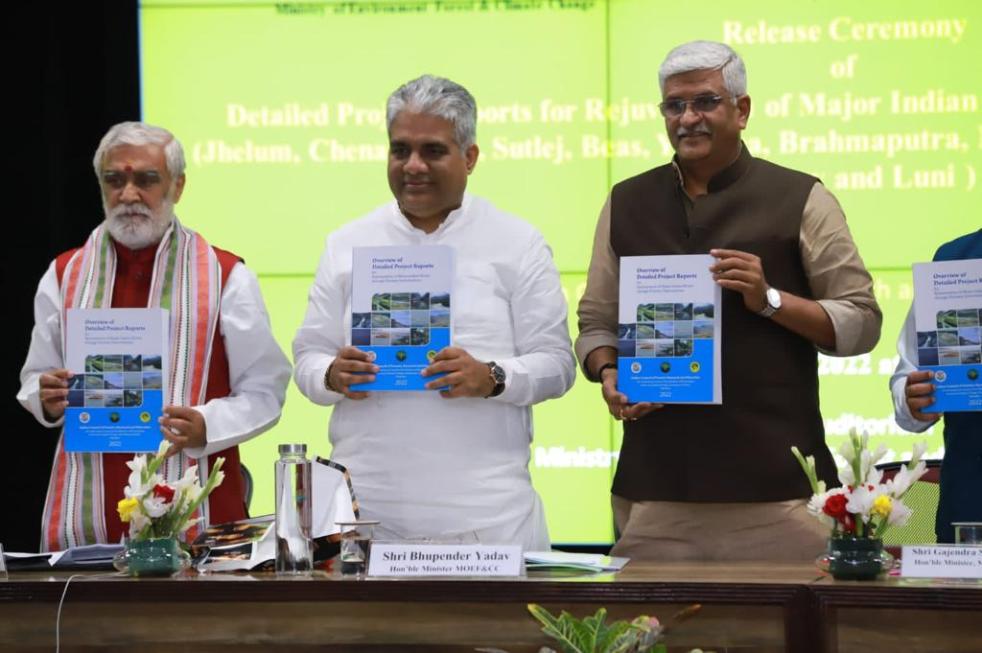
DRP 21 Mar 2022: Centre’s unconvincing Plan to rejuvenate 13 major rivers

The government of India, through joint announcement of Union Ministries of Jal Shakti & Environment and Forests (such joint addresses are rather rare events) this week announced its plans to rejuvenate 13 major rivers of India (excluding Ganga but including some of the key Ganga tributaries!) through the limited activity of plantations is not every convincing on many counts. Firstly it is welcome to see that the government sees a role of forests as a hydrological asset. Unfortunately, this is clearly and completely absent in government’s forest management, both in policy and practice. If we see the forest governance of India through the functioning of the Forest Advisory Committee of MoEF, we see absolutely no sign of acknowledgement of this reality that forests are major hydrological assets. So for example when a decision is taken to allow diversion of major chunks of existing forests, there is never any discussion, assessment or counting of hydrological eco system services that forests provide. This is apparent in many cases, but most recently in the case of Ken Betwa project where the Supreme Court’s Central Empowered Committee too has acknowledged this reality. So again it seems government’s mind or heard does not seem to know what the tongue is conveying!

Continue reading “DRP 21 Mar 2022: Centre’s unconvincing Plan to rejuvenate 13 major rivers”
Groundwater

World Water Day 2022: India’s Positive Groundwater Stories

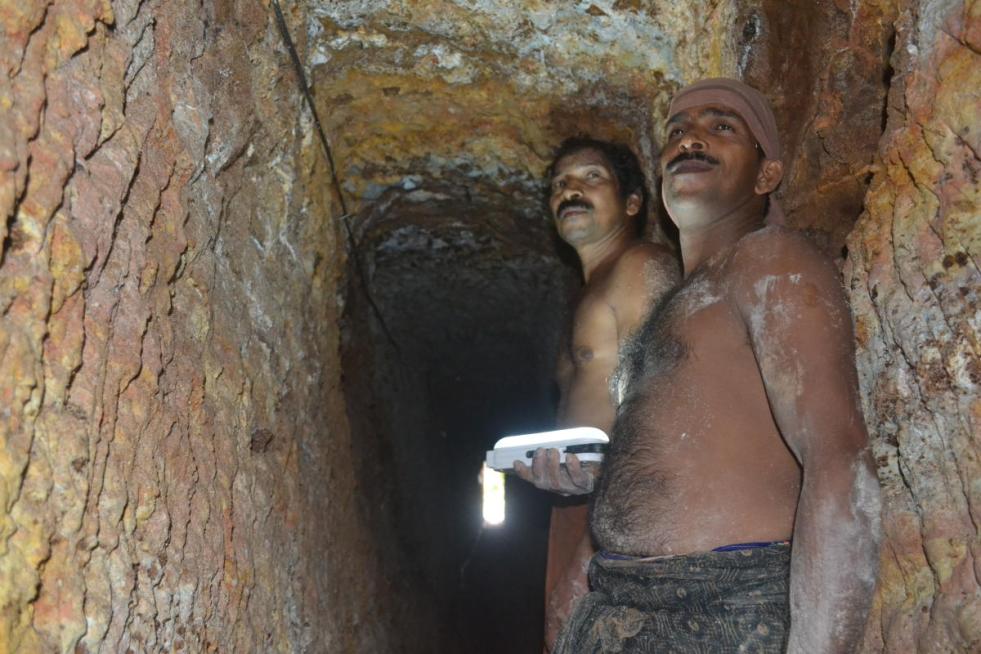
(Feature image: Suranga: Tunnelling the earth for water https://www.deccanherald.com/spectrum/suranga-tunnelling-the-earth-for-water-1080713.html (12 Feb. 2022)

March 22 is celebrated as World Water Day (WWD) since 1993 to underline the significance of freshwater resources. The theme for 2022 WWD is Groundwater which has become India’s water lifeline at least for the last four decades for most of urban and rural areas, be it supply of potable, irrigation or industrial use. The large scale unsustainable extraction and pollution of this invisible finite resource has been causing grave concern.

However, there are several indigenous viable alternatives and governance mechanism which can reverse the groundwater depletion trend and fulfil water requirements. We here compile top 10 positive groundwater stories of last one year. Similarly, the second part covers urban water options and the third part highlights positive water stories. It is worth mentioning that most of these remarkable efforts are result of MNREGA (Mahatma Gandhi National Rural Employment Guarantee Authority) scheme.

Continue reading “World Water Day 2022: India’s Positive Groundwater Stories”
DRP News Bulletin

DRP 14 March 2022: 25th Anniversary of International Day of Action for Rivers!

14th March is celebrated as International Day of Action for Rivers since 1997 after the resolution at the 1st International meeting of People Affected by Dams in Curitiba, Brazil. At this meeting of Dam affected people from 20 countries (including India) it was decided to celebrate this day as the International Day of Action Against Dams and For Rivers, Water and Life. It is thrilling to see the celebration continuing and spreading on 25th anniversary of that meeting. The focus this years is on Rivers for Biodiversity. To illustrate how the celebration of this day has spread, in 2021, even during pandemic, the day was celebrated with over 120 events in 32 countries. For details, see: https://www.internationalrivers.org/take-action/international-day-of-action-for-rivers/.

Continue reading “DRP 14 March 2022: 25th Anniversary of International Day of Action for Rivers!”
DRP News Bulletin

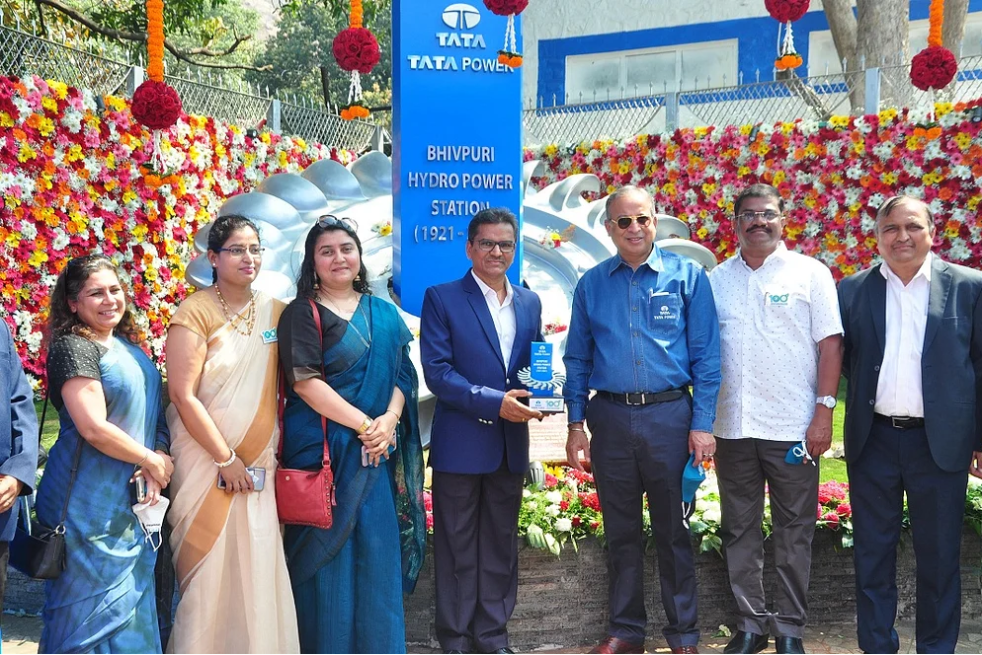
DRP 070322: As Tata celebrates century of Bhivpuri HEP operation, time to return the project to government and review it?

On March 5, 2022, Tata Power celebrated 100 years of operation of the Bhivpuri hydropower project in Raigad district of Maharashtra. It is possibly right time to consider by the government to ask Tata Power to return all the hydropower projects of Tata Power in that region to the government. Tatas got the right to develop these projects under a colonial agreement that handed over the public resources of land, river and rights over the project benefits to a private company like Tatas almost for free, for the company to profit from these public resources. This arrangement should have been reviewed long back, but possibly it is right time to review it now. Possibly it will be a good move in the year when India celebrates Azadi ka Amrutmahotsav!

The project transfers water from drought prone, water deficit Krishna basin to high rainfall area of Konkan. And such disastrous transfer continues even in drought years. It is high time this is reversed and the water is allowed to flow in the Krishna basin. From this perspective, the project also needs to be reviewed if at all it should continue to operate and if so under what terms and conditions.

Continue reading “DRP 070322: As Tata celebrates century of Bhivpuri HEP operation, time to return the project to government and review it?”
Ramganga

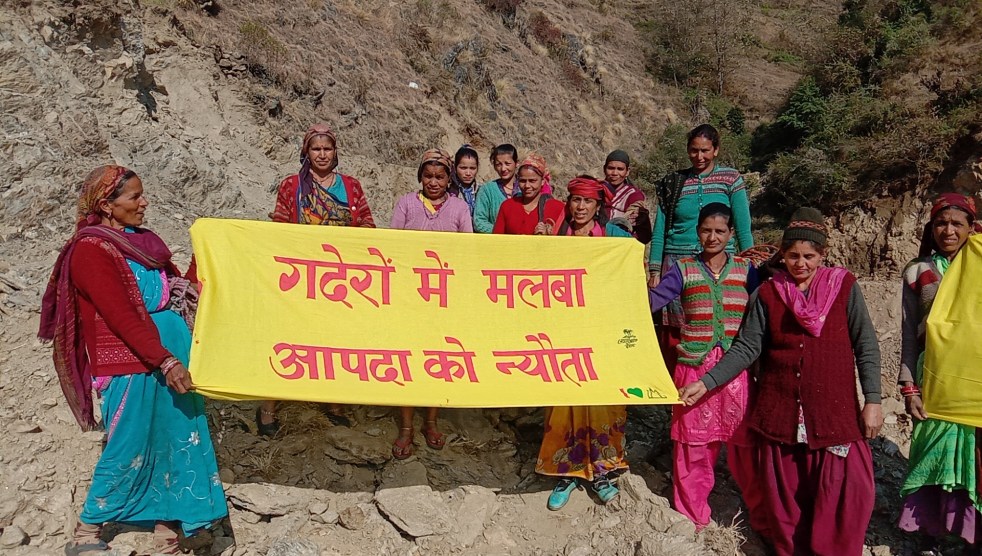
Uttarakhand: Ensure safe disposal of Rural Road debris

Road connectivity is essential in accessing basic amenities and better life in remote hills of Uttarakhand. Particularly during medical emergencies when each and every minute counts, timely access to nearest road turns decisive factor for survival of grieving persons. For these reasons, many see road construction and connectivity as single point development agenda in rural Uttarakhand.

Syunsal village in Thailisain block of Pauri district is no exception and after years of struggle a 7 km long road is under construction here since first week of December 2021. The village is located in buffer zone of Dudhatoli reserve forest in Chauthan Patti which shares its border with Almora and Chamoli districts. The region is also birth place of several perennial streams forming Binnu river a tributary of Ramganga river.

Continue reading “Uttarakhand: Ensure safe disposal of Rural Road debris”