Groundwater

2022: Some positive reports on groundwater management 

This second part of yearend overview, SANDRP highlights some positive reports and steps taken by various state governments in India for management and conservation of groundwater in 2022. In first part of the overview, we have tracked the situation of groundwater depletion and contamination in the country and in third part covered some remarkable judicial interventions regarding groundwater conservation in 2022.

Centre Recharge wells to power multi-city groundwater project. A pilot project on shallow aquifer management, initiated by the Union Ministry of Housing and Urban Affairs for 10 cities, under the Atal Mission for Rejuvenation and Urban Transformation (AMRUT), has identified recharge wells as key to improving groundwater availability. Experts have cited the non-availability of space to allow the percolation of rainwater as a major hurdle to recharging Bengaluru’s groundwater table. The Million Wells programme was launched by Biome Environmental Trust in 2015 to encourage citizens and communities to dig and maintain their own recharge wells. It also opened up employment for the traditional well-digger community, the mannu vaddars.

In Bengaluru, the Bruhat Bengaluru Mahanagara Palike (BBMP) will be the nodal agency for the project. Biome Environmental Trust and Advanced Centre for Water Resources Development and Management (ACWADAM) will be technical partners in the project, which is led by the National Institute of Urban Affairs, a national think-tank on urban planning and development. The pilot project also covers Chennai, Dhanbad, Gwalior, Hyderabad, Jaipur, Kolkata, Rajkot, Thane, and Pune. https://www.deccanherald.com/city/recharge-wells-to-power-multi-city-groundwater-project-1157262.html  (28 Oct. 2022)

Continue reading “2022: Some positive reports on groundwater management “
Groundwater

2022: Groundwater Depletion, Contamination Continue amid Govts’ Efforts

This first part of the annual overview, SANDRP tracks some of the important developments regarding groundwater depletion and contamination in India and ongoing efforts, new steps taken by Central and various state governments in 2022 for the protection and conservation of the finite natural resource. Overall, these developments show no significant improvement in governance and management of groundwater resources which is also the water lifeline of the country amid its rising depletion and contamination. In second and third parts of the yearend roundup we have tracked some positive initiative for groundwater management by various governments in the country and some remarkable judicial interventions for groundwater governance and conservation in 2022.

Continue reading “2022: Groundwater Depletion, Contamination Continue amid Govts’ Efforts”
DRP News Bulletin

DRP 160123: Top Court appeals for EIAs for Urban Development: Welcome, but…

The Supreme Court of India, while disposing of a petition related Chandigarh, in its order on January 10, 2023 has said: “Before we part with this judgement, we observe that it is high time that the legislature, executive, and the policymakers at the centre and state levels take note of the damages to the environment on account of haphazard development and take a call to take necessary measures to ensure that the development does not damage the environment… We therefore appeal to the Legislature, the Executive and the Policy Makers at the Centre as well as at the State levels to make necessary provisions for carrying out Environmental Impact Assessment studies before permitting urban development.”

This is most welcome. And urgently required. That India’s urban development is happening at the cost of life sustaining environment resources including rivers, water bodies, forests, wetlands among others is well known. That the government sees all requirements of environmental scrutiny as road blocks is also well known. The consequences of this are clear for all concerned, not only in case of Bangalore as cited by the Supreme Court Bench, but also in case of Ahmedabad, Bhopal, Chennai, Delhi, Ernakulam, Faridabad, Gurugram, Hyderabad, Indore, Joshimath, Kolkata, Lucknow, Mumbai and so on. So is there a good chance that the apex court suggestion will be followed either in letter or in spirit? Unlikely. So what is clearly required is that the apex court emphatically directs the centre and states in this regard and follows it up with ensuring its implementation.

Continue reading “DRP 160123: Top Court appeals for EIAs for Urban Development: Welcome, but…”
Hydro Power Projects

2022: Hydro Power Projects Disasters, Damages & Concerns in South Asia

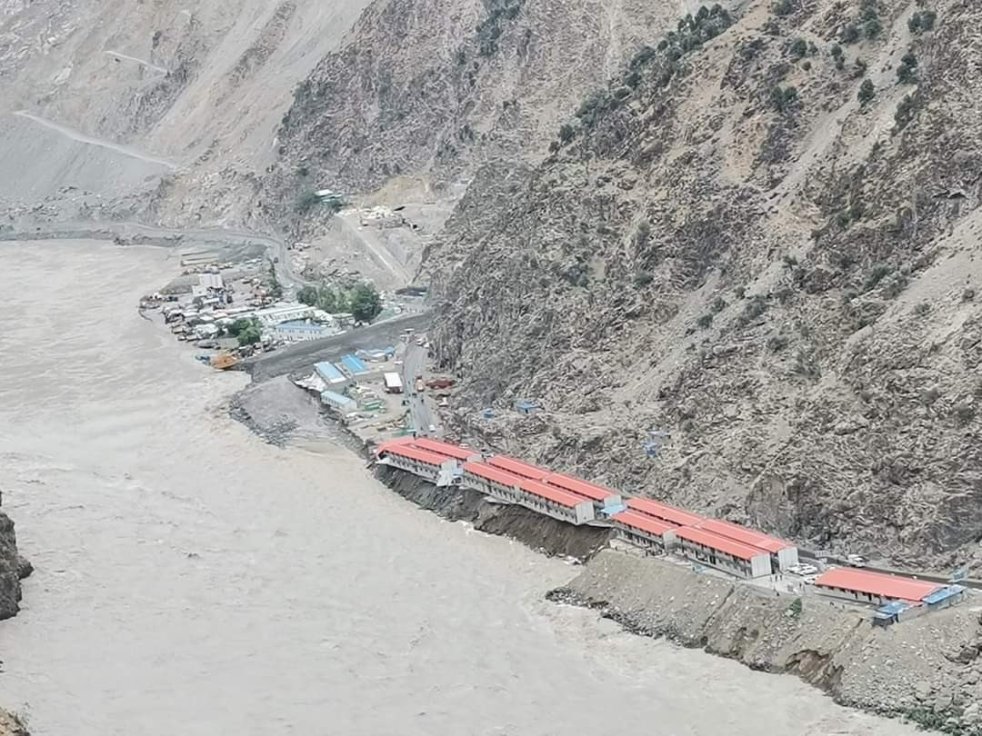
(Feature Image:- The residential quarters established alongside the Ichar Nullah by the Chinese workers of the Dasu hydropower project were swept away along with their machinery, trucks and dumpers in the swollen nullah. Image: Pamir Times, Text:Dawn. Aug. 2022)

In addition to India, the local people in Himalayan countries of South Asia have been resisting against the hydro power projects. These countries have also been facing accidents and disasters caused by the hydro power projects. At the same time, the increasing construction as well as operational cost and climate change threats have been making the future of hydro power projects risky and uncertain in the region. This annual overview highlights the hydro power projects related accidents, disasters and concerns in South Asian countries. 

Continue reading “2022: Hydro Power Projects Disasters, Damages & Concerns in South Asia”
DRP News Bulletin

DRP 261222: People on roads against hydro projects that govt is pushing

(Joshimath residents staging protest against land sinking and damages to their homes demanding rehabilitation & halt in NTPC’s Tapovan Vishnugad HEP tunnel work on Dec. 24, 2022. Image source: Atul Sati, Joshimath)

People of at least four states are opposing hydropower projects that the central and state governments are pushing, ignoring all the ground realities. In Uttarakhand, the Joshimath residents are on roads to wake up the government that seems deaf to their protests due to their houses cracking and land subsiding due to the tunnels being blasted for hydropower projects and Char Dham highway being built ignoring the voices of not only the affected people, but also the experts.

In Arunachal Pradesh, people have been writing to the central govt authorities against the Etalin and Dibang projects being pushed in Dibang valley of Brahmaputra basin.

In Himachal Pradesh, the people of Kinnaur and Lahaul Spiti districts have made it an election issue the destructive hydropower projects being pushed there both by the state and central governments.

In Andhra Pradesh too people have been protesting against the pump storage projects being given permission in schedule tribe areas without their prior informed consent and ignoring the statutory requirements.

2022 is thus ending with people’s active protests across the country against destructive, disaster prone and unviable projects being pushed against their wishes and in violation of any proper consultations or even any credible impact assessments. In the escalating impacts of climate change, these projects are even more problematic as they not only worsen the adaptive capacity of people and invite more frequent, intense and spread of the disasters, but they also destroy the mitigation tools like forests and flowing rivers. This when all these projects are not even economically viable, and when better, cheaper options are available. It would be best if sooner the government listens to the people and stop pursuing such projects.

Continue reading “DRP 261222: People on roads against hydro projects that govt is pushing”
Dam Safety

2022: Growing Concerns over Dam Safety, Sustainability & Impacts

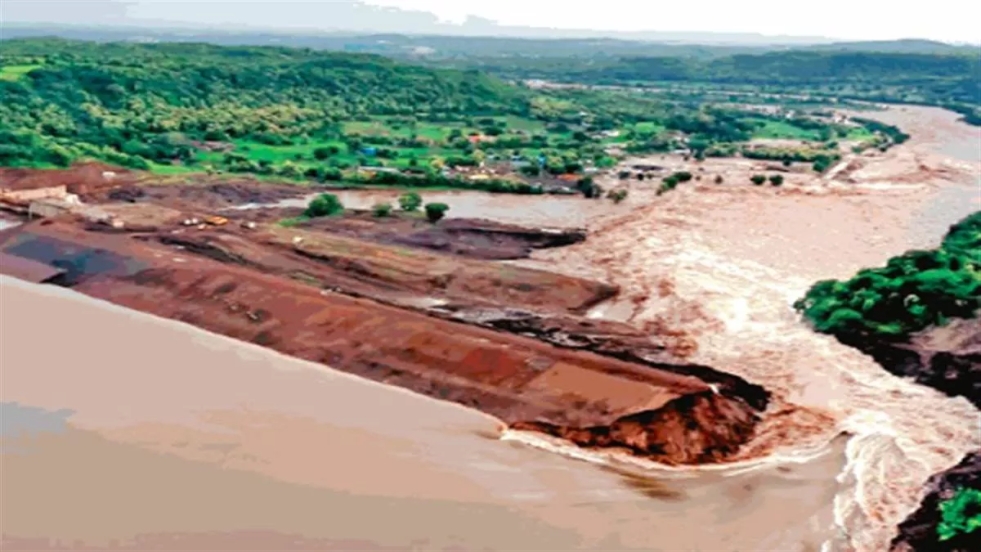
(Feature image: Breach in Karam dam, MP in Aug. 2022. Dainik Jagran)

This annual overview is focused on issues concerning structural and operational safety of dams that arose in 2022. It includes issues related to how climatic threats and siltation is making the large dams unsustainable. It also highlights the impacts of dams on river eco-system and riverine people amid some corrective measures being taken by the various state and central governments including the formation of National Dam Safety Authority.

Please see for links to SANDRP’s analysis on the issues in 2022 in India covering: (1) Dam induced floods, (2) Dam safety and related issues of Polavaram project, (3) Disasters and accidents caused by hydro power projects in Himalayan states, (4) Growing and ongoing resistance against destructive dams and hydro projects, (5) Fly ash dam breaches.

Continue reading “2022: Growing Concerns over Dam Safety, Sustainability & Impacts”
Dam Disaster

2022 Fly ash dam breaches in India

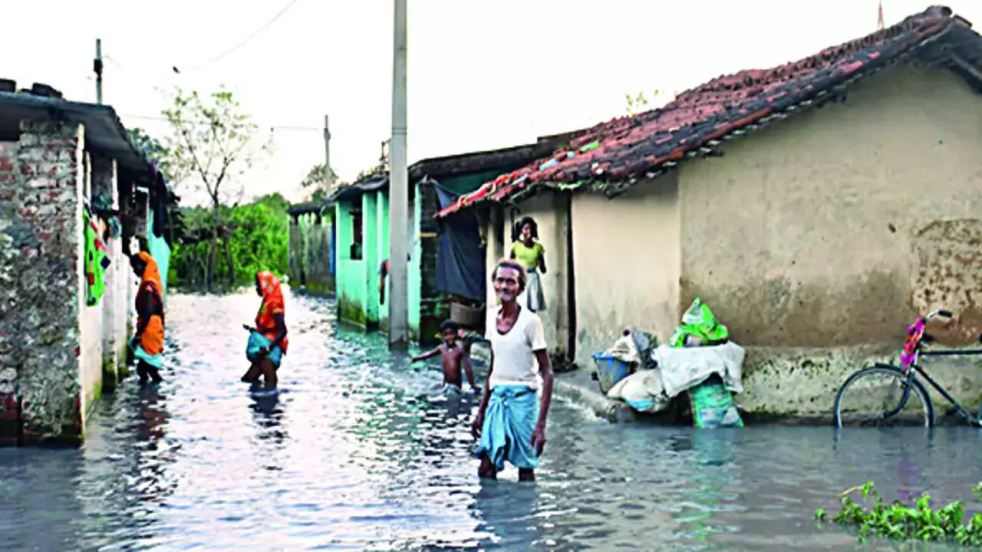
(Feature image:- This is the second time in the six months that Rautdih village has become inundated by the breach of ash pond embankment in Bokaro. ToI, Oct. 09, 2022)

Most mining companies make dams to store the semi solid slurry waste from the mines. Similarly most thermal power projects have fly ash dams to store the fly ash slurry. These dams store highly toxic slurries but there is little happening by way of regulation, monitoring or compliance at design, construction or operation level. Many of these dams breach or overflow, leading of release of the toxic slurry in the downstream areas. These dams do not even come under monitoring of Central Water Commission or under the dam safety act passed by the parliament. Despite accidents happening with huge adverse consequences, there is no accountability.

In this report, we have compiled the instances that we could locate about breaches of such dams in 2022. We earlier wrote about the Singrauli instance in April 2020 and in the 2019 SW Monsoon dam breach compilation report.

Continue reading “2022 Fly ash dam breaches in India”
DRP News Bulletin

DRP 191222: Question marks over viability of pump hydro projects

(Feature Image: 1772 Mw PSHPs Spain. Photo courtesy of Iberdrola/ ENR)

The question marks over viability of huge number of pump storage hydro projects (PSHP) being pushed forward in India currently were flowing in the rivers for long. This week, Moody’s investors Service (MIS) seems to have strengthened this after it downgraded Greenko Energy Holdings’ corporate family rating. It may be noted that Greenko is the biggest investor in PSHPs in India from private sector and a major part of Greenko’s new investments are in PSHP.

This makes the implications of MIS’s downgrade all the more interesting. MIS has noted that PHSPs are capital intensive and each PHSP will generate cash flow only after at least 2-3 years of construction (in reality it can be much longer than 2-3 years, the operative phrase here is at least). It also noted that the additional debt to be raised from Greenko’s capital spending, coupled with a rising interest environment will put further pressure on “GEH’s already weak financial metrics” and that Greenko’s high financial leverage due to its substantial capital spending program will keep its financial metrics below its downgrade trigger “for an extended period of time”.

Continue reading “DRP 191222: Question marks over viability of pump hydro projects”
DRP News Bulletin

DRP 121222: Green Hydrogen from Hydropower is false solution

(Feature Image: Reservoir of Vyasi hydro project dam on Yamuna river in Dehradun. Credit: Varsha Singh/The Third Pole.)

A section of the hydro lobby has been trying to push hydropower in the name of producing green hydrogen as an alternative energy source. However, it has been known for a long time that this is a false solution. There cannot be green hydrogen when sourced from hydropower as not only hydropower projects have huge social and environmental footprint, they also have huge carbon footprint as the following article shows. It would be best to out rightly reject any such claim of green hydrogen when sourced from hydropower project.  

Continue reading “DRP 121222: Green Hydrogen from Hydropower is false solution”
DRP News Bulletin

DRP 051222: World Soil Day 2022: Soil where food begins

(Feature Image:-Several practical principles for soil and water conservations are important to be understood and combined. Source Wiki Farmer)

United Nations is celebrating today, i.e. Dec 5, as the World Soil day, the theme this year is “Soils: Where food begins”. The World Soil Day is held on Dec 5 each year since 2014, following the recommendation the International Union of Soil Sciences (IUSS) in 2002. The FAO Conference unanimously endorsed World Soil Day in June 2013 and requested its official adoption at the 68th UN General Assembly. In December 2013, the UN General Assembly responded by designating 5 December 2014 as the first official World Soil Day as a global awareness raising platform.

In the context of climate change, the soil organic content assumes additional huge significance. While the organic content in soils is decreasing globally, it can be reversed. If we can increase the soil organic content, it will not only help in mitigation of climate change by helping reduce the carbon in the atmosphere, it can also help in adaptation as soil with higher organic context has much greater capacity to store soil moisture, which can then be helpful in both flood mitigation (as more of the rain water is stored in the soil), and drought mitigation (soils with most moisture storage will help crops survive longer dry spells).

Continue reading “DRP 051222: World Soil Day 2022: Soil where food begins”