DRP News Bulletin

DRP NB 2 May 2022: Sand a strategic resource like water, rethink its exploitation: UN

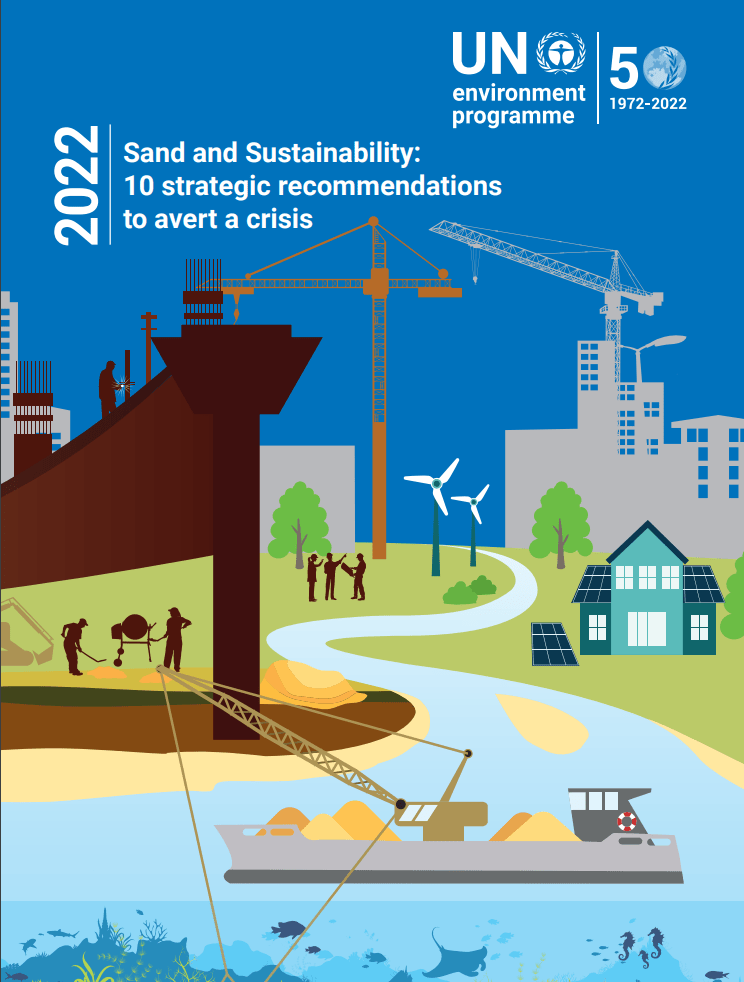
A United Nations report released this week on Apr 26, 2022 has recommended that river sand needs to be considered by the governments as a strategic resource like water for its multiple roles in the environment and its extraction and use needs to be rethought. The UNEP report says sand is the second most exploited resource. And yet there are no credible governance guidelines or policies for the exploitation and use of this report, nor assessment of impact of unsustainable exploitation.

The report says: “Extracting sand where it plays an active role, such as rivers, and coastal or marine ecosystems, can lead to erosion, salination of aquifers, loss of protection against storm surges and impacts on biodiversity, which pose a threat to livelihoods through, among other things, water supply, food production, fisheries, or to the tourism industry.”

Continue reading “DRP NB 2 May 2022: Sand a strategic resource like water, rethink its exploitation: UN”
DRP News Bulletin

DRP NB 25 April 2022: Bad news for dams: Vyasi, Renuka, Parbati, Betwa, Ken Betwa, Ganga waterways, Hydropower false climate solutions…

This week seems to have brought rather too many bad news for big dams in India, it seems. The Vyasi hydropower project on Yamuna river in Uttarakhand, inaugurated by the Prime Minister Shri Modi in Dec 2021, is facing plethora of problems even before its formal commissioning, including scarcity of water, mass fish death, displacement without rehabilitation of people, among others.

In Himachal Pradesh, the stage-1 forest clearance of the Renuka dam, whose foundation stone was laid by the Prime Minister Shri Modi on Dec 28, 2021, has lapsed, 12.5 years after it was given. Now the project need to restart the whole clearance process. There is also news of massive leakage of water and silt collapse in Parbati 2 project in HP.

In Betwa basin, an exasperated Jal Shakti Minister has ordered n inquiry into the Dam project. This, while the Ken Betwa project that the Union Govt has been desperate in pushing, still does not have crucial clearances.

A well researched article by Avli Verma shows that the Ganga waterways project does not have environment clearance, nor environment impact assessment even as the National Green Tribunal has adjourned the hearing demanding that for FOURTEEN times even as Union Environment Ministry quietly sits on the issue.

And finally, sound analysis by international experts lists ten reasons why hydropower is a false climate solution. It may be good idea to take a pause on these big dams, hydropower projects and other river affecting projects and rather take stoke of the way we are governing our rivers and these projects?

Continue reading “DRP NB 25 April 2022: Bad news for dams: Vyasi, Renuka, Parbati, Betwa, Ken Betwa, Ganga waterways, Hydropower false climate solutions…”
DRP News Bulletin

DRP NB 18 April 2022: Clean Hydro does not make much sense in India: Experts

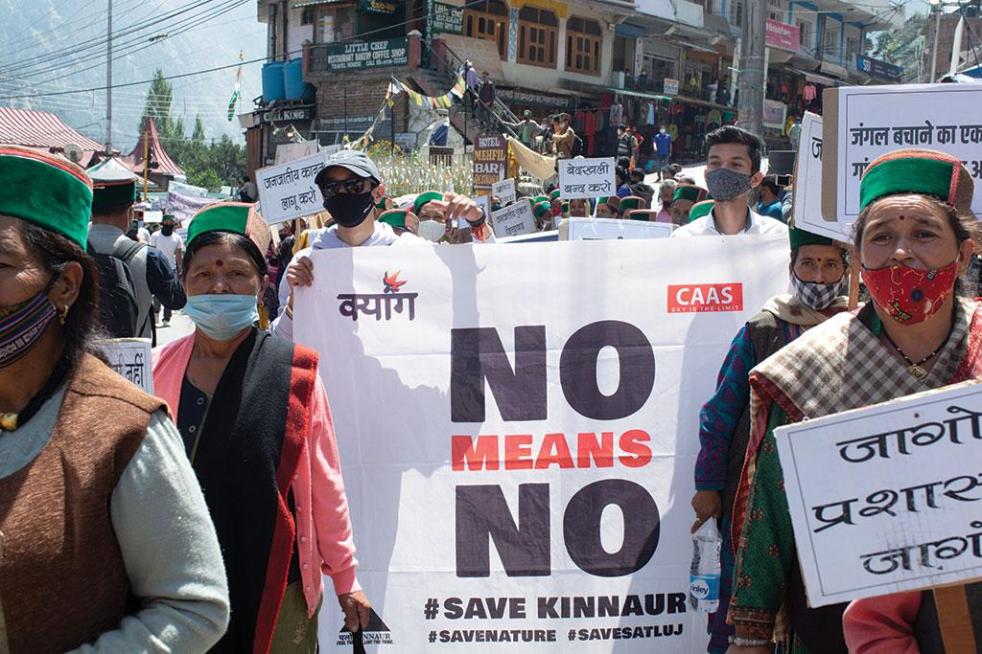
(Feature image:- Following massive landslides in Kinnaur, Himachal Pradesh sees growing protests against hydropower projects. DTE)

As the following report from Energy Monitor this week says, according to international experts, the idea that hydro is clean does not make sense. They say that for a number of reasons including for the social risks, environmental risks and the increased emissions of methane due to rotting of organic matter flowing in the river and settling in the reservoirs. In spite of some apparent inherent misconceptions, this part of the report is sound and should be a wakeup call for the supporters of big hydro in India. As the report suggests this is particularly true in the context of climate change. Indeed, this has been our own experience in India with increasing disasters related to hydro projects and the increasing unviability of the hydro projects in India.

Continue reading “DRP NB 18 April 2022: Clean Hydro does not make much sense in India: Experts”
DRP News Bulletin

DRP NB 4 April 2022: Gujarat Tribals unite to stop Par Tapi Narma

(Feature Image:-Tribals protesting against Par-Tapi-Narmada Project. The Indian Tribals)

The amazing unity and fight shown by Gujarat Tribals in their protest against the Par Tapi Narmada Link has led to both Gujarat govt and Central govt agreeing to suspend the project. However, the tribals are rightly not satisfied with the word of play indulged in by the Gujarat and Union govt so far. The central govt has said that the project will not go ahead as long as there is no consensus among the party states, but that statement is true even with or without the campaign launched against the project. The Maharashtra govt in any case is not in agreement with the project. Gujarat govt has not taken a clear decision to permanently cancel the project and without such a decision, Gujarat govt can again revive the project any minute. Same is true about the Central govt. So until both Gujarat govt and Central govt decide to cancel the project and come out with official notification to that effect, the tribals are right to continue the protest and not believe in either of the govt.

Continue reading “DRP NB 4 April 2022: Gujarat Tribals unite to stop Par Tapi Narma”
DRP News Bulletin

DRP NB 21 Mar 2022: Centre’s unconvincing Plan to rejuvenate 13 major rivers

The government of India, through joint announcement of Union Ministries of Jal Shakti & Environment and Forests (such joint addresses are rather rare events) this week announced its plans to rejuvenate 13 major rivers of India (excluding Ganga but including some of the key Ganga tributaries!) through the limited activity of plantations is not every convincing on many counts. Firstly it is welcome to see that the government sees a role of forests as a hydrological asset. Unfortunately, this is clearly and completely absent in government’s forest management, both in policy and practice. If we see the forest governance of India through the functioning of the Forest Advisory Committee of MoEF, we see absolutely no sign of acknowledgement of this reality that forests are major hydrological assets. So for example when a decision is taken to allow diversion of major chunks of existing forests, there is never any discussion, assessment or counting of hydrological eco system services that forests provide. This is apparent in many cases, but most recently in the case of Ken Betwa project where the Supreme Court’s Central Empowered Committee too has acknowledged this reality. So again it seems government’s mind or heard does not seem to know what the tongue is conveying!

Continue reading “DRP NB 21 Mar 2022: Centre’s unconvincing Plan to rejuvenate 13 major rivers”
DRP News Bulletin

DRP NB 21 Feb 2022: UNVIABLE HYDRO STORIES FROM INDIA, BHUTAN, NEPAL, US

One of the key underlying theme of several stories this week is about more resounding evidence from several parts of the world including India (Kerala, Arunachal Pradesh, Kashmir, NHPC), Bhutan, Nepal, USA and Canada among others, that hydropower projects are no longer even economically viable, besides being socially and environmentally destructive and unacceptable. It is high time that our authorities wake up and realise this soon rather than spending massive amounts of scarce resources on such unviable projects that also work as force multipliers in the changing climate.

Continue reading “DRP NB 21 Feb 2022: UNVIABLE HYDRO STORIES FROM INDIA, BHUTAN, NEPAL, US”
DRP News Bulletin

DRP NB 14 Feb 2022: Wake up call: Chairman of Supreme Court HPC Chopra Resigns

(Feature Image: Pillars of elevated road eating into Ganga’s actual riverbed at Rishikesh. Bhim Singh Rawat/SANDRP, 08 Oct. 2021)

The resignation of Shri Ravi Chopra, chairman of the Supreme Court appointed High Powered Committed to report about the implications and dimensions of the Char Dham Highway in fragile Himalayan region is yet another wake up call for all concerned, including the Supreme Court. Chopra has said that following the Dec 14, 2021 order of the Supreme Court in the Char Dham case, the panel “has been shattered”. Chopra’s resignation letter dated Jan 27, 2022 has only now being made public. The order of Dec 14, 2021 was not only contrary to the order of Sept 8, 2020, but also limited the HPC’s role even in monitoring to less than 30% of the road, that too when the Ministry of Road Transport and Highways have consistently ignored the recommendations of the HPC. Will the resignation have any impact on the apex court of the project or the MoRTH?

Continue reading “DRP NB 14 Feb 2022: Wake up call: Chairman of Supreme Court HPC Chopra Resigns”
DRP News Bulletin

DRP NB 24 Jan 2022: MoEF’s complete surrender: Rating SEIAA on faster clearances

If rating of the State Environment Impact Assessment Authorities (SEIAA) of various states were to be done, it has to be based on how rigorous, how transparent, how participatory, how well defined, how consistent, how comprehensive, how rules following has been the functioning of the various SEIAA. Such an exercise has to be done by a panel of independent experts, who are experienced and knowledgeable about the various aspects of environmental governance and functioning of these authorities. In fact the exercise should also include the National EIAA too and the various Expert Appraisal Committees under it. It clearly cannot be what the MoEF has now proposed. What MoEF has proposed is completely against all basic norms of environmental governance and is part of MoEF’s complete surrender to the vested interests and not is not in the interest of environment governance. As the Tribune editorial noted, such blatant disregard of the environment is completely unacceptable. Similarly as the TOI editorial said, SEIAAs need to be independent of both business and governments. They should put the environment first, and last. There is a role of judiciary to step in here and ensure that MoEF does not go down this path.

Continue reading “DRP NB 24 Jan 2022: MoEF’s complete surrender: Rating SEIAA on faster clearances”
DRP News Bulletin

DRP NB 17 Jan. 2022: Urban Water Mess visible in advocacy for Renuka and Mekedatu dams

This week brings heightened advocacy for major dams in the name of Urban Water supplies for cities that have no water policy, no worthwhile good water governance, but are happy demanding more and more water projects from further off places to cater to its unjustifiable demands. This is the underlying theme both in case of Renuka dam for Delhi and Mekedatu dam for Bangalore.

Some media reports are talking about need for additional storages, but in this advocacy there is no place for either efficient use of existing water storages, nor place for decentralised water storage options or underground water storage options, leave aside inclusion of soil moisture, which is a major storage option too.

Continue reading “DRP NB 17 Jan. 2022: Urban Water Mess visible in advocacy for Renuka and Mekedatu dams”
DRP News Bulletin

DRP NB 10 Jan 2022: Positive Groundwater stories from TN, Haryana

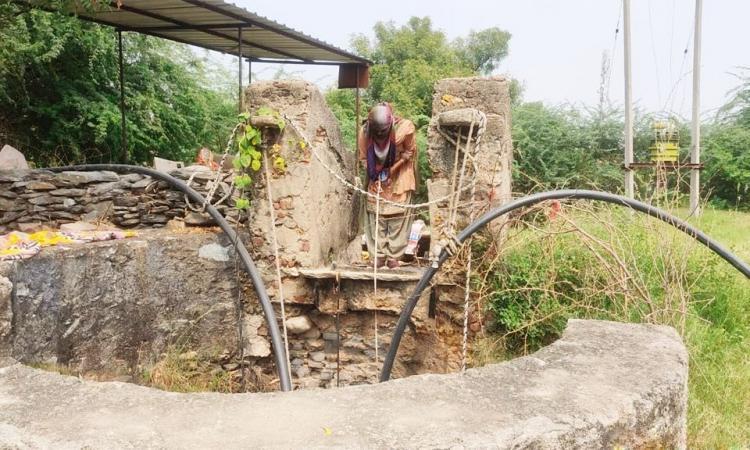
It’s rather rare that we have some positive stories related to groundwater. This week we have two: One each from Tamil Nadu and Haryana. A recent performance audit report, the CAG has lauded the Tamil Nadu Govt for regulating industry’s groundwater extraction. The CAG has also lauded TN for adopting ‘firka’(which are smaller than blocks and encompasses 10-15 villages) as the assessment unit in 2011 because this is expected to help in identification of pockets of groundwater potential within the over- exploited and critical blocks.

Continue reading “DRP NB 10 Jan 2022: Positive Groundwater stories from TN, Haryana”