Dams · DRP News Bulletin

DRP: 19 Feb 2018 (How Are We Treating Our Urban Rivers?)

In this comprehensive article Mumbai-based author Vaishnavi Chandrashekhar throws the light on the plight of Uraban Rivers. “Rivers and streams have borne the brunt of the recent urban explosion in India, a nation whose population has nearly doubled in the last 40 years to 1.35 billion. Unplanned growth has led to the use of water bodies as dumping grounds for sewage and industrial effluent. According to CPCB, 63 % of the urban sewage flowing into rivers (some 62 billion liters a day) is untreated.

In addition, riverbanks, wetlands, and floodplains have been claimed over time by infrastructure, slums, offices, and housing developments – all of which has narrowed natural river channels and distorted flow, greatly reducing the ability of India’s rivers to buffer flooding. It also has taken a toll on biodiversity. http://e360.yale.edu/features/dying-waters-india-struggles-to-clean-up-its-polluted-urban-rivers (Yale Environment 360, 15 Feb. 2018) 

Continue reading “DRP: 19 Feb 2018 (How Are We Treating Our Urban Rivers?)”
Dams · DRP News Bulletin

DRP: 05 Feb 2018 (J&K To Assess The Viability Of Big Hydro Pojects)

In a remarkable development, Jammu & Kashmir Govt is reviewing its Hydro policy to assess whether the Hydro Electric Power Projects (HEPs) are still viable. As per sources, this is for the first time that the Govt is discussing the viability of generating hydro power.

An empowered committee led by the Chief Secretary has started this discussion by calling for an “approach paper” that will give an overall picture of the hydropower industry in India. Top sources in the State Power Development Corporation (SPDC), a government-owned company, told Kashmir Reader that the empowered committee wants to lay a roadmap for power generation in the state. “It will reflect the vision of the government. It will give the picture of hydropower generation in India, its rates, market, demand and supply. It will also lay down a roadmap for large power projects,”

The approach paper will be part of a new hydropower policy which will be submitted before the same committee, and then before the cabinet for approval. The SPDC had submitted a hydro policy draft in April last year, which was returned to it in December. Sources said the approach paper has to be submitted in two months’ time.

At present, India has a surplus generation of hydropower, which has plummeted its rate. This has led to losses for SPDC as it invested in projects whose generation costs were high. The blunt example is that of the 450-MW Baglihar II. SPDC has failed to lure any buyer for more than a year as its selling cost of per unit of energy, Rs 4.4, is nearly Rs 2 higher than the market rate. The SPDC has finally managed to sell the power at about Rs 4 per unit to the Uttar Pradesh government but for one year only. The SPDC may have to struggle again next year if the state of UP does not continue the contract.

Another example is that of Nimuno Bezgo, and Chutak hydropower projects, which sell energy at Rs 13 per unit. The SPDC also buys power from Dulhasti project at Rs 7, when the available rates for power in the market is around Rs 2 and Rs 4. https://kashmirreader.com/2018/02/02/cs-led-panel-to-lay-roadmap-for-power-generation-in-jk/ (Kashmir Reader. 2 Feb. 2018)

As per another report, facing a growing demand for electricity and unable to tap its vast potential for generating hydroelectric power, the state government is looking to boost solar power generation. Given the long gestation period of hydel projects, it is unlikely the generation of hydroelectric power will expand significantly in the near future, said. Hence,  the focus on solar power. Indeed, when solar power potential exists, with lower installation and operation costs and impacts, why States continue after destructive, expensive hydro projects? https://scroll.in/article/866058/kashmir-can-generate-a-lot-more-hydel-electricity-than-it-requires-why-is-it-eyeing-solar-power (Scroll.In, 30 Jan. 2018)

There is one more interesting hydro power development in which the state cabinet of Bihar has approved closing 3 and cancelling the development of 2 others in addition to handing over of 8 hydropower projects to neighboring Jharkhand.

Continue reading “DRP: 05 Feb 2018 (J&K To Assess The Viability Of Big Hydro Pojects)”
Dams · DRP News Bulletin

DRP: 8 Jan 2018  (“THIS IS RIVER, NOT LAND” Chennai Fisherfolks Fight To Save Ennore river)

In a remarkable protest echoing urgent need for protection of rivers, fisherfolk of Kosasthalai River on 03 January 2018, launched a ‘Jal Satyagraha’ against Kamarajar Port project. The proposal would divert 1000 acres of creek area. It mainly comprises of river, wetlands, marshy areas on which fisher community depend for livelihood.

Raising their voices against the project with holding play cards that read “This is River, Not Land” they stood in waist-deep in waters to save Ennore Creek. Joining the protest, hundreds of residents also demanded the withdrawal of alleged fraudulent maps denying the existence of the Ennore Creek. The community has been fighting a lonely battle against the Tamil Nadu government accusing it of turning wetlands illegally into industrial real estate corridors.

– “Fishing economy has been hit massively. Shrinking of water body means less space for fish. Shrinking has happened in terms of surface spread as well as depth thanks to the dumping of dredged sand from the sea, silting the waterbody. The larger concern is fly ash and heavy metals from the industries polluting the environment causing health hazards,” said Nityanand Jayaraman, Environmental activist and researcher who was part of the protest. https://www.oneindia.com/india/chennai-fisherfolk-stage-jal-satyagraha-to-save-ennore-creek-2613088.html (One India, 04 January 2018)

Continue reading “DRP: 8 Jan 2018  (“THIS IS RIVER, NOT LAND” Chennai Fisherfolks Fight To Save Ennore river)”
Dams · DRP News Bulletin

DRP: 25 Dec 2017 (CAG Report Shows Ganga River Has No Hope Under NMCG)

Apart from mentioning Govt failure in checking Ganga pollution, the Comptroller & Auditor General’s (CAG) performance audit report on Ganga rejuvenation tabled in Parliament on December 19, 2017 specifically mentions that National Mission for Clean Ganga (NMCG) “could not finalize the long-term action plans even after more than six-and-a-half years of signing of agreement with the consortium of Indian Institutes of Technology”. The fact that NMCG does not have a “river basin management plan even after a lapse of more than 8 years of National Ganga River Basin Authority notification”, mentioned in the report also has great significance. 

It is surprising that NMCG is working without a river basin management plan or a long-term action plan. The CAG performance audit is also lacking. It rightly mentions that infrastructure to treat pollution has not been created but does no assessment whether the creation of infrastructure alone would revive the river.

Further, CAG audit does not look into the issues if lessons from past failures have been learnt, corrections done, independent scrutiny institutionalised, participatory governance achieved, and if this business as usual approach is going to achieve any better results even if all the money were spent, all the DPRs were sanctioned, all the meetings happened, all the manpower available and all the STPs constructed?

Hence it critical that CAG performance audit should have tried to address these issues. Can the state of Ganga improve without improving the state of tributaries? CAG does not even look at this issue.

The CAG report shows that this programme provides no real hope for better future of Ganga and Modi and his government will have a lot to answer when they go to polls in less than 1.5 years. It’s a serious indictment for the govt in general and Modi in particular since he has said right from the beginning that Ganga is their priority and all that they have tried is audited here. http://www.livemint.com/Politics/KW6MIOrOvMvZvEGeozwifJ/CAG-slams-Centre-for-failing-to-utilize-funds-for-Ganga-reju.html;                                 http://indianexpress.com/article/india/ganga-pollution-hc-orders-uttarakhand-govt-to-seal-establishments-polluting-rivers-4991923/; https://timesofindia.indiatimes.com/city/dehradun/building-of-ghats-crematoria-on-ganga-misses-nov-deadline/articleshow/62234114.cms https://www.nationalheraldindia.com/environment/pm-modi-fails-to-clean-up-his-mother-ganga

Continue reading “DRP: 25 Dec 2017 (CAG Report Shows Ganga River Has No Hope Under NMCG)”
Dams

Godavari: Worshiped, Destroyed & Forgotten River of Nashik

Guest Blog by Shilpa Dahake

One of the youngest participants of the river walk along the Godavari, which happened on 10th December 2017, asked – “आपली गोदावरी खरच मेली का?” (Is our river Godavari, really dead?)

Such an innocent query, but it raises multiple issues and questions – Why we worship, and simultaneously pollute our rivers? Do we abuse rivers because we haven’t understood them? To deliberate upon these questions, I present a case study of Godavari River in Nashik city. In a span of about 30 km from its origin at Brahmagiri Mountain, the Godavari encounters a fast developing and urbanizing city of Nashik.

Continue reading “Godavari: Worshiped, Destroyed & Forgotten River of Nashik”

Dams · DRP News Bulletin

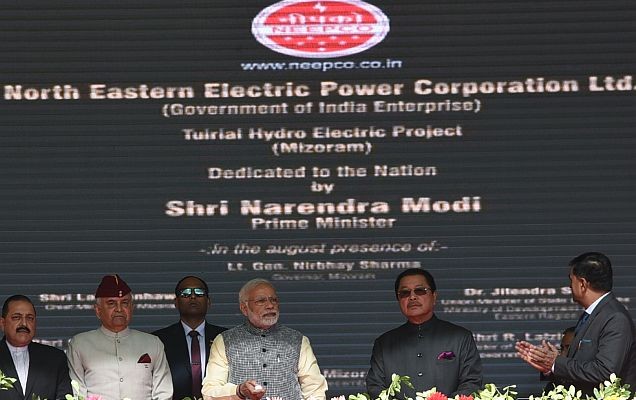
DRP: 18 Dec 2017 (Also Needed To Mention This About Turial HEP)

The Prime Minister, on Dec 16, 2017, while dedicating to nation the 60 MW Turial HEP, should have also mentioned:

– PUBLIC PROTESTS: The project faced strong protests from local people, so much so that work had to be stopped for over 7 years from 2004 to 2011. Even a day before PM dedicated the project, people took out a protest march.

– NO PUBLIC CONSULTATION:  One of the reasons people protested was that the project did not have any proper public consultation.

– NO PROPER IMPACT ASSESSMENT: Another reason for people’s anger was no proper environment or social impact assessment, or proper compensation and rehabilitation.

– HIGH COST: The project cost was Rs 368.72 Crores, but now already has gone above Rs 1441 crores officially, likely to go up further. That means per MW cost is already above Rs 24 crores, one of the highest in the country. WHO WILL PAY THE HIGH COST OF ELECTRICITY FROM THE PROJECT?

– HUGE COST ESCALATION from Rs 369 crores to over Rs 1440 crores

– HUGE TIME OVER RUN: The project was supposed to be completed many decades back but  has seen huge time over run, not only because of protests, but also because of inadequate mobilisation by the contractor, poor approach road, power house slope failure, among many other reasons.

This latest project once again shows that big hydro is no longer viable, one wishes, the Prime Minister would also highlight these realities in his speeches.

Continue reading “DRP: 18 Dec 2017 (Also Needed To Mention This About Turial HEP)”
Dams

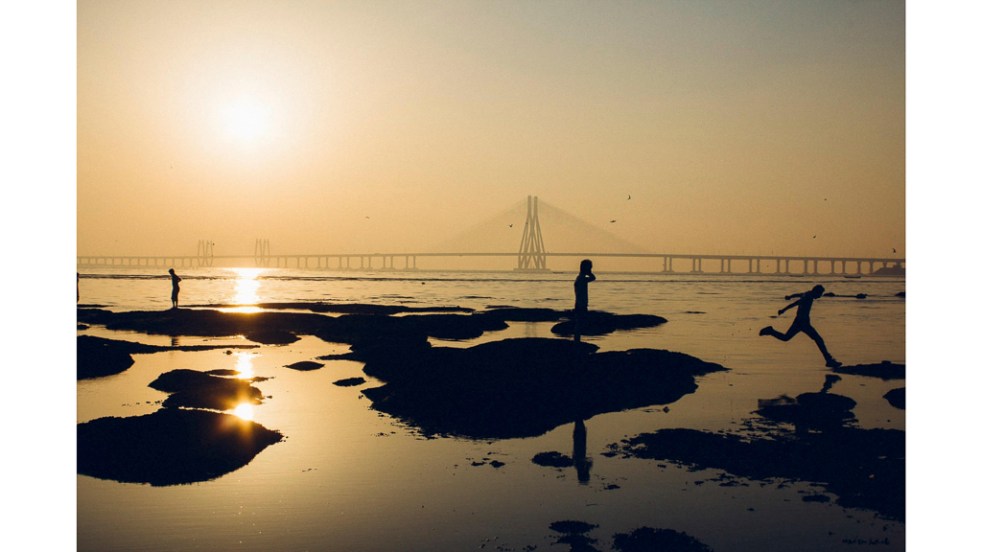
Mithi – Walking Along A Running River

 Guest Blog by Gopal MS aka Slogan Murugan

This story of Mithi River from Mumbai is third in the series of online stories of urban rivers from across India. Please share your feedback and provide us with suggestions (read more in appendix). If you have any urban river stories or images that you might want to share, please send them to ht.sandrp@gmail.com and asid@veditum.org.

PLZ DO WATCH THE AMAZING 43 frame slide show.

Continue reading “Mithi – Walking Along A Running River”

Dams

NAG – The River That Lends Life And A Name To Nagpur

Guest Blog by by Nivedita Khandekar

This story from Nag River in Nagpur is second in the series of online stories of urban rivers from across India. Please share your feedback and provide us with suggestions (read more in appendix). If you have any urban river stories or images that you might want to share, please send them to ht.sandrp@gmail.com and asid@veditum.org.

With an area of little over 200 sq kms, Nagpur, the geographical centre of India, is a lucky city to have 11 lakes and two rivers within municipal limits. Nag Nadi – which lends its name to the city – is the main river along with the other, Pili Nadi; the two later merge and further join the Kanhan river near the city outskirts.

It has always been believed that the river starts as an outflow from the western weir of Ambazari Lake in west Nagpur. In 1998, a bunch of researchers went to further explore the catchment of the lake and found the actual origin of the river is up north of the lake at a place called Lava, more than 25 kms from this western weir. 

Continue reading “NAG – The River That Lends Life And A Name To Nagpur”

Dams · India Rivers Week

भारतीय नदी दिवस 2017 – नदियों के संरक्षण का अभिनव प्रयास

देश की नदियों की दुर्दशा किसी से छिपी नहीं है। एक ओर नदियों का जलप्रवाह लगातार घट रहा है, दूसरी ओर उनमें प्रदूषण की मात्रा चिंताजनक स्तर पर पहुॅच गई है। बढ़ती बॉध, पनबिजली, सिंचाई परियोजनाओं, भूजल दोहन, वनविनाश, बाढ़ भूमि अतिक्रमण और अवैध खनन से हमारी नदियों की जैवविविधता पर विपरीत प्रभाव सामने आ रहे हैं। साथ में नदियों पर गुजर बसर करने वाले मछवारों, मल्लाहों, किसानों की आजीविका पर गंभीर खतरा मंडरा रहा है।

इन सबके बीच, नदियों को बचाने के सरकारी प्रयास नाकेवल नाकाफी और निष्फल साबित हो रहे है, अपितु अब यह स्पष्ट है कि नदी विरोधी सरकारी योजनाओं के चलते ही छोटी बडी जलधाराएॅ सूख रही है, मैला हो रही है और बाढ़ के समय आपदा का कारण भी बन रही है। वास्तव में नदी संरक्षण संबंधी नियम कानूनों और व्यापक जनभागीदारी के अभाव के चलते आज हमारी जीवनदायनी नदियॉ, खुद के स्वछंद बहते जल को तरस रही है। 

इन्हीं सब महत्वपूर्ण मुद्दों को उजागर करने के लिए 25 नवम्बर 2017 को दिल्ली भारतीय नदी दिवस[1] समारोह आयोजित किया गया। इस बार के एक दिवसीय आयोजन में शहरी नदियों को केंद्र में रखकर मनाया गया। कार्यक्रम में भारत के विभिन्न क्षेत्रों से अस्सी से अधिक सरकारी विभागों -गैरसरकारी संस्थाओं से जुडे़ नदीप्रेमियों, चितंको और विचारकों ने भाग किया। यह कार्यक्रम वर्ष 2014 से निरंतर मनाया जा रहा है। हर साल की तरह, इस बार भी देश में नदियों को बचाने में संघर्षरत व्यक्तियों और नदी संगठनों को ‘भगीरथ प्रयास सम्मान’[2]  से नवाजा गया। प्रभावी नदी लेखन, छायांकन और चित्रण के माध्यम से नदियों की आवाज उठाने वाले मीडियाकर्मी के लिए, इस साल से अनुपम मिश्र[3] मैमोरियल मैडल का शुभांरभ  किया गया।  

Continue reading “भारतीय नदी दिवस 2017 – नदियों के संरक्षण का अभिनव प्रयास”

Dams

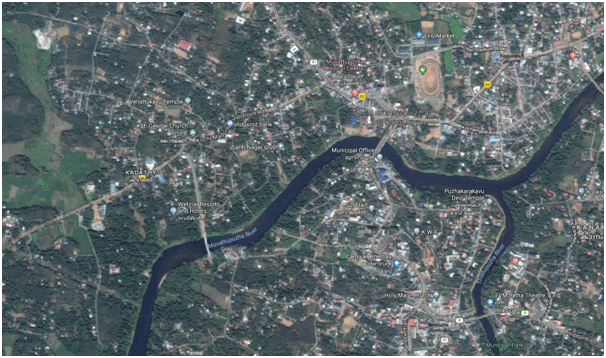
Urban Rivers – Moovattupuzha River in Kerala 

– Guest blog by Shri N. Ramdas Iyer

This story from Moovattupuzha Town in Kerala is first in a series of online stories of urban rivers from across India. Please share your feedback and suggestions on the same (Read more in appendix). If you have any urban river stories or images that you might want to share, please send them to ht.sandrp@gmail.com and asid@veditum.org

The Moovattupuzha river which literally means the “river made of three streams”,  these being the Thodupuzha river, the Kothamangalam river and the Kaliyar river, ran just through the backyard of my maternal grandparents’ ancestral home. The river lends its name to the town through which it flows. This shows the importance of the river in the life of the people living in the town of Moovattupuzha. Our house was located just on the banks of the confluence. The famous Puzha Kara Kavil Bhagawathi temple (meaning Bhagawathi on the banks of the river) is visited by a lot of people even now.

Continue reading “Urban Rivers – Moovattupuzha River in Kerala “