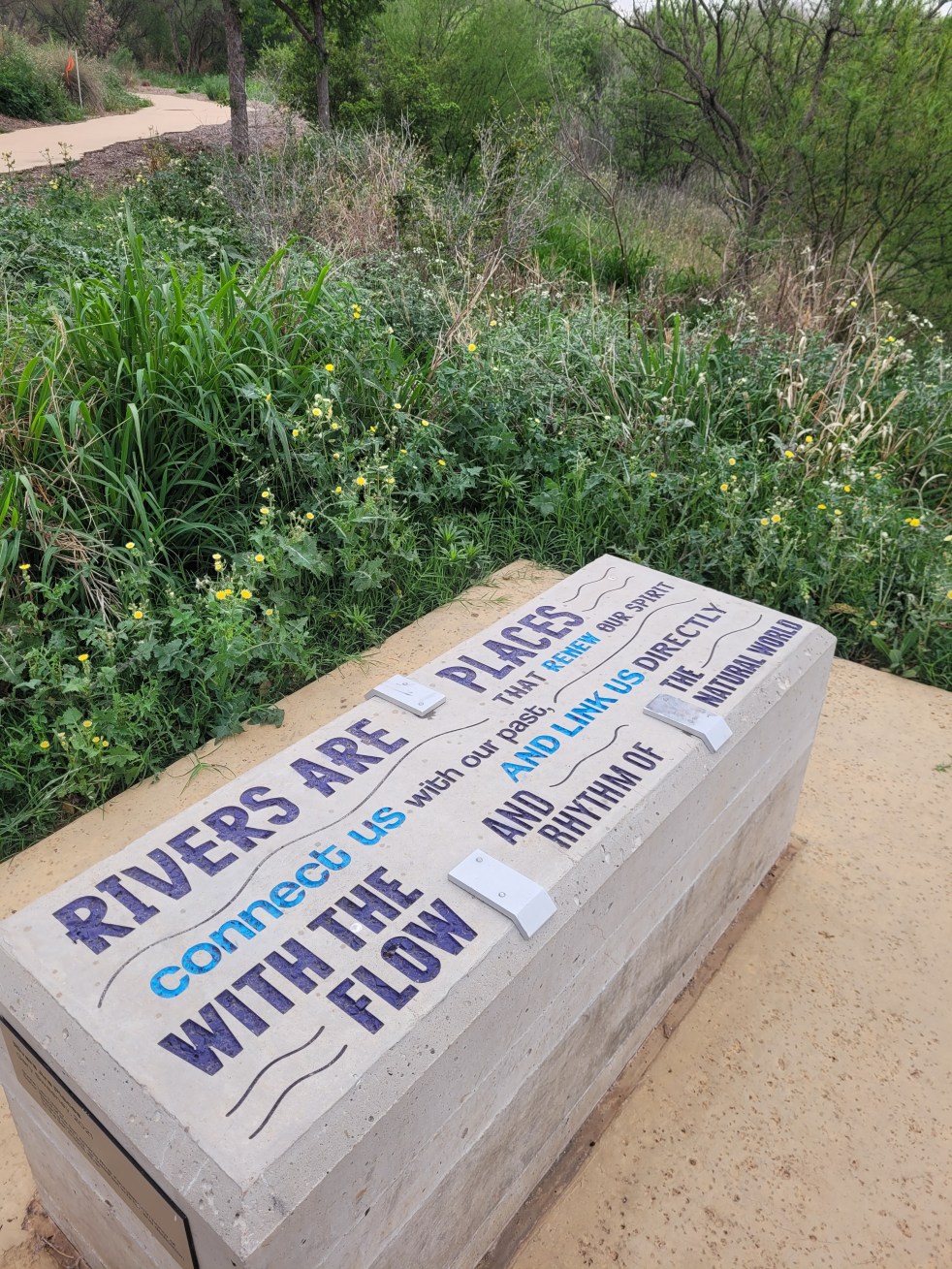
The principles of Integrated Water Resources Management (IWRM) and Integrated River Basin Management (IRBM) have been supported by practitioners, policy makers and stakeholders across the world for a long time. While IWRM aims at integrating planning of land and water management initiatives together considering water as a resource, IRBM accepts the integrity of a river basin as an ecological unit for the same. River Basin Organizations (RBO) are basin level entities that can bring together stakeholders and coordinate, envision, plan and implement these integrated plans at the basin scale (or aquifer/subbasin/watershed scale). By implication, RBOs must be a bottom-up democratic bodies, upscaling solutions.
Continue reading “From Texas to Maharashtra: Can River Basin Organizations Actually Work?”Tag: Riverfront Development
DRP 121222: Green Hydrogen from Hydropower is false solution
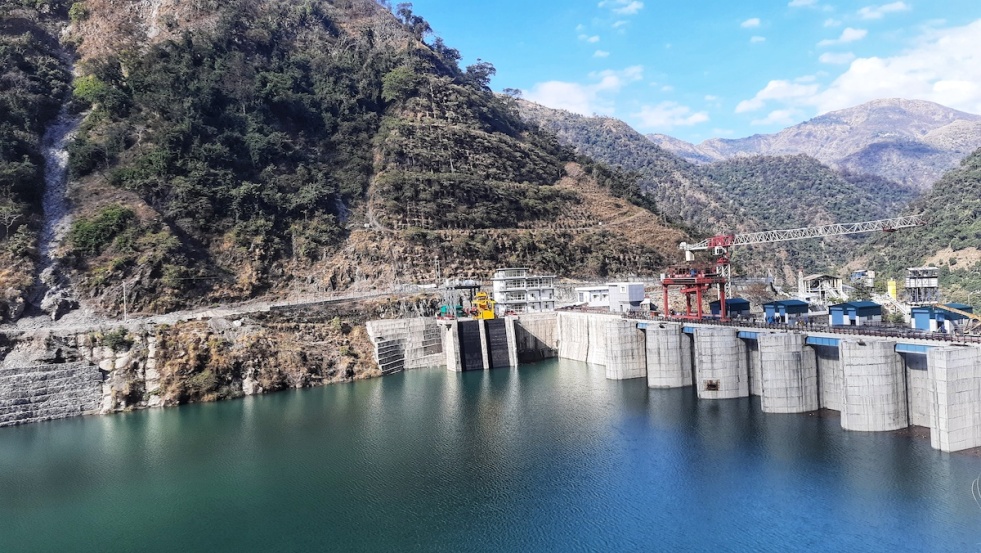
(Feature Image: Reservoir of Vyasi hydro project dam on Yamuna river in Dehradun. Credit: Varsha Singh/The Third Pole.)
A section of the hydro lobby has been trying to push hydropower in the name of producing green hydrogen as an alternative energy source. However, it has been known for a long time that this is a false solution. There cannot be green hydrogen when sourced from hydropower as not only hydropower projects have huge social and environmental footprint, they also have huge carbon footprint as the following article shows. It would be best to out rightly reject any such claim of green hydrogen when sourced from hydropower project.
Continue reading “DRP 121222: Green Hydrogen from Hydropower is false solution”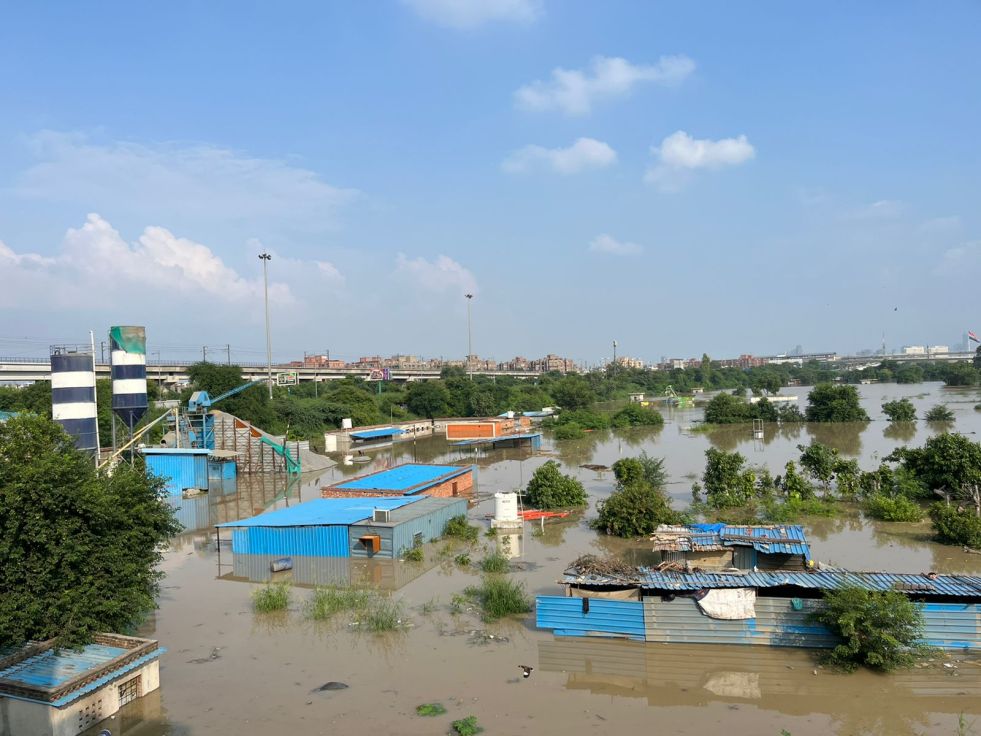
August 2022: Yamuna flood reclaims encroached floodplains in Delhi
(Feature Image: RMC plants located in active floodplain of Yamuna at Noida More submerged in flood water on Aug. 13, 2022. Image Credit:- Vikrant Tongad, SAFE)
A much awaited flood spell has flowed through Delhi during August 13-14, 2022. It came after more than two months of south west monsoon. Usually by this time, Yamuna river would have witnessed two or three flood spells in national capital lending a fresh lease of life to one of the most polluted rivers of India.
The small scale flood spell in the river has invaded parts of floodplains under abuse and encroachment by government agencies in open defiance of National Green Tribunal (NGT) January 13, 2015 judgement[i]. Apart from this flood, Delhi stretch of the river has witnessed few more abnormal events in this monsoon season so far.
Continue reading “August 2022: Yamuna flood reclaims encroached floodplains in Delhi“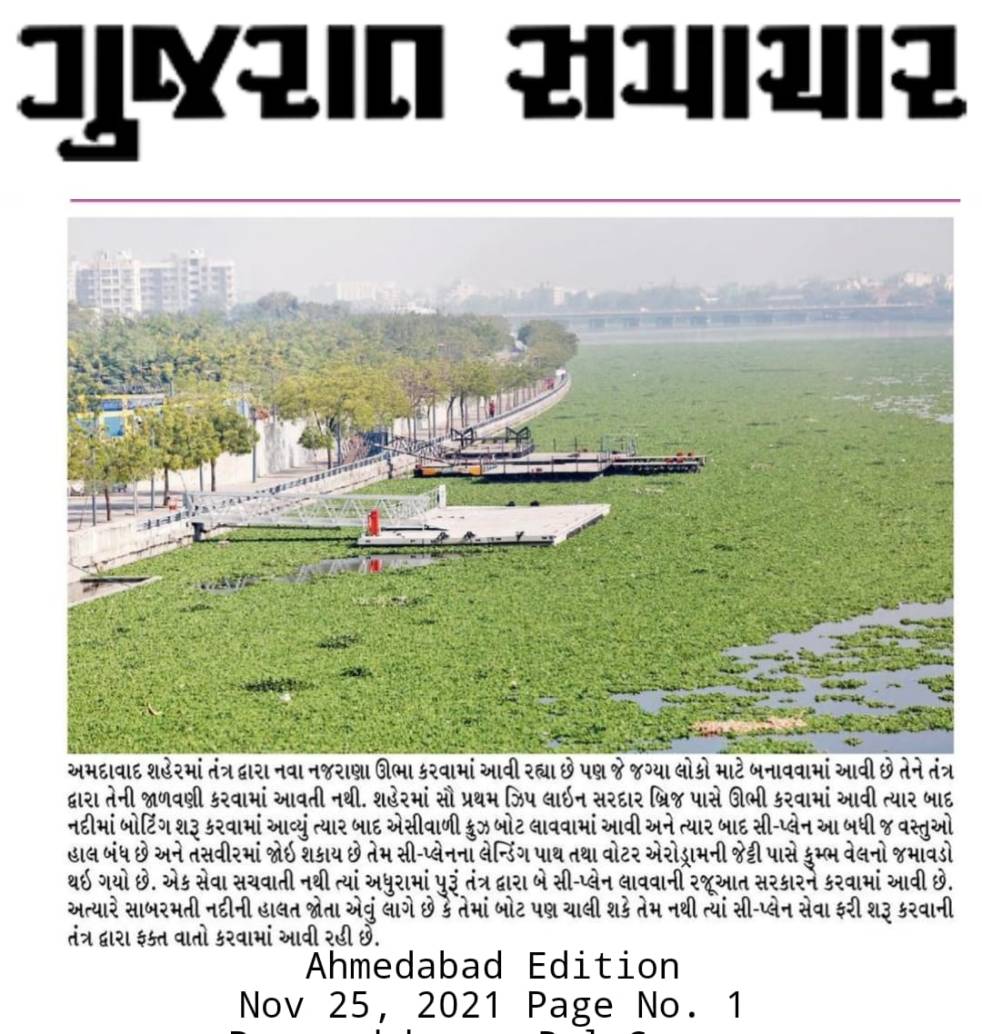
DRP 291121: Pathetic State of Sabarmati River Front in Ahmedabad
This photo from the Gujarat Samachar newspaper of Ahmadabad on Nov 25, 2021 depicts the reality of Sabarmati River Front Development. It shows that the growth of weed water hyacinth spread all over the stagnant, polluted river channel that is no longer a river. It says the boat service (running into losses) and AC Cruise services have stopped. There is no place for sea planes to land due to the growth of the water hyacinth, but the government has asked for permission to run two sea planes! There is the big issue of pollutants from industries and Ahmedabad flowing into the river that the Gujarat High Court is dealing with (see below).
Similar photos also appeared on the same date in two more Ahmedabad based two newspaper: Dainik Bhaskar and Nav Gujarat Samay, reinforcing the pathetic state of Sabarmati River Front.
Is there any doubt that all River Front Development projects are likely to face similar or worse fate than this? The situation could worsen in near future as both Sardar Sarovar Dam on Narmada and Dharoi dam on Sabarmati in the upstream of Ahmedabad have insufficient storage. In a related development, Rajasthan is threatening to stop flow of 45 TMC water to Mahi Dam, it is pertinent to note that Sabarmati also flows from Rajasthan to Gujarat.
Continue reading “DRP 291121: Pathetic State of Sabarmati River Front in Ahmedabad”
DRP 230821: World Water Week: 30 years long enough for stock taking?
This week (23-28 Aug 2021) it is Stockholm World Water Week (SWWW) with a 30 year history. The organisers say: “World Water Week 2021 is unlike any other week in our 30-year-old history.” But provide no clear reasons why they are saying that. Their possible explanation: “In 2021 people across the world are really beginning to understand the gravity of the situation we are facing – within a decade we must halve carbon emissions, restore the degraded natural world, and achieve the Sustainable Development Goals. This will require massive transformations of all sectors of society. World Water Week 2021 is entirely focused on the role of water for these transformations and on developing real solutions.” https://www.worldwaterweek.org/news/join-the-most-important-world-water-week-ever
Continue reading “DRP 230821: World Water Week: 30 years long enough for stock taking?”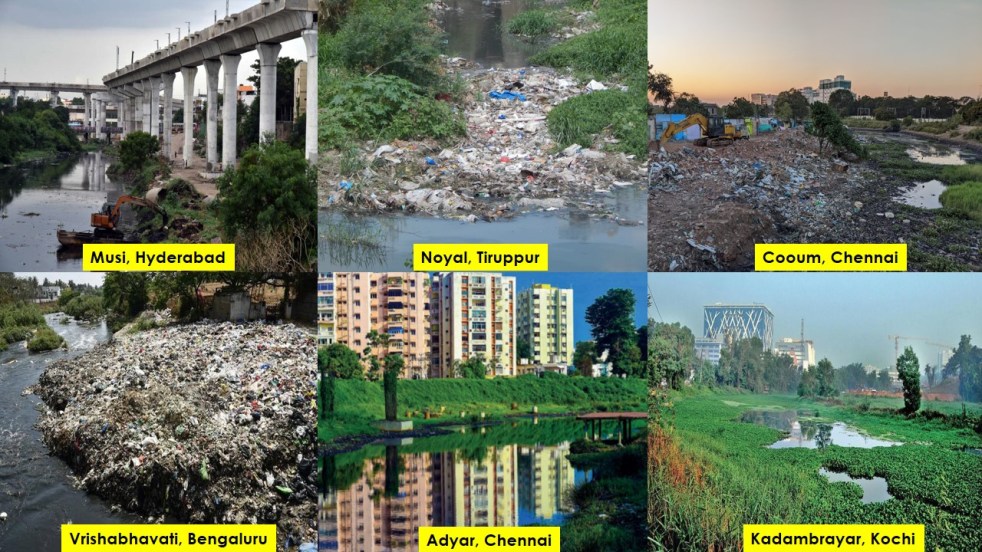
South India Urban Rivers Overview 2020
Urban rivers provide a lot of services, but the urban areas are inviting major trouble by destroying them through dumping of solid and liquid waste, encroachments, river front developments, unsustainable mining among others. The urban areas also operate in almost total policy vacuum and none of the cities under smart city programs are dealing with Urban rivers with any smartness.
This overview includes some key developments about Urban Rivers in 2020 from the South Indian states of Karnataka (Vrishabhavati in Bengaluru; Swarna-Netravati in Udupi), Tamil Nadu (Adyar, Buckingham Canal and Cooum rivers in Chennai; Kiruthumal in Madurai; Noyyal in Tiruppur; Bhavani in Coimbatore; Palar in Vellore; Vasishta in Salem), Telangana (Musi in Hyderabad), Andhra Pradesh (Tungabhadra in Kurnool), Kerala (Periyar, Kadambrayar & Konthuruthy in Kochi; Kodoor in Kottayam) and Puducherry (Sankarabarani).
Continue reading “South India Urban Rivers Overview 2020”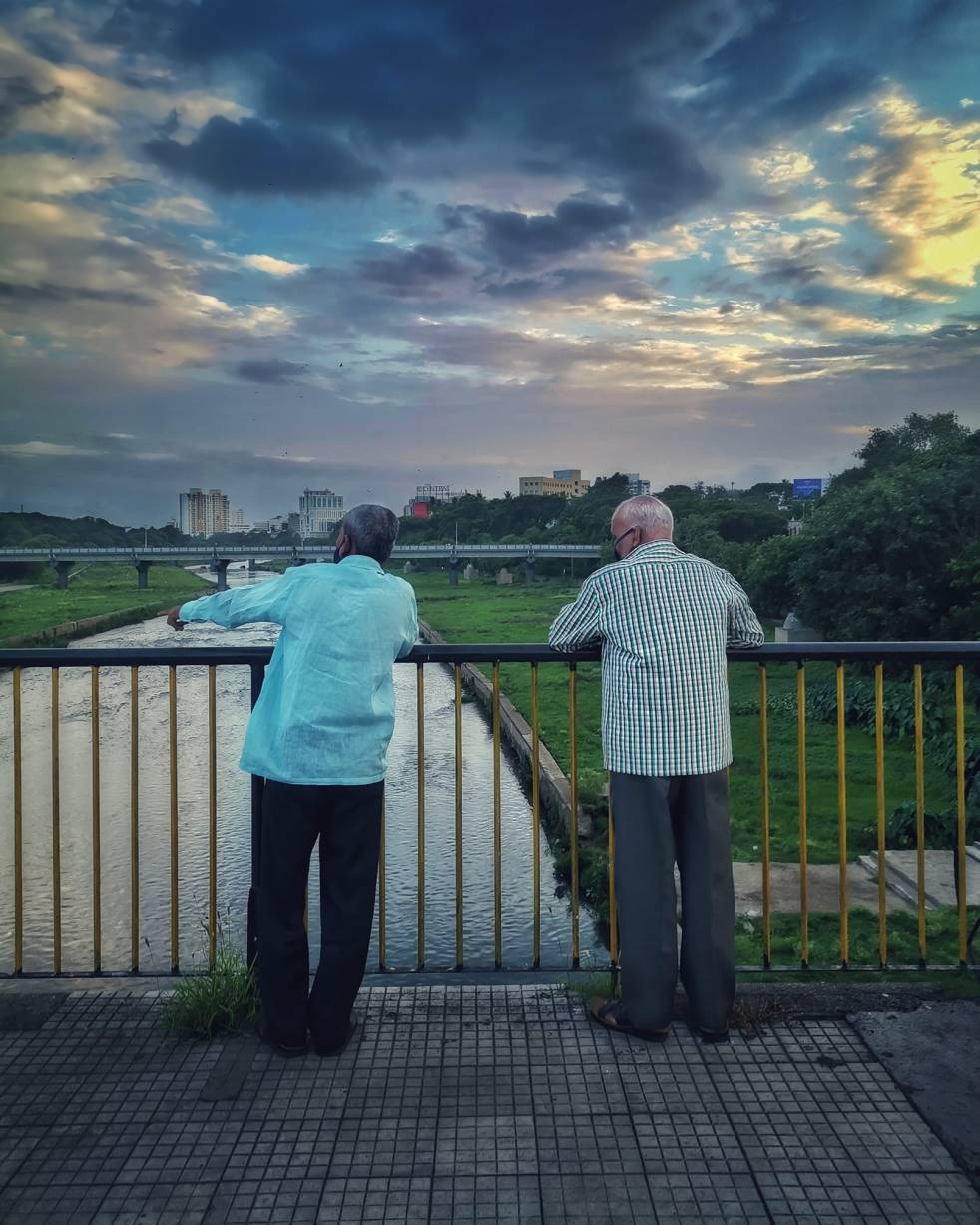
Of Peace and Pollution: Urban Rivers as Public Spaces
In the ongoing Covid crisis, accessible green, open spaces are a dream for many city dwellers. And yet, there is burgeoning work on the profound positive impacts of urban green spaces on the physiological and psychological health of city dwellers.
Despite being polluted, dammed, encroached and thwarted, rivers continue to be free and open public places. Today more than ever, rivers, riverbanks, floodplains and bridges are an invaluable resource for any Indian City. This momentous service is ignored in our riverfront development projects, metro and road plans and city development plans which encroach upon rivers. Continue reading “Of Peace and Pollution: Urban Rivers as Public Spaces”

Yamuna Jayanti 2019: Will the agony of the River & People speak in Elections?
(Feature image by Nishant Panwar, Vikas Nagar, shows Yamuna River in upper reaches in Jan. 2019)
On April 11, 2019, is the birthday of Yamuna river. The Yamuna Jayanti comes every year on the sixth day of ‘Chaitra’ (summer) Navratra. The Kapat (door) of famous Yamnotri shrine would be opened this year on May 7 for Char Dham Yatra.
In April-May 2019 India will vote to elect 17th Lok Sabha or Parliament. On April 11, the 1st of the 7 polling days, the home state of Yamuna river, Uttrakhand and the districts of Western Uttar Pradesh through which Yamuna river flows, will vote.
The two other states heavily dependent and Yamuna river, Haryana and Delhi will see voting on May 12. The district Mathura, Agra, Etawa, Kanpur, Hamirpur, Fatehpur and Allahabad of Uttar Pradesh located along Yamuna river will witness voting from second (April 18) to sixth phase on May 12.

The NDA government come to power in May 2014 promising clean Ganga and Yamuna. The thousands of devotees of Mathura and residents of Agra were especially convinced of a promise of clean flowing Yamuna river. People were also hopeful that the government of the same party, BJP, in centre and in key basin states of Yamuna (Uttarakhand, Haryana and Uttar Pradesh) would bring a change in the situation. But over the five years, things have only deteriorated further. In fact, under the present government apart from dams and pollution a illegal sand mining has emerged as equally dangerous threat for the Yamuna rivers from upper reaches through middle and lower stretches.
On the occasion of Yamuna Jayanti, the Yamuna Nadi Mitra Mandli (YNMM) a voluntary group of villagers and concerned; established along the length of Yamuna by Yamuna Jiye Abhiyan is highlighting the issues affecting the Yamuna river and riparian communities which have remained unaddressed during past five years and none of the political parties even now have remotely focused on these. They also warn that ignoring the problems of Yamuna and dependent community will soon affect every state and dependent people in a significant way apart from endangering the river itself.
Continue reading “Yamuna Jayanti 2019: Will the agony of the River & People speak in Elections?”

DRP: 21 Jan 2019: NGT Asks For Audit of Pollution Control Regulation, But Fails on EIA
Two interesting orders from National Green Tribunal (NGT) marked important developments on water-environment issues this week. NGT asking for PERFORMANCE AUDIT of pollution Control Mechanism is indeed long overdue necessity, considering the complete, abject failure of the pollution control mechanism in India. The hopes of effective action, like in the past, however, were dashed since CPCB, which is PART OF THE PROBLEM has been asked to do the audit. An independent audit, in addition to one possibly by CAG may have helped. https://www.thehindu.com/news/cities/Delhi/ngt-slams-state-pollution-bodies/article26008687.ece (17 Jan. 2019)
Whatever positive signs were available by this order were further dashed by another NGT order in which it declared that EIAs (Environmental Impact Assessment) reports are already taking climate change into account, while the tribunal dismissed a petition asking that all development activities be screened/ regulated keeping climate change in mind.
This is totally WRONG contention. Just to illustrate, SANDRP has been pointing out to the EAC, MoEF and the developers how the EIAs of dams and hydropower projects are ignoring the climate change related issues and impacts. In response the consultants and developers have responded, approved by the silent or spoken nods by the EAC and MoEF that these were not even part of their TORs! One only wishes NGT was most discerning before making such claims and would have gone through a few EIAs to see if at all EIAs are dealing with these issues with any rigour or credibility. https://www.business-standard.com/article/pti-stories/climate-change-already-covered-under-environment-impact-assessment-ngt-119011600897_1.html (16 Jan. 2019)
Continue reading “DRP: 21 Jan 2019: NGT Asks For Audit of Pollution Control Regulation, But Fails on EIA”
DRP: 21 May 2018 (World Over New Renewables Are Making Large Hydro Unviable & Unnecessary)
According to an energy expert, 6,000 megawatts’ worth of wind and solar contracts had been signed in Cambodia, Vietnam, Thailand and Laos in the last six months, seriously challenging the financial viability of major hydropower projects on the river. Buoyed by a recent Thai government decision to delay a power purchase deal with a major mainstream Mekong dam, clean-energy proponents and economists told the third Mekong River Commission summit that the regional energy market was on the cusp of a technological revolution.
A six-year Mekong River Commission Council study on development plans for the Mekong, which was the focus of the summit, suggested catastrophic impacts upon the health of the river system if all planned hydropower dams — 11 mainstream projects and more than 100 on tributaries — were built.
Continue reading “DRP: 21 May 2018 (World Over New Renewables Are Making Large Hydro Unviable & Unnecessary)” SANDRP