DRP News Bulletin

DRP NB 010523: Water bodies census welcome, but how reliable?

While the publication by the Union Jal Shakti Ministry of the first water body census of India is not only welcome but urgently required, the usefulness of the census findings will depend on the quality of the information in the report. Firstly, such a census should have been conducted in a bottom up way, starting from villages in rural areas and ward in urban areas. That way, the census findings would have not only been more reliable, but also the process would have helped create greater awareness about the water bodies and issues surrounding them.

In case of Karnataka, as the report below shows the survey by the Tank Conservation and Development Authority and Karnataka Public Land Corporation in 2021 showed the state had 40483 water bodies, whereas the Jal Shakti Ministry census of 2022 says the state has just 26994 water bodies, a huge 13489 less than the 2021 census. Clearly so many water bodies cannot disappear in a year. As some experts from Karnataka have asked, is the Jal Shakti Census a deliberate attempt to show that a much lower number of water bodies exist, allowing encroachers to go ahead to destroy water bodies not registered in the census?

Continue reading “DRP NB 010523: Water bodies census welcome, but how reliable?”
Urban Rivers

Do we have space for Rivers in our cities?

Is it a legitimate, valid question, or is this question a product of old fashioned, romantic mind? If we go by the way we are treating the rivers and its various essential components in big cities or small, the answer seems a clear no.

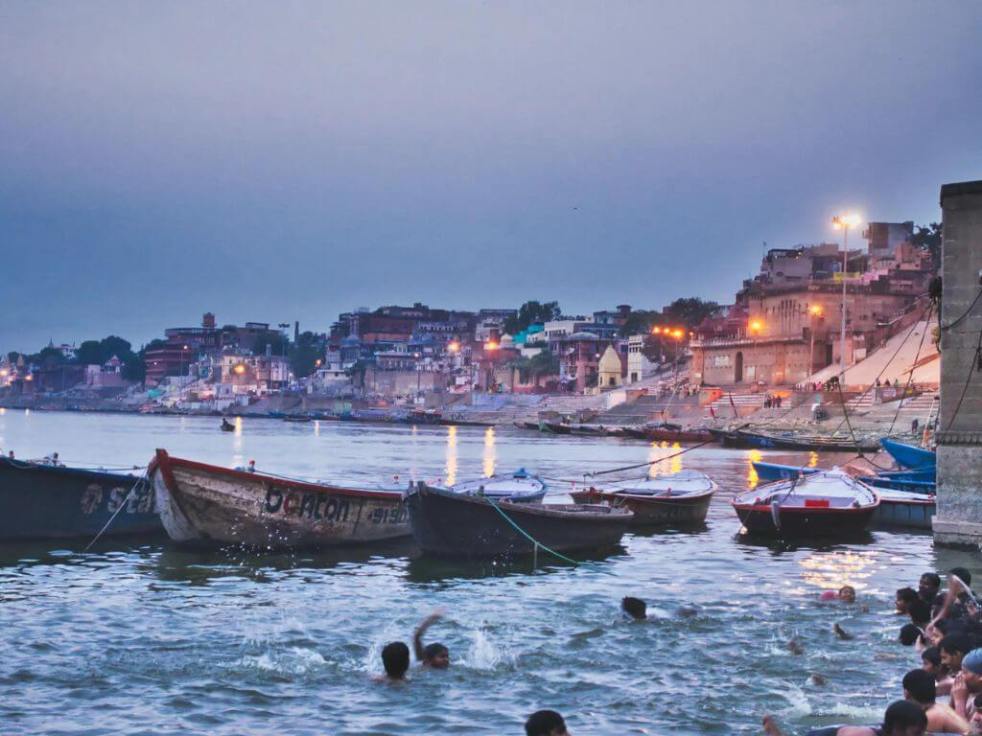
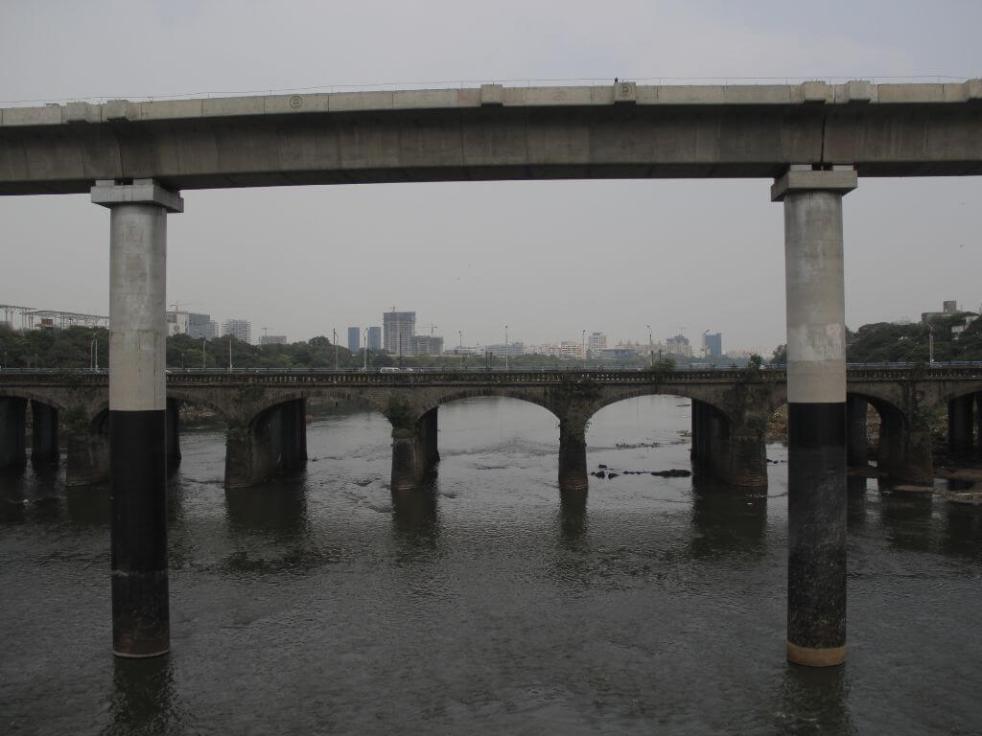
State of Urban Rivers The urban rivers in India are not only in poor state, but their condition is worsening with every passing day[i]. Pollution, encroachments, solid waste dumping, damming, water diversions, groundwater over-exploitation, catchment degradation, destruction of water bodies, wetlands and forests, indiscriminate mining, the impact of building bridges, flyovers and metros are some of the known physical threats to the Urban rivers. Complete lack of any legal or institutional protection, and a mindset that sees rivers as non-essential, expendable entities are some of the major causes for this situation. This is true of rivers like Yamuna (Delhi, Agra, Mathura), Ganga (Allahabad, Varanasi, Patna), Gomati (Lucknow), Mithi (Mumbai), Mula-Mutha (Pune), Sabarmati (Ahmedabad), Dravyawati (Jaipur), Khan (Indore), Kshipra (Ujjain), Jhelum (Srinagar), Mahi and Vishvamitri (Vadodara), Tapi (Surat), Arkavathi & Virishabhavati (Bangalore), to name a few.

Continue reading “Do we have space for Rivers in our cities?”
DRP News Bulletin

DRP NB 071122: Increasing focus on Urban Rivers; they continue to face destruction

(Feature Image Source: Question of cities)

It is good to see that focus on Urban Rivers is increasing not only in media, but also by the government. The focus of the latest edition of “Question of Cities” is on Urban Rivers, carrying articles on, beside the lead article by SANDRP coordinator, Article “Rivers & Cities”, Sabarmati (Ahmedabad), Mula-Mutha (Pune), on River Centric Urban Planning Guidelines from Union Ministry of Housing and Urban Planning. In addition, this SANDRP DRP update also carries articles on Dravyawati River of Jaipur, Godavari river in Nasik and a report on Mandakini river in Badrinath.

All this increased focus is welcome, but will be worthwhile only when we see an effective impact of this on rejuvenated Urban rivers. We have yet to see that. In fact, if at all, the movement is hugely in opposite direction, with increasing destruction of Urban Rivers.

Continue reading DRP NB 071122: Increasing focus on Urban Rivers; they continue to face destruction
DRP News Bulletin

DRP NB 260922: Need for new credible Polavaram backwater study

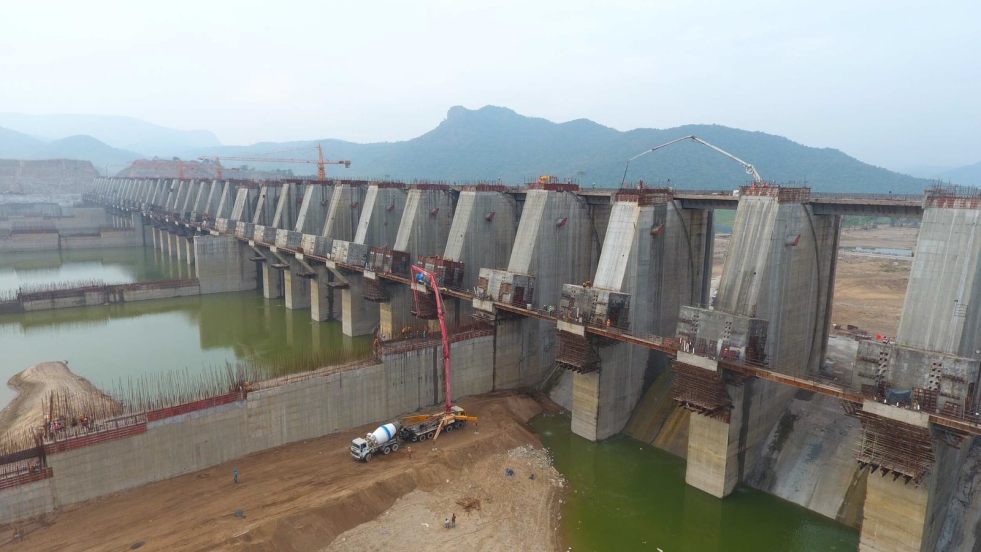
(Feature Image:- The construction of the Polavaram dam across the Godavari river has posed a big threat to the Pulasa fish, as its movement to the upstream of the river could be curtailed. HT PHOTO).

Telangana state has demanded fresh backwater study for the Polavaram dam based on a number of grounds including the higher spillway capacity and outdated river cross sections of 1990s used in the old study. The changing rainfall pattern and resultant changing river flow pattern, both due to changed rainfall and changed state of catchment area also should be a reason for such a fresh study. However, more importantly, the study needs to be done in a credible way involving independent experts, not just state or central govt officials or academics from govt run institutions. Moreover, the study and all the information related to it has to be completely and promptly in public domain as these studies are required for the affected people and affected area. Normally Central Water Commission does such studies and refuses to make it public. What is the use or reason for backwater study to be secret? Possibly CWC is not confident of the quality of the study and that is why it is very important to have experts in the study team who are known to take independent stand. It is useful not only for the states of Telangana, Odisha and Chhattisgarh, but also for the people of Andhra Pradesh too. And earlier this is done, better it will be for all concerned.

Continue reading DRP NB 260922: Need for new credible Polavaram backwater study
Urban Rivers

Top Ten Judicial Actions on Urban Rivers 2022: Executors Deliberately Delaying, Diluting, Defying orders

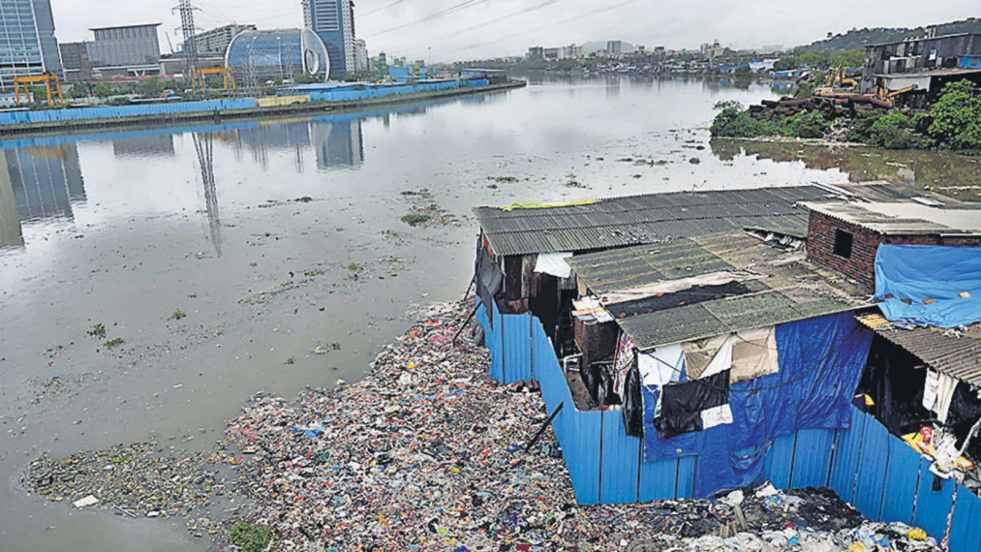
(Feature Image: The order is subject to the orders of the SC which is pending. NGT on Nov. 24, 2021ordered the BMC to deposit within three months an environmental penalty of ₹28.20 crores to the CPCB for discharging raw sewage into the city creeks, rivers and drains. HT Photo)

During past one year, the judicial bodies including National Green Tribunal, Supreme Court, various High Courts have passed several orders and made critical observation while dealing with multiple issues afflicting Urban Rivers in India. This report highlights top ten such judicial interventions across India. The stories underline that the responsible agencies particularly pollution control boards and district, state and union governments have been failing miserably in timely and efficient implementation of these judicial orders, some of which are quite remarkable. If the executive bodies do not show right spirit and seriousness in enforcing the existing rules and court orders the state of India’s urban river only go downhill.    

Continue reading “Top Ten Judicial Actions on Urban Rivers 2022: Executors Deliberately Delaying, Diluting, Defying orders”
Urban Rivers

Top Ten River Front Development Stories 2022: Destroying Rivers, Livelihoods

(Feature Image: Work on Rs. 700 crore Chambal RFD project in Kota which is supposed to be ready by Dec. 2022 end. Image Source: Free Press Journal)

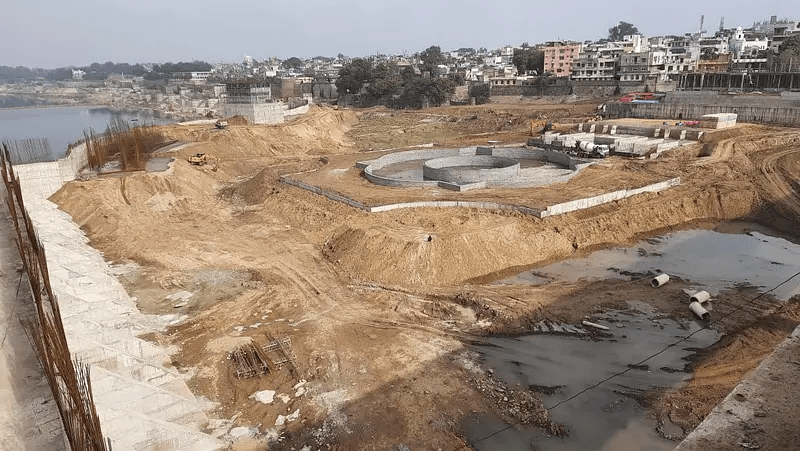
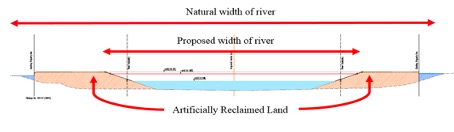
The Central and various state governments have been pushing big budget River Front Developments (RFD) projects as panacea for all the urban water woes. In reality, these are River destruction projects with the objective of encroaching on river floodplain and even river beds of Urban Rivers. These RFDs have been failing to deliver on proposed claims and resulting in waste of public money apart from causing more damages to urban rivers eco-system and livelihoods of dependent communities. The projects are also multiplying the Urban Flood potential. In reality, India urgently requires an Urban River Policy as a subset of Urban Water Policy to guide how to treat urban water and urban rivers.

This compilation highlights situation of ten such RFD projects in the country which are failing miserably and facing stiff resistance from concerned citizens and dependent people during last one year or so.

Continue reading “Top Ten River Front Development Stories 2022: Destroying Rivers, Livelihoods”
River Front Development

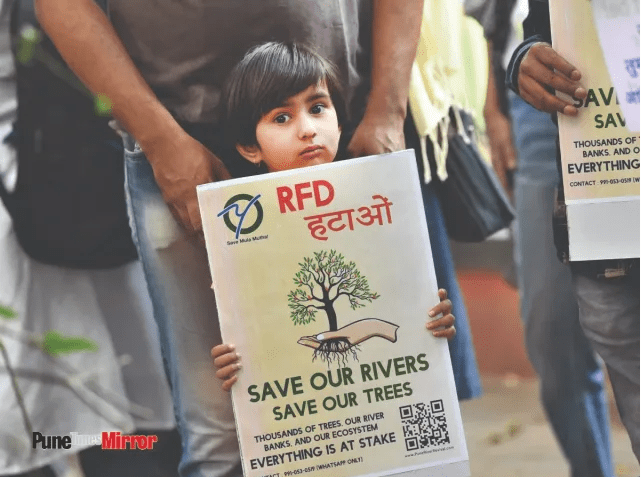
PUNE RIVER FRONT DEVELOPMENT PROJECT

GUEST ARTICLE BY SARANG YADWADKAR

Pune, 
A city along the banks of five rivers,
A city with 7 dams on the upstream,
A city surrounded by pristine green hills,
Hence probably the only city to enjoy abundance of water even in drought like situation. 

Due to this abundant availability of water, the city of Pune grew very rapidly. But this situation has a darker side of frequent flooding as well, which the citizens have witnessed and experienced quite a few times. The most recent example, is the floods in 2019. In a few hours hundreds of houses were washed away; properties worth Crores of rupees were destroyed and 25 innocent people lost their lives. The flood water breached the flood levels to inundate innumerable houses and even a hospital. In 2020 too, Bhairoba Nala breached its limits.

Continue reading “PUNE RIVER FRONT DEVELOPMENT PROJECT”
DRP News Bulletin

DRP NB 2 Aug 2021: Disappointing UKD HC order on Chamoli disaster: Will SC intervene please?

( Feature image:- Women members of Raini village’s gram sabha, Source: Atul Sati/ Facebook/The Quint)

The July 14, 2021 order of Uttarakhand HC, dismissing the petition of those affected by the Chamoli disaster of Feb 2021 and asking that NTPC, developer of the Tapovan Vishnugad project be accountable, is most distressing. While Indian judiciary is rightly credited with doing a lot for the cause of environment and people in general, in the unequal battle of the communities and activists against injustice and negligence of giant projects and their developers, the judiciary has more often failed to ensure that the developers are held accountable and are not allowed to bulldoze ahead using their might, supported by the state, to crush attempts to achieve just and democratic results. In the Chamoli disaster, there are many many questions that remained unanswered and one expected the HC to use the petition to seek those answers. But in stead, the HC has chose to question and fine the petitioners. One hopes the higher judiciary will correct this and stay the order and in stead seek answers from the developers of the hydro projects in such fragile, disaster prone areas and those that sanctioned such projects, including the environment ministry, the state government, the CWC, the CEA, the Geological Survey of India and also the project developers.

Continue reading “DRP NB 2 Aug 2021: Disappointing UKD HC order on Chamoli disaster: Will SC intervene please?”
DRP News Bulletin

DRP NB 5 July 2021: Supreme Court pulls up MoEF, NGT over environment issues: Will it go far?

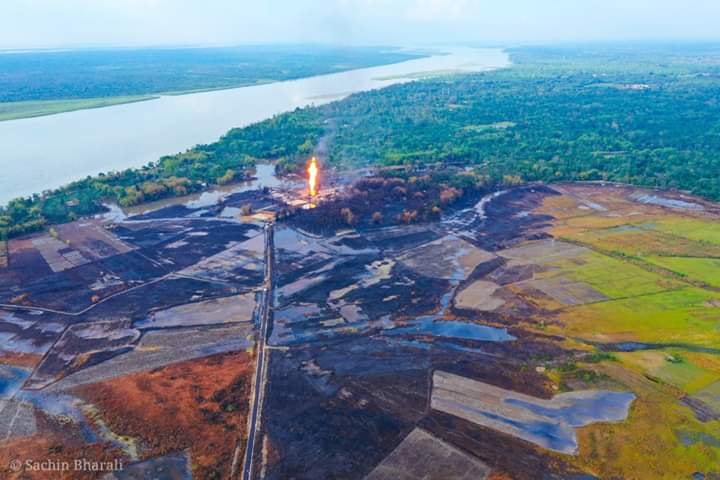
(Feature image:- Aerial image of the fire – Photo by Sachin Bharali, from the Facebook page I am Dehing Patkai https://www.facebook.com/iamdehingpatkai/photos/pcb.131915155180713/131915048514057/?type=3&theater)

In the last week, the Supreme Court of India used rather strong words against Union Ministry of Environment and Forests under the leadership of Prakash Javdekar. It said: “You must show it is a ministry for environment and not just ‘of environment’. You (ministry) have been constantly diluting the environmental standards. That’s all that has been happening”. While this was necessary and in fact it should have come several years earlier, one hopes the SC does not stop at using just strong words, but ensures that the MoEF is held accountable for its numerous unpardonable anti environment acts.

In another notable event, the Supreme Court also pulled up the NGT for not understanding even basic conflict of interest: “We are surprised by this order of the NGT. It is the OIL Ltd. which is responsible for the damage to the wetlands and its own Managing Director has been inducted into the committee? … We are very dissatisfied with the manner the NGT has pushed the matter off its hands. It is the National Green Tribunal, it must have some alacrity and concern for the environment. And after the report of the first committee, three committees have been set up separately! What is this?” This again is welcome and was long overdue. NGT had shown similar lack of understanding of conflict of interest in the Lower Subansiri case which also SC needs to open up for review. Conflict of Interest is a MAJOR dark spot in functioning of India’s governance and SC needs to do lot more to correct this.

Continue reading “DRP NB 5 July 2021: Supreme Court pulls up MoEF, NGT over environment issues: Will it go far?”
DRP News Bulletin

DRP NB 28 June 2021: Where is the impact of lessons of the water conservation efforts that Modi praises, on his government’s water projects and policies?

When the Prime Minister Shri Narendra Modi Mentioned some exemplary water conservation efforts in his Mann ki Baat on June 27, 2021, it was not for the first time he was doing it. These are certainly most welcome.

However, these mentions raise a number of questions. If the Prime Minister considers these local water options as exemplary, which they indeed are, where do we see the reflection of the lessons from such efforts in government programs and policies? In fact why there is no reflection of such lessons in what the government does in water sector? How can the government justify the destruction of Panna Tiger Reserve, over 9000 ha of forests, some 46 lakh trees, the catchment of Ken river and large part of Bundelkhand in the name of Ken Betwa Link Project, in the same Bundelkhand. How can his government justify the destructive projects like the Char Dham Highway, the big hydro projects and so on in the same Uttarakhand where Sachidanand Bharati (who was incidentally recipient of the Bhagirath Prayas Samman of India Rivers Week) works, whose efforts the PM praised? One hope the PM and his government will be awake to the implications and lessons of the works that PM praises.

Continue reading “DRP NB 28 June 2021: Where is the impact of lessons of the water conservation efforts that Modi praises, on his government’s water projects and policies?”