DRP News Bulletin

DRP 240423: The world is moving away from Big Dams: Are we?

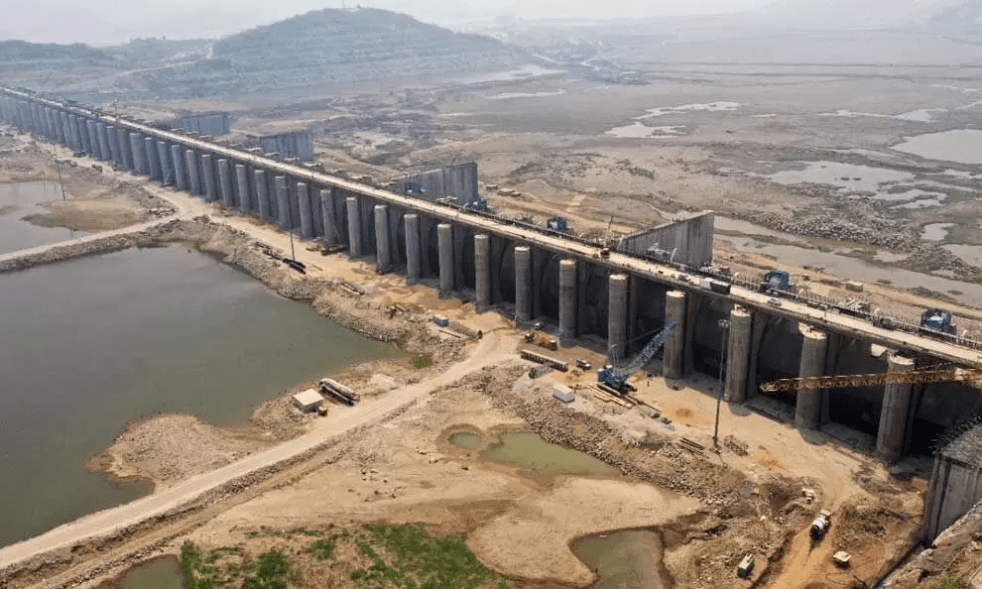
(Feature Image: Construction works going on at Polavaram Dam site. Source: The Hans Media, May 2021)

This well substantiated report from Yale School of Environment this week shows that the end of the big dam era is approaching. The well argued report from Jacques Leslie uses the reports from UN University, International Renewable Energy Agency, Oxford University, Inclusive Development International, China, among others to show how the pace of construction of dams and hydropower projects and also pace of financing such projects have hugely reduced in recent years and decades.

Even the International Hydropower Association, sensing the change, is now advocating pump storage hydro rather than conventional hydro and that too off stream version, to complement the power from solar and wind. Emerging economics with rising cost of hydropower projects and rising cost of power from such projects compared to solar, wind (onshore and offshore) are a major reason for the massively slowing pace of new hydropower projects.

Continue reading “DRP 240423: The world is moving away from Big Dams: Are we?”
DRP News Bulletin

DRP 100423: Abysmal track record of water pollution control in India

(Feature Image: Stagnant waste water pools amid residential plots in Kashipur, Uttarakhand, Bhim Singh Rawat 10 April 2023)

That India’s track record in water pollution control is abysmal is self-evident. This is particularly important to note as India prepares to mark 50 years of Water Pollution Control Act enacted in 1974, next year. It was after that act that the huge institutional architecture of central and state pollution control boards and laboratories were created with huge bureaucracy. That whole institutional architecture is more known for inefficiency and corruption than for achieving any clean rivers or cleaning other water bodies. During the existence of this act the bureaucracy that came with it, the state of our rivers and water bodies have only gone worse with every passing year.

Continue reading “DRP 100423: Abysmal track record of water pollution control in India”
Urban Water Sector

World Water Day 2023: Positive Urban Water Stories from India

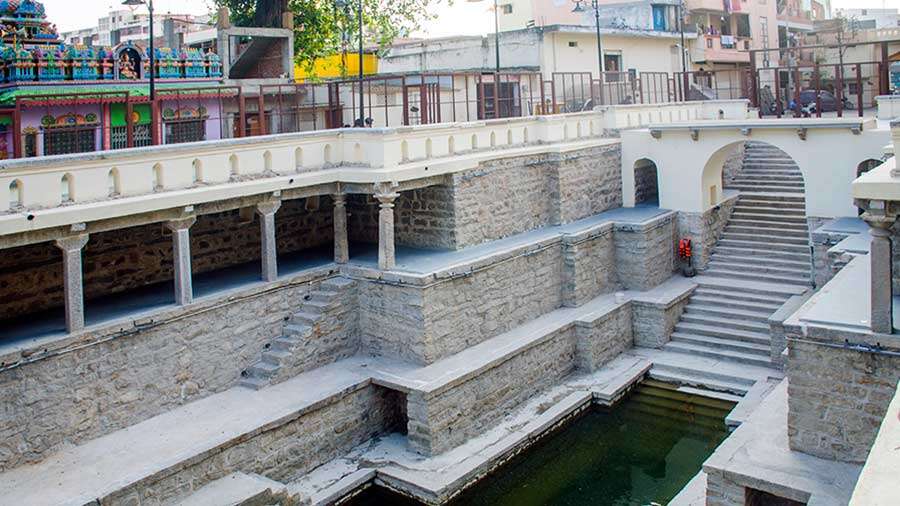
(Feature Image: Revived Bansilalpet stepwell in Hyderabad which has a capacity of over 20 lakh litres. Rangan Datta/Telegraph India.)

Marking World Water Day 2023; this compilation by SANDRP highlights top ten successful and worth replicable initiatives and actions being taken in Indian cities for revival of surface water sources and recharge of depleting groundwater table.

Continue reading “World Water Day 2023: Positive Urban Water Stories from India”
DRP News Bulletin

DRP 200323: Time to Focus on Natural Water Storages

(Feature Image: Cover page of World Bank report titled What the Future Has in Store: A New Paradigm for Water Storage)

On the occasion of World Water Day 2023, the United Nation will be organizing a conference (March 22-24) in New York, USA. In its latest report the World Bank has also raised concern over decline in fresh water storages and underlined the need of a new approach for integration of built and natural water storages as a measure to adapt to climate change related water challenges and better management of water resources.

There is no doubt that large parts of the world are facing water scarcity and insecurity from existing and looming threats both from man made reasons and changing climates. Given the omnipresent & increasing shortages of cumulative storage capacity and adverse impacts of built water storages especially big reservoirs and dams; it is time global bodies like UN, World Bank, policy makers and governments at large must focus on conservation and replenishment of natural water storages, which are far better, cost effective options available to address and mitigate ever increasing and evolving climatic threats on human water security and sources.

Continue reading “DRP 200323: Time to Focus on Natural Water Storages”
DRP News Bulletin

DRP 270223: How much Pump Storage Hydro capacity is required in India?

(Feature Image: State steps up pumped hydro storage projects amid coal crisis. Source: EQ Mag Pro/ May 2022)

On Feb 15, 2023, Union Ministry of Power issued draft guidelines for Pump Storage Projects, inviting comments from stakeholders in 15 days to the email id – hydro2-mop@gov.in. The guidelines say that more Pump Storage Projects (PSPs) are required in view of increasing solar and wind power capacity connected to the grid, to stabilize the grid, store the power to make it available during non-solar and non-wind power hours and for peaking power, reactive power, etc. It describes the PSP as “clean, green, safe, and non-explosive” and “environment friendly” option. No studies or basis are provided for this sweeping conclusion.

Continue reading “DRP 270223: How much Pump Storage Hydro capacity is required in India?”
Fish, Fisheries, Fisherfolk

WFD 2022: Protect Aquatic Biodiversity for Fish to prosper

(Feature image: Fish species caught in small Ramganga stream in Pauri Garhwal. Bhim Singh Rawat/SANDRP)

On the occasion of World Fisheries Day (WFD) 2022, this report by SANDRP tracks developments related to aquatic biodiversity in India over the last year.  The first, second, third and fourth parts of the WFD 2022 reports covered positive reports on rivers’ fish and fishermen; mass fish deaths in rivers and emerging threats; mass fish kills in lakes, ponds in the country and issues concerning rights & livelihoods of inland & coastal fishers reported during the past one year.

Continue reading WFD 2022: Protect Aquatic Biodiversity for Fish to prosper
Fish, Fisheries, Fisherfolk

WFD 2022: Mass Fish Deaths in Lakes, Ponds in India

(Feature Image: Workers remove the dead fish at the regulatory end of Sukhna Lake in Chandigarh on July 23, 2022. Express photo)

On the occasion of World Fisheries Day (WFD) 2022, we here highlight the mass fish death incidents India in inland water bodies including lakes and ponds over the last one year. The first part of this series on WFD 2022 covered the positive stories of rivers’ fish and fishermen; the second part tracked critical issues affecting rivers’ fish and fishermen. The fourth part would focus on worsening plight but ongoing struggle of coastal and inland fisherfolks. The fifth and last part on the series would highlight issues concerning aquatic bio-diversity in the country.    

Continue reading WFD 2022: Mass Fish Deaths in Lakes, Ponds in India
Fish, Fisheries, Fisherfolk

WFD 2022: River Pollution Killing Fish En-Masse; New Threats to river fish

On the occasion of World Fisheries Day (WFD) 2022, this second report is on the mass fish death incidents in Indian rivers and wetlands during last year. It also presents critical reports concerning emerging threats of invasive fish, riverbed mining, pollution, encroachments, microplastic affecting rivers’ fish and fishers. The first part containing positive stories on the issue can be seen here. The third part would highlight mass fish death incidents in inland water bodies including lakes and ponds and the fourth part would cover the ongoing struggle of coastal fisherfolks and related issues. The fifth and last part on the series would highlight issues concerning aquatic bio-diversity in the country.     

Continue reading WFD 2022: River Pollution Killing Fish En-Masse; New Threats to river fish
DRP News Bulletin

DRP 17×22: SSP Fails To Provide Promised Water, Rehabilitation: Former Gujarat CM from BJP 

(Feature Image: An aerial view of Narmada river downstream Sardar Sarovar Project in Oct. 2018. Source: CMO Gujarat twitter handle)

With Gujarat state assembly election round the corner, Bhartiya Janta Party (BJP) the party ruling the state and Centre has been evoking the Sardar Sarovar Project as a big achievement in the face of contrasting ground realities as suggested by no less than former Gujarat Chief Minister of BJP Shri Suresh Mehta. The project has failed to provide promised irrigation water to farmers of Kutch and Saurashtra in whose name the dam was pushed as the canal system remains not fully built. The people of Kutch, in whose name Gujarat got 9 Million Acre Feet of water, disproportionate to its catchment area at SSP, were incidentally last to get the water and not first as it should have been. Kutch canals remains largely unfinished and command area largely unirrigated. Who stopped this area to get the water over a decade after the water started flowing from the dam is a question, Gujarat rulers refuse to answer.

Similarly, thousands of project affected people continue to struggle for rehabilitation and compensation despite court orders. The Gujarat rulers have gone silent over unending and unfolding ecological and hydrological impacts of the dam on Narmada river system downstream from the dam including delta area. Thousands of villagers living in miserable conditions submerged in backwater of the dam but have not been officially recognized as project affected people. At this moment, the timely, just rehabilitation and compensation of these villages and project affected families should be top priority of concerned governments including the Central government.

Continue reading DRP 17×22: SSP Fails To Provide Promised Water, Rehabilitation: Former Gujarat CM from BJP 
DRP News Bulletin

DRP 10×22: All Pervasiveness of Climate Change and Anthropocene Impacts

(Feature Image:- Odisha: 10 stranded in flash flood after sudden release of water from Gohira dam. Source: TNIE )

A large number of reports in this week’s news bulletin from SANDRP are tied by a common threat. The report in NYT about how the South Asian Monsoon is becoming more intense. How the droughts like the one in western US are becoming more likely.

In Bengal people killed in October rains while they were doing visarjan of Durga idols and in Odisha people stuck by sudden release of water from a dam. In these cases of W Bengal and Odisha, strangely, there was no warning and no one is even asking why. In both cases it is the destruction of the river in the that led to create the crisis, but again no questions are being asked.

The report of death by avalanches, the more frequent landslides in monsoons are also in the same league. The SW Monsoon is officially over as per India Meteorological Department, but even as we write, the extreme floods in Uttarakhand, Uttar Pradesh and Madhya Pradesh are breaching the Highest Flood Levels in several rivers.

Continue reading DRP 10×22: All Pervasiveness of Climate Change and Anthropocene Impacts