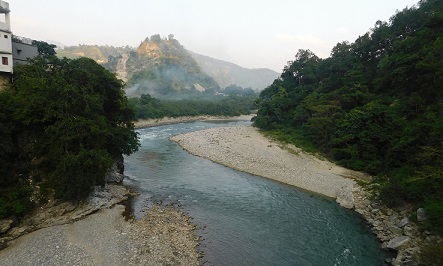
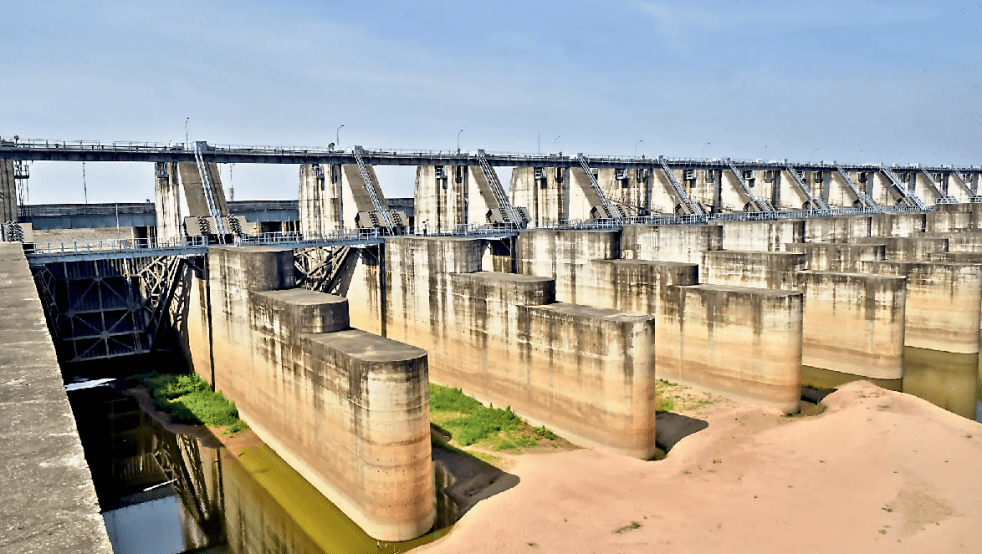
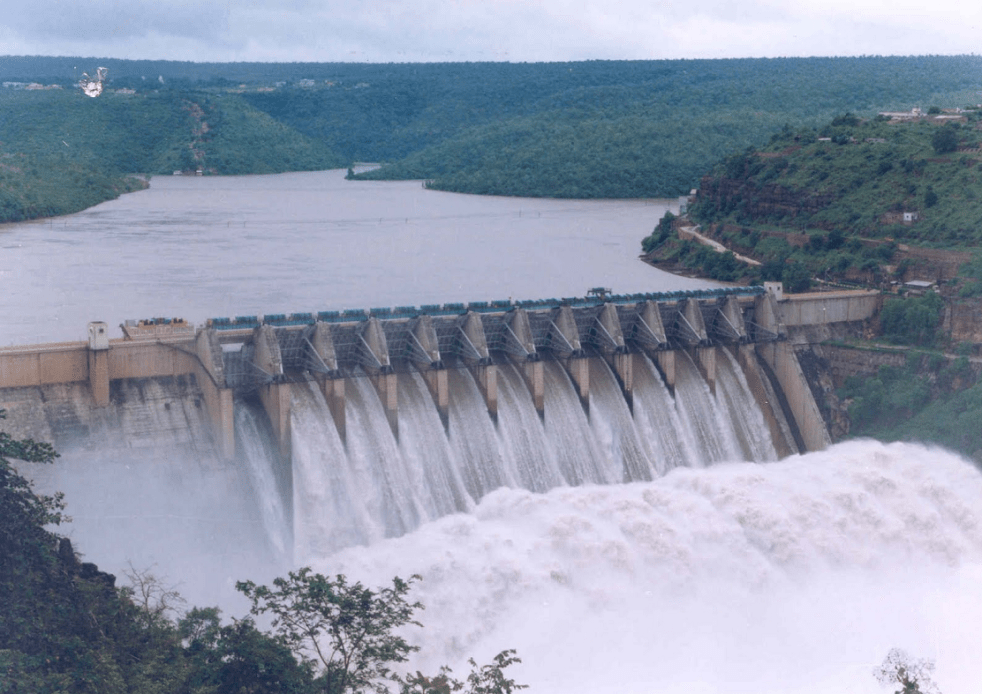
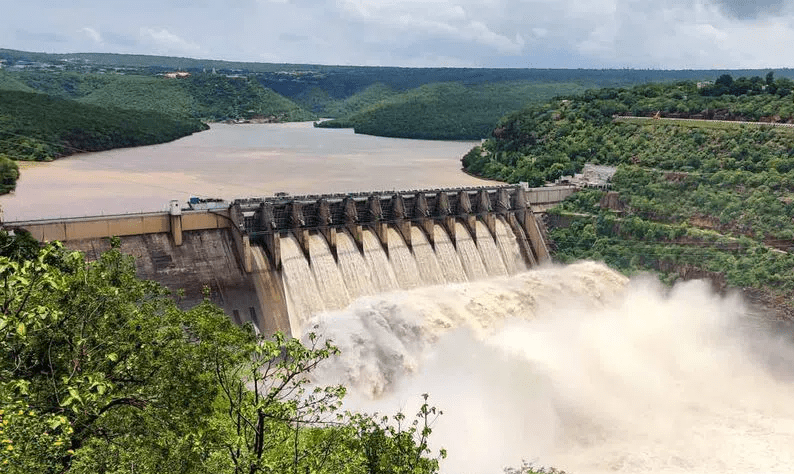
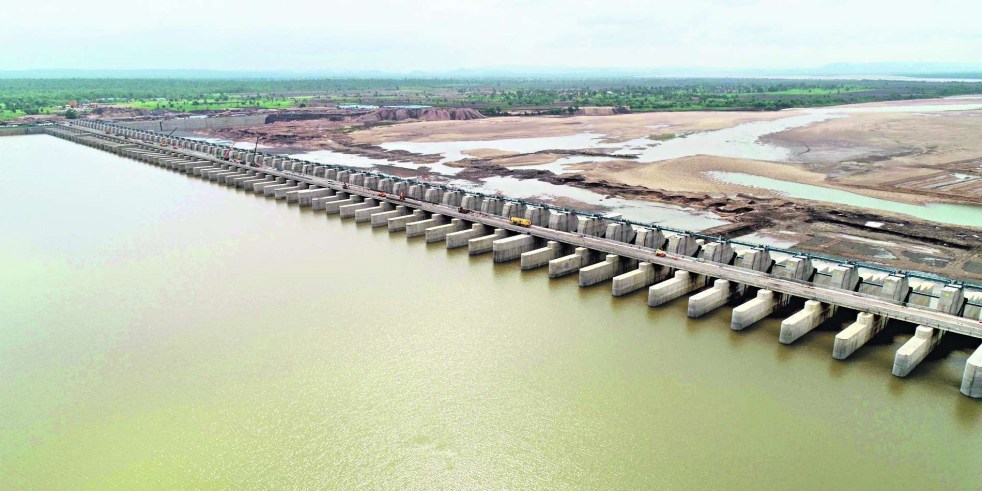
A report this week quotes a Govt of Gujarat (GOG) insider saying that GOG is giving 16.7% of SSP (Sardar Sarovar Project) water for industries (with more in pipeline) against planned allocation of just 2% (0.2 Million Acre Feet or MAF). Similarly, against planned allocation of zero for Urban areas in Ahmedabad, Gandhinagar, Vadodara, Kheda and Bharuch, most large urban areas are getting Narmada water. However, the insider says, the area irrigated by the SSP is only 33% of the targeted area, with largest water quantities going to already irrigated central Gujarat. Similarly, with the Narmada Water Disputes Tribunal (NWDT) asked Gujarat to provide water for the SSP Downstream areas from its allocated share, but Gujarat keeps claiming it has no water for this and asks other states to provide water for the downstream areas from common pool. It seems the worst fears of the project critiques are coming true. The insider has in fact characterized this state of affairs as water anarchy in Gujarat.
Continue reading “DRP 030225: Water Anarchy in Gujarat in Narmada water allocation?”Tag: Policy
DRP 130125: Will Judiciary take these matters to logical conclusion?
There are at least four cases in this past week where the judiciary has used strong words or taken up crucial issues in water, dams, hydropower projects, wetlands and riverbed mining related issues. In the case related to the safety of Mullaperiyar dam on Kerala-TN border, the Supreme Court has prodded the Centre to wake up from the slumber to ensure that National Dam Safety Authority quickly forms a panel to examine the project. This case has wide ranging repercussions not only about this project, but also functioning of NDSA and other bodies under the Dam Safety Act 2021. Indeed, there is huge question mark as to what extent NDSA and DSA has made our dams any safer.
Continue reading “DRP 130125: Will Judiciary take these matters to logical conclusion?”DRP 161224: Arunachal Pradesh needs dialogue on dams
(Feature Image: Resident in upper Siang protesting agaisnt SUMP on Dec. 15. Image source: Ebo Milli @Ebo_Mili_Linggi on X)
Hundreds of People of Siang, East Siang and Upper Siang Districts of Arunachal Pradesh came out in peaceful protests on Dec 14 2024. They opposed the govt effort to deploy armed central and state police forces for a pre-feasibility study for the 12500 MW hydropower project on Siang River, a tributary of Brahmaputra River.
Indeed, as remarkably articulate report by in Arunachal Times said, Siang needs dialogue not guns. In fact, the Chief Minister recently and even the Prime Minister and Union Home Minister had earlier promised to the people of the state that if they do not want big dams, such projects will not be taken without people’s consent as there were options for power and development.
Continue reading “DRP 161224: Arunachal Pradesh needs dialogue on dams”DRP 091224: “Kale Pani Da Morcha”: A Landmark people’s movement
(Feature Image: Women activists who were standing and displaying placards were detained by the Ludhiana police during the protest. Photo: By special arrangement/The Wire)
‘Kale Pani da Morcha”, the people’s movement against Pollution of Buddha Nallah, a tributary of Sutlej River in Ludhiana (Punjab) is a landmark movement in more than one sense. Firstly, while severe pollution of rivers is the usual story from across the country, a courageous people’s movement to address is the issue is such a rare event.
The fact that the industries association actually threatened this movement with a counter from the industries and their workers is shocking and shows the impunity of these industries. While the state government has to take quick action to address the issue, there is also a huge role for the central government, which has abjectly failed to perform its basic duty of providing credible governance of rivers, including their pollution in India. They including CPCB and MoEF know since decades that CETPs are completely failed model, and no worthwhile action has been taken to address the failure, including by the World Bank which has funded many of them. The filthy rivers all over India are violating the fundamental rights of millions of people, without any credible action even by the judiciary.
Continue reading “DRP 091224: “Kale Pani Da Morcha”: A Landmark people’s movement”DRP 251124: Protest by Mothers Union against sand mining along Assam-Meghalaya border
(Feature Image: Mother’s Union protest rally against sand mining. Image Source: Nagaland Post, 03 Nov 2024)
The ongoing protest by the Mother’s Union against sand mining in Dudhnoi River along the Assam Meghalaya border has brought to focus the serious implications of unsustainable sand mining, whether legal or illegal. The campaign has wide based support from the Garo Students Union, All Bodo Students Union, Krishak Mukti Sangram Samiti and other groups.
The campaign has highlighted that due to use of motorized equipment to extract sand, the water level in the Dudhnoi river is dropping hugely, including during rainy season. The campaign has also pointed out that the forest, mining, transport and police departments have been allowing over loaded sand laden dumpers with or without proper challans.
Continue reading “DRP 251124: Protest by Mothers Union against sand mining along Assam-Meghalaya border”Yamuna Manthan 061124: Save River from ‘Illegal’ Sand Mining
(Feature: Members of Haryana Anti Corruption Society, Yamuna Nadi Mitra Mandli, Bhartiya Kisan Sangh, Yamuna Nagar raising concerns over unabated unsustainable riverbed mining in Yamuna in Gumthala Rao, Karnal on Oct 07, 2024.)
Large scale riverbed mining has become most underestimated and least discussed threat for Yamuna rivers. While increasing pollution has turned the river stretch between Delhi and Agra ecologically dead, the rampant sand mining has been severely damaging the Yamuna eco-system in upper and lower segments.
Presently, the mining menace is quite rampant in Paonta Sahib, Yamuna Nagar, Saharanpur, Karnal, Shamili, Panipat, Sonipat, Baghpat and Ghaziabad districts along the river in upper segment. Similarly, in lower segment the main stem of river as well as its key tributaries Chambal, Sind, Betwa, Ken have been bearing the burnt of unsustainable sand mining.
Continue reading “Yamuna Manthan 061124: Save River from ‘Illegal’ Sand Mining”DRP 28×24: Hydropower Impacts on Biodiversity
(Feature Image: The Ranganadi dam in Arunachal Pradesh. In February 2019 the dam released an unprecedented amount of silt, with severe impacts for the river’s biodiversity and the livelihoods of people who live along its banks. Image Credit: Karen Conniff / Flickr, CC BY-NC 2.0/Source: Dialogue Earth)
A new study of available scientific publications on impact of Hydropower projects on biodiversity provides a thorough review of the subject. The review does not directly give a call not to construct more such destructive projects. But it is useful for anyone concerned about the impact of dam projects on rivers.
The study discusses the impacts of hydropower projects on both aquatic and semi-aquatic species in riverine ecosystem and cumulative impacts spatially and temporally across river basins. Dams disrupt longitudinal connectivity and act as physical barriers in upstream-downstream movement of species. Upstream of dam, there is static water environment rather than flowing river environment. In the downstream, the hydropower projects adversely affect the water flow, sediment flow, thermal regimes, affecting water quality and environmental cues for the fish movement. All these also affect the floodplains both upstream and downstream.
Continue reading “DRP 28×24: Hydropower Impacts on Biodiversity”DRP 300924: Focus on River Studies
Rivers are the most important ecosystems (eco here includes ecology and economy) and yet possibly least studied entities. Some news below this week about some river studies brings the focus on need to take up many more river related studies.
Most important aspect of river related studies is the need for credible, independent studies, not influenced by the needs of the governments. Otherwise, the government is likely to not only influence the study, but also decide not to make it public as they did in case of the studies related to Joshimath town and role of Chamoli disaster.
Continue reading “DRP 300924: Focus on River Studies”DRP 230924: Role of rivers in the birth of governments
(Feature Image Source: The Economic Origins of Govt)
Interesting research published in 2023 suggests that archaeologists and economists are now learning that dynamic, shifting rivers also created conditions that triggered people to develop some of the first organized govts on the planet.
In the research published in The American Economic Review Robert Allen and two co-authors found that Agriculture and large settlements emerged alongside rivers because they could tap into the gifts of rivers: close access to water and fertile soil. But rivers can move and take those gifts away. So, society developed organized govts to work collectively to regain their access to those gifts.
Continue reading “DRP 230924: Role of rivers in the birth of governments”DRP 120824: Chalakudy community demand Prudent Dam Management Plan
(Feature Image: Water flows through the gates of the Peringalkuthu dam on Chalakudy river after a sluice was opened following heavy rain in Thrissur on Aug. 04, 2022. Photo Credit: PTI/The Hindu)
One of the heartening development this week is from Kerala, where Chalakudy river community held a satyagraha to demand proper integrated dam management plan in the Chalakudy River basin to minimize flood risks. It is rather rare that communities come out for such a demand. It was also great to see that the satyagraha was supported by Chalakudy Puzha Samrakshan Samiti, Chalakudy municipal chairman and also environmentalists.
The satyagraha in fact had specific demand for each of the dams included in the Paramibikulam Aliyar Project, including in Kerala and upstream Tamil Nadu. We hope the Kerala government positively responds to these demands at the earliest.
Continue reading “DRP 120824: Chalakudy community demand Prudent Dam Management Plan”