DRP News Bulletin

DRP 11 April 2022: Ken Betwa Affected people protest land acquisition

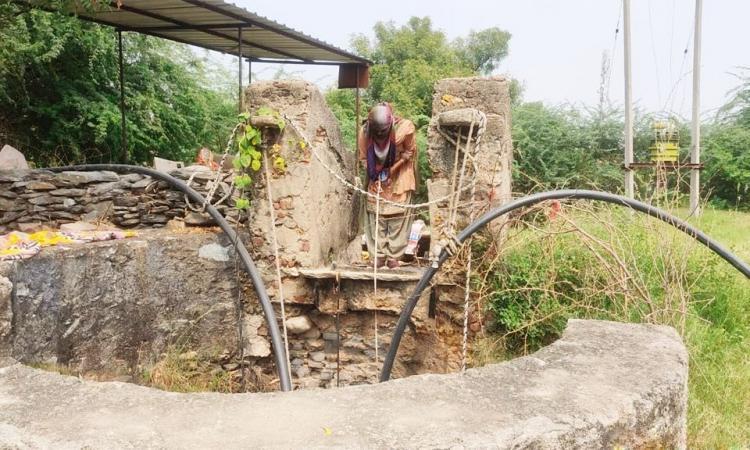
The residents of about 15 villages affected by the Ken Betwa link project are opposing the land acquisition process being initiated in violation of all norms have opposed the move. The notices have not been pasted in the affected villages, gram sabhas have not been conducted and the information promised in the notice is not available at the designated places. When question, the Madhya Pradesh officials have responded arrogantly. The history of manipulations and violations that has been the norm every step of the way in Ken Betwa Project continues. In fact the project does not have final forest clearance, its wildlife clearance has been questioned by the Supreme Court appointed Central Empowered Committee and its Environment clearance is under challenge before the National Green Tribunal. In absence of the clearances, the land acquisition should not even be started if there is any place for prudent norms in such projects. It would be best if the government stops the process and starts it only if and when it gets all the clearances and after taking all the concerned into confidence through a prudent confidence inspiring process.

Continue reading “DRP 11 April 2022: Ken Betwa Affected people protest land acquisition”
DRP News Bulletin

DRP 14 March 2022: 25th Anniversary of International Day of Action for Rivers!

14th March is celebrated as International Day of Action for Rivers since 1997 after the resolution at the 1st International meeting of People Affected by Dams in Curitiba, Brazil. At this meeting of Dam affected people from 20 countries (including India) it was decided to celebrate this day as the International Day of Action Against Dams and For Rivers, Water and Life. It is thrilling to see the celebration continuing and spreading on 25th anniversary of that meeting. The focus this years is on Rivers for Biodiversity. To illustrate how the celebration of this day has spread, in 2021, even during pandemic, the day was celebrated with over 120 events in 32 countries. For details, see: https://www.internationalrivers.org/take-action/international-day-of-action-for-rivers/.

Continue reading “DRP 14 March 2022: 25th Anniversary of International Day of Action for Rivers!”
DRP News Bulletin

DRP 070322: As Tata celebrates century of Bhivpuri HEP operation, time to return the project to government and review it?

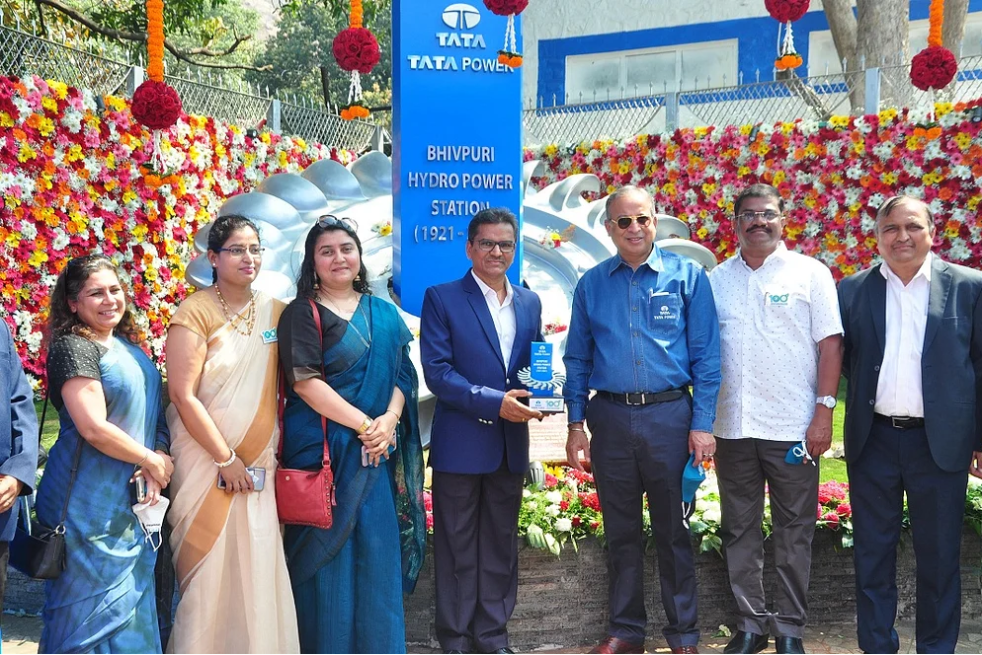
On March 5, 2022, Tata Power celebrated 100 years of operation of the Bhivpuri hydropower project in Raigad district of Maharashtra. It is possibly right time to consider by the government to ask Tata Power to return all the hydropower projects of Tata Power in that region to the government. Tatas got the right to develop these projects under a colonial agreement that handed over the public resources of land, river and rights over the project benefits to a private company like Tatas almost for free, for the company to profit from these public resources. This arrangement should have been reviewed long back, but possibly it is right time to review it now. Possibly it will be a good move in the year when India celebrates Azadi ka Amrutmahotsav!

The project transfers water from drought prone, water deficit Krishna basin to high rainfall area of Konkan. And such disastrous transfer continues even in drought years. It is high time this is reversed and the water is allowed to flow in the Krishna basin. From this perspective, the project also needs to be reviewed if at all it should continue to operate and if so under what terms and conditions.

Continue reading “DRP 070322: As Tata celebrates century of Bhivpuri HEP operation, time to return the project to government and review it?”
DRP News Bulletin

DRP 28 Feb 2022: Climate Change intensifying water cycle at double the predicted rate

This should be worrying all water managers, particularly in monsoon driven climate like India. New Research by New South Wales University Science and published in Nature in Feb 2022, based on changes in salinity of sea, a new method, says that the climate change is intensifying the water cycle at more than double the predicted rate. This is also likely to have huge impact on the rainfall pattern and possible increase in frequency of high intensity rainfall events and storms, besides other impacts. This will also have impact on the Probable Maximum Precipitation and Probable Maximum Floods in the dam catchments, and would mean the current spillway capacity of many of our dams wont be adequate. All this also means increased frequency high intensity floods and disasters. Unfortunately, CWC or state dam managers in India are not even looking at these figures. India also needs to urgently take up research into all these aspects for assessing India specific impacts.

Continue reading “DRP 28 Feb 2022: Climate Change intensifying water cycle at double the predicted rate”
Sand Mining

Riverbed Mining India 2021 Overview: Govts’ Changing Policies to Mine Revenues

(Feature image showing brazen rule violations in legally approved sand (morang) mining site along river Ken at Kanwara, Banda. Source: Ashish Sagar Dixit.)

This second part of riverbed sand mining overview 2021 by SANDRP highlights relevant reports from ten different states where governments have taken new policy, administrative decisions. The first part presenting prevailing riverbed mining scenario over past one year can be seen here. The third and final part of this series would cover the key judicial interventions.    

Continue reading “Riverbed Mining India 2021 Overview: Govts’ Changing Policies to Mine Revenues”
DRP News Bulletin

DRP 271221: PM pushes unviable, destructive Hydro projects in HP

Feature Image: Renuka Dam Sangharsh Samiti members take out a protest march at Dadahu in Sirmaur district on Dec. 19, 2021. Tribune photo

What will be the realistic cost of power from hydropower projects being pushed by the Prime Minister during this visit today to Himachal Pradesh? One indication of that comes from the 111 MW Sawra Kuddu HEP that he inaugurates during his visit. The cost of this project is already over Rs 2080 Crores, likely to go up further. Which means per MW installed capacity, the cost is around Rs 20 Crores. At this cost, the cost of power from the project is likely to be over Rs 8 per unit even without factoring in the social, environmental and increased disaster vulnerability costs that such projects impose on the fragile Himalayan Mountains. As if to also remind the active seismic zone, on the eve of his visit, there were tremors, even if mild, in Mandi.

The Renuka dam that he lays the foundation for does not even have all the statutory clearances. Its EIA has been the most dishonest exercise, as came out in the NGT hearings. What signal is the government sending by laying foundation stone for such a project? Similar are the issues with Luhri I and Dhaulasidh HEPs. The government seems to be pushing such outdated, unviable, costly and destructive projects in fragile Himalayan regions, purely on political arithmetic assumptions, but possibly need to realise that these projects are not even popular and they are also most inappropriate in the climate change context. Or is it the lure of spending such huge sums of unaccountable public money that provide opportunities for getting election funds for the party that is driving such undemocratic decisions?

Continue reading “DRP 271221: PM pushes unviable, destructive Hydro projects in HP”
DRP News Bulletin

DRP 200921: Policy needed for Urban Rivers, not Riverfronts

There is no doubt that India urgently needs a guidance note and policy for Environment Sensitive, Climate Adaptive and Socially inclusive Urban Rivers Planning and Development. But this is required for the Urban Rivers and not just Urban Riverfront. The NMCG attempt like that of Sabarmati and numerous other river fronts unfortunately are not bothered about rivers, they are only interested in grabbing land from the Urban Rivers and convert the rivers into concrete channels on two and in some cases three sides (include the sides and the bed of the rivers). That is clearly death knell for the rivers. There is no doubt that there is need connect the people with the rivers, not just river fronts. The NMCG and other government bodies know the difference, so it is not out of ignorance that they have come out with the guidance note for river fronts rather than one for rivers. Unless people, civil society, experts and judiciary raise these issues, the future of Urban rivers seem bleak in India, as can be seen from the stories of Urban rivers compiled here from this week. 

Continue reading “DRP 200921: Policy needed for Urban Rivers, not Riverfronts”
DRP News Bulletin

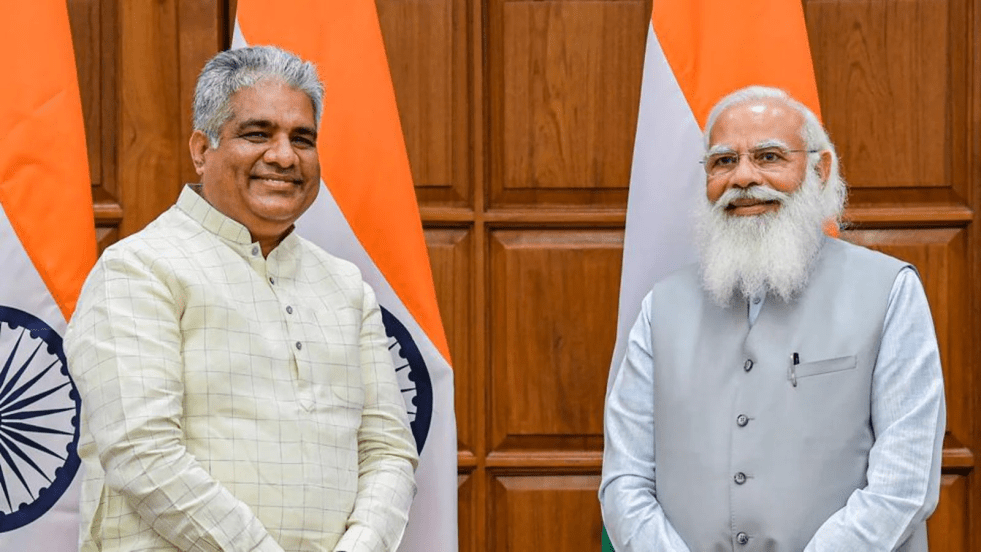
DRP 120721: Will Bhupender Yadav improve India’s Environment Governance?

It’s rather rare when some of the most well-known environmentalists of India, including Ritwick Dutta and Manoj Misra welcome the arrival of Bhupender Yadav as India’s new Environment Minister. The state of the environment governance under the outgoing minister, Prakash Javadekar has worsened so much, both in perception and substance, that possibly any change would look better. In fact Javadekar may be front runner for the label of India’s worst ever environment minister according to some analysts.

The environment appraisals, the constitution of committees including the various Expert Appraisal Committees, the Forest Advisory Committee and the Standing committee of National Board of Wildlife, the public hearings and consultation processes, the state of pollution and rivers, biodiversity, wetlands, floodplains, sand mining, to name just a few areas, were all seen going downhill on a steep slope during the Javadeker period. The monitoring and compliance remained non existent. Some would argue that was it much different before Javadekar. The point is Javadekar had no pretentions of trying to improve the environment governance. He was out to dilute every available norm and he seemed to have succeded significantly.

Even if Yadav were to genuinely wish to improve matters, how much will he be allowed to do, by the perceived imperatives of the economic fundamentalist agenda, the well-entrenched vested interests and the bureaucracy is a question that only time will tell, but there is little doubt that a lot can and needs to be done rather urgently and none of these perceived obstacles should come in the way if there is will. The climate change is making the improvement in environmental governance rather urgent.

Continue reading “DRP 120721: Will Bhupender Yadav improve India’s Environment Governance?”
DRP News Bulletin

DRP 280621: Where is the impact of lessons of the water conservation efforts that PM praises, on his govt’s water projects & policies?

When the Prime Minister Shri Narendra Modi Mentioned some exemplary water conservation efforts in his Mann ki Baat on June 27, 2021, it was not for the first time he was doing it. These are certainly most welcome.

However, these mentions raise a number of questions. If the Prime Minister considers these local water options as exemplary, which they indeed are, where do we see the reflection of the lessons from such efforts in government programs and policies? In fact why there is no reflection of such lessons in what the government does in water sector? How can the government justify the destruction of Panna Tiger Reserve, over 9000 ha of forests, some 46 lakh trees, the catchment of Ken river and large part of Bundelkhand in the name of Ken Betwa Link Project, in the same Bundelkhand. How can his government justify the destructive projects like the Char Dham Highway, the big hydro projects and so on in the same Uttarakhand where Sachidanand Bharati (who was incidentally recipient of the Bhagirath Prayas Samman of India Rivers Week) works, whose efforts the PM praised? One hope the PM and his government will be awake to the implications and lessons of the works that PM praises.

Continue reading “DRP 280621: Where is the impact of lessons of the water conservation efforts that PM praises, on his govt’s water projects & policies?”
Wetlands

Wetlands Overview 2020: Judiciary is active, but remains ineffective

The highlight of the overview of wetlands in India in 2020 here (keeping aside the Wetlands related developments in Maharashtra in 2020 and Positive wetlands related developments in 2020, on both these subjects we have published separate reports), is that the National Green Tribunal (NGT), various High Courts and even the Supreme Court have been quite active on wetlands front, but there is very little impact of this on the wetlands and their governance in India. This is basically because, and this is the second key highlight of this overview, the central and state governments have shown almost no interest, understanding or will to protect the wetlands. This is in spite of the huge number of new Indian wetlands brought under the Ramsar convention in 2020, since experience and also this overview shows that Ramsar convention does not seem to particularly help the fate of the wetlands. The third highlight of the overview is that there is a lot of civil society effort, both in terms of advocacy and work on ground for the protection of wetlands in India. In fact the legal action that we see in the NGT and Courts is largely due to their efforts. In fact whatever little positive developments we see here is coming from community and civil society efforts.

Continue reading “Wetlands Overview 2020: Judiciary is active, but remains ineffective”