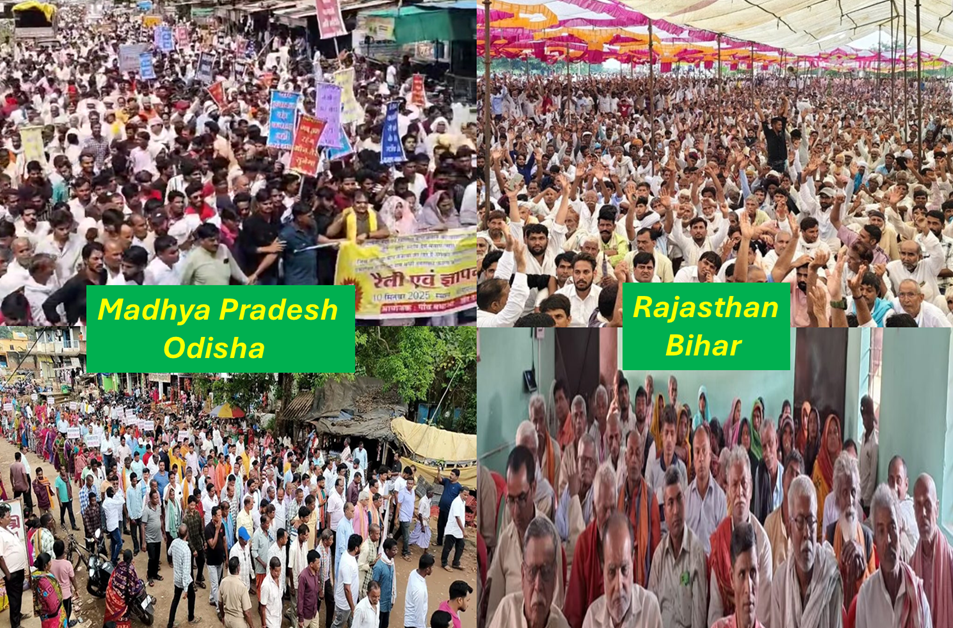
The annual overview tracks top ten people’s resistance stories against large dam projects in India during 2025. It is encouraging to see that the year ended with the Odisha CM announcing scrapping of Samakoi dam project after strong opposition by local villagers. Interestingly, the NTCA and CEC have boldly underlined the threats to tribal people, tigers and forest biodiversity from proposed Morand-Ganjal dam in Madhya Pradesh and dams in Shivalik national park in Haryana. During the year, the villagers have organized mass protests against massive Guna and Dongari dams under PKC link project. Demanding basic information and consultation, the affected tribals have halted ground surveys for Basania dam project.
Continue reading “Dam Protest 2025: People Demands Development Not Displacement”Tag: People
2025 South West Monsoon in Upper Yamuna Basin
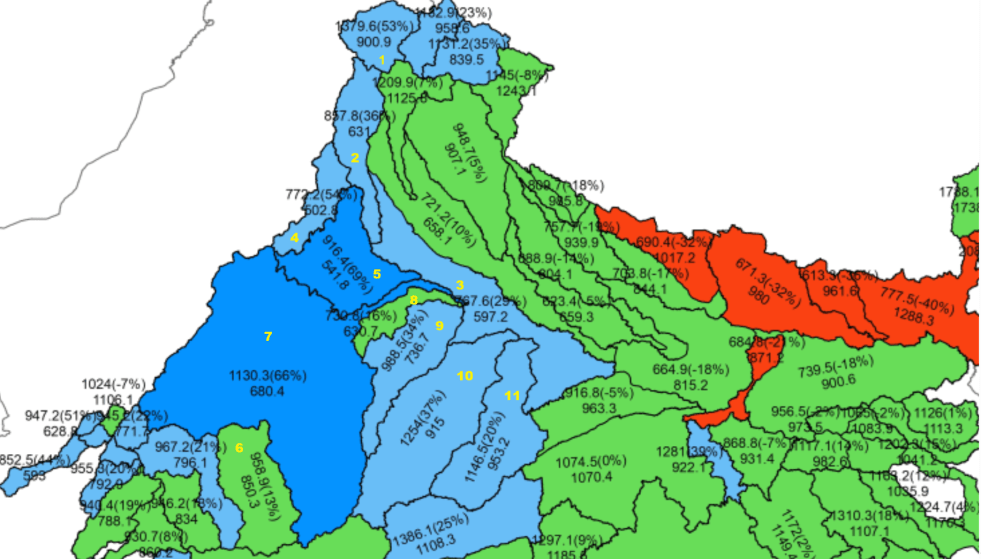
(Feature Image: Screenshot of IMD River basin wise cumulative rainfall map dated 30.09.2025 showing the Yamuna basin)
This report presents monthly rainfall figures during South West (SW) monsoon season 2025 for 16 districts located in 4 states of Himachal Pradesh (3 districts), Uttarakhand (3 districts), Haryana (5 districts), Uttar Pradesh (5 districts) which forms parts of the upper Yamuna basin. The India Meteorological Département (IMD) has divided Delhi in 10 divisions which entirely comes in upper Yamuna basin and the report has rainfall figures for entire Delhi area.
Continue reading “2025 South West Monsoon in Upper Yamuna Basin”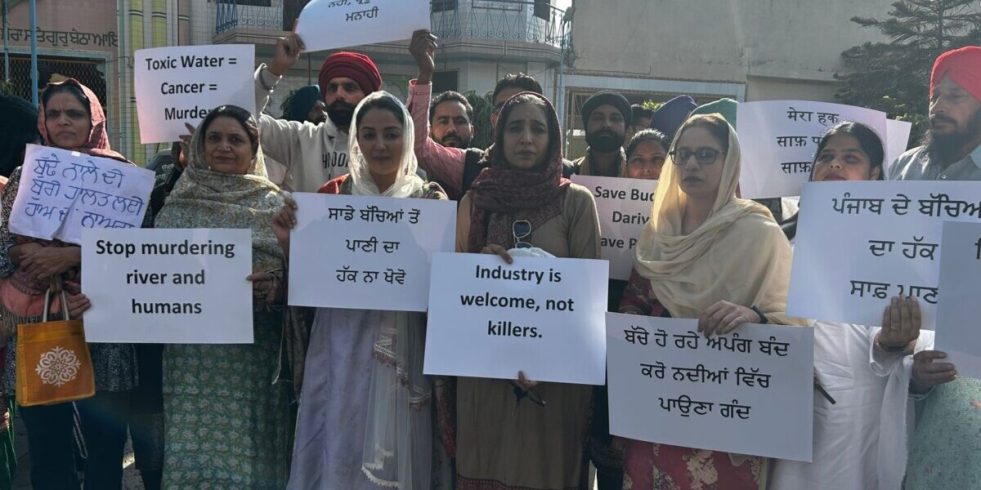
DRP 091224: “Kale Pani Da Morcha”: A Landmark people’s movement
(Feature Image: Women activists who were standing and displaying placards were detained by the Ludhiana police during the protest. Photo: By special arrangement/The Wire)
‘Kale Pani da Morcha”, the people’s movement against Pollution of Buddha Nallah, a tributary of Sutlej River in Ludhiana (Punjab) is a landmark movement in more than one sense. Firstly, while severe pollution of rivers is the usual story from across the country, a courageous people’s movement to address is the issue is such a rare event.
The fact that the industries association actually threatened this movement with a counter from the industries and their workers is shocking and shows the impunity of these industries. While the state government has to take quick action to address the issue, there is also a huge role for the central government, which has abjectly failed to perform its basic duty of providing credible governance of rivers, including their pollution in India. They including CPCB and MoEF know since decades that CETPs are completely failed model, and no worthwhile action has been taken to address the failure, including by the World Bank which has funded many of them. The filthy rivers all over India are violating the fundamental rights of millions of people, without any credible action even by the judiciary.
Continue reading “DRP 091224: “Kale Pani Da Morcha”: A Landmark people’s movement”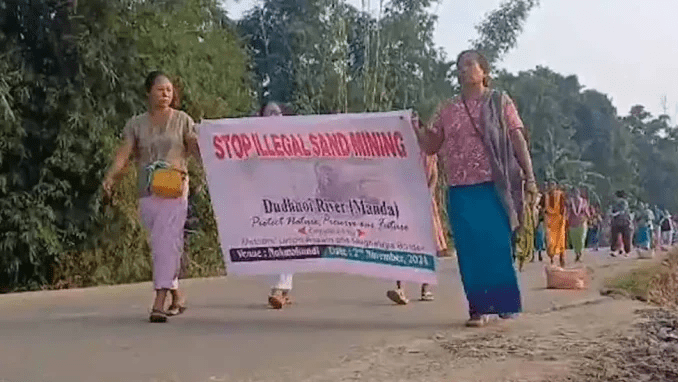
DRP 251124: Protest by Mothers Union against sand mining along Assam-Meghalaya border
(Feature Image: Mother’s Union protest rally against sand mining. Image Source: Nagaland Post, 03 Nov 2024)
The ongoing protest by the Mother’s Union against sand mining in Dudhnoi River along the Assam Meghalaya border has brought to focus the serious implications of unsustainable sand mining, whether legal or illegal. The campaign has wide based support from the Garo Students Union, All Bodo Students Union, Krishak Mukti Sangram Samiti and other groups.
The campaign has highlighted that due to use of motorized equipment to extract sand, the water level in the Dudhnoi river is dropping hugely, including during rainy season. The campaign has also pointed out that the forest, mining, transport and police departments have been allowing over loaded sand laden dumpers with or without proper challans.
Continue reading “DRP 251124: Protest by Mothers Union against sand mining along Assam-Meghalaya border”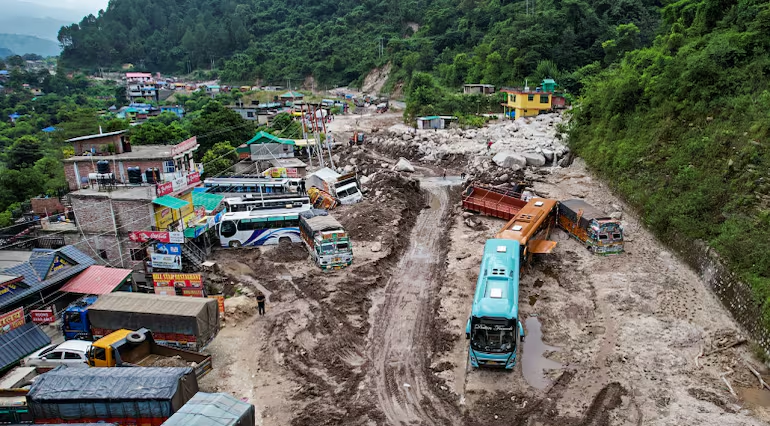
DRP 290424: Why is Climate Change not major election issue?
(Feature Image: Vehicles stuck in debris following a recent cloudburst at Saat Meel in Mandi, on August 20, 2023. (PTI Photo/Money Control)
World’s largest democratic exercise is now ongoing in India to elect the members of India’s Lok Sabha. Over 97 crores are eligible to vote in these elections. One of the biggest factors that is adversely affecting people across India currently is Climate Change. It is affecting almost every aspect of life and the adverse impacts are only increasing with every passing year. This is man-made disaster basically happening due to anthropogenic reasons, affecting air, water, climate, food, health, livelihoods, disasters and so on, affecting everyone. Currently, India is also a major contributor to the climate change causing green-house gas emissions, even though historically, the developed countries have contributed much more.
More importantly, the development options that the elected government choose will decide how the people will be impacted by climate change. The government has large number of options for pathways to development. Considering all this, one expected that climate change responses will be a major issue in these elections. But that is clearly not the case. BJP and Congress, two of the biggest parties fighting the elections, have mentioned climate change in their manifestos, but neither has dealt with this important issue with the detail and seriousness required. Nor are any of them making climate change a major election issue. One expects the ruling party to at least respond in greater detail and seriousness to this issue, but that is not the case.
Continue reading “DRP 290424: Why is Climate Change not major election issue?”
DRP 050224: IMD needs to improve forecasting and sharing, but doing the opposite?
(Feature Image: Climate change catoon by Jug Suraiya & Partho Sengupta. ToI, 23 June 2018)
The decision of the IMD to shut down 199 of its district agromet units across India is disturbing on a number of counts. In the era of climate change when the key parameters are undergoing such rapid change, there is need for increasing monitoring and sharing of climate information by the IMD and need to in fact decentralize the whole effort. But this decision of IMD is going against this basic requirement.
In fact, the IMD has become a sort of holy cow, while in reality its performance in monitoring, forecasting and sharing information in time is far from satisfactory. This is increasingly evident every year when IMD fails to provide not only accurate, actionable, rainfall forecasts sufficiently in advance to help reduce the flood disasters and also take timely decisions on reservoir operations, IMD also fails to provide even timely information about the actual rainfall on ground and how that rainfall is going to get converted to inflows in rivers and reservoirs. Similarly, the district agromet units can provide farmer level and decentralized accurate rainfall monitoring and forecasting information that can help farmers take timely decisions.
Continue reading “DRP 050224: IMD needs to improve forecasting and sharing, but doing the opposite?”
DRP 290124: Wetlands and Human Wellbeing: So little reflected in wetlands governance
(Chest nut clutivators removing water hycinth from Giri taal of Kashipur in US Nagar, Uttarakhand in April 2023. Bhim Singh Rawat/SANDRP)
As the world approaches the World Wetlands Day on Feb 2, we notice a proliferation of news related to wetlands, but mostly bad news in this week’s DRP NB: Loktak lake in Manipur facing impact of inland waterways project, the Supreme Court having to intervene for the Futula lake in Nagpur, TN Govt telling NGT that 38% of Pallikaranai marshland is under encroachment, in Bangalore, NGT is asking for response from KSPCB and others regarding the lake buffer zone encroachment. There is also a lot of bad news about the worsening state of our rivers, including Ganga.
One piece of good news is that people have come out with their own plan for restoration of Ennore wetland in TN. In Assam, Maguri Motapung Bill is regaining biodiversity after earlier being polluted by oil spill, but that is only control of damage earlier. Similarly, while it is good news that SC has intervened to protect Futula lake in Nagpur, but the fact that the govt wanted to encroach on it in the name of “temporary” construction is not at all good news.
Continue reading “DRP 290124: Wetlands and Human Wellbeing: So little reflected in wetlands governance”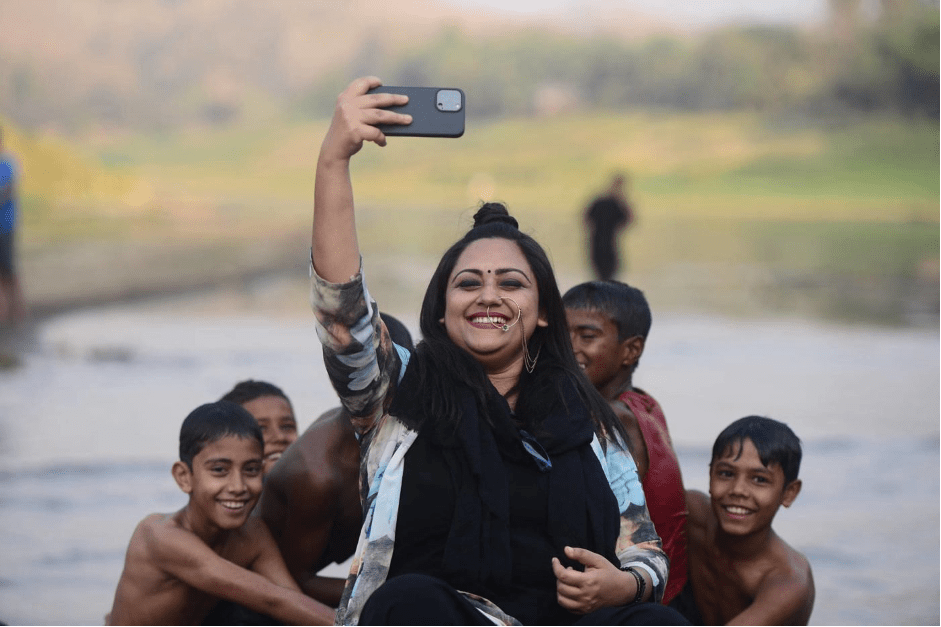
DRP BANGLADESH 2023: Rivers dominate in a River Intense Nation
In this overview of 2023 issues related to Dams, Rivers and People in Bangladesh, we see how rivers dominate the discourse in one of the most river intense nations of the world. As expected, as India and Bangladesh share the rivers in so many ways, the bilateral issues also dominate. These includes fisheries, power sharing, navigation, besides of course water sharing. As expected, Teesta water sharing issue dominates more than others.
Continue reading “DRP BANGLADESH 2023: Rivers dominate in a River Intense Nation”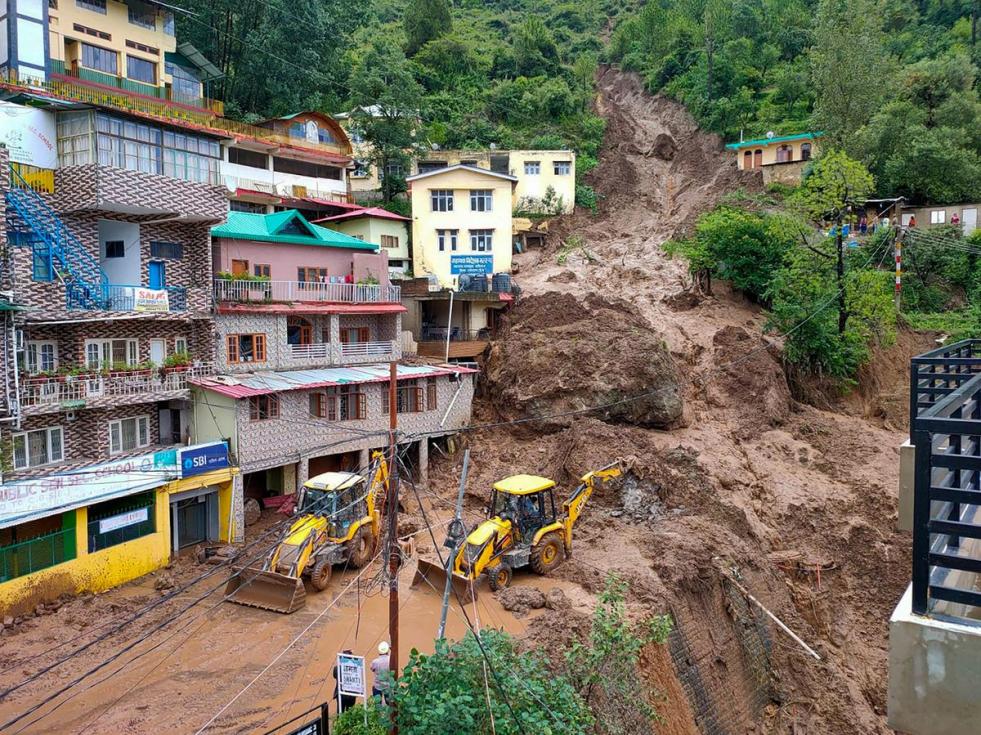
DRP 310723: Disastrous SHORT TERMISM in Urban India
(Feature Image: Earthmovers on restoration work as massive landslide damaged buildings at Shamti after heavy monsoon rainfall, in Solan district, on July 11, 2023 | Photo Credit: PTI/The Hindu)
The Supreme Court’s notice on Shimla development plan that lacks balance between development and environment is welcome and one hopes the apex court takes the issue to its logical conclusion. The consequences of unplanned and ill planned urban developments are a clear invitation to major disasters, including floods, landslides, traffic congestions, air and water pollution, health hazards and also water shortages. The Shimla Master plan also violates the NGT directions with complete impunity.
This is exactly what the EDIT in the Times of India on Mussoorie misery, dangerous short termism that pervades across sectors in Urban India with no policy to guide Urban Water sector or for that matter any other sector.
Continue reading “DRP 310723: Disastrous SHORT TERMISM in Urban India”
DRP 190623: Ten years of Uttarakhand Flood disaster
(Feature Image: Thousands of people have been rescued but the inability of rescue teams to navigate disaster-struck areas has left over 60,000 people stranded in Uttarakhand. The Hindu, 19 June 2013)
This week marks ten years since the Uttarakhand flood disaster of June 2013, the worst recorded disaster in the state. The deaths and destruction in the disaster were unprecedented. Large parts of the deaths and destruction were due to man-made causes. Climate Change played its anthropogenic role too as the unprecedented rainfall happened even before the monsoon was set in. Even the Supreme Court took suo motu cognizance of the disaster and ordered halt to all hydropower projects and independent review of them. One of the major human causes that worsened the disaster was the lack of credible disaster prevention and management systems.
One expected that we and particularly our all powerful governments in the state and the Centre would learn lessons from such an unprecedented, such a massive destructive disaster. The first step to that would have been credible reporting of what exactly happened during the disaster, which agencies played what role and how the destruction could have been reduced. That such a report does not exist even today says a lot.
Continue reading “DRP 190623: Ten years of Uttarakhand Flood disaster” SANDRP