Dams · DRP News Bulletin

DRP: 28 March 2016(Is India facing its worst-ever water crisis?)

Is India facing its worst-ever water crisis? On 11 March first time in 30 years history power generation at Farakka power plant in West Bengal was suspended for 10 days due to non-availability of water in Ganges. Nobody is sure why but the evidence about the declining water levels and waning health of the 2,500km long Ganges is mounting. Monsoon rains have been scanty for the second year in succession. The melting of snow in the Himalayas has been delayed. Water tables have also been declining in the Ganges basin due to the reckless extraction of groundwater. The 3-month-long summer is barely weeks away but water availability in India’s 91 reservoirs is at its lowest in a decade, with stocks at a paltry 29% of their total storage capacity, according to the Central Water Commission. Thousands of villagers in drought-hit region of Maharashtra depend on tankers for water & authorities in Latur district, fearing violence, have imposed prohibitory orders on gatherings of more than 5 people around storage tanks. Tens of thousands of farmers and livestock have moved to camps providing free fodder and water for animals in parched districts. The govt has asked local municipalities to stop supplying water to swimming pools. States like Punjab are squabbling over ownership of river waters. In water-scarce Orissa, farmers have reportedly breached embankments to save their crops. Realy the waning health of the sacred river underscores the rising crisis of water in India.

Continue reading “DRP: 28 March 2016(Is India facing its worst-ever water crisis?)”

Dams · DRP News Bulletin

DRP: 25 Jan. 2016 (FAO supports SRI)

“Save & Grow” FAO supports SRI A new FAO book out on 18 Jan.16 takes a close look at how the world’s major cereals maize, rice and wheat can be grown in ways that respect and even leverage natural ecosystems.  FAO also underscores that “Save and Grow” farming systems are knowledge-intensive, and need to be built on local knowledge and needs, recognizing the important role of farmers as innovators. GREAT to see that this FAO publication (http://www.fao.org/3/a-i4009e.pdf ) contains a very detailed discussion and presentation on SRI, the first time that there has been such an endorsement of SRI (System Rice Intensification). With this publication, FAO joins the World Bank (http://info.worldbank.org/etools/docs/library/245848/) and IFAD (http://www.ifad.org/english/sri/  and http://www.ifad.org/english/sri/documents.html).

Continue reading “DRP: 25 Jan. 2016 (FAO supports SRI)”

Dams · DRP News Bulletin

DRP: 11 Jan. 2016 (Punjab Villagers oppose Dam on Ghaggar River)

86 Villages rise in protest against dam on Ghaggar  A dam is proposed to be constructed on the Ghaggar, near Banur, at a cost of Rs 75 crore. An agreement was signed between representatives of various villages located downstream and the Irrigation Department in 2006 promising 200 cusecsto irrigate fields in thesevillages. Villagers now fear that they will not get the promised 200 cusecs after the construction of the dam. Their claim is that the water flow in the river is much lower than 400 cusecs, as claimed by the irrigation department. The department, on the other hand, sticks to its stand that the water flow in the river is sufficient enough to feed the canal and the villages downstream. However, a perusal of the monthly average discharge data of the river for the past 10 years, defies the department’s claim. It revealed that the average yearly discharge barely crossed 400-cusec mark over the past 10 years, excluding the peak period (July to September). Interestingly NABARD and the State Irrigation department had separately conducted studies of the project well before giving it a green signal.

Continue reading “DRP: 11 Jan. 2016 (Punjab Villagers oppose Dam on Ghaggar River)”

Dams · Expert Appraisal Committee · Ministry of Environment and Forests

NGT Quashes MoEF’s Office Memoranda on violating projects: Large number of irrigation projects of Maharashtra & Karnataka affected

Press Release                                                 08.07.2015

In a landmark judgement, the Hon. National Green Tribunal has quashed the Office Memoranda issued by the Union Ministry of Environment, Forests & Climate Change (MoEF for short) on the 12.12.2012 & 27.06.2013 for “Consideration of proposals for  TORs/Environment Clearance/ CRZ Clearance involving violation of the Environment (Protection) Act, 19861 Environment Impact Assessment (EIA) Notification, 2006 / Coastal Regulation Zone (CRZ) Notification, 2011”. Continue reading “NGT Quashes MoEF’s Office Memoranda on violating projects: Large number of irrigation projects of Maharashtra & Karnataka affected”

Dams

Dams, Rivers & People – April-May 2015

HYDROPOWER

“Right now, hydel is almost stalled”: Piyush Goyal (18 May 2015)

Union Power Minister makes some candid comments on Hydro: “Right now, hydel is almost stalled. We have Teesta stuck for various reasons. Subansiri, Maheshwar, Lower Subansiri, all of them have different challenges. Small hydros are facing challenges of transmission, they are facing challenges of local area problems. So, by and by, the hydro sector will need a more holistic thinking. The courts have also taken up certain matters, particularly in Uttarakhand, post the tragedy (of floods in 2013). There is the mission of Ganga to ensure that there is a reasonable flow—Aviral Ganga, which we are committed to. We are working on all of these plans… For example, Subansiri had an issue where the local population had concerns. We immediately got an eight-member very, very high-level expert committee, including Central Water Commission, Central Electricity Authority, and experts from Assam. They are all working together to see the environmental impact, structural impact, riparian state impact and riverbed impact.

http://www.livemint.com/Industry/9HtQbGUG0v4rYIczIT21hJ/Time-is-now-ripe-for-a-power-fund-says-Piyush-Goyal.html Continue reading “Dams, Rivers & People – April-May 2015”

Delhi

NGT Orders MAILY SE NIRMAL YAMUNA – WILL THIS LEAD TO A REJUVENATED YAMUNA?

Guest Blog by Manoj Misra (yamunajiye@gmail.com), Yamuna Jiye Abhiyan, Delhi

The National Green Tribunal (NGT) in a landmark judgment pronounced on 13 January 2015[1], has set an ambitious road map for a rejuvenated river Yamuna by 2017. Naming it as “Maily se Nirmal Yamuna rejuvenation project, 2017” the green court in the judgment spread over almost 100 pages has detailed steps necessary to achieve what all previous efforts have miserably failed. Continue reading “NGT Orders MAILY SE NIRMAL YAMUNA – WILL THIS LEAD TO A REJUVENATED YAMUNA?”

Ministry of Environment and Forests

The High Level Committee Report on Environmental Laws: A Recipe for Climate Disaster and Silencing People’s Voice

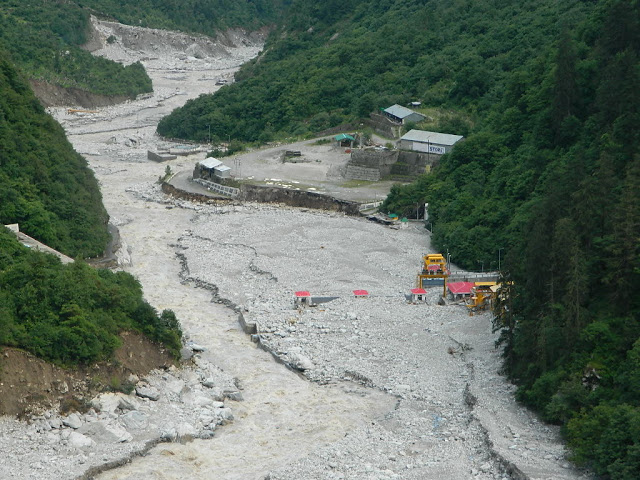
Above: 440 MW Vishnuprayag HEP post 2013 disaster in Uttarakhand. The project, its operation and location added significantly to disaster in the downstream. Photo: Matu JanSangathan

Post by- Ritwick Dutta, Lawyers  Initiative For Forest and Environment,                                             Debi Goenka, Conservation Action Trust,                                                                                                         Manoj Mishra, Yamuna Jiye Abhiyan                                                                                                   & Himanshu Thakkar , South Asian Network for Dams, Rivers & People

Continue reading “The High Level Committee Report on Environmental Laws: A Recipe for Climate Disaster and Silencing People’s Voice”

Environment Impact Assessment · Environmental Laws · Expert Appraisal Committee · Himalayas · Hydropower · Ministry of Environment and Forests

National Green Tribunal’s Fourth Foundation Day: Why such a pro hydro bias?

The National Green Tribunal, NGT marked its 4th Foundation Day on 18 October 2014, with an impressive fanfare. A full day function was organized at the Plenary hall of the capital’s iconic Vigyan Bhawan. NGT in this short span has acquired a formidable reputation as a unique, vibrant, active institute with independent & unbiased mind and forthright, quick redressal of petitions that come to it.

The function in two separate sessions, one in the forenoon and the other in the afternoon (a Seminar) was attended by large number of government officials, judicial officers, advocates, law school students, NGT petitioners and office bearers and members of the NGT Bar association.

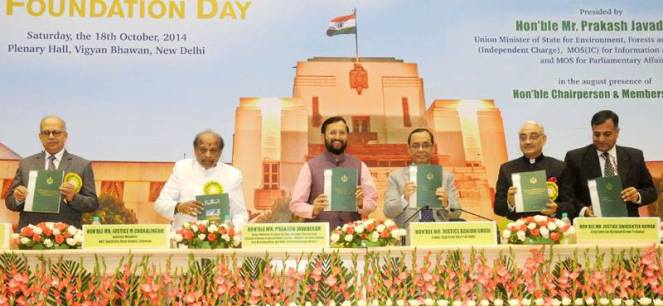
NGT  Foundation Function on Oct 18, 2014 (Source: FB page of Information and Broadcasting Ministry)
NGT Foundation Function on Oct 18, 2014 (Source: FB page of Information and Broadcasting Ministry)

Invited dignitaries included Mr Justice Ranjan Gogoi (Judge, Supreme Court), Prakash Javadekar (Union Minister of State for Environment, Forests and Climate Change) and Ashok Lavasa (Secretary, MoEF&CC) in the forenoon session and Mr Justice Sudhanshu Jyoti Mukhopadhaya (Judge, Supreme Court) and Piyush Goyal (Union Minister of state for Power, Coal and new and renewable energy). Mr Justice Swatanter Kumar, the Chairperson of the NGT, Mr Justice Dr. P. Jyothimani, Judicial Member, Principal Bench, NGT, Prof. R. Nagendra, and Dr. D.K. Agarwal, Expert Members at the NGT also spoke and graced the dais.

The function included, in addition to the addresses by the invited dignitaries, the release of 2nd issue of NGT International Journal; the launch of new NGT Website (in the first session) and address by invitee experts (in the second session).

In the first session Mr Javadekar informed the gathering about his political beginnings from a water pollution struggle activist against factory pollution and Mr Lavasa categorically stated that the NGT is playing an extremely crucial role and that there is no move to dilute its powers in any manner. It was in the second session that very controversially one Mr M.K. Pandit was invited to speak as an invited expert.

The Minister of State for Environment, Forests and Climate Change (I/C), Shri Prakash Javadekar lighting the lamp at the 4th Foundation Day function of the National Green Tribunal, in New Delhi on October 18, 2014. The Secretary, Environment, Forests and Climate Change, Shri Ashok Lavasa and the Judge, Supreme Court of India, Mr. Justice Ranjan Gogoi are also seen (Source: FB page of I&B Ministry)

Mr Pandit began with highlighting how recent and how fragile the Himalayas were and that a 8+ richter scale earthquake in central Himalayas was round the corner that could flatten Dehradun. Very soon in his almost 25 minute speech changed track as if on a cue to how great the hydropower dam projects in the Himalayas were for the power security of the country. The Union Power Minister had by then just joined the function to nod in full agreement with all that the Mr Pandit was narrating. The audience on the other hand was left perplexed as to what was happening?

An invited speaker was eulogizing the great merits of high dams receiving approving glances from the power minister on an NGT seminar whose topic was “Natural Disasters, Environment & Role of NGT with special reference to Uttarakhand, J&K, Assam & Himachal Pradesh”. Clearly something was amiss, somewhere?

Secondly, Mr Pandit is not a neutral expert, but an interested party. As leader of scores of pro hydro Environmental Impact Assessments that he has led as part of the CISMHE[1] team (Center for Inter-disciplinary studies of Mountain and Hill Environment) has earned them millions as they also continue to mint more money. Typical of Indian EIAs, no EIA done by CISMHE has ever raised any difficult questions for the developers. It has also never concluded that any of the projects is unviable. CISMHE EIAs are as shoddy, incomplete and inadequate as any other[2]. For example on Luhri HEP, the CISMHE EIA was so problematic that even the Ministry of Environment, Forests and Climate Change’s Expert Appraisal Committee on River Valley Projects and the World Bank found it inadequate and unreliable.

Interestingly, CISMHE website says: “Ministry of Power, Government of India established CISMHE as an R&D Centre in power studies in environment in recognition of its excellent past performance”. This means that there is also conflict of interest here in CISMHE doing EIAs, since it has been set up as an R&D Centre by Ministry of Power, that is itself a promoter and developer of hydropower projects. No wonder, Mr Pandit said what the Power Minister wanted to hear and Power Minister made no efforts to hide his approval of what Mr Pandit was saying.

Very strangely, Mr Piyush Goyal claimed that Tehri dam was an example of good project in the Himalayas that saved Uttarakhand in the floods of June 2013. Mr Goyal should know that this claim had absolutely no basis and even an Expert Body appointed by the Supreme Court of India has shown, after listening to THDC, CWC and others that such a claim has no scientific foundation. Mr Pandit did try to support the unfounded contention of Mr Goyal, but the minister asked him to keep quite.

It became clearer, when a pointed question asked by Shri Manoj Misra of Yamuna Jiye Abhiyaan about what would have been the Tehri dam scenario if the Uttarakhand high rainfall event had occurred in the peak monsoon months of July, August or September and not on 16 June 2013 (as in fact happened in Sept 2010, when Tehri created a havoc in the downstream, damaging its own Koteshwar project[3]), when the dam was almost empty and only beginning to get filled, elicited an evasive response first by the Union Minister (we cannot have structures planned for every 365 days in a year). And later when Pandit ji tried to answer, he was asked to shut without him being able to even respond to the other two questions relating to how does he reconcile to the fact of  a high intensity earthquake visiting a region where he had been advocating the dams; why was USA (as also some other countries), the mecca of large Dams bringing many of its dams down?

In any case, Mr Maharaj Pandit was contradicting himself, because he said something totally different in his article in The Hindu soon after the Uttarakhand disaster of June 2013: “Most downstream damage in otherwise flood-free areas is caused by dams and barrages, which release large volumes of water to safeguard engineering structures. Dam operators often release more water during rains than the carrying capacity of downstream areas, causing floods… Hydropower policy must consider building fewer dams and prioritise those that have the least environmental and social costs. Independent and serious monitoring of the catchment area treatment plans proposed by Forest Departments with funds from hydropower companies needs to be carried out and reported to the Green Tribunal.” In fact then in June 2013, he was on TV channels almost every night, talking about how Himalayas have the highest dam density in the world and that is such a big invitation to disaster! But he seems ready to change his stand to please the minister or the hydro project developers.

It seems as if Mr Pandit had been invited to justify the building of dams in the Himalayas in front of a large gathering of impressionable judicial officials and young student minds. It is possible that it was also intended to influence the minds of NGT members (judicial and experts) and other persons from judiciary in the face of a number of proposed dams being challenged before the various NGT benches and courts.

If a proper seminar was indeed planned on such an important matter, then there should have been several speakers on wide range of perspectives and topics and not just one speaker with conflict of interest and a clear agenda? The only other technical speaker, Dr R. Nagendran, an expert member with NGT southern bench spoke sensibly on how unscientific management of sanitary projects in hilly regions lead to parallel “Faeco-microbial disaster” which is difficult to tackle.

Mr Ritwick Dutta, secretary of NGT bar association said that the information about Mr Pandit speaking from NGT platform was not available in public domain and it is not clear how he was selected as a speaker.

Such blatant pro hydro bias in an NGT foundation day meeting is certainly unwarranted and out of place for an NGT function. An NGT platform should not have been allowed to be used for such biased presentation. We hope the bias apparent in this aberration is just that, an aberration and does not run deeper, considering that some hydropower professionals have been appointed on NGT benches.

We hope that at least in future the NGT, a statutory judicial body, otherwise doing a great job for the protection of environment, would be more careful in not letting its platform get used by the vested interests. The formidable reputation that NGT has acquired with a lot of remarkable orders should not be allowed to be affected by this one incident. NGT indeed needs to be strengthened in every way and not weakened in any manner.

It would also help if the NGT were to distance itself from this biased episode.

Pushp Jain, EIA Research and Response Centre (http://www.ercindia.org/, Pushp Jain pushp@ercindia.org) & SANDRP (based on interviews with those who were present at the NGT foundation day meeting)

END NOTES

[1] http://www.cismhe.org/

[2] For example, see: https://sandrp.wordpress.com/2014/04/11/the-world-bank-drops-funding-usd-650-m-for-the-luhri-hydro-project-victory-for-the-sutlej-bachao-jan-sangharsh-samiti/, https://sandrp.wordpress.com/2014/07/09/pauk-heo-tato-i-hydropower-projects-cismes-shoddy-eias-seven-big-hydro-on-third-order-tributary-of-brahmaputra/, https://sandrp.wordpress.com/2014/10/06/manipulating-environment-forest-clearances-for-dibang-project-deja-vu-lshp-history-repeated-will-it-be-tragedy-or-comedy/

[3] For details, see: https://sandrp.wordpress.com/2013/06/28/uttarakhand-floods-truth-about-thdc-and-central-water-commissions-claims-about-tehri/ and https://sandrp.wordpress.com/2013/08/07/is-thdc-preparing-to-repeat-the-disaster-tehri-created-in-sept-2010/

[4] https://sandrp.wordpress.com/2014/04/29/report-of-expert-committee-on-uttarakhand-flood-disaster-role-of-heps-welcome-recommendations/

[5] http://www.greentribunal.gov.in/

[6] http://www.greentribunal.gov.in/Writereaddata/Downloads/circular7Oct14.pdf

[7] http://www.thehindu.com/opinion/op-ed/nature-avenges-its-exploitation/article4834480.ece

Environment Impact Assessment · Environmental Laws · Expert Appraisal Committee · Forest Advisory Committee · Ministry of Environment and Forests

Strengthen and not dilute Environment Laws: Submission to the MEF’s HLC to Review Environment Laws

Guest Blog by: Ritwick Dutta (ritwickdutta@gmail.com) Environmental Lawyer, Managing Trustee,

Legal Imitative for Forest and Environment, New Delhi

The review of Environmental Law is currently being undertaken by the High Level Committee (HLC) constituted by the Ministry of Environment, Forest and Climate Change. The task is huge and requires a much more detailed, comprehensive, real and effective consultative process than what is currently being done. The Committee is well within its right to say that such a task cannot be undertaken within such a limited and unrealistic time frame (2 months) and without the required expert composition.

The committee must give suggestions only on how to strengthen environmental law in India and not dilute environmental laws. Undermining environmental law is disastrous for the people, environment and even for economic development. It is pertinent to point out some events which have occurred in recent times which reflects on how the decisions on environment have had disastrous consequences both for the people and the economy.

Contrary to what is generally projected by the Industry Associations and a section of the press, environmental laws are not the cause of slow economic growth. Rather speedy and hasty approvals have been the cause of both environmental, social and economic loss and damage. It is imperative to focus on some facts which would be relevant.

  • The Ministry of Environment and Forest and its various expert committees never reject a project totally. Even if the approval is declined in one meeting it is presented in a subsequent meeting with minor modification. One can cite the recent case of Dibang Hydro Electric project in Arunachal Pradesh which was recommended for forest clearance despite being rejected twice by the Forest Advisory Committee.
  • An analysis of the approvals granted by the Regional Office of the MoEF based on recommendation of State Advisory group, the rate of approval is 78 Percent [See report of EIA Response Centre, study from January to April, 2014 at Annexure IIm, see the end of the blog]
  • The Expert Advisory Committee (EAC) constituted under the EIA Notification 2006 undertakes the task of appraisal at remarkable speed and hasty manner. It is worth quoting from the Judgments of Courts and Tribunals on the manner in which appraisal is done by the Expert Committees.

A. Samata Versus Union of India [National Green Tribunal , Appeal No 9 of 2011,] [Thermal Power Plant in Andhra Pradesh]

‘For a huge project as the one in the instant case, a thermal power plant with an estimated cost of Rs. 11,838 crore, covering a total area of 1675 acres of land, the consideration for approval has been done in such a cursory and arbitrary manner even without taking note of the implication and importance of environmental issues. On the same day the EAC took for appraisal not only the thermal power plant in question, but also other projects which would be indicative of the haste and speedy exercise of its function of appraisal of the project.

B. Utkarsh Mandal Versus Union of India[1]

“As regards the functioning of the EAC, from the response of the MoEF to the RTI application referred to hereinbefore, it appears that the EAC granted as many as 410 mining approvals in the first six months of 2009. This is indeed a very large number of approvals in a fairly short time. We were informed that the EAC usually takes up the applications seeking environmental clearance in bulk and several projects are given clearance in one day. This comes across as an unsatisfactory state of affairs. The unseemly rush to grant environmental clearances for several mining projects in a single day should not be at the cost of environment itself. The spirit of the EAC has to be respected. We do not see how more than five applications for EIA clearance can be taken up for consideration at a single meeting of the EAC. This is another matter which deserves serious consideration at the hands of MoEF.”

C. Gauraxa Hitraxa Pauchav Trust Vs Union of India [Appeal No 47 of 2012 of NGT] [Pipava port, Gujarat]

“The relevant observations in the EAC meeting reveal that the presentation made by the Project Proponent was accepted as “gospel truth””

D. Sreeranganathan K.P and ors Vs Union of India : [Appeal No 172 -174 of 2013] [Aranmula Airport, Kerala]

“The Tribunal is able to notice a thorough failure on the part of the EAC in performing its duty of proper consideration and evaluation of the project by making a detailed scrutiny before approving the same……The EAC is constituted consisting of a Chairman and number of members who are experts from different fields only with the sole objective of national interest in order to ensure establishment of new projects or expansion of already existing activity without affecting the ecological and environmental conditions. Thus, a duty is cast upon the EAC or SEAC as the case may be to apply the cardinal and Principle of Sustainable Development and Principle of Precaution while screening, scoping and appraisal of the projects or activities. While so, it is evident in the instant case that the EAC has miserably failed in the performance of its duty not only as mandated by the EIA Notification, 2006, but has also disappointed the legal expectations from the same.

The above list is only illustrative and there are many other judgments reflecting the situation with respect to haste with which approvals are granted.

While undertaking any review the Committee must keep into account the following facts, issues and ground realities.

  1. India’s Environmental law are a result of people’s struggle, international convention, commitments and judicial pronouncements and is aimed at ensuring sustainable development. Most provisions of the India’s environmental law have been an outcome of International Conventions pursuant to Article 253 of the Constitution eg, the Public Hearings and Environment Impact Assessment became part of India’s legal framework pursuant to the Rio Declaration of 1992 and the National Green Tribunal was set up pursuant to India’s committment to Principle 10 of the Rio Declaration.
  1. ‘Principle on Non-Regression’ has to be applied while undertaking review.

The principle of non-regression is understood as the requirement that norms which have already been adopted by states may not be revised in ways which would imply going backwards on the previous standard of protection.[2] This principle has been traditionally recognized in the area of human rights – that is, once a human right is recognised it cannot be restrained, destroyed or repealed. This theme is echoed in almost all the major international instruments on human rights, including the Universal Declaration of Human Rights. [3] Environmental rights are closely related to human rights as well, including cultural and social rights, and can be interpreted to apply in the context of environmental protection as well. In addition, the principle is increasingly being invoked in the context of environmental protection. The European Union has adopted this view through a resolution: [4]

97. Calls for the recognition of the principle of non-regression in the context of environmental protection as well as fundamental rights.

The Resolution of the UN General Assembly as the outcome document of the Rio+20 United Nations Conference on Sustainable Development reflects the acceptance of this principle as well:[5]

20. We acknowledge that since 1992 there have been areas of insufficient progress and setbacks in the integration of the three dimensions of sustainable development, aggravated by multiple financial, economic, food and energy crises, which have threatened the ability of all countries, in particular developing countries, to achieve sustainable development. In this regard, it is critical that we do not backtrack from our commitment to the outcome of the United Nations Conference on Environment and Development. We also recognize that one of the current major challenges for all countries, particularly for developing countries, is the impact from the multiple crises affecting the world today.

Therefore, the principle of non-regression applies as a human and fundamental right, as well as under the principles of environmental law – like “sustainable development” and precautionary principle”.

  1. The concept of Sustainable Development has to be comprehensively understood and cannot be equated only with economic growth. The Rio Declaration of 1992 has to be comprehensively understood and read not in isolation but as a whole. Public hearings (Principle 10), EIA (Principle 17) Precautionary Principle (Principle 15), Compensation and liability regime (Principle 13) are the core of Sustainable Development and have been incorporated as part of national law. The aim should be to further include these in various laws in a comprehensive manner. Rule of law, the right to participate effectively in matters which concerns one’s life.
  1. Expert Committees, Advisory Committees, Appellate Forums constituted of Bureaucrats do not inspire confidence. This Committee must recommend that any committee or appellate forums should not have any bureaucrats. The working of the National Environment Appellate Authority (NEAA) is a classic example of failure due to the fact that retired IAS and IFS officials were made vice chairman and member. The Delhi High Court in Vimal Bhai versus Union of India [CM No. 15895/2005 in W.P. (C) 17682/2005 has held:

“The list produced by the petitioners of appeals before the NEAA shows that most of the appeals disposed of thus far have in fact been dismissed, comprised as it is of retired bureaucrats, minus the Chairperson and Vice Chairperson. The NEAA is, therefore, at present neither an effective nor an independent mechanism for redressing the grievances of the public in relation to the environment clearances granted both either the State or the Central Government.”

Conclusion:

There is clearly a need to review environmental laws. Yet neither the objective and purpose is clear of the present exercise. The Environment (Protection) Act, 1986 has numerous notifications issued under it. It ranges from EIA Notification to rules regulating the use of Plastics and microorganisms. Will the present review cover all these? These are issues which needs clarity. In addition, the Committee has to genuinely interact with all concerned persons across the country. The present process cannot be called consultative at all.

India’s environment has already impacted negatively due to hasty decisions as evident from numerous decisions of the Courts, the least this HLC can do is not to prepare a hasty report based on limited one sided information and limited public interaction.

[Earlier Blog on HLC: https://sandrp.wordpress.com/2014/09/26/review-of-environment-laws-is-necessary-but-the-tsr-subramanian-hlc-lacks-credibility/]

Ritwick adds in post script: So far as ELMA is concerned, it is not even in a form that can be called as a Bill. The ELMA has many dangerous provisions and the sole aim is to manage the progressive provisions in all the other laws. ELMA gives overriding powers to the environmental authority to pass any direction. The thrust of ELMA is to ensure that those who approach the courts for redressal of their grievances face the threat of penalty.  I feel that one of the most problematic provisions of ELMA is the fact that it combines all clearances (CRZ, EC and FC) into one (Single window) with very limited scope for appeal. The Appeal will have to be filed within 30 days of approval and before a Board constituting of two serving or retired secretaries to the Government! The process without doubt was a hurried one.

I have recently got an RTI response stating that the HLC has not kept records of any of the public consultations which it undertook: Source: http://www.dnaindia.com/india/report-moef-has-no-minutes-of-30-panel-meetings-2053483

END NOTES:

[1] Delhi High Court, 2009 http://www.indiankanoon.org/doc/188721650 [Mining in Goa]

[2] The Future of Environmental Law – Emerging Issues and Opportunities, Issue Brief 3, United Nations Environment Programme (2012). Available at http://www.unep.org/delc/Portals/24151/IssueBriefTheme3.pdf

[3] Michel Prieur, “Non-regression in environmental law”, S.A.P.I.EN.S [Online], 5.2 (2012). Available at: http://sapiens.revues.org/1405

[4] Resolution on developing a common EU position ahead of the United Nations Conference on Sustainable Development (Rio+20). Document no. P7_TA-PROV(2011)0430. Available at: http://www.europarl.europa.eu/sides/getDoc.do?type=MOTION&reference=B7-2011-0522&format=XML&language=EN

[5] Resolution adopted by the UN General Assembly on 27 July, 2012. A/RES/66/288. Available at: http://www.un.org/ga/search/view_doc.asp?symbol=A/RES/66/288&Lang=E

ANNEXURE II

 State Advisory Groups (SAGs): Recommendations for Forest Clearance during January-April 2014

The Forest (Conservation) Rules, 2003 under the Forest (Conservation) Act 1980, provide that proposal involving forest land of more than forty hectare shall be sent by the State Government to the Secretary to the Government of India, Ministry of Environment and Forests (MoEF) while proposals involving forest land up to forty hectare shall be sent to the Chief Conservator of Forests or Conservator of Forests of the concerned Regional Office (RO) of the MoEF.

RO is empowered to scrutinize and sanction the proposals involving diversion of forest area up to 5 hectare.  In respect of proposals involving diversion of forest area above 5 hectare and up to 40 hectare and all proposals for regularization of encroachments and mining up to 40 hectare, the proposals are examined by the RO in consultation with State Advisory Group consisting the representatives of the State Government from the Revenue Department, Forest Department, Planning and /or Finance Department and concerned Department (User Agency).

State Advisory Groups (SAGs) are constituted by the Ministry of Environment & Forests, Government of India, under the Forest (Conservation) Act, 1980 for each State and Union Territory.

The view of the Advisory Group are recorded by the Head of the RO and along with the same, the proposals are sent to Ministry of Environment & Forests, Government of India, New Delhi for consideration and final decisions.

The meeting of the State Advisory Group (SAG) is normally held once in a month at concerned State Capital as per a pre-decided schedule for each State and Union Territory.

Agenda and minutes of SAG meetings are uploaded on the MoEF website.

In this report, we have analysed minutes of SAG meetings all over the country from January to April 2014. During the period, minutes of meetings in 10 states are available in public domain.

As per the information available on MoEF website, there were 16 meetings during this period of four months in which 541 ha area has been recommended for diversion. These meeting happened in Gujarat, Maharashtra, Madhya Pradesh, Uttarakhand, Andhra Pradesh, Karnataka, Kerala, Punjab, Tamil Nadu and Odisha. Gujarat leads with maximum diversion of 138 ha followed by Maharashtra with about 100 ha diversion.

It is interesting to note that Transmission Line is at top of the table taking maximum recommendation for diversion, 142 ha (26 %) closely followed by Roads with 138 ha (25 %). If we include Railways which takes 56 ha (11%), it is conspicuous that ‘linear intrusion projects’ are taking 62 per cent of the total recommended diversion.

The total number of projects considered by SAGs during the period was 41 of which 32 were recommended, i.e.78 per cent. It is alarming to note that not even one project was declined by SAG!