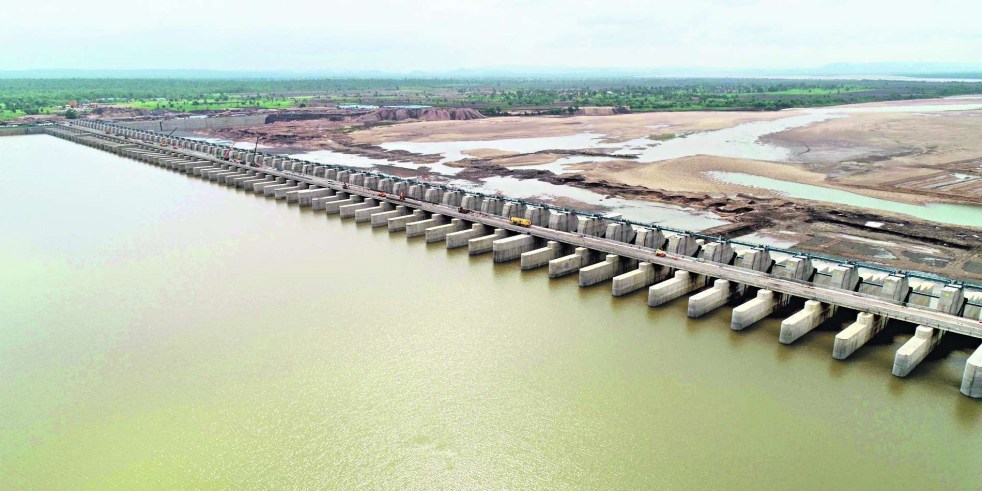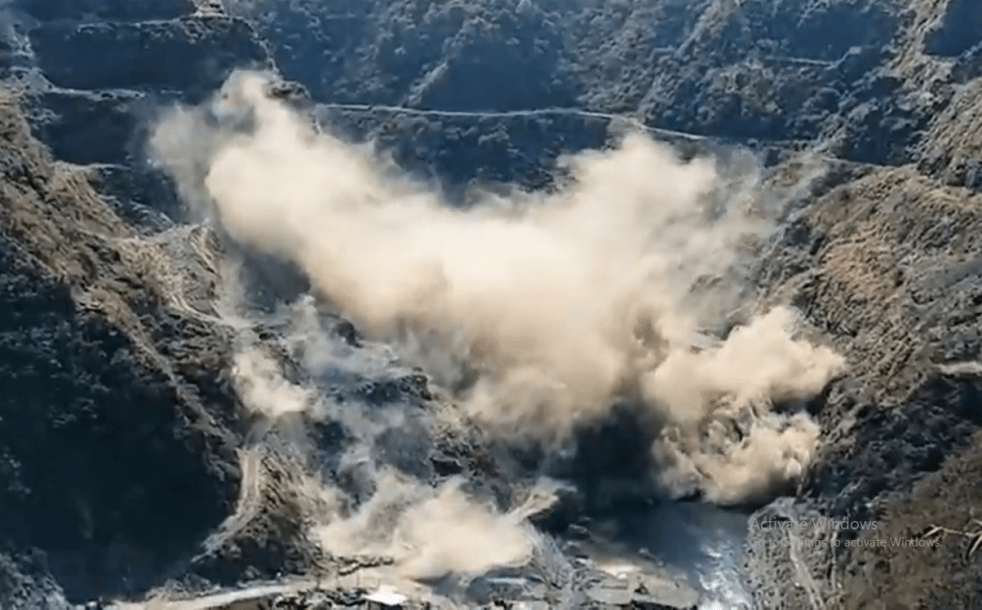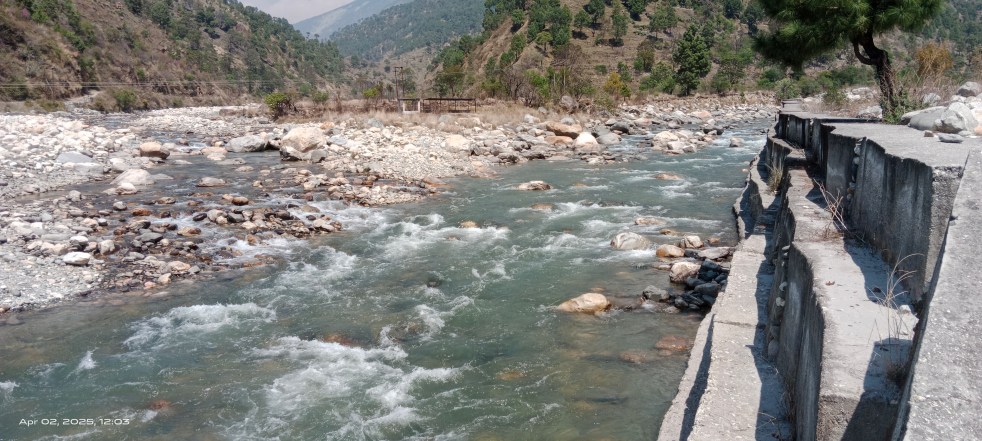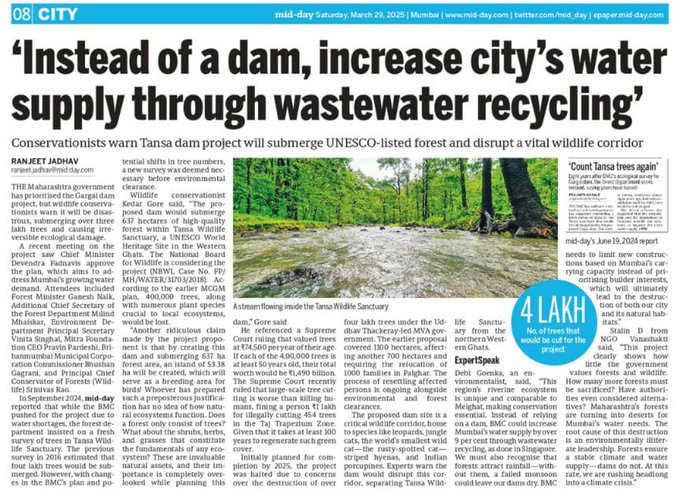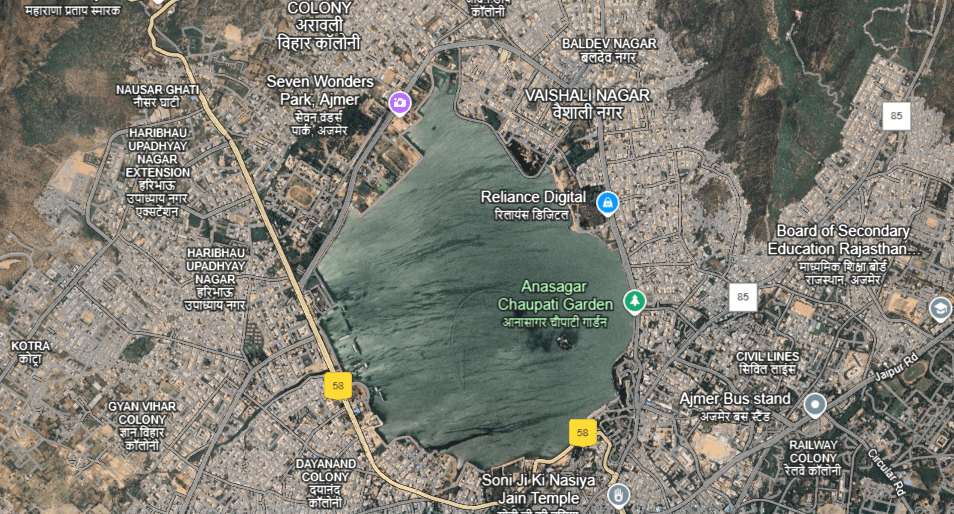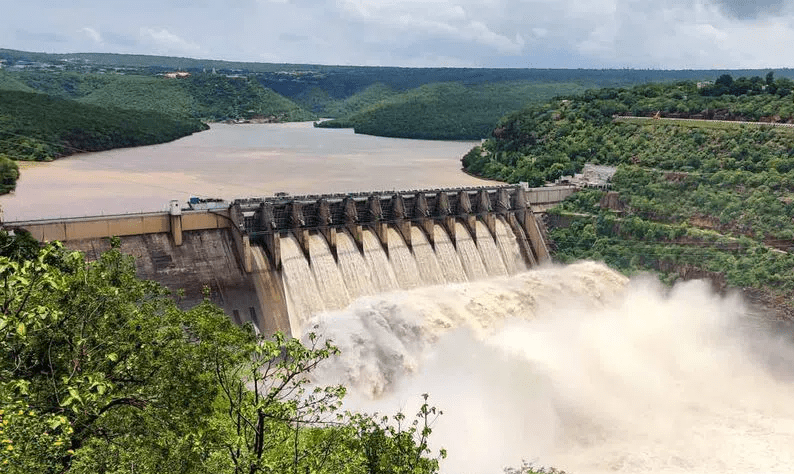
At a well-attended meeting at India International Centre in Delhi on Feb 20 2025, organised by VIDHI Centre for Legal Policy, a panel of speakers including Shri Shashi Shekhar (former secretary, Union Ministry of Water Resources) and Shri Jasbir Singh Chauhan (former Principle Chief Conservator of Forests, Madhya Pradesh) and Himanshu Thakkar of SANDRP, a number of fundamental questions were raised about the controversial Ken Betwa River Link Project. Unfortunately, no clear answers are forth coming from the authorities.
Continue reading “DRP NB 240225: Unanswered questions on Ken Betwa Project”Tag: MoJs
DRP NB 270125: India’s non-functional Sewage Treatment Plants
(Feature Image: 10 MLD Kundli CETP in Sonipat. BS Rawat/SANDRP/May 2023)
A detailed report in this week’s DRP News Bulletin below shows how India’s Sewage Treatment Plants (STPs), Govt’s main weapon against pollution of rivers in Urban areas, have been a failure for decades. It is pertinent to note that this is the golden jubilee year of Water Pollution Control Act of 1974, that led to the formation of Central, state Pollution Control Boards, and the whole water pollution control bureaucracy, institutions and legal architecture. There should be little doubt that whole architecture has abysmally failed in achieving basic objective for which it was created, including ensuring proper treatment of urban sewage.
India has spent thousands of crores of rupees on these STPs, mostly, mega, centralized projects. But there has been little effort to address governance of the STPs, to ensure that they function as required and provide the results that they have been set up for. Whether they function or not, qualitatively or quantitatively, year after year and decades after decades, there are no consequences! In fact, if treated properly, sewage can become a asset rather than nuisance that it now is. The Judiciary too, right up to the apex court, have badly failed in achieving any improvement in this eminently justiciable issue.
Continue reading “DRP NB 270125: India’s non-functional Sewage Treatment Plants”DRP NB 200125: Whither Env Clearance Rejection rate from Expert Appraisal Committee or MoEF?
A detailed review of functioning of Union Ministry of Environment and Forests’ (MoEF) Expert Appraisal Committee (EAC) on River Valley Projects (RVP) for 2024 by SANDRP shows that the committee or for that matter MoEF has almost non-existent rejection rate. Even when a project is not cleared, when it applies again, it gets clearance, whether the application if for stage I (Terms of Reference) or Stage II (Environment Clearance- EC) clearance. Even in some cases like Pump Storage Projects (PSP) in Western Ghats or the Hydropower projects in disaster prone Himalayas, including the disaster-stricken projects like the 1200 MW Teesta III projects in Sikkim, the scrutiny including field visits by the EAC Sub committees is minimal, not worthy calling even scrutiny.
Continue reading “DRP NB 200125: Whither Env Clearance Rejection rate from Expert Appraisal Committee or MoEF?”DRP NB 130125: Will Judiciary take these matters to logical conclusion?
There are at least four cases in this past week where the judiciary has used strong words or taken up crucial issues in water, dams, hydropower projects, wetlands and riverbed mining related issues. In the case related to the safety of Mullaperiyar dam on Kerala-TN border, the Supreme Court has prodded the Centre to wake up from the slumber to ensure that National Dam Safety Authority quickly forms a panel to examine the project. This case has wide ranging repercussions not only about this project, but also functioning of NDSA and other bodies under the Dam Safety Act 2021. Indeed, there is huge question mark as to what extent NDSA and DSA has made our dams any safer.
Continue reading “DRP NB 130125: Will Judiciary take these matters to logical conclusion?”DRP NB 060125: Concerns about & Contradictions in CGWB’s Reports
The Central Ground Water Board (CGWB) released two important reports last week. While the Annual Ground Water Quality Report 2024 reveals rise in nitrate fluoride, arsenic and uranium contimination of groundwater resource in India, the Dynamic Groundwater Resource Assessment Report 2024 claims substantial rise in annual groundwater recharge and decline in extraction of the resource.
As per the first report, the number of districts affected by high nitrate levels in groundwater has gone up to 440 (near 56% of all 779 districts in country) from 359 found in 2017 assessment which means in 7 years 81 more districts have been found having excessive nitrate levels in groundwater. This should concern us from a number of points of view.
Continue reading “DRP NB 060125: Concerns about & Contradictions in CGWB’s Reports”DRP NB 161224: Arunachal Pradesh needs dialogue on dams
(Feature Image: Resident in upper Siang protesting agaisnt SUMP on Dec. 15. Image source: Ebo Milli @Ebo_Mili_Linggi on X)
Hundreds of People of Siang, East Siang and Upper Siang Districts of Arunachal Pradesh came out in peaceful protests on Dec 14 2024. They opposed the govt effort to deploy armed central and state police forces for a pre-feasibility study for the 12500 MW hydropower project on Siang River, a tributary of Brahmaputra River.
Indeed, as remarkably articulate report by in Arunachal Times said, Siang needs dialogue not guns. In fact, the Chief Minister recently and even the Prime Minister and Union Home Minister had earlier promised to the people of the state that if they do not want big dams, such projects will not be taken without people’s consent as there were options for power and development.
Continue reading “DRP NB 161224: Arunachal Pradesh needs dialogue on dams”DRP NB 091224: “Kale Pani Da Morcha”: A Landmark people’s movement
(Feature Image: Women activists who were standing and displaying placards were detained by the Ludhiana police during the protest. Photo: By special arrangement/The Wire)
‘Kale Pani da Morcha”, the people’s movement against Pollution of Buddha Nallah, a tributary of Sutlej River in Ludhiana (Punjab) is a landmark movement in more than one sense. Firstly, while severe pollution of rivers is the usual story from across the country, a courageous people’s movement to address is the issue is such a rare event.
The fact that the industries association actually threatened this movement with a counter from the industries and their workers is shocking and shows the impunity of these industries. While the state government has to take quick action to address the issue, there is also a huge role for the central government, which has abjectly failed to perform its basic duty of providing credible governance of rivers, including their pollution in India. They including CPCB and MoEF know since decades that CETPs are completely failed model, and no worthwhile action has been taken to address the failure, including by the World Bank which has funded many of them. The filthy rivers all over India are violating the fundamental rights of millions of people, without any credible action even by the judiciary.
Continue reading “DRP NB 091224: “Kale Pani Da Morcha”: A Landmark people’s movement”Yamuna Manthan 051224: Native River Fish Species Facing Extinction
(Feature Image: A fish catch comprised mostly of invasive Tilapia species downstream Wazairabad barrage in Delhi in June 2023. Bhim Singh Rawat/SANDRP)
A recent CIFRI (Central Inland Fisheries Research Institute) report submitted to NGT is an eye-opening official document about the fish diversity in Yamuna. The report says that overall native fish species have declined sharply in the river not only in number but in size also due to habitat degradation, pollution and increasing presence of invasive fish species.
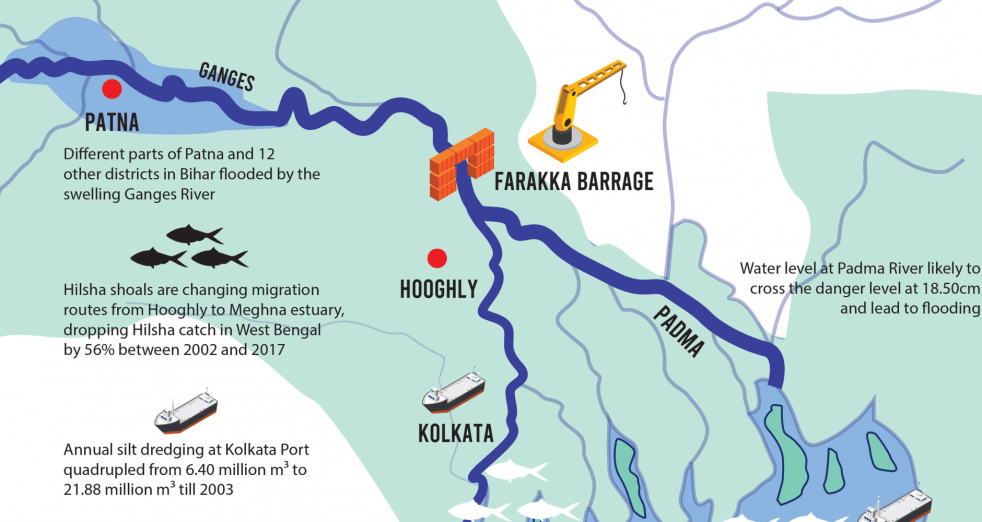
The report admits that construction of Farakka barrage has led to complete elimination of Hilsa fish in lower segment of river since 2010. Among other recommendations the report has suggested maintenance of continuous flows in the river and addressing sources of pollution.
Indeed, the freshwater fish species are key indicator of health of a river eco-system and the fish diversity in Yamuna has been pushed to brink by the water abstraction, unsustainable riverbed mining activities and ever-increasing pollution of river waters besides other factors.
Continue reading “Yamuna Manthan 051224: Native River Fish Species Facing Extinction”यमुना में पर्यावरणीय प्रवाह बढ़ाने के हों ठोस प्रयास
(Feature Image: Bone dry Yamuna riverbed at Mawi, Kairnana. (Image Bhim Singh Rawat, June 2010)
सर्दी शुरू होते ही दिल्ली में यमुना नदी में झाग की समस्या चरम पर पहुँच जाती है। इसी के साथ कई दिनों तक ओखला बैराज के नीचे नदी सतह पर तैरते ‘आइस बर्ग’ की भांति दिखने वाले झाग के बड़े-बड़े खंड लोगों के आकर्षण और मीडिया की सुर्ख़ियों का केंद्र बन जाते हैं। बढ़ते नदी प्रदुषण पर नागरिकों की बढ़ती चिंताओं और नदी प्रेमियों के बढ़ते सवालों के बीच राजनितिक दोषारोपण का दौर शुरू होता है। समस्या का फौरी निराकरण करते दिखने के प्रयास में संबंधित सरकारी विभाग आनन-फानन में कुछ आधे-अधूरे कदम उठाते हैं। त्यौहार और खास तौर पर छठ पर्व समाप्त होते ही, लोगों की नदी पर जाने वाले भीड़ कम हो जाती है और दो-तीन सप्ताह बाद सब यमुना नदी में बढ़ते प्रदुषण और झाग की समस्या को भूल जाते हैं। लगभग एक साल बाद फिर से यह क्रम दोहराया जाता है जब सर्दी के समय झाग के आगोश में लिपटी प्रदूषित यमुना, नागरिकों की उदासीनता और नदी सफाई योजनाओं की नाकामी को उजागर करती है।
Continue reading “यमुना में पर्यावरणीय प्रवाह बढ़ाने के हों ठोस प्रयास”DRP NB 190824: Goa River group win important battle against illegal sand mining
(Feature Image: Sand extraction in Mandovi river near Candola bridge. Image Credit: GRSPN)
This is indeed a rare and important victory by Goa River Sand Protectors’ Network (GRSPN) in their long fight against illegal river sand mining in Goa. Following a petition in the National Green Tribunal the state government has agreed to recall all the environment clearances granted by the State Environment Impact Assessment Authority.
Goa government has agreed since these clearances were given without a District Survey Report (DSR) as required under the sustainable sand mining guidelines of MoEF. While this may sound like a temporary respite based on some technical violation, the fact is most sand mining clearances across India are given without a credible DSR, but it has not been possible to stop such violations elsewhere.
Continue reading “DRP NB 190824: Goa River group win important battle against illegal sand mining”