Gujarat · Madhya Pradesh · Maharashtra · Narmada

Sardar Sarovar gate closure without resettlement or justification is a inhuman, unjust decision: Will SC intervene?

On June 17, 2017, a PIB Press Release from Union Ministry of Water Resources announced, “Narmada Control Authority (NCA) has cleared the final raising of Sardar Sarovar Dam (SSD) in Gujarat by lowering of gates and impounding of water in the reservoir upto its Full Reservoir Level (FRL) of EL 138.68 mts. The NCA which met here yesterday under the Chairmanship of Dr. Amarjit Singh, Secretary (WR, RD & GR) considered all aspects of environmental and Resettlement and Rehabilitation (R&R) issues.”

The gate closure will lead to submergence and displacement of lakhs of tribals and farmers of Gujarat, Madhya Pradesh and Maharashtra, without even proper resettlement as legally required. There is also no justification for the decision as the canal infrastructure necessary to use the additional water that the dam will store with increase in height from 121.92 mts to 138.68 mts is not even ready. Continue reading “Sardar Sarovar gate closure without resettlement or justification is a inhuman, unjust decision: Will SC intervene?”

Andhra Pradesh · Dams · Karnataka · Maharashtra · Telangana

STOP DIVERSION OF WATER FROM DROUGHT HIT KRISHNA BASIN

Release water from Koyna & Tata dams to drought hit Karnataka, Telangana & Andhra Pradesh

Large parts of South India, including parts of Karnataka, Andhra Pradesh and Telangana are facing unprecedented drought and water scarcity. However, Maharashtra is sending OUT billions of liters of water FROM drought hit Krishna basin to High Rainfall Konkan region to flow to the sea. Continue reading “STOP DIVERSION OF WATER FROM DROUGHT HIT KRISHNA BASIN”

Maharashtra

Wainganga River: Threatened lifeline of Vidarbha’s Forests

Above: Wainganga River, downstream of Gosikhurd reservoir (Photo by AJT Johnsingh on 09/03/17)

The valley of Wainganga River has served as a backdrop for Rudyard Kipling’s Jungle book. East Vidarbha region of Maharashtra hosts major part of this lush green landscape which is ecologically one of the most significant regions of India. More than 50% of forest of Maharashtra State falls in this region. Government of Maharashtra (GoM) however is doing little on its part to protect these. Perceiving them as ‘hurdles’ GoM is pushing more and more unfeasible dam projects in this region in the name of irrigation. Water for rivers, biodiversity, wildlife has taken a backseat in the growing claims on Wainganga waters. If these projects come up health of Wainganga basin will be further seriously jeopardized.

This is an attempt to put together Maharashtra specific profile of Wainganga River. Continue reading “Wainganga River: Threatened lifeline of Vidarbha’s Forests”

Groundwater · Maharashtra

Maharashtra Farm Ponds: accelerating groundwater exploitation, rather than harvesting rain?

Farm ponds dotting the agricultural fields immediately grab your attention as you enter Hiwargaon Pawasa – a small village of about 1500 population in Sangamner Taluka of Ahmadnagar District. The village is located just off NH-50, the national highway connecting Pune and Nashik. Farm ponds start to appear as soon as you turn east from NH-50 (which broadly runs North South) to head towards Hiwargaon. Nearly every farm, small or big, has a plastic lined farm pond. Hiwargaon Pawasa village alone has some 300 odd farm ponds.

I am here to see how these small scale irrigation facilities now set to be implemented on massive scale through the country are performing on ground. Continue reading “Maharashtra Farm Ponds: accelerating groundwater exploitation, rather than harvesting rain?”

Dams · Maharashtra · Rivers

Maharashtra Urban water sector in 2016: Big cities eyeing big dams

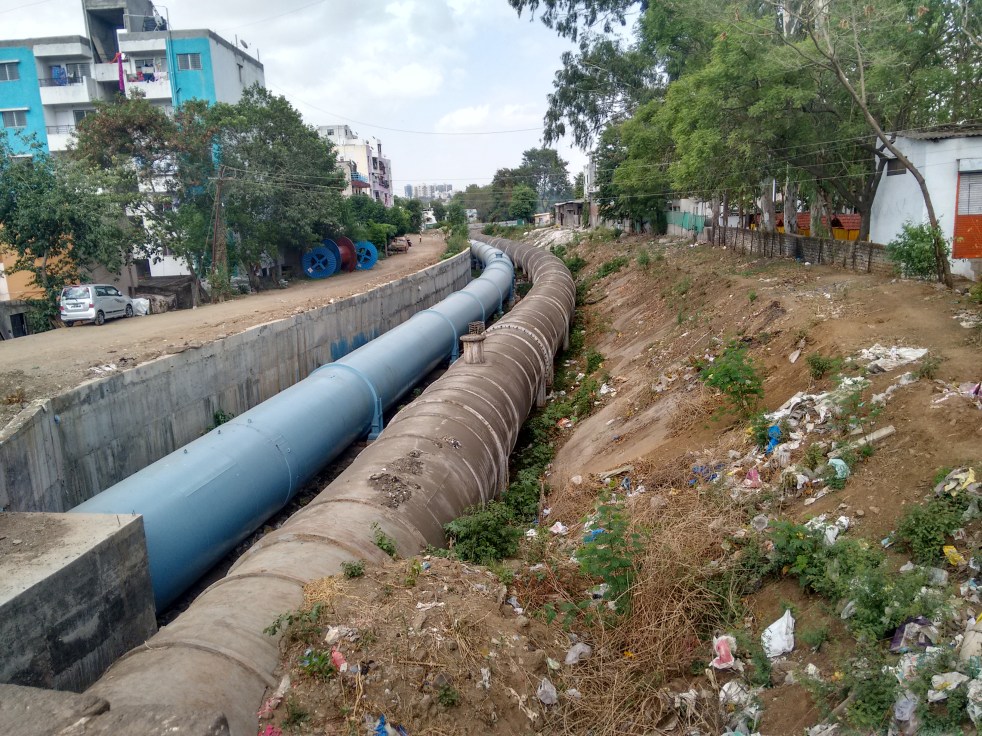
Above: Pipelines which supply water to Pune City from Khadakwasla Dam (Photo: Amruta Pradhan, SANDRP)

Urban narrative of Maharashtra revolves predominantly around cities of Mumbai (along with the Mumbai Metropolitan Region i.e. MMR), Pune, Nagpur and Nashik. Dominance of these large urban centres or the big cities over raw water sources is apparent. These cities have per capita water supply much more than the prescribed norms and continue to seek more water allocations. As Maharashtra gears up to fund more and more dams tapping finances from different sources, big cities with growing footprint of water consumption are all set to claim more water from these dams. Continue reading “Maharashtra Urban water sector in 2016: Big cities eyeing big dams”

Dams · Krishna River · Maharashtra · Rivers

Krishna River in Maharashtra: A Profile

Above: Menawali Ghat at Wai, Satara Dist (Photo: Sanket Deshpande)

The mighty Krishna River bears the name of Lord Krishna; the beloved dark and dusky lord worshipped throughout the country. Originating but a few kilometers from Arabian Sea, the river has chosen to flow towards Bay of Bengal becoming a lifeline of four states viz. Maharashtra, Karnataka, Telangana and Andhra Pradesh. In its journey of thousands of kilometers and thousands of years, the river witnesses an amazing diversity in language, lifestyle, food and culture.

Maharashtra is blessed to be an upper riparian state in the Krishna Basin. Sahyadri ranges of Western Ghats falling in Maharashtra are abode to early flows of Krishna River. In Maharashtra the river is perceived in a feminine form called ‘Krishna Mai’ meaning ‘Mother Krishna’. The River Krishna is one of the important rivers flowing through Maharashtra and has a tremendous religious and cultural significance. Agriculture and economy of districts like Satara, Sangli and Kolhapur thrive on Krishna mainstream.

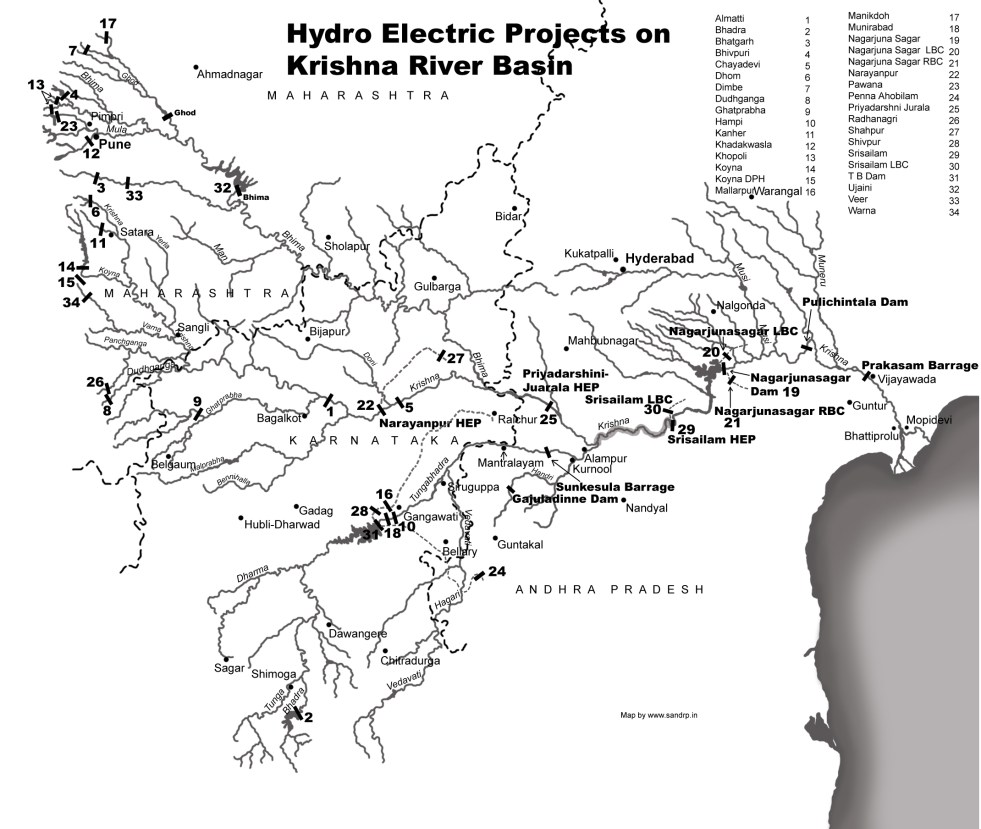
Here we make an attempt to provide glimpse of Krishna River within Maharashtra. The article is based on Maharashtra specific river profiles that SANDRP has prepared for India Rivers Week 2016. Continue reading “Krishna River in Maharashtra: A Profile”

Indian Meteorological Department

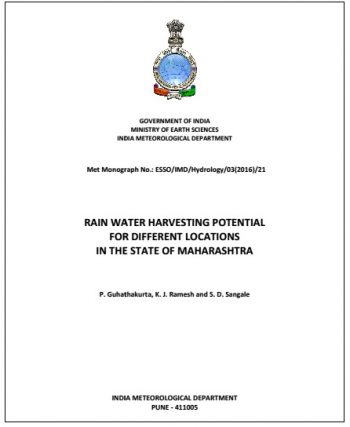
IMD estimates rainwater harvesting potential of Maharashtra

India Meteorological Department of Pune (IMD) functioning under Ministry of Earth Sciences has recently (Nov 2016) published a study titled “Rain water harvesting potential for different locations in state of Maharashtra”.[i] The study was undertaken to assess the potential of roof top rain water harvesting based on mean annual rainfall. The need for the study was prompted by requests from a number of NGOs for information on how much rain can be harvested in Maharashtra during a good rainfall.[ii] The study basically estimates volume of rainwater (in liters) that could be harvested per sqft of roof area at 326 locations across Maharashtra where IMD stations are located.

Though this study is an important step, there are a number of ways in which such a study, which IMD plans to eventually conduct for other states as well, can be improved, in addition to a number of limitations that the study has, as elaborated subsequently. Continue reading “IMD estimates rainwater harvesting potential of Maharashtra”

Dams · DRP News Bulletin

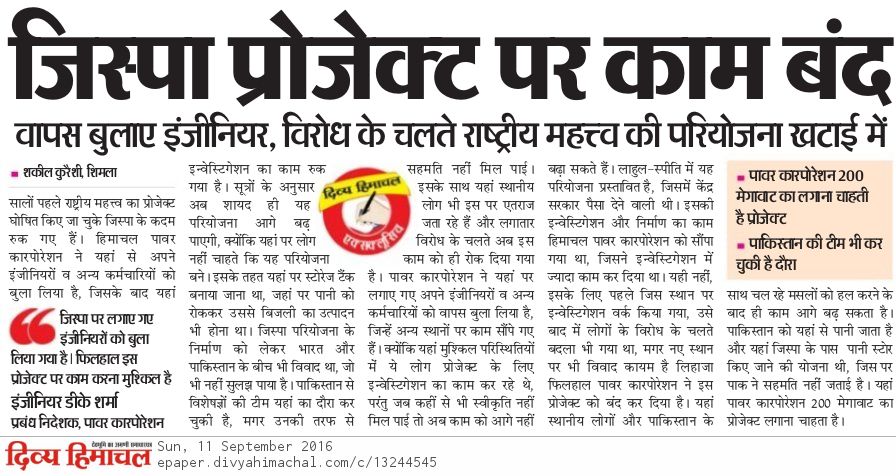
DRP News Bulletin 26 Sep 2016 (Victory to tribals protest; Jispa HEP calls back staff)

Finally, tribals struggle wins, sends Jispa HEP company packing up Facing stiff opposition from the tribal community against the construction of 300 MW Jispa Dam in Lahaul-Spiti valley has forced the Himachal Pradesh Power Corportaion Ltd (HPPCL) to suspend the project for the time being. The dam which was declared a project of national importance now has residents from 14 villages oppose it. HPPCL has invested Rs 3 crore and has stated that it would begin study work only when locals extend their support.

Since 2009, people from the Todh valley in Lahaul-Spiti district were opposing the Jispa Dam project proposed over Bhaga river, a tributarJy of Chenab at Jispa village. The government had sanctioned Rs 7,000 crore for this project but local residents did not allow officials to work in smoothly for three years now.

Confirming the development, managing director, HPPCL, D K Sharma told that some people were continuously opposing the project without realizing that construction of project could have ushered development in the area. He said constant opposition of local people had resulted into wastage of limited human resource so HPPCL board had decided to withdraw the manpower as project was only at investigation stage.

Continue reading “DRP News Bulletin 26 Sep 2016 (Victory to tribals protest; Jispa HEP calls back staff)”

Dams

Celebrating our Rivers on the World Rivers Day, 2016!

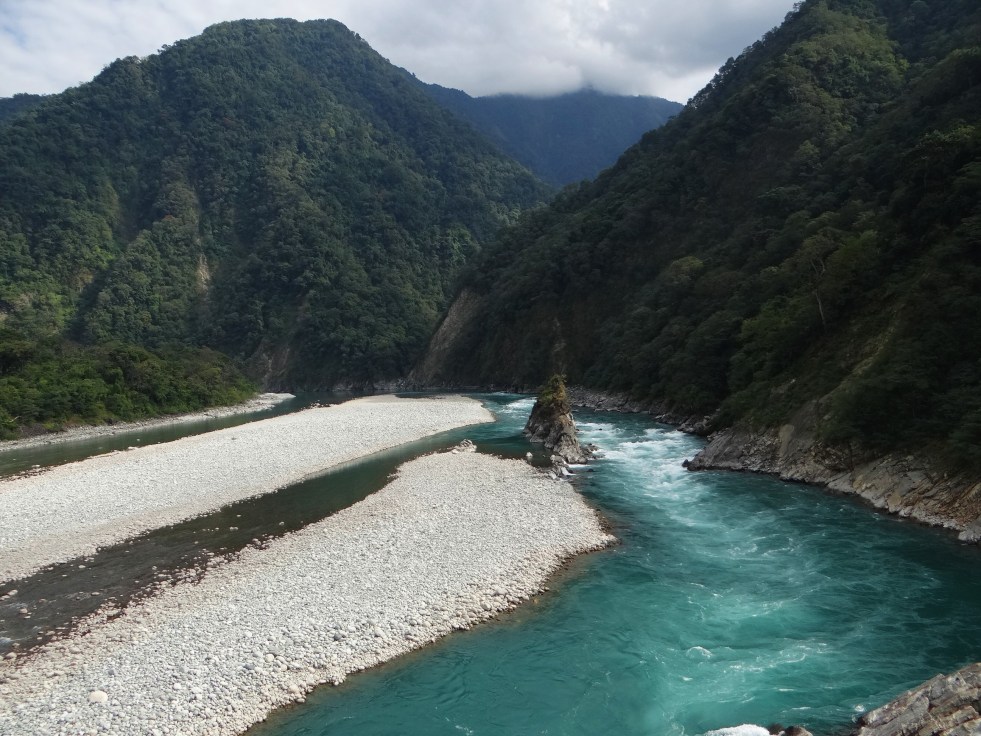
Above: Parshuram Kund on River Lohit, Arunachal Pradesh

Since 2005, last Sunday of every September is celebrated as the World Rivers Day. The tradition started in 1980s in British Columbia when some river activists came together for their rivers. Its only grown since then.

All through the year we hear about water conflicts, river pollution, degrading freshwater biodiversity, damming of living rivers, mismanagment, concretisation and encroachment on Indian Rivers. As I write this, Cauvery Water Conflict and simmering, serious discontent over the Indus Water Treaty governing 6 rivers between India and Pakistan is mounting. A simple google search on Indian Rivers throws up images of filth, pollution, droughts and floods. Lest we forget, thats not the whole picture. We are still the custodians of an amazing legacy. India still holds some of the most beautiful, healthy and life giving rivers in the world. There are people and communities nurturing their rivers and protecting them. All is not lost and this is a battle worth fighting, full of positive energy. Continue reading “Celebrating our Rivers on the World Rivers Day, 2016!”

Maharashtra

Sinchan Shodh Yatra finds Gosikhurd Right Bank Canal incomplete even after a decade of construction

Above: Irrigation official confronting the angry farmer from Asolamendha village in Chandrapur District of Maharashtra Photo: Amruta Pradhan

“Farmers are dying… but your procedures have to be complete…”

Sight of an angry farmer saying this to an irrigation official has stayed with me long after I returned from visit to Gosikhurd Right Bank Canal (RBC). More often than not, I, like many others have read and written about mighty Gosikhurd- that multi thousand crore irrigation project languishing incomplete for last 32 years. I was now seeing personification of the havoc wrecked by this poorly planned and even more poorly implemented project.

I was at the Asolamendha dam, tail end of Gosikhurd RBC. 30-40 farmers from nearby villages suffering because of the shoddy work of RBC had gathered with complaints at tip of their tongue. Nature of complaints was serious. This incomplete canal running a total length of 99.53 km from Gosikhurd Dam in Pauni Tehsil of Bhandara District to Asolamendha Dam in Nagbhid tehsil of Chandrapur District has not only failed to provide irrigation  but is also destroying the catchment of the local water sources.

I was visiting Gosikhurd RBC as a part of Sinchan Shodh Yatra- a series of fact finding tours started since May 2015 by Jan Manch– a voluntary organization from Nagpur to uncover the shocking ground reality of corruption laden incomplete irrigation projects of Vidarbha region. The yatra that has visited 18 projects so far is being joined by more and more farmers who have suffered due to the poorly implemented, half done irrigation projects. It is becoming a platform for affected people to raise their voices and slowly emerging as a pressure group on irrigation officials. (Read more about Sinchan Shodh Yatra at https://sandrp.wordpress.com/2016/09/06/public-audits-of-corruption-ridden-irrigation-projects-in-vidarbha-sinchan-shodh-yatra/#more-15917)

Shodh yatra consisting of about 70 people had taken an inspection tour of Gosikhurd RBC which was proposed to irrigate command area of 64,362 Ha but has been incomplete since last decade. During its journey of 50 km length of RBC (from 45 km from Gosikhurd dam to Asolamendha) Shodh yatra witnessed stalled work of the main canal which has not resumed for past more than three years, farmers agitating over host of issues from incomplete branch canals to crop damage caused by breach of canals and irrigation officials offering more and more excuses. Continue reading “Sinchan Shodh Yatra finds Gosikhurd Right Bank Canal incomplete even after a decade of construction”