
The recently concluded World Fisheries Congress in Seattle in March 2024[i] discussed several themes relating to the health of our rivers, dependent communities and fish. Of the several interesting sessions, Symposium on ‘Dam Removal as a River Restoration Tool at the Water-Energy-Food Nexus’[ii] was of particular interest. I was simultaneously at two parallel sessions and was unable to attend some of the presentations but have tried to provide an overview of the Symposium, including a talk by SANDRP.
Continue reading “Dam Removal as a River Restoration Tool: World Fisheries Congress 2024”Tag: Loktak
WWD 2024: Top Ten Ramsar Wetland stories from India: Participatory Decision Making needed but totally absent
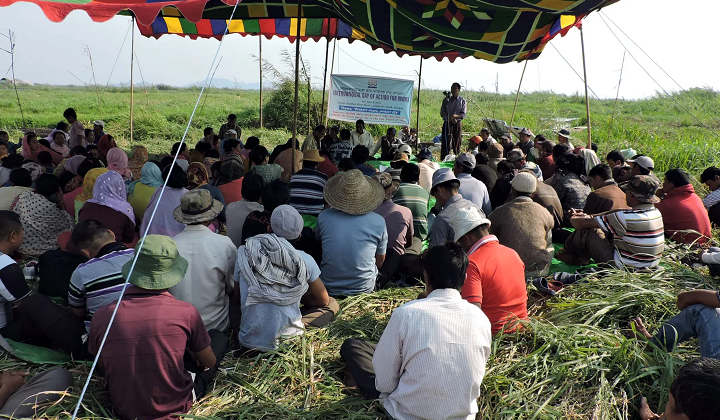
(Feature Image: Loktak fishers holding meeting at Champu Khangpok floating island village. Photo Credit: Vikalp Sangam)
World Wetland Day (WWD) is celebrated on February 2 annually to signify the environmental as well as socio-economic services and benefits provided by the wetlands both natural and man-made water bodies including rivers, lakes, ponds, reservoirs, swamps, marshlands deltas, coral reefs and mangroves. The theme of WWD 2024 is ‘Wetlands and Human Wellbeing’.
Ramsar Wetlands Convention selects Wetlands of International Importance, basically depending on nominations of the respective national governments and includes them under what is also known as the Ramsar List. However, it is not clear what exactly the Ramsar does for the protection of such designated wetlands. There are currently 75 Ramsar wetlands in India. In fact, the Ramsar sites have seen nearly a three-fold rise in the country in the past eight years decade (26 in 2014 to 75 in 2022). The complete list of 75 Ramsar wetlands in India can be seen here. The state of large number of these designated Ramsar Wetlands is pretty sad for years and decades and deteriorating, but it is not known if Ramsar convention is doing anything in this regard.
Continue reading “WWD 2024: Top Ten Ramsar Wetland stories from India: Participatory Decision Making needed but totally absent”
Why are we still building Large Dams?
Analysis of official information shows that Big dams are not longer necessary or viable or optimal in India. Most (over 95% of India’s 5701 large dams (5264 completed and 437 under construction as per CWC’s National Register of Large Dams[i]) are built for irrigation, but most of our irrigation now comes from groundwater. In fact, about 90% of additional irrigation in last four decades has come from groundwater.
Continue reading “Why are we still building Large Dams?”
DRP: 28 Oct 2019: Growing opposition to Large Hydro Projects
As can be seen from the news reports from Jammu & Kashmir, Assam, Arunchal Pradesh, Karnataka, among others, the opposition to Large Hydro Projects and Big Dam is growing all over India. These projects are neither economically viable, nor Socially-environmentally sustainable. There are much better options exist and hope the governments takes informed, democratic decisions. Going by the agenda and minutes of the recent Expert Appraisal Committee on River Valley Projects and other decisions, this hope seems far fetched at the moment.
Continue reading “DRP: 28 Oct 2019: Growing opposition to Large Hydro Projects”
Wetlands Review 2019: East & North East India
ODISHA
HC asked govt to start demolishing illegal prawn gheries in wetlands In a remarkable order the Odisha High Court on Jan. 21, 2019 directed the govt to start the demolition process of illegal prawn farms in Bhitarkanika National Park and the Chilika Lake under the supervision of the committee formed for the purpose. The high court has set March 18 as the date for taking stock of the work. It has also directed the govt to lodge criminal proceedings against the offenders.
The Supreme Court had on April 3, 2017, asked the chief justice of high courts in 15 states to take up the issue of conservation of important wetlands. Of the 26 major wetlands in 15 states, two are in Odisha. The high court had taken up the issue by suo motu registering a PIL in Sept 2017 for restoration of two wetlands – Bhitarkanika in Kendrapada district and the Chilika Lake, encompassing areas in Puri, Ganjam and Khurda districts.
Continue reading “Wetlands Review 2019: East & North East India”
Fighting Destructive Dams: Lessons from the masters
Guest Article by Chicu Lokgariwar
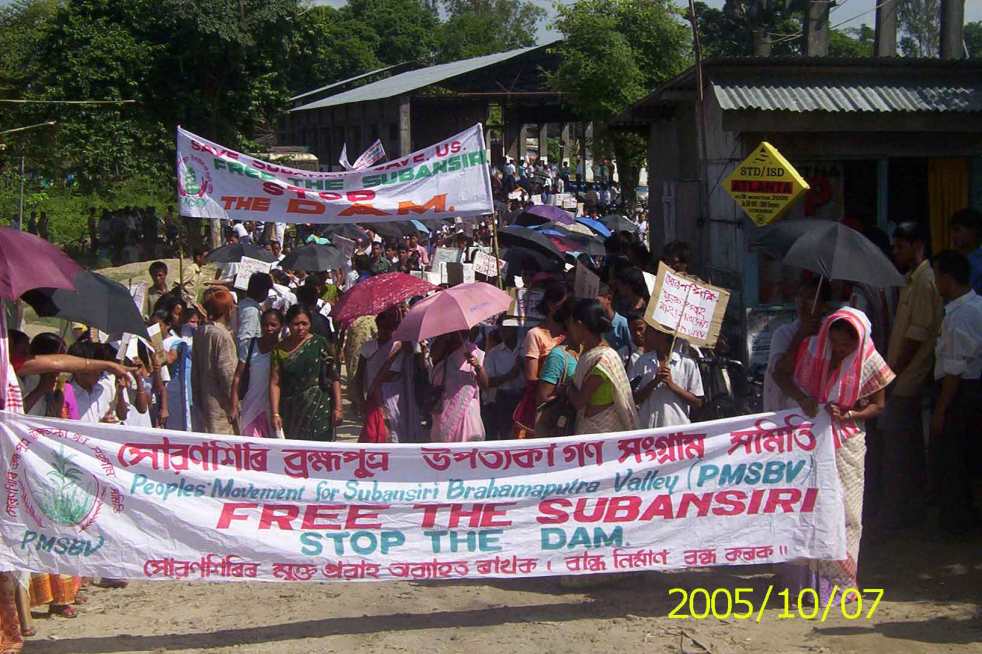
“Everybody loves us Lepchas” said Tseten. He went on to explain that this affection was important to the Affected Citizens of Teesta and was a major reason that the group decided never to add violence[i] to their arsenal of techniques in their fight to save the Teesta.
The idea of non-violence being a strategic decision rather than a (purely) moral one intrigued me. I was at a meeting where several anti-dam activists from the North-Eastern states were present. As I listened to their stories, it was clear that these veterans had several lessons for those of us worried about the death of their rivers today. Each of the groups that had been compelled to fight for their rights had evolved strategies and developed tools to help them.
Sadly, the struggle against ‘development’ projects that adversely impact the lives and livelihoods of people, as well as cause irretrievable harm to the environment, continues in many places across the world. Rather than reinventing the wheel, it will be useful for young activist groups to have access to the lessons learnt by those who have preceded them. Continue reading “Fighting Destructive Dams: Lessons from the masters”

DRP: 8 Oct 2018: “WELCOME CHANGE! Kerala Depletes Reservoir in Anticipation of Deluge from Cyclone”
In spite of all the protests against criticism of Floods worsened by Dams in Kerala in Aug, its refreshing that Kerala now accepts needs for better operation of dams with IMD red alert in three districts:
– Senior officers expressed confidence that the dams can contain the flood waters even if it rains continuously for four days. Better late than never, commented experts on the Kerala State Electricity Board’s (KSEB) decision to keep the water level low. “We’re prepared to face any eventuality. There won’t be any need to open the dam shutters even if it rains continuously for four days. We’re maintaining the water level low in major dams. The water level in Mattupatty dam is close to the full reservoir level and we’ve decided to release water from Thursday. The situation is under control and there’s no need to panic,” said KSEB chairman N S Pillai.
Continue reading “DRP: 8 Oct 2018: “WELCOME CHANGE! Kerala Depletes Reservoir in Anticipation of Deluge from Cyclone”” SANDRP