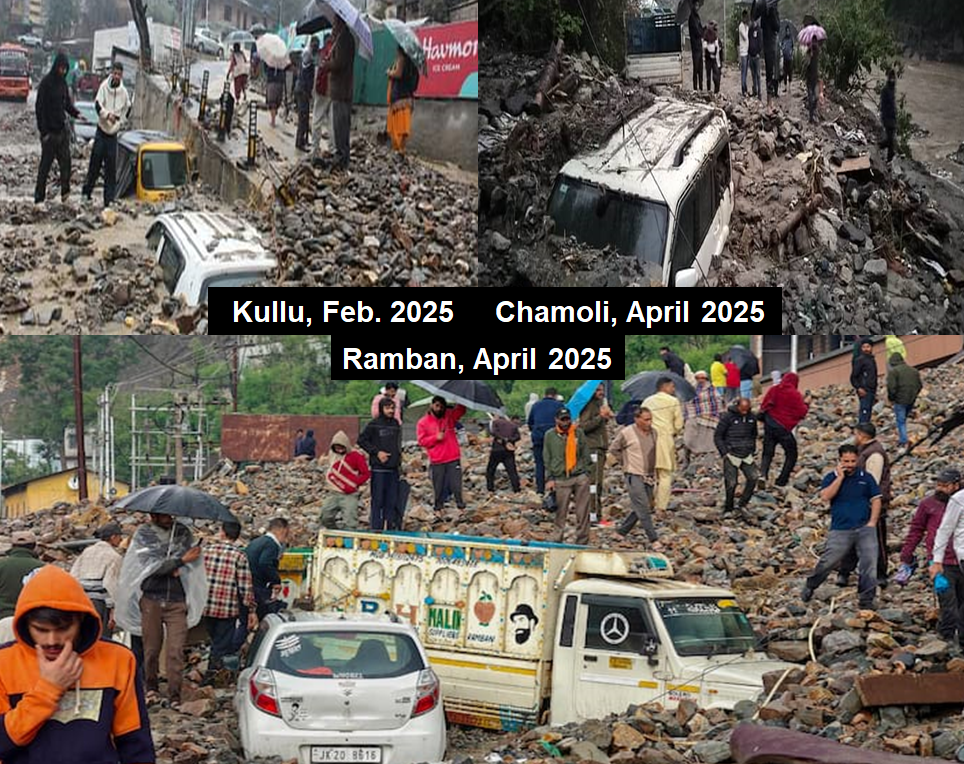
The rising numbers and intensity of western disturbances (WDs) in pre-monsoon months are causing excessive but short rainfall spells across the country particularly in the Himalayan states. These events are then resulting in sudden flash floods and taking a huge toll on human life and public infrastructure. However, the specific monitoring and warning services for such disasters by the Central Water Commission (CWC) & Indian Meteorological Department (IMD) are largely unavailable as these agencies are mainly forecasting floods during the monsoon.
Continue reading “CWC, IMD Need to Improve Extreme Weather Forecast Services”Tag: Landslide
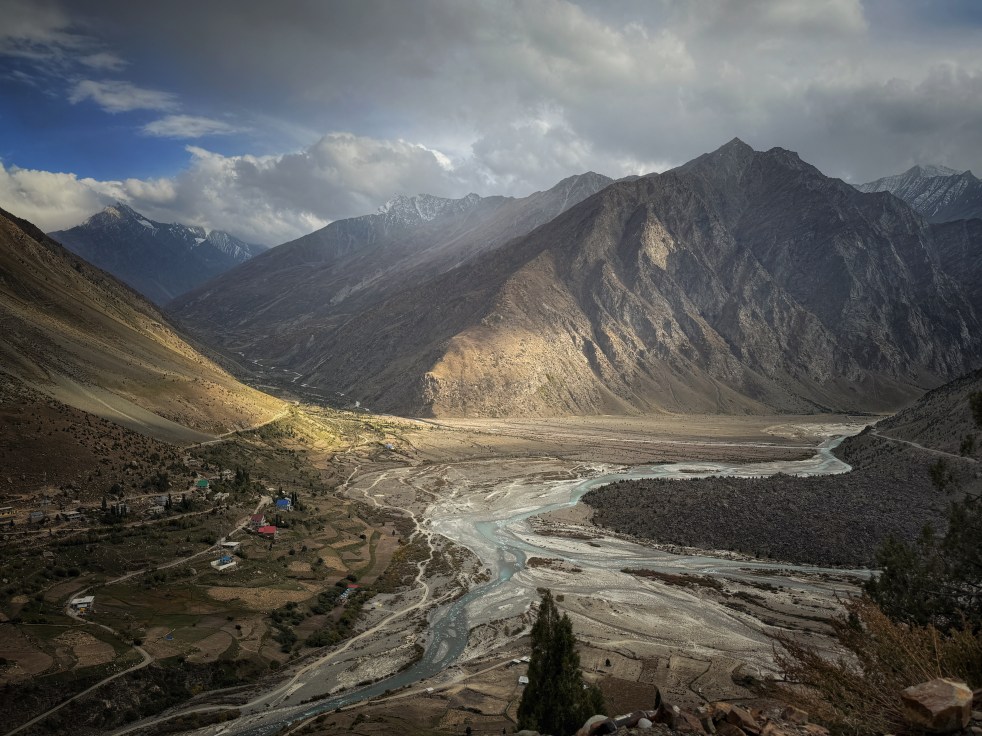
Of Landslides, Spirits and Stories
The Science and Myth surrounding a Himalayan Landslide
Here, in this central spot where three valleys come together
Is the triangle from which all phenomena originate,
An abode of the yoginis of the past,
A place for practitioners in the future.
~ A Tibetan prayer to the sacred Drilbu Ri Mountain where Rivers Chandra and Bhaga meet to form the Chenab
On a crisp September morning, we clank across an iron suspension bridge on the River Chandra to enter the valley of Bhaga. We are tracing the origins of Bhaga and will be reaching Barlacha La pass at an altitude of 15,900 feet in a few hours. Madly fluttering prayer flags swaddling the bridge and the roaring river below make it seem as if, like the prayers, we are adrift on the wind too. Below, on the toasty river sands, a few men doze like monitor lizards.
Continue reading “Of Landslides, Spirits and Stories”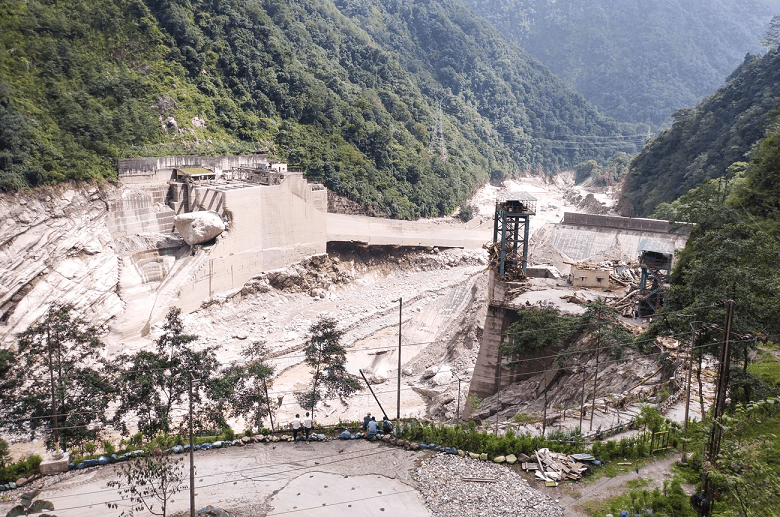
DRP 100225: EAC & MoEF’s shocking decision to clear Teesta 3 Dam raises a stir
(Feature Image: Teesta III HEP dam was washed away on the intervening night of Oct. 3-4, 2023 on account of a GLOF. The flood in the downstream was magnified by the dam disaster. Photo: Mayalmit Lepcha/Source: Sanctuary Nature Foundation)
The decision of Union Ministry of Environment and Forests (MoEF)’s Expert Appraisal Committee (EAC) on River Valley Projects on Jan 10 2025 has understandably raised a stir and earlier the EAC and MoEF reviews and reverses this decision, better it will be. The decision is shocking on a number of counts. The EAC itself had raised a number of issues related to the project in its earlier meeting, but decided to clear the project without getting satisfactory resolution of the issues.
Continue reading “DRP 100225: EAC & MoEF’s shocking decision to clear Teesta 3 Dam raises a stir”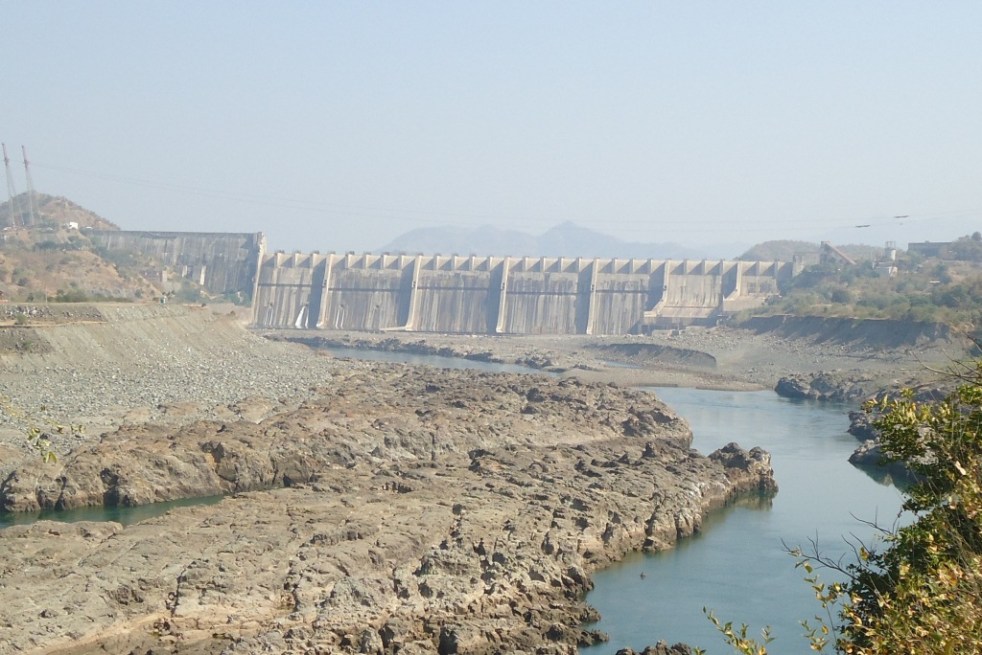
DRP 030225: Water Anarchy in Gujarat in Narmada water allocation?
A report this week quotes a Govt of Gujarat (GOG) insider saying that GOG is giving 16.7% of SSP (Sardar Sarovar Project) water for industries (with more in pipeline) against planned allocation of just 2% (0.2 Million Acre Feet or MAF). Similarly, against planned allocation of zero for Urban areas in Ahmedabad, Gandhinagar, Vadodara, Kheda and Bharuch, most large urban areas are getting Narmada water. However, the insider says, the area irrigated by the SSP is only 33% of the targeted area, with largest water quantities going to already irrigated central Gujarat. Similarly, with the Narmada Water Disputes Tribunal (NWDT) asked Gujarat to provide water for the SSP Downstream areas from its allocated share, but Gujarat keeps claiming it has no water for this and asks other states to provide water for the downstream areas from common pool. It seems the worst fears of the project critiques are coming true. The insider has in fact characterized this state of affairs as water anarchy in Gujarat.
Continue reading “DRP 030225: Water Anarchy in Gujarat in Narmada water allocation?”
DRP 200125: Whither Env Clearance Rejection rate from Expert Appraisal Committee or MoEF?
A detailed review of functioning of Union Ministry of Environment and Forests’ (MoEF) Expert Appraisal Committee (EAC) on River Valley Projects (RVP) for 2024 by SANDRP shows that the committee or for that matter MoEF has almost non-existent rejection rate. Even when a project is not cleared, when it applies again, it gets clearance, whether the application if for stage I (Terms of Reference) or Stage II (Environment Clearance- EC) clearance. Even in some cases like Pump Storage Projects (PSP) in Western Ghats or the Hydropower projects in disaster prone Himalayas, including the disaster-stricken projects like the 1200 MW Teesta III projects in Sikkim, the scrutiny including field visits by the EAC Sub committees is minimal, not worthy calling even scrutiny.
Continue reading “DRP 200125: Whither Env Clearance Rejection rate from Expert Appraisal Committee or MoEF?”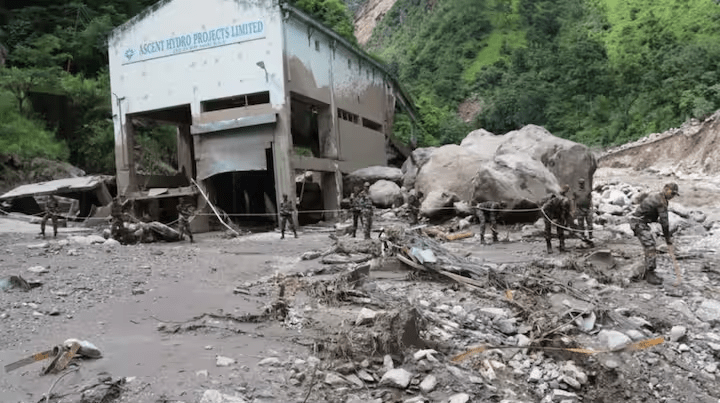
2024: Climate Change, GLOF impact on Safety of Hydro, Dams in India
(Powerhouse of a hydro project ravaged by cloudburst induced flashflood in Sutlej basin Shimla, Himachal Pradesh in Aug 2024. Image Source: Social Media)
This 2024 annual overview focusses on important reports highlighting the safety and sustainability issues of the hydro and dam projects in India in 2024 in the context of Climate Change, including Glacier melt and GLOFs. The compilation shows that the climate change driven extreme weather events have become significant threat for the structural safety of these projects.
This is even more relevant in inherently vulnerable areas like the Himalayas and Western Ghats from the point of view of seismic activity, young erosion prone mountain, flash floods, avalanches and landslides. Here the impact of climate change effects like more intensified hydrological cycles, cloud bursts, reduction in snow fall, glacier melts and GLOF (Glacier Lake Outburst Flood) increase the vulnerability including landslide dams and avalanche dams.
Continue reading “2024: Climate Change, GLOF impact on Safety of Hydro, Dams in India”
DRP 301224: We are not studying our rivers, Global North is studying
(Feature Image: Ramganga river at Marchula, Uttarakhand. Bhim Singh Rawat/SANDRP/Sept. 2024)
Exactly three months back, on Sept 30 2024, we had highlighted the urgent need for credible river studies in India (https://sandrp.in/2024/09/30/drp-nb-300924-focus-on-river-studies/). A new research report published last week in Nature has corroborated this, showing that volume of research across global south is disproportionately small compared to need based on basic population, water withdrawals and water consumption.
Based on review of 4237 publications using machine learning and desk review of 325 publications, analysis of 4713 case studies across 286 basins, it shows that river research currently in global south is predominantly led by global North institutions, thus the river research is shaped by selection of theme and locations done by such institutions.
Continue reading “DRP 301224: We are not studying our rivers, Global North is studying”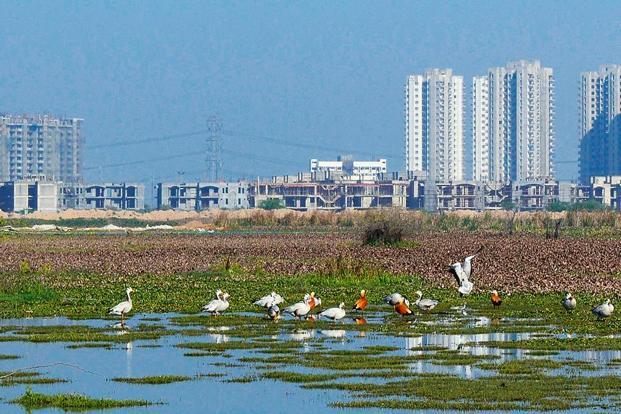
DRP 231224: Can we expect the Supreme Court to be more effective this time on Wetlands?
(Feature Image: The Basai wetlands in Gurugram. Photo by Pankaj Gupta at Live Mint)
It is indeed good to see an Editorial in a newspaper on the important issue of wetlands protection and rejuvenation. The Supreme Court’s order on wetlands last week shows its concern over the threat to wetlands as a natural feature of the environment that is under serious threat. The court ordered the protection of about 30,000 wetlands (each with area more than 2.25 ha) over the 201,503 protected by an order which it issued in 2017, and asked states to ensure their demarcation and ground-truthing which involves closer verification, within three months.
The order is in response to a PIL that said the Central government had abdicated its functions under the Environment Protection Act, 1986, to protect the wetlands. The petition also sought the identification and protection of around 5,55,557 wetlands which are less than 2.25 hectares in size. The court is likely to consider the proposal in March. One hopes the SC also gives effective orders for their protection.
Continue reading “DRP 231224: Can we expect the Supreme Court to be more effective this time on Wetlands?”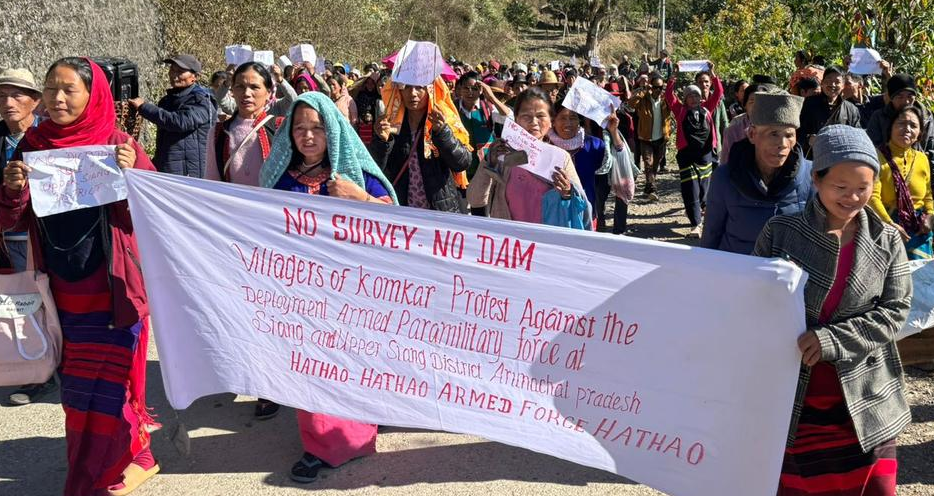
2024: People’s Resistance against Dam, Hydro Projects in Himalayan States
(Feature Image: Tribals in Siang river belt in Arunachal Pradesh demonstrating against a proposed mega hydropower dam. Photo Credit: Special Arrangement/The Hindu)
All through 2024, the vulnerable communities across Himalayan states have continued their resistance and struggles against proposed, under construction & damaged hydro and dam projects as can be seen in this yearend roundup.
The tribals in Siang valley have been urging Central and State govts to stop pushing the giant SUMP. In Teesta valley the GLOF, flood and landslide though have served as wake-up call, the planners seem to ignore the warnings. Facing adverse impacts, the native people in Manipur have resolved to stop further extension to Loktak lake HEP. In Nagaland, fearing damages, the villagers have made the future of Dikhu HEP uncertain.
Continue reading “2024: People’s Resistance against Dam, Hydro Projects in Himalayan States”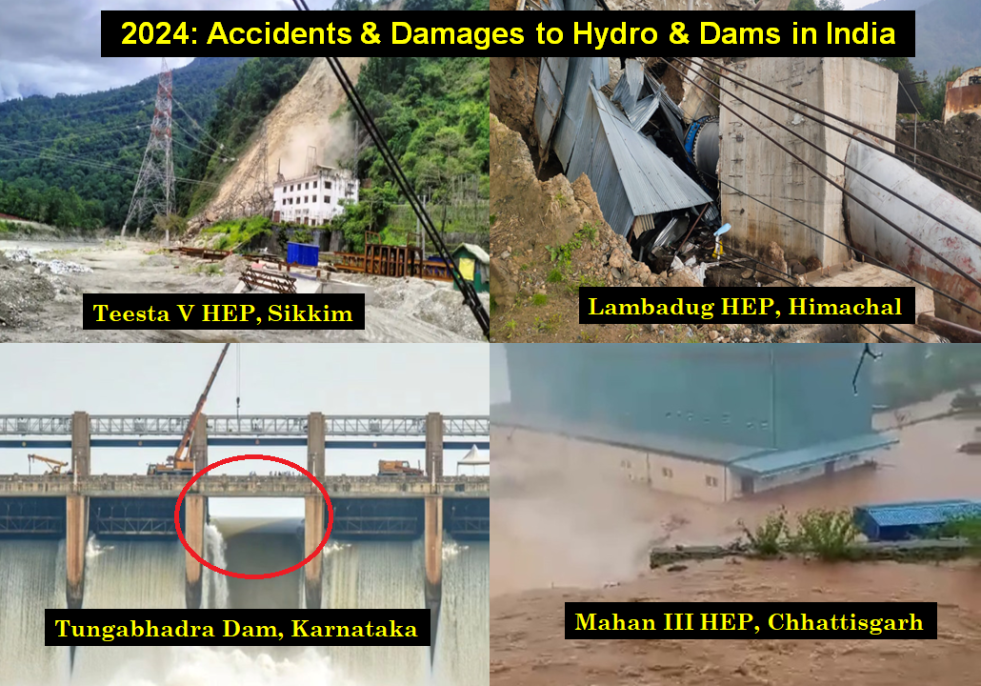
2024: Accidents & Damages to Hydro & Dams in India
The annual overview highlights the damages and accidents affecting dams and hydro power projects in India during 2024. The highest number of such incidents happened in Himachal Pradesh. Incidents are also noteworthy from Sikkim, Arunachal Pradesh and Uttarakhand among the Himalayan states. In addition, noteworthy dam disaster incidents in the year happened in Karnataka, Telangana, Andhra Pradesh and Madhya Pradesh. The previous overview on the issue can be seen by visiting the links 2023, 2022, 2021, 2020.
Continue reading “2024: Accidents & Damages to Hydro & Dams in India” SANDRP