Dams · DRP News Bulletin

DRP: 11 June 2018 (Groundwater Pollution: The Hidden Killer Menace Lurking All Over)

Aquifers in 16 States in the country are contaminated by uranium, whose presence in drinking water has been linked to chronic kidney disease by several studies, a recent study has shown. More importantly, uranium doesn’t figure on the list of contaminants monitored under the Bureau of Indian Standards’ drinking water specifications. The main source of this contamination is natural, but groundwater depletion by extensive withdrawal of water for irrigation and nitrite pollution due to the excessive use of nitrogenous fertilisers may be exacerbating the problem, said the study.

– The study was carried out by a team of researchers led by Avner Vengosh, professor of geochemistry and water quality at the Nicholas School of the Environment at Duke University in the US. The team, which also included experts from the Central Ground Water Board, the Rajasthan government’s Ground Water Department and Gujarat Water Resources Development Corporation, analysed groundwater samples from 226 locations in Rajasthan and 98 in Gujarat.

Continue reading “DRP: 11 June 2018 (Groundwater Pollution: The Hidden Killer Menace Lurking All Over)”
DRP News Bulletin

DRP: May 7, 2018: WESTERN GHATS FORESTS ARE VITAL FOR SOUTH WEST MONSOON RAINS IN TAMIL NADU

W Ghats Forests vital for Tamil Nadu SW Monsoon Rains Researchers have found that the dense vegetation in the Western Ghats determines the amount of rainfall that Tamil Nadu gets during the summer monsoon. A team led by Prof. Subimal Ghosh from the Department of Civil Engineering at the Indian Institute of Technology (IIT) Bombay has found that dense forests of the Western Ghats contribute as much as 40% of moisture to the southwest monsoon rainfall over Tamil Nadu during normal monsoon years. The average contribution is 25-30%. But during monsoon deficit years, the contribution increases to as high as 50%.

Continue reading “DRP: May 7, 2018: WESTERN GHATS FORESTS ARE VITAL FOR SOUTH WEST MONSOON RAINS IN TAMIL NADU”
DRP News Bulletin

DRP: 16 April 2018: HOW Citizens can use mobile app to monitor Rivers

MOBILE APP FOR RIVER MONITORING: HUGE POTENTIAL FOR CITIZENS IN INDIA? If you added up the length of all the streams around the world, the total would be at least 89 million kilometers [Downing et al., 2012]. More than half of the global stream channel network is likely intermittent (i.e., the streams do not have flow year-round [Datry et al., 2014]), yet most streamflow monitoring stations are located on perennial streams.

Continue reading “DRP: 16 April 2018: HOW Citizens can use mobile app to monitor Rivers”
Dams · DRP News Bulletin

DRP: 18 September 2017 (Why Madhaya Pradesh Depleted Its Meagre Water Storage To Fill up SSP Dam For Sept 17?)

As per the Daily Status Reports of Narmada Control Authority[iv], inflow into SSP Dam suddenly jumped from 495 cumecs (Cubic Meters per second) on Sept 12, to 2518 cumecs on Sept 13, 2383 cumecs on Sept 14 and 2210 cumecs on Sept 15, 2384 cumecs on Sept 16, in anticipation of the birthday, so that when Narendrabhai visits the dam site to formally declare the project complete, the reservoir is seen to have substantial water. Expectedly, SSP water level rose from 126.19 m to 128.5 m by 8 am on Sept 15. How was this made possible?

Madhya Pradesh depletes its water storage so that SSP looks full on Sept 17? The increased inflow into SSP was made possible only by increased outflow from upstream Madhya Pradesh dams like Indira Sagar Project (ISP) on Narmada. ISP, incidentally is India’s largest reservoir in terms of storage capacity.

So the ISP storage level which was already very low (about 33%) on Sept 11 with monsoon almost coming to close, was depleted by further 450 MCM (Million Cubic Meters) from Sept 11 to Sept 16 (date for which latest information is available), while SSP water level rose by 750 MCM during the same period. All this, so that water level at SSP could look more respectable on Sept 17. Its not known why Madhya Pradesh is ready to lose water from its low storage levels (in fact, the water level at Omkareshwar Project on Narmada is below Minimum Draw Down level throughout this period).

Will Madhya Pradesh Chief Minister and MP Govt be held accountable for this by the media, judiciary and the people?

Continue reading “DRP: 18 September 2017 (Why Madhaya Pradesh Depleted Its Meagre Water Storage To Fill up SSP Dam For Sept 17?)”
Dams · DRP News Bulletin

DRP: 11 September 2017 (Why This Rally Won’t Help The Rivers?)

The news media is filled with this new kid on the block, trying to wake the nation about the need to save our rivers… amazing to see so many film stars, politicians, governments, and public personalities, many of them rather innocently joining the band wagon… some friends were pleading that see, he is able to take the message of rivers to so many people, including lakhs of children… let us try and see if there is something positive here… may be, may be this is just the entry point, but the guy and his team have bigger vision? May be we need to give him longer rope, be more charitable and not jump to negativity?

We have kept all this in mind while writing this.

We see nothing from the people who are leading the rally, or their websites or messages that they understand the real threats faced by and reasons for the state of our rivers, are ready to even list such causes or protest any further move to destroy our rivers. The website claims it is “a nationwide awareness campaign to revive our rivers”. Can missed call save our rivers?

Continue reading “DRP: 11 September 2017 (Why This Rally Won’t Help The Rivers?)”
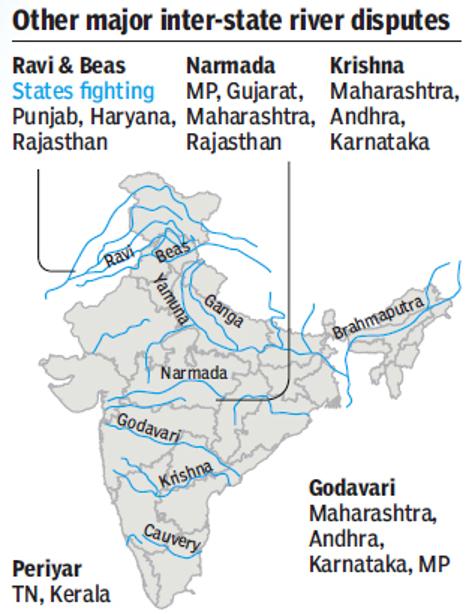
Inter State Water Disputes

Inter state River Water Disputes in India: History and status

Water sharing disputes across the country (and even beyond) are only going to escalate with increasing demands, and also with increasing pollution & losses reducing the available water. Climate change is likely to worsen the situation as monsoon patterns change, water demands going up with increasing temperatures, glaciers melt and sea levels rise. The government’s agenda of interlinking of rivers would further complicate the matters.

The ongoing Cauvery Water Dispute [iv] has once again brought the focus on interstate river water sharing disputes in India and what has been our experience so far. There is no solution of Cauvery water dispute in sight and the engineer-dominated Cauvery Management Board that the Cauvery Water Dispute Tribunal Award has recommended is unlikely to help matters. Continue reading “Inter state River Water Disputes in India: History and status”

Dams

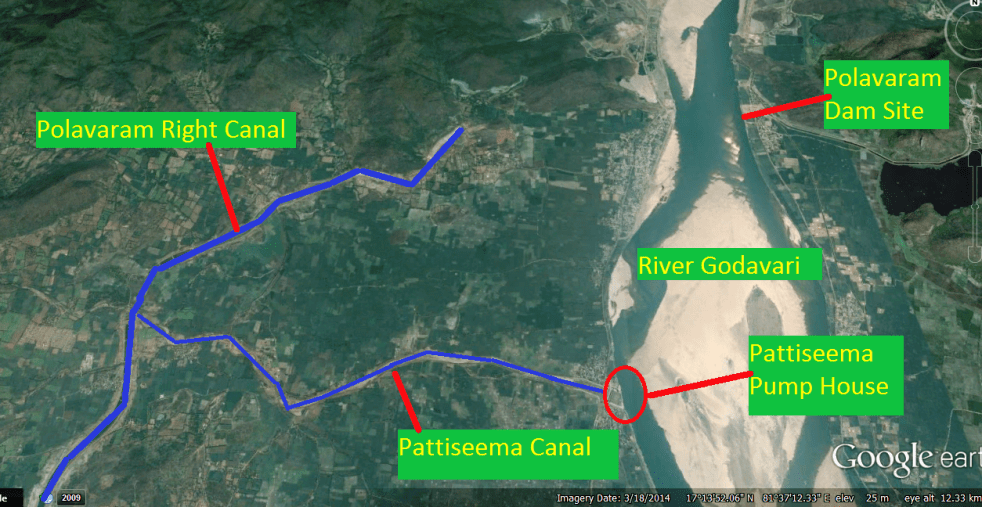
Godavari Krishna River Linking: Are we celebrating an illegal, unnecessary & misconceived water transfer project?

The national media seems to be celebrating linking of Godavari and Krishna River in Andhra Pradesh on September 16, 2015 as the first major step towards Inter Linking of Rivers in India. An emotional Andhra Pradesh Chief Minister Shri N Chandrababu Naidu called it historic and Pavitra Sangam (Holy Confluence)[1].

What is the reality? Continue reading “Godavari Krishna River Linking: Are we celebrating an illegal, unnecessary & misconceived water transfer project?”

Dams

Open letter to Tata Sustainability Group to stop westward diversion of Bhima basin water by Tata Hydro projects

From: Parineeta Dandekar (Pune) & Himanshu Thakkar (Delhi)

South Asia Network on Dams, Rivers & People (SANDRP)

parineeta.dandekar@gmail.com, ht.sandrp@gmail.com

August 20, 2015

TO:

Tata Sustainability Group

Army & Navy Building, 2nd Floor

Mahatma Gandhi Road,

Mumbai 400001, tsg@tata.com

  1. Shankar Venkateswaran

Chief – Tata Sustainability Group: svenkateswaran@tata.com

  1. Dr. Avinash Patkar

Head – Environment Services: apatkar@tata.com

  1. Sudhakar Gudipati

General Manager – Community Services: sgudipati@tata.com

  1. Alka Upadhyay

General Manager – Environment Services: aupadhyay@tata.com

  1. Ajit Chaudhuri

General Manager – Community Services: achaudhuri@tata.com

  1. Sourav Roy

Program Leader – Tata Uttarakhand Program: aroy@tata.com

  1. Abhishek Goyal

Senior Manager – Environment Services: agoyal@tata.com

  1. Zarir DeVitre

Manager – Environment Services: zdevitre@tata.com

  1. Manjula Sriram

Manager – Community Services: msriram@tata.com

  1. Lucas Saldhana

Assistant Manager – Tata Sustainability Group: lsaldhana@tata.com

Dear members of Tata Sustainability Group,

We are encouraged to write to you on this subject, thinking that considering the name, objective of the TSG and also the various statements on the TSG website, you will take prompt and necessary action on this subject.

We are writing to you in the context of Bhima basin in Maharashtra and Krishna river basin in general facing the worst monsoon deficit, crop loss and water scarcity. Millions of farmers are facing crop loss, livelihood loss and worst. Ujani dam on Bhima River is below its live storage level now and in the downstream Telangana, Nagarjunsagar is at zero live storage level and Srisailam has just 9% water in its live storage. Telangana and Andhra Pradesh have said they have no water to save farmers’ crops; they are reserving the available water for drinking water. Continue reading “Open letter to Tata Sustainability Group to stop westward diversion of Bhima basin water by Tata Hydro projects”

Dams

Tata Power responds on the issue of Tata dams diverting water from Drought hit Bhima Krishna basin to Konkan, but it is a vacuous, insensitive response

On the 7th August 2015, SANDRP published a Press Release titled “As Krishna Bhima basin farmers in Maharashtra, Karnataka, AP & Telangana face drought, crop failure, Water scarcity, Maharashtra DIVERTED 350 MCM water from the basin & stored another 2535 MCM reserved to release, literally to sea!”[1]. On August 9, 2015[2], DNA, a leading newspaper in Mumbai published a report based on this story as their front page top story titled “Drought? Last month alone Maha govt drained 350 MCM water into sea!” Continue reading “Tata Power responds on the issue of Tata dams diverting water from Drought hit Bhima Krishna basin to Konkan, but it is a vacuous, insensitive response”

Dams

Ekti Nadir Naam: Ramblings through the etymology of River names in India

Above: Dry Chandrabhaga from Maharashtra. We have at least 5 Chandrabhagas in India! Photo: Parineeta Dandekar

~~

“I’m going to buy vegetables from the banks of Ganga. Coming?” (“गंगेवर चालले आहे भाजी आणायला. येणार?”). This was my Grandmother’s Sunday morning ritual. I always jumped at the opportunity: it meant going to the local market skirting Ganga and staring at colorful heaps of vegetables, patting dewlaps of humongous cows settled in islands, stealing guilty glances at sadhus who sold fascinating stuff: owl claws, deer musk pods, Giant Entada seeds..but most of all, it meant observing the filthy and beautiful river from the Ghats. I lived in Nashik, on the banks of Godavari and Godavari was our Ganga. Continue reading “Ekti Nadir Naam: Ramblings through the etymology of River names in India”