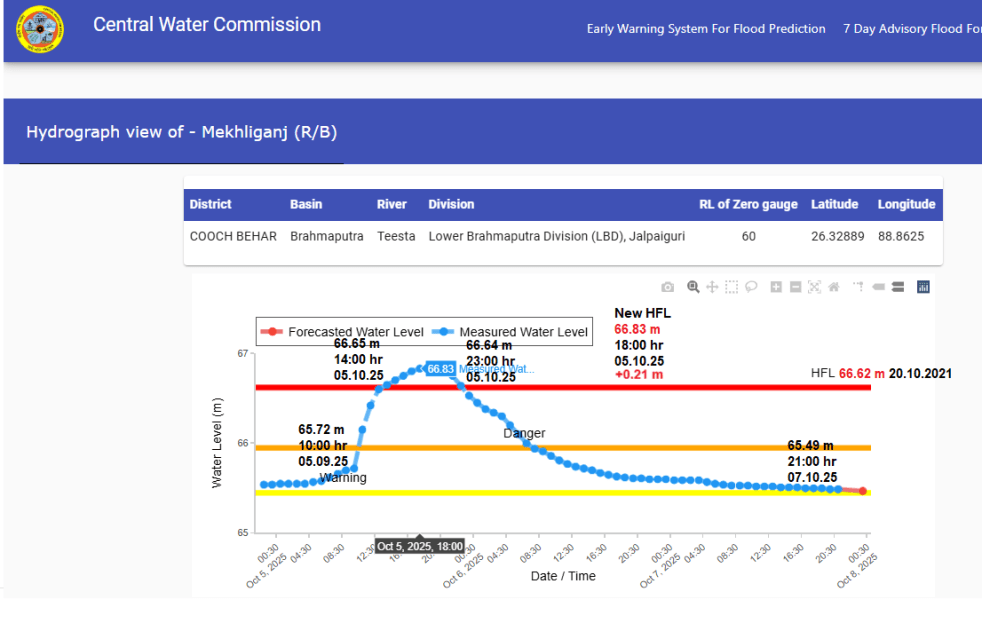
In Oct. 2025, we could find at least 06 flood monitoring sites of Central Water Commission (CWC), where rivers have crossed their Highest Flood Levels (HFL) after the end of South West Monsoon season 2025 on Sept 30 2025. Of the 6 sites, 2 each are in Brahmaputra basin in W Bengal and Ganga basin in Bihar. 1 site Anantharam on Musi river in Telangana is part of Krishna basin and 1 site Marella on Gundlakamma river in Andhra Pradesh is part of East Flowing Rivers between Mahandi and Pennar basin.
Continue reading “India’s Rivers in Extreme Floods in Oct 2025”Tag: Kosi

Dams, Rivers & People-June 23 2025: Solar pumps threatening Groundwater Sustainability?
(Feature Image Source: PM KUSUM Booklet)
Can Solar pumps threaten groundwater sustainability? The answer is yes. Without integrated water and energy governance India’s solar irrigation drive may worsen environmental stress, say experts. Along with the energy benefits, there are invisible consequences of solar pumps – excess water extraction and energy going waste.
Continue reading “Dams, Rivers & People-June 23 2025: Solar pumps threatening Groundwater Sustainability?”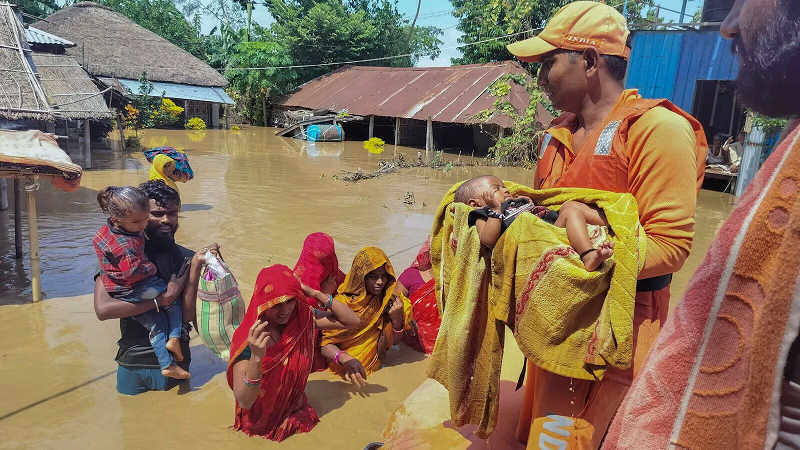
2024: Do Embankments save from floods or worsen the disasters?
(Feature Image: NDRF personnel conduct a rescue operation at a flood-affected area in Bihar’s Supaul district. Image Credit: PTI/Source Live Mint, Sept. 30)
India has seen several floods brought by breach of embankments during the 2024 monsoon. In Bihar, though the state has received deficit rainfalls, the overspilling of barrages and breaching of several embankments created widescale flood damages. Number of reports have again highlighted the ineffective and adverse role being played by flood protection structures in worsening the deluge impacts. The first part of the overview has covered dam induced flood incidents in the country during 2024 and third part has highlighted incidents of dam induced urban floods.
Continue reading “2024: Do Embankments save from floods or worsen the disasters?”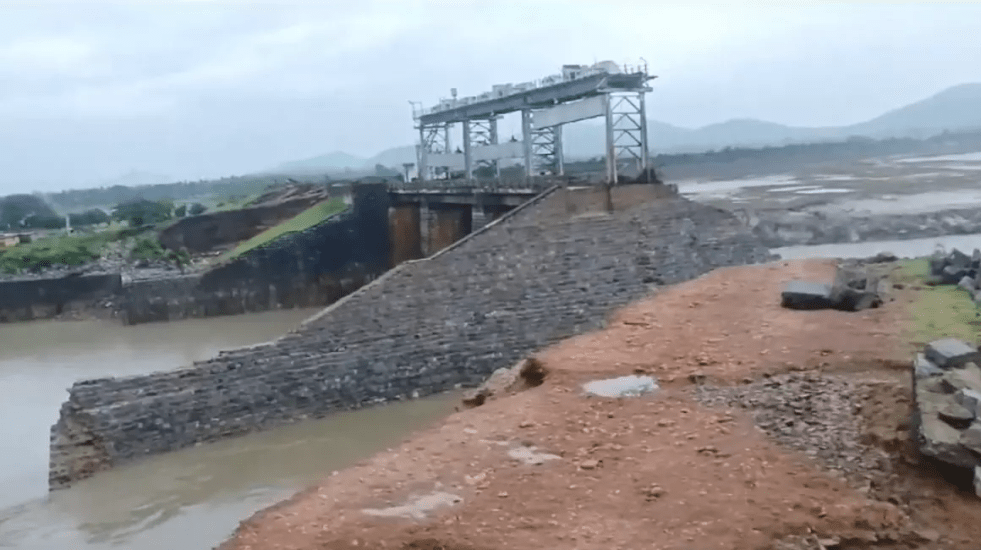
2024: Dam Induced Floods in India
(Feature Image: Breach in the earth dam of Peddavagu project flooded several villages in Telangana & Andhra Pradesh on July 17, 2024. Source: DC)
India has seen several manmade flood disasters during the 2024 monsoon. The mismanagement of dams in Narmada valley including Bargi, and SSP inundated several dam affected villages despite adequate actionable advance warnings. The uninformed excess releases from DVC dams have led to flooding in large areas in West Bengal as repeatedly raised by the state government. The extensive floods in Tripura have revealed glaring loopholes in flood prevention and disaster management.
The floods in the year have also washed away or damaged several earthen dams, tanks in Madhya Pradesh and Rajasthan affecting human population, agricultural lands in their vicinity. Even during Northeast monsoon, the sudden releases from Sathanur and Veedur dams in Tamil Nadu created avoidable flood damage in downstream areas. Similarly, the states of Gujarat, Telangana, Haryana and Delhi have seen deluge due to mismanagement or breaches in the canals. The case of Narmada canal waters flooding large areas of Little Runn of Kutch is quite concerning.
Continue reading “2024: Dam Induced Floods in India”
North India: 136 people killed in sand mining violence & accidents in 16 months
(Feature Image: 1 killed, 17 injured after a sand truck toppled in mine pit in Kosi river, Ram Nagar. Source Amar Ujala, 30 Jan. 2021)
Among the many issues affecting Riverbed sand mining is the issue of violence of various types. Stories of such violence keeps coming up from all across the country all the time. However, there is no comprehensive picture emerging about this violence. SANDRP has been trying to compile available information about instances of various types of violence related to river bed mining since last few years.
Tracking the issue, this year we have prepared detailed accounts along with summary reports in a Zone wise format. This first part is a summary report of the detailed account on North Zone states including Uttar Pradesh, Haryana, Uttarakhand, Punjab, Delhi, Jammu & Kashmir and Chandigarh and covers sand mining violence and deaths that took place between December 2020 and March 2022, following after our earlier report that carried the figures for period upto Nov 2020. The successive parts will cover East & North East, West and South Zones. SANDRP’s previous report detailing nearly 193 human deaths between January 2019 and November 2020 on account of illegal sand mining activities can be seen here.
Continue reading “North India: 136 people killed in sand mining violence & accidents in 16 months”
Unprecedented October 2021 Rainfall in Uttarakhand
Uttarakhand has seen unusual rainfall episode in the month of October 2021. The extreme rains during October 17 to 19 across the state and particularly at several places in districts under Kumaon division have been termed as highest rainfall in the recorded history as per Meteorological Circle (MC), Dehradun. This account is an attempt to document the historical rainfall events caused by combination of low pressure and western disturbance (WD) weather phenomena.
Continue reading “Unprecedented October 2021 Rainfall in Uttarakhand”
East Zone River Sand Mining Dialogue: How can we ensure implementation of court orders?
Higher Courts and NGT has been giving numerous orders and judgments, but the state is happily getting away with non implementation in most cases. How can we ensure that court orders get implemented? Why is the judiciary not concerned about non implementation of its orders? This was one of the central message of the East Zone River Sand Mining Dialogue on Nov 21, 2020 (4-6.30 pm) as part of the India Rivers Week 2020[i] theme “Is Sand Mining Killing our Rivers?” Additional Director R B Lal from Union Ministry of Environment and Forests in his presentation agreed that the sustainable sand mining guidelines have not been implemented. One would have liked to hear how we can achieve their implementation and that MoEF also values participation of people at the grass roots in sand mining governance. He did not mention the local people even once, while praising MoEF’s emphasis on technology in the sand mining guidelines.
The Dialogue was very ably moderated by Dr Malavika Chauhan of Tata Trusts and Dr Debashish Sen of People’s Science Institute (Dehra Dun). This was Fourth in a series of Zonal River Sand Mining dialogues being held after North Zone[ii], South Zone[iii] and West Zone[iv] Dialogues held earlier.
Continue reading “East Zone River Sand Mining Dialogue: How can we ensure implementation of court orders?”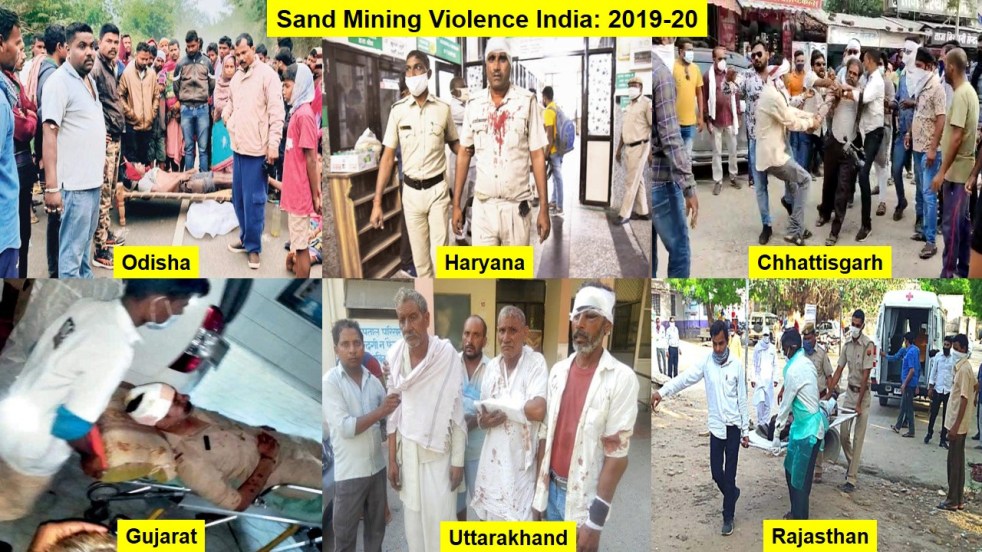
193 dead in River Sand Mining incidents in India in 2019-20
The illegal, excessive sand mining activities have been impacting river ecosystem and riparian communities adversely. Scores of villagers, young kids, reporters, activists and government officials are being attacked and killed every year for objecting to or due to unlawful and unsustainable excavation of River sand. The brazen mining is also leading to fatal road accidents which is again resulting in grievous injuries or even deaths.
The situation has only deteriorated despite several protests by locals and numbers of court orders reprimanding the central and the state governments. Political parties, politicians are directly or indirectly linked to many of these activities.
SANDRP in its 2018 overview, could compile 28 human fatalities due to illegal sand mining operations. However that was only based on the news reports that came to our notice, the actual death toll would be much higher. SANDRP this time has prepared a more detailed account of violent incidents that have taken place since January 2019 so far causing human death and injuries. The state and zone wise brief summary of these incidents is given here and a bit more detailed report is uploaded separately.
Continue reading “193 dead in River Sand Mining incidents in India in 2019-20”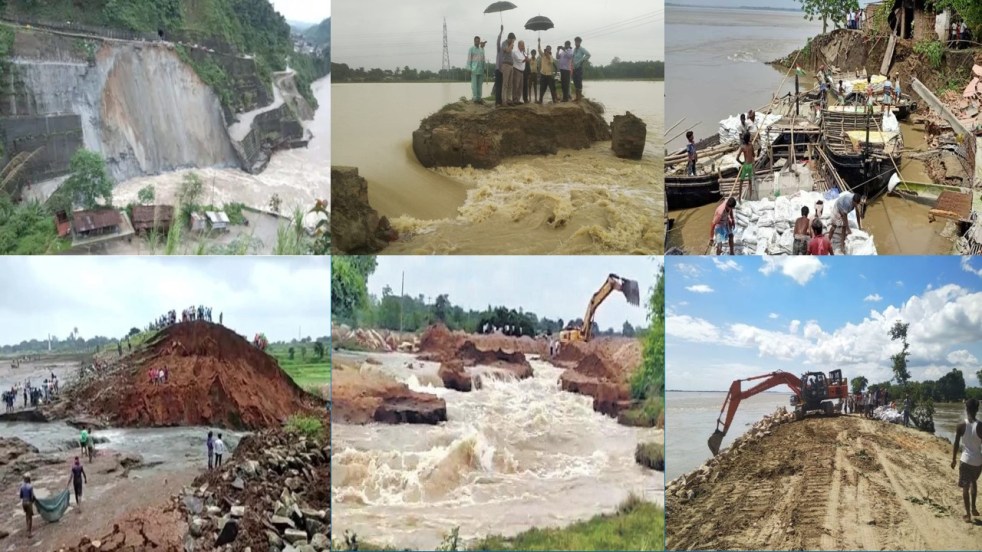
Dam Floods & Embankment Breaches in South West Monsoon 2020
Improper operations of dams, disasters related to dams and hydro projects and breaching of embankments have been aggravating flood disasters during every monsoon. There have been several such incidents during South West Monsoon 2020, taking heavy toll on people and property which could have been avoided or impacts reduced in many cases with proper dam operations and proper maintenance of the embankments. This compilation attempts to put together all such instances when avoidable flood disasters were created by improper operation of dams and breaching of embankments in the south west monsoon 2020.
Continue reading “Dam Floods & Embankment Breaches in South West Monsoon 2020”
DRP: 26 Oct 2020: Why Floods is not big issue in Bihar elections?
Or may be it is a major issue at a number of places. Like in Kishanganj district along Mahananda river in North East Bihar, as the report here mentions. We hope it is. Since floods and how they are managed affect so fundamentally and in so many different ways so many people, it should be an election issue. Particularly when the incumbent Chief Minister Nitish Kumar is fighting to be voted in after being the Chief Minister of the state for 15 years since Nov 2005 (except brief ten month period in 2014-15).
15 years is long enough time to have been able to make at least some dent in flood management. On ground, the situation seems to have only gone worse. It was in this 15 year period that the unprecedented Kosi floods happened after the Kusaha breach in 2008. But the word unprecedented has been used for several more floods in these 15 years, including by Nitish Kumar. He also raised a number of pertinent issues in this period, including impact of Farakka barrage on Bihar floods, need for its decommissioning, Bihar’s right to get Ganga water from the headwaters in Uttarakhand [currently it gets none except during monsoon]. He is currently silent on these issues, but voters and media do not have to be silent.
Continue reading “DRP: 26 Oct 2020: Why Floods is not big issue in Bihar elections?” SANDRP