Beas · Himachal Pradesh

NHPC negligence leads to man-made disaster in Parbati Valley in Himachal Pradesh

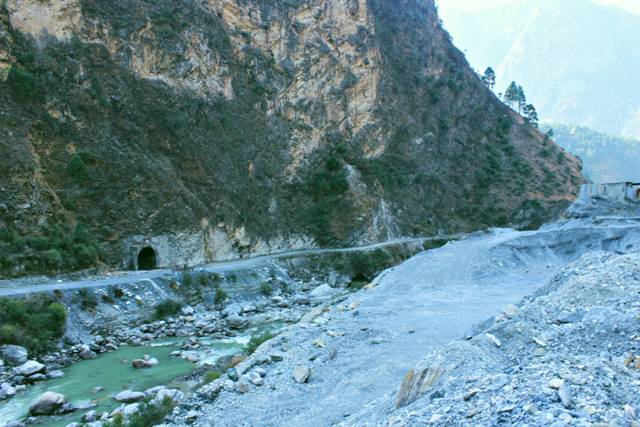
(Above: illegal muck dumping by Parbati HEP along the Sainj River in Himachal Pradesh)

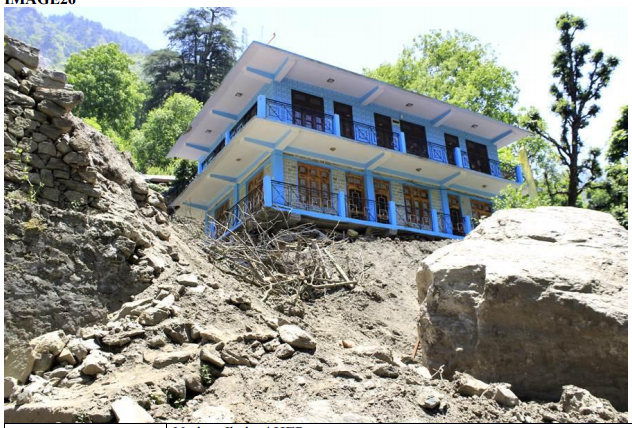
The people of Sainj-Parbati valley in Beas basin in Himachal Pradesh’s Kullu disrict’s Banjar Tehsil are living in constant fear of a disaster. Since six days now, the power tunnel of the NHPC’s under construction 800 MW Parbati II hydropower project is heavily leaking, but NHPC refused to stop water release into the tunnel till the leakage led to landslides and displacement of people. Ultimately on the night of April 17, 2017, huge cracks spread over 200 m appeared in the hills, leading to landslide & fall of soil and rocks, immediately threatening eight families of Rahan (Reina) village, though over 400 families of some 12 villages of Rella Panchayat (including Rella, Sharan, Jiva, Sulga, Khadoa, Rahan, Shalah, Bhebal, Bahara, Bagidhar, Khaul, etc) are facing the prospects of disaster as cracks in the hill have appeared just above the villages. People here are spending sleepless nights since several days now. They are afraid that if the leakage continues, these villages will have to be evacuated any moment, else a major catastrophe may result.[i] Continue reading “NHPC negligence leads to man-made disaster in Parbati Valley in Himachal Pradesh”
Chenab · Indus · Pakistan

India Pakistan resume talks on Indus Treaty: Stakes are high

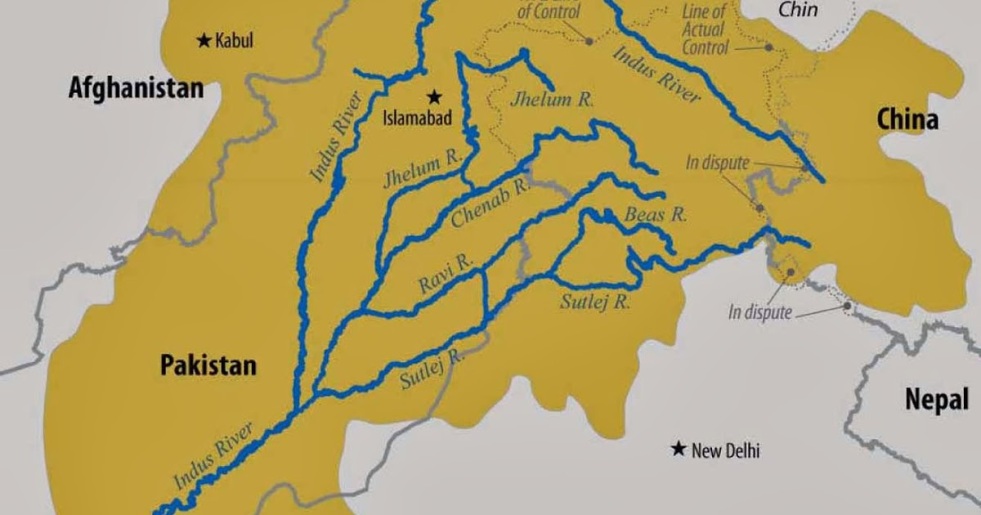
When on March 20-21, 2017, on the eve of World Water Day, India and Pakistan’s Permanent Indus Commission met in Islamabad for its 113rd meeting, there was a lot at stake besides the immediate issue or even the Indus Treaty.

In many ways, the Indus Treaty remains a bright spot in relations between these two neighbors and the treaty keeps bringing them back to the talking table…This is the magic of a shared river! Continue reading “India Pakistan resume talks on Indus Treaty: Stakes are high”

Dams · Himachal Pradesh

Lahaul people write to Environment Committee not to clear Reoli Dugli Hydro project

To

The Environment Appraisal Committee

River Valley Projects

Ministry of Environment and Forests

New Delhi

Subject: Submission related to Chenab River and Lahaul Valley  in context of EC for 430 MW Reoli Dugli project

Dear Chairperson,

We have read reports that the expert appraisal committee (EAC) on river valley and hydel projects of the Ministry of Environment has decided “not to take any cognizance of representations” received by its members since such representations are ‘anti-development’. The article appearing in Indian Express on January 14, 2017 stated, “In its December 30 meeting, the committee concluded that once a project proposal reaches the EAC for appraisal, it has crossed the stage of public consultation and “the EAC should not go back in time, and should not reopen it, by entertaining unsubstantiated representations received from the people”. Continue reading “Lahaul people write to Environment Committee not to clear Reoli Dugli Hydro project”

Dams · DRP News Bulletin

DRP News Bulletin 16 Jan. 2017 (MoEF’s Expert Committee Shows Anti-People, Anti-Environment Biases)

EAC against entertaining ‘anti-development’ representations The expert appraisal committee (EAC) on river valley and hydel projects of the Union Environment Ministry has decided “not to take any cognizance of such representations” received by its members. In its Dec. 30, 2016 meeting, the committee concluded that once a project proposal reaches the EAC for appraisal, it has crossed the stage of public consultation and “the EAC should not go back in time, and should not reopen it, by entertaining unsubstantiated representations received from the people”. 

The EAC noted that in case of any clarification regarding action taken on such representations under the RTI Act, the EAC prescribed that a standard reply “action has been taken in accordance with the decisions taken in the 1st meeting of the EAC for River Valley and HEP on 30.12.2016” should suffice. “It was also felt that many of the objections raised are repetitive. Many such kind of representations have an anti-development attitude so that the projects are kept on hold or delayed. This has financial implications to the developers in particular and to the nation in general.

The committee emphasized that relevant ministries scrutinised every aspect of a project and proposed it for final appraisal only when all details were in place. If not satisfied that public consultation had been completed properly, the EAC said it could ask the project promoter to do the needful. The committee also made allowance for representations with “new points” and “grave consequences” on which comments from project proponents could be sought. The EAC considered 13 projects in its December 30 meeting and cleared eight of them.

Environmental activists, however, pointed out the impracticality of the contention that representations should be restricted to the 30-day public consultation window. Sripad Dharmadhikari also, in his blog has mentions various reasons to counter the EAC’s suspicious justifications. He also says that the fact that a body which is supposed to represent the environmental perspective displays such an attitude is the biggest critique of the EAC and the environmental clearance process that it is a part of. The newly constituted MOEF’s EAC on River Valley Projects has in their very first meeting shown anti people, anti democratic and anti environment attitude.

Continue reading “DRP News Bulletin 16 Jan. 2017 (MoEF’s Expert Committee Shows Anti-People, Anti-Environment Biases)”

Dams

Yamuna River 2016: Unjustified Dams, Hydro Projects

The first part of 3-part blog series throws light on impact of dams and hydro projects in upper reaches of the River and the imminent dangers of climate change that have jeopardized the entire eco-system around the Yamuna rivers. 

The second part would bring forward the plight of severely polluted and threatened Yamuna tributaries in the mainland of Haryana, Uttar Pradesh (UP), Rajasthan and Madhya Pradesh (MP). The third and concluding part would detail the status of ongoing and planned cleaning and rejuvenation projects launched in 2016.  

Continue reading “Yamuna River 2016: Unjustified Dams, Hydro Projects”

Dams · Sand Mining

River Sand Mining in India in 2016-II- Governments Show no Will to Regulate


In the second part of three-part blog series SANDRP presents an overview of steps taken by Central and State Governments on this issue of river sand mining practices in the year 2016.

CENTRAL GOVERNMENT

The year 2016 started with a welcoming development when none other than the Prime Minister of India, Sri Narendra Modi himself, while delivering inaugural address[1] at 103rd session of Indian Science Congress, in Mysuru on January 06, 2016 cited the importance of rivers in human history.  Emphasizing the value of rivers, he stressed on the use of science and technology to understand the impact of urbanization, farming, industrialization and ground water use and contamination on the river eco-system. Revering the Rivers as soul of nature, the PM emphasized to make renewal of Rivers an element of a larger effort to sustain Nature.

Contrary to this, on January 06, 2016, the Union Transport Minister revealed Government plans considering use of river sand for national highways construction[2]. The minister particularly mentioned sand of river Yamuna to be used in construction of national highways and agreements would be signed with states to seek approval for using sand from their rivers. The report ironically mentioned it as innovative moves to boost infrastructure development. Interestingly the Sustainable Sand Mining Management Guidelines 2016[3] from Union Ministry of Environment, Forests and Climate Change (MoEF&CC) condemned the use of sand in concretization including its burial under highways despite very high value of minerals found in the sand. 

In the same month the MoEF&CC came out with a draft notification[4] for a new sustainable sand and minor mineral mining policy[5] applicable form January 1, 2016. Proposing to decentralize the process of granting environmental clearance the draft notification prescribed creation of District Environment Impact Assessment Authority (DEIAA) for screening mining proposals followed after district level survey report. As per the draft policy District, State and Central level authorities were eligible to approve environment clearances (EC) for mining up to five ha, 5-50 ha, over 50 ha respectively. 

Continue reading “River Sand Mining in India in 2016-II- Governments Show no Will to Regulate”

Dams · Sand Mining

River Sand Mining in India in 2016

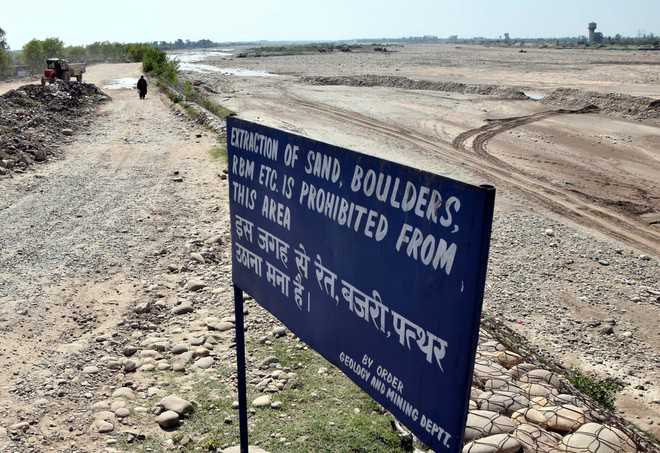
For past many years, incidents of illegal river sand mining across the country are on the rise. Given its resultant and adverse impact on river system and dependent communities, various state and central governments continue to go through the motions of devising a mechanism for judicious excavation of this minor mineral. But there seems no will to achieve compliance. At the same the time, people and concerned groups affected by illegitimate riverbed mining practices are approaching judiciary seeking legal intervention to curb the unsustainable mining of the natural resource.   

In this backdrop, continuing[1] tracking of this issue (like in 2015) SANDRP is providing an overview of various aspects related abstraction of the finite grit material from the rivers through a three part blog series. The first part of the series presents description of the most of the illegal riverbed sand mining incidents that have taken place in different Indian States through the year 2016. The second part of the blog gives account of the measures taken by governments at States and Central level to check the pilferage of this natural resource. The third part will highlight on the legal interventions by respective courts including Honorable Supreme Court (SC) and National Green Tribunal (NGT) to regulate unscientific quarrying of riverbeds.

Continue reading “River Sand Mining in India in 2016”

Dams

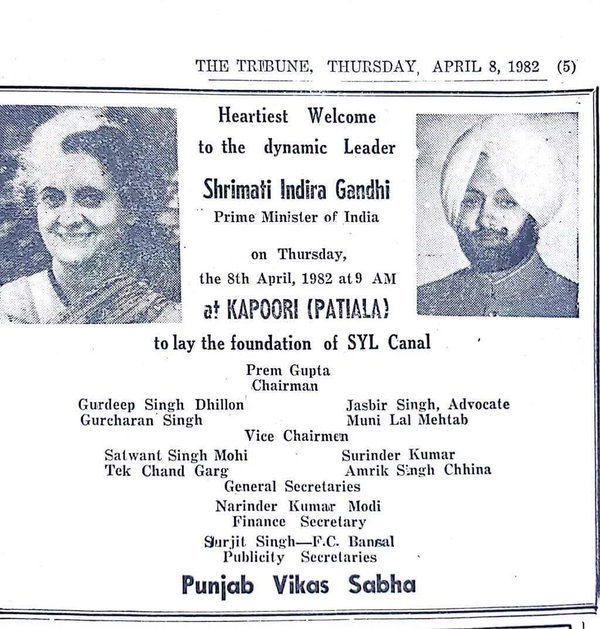
Sutlej Yamuna Link Row:  Chronology of Events

The SYL Row has been going on inconclusively for over last about 50 years. The matter also has been languishing in SC for last 40 years without any resolution. The seemingly unending disputes have been raising questions in the mind of many as to why the issue remains undecided and for how long the controversy will go on. To have better understanding of the issue we have put together a chronology of the events around the SYL dispute.

On November 10, 2016, Honorable Supreme Court (SC) of India has pronounced its judgment on Sutlej Yamuna Link Canal (SYL). In the decision, the apex court has termed the Punjab Termination of Agreements Act 2004 invalid and ruled that Punjab is bound to share Ravi-Beas river waters with Haryana and Himachal Pradesh, Rajasthan, Jammu and Kashmir and Delhi. The court has also ordered Punjab to comply with its two judgments for completion of the SYL canal.

Continue reading “Sutlej Yamuna Link Row:  Chronology of Events”

Cumulative Impact Assessment · Dams · Ministry of Environment and Forests

Transparency in Environment Governance? Expert Meeting on River Projects does not have documents in open domain

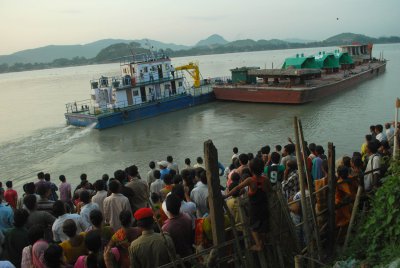
Above: Protest against Lower Subansiri Project in Assam. Basin Study of Lower Subansiri is also a part of intense debate in Assam. Now these studies are under wraps by the MoEF and CC

Non-transparent Environment Governance does not help anyone, neither is it legal. In the upcoming Expert Meeting of the MoEF and CC on River Valley Projects (read dams), documents pertaining to 6 of the 8 projects being considered are not available!

We have appealed to the new Minister to take swift action against this non-transparent and non-democratic governance in the MoEF and CC. Please feel free to send similar letters to the email addresses mentioned below. Continue reading “Transparency in Environment Governance? Expert Meeting on River Projects does not have documents in open domain”

Himachal Pradesh

HIMACHAL PRADESH HYDROPOWER PROJECTS IN 2015

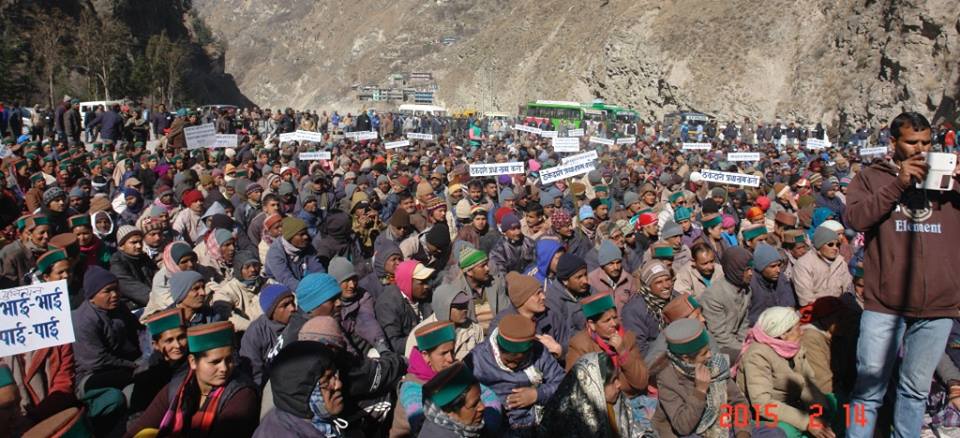
Himachal Pradesh in Northern India is foremost among Indian states in pushing large hydropower projects. It has operating hydropower projects with total installed capacity of 7970 MW, under construction hydropower with 2216 MW and largest capacity projects under consideration for clearances. As this review of Hydropower development in Himachal Pradesh in 2015 shows, HP has also started facing the consequences of too many projects, with fragile Kinnaur area facing multiple disasters in 2015, including the penstock burst disaster at Sorang HEP. However, the Expert Appraisal Committee on Union Ministry of Environment and Forests continues to sanction more projects. In 2015, the committee recommended first stage clearance to 219 MW Luhri Project on Sutlej river and 210 MW Purthi Project on Chenab river. During the year, the 800 MW Kol Dam project was commissioned, and as our separate review of hydropower projects commissioned in 2015 shows, the project faced large number of serious problems and continues to face them even post commissioning.

Continue reading “HIMACHAL PRADESH HYDROPOWER PROJECTS IN 2015”