
At a well-attended meeting at India International Centre in Delhi on Feb 20 2025, organised by VIDHI Centre for Legal Policy, a panel of speakers including Shri Shashi Shekhar (former secretary, Union Ministry of Water Resources) and Shri Jasbir Singh Chauhan (former Principle Chief Conservator of Forests, Madhya Pradesh) and Himanshu Thakkar of SANDRP, a number of fundamental questions were raised about the controversial Ken Betwa River Link Project. Unfortunately, no clear answers are forth coming from the authorities.
Continue reading “DRP 240225: Unanswered questions on Ken Betwa Project”Tag: groundwater
Urban Groundwater 2024: Top Ten Judicial Interventions
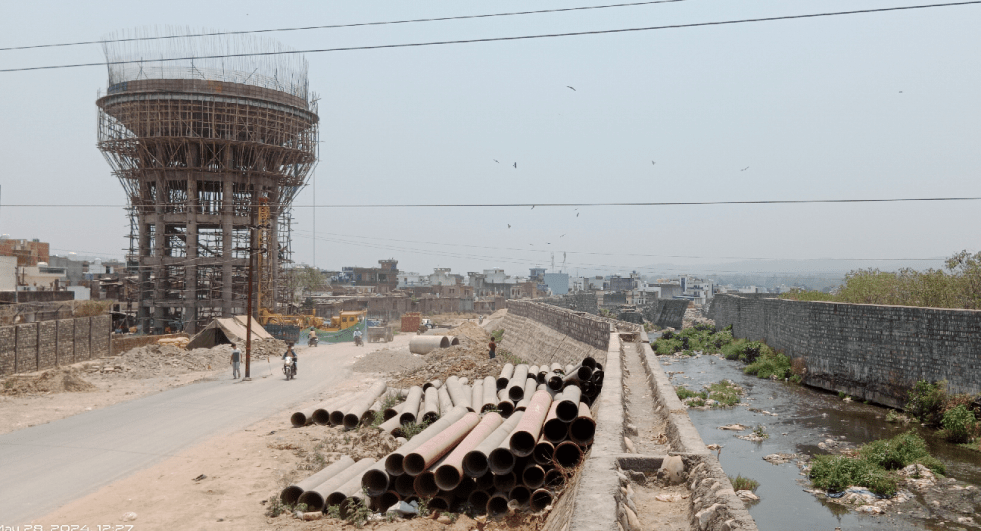
(Feature Image: Underconstruction overhead water tank along Bindal river in Dehradun. B. S. Rawat/SANDRP/May 2024)
This annual overview includes the top ten reports from 2024 on judicial interventions regarding groundwater in urban India. The overview shows that the judicial bodies, particularly the NGT, have been dealing with various cases concerning the violations of groundwater extraction norms, including permission, use of treated sewage and rainwater harvesting by residential projects, and groundwater pollution by landfill sites and industrial waste across the country.
The overview of the court proceedings broadly suggest that the concerned governing bodies have been showing casual approach when it comes to ensuring the compliance to norms and improve governance, thus failing to stop the depletion & contamination of GW in Urban India.
Continue reading “Urban Groundwater 2024: Top Ten Judicial Interventions”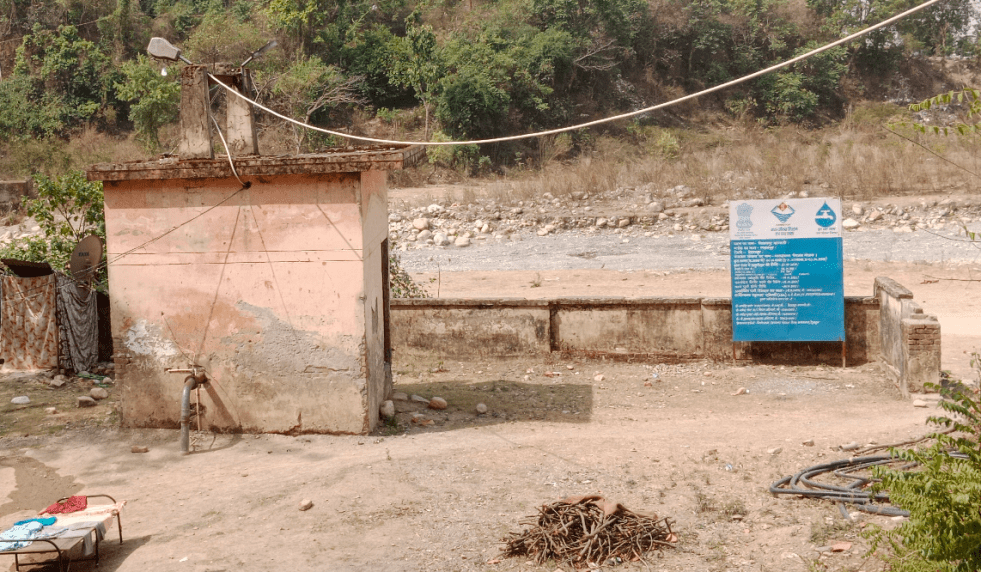
Urban Groundwater 2024: Top Ten Government Actions
(Feature Image: A tubewell installed under JJM scheme along dried up Tons river bank in Sahaspur, Dehradun. B. S. Rawat/SANDRP/May 2024)
This annual overview covers relevant media reports from ten cities, highlighting the groundwater management and recharge efforts made by the governments during 2024. The earlier overviews on the subject of Groundwater in India have focused on important studies done in 2024, general scenario on groundwater contamination & depletion, relevant government actions, significant judicial intervention and groundwater issues in urban India.
Continue reading “Urban Groundwater 2024: Top Ten Government Actions”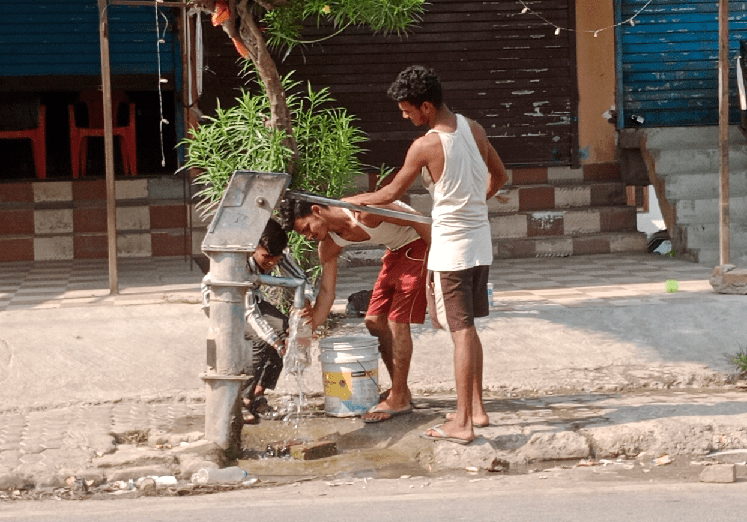
Groundwater 2024: Urban Issues
(Feature Image: Children extracting groundwater from a handpump in Dehradun. B. S. Rawat/SANDRP/May 2024)
This overview complies top ten reports from 2024 to highlight the growing concerns over groundwater depletion and contamination in various Indian cities. Though several cities in India are already being supplied surface water from dams and rivers, groundwater use is increasing to meet significant portion of potable water demand. The unabated unplanned urbanization on one side has been damaging the groundwater recharge functions, sources and on the other putting more pressure on surface and underground water resources. At the same time the cities have been failing to adequately treat wastewater and harvest rainwater. The situation is only deteriorating fast in absence of a National Urban Water Policy.
Continue reading “Groundwater 2024: Urban Issues”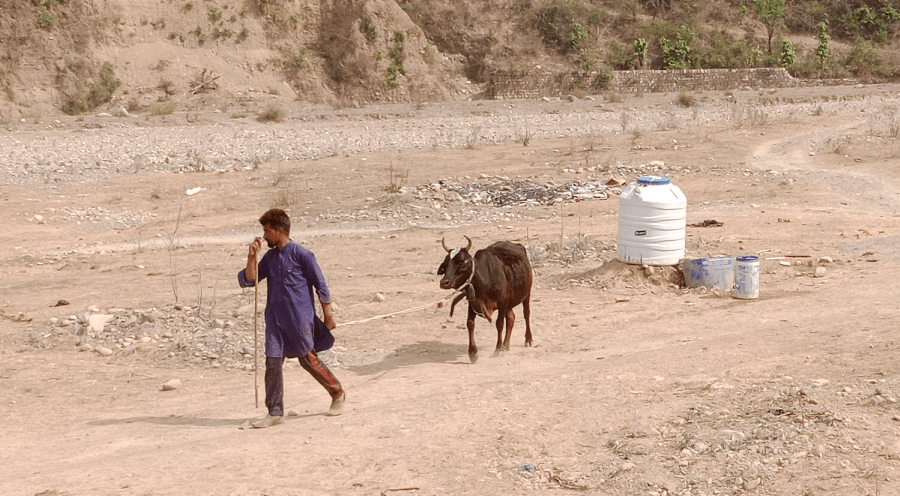
Groundwater 2024: Top Ten stories on how Depletion continues alarmingly
(Feature Image: A villager is taking his cattle through the bone-dry Nimi River, a tributary of Tons in Dehradun after feeding it water from a syntex tank placed in riverbed. The tank is filled with groundwater by a submersible installed on the bank of the river. B. S. Rawat/SANDRP/May 2024)
Like growing contamination of groundwater in India, its depletion is also increasing at alarming level as shows the top ten relevant reports from 2024 which we are able to compile in this third annual overview on the subject. At central level two reports on Atal Bhujal Yojna highlight that funds allocated for the flagship scheme have been grossly underutilized and the scheme is focusing more on meeting the deadlines and facing challenges in large scale community mobilization. The CGWB’s 2023 report published in June 2024 shows that the situation is worsening contradicting MoJS claim that the groundwater depletion situation is improving. About 87% of total groundwater extraction is used in farming.
Continue reading “Groundwater 2024: Top Ten stories on how Depletion continues alarmingly”
DRP 170225: Dam Safety Slumber
(Feature Image: Srisailam dam in Telangana. Source: Telangana Today)
The Srisailam, dam one of the biggest dams of India, is facing a serious dam safety issue since over a decade, and yet, strangely, there is no resolution of this in sight. All attempts seem to downplay the issue and hide the reports & reality from public domain. It is well known that the damage to the stilling basin and plunge pool area, part of the Dam project and located just downstream of the main wall is serious and some of the cracks from the downstream are going towards the main dam. Even the National Dam Safety Authority (NDSA) visited the dam a year back, but no action plan is in sight.
Continue reading “DRP 170225: Dam Safety Slumber”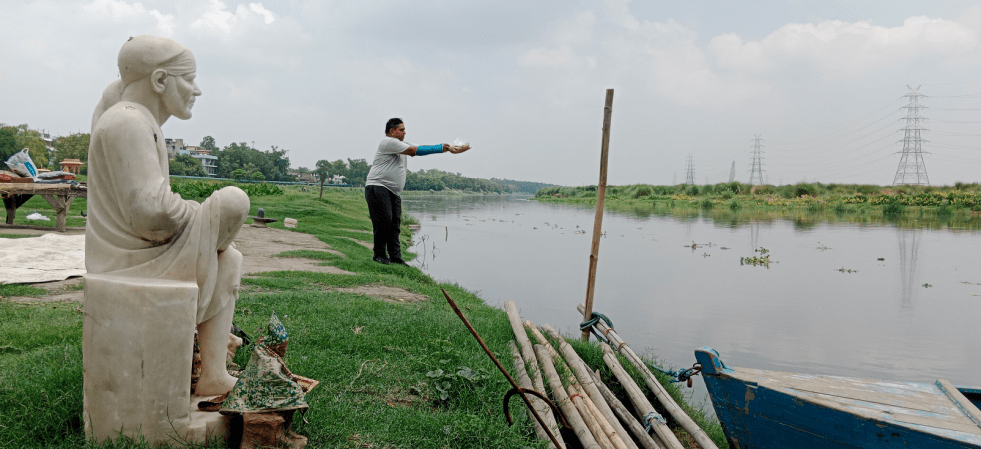
दिल्ली में नई सरकार: क्या अब निर्मल होगी यमुना?
दिल्ली विधानसभा चुनाव प्रचार के दौरान यमुना नदी प्रदूषण एक महत्वपूर्ण राजनितिक मुद्दा बना। चुनाव जीतने के बाद स्वयं प्रधानमंत्री और भाजपा पार्टी के वरिष्ठ नेताओं ने ‘आप’ सरकार की हार के लिए यमुना की दुर्दशा को एक प्रमुख कारण बताया। साथ में यमुना को साफ करने की बात कही। ऐसे में क्या दिल्ली के नागरिक एक स्वच्छ बहती नदी की उम्मीद रख सकते हैं?
Continue reading “दिल्ली में नई सरकार: क्या अब निर्मल होगी यमुना?”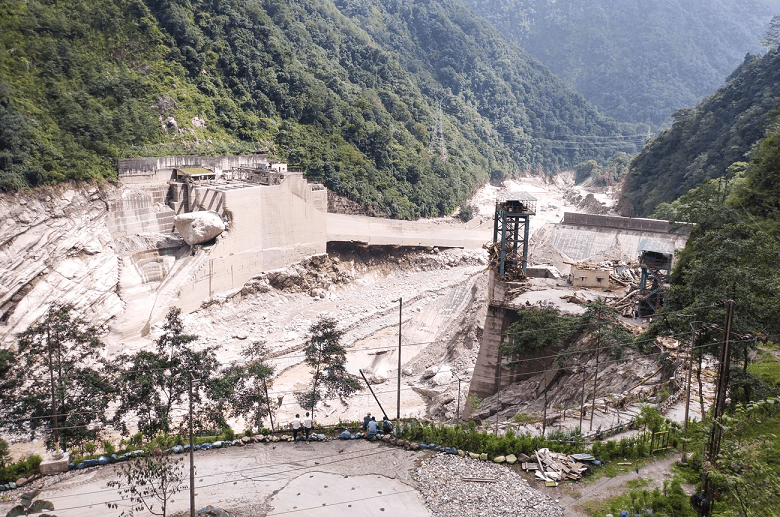
DRP 100225: EAC & MoEF’s shocking decision to clear Teesta 3 Dam raises a stir
(Feature Image: Teesta III HEP dam was washed away on the intervening night of Oct. 3-4, 2023 on account of a GLOF. The flood in the downstream was magnified by the dam disaster. Photo: Mayalmit Lepcha/Source: Sanctuary Nature Foundation)
The decision of Union Ministry of Environment and Forests (MoEF)’s Expert Appraisal Committee (EAC) on River Valley Projects on Jan 10 2025 has understandably raised a stir and earlier the EAC and MoEF reviews and reverses this decision, better it will be. The decision is shocking on a number of counts. The EAC itself had raised a number of issues related to the project in its earlier meeting, but decided to clear the project without getting satisfactory resolution of the issues.
Continue reading “DRP 100225: EAC & MoEF’s shocking decision to clear Teesta 3 Dam raises a stir”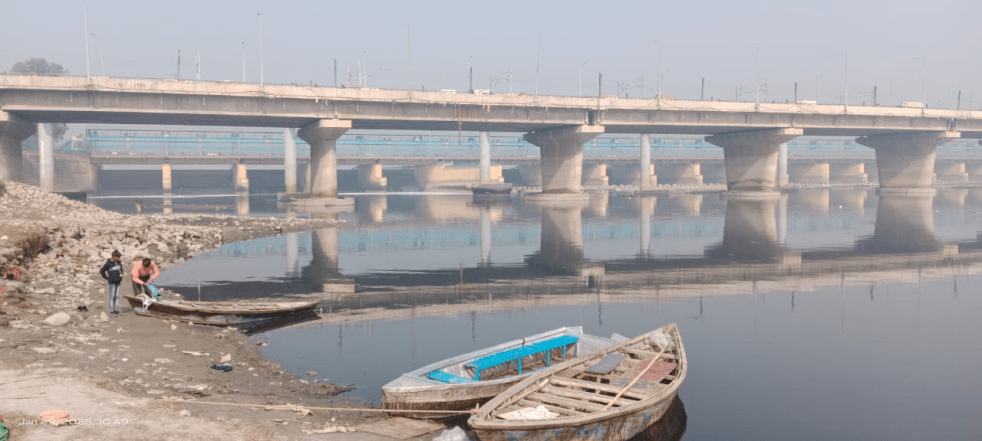
Yamuna Manthan 050225: River Needs Attention beyond Politics & Elections
(Feature Image: Yamuna river downstream Okhla barrage in Delhi on Jan 29, 2025. Bhim Singh Rawat/SANDRP)
Political blame games surrounding the Delhi assembly election have brought Yamuna in focus for about past one month. Disappointingly, the central and all state govts in basin are responsible for continual degradation of river and none of the parties have offered practical solutions to improve the condition of the river in the national capital.
It’s a fact that the pollution from Haryana drains, namely Dhanaura Escape in Karnal, Drain No 2 in Panipat and Drain No. 6 and 8 in Sonipat have been bringing untreated effluents in increasing amounts in the river upstream of Delhi, ultimately severely crippling the Wazirabad barrage based potable water supply in the city. In addition to diversion of river waters for industrial, irrigational and potable demands from Hathni Kund Barrage, increasing unsustainable mechanized mining for about past eight years have been ruining lean season flows in the river in upper segment. The concerned central govt departments and Haryana government are required to address these issues effectively as part of a solution to improve the health of river in Delhi.
Continue reading “Yamuna Manthan 050225: River Needs Attention beyond Politics & Elections”
World Wetlands Day 2025: Ten Positive Stories from Urban India
(Feature Image: Dharmesh Barai, who leads the NGO Environment Life Foundation (ELF), began the “Mangrove Clean-Up Drive” on August 15. Source: TIE)
This compilation highlights ten positive efforts put in to protect the lakes, waterbodies and mangroves in urban India by individuals and environmental groups during 2024. The top ten stories come from five metros: Delhi (3), Mumbai (2), Bengaluru (2), Chennai (2) and Kolkata (1). We are sure such positive actions also happened in other cities in 2024, but we could not find them.
We have also compiled the top ten positive wetlands reports from the countryside here. Also see overviews on the worsening plight of Ramsar wetlands, deteriorating situation of wetlands in India in general and some important judicial interventions concerning protection and management of wetlands in the country that have taken place during the past one year.
Continue reading “World Wetlands Day 2025: Ten Positive Stories from Urban India” SANDRP