Dams · DRP News Bulletin

DRP News Bulletin,16 July 2018: Dam Safety Is Needed, Can We Depend On CWC Engineers Alone?

India certainly urgently needs credible measures to achieve both structural and operational safety of dams. As the HINDUSTAN TIMES editorial emphasizes, we need much greater transparency, accountability and participation of independent, non government experts at every level of functioning of Dam Safety mechanism. Current Dam Safety Bill draft falls far short of that. This is also underscored by many of the news we bring in this July 16, 208 issue of DRP News Bulletin.

The Tamil  Nadu CAG report, as Indian Express reports, has clearly said that the Chennai floods  of Dec 2015 were majorly due to the wrong decision of dam operators to release 29000 cusecs of water for 21 hours, in violation of all safety norms, but no was punished for this wrong decision. The same has always been the case.

The Bulletin also brings the warning from, no less than Chief Minister of Assam to NEEPCO that if NEEPCO, the operator of the 405 MW Ranganadi Dam releases water from the dam without warning and when downstream areas are facing  floods, they will have to bear the losses people suffer. Continue reading “DRP News Bulletin,16 July 2018: Dam Safety Is Needed, Can We Depend On CWC Engineers Alone?”

Dams · DRP News Bulletin

DRP News Bulletin 9 July 2018: National Meeting on Inland Fishworkers in Delhi on July 10, 2018

The NATIONAL PLATFORM FOR SMALL SCALE FISH WORKERS (INLAND) is convening a Consultative Meeting on Livelihood Issues of Inland Small Scale Fish Workers 10thJuly 2018, Gandhi Peace Foundation, New Delhi.

The Invitation letter says: “India is gifted with vast and varied inland water bodies bearing rich fish resources.Rivers and canals, reservoirs, ponds and tanks, oxbow lakes, wetlands, backwaters and estuaries yield 7.21 million tonnes of fish which is more than 66% of total fish production of the country. The sector sustains about 4 million fish workers and a total population of around 2 crores.Fish provides good quality animal protein rich in minerals and vitamins. About 800 million Indians eat fish. After milk, fish is the largest source of our animal protein.These huge resources are under severe stress. Rivers are poisoned with heavy pollution. Diversion of water from rivers is harming their ecological flow.

Continue reading “DRP News Bulletin 9 July 2018: National Meeting on Inland Fishworkers in Delhi on July 10, 2018”

Dams · DRP News Bulletin

DRP News Bulletin 2 July 2018: Punjab Cabinet Meets To Discuss Water crisis, IS IT SERIOUS?

In a rare event, Punjab Cabinet met to discuss water crisis on June 26, 2018. The reports before the meeting seemed to give hope that may be Punjab will look at the water crisis in a fundamental, holistic way. https://indianexpress.com/article/cities/chandigarh/punjab-government-to-firm-up-water-conservation-plan-5233826/ (June 26, 2018)

But the cabinet ended up setting up a committee to assess the ground water situation in the state and submit a detailed proposal for water conservation.

– Punjab has the highest rate of groundwater exploitation and had on average withdrawn 28.2 million acre feet (MAF) water yearly during 2008-2013. However, the yearly average replenishment of water was only 18.9 MAF.

– 73% of Punjab’s irrigated area uses groundwater for irrigation, while only 27% uses surface water. The number of tubewells had gone up exponentially from 2 lakh in 1971 to 12.50 lakh in 2015-16, with 41% of these have water availability beyond the depth of 60 metres. https://timesofindia.indiatimes.com/city/chandigarh/5-member-committee-to-assess-punjab-ground-water/articleshow/64770186.cms  (28 June 2018)

Continue reading “DRP News Bulletin 2 July 2018: Punjab Cabinet Meets To Discuss Water crisis, IS IT SERIOUS?”

Dams · DRP News Bulletin

DRP News Bulletin 18 June 2018 (Why this Onslaught of Big Dam Advocacy by CWC Ideologues?)

In a recent article Ashwin B Pandya, Former, Chairman Central Water Commission (CWC) refuses to acknowledge either the adverse impacts of dams or the better option of using groundwater aquifer for storing water. And thus making unscientific arguments against dam decommissioning and for dams. No one is talking of removal ALL dams as the author seems to postulate and then dismiss it as impossible and irresponsible.

Continue reading “DRP News Bulletin 18 June 2018 (Why this Onslaught of Big Dam Advocacy by CWC Ideologues?)”

Dams · DRP News Bulletin

DRP News Bulletin 11 June 2018 (Groundwater Pollution: The Hidden Killer Menace Lurking All Over)

Aquifers in 16 States in the country are contaminated by uranium, whose presence in drinking water has been linked to chronic kidney disease by several studies, a recent study has shown. More importantly, uranium doesn’t figure on the list of contaminants monitored under the Bureau of Indian Standards’ drinking water specifications. The main source of this contamination is natural, but groundwater depletion by extensive withdrawal of water for irrigation and nitrite pollution due to the excessive use of nitrogenous fertilisers may be exacerbating the problem, said the study.

– The study was carried out by a team of researchers led by Avner Vengosh, professor of geochemistry and water quality at the Nicholas School of the Environment at Duke University in the US. The team, which also included experts from the Central Ground Water Board, the Rajasthan government’s Ground Water Department and Gujarat Water Resources Development Corporation, analysed groundwater samples from 226 locations in Rajasthan and 98 in Gujarat.

Continue reading “DRP News Bulletin 11 June 2018 (Groundwater Pollution: The Hidden Killer Menace Lurking All Over)”

Dams · Water

India’s Summer of Water Crisis in 2018

North India

HIMACHAL PRADESH Water scarcity leaves Shimla high and dry Residents in the city are reeling under acute water shortage for the last few days. They are getting rationed water supply after four-five days.“Hoteliers are paying private tankers Rs 2,600 for 6,000 litre water,” said Harnan Kukreja, president, Shimla Hoteliers’ Association. The Shimla Municipal Corporation is struggling to ration 21 MLD of water that was pumped from its major sources these days. The water availability per resident was just 5 litre as on May 25.

 The city needs 45 MLD water daily, but the water availability has come down from 29 MLD last week to 21 MLD on May 25, 2018. Guma, which has 20 MLD capacity, and Giri, which has 20 MLD capacity, could supply just 4 MLD and 14 MLD, respectively, revealed MC supply chart. Churat supplied 1.25 MLD, Chair (0.32 MLD) and Koti- Brandi (0.35 MLD).

Around 4-5 MLD water is getting wasted due to leakages in supply lines before it reaches MC storage tanks in the city. The state government and the MC have failed to compensate for the water that it used to get from the Ashwani khud, supply from where was suspended in 2015 following a jaundice outbreak in the city. http://www.tribuneindia.com/news/himachal/water-scarcity-leaves-shimla-high-and-dry/594998.html (The Tribune, 26 May 2018) Continue reading “India’s Summer of Water Crisis in 2018”

Dams · DRP News Bulletin

DRP News Bulletin 28 May 2018 (Survival of Biodiversity Habitats, Must for Ganga River Rejuvenation)  

On occasion of International Day for Biodiversity May 22, 2018, the Union Minister for Water Resources, River Development and Ganga Rejuvenation Nitin Gadkari released the report on “Status of Conservation of Select Aquatic Species” in river Ganga in New Delhi . The celebrations have been organised to mark the 25 years of coming into force of the Convention on Biological Diversity. He also inaugurated a day-long workshop organized by World Wildlife Fund (WWF) on the theme “Ganga and its Biodiversity: Developing a Road Map for Habitat and Species Conservation”.

A database of Ganga Praharis’, a self-motivated cadre, being created by Wildlife Institute of India (WII) was also launched by the Minister. Shri U.P. Singh, Secretary, Ministry of Water Resources, River Development and Ganga Rejuvenation said: “Ganga still has about 2,000 aquatic species.” He also pointed out that both aviralta and nirmalta of river Ganga are important and the government is committed to achieve both.

Continue reading “DRP News Bulletin 28 May 2018 (Survival of Biodiversity Habitats, Must for Ganga River Rejuvenation)  “

Dams · DRP News Bulletin

DRP News Bulletin 21 May 2018 (World Over New Renewables Are Making Large Hydro Unviable & Unnecessary)

According to an energy expert, 6,000 megawatts’ worth of wind and solar contracts had been signed in Cambodia, Vietnam, Thailand and Laos in the last six months, seriously challenging the financial viability of major hydropower projects on the river. Buoyed by a recent Thai government decision to delay a power purchase deal with a major mainstream Mekong dam, clean-energy proponents and economists told the third Mekong River Commission summit that the regional energy market was on the cusp of a technological revolution.

A six-year Mekong River Commission Council study on development plans for the Mekong, which was the focus of the summit, suggested catastrophic impacts upon the health of the river system if all planned hydropower dams — 11 mainstream projects and more than 100 on tributaries — were built.

Continue reading “DRP News Bulletin 21 May 2018 (World Over New Renewables Are Making Large Hydro Unviable & Unnecessary)”

Dams · Ken River

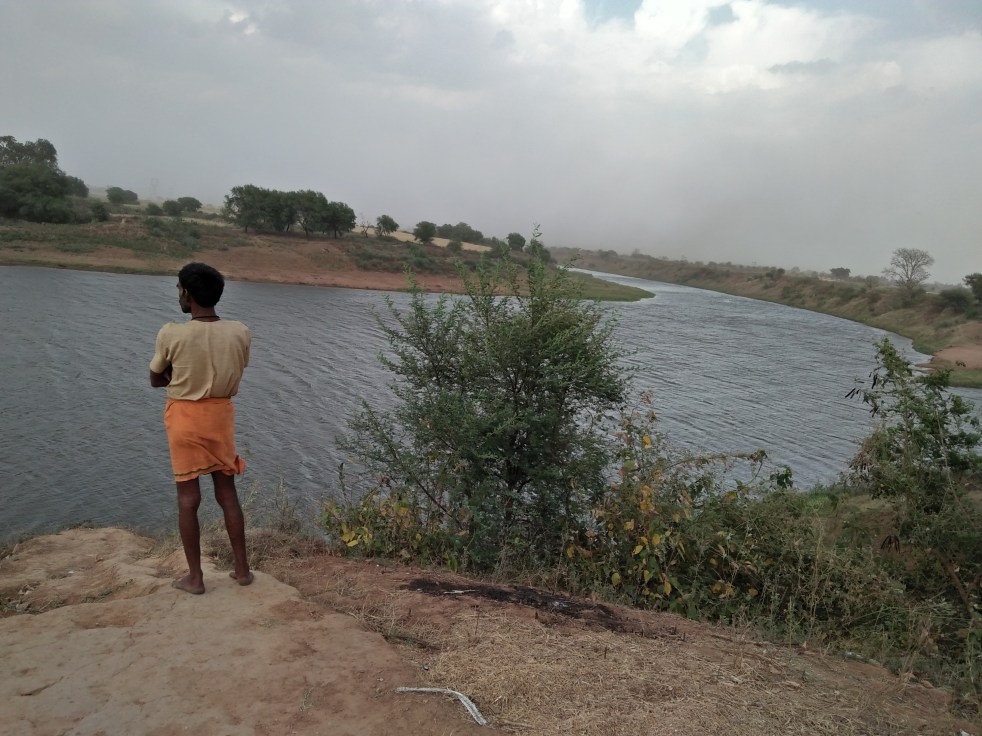
Amazing experience of Yatra along the Majestic Ken River

SANDRP & VEDITUM: Press Release, Panna, Apr 19, 2018

  1. About the Yatra: The Ken River is considered to be one of India’s cleaner rivers. It is part of the Ganga basin and meets the Yamuna at Chilla Ghat in Banda District, Uttar Pradesh. To closely understand the Ken, this walk along the Ken was organised by SANDRP – South Asia Network on Dams, Rivers and People (SANDRP) from Delhi and Veditum India Foundation from Kolkata. In the past, these organisations have also undertaken long journeys along rivers Yamuna and Ganga.

The difficult terrain of the Ken River and the harsh weather required this journey to be undertaken in multiple parts (June 2017, October 2017 and April 2018). It required a total of 33 days to complete this over 600 km journey on foot, where we discussed issues of the river, water, agriculture, the proposed Ken Betwa project and other socio-environmental topics with villagers in over 60 villages.

Continue reading “Amazing experience of Yatra along the Majestic Ken River”

Dams

WORLD WATER DAY 2018: INDIA’S POSITIVE WATER STORIES

On occasion of World Water Day 2018, SANDRP put together reports of remarkable water conservation work done by individuals, villager community and organizations across the country.

Good that UN report this WWD says[i]: “The efforts by local communities in India to improve water availability have been lauded in a UN report that highlights the importance of finding nature-based solutions to meet global water challenges…. The report notes that reservoirs, irrigation canals and water treatment plants are not the only water management instruments at disposal. It also cited the example of China’s Sponge City which aims to recycle 70 per cent of rainwater.”

Image result for un wwd 2018 nature based water solution report

But the UN report[ii] does not mention that local options should be the top priority and should be exhausted before going for large projects. Unfortunately, Indian water resources establishment’s priority is Large dams and river linking. The UN report also does not say that local systems are bound to be neglected and destroyed in the shadow of large projects and where the governance is top down, unaccountable, non transparent and non participatory.

Continue reading “WORLD WATER DAY 2018: INDIA’S POSITIVE WATER STORIES”