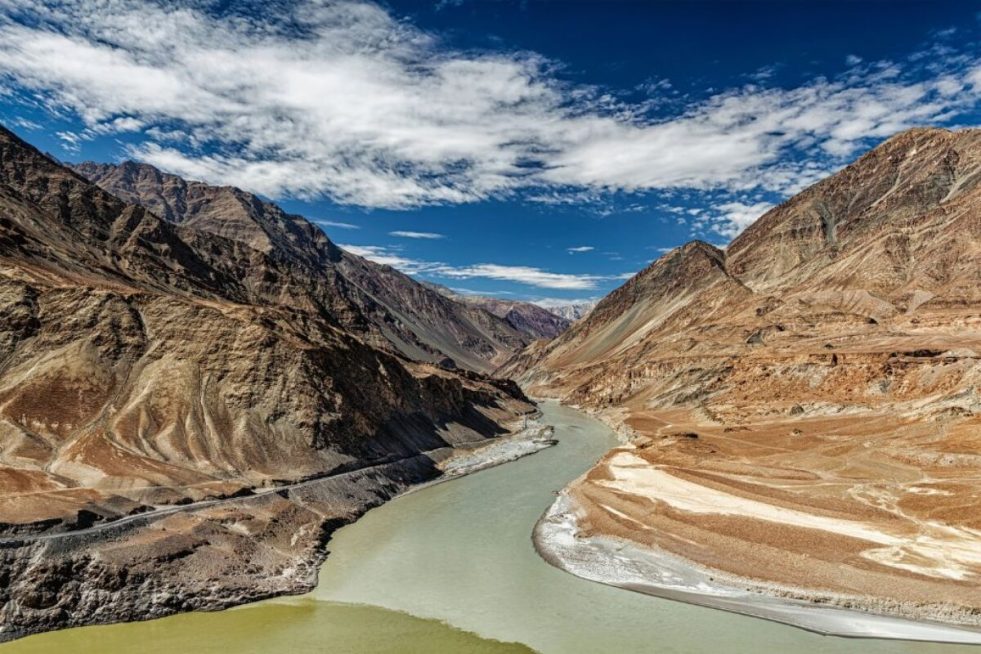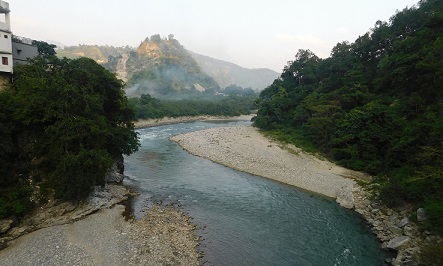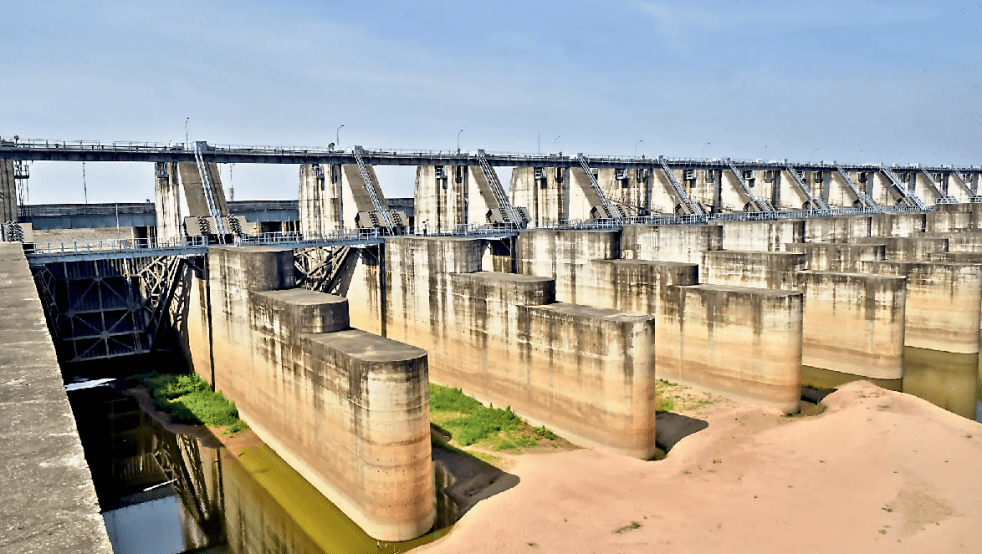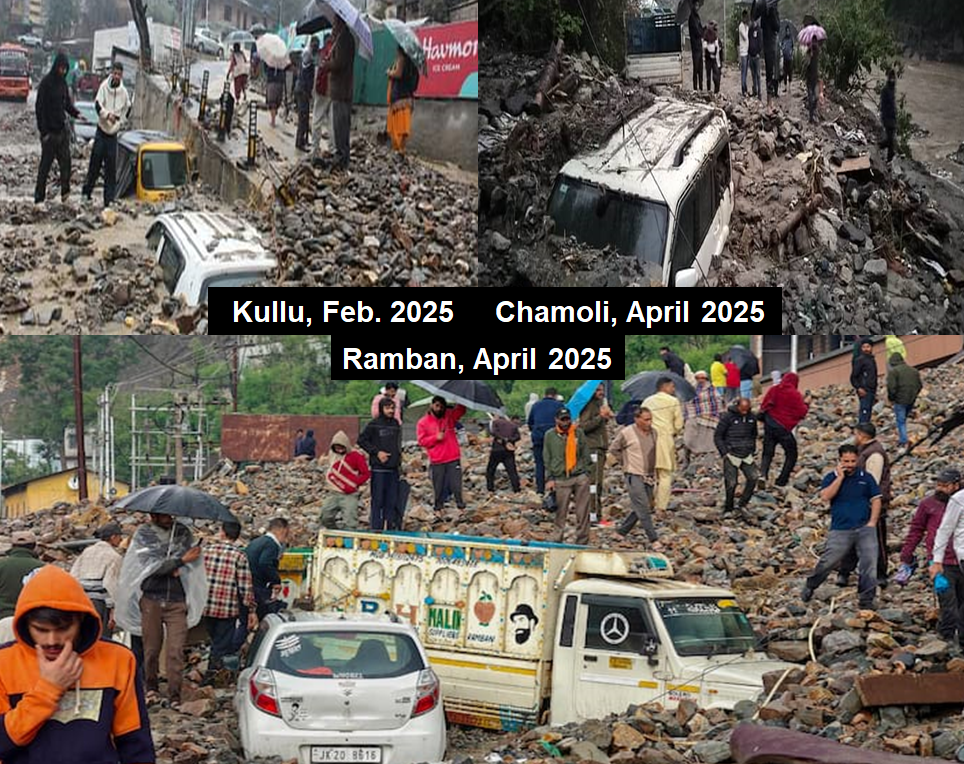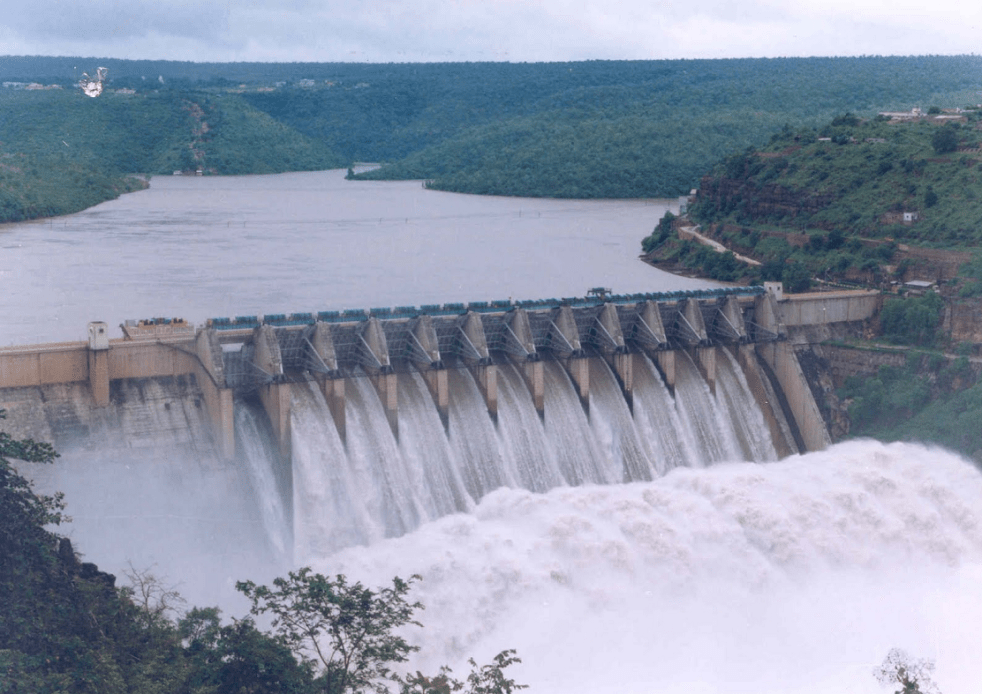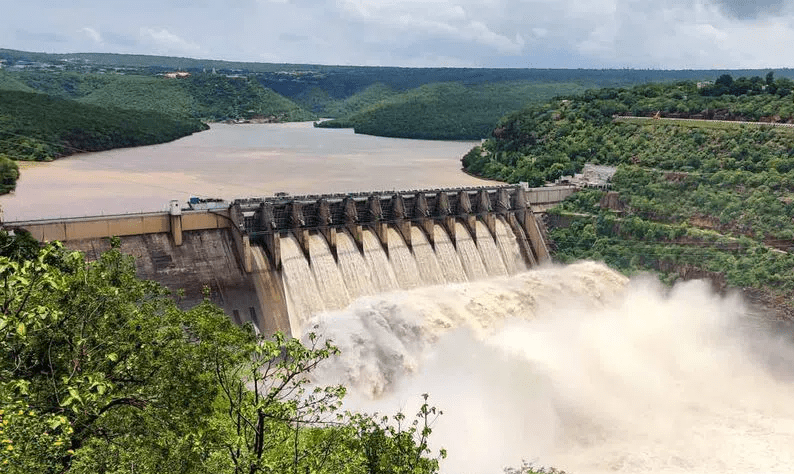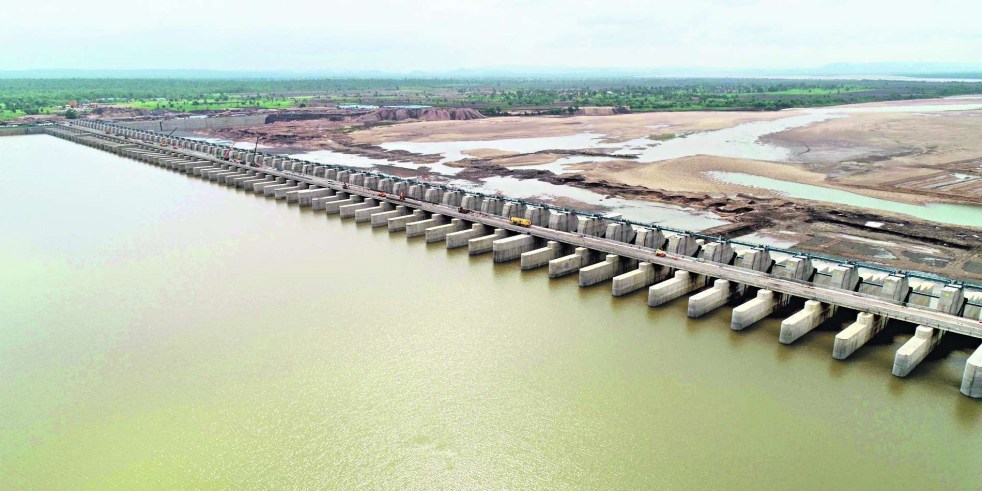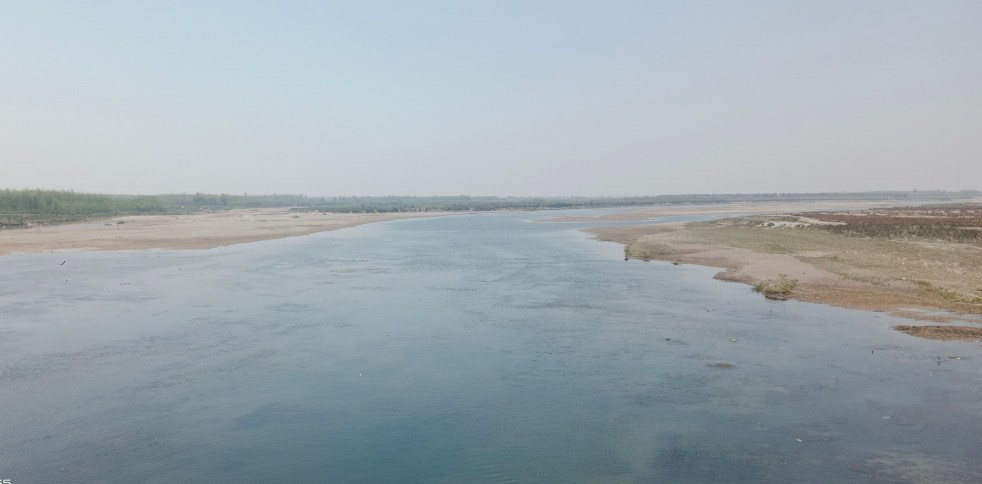
“All rivers are living entities. The job of any river is to flow. And it flows in a most systematic and sophisticated manner. As it flows, it nurtures everything around it, everything within it. A flowing river, whether it’s gurgling, bubbling and frothing on rocks and cobbled valleys or silently meandering along its course on the plains, is a happy and healthy river. Like a lap of a mother, the river allows many living beings to make a home and live together…” These introductory lines from the recently published book “Submerged Worlds and Amazing Stories of India’s Mighty Rivers” highlights the significance of a free-flowing river.
Continue reading “Book Review: Submerged Worlds & Amazing Stories of India’s Mighty Rivers”Tag: Ganga
DRP NB 210425: Farakka Dam operation completes 50 years: A time to review?
(Feature Image: Infographic taken from Farakka now boomerangs on India: Source: TBS News, Oct. 2019)
The 2304 m long Farakka dam on Ganga in Murshidabad district in W Bengal was commissioned on Apr 21 1975 and completes 50 years today. The dam needs an independent review to assess the costs, benefits and impacts of the dam, both projected and actual and to decide about the need and form of its continued existence.
Continue reading “DRP NB 210425: Farakka Dam operation completes 50 years: A time to review?”DRP NB 140425: Normal SW Monsoon Rainfall forecast
(Feature Image: Skymet predicts normal monsoon with 103% rainfall of the long-period average. Source: Business Today)
The private forecasting agency Skymet has forecast Normal SW Monsoon rainfall across India on Apr 8, 2025, a week before IMD comes out with its forecast. This advance forecast by private agency, compared to IMD raises question as to how come the private agency with much more limited resources is able to achieve this.
In any case, the forecast of about 3% above normal rainfall in June Sept 2025 is welcome. The rainfall distribution forecast, both across the four months and across the four regions is also good if it comes true.
Continue reading “DRP NB 140425: Normal SW Monsoon Rainfall forecast”DRP NB 070425: New Impact of Big dams: Increased oxygen intake in inland waters
(Feature Image: Merging point of of Badiyar gaad (left) and Yamuna river (right) at Gangani in Badkot, Uttarakhand. BS Rawat/SANDRP)
New research published this week reveals a startling change: the oxygen levels in inland waters has been dramatically reducing since 1900, due to human activities including big dams and pollution. This condition leads to dead fish, collapsing food chains and reducing water quality, among other impacts.
There are simultaneous processes ongoing in inland waters leading to production and consumption of oxygen. The location and processes for both the production and consumption of oxygen has been changing during 1900 to 2010. The Global oxygen consumption in inland waters, net of production has gone up by over 100% from 0.26 Pg/year in 1900 to 0.53 Pg/ year in 2010. While earlier climate change was considered major contributor to this reduction, new research shows it is big dams and pollution that are much bigger contributors. Inland waters now pull nearly 1 billion tons of oxygen from the atmosphere every year — half as much as the entire ocean emits back.
Continue reading “DRP NB 070425: New Impact of Big dams: Increased oxygen intake in inland waters”DRP NB 310325: Does Mumbai need Gargai Dam?
Maharashtra Chief Minister Devendra Fadnavis, brushing aside the concerns of forest officials, opposition, environment and available options this week has asked the officials to fast track the Forest and other clearances for the controversial Gargai dam for additional supply of water to Mumbai. This is shocking on several counts.
Our study earlier showed that Mumbai does not need any additional dam including Gargai if it utilizes available local resources including rainfall, reuse of treated sewage, desalinization, demand side management, groundwater recharge, among other cost effective and less destructive options. The Chief Minister of his government has not bothered to respond to these concerns or options. In fact, when our study was published, even government officials in Mumbai had supported our conclusions.
Continue reading “DRP NB 310325: Does Mumbai need Gargai Dam?”DRP NB 240325: Will the encroachments in Anasagar lake in Ajmer be removed?
Over the last about 4 years, very interesting events are playing out in India’s judiciary regarding the encroachments in Anasagar lake in Ajmer, Rajasthan.
The first order from the National Green Tribunal came to remove the encroachments from Anasagar lake in Dec 2021, reiterated in Aug 2023 as the encroachments were in violation of the environmental regulations and Wetland Rules of 2017. Apparently, the state government with investment of Rs 12 Cr was the biggest encroacher and the investment in the encroached land continued even while NGT order was awaiting implementation.
Continue reading “DRP NB 240325: Will the encroachments in Anasagar lake in Ajmer be removed?”DRP NB 170325: Can we work for more Kham Rivers and Less Sabarmati Rivers?
This week’s DRP News Bulletin brings two encouraging reports about revival of Kham River in Sambhajinagar district in Maharashtra. The Bulletin also brings report of Gujarat Human Rights Commission sending notice to the state and city government to uphold the environment rights of citizens in Vadodara. There is also here the news of signing of MOU for beginning of 4 km water taxi along Yamuna in Delhi upstream of Wazirabad barrage, of course without any environment or social impact assessment, any environmental clearance, any public consultation process, with blind faith in Sabarmati River Front Development model.
Continue reading “DRP NB 170325: Can we work for more Kham Rivers and Less Sabarmati Rivers?”DRP NB 100325: “Good Floods Reduce the Risk of Bad Floods”
(Feature Image: An aerial view of the flooded collectorate ghat at the bank of Ganga river in Patna. PTI Photo/Source: The Asian Age)
This remarkable report this week, quoting the work of Gilbert F White, also considered “father of floodplain management” provide a number of lessons in flood management. These include: – “Floods are ‘acts of God’, flood losses are largely acts of man” (By ‘acts of God,’ he meant that floods are perfectly natural events);
– “Yes, floods will happen. Whether or not those floods are good floods or bad floods, whether or not they cause damage is largely up to us”;
Continue reading “DRP NB 100325: “Good Floods Reduce the Risk of Bad Floods””Yamuna Manthan 060325: Dolphin Survey Rings Alarm for Pachnad Dam Project
(Feature Image: Line drawing of proposed Pachnad Major Irrigation Project. Source: Amar Ujala)
The findings of the latest Project Dolphin Survey Report released on March 3, 2025, by Prime Minister Narendra Modi in presence of Union Environment Minister Bhupendra Yadav have raised significant concerns over proposed Pachnad Major Irrigation Project.
While the survey reiterates the adverse impacts of dams, barrages fragmenting the national aquatic animal’s habitat as the population has been found nearly absent between Narora barrage and Kanpur barrage stretch in main stem of Ganga, it also reveals that the endangered species are preferring refuge in Ganga tributaries and confluence points and has been found in highest numbers along 47 km long river stretch between Chambal and Pachnad in Bhind which still undammed.
Continue reading “Yamuna Manthan 060325: Dolphin Survey Rings Alarm for Pachnad Dam Project”DRP NB 030325: Supreme Court asks: How a city can become smart without protecting the water bodies, wetlands
In a welcome development, the Supreme Court of India has asked, in the context of Ajmer City in Rajasthan, how can a city become smart without protecting the water bodies/ wetlands? How cities will become smarter by encroachments on the water bodies and wetlands? The Supreme Court bench threatened the Rajasthan government of contempt of court for non-compliance of order dated Dec 1 2023 as also the order of National Green Tribunal on Dec 13 2021.
The Supreme Court here has hit the nail and raised a very fundamental question that is relevant to all the cities across India as they are all guilty of allowing encroachments and destruction of local water bodies in their respective areas. This is a suicidal step as it has adverse impact on the cities in multiple ways and yet, most cities consider this smart and in fact get away with it. There is also no National Urban Water Policy guiding the cities solve the puzzle of multiple issues handled by multiple departments, including some by the local, state and central governments. This self-created mess in the cities comes handy for the various vested interests in encroaching more water bodies. The judiciary, so far has also not been effective in addressing this issue with any effectiveness.
Continue reading “DRP NB 030325: Supreme Court asks: How a city can become smart without protecting the water bodies, wetlands”