The World Wetlands Day, celebrated around the world on 2nd February each year, marks the adoption of Ramsar Convention on Wetlands in Iran in 1972. The Convention came into force in India since 1982. The theme for this year’s World Wetlands Day is “Wetlands for Disaster Risk Reduction.”[i]
During floods, wetlands can act as natural sponges and absorb intense runoff and discharge, holding more water than most soil types.[ii] This role of wetlands has been demonstrated most powerfully in India in the past few years. Chennai deluge in Nov-Dec 2015 highlighted what happens when wetlands in a city reduce by 2/3rds in just 20 years. Similarly, Kashmir valley lost 50% of its riverine wetlands in just over 30 years, which was one of the main reasons behind the extensive losses during the Sept 2014 Jhelum floods, as corroborated by Dr Asam Rahmani of Bombay Natural History Society (BNHS)[iii]. In 40 years, Bangalore has lost 79% of its wetlands, similar is the case with Mumbai, Hyderabad, Kolkata and New Delhi. Bhopal, a city of relatively sloping profile, faced floods twice in 2016, and wetlands, including the rivers in the city are facing existential risks in terms of encroachments[iv].
In the midst of a serious meeting pontificating on water issues, suddenly one hears an evocative sher in impeccable Urdu, followed by laughter and rounds of Irshad. The sher captures a lot in a few lines.
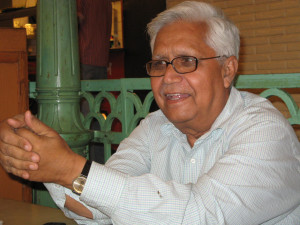
For an MTech Engineer from IIT and a Ph D Structural Engineer, Dr Dinesh Kumar Mishra, Mishra ji, is a colourful personality.
Mishraji, a light moment Photo: kdasgupta2007.wordpress.com
His erudition on rivers and floods in Bihar is tempered by folklore, songs, myths and shayari. A polyglot, Mishraji speaks and writes with eloquence in not only in Hindi and English, but in Bengali, Odiya and Urdu with equal ease. He holds a doctorate from the University of South Gujarat and has been an Ashoka Fellow. Mishraji is an institution in himself when it comes to rivers and floods of North Bihar and has single-handedly contributed to a gradually changing perception of flooding rivers as a catastrophe or “something to be tamed”.
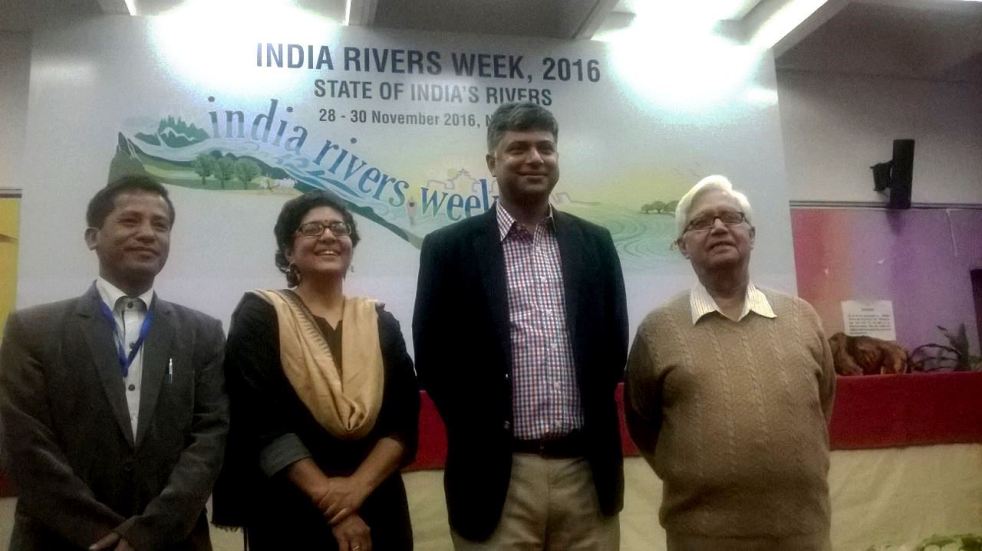
And hence, it gives us great pleasure to share that Mishraji was honored with the Bhagirath Parayas Samman at the India Rivers Week held in New Delhi on the 29th November 2016. India Rivers Week is being organized since November 2014 by a consortium of NGOs including WWF India, INTACH, SANDRP, Toxics Link and PEACE Institute Charitable Trust. More than 100 River experts, planners, researchers, artists, enthusiasts and activists from different parts of the country have been coming together to celebrate India Rivers Week in Delhi in last week of November to discuss, deliberate and exchange their experiences and ideas aimed at the conserving, rejuvenation, restoration of rivers in the country.
Citation of Bhagirtah Prayas Samman states “Dinesh Mishra, an engineer from IIT Kharagpur, has laid the foundation for an extensive knowledge base on floods in rivers.Through his writings, lectures, advocacy and public interactions he has inspired many individuals and organisations to record local knowledge about floods and generate information that creates awareness among communities. All this has become part of a larger social movement… It is an honour to recognize and celebrate Dr Dinesh Mishra’s extraordinary Bhagirath efforts in institutionalizing traditional ways of living with floods.”
Born just prior to independence in a village in Utter Pradesh, Mishraji has dedicated his life in telling us about destruction wrought by infrastructure centric-flood control measures on rivers… especially rivers of the Ganga basin in North Bihar. Since 1984, Mirshraji is engaged in the study of floods, water-logging and irrigation and has slowly nurtured a diverse army which is able to see a lot more in floods than only destruction. He has helped us see the impact of flood control infrastructure like embankments.
Mishraji believes that India’s flood control policy revolves mainly around embankments resulting in severe environmental problems. The maintenance of such structures is in the hands of “indifferent technocracy” which does not take cognizance of the fact that investment in the flood control sector is doing more harm than good. Rising flood prone area of the country is a pointer to that. There are a wide range of aspects that need to be looked into afresh like agriculture, non-farm employment, migration, health, education, and access to civic amenities etc. He finds it intriguing that reciprocal inaccessibility of the flooded areas during the peak season and prolonged water-logging during the peace-time has not attracted the imagination of most of the responsible people. He is trying to learn from the people, their perception of the problem and take it up with those in power while keeping in touch with the people about the probable official intervention. These bridges are rare and much-needed in India. He has raised the issue of floods and water-logging and the links with infrastructure in state, national and international levels.
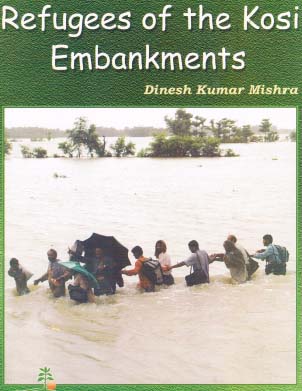
He has highlighted the futility of embankments as a flood control measures in rivers like Kosi and its tributaries. Through his persistent efforts of over more than three decades, Mishraji has helped change the way river floods are understood and managed. Using an approach which respects the natural cycle of floods, founded on local knowledge, he has robustly challenged the main stream flood control approach. For him, the long-term sustenance of rivers as well as their natural processes is the key, supported by meticulous research into the historical and cultural aspects of rivers.
Mishraji’s narration of how people used to come out in boats to enjoy flooded areas at full moon nights in Bihar is not only poignant, it also reminds us of the paradigm shift that came into our water management when we discarded age-old wisdom and adopted measures which were out of sync for our rivers.
Mishraji’s work is a confluence of solid grass root level contacts, extensive knowledge of local traditions, topography, geography and hydrology, robust field research and unique analysis. His writings including articles, books and films have made a deep impact on current understanding and thinking about floods in rivers and how best to deal with them. Through all this, he has made notable contributions towards developing a new policy dialogue on India’s flood control system, and the impact they have had on livelihood practices.
Mishraji is also the convener of an informal group of flood activists called Barh Mukti Abhiyan, an effective informal group with wide acceptance and vast contacts. He is currently engaged in writing about river Gandak and Ghaghara and thus shall complete the entire landscape of rivers of north Bihar.
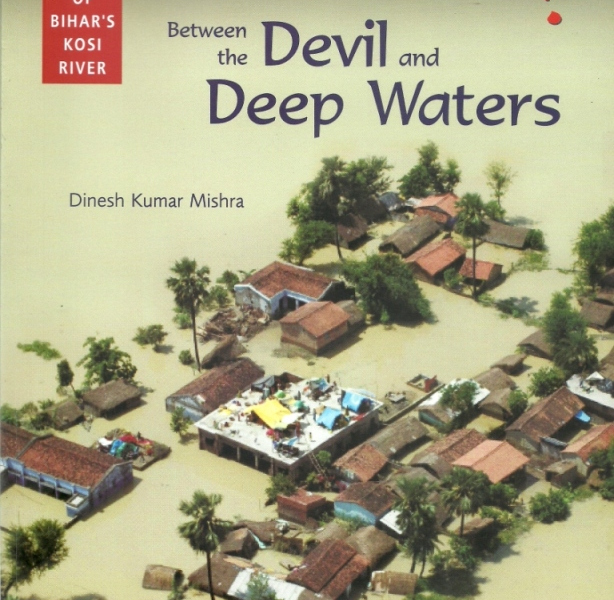
He has over hundreds of Notable among his large number of publications, are “Trapped! Between the Devil and Deep Waters: The Story of Bihar’s Kosi River” and “River Bagmati: Bounties Become a Curse”. His book “Boya Per Babool Ka’ was chosen as one of the best books written over the subject of environment by the Ministry of Forest and Environment, Government of India in 2002. This was later translated into English and published titled, ‘Living with Politics of Floods’ in 2002.
He was a member of the Dams and Development Forum of UNEP and represented Project Affected People there during 2003-07. He was also a member of the Working Group on Flood Control and Water Logging of the Planning Commission of India to review the progress made in eleventh Five Year Plan and make recommendations for the Twelfth.
He has encouraged many organizations to take up the issue of floods and water-logging in their respective river basins, in Bihar and other states as well, and they are carrying on their works. He has encouraged many groups to take up drainage works of small chaurs (land depressions) and resume agriculture on the land that emerges out of water. He provides them with basic technical details and help them executing the work. This has shown very encouraging results as compared to heavily budgeted drainage schemes taken up by the Irrigation Departments.
He has published a book on the River Mahananda (titled Bandini Mahananda in Hindi), a boundary river between Bihar and Bengal, in 1994 followed by a bi-lingual (Hindi and English) book on the Bhutahi Balan (2004) (Bhutahi Nadi aur Takniki Jhar Phoonk / Story of a Ghost River and Engineering Witchcraft) and on the Kamla River (2005) titled Baghawat Par Majboor Mithila Ki Kamala Nadi/ The Kamla-River and People on Collision Course.
His book on the River Kosi titled ‘Dui Paatan Ke Beech Mein – Kosi Nadi Ki Kahaani’ was published in Hindi in 2006. Its updated English version titled “Trapped! Between the Devil and Deep Waters – Story of Bihar’s Kosi River”, co-published by SANDRP, came out in 2008 just before the famous breach of the Kosi embankment at Kusaha in Nepal. Book on Bagmati was published in 2010, titled Bagmati Ki Sadgati. Its English version is also co-published by SANDRP titled “River Bagmati: Bounties Become a Curse” in August 2012. He has now started working on the major river of North Bihar, the Gandak and that will complete detailing the major rivers of north Bihar. This book will touch the Ghaghara and the Burhi Gandak too that flow almost parallel to the Gandak.
Mishraji’s crusade to highlight the wisdom behind age-old methods to “live with the floods”, his fight to expose the utterly destructive impacts of embankments and their role in amplifying flood misery, coupled with his sensitive and scholarly love of folklore and literature make his work accessible and engaging. We need more people like Mishraji who can tell us the stories of our rivers.
We congratulate him for the Bhagirath Prayas Samman and thank him, on behalf of our rivers, for his Bhagirath efforts.
India Rivers Week 2016: River health assessments highlighted during this year’s discourse
The second edition of India Rivers Week that took place from November 28- 30th 2016 witnessed a gathering of stalwarts in the field of river conservation, including activists, academicians and practitioners from across the country.
This year’s theme ‘State of India’s Rivers’ highlighted the importance of arriving at a comprehensive way of understanding and assessing the health of our rivers. Over the three days, experts in the field discussed the methodology of river health assessment and deliberated on state wise reports prepared, with the aim of arriving at a list of rivers graded blue for wild/pristine, pink for threatened and red for critical or destroyed. 290 rivers across the country were assessed out of which 205 figured in the red list indicating that 70% of our country’s rivers are in a critical state, warranting immediate action.
Yamuna Basin: River Yamuna[1] accounts for 7.10 % of the total geographical area of the country. TheHaryana state forms 6.5%[2]of the river basin. It drains an area of 366,223 square km in the Gangetic plain and constitutes 40.2% of Ganga Basin. The river annually carries 10,000 cubic billon meters (CBM) of water of with 4400 cbm is used for irrigation. Yamuna river basin forms the upper sub-basin of Ganga river[3] the total area of which is 35798.19 square km comprising of 47 water sheds.
Yamuna river originates from Bandar Punch glacier in Uttarkashi district of Uttarakand. The river flows through about 200 kilometers before reaching Haryana State at Shivalik Hills in Yamuna Nagar district. In the same district the river is trapped in Hathini Kund Barrage located in Kalesar National Park.
Is there hope for India’s Environment from Mr Anil Dave? Most shocking statements from India’s environment Minister. He says let us do Ken Betwa link when the project has NONE of the statutory clearances from his own ministries. The independent committees are yet to appraise the project and yet he is saying: “This Ken-Betwa river link we should do it and have an impact assessment after five years. If it is good, then great, if not they don’t go for other linkages.” Is there any hope for India’s environment? As he says, YE SAB CHALTA HAI!!
The dam induced flood disaster could only increase since we refuse to learn any lessons:
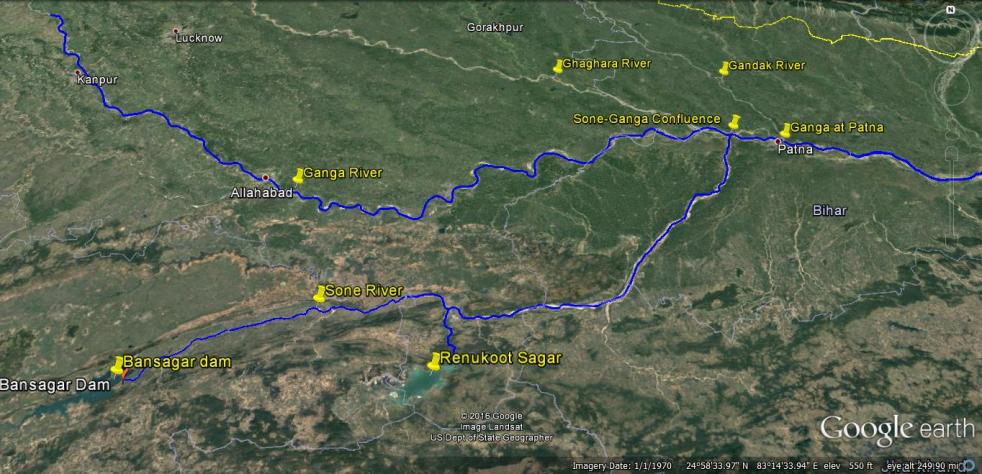
SANDRP Blog A tale of two dams: Is Bihar’s unprecedented flood an avoidable man-made disaster?Is the unprecedented water levels of Ganga that has flooded Bihar and UP an avoidable flood disaster? What role did the water releases from Bansagar dam in the upstream and Farakka Dam in the downstream play in this? SANDRP analysis of this developing situation. Feed back is welcome, Please help us disseminate this.Kindlyd also see the Hindi version of this blog here दो बाॅधों की कहानीः क्या बिहार की अप्रत्याशित बाढ़ एक टाली जा सकने वाली मानव जनित त्रासदी है?PRABHAT KHABAR newspaper of Ranchi carries “in-depth” articles by Parineeta Dandekar and Himanshu Thakkar of SANDRP in the context of Bihar floods and demand to decommission Farakka barrage. Flood expert Dinesh Misra explaining role of dams behind unprecedented Ganga flood. In Part I of a separate report he narrates about Bihar/ Patna floods due to Ganga and Sone. Also see, बिना नदियों के उफान के ही पटना डूब गयाBBC Hindi website has published this based on a radio discussion they carried earlier on the issue of Bihar floods and role of Bansagar and Farakka dam.
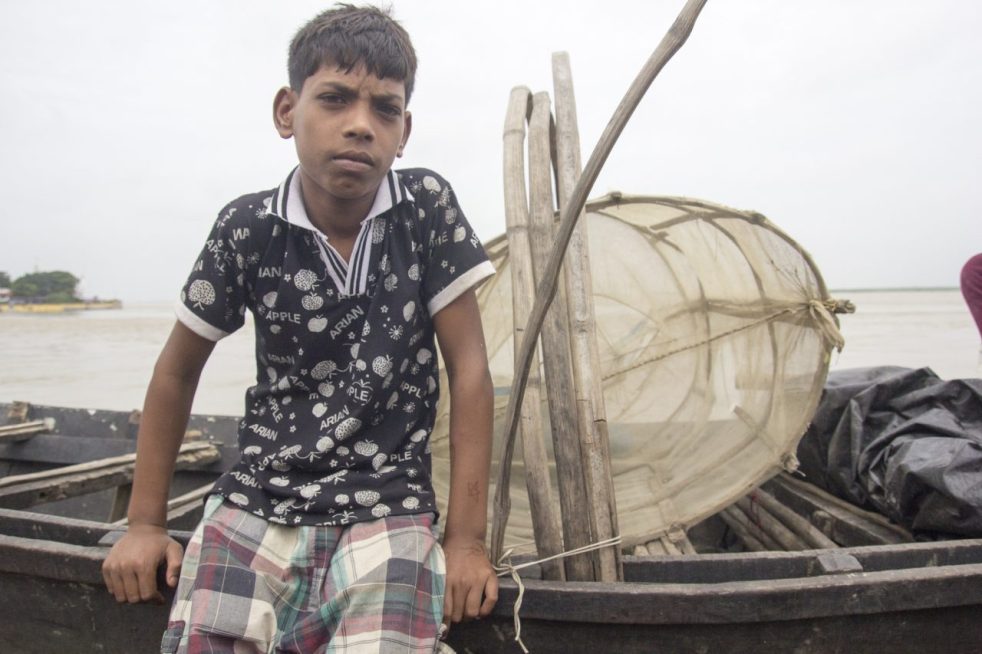
Above: Young kid from a fishing family in Kahalgaon, even the most informed communities (Ganga Mukti Andolan) are clueless about the government’s intentions (Photo by Veditum)
GUEST BLOG BY: Siddharth Agarwal
As the Ganga rises and fills streets and alleys with it’s water all along it’s course, I spend a time out at home, partially because of personal reasons and in some parts due to the rising levels of the river hindering all sorts of movement around it. Currently on a walk along the Ganga for Veditum India Foundation’s ‘Moving Upstream’ project, I’ve been able to walk a distance of about 1000 kms alongside it’s banks from Ganga Sagar till Varanasi in 50 days’ time. Some places saw me walking right next to the river while others had me maintaining my distance since it just wasn’t possible to peruse a course anywhere in the vicinity of the flooded banks.
The rising levels of the river are no surprise, an annual occurrence with variation only in ferocity. We’re surprisingly still caught off guard, every single year, with this news about floods in cities like Patna, Allahabad and Varanasi making it to national television on an almost daily basis. But what of all the places between Patna, Allahabad and Varanasi? What of all the places that are not cities and of all the people who are not urban dwellers? The major focus as I walk along the river are the people of the river and their lives, those who inhabit this space known to all as the vastly fertile Indo-Gangetic plains but unknown as a place extremely vulnerable to the forces of nature and shaky towards those man-made.
What will happen to a river that already has no fish and is way too salty. The barrages will mean doom for even the few fish that are left (Photo by Veditum)
I had been informed in advance of the situation of our fishermen by minds already working in the field of environment and rivers in our country, often mentioning that these communities were severely under-represented and very much neglected even when it came to discussions relating to them. Non-inclusiveness of communities while making decisions is not a new theme in India, but given the extent of impact that some upcoming government decisions/policies was going to have on these people, I decided to ask them a few questions as I proceeded upstream from Ganga Sagar, starting early June 2016.
Anywhere downstream of the Farakka barrage, the mention of the word barrage has a stunning effect on the people and 1975 is a year that fisher folks remember as a year of doom. For most readers and even for me before I started upon this trip, this would makes sense if one tries to put in a little effort in imagining how a barrage or dam might affect a river. But unlike how logic would dictate, this effect doesn’t exist just downstream of the barrage and similar reactions continued even further upstream, in Jharkhand and Bihar.
In places along the feeder canal from the Farakka Barrage, an increased frequency of ships to the Thermal Power Plants has resulted in rapid soil erosion (Photo by Veditum)
The National Mission for Clean Ganga and The National Waterways programme have been in the limelight for making grand promises of :
1.) Cleaning and maintenance of the river
2.) Economic Development and Cheaper Transportation.
Now, this is not a commentary on the efficiency and feasibility of making such proposals, simply an attempt to understand the impact of such programmes. EIA (Environmental Impact Assessment) and SIA (Social Impact Assessment) are the terms you might be looking for, something that ideally the governing authority should be taking care of. But why is any of this important or relevant to this article? It is because whatever happens in these places between Patna, Allahabad and Varanasi is very much relevant and important to discuss. These are not uninhabited spaces, but pretty well populated areas with a lot of lives at risk.
Coming back to the point of the two government programmes, firstly, the NMCG letting the Waterways programme run through protected areas and non-protected ecologically sensitive areas goes very much against the whole agenda why this mission was set up. Secondly, the waterways programme in a bid to decrease ‘transportation’ costs and utilise our river potential recently ran tests with large vessels on the Ganga.
Small country boats near Farakka. Wonder what large waves from huge vessels will do to these (Photo by Veditum)
What is surprising (or rather not) is that these test runs were without any warnings to fishermen and boatmen in said test sections, the few who were on the waters at the time of passing of these vessels had to face high waves, enough to topple a less experienced or unaware boatman. The news of these tests were flashed all over the main stream media, but failed to make it to those for whom it mattered. Not an uncommon occurrence at all, but till when will this go un-noticed? On asking these fishermen if they have any clue why this is happening, most of them responded in the negative while a few said they’ve learnt about the government’s plans to run large vessels on the river.
As this conversation extends and questions follow, it is gradually revealed that the picture is not clear and conversations have somehow trickled down in a very muzzled form. Though most fishermen laugh off the prospect of this being a constant activity because of the extreme reduction in water level that the river has seen these past years, often mentioning how large excavators and multiple tugboats have been needed anytime a large vessel has traversed these stretches in lean seasons. There’s talk of loss of fishing nets and reduced catch, difficulty in controlling small country boats in high waves, chances of accidents when transporting villagers to small ‘diars’ for agricultural work, loss of land where there’s no embankments and so on, but this also brings us to the most important part of this article.
The dark clouds often linger over the heads of those not involved, not informed (Photo by Veditum)
The Water Highway programme on the Ganga has been proposed on a 1500 km stretch from Allahabad to Haldia, with barrages at about every 100 kms. Now, an avid news reader would have knowledge of this as a great policy step but the fisherman who directly depends on the river for his livelihood does not. This holds true for maybe 15-20 different fishing communities that i’ve had the chance to interact with in the first 50 days and even the mention of new barrages was way too shocking for those who have had to bear the burden of Farakka’s impacts. There are even places where locals have signed their wishfulness of a barrage near their villages without understanding consequences and only having been shown the shiny side like we see everyday in the papers, called ‘development’.
The ‘Moving Upstream’ project intends to understand and present a narrative of the river and it’s people, hoping this will lead to more meaningful conversation and inclusive action by the government. In a recent announcement by Sushri Uma Bharti Ji – Union Cabinet Minister of Water Resources, River Development & Ganga Rejuvenation, she said she will march down the length of the river to take stock of the status of various projects commissioned by her. I’m glad that cues are possibly being taken from the Moving Upstream project, but like every other government project, when will our habit of assessment (if at all) after execution stop and preparedness & understanding before implementation materialise? I hope she does her Ganga yatra before approving any projects, I hope for inclusiveness.
CenterMeeting held to sort out Mahanadi issueUnion Water Ministry on July 31 called a Meeting of representatives of Odisha & Chattisgarh Govts to consider the various water resources issues/projects in Mahanadi Basin. It was decided that the Central Water Commission would invariably ensure that the DPRs for the projects in Mahanadi basin which are appraised by it, are duly shared with the other riparian State and that the riparian State is given a period of 45 days to convey their views/comments on the project. It was also decided that the DPRs would be delivered to the Resident Commissioners of respective States and thereafter the representatives of the State would be invited to share their observations. The meeting was called in pursuance of the assurance given by Water Minister Uma Bharti in Parliament on July 26. Earlier, fearing that dams on river Mahanadi in Chhattisgarh would have adverse impact on Odisha, former union minister Jairam Ramesh has asked CM Naveen Patnaik to take up all party team to Delhi to raise the matter with the PM. He also said that Congress will send a delegation to Chhattisgarh in a week to study the sites where dam and barrages are proposed to be constructed. On the other hand, former CM Ajit Jogi having broken away from the Congress on July 25 attacked Congress over its opposition to Chhattisgarh’s plan to construct dams & barrages on Mahanadi river.
Ganga Manthan to Ganga Act: No progress madeChairing the 6th meeting of the National Ganga River Basin Authority on July 04 Water Minister Uma Bharti has said that a new act will be formulated for speedy implementation of Namami Gange programme. On July 06, giving a major boost to Namami Gange Programme Ms Uma Bharti has also announced that 231 projects will be inaugurated at various locations in Uttrakhand, UP, Bihar, Jharkhand, West Bengal, Haryana and Delhi on July 07. Incidentally, on July 07, 2014 NDA Govt. launched the Namami Gange programme to rejuvenate the river to be executed over five years. The project has a budget outlay of Rs 20K crore which is 10 times more than what was allocated in previous Ganga Action Plan (GAP) phase I and II. But more money and the PM minister’s zeal, notwithstanding, Namami Gange seems a carryover from its predecessor in one crucial respect. The overwhelming emphasis on pollution abatement that had led to the GAP’s failure bedevils Namami Gange as well. In certain respects, Namami Gange is an improvement on the GAP. It seems that the govt has not learnt lessons from the GAP’s failure. The lag between sewage generation and treatment has remained between 55% & 60% even as new STPs were built under the GAP. This is because a lot of the waste is generated outside the sewerage network and is not conveyed to the STPs. A large section of the country’s urban population lives outside this network. Moreover, the STPs can only do so much. The official statistics show that the STPs are currently running at a deficiency of 55%. The problem of STPs is three-fold: underestimation, shortage and underutilization due to lack of a well-connected underground sewage system.
The problems associated with river Ganga, however, do not end or begin in its middle course dotted by factories. The upstream of the river, where Bhagirathi and Alaknanda join to form the Ganga, is part of a very fragile Himalayan ecosystem. Caution is needed in implementing the Namame Gange projects along this stretch. The Kedarnath flood of Uttarakhand is an example of what a combination of melting glaciers and mindless construction can do to a sensitive geological zone. With more than 40 dams, barrages and weirs and many more planned aviral Ganga seems nothing more than an empty catchphrase. Ganga is the sum total of the contribution of some 12 major tributaries. Without a rejuvenation strategy for each of Ganga’s tributaries, there can be no Ganga rejuvenation.
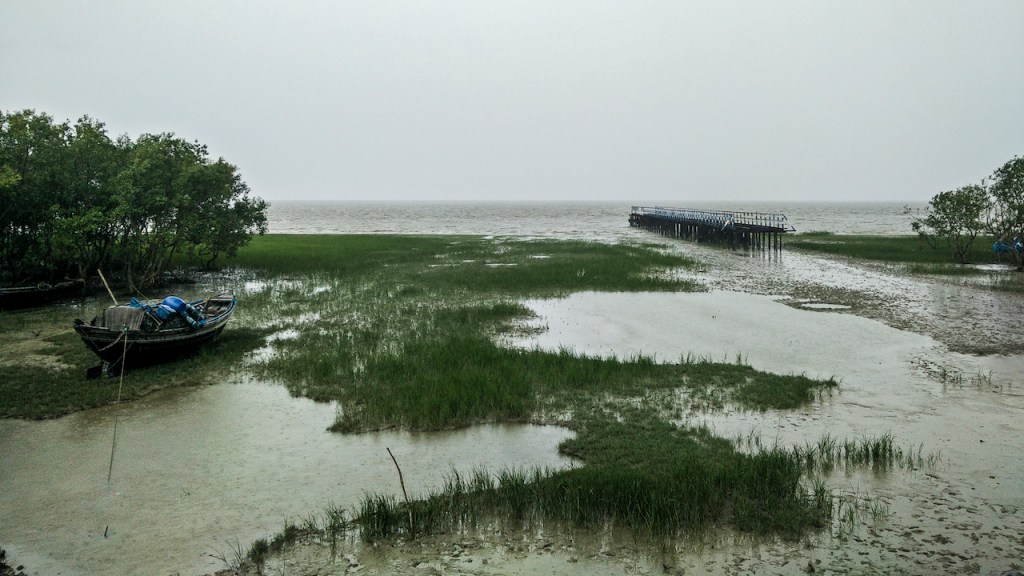
Meanwhile, increased fishing activity and vessel traffic are proving to be the disturbing element downstream. Deploying more scientific methods for fishing and limiting it to levels enough for species’ sustenance might help without significantly affecting livelihoods. The direct consequences of climate change are also felt in the lower belts, around the Ganga Sagar region. Land is disappearing but no comprehensive plans have emerged as yet to provide for the rehabilitation of the region’s inhabitants.
Uma threatens stir over delay in Ken-Betwa interlinkingWater Minister Uma Bharti on June 07 threatened an agitation if there were further delays to the wildlife clearances necessary for the storied Ken-Betwa river-interlinking project. This is TOO Much! Union Ministerthreatening to go on Fast, demanding environment clearance to Ken Betwa link! Calling it a national crime to stop clearance to Ken Betwa link. Saying if the project is not cleared in next meeting, she will go on fast!Claiming that the link will help Marathwada!! It wont help even Bundelkhand, but the Union Minister seems to be setting completely wrong, precedent, which also ultra legal. On the other hand The Hinduhas been consistently underplaying the impacts of the Ken Betwa project and over playing the official lines. Very strange to see this from THE HINDU. Before this in its June 02 meeting the expert appraisal committee (EAC) of environment ministry has deferred environment clearance for the ambitious Rs.10,000cr Ken-Betwa river linking project in its last meeting on June 2, and has sought more clarity on its wildlife & hydrological impact. The meeting could not come to a conclusion as the members of the EAC had several doubts regarding the project’s hydrological feasibility, its impact on hydrology and wildlife too and found that many serious issues related to the project are yet to resolved. In the last week of May 2016, SANDRP in a letter to EAC has written about Ken-Betwa project & why EAC should not clear this. Please help us spread the word and urgently write to EAC if you agree. Himanshu Thakkar coordinator SANDRP points out that the Ken-Betwa link, in essence, Ken-Betwa link will facilitate transfer of water from the Ken River Basin (Bundelkhand) to Upper Betwa Basin (outside Bundelkhand), so it is actually exporting water out of Bundelkhand.





 Water Commission would invariably ensure that the DPRs for the projects in Mahanadi basin which are appraised by it, are duly shared with the other riparian State and that the riparian State is given a period of 45 days to convey their views/comments on the project. It was also decided that the DPRs would be delivered to the Resident Commissioners of respective States and thereafter the representatives of the State would be invited to share their observations. The meeting was called in pursuance of the

 SANDRP