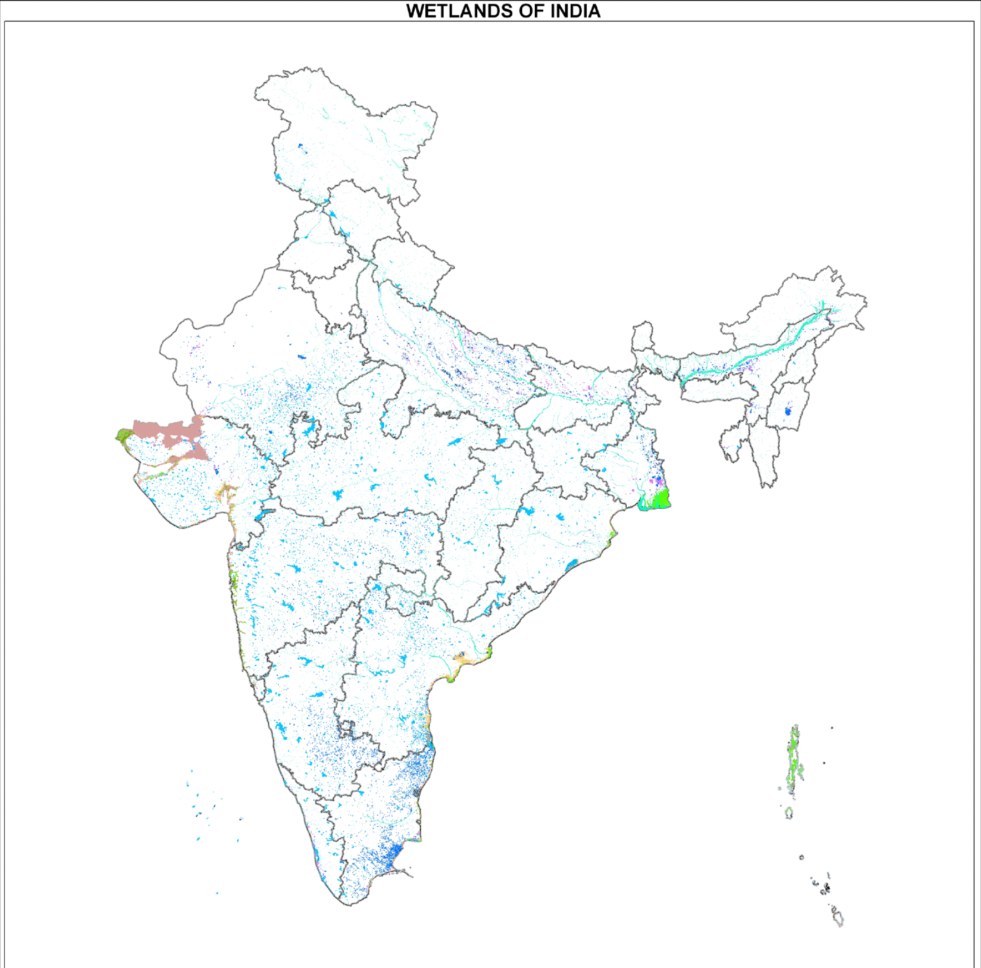
As somewhat belated summer in North India reaches its peak, with ongoing heat wave in Delhi and surrounding areas, there is increasing fear of water scarcity. The media generally uses one figure to highlight this situation, namely Live Storage in some 150 reservoirs in Central Water Commission (CWC)’s Weekly Reservoir Bulletin (WRB) that is published every Thursday afternoon (why cannot this be given on daily basis is a mystery).
Continue reading “Becoming water smart holds the key to our water secure future”Tag: CWC
‘Let Yamuna Flow’: A River’s Appeal to Political Parties
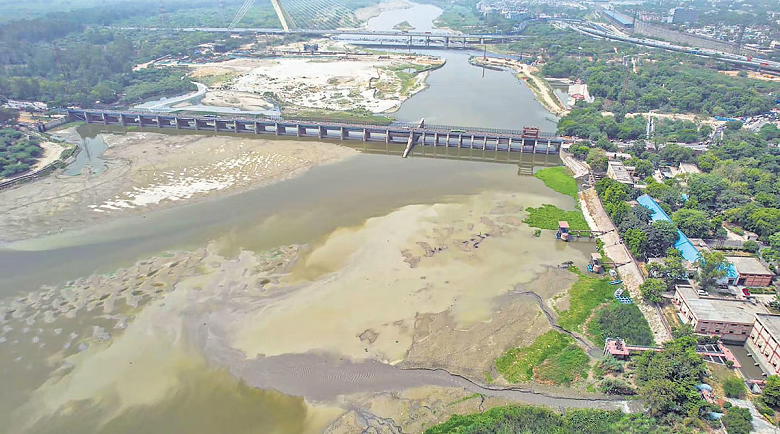
(Feature Image: An aerial view of Wazirabad Barrage shows a drying up Yamuna in May 2022. Image Credit: PTI/TNIE)
In the wake of Lok Sabha election 2024 in Delhi on May 25, the civil societies and concerned citizens on behalf of River Yamuna appeal to the political parties to address the critical issue of absence of environmental flows adversely impacting the river health in the national capital.
Continue reading “‘Let Yamuna Flow’: A River’s Appeal to Political Parties”
DRP 130524: Unreliable Hydropower poses new challenges for India
(Feature Image: NHPC’s under construction 2000 Mw Subansiri Lower Hydro Power Project. Source: PIB, June 2023)
As per this Reuters report based on official information and statements, in June 2024 India will face the biggest peak hour power shortfall in 14 years, mainly due to the slump in hydropower generation. This is the result of not only pushing hydropower projects over the decades, but also not taking any steps to optimize peaking power generation from existing hydro or doing anything worthwhile to manage peak load. India’s hydropower generation had steepest fall in four decades in the year ending on March 31 2024, which was another reason not on rely on unreliable hydropower projects. The regular and frequent disasters that we see connected with hydropower projects in almost every month and more frequently in monsoons should be another reason in this regard.
Continue reading “DRP 130524: Unreliable Hydropower poses new challenges for India”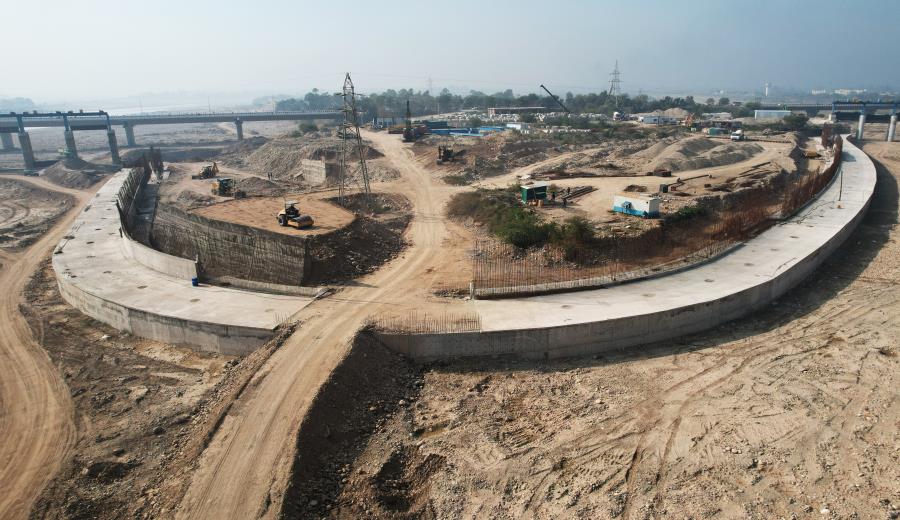
Tawi Barrage & Riverfront Projects in Jammu destroying river, inviting disaster
(Feature Image: a picture of Tawi Riverfront and Real Estate Development uploaded on Jammu Smart City website)
Tawi Riverfront Development (RFD) project in Jammu symbolizes the fallacy of most of the RFD projects in India. The city owes its historical relevance, cultural legacy and gradual prosperity to the river. But in return the Tawi has been witnessing typical urban river problems of gradual decline in flows, continual rise in solid and liquid waste pollution, encroachments and riverbed mining. And as is the case with most of urban rivers, instead of taking effective measures to address the existing threats, the government here has been pumping crores of rupees into an artificial lake and RFD project for over past one and half decade in a non-transparent and questionable manner.
Continue reading “Tawi Barrage & Riverfront Projects in Jammu destroying river, inviting disaster”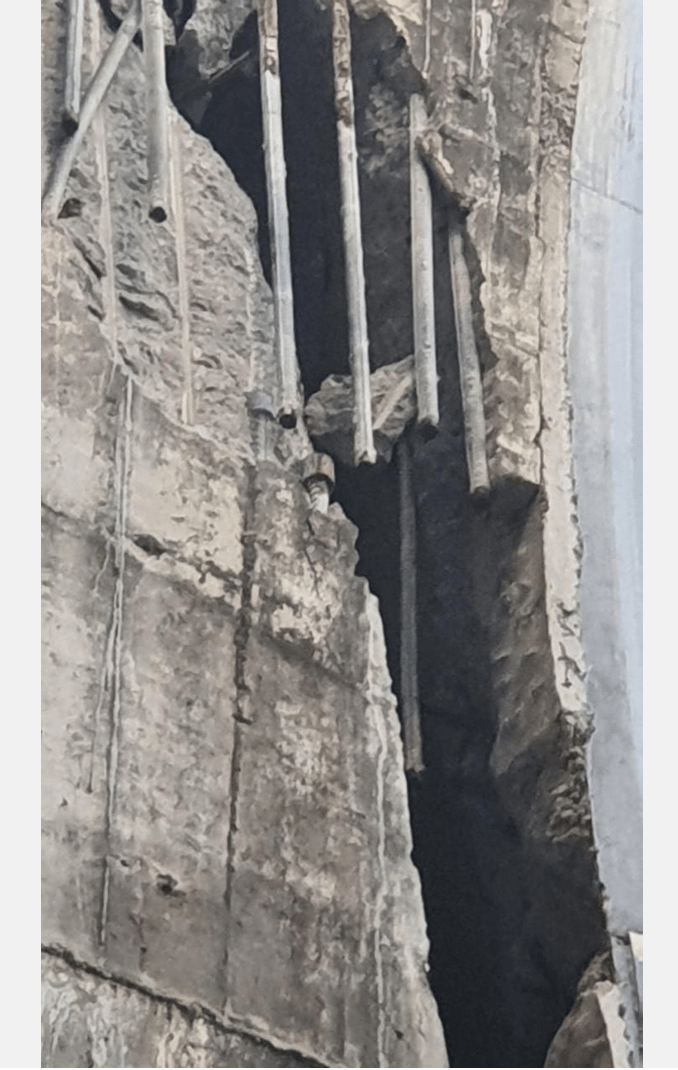
May 2024: Questions about NDSA interim report on Kaleshwaram Dam Disaster
The National Dam Safety Authority (NDSA) Chairman Shri Anil Jain has through a letter dated May 1, 2024, sent an interim report of the NDSA committee to the Telangana govt. The 16 page interim report titled: “RECOMMENDATIONS ON THE INTERIM MEASURES AND FURTHER STUDIES/INVESTIGATIONS TO BE TAKEN UP BY IRRIGATION & CAD DEPARTMENT, BEFORE THE ONSET OF COMING MONSOON” came as an annexure to the letter addressed to Rahul Bojja, Irrigation and Command Area Department (I & CAD) of Govt of Telangana.
Continue reading “May 2024: Questions about NDSA interim report on Kaleshwaram Dam Disaster”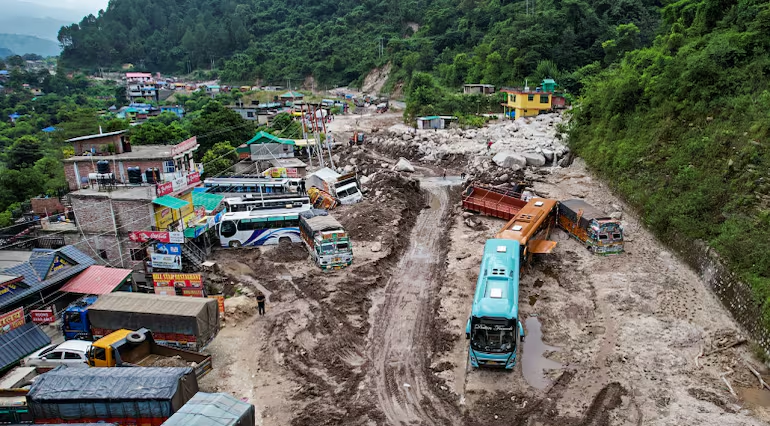
DRP 290424: Why is Climate Change not major election issue?
(Feature Image: Vehicles stuck in debris following a recent cloudburst at Saat Meel in Mandi, on August 20, 2023. (PTI Photo/Money Control)
World’s largest democratic exercise is now ongoing in India to elect the members of India’s Lok Sabha. Over 97 crores are eligible to vote in these elections. One of the biggest factors that is adversely affecting people across India currently is Climate Change. It is affecting almost every aspect of life and the adverse impacts are only increasing with every passing year. This is man-made disaster basically happening due to anthropogenic reasons, affecting air, water, climate, food, health, livelihoods, disasters and so on, affecting everyone. Currently, India is also a major contributor to the climate change causing green-house gas emissions, even though historically, the developed countries have contributed much more.
More importantly, the development options that the elected government choose will decide how the people will be impacted by climate change. The government has large number of options for pathways to development. Considering all this, one expected that climate change responses will be a major issue in these elections. But that is clearly not the case. BJP and Congress, two of the biggest parties fighting the elections, have mentioned climate change in their manifestos, but neither has dealt with this important issue with the detail and seriousness required. Nor are any of them making climate change a major election issue. One expects the ruling party to at least respond in greater detail and seriousness to this issue, but that is not the case.
Continue reading “DRP 290424: Why is Climate Change not major election issue?” DRP 220424: International Energy Agency accepts high-cost high risk hydro is no longer High Priority
DRP 220424: International Energy Agency accepts high-cost high risk hydro is no longer High Priority
The International Energy Agency (IEA) has accepted in its latest World Energy Investment Special Report titled “Reducing the Cost of Capital: Strategies to unlock clean energy investment in emerging and developing economies” has candidly accepted that hydropower (excluding pump storage) is no longer the high-priority sector.
Among the challenges hydropower faces, according to IEA, include long permitting time necessary considering the high and complex impacts of hydropower projects amd delays during construction. IEA figures show that the capacity of Chinese developed hydropower projects that had high proportion of installed hydropower capacity globally in any year for decades, was the lowest in 2023 since 2014. The report accepts that high cost of capital with high interest rates can have a major impact on Cost of electricity, affecting competitiveness of the hydropower projects.
Continue reading “DRP 220424: International Energy Agency accepts high-cost high risk hydro is no longer High Priority”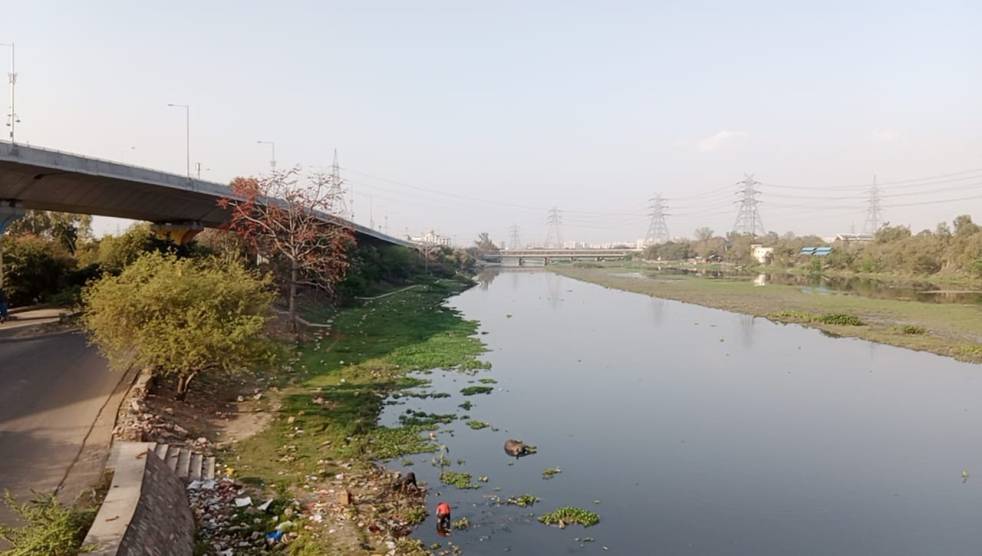
DRP 150424: Supreme Court’s order on right to be free from climate change impact is welcome, BUT…
(Feature Image: Polluted Hindon river flowing through Ghaziabad in March 2024. Bhim Singh Rawat/SANDRP)
On March 21, 2024, a case related to the Grean Indian Bustard, a critically endangered bird – numbering less than 150 individuals – has led the Supreme Court of India to expand citizens’ constitutional right to life and equality to include the right to be free from the adverse impact of climate change. The PIL filed by M.K. Ranjitsinh asked to protect the GIB from extinction. In 2021, in this PIL, the Supreme Court had passed directions restricting and regulating power lines and renewable energy projects in an area of 99,000 sq km in Rajasthan and Gujarat.
The Supreme Court’s latest order modified directions passed in the earlier judgment. Chief Justice D.Y. Chandrachud – writing for the 3-judge bench including Justices J.B. Pardiwala and Manoj Mishra – has expanded the contours of environmental jurisprudence: from the oft-repeated polluter pay principle–precautionary principle–public trust doctrine to the larger arena of climate justice, environmental inequity and gender justice. However, in the process, the protection the SC gave through earlier order has been withdrawn.
Continue reading “DRP 150424: Supreme Court’s order on right to be free from climate change impact is welcome, BUT…”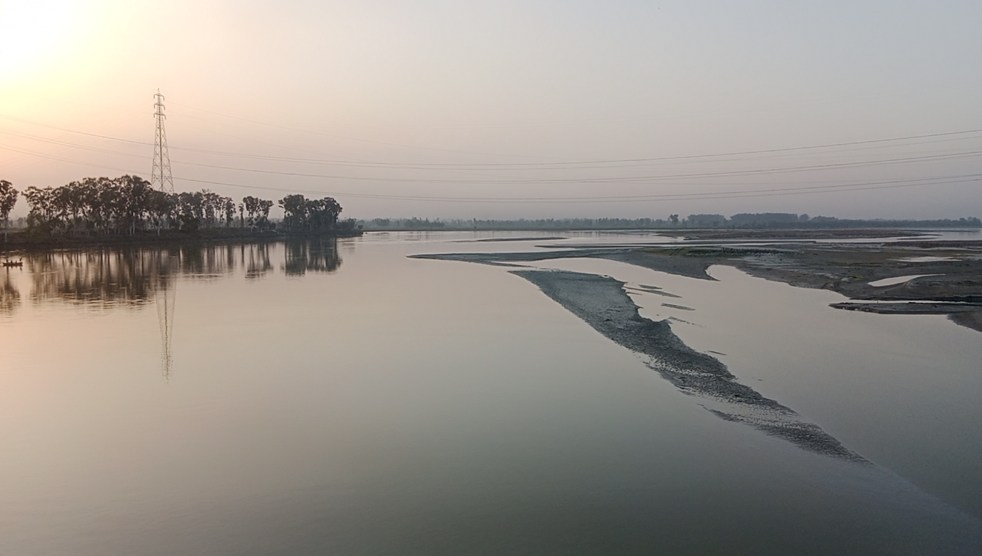
DRP 080424: Demand to include River protection measures in election manifestoes
(Feature Image: Ganga river at Garhmukteshwar in March 2024. Bhim Singh Rawat/SANDRP)
The demand of NAPM to political parties going to the National elections in next couple of months to include protection of rivers and communities dependent on rivers in their manifestoes is most appropriate and urgently required.
Some key components of the demand include strengthening of decentralized river governance, role in decision making related to rivers for the fisherfolks, boats people and other river dependent communities. A draft of the People’s River Protection Bill has also been sent to the political parties. The NAPM also opposed indiscriminate construction of dams, hydro projects, embankments, barrages, river front developments, illegal sand mining, dumping of solid and liquid waste in the rivers and also interlinking of projects, all being done in the name of development, with least concern for the rivers. The draft bill also demands removal of unjust encroachments into riverbeds and floodplains. NAPM also demands continued flow in the perennial rivers by way of adequate environment flows throughout the length of the rivers from origin to its confluence with other rivers or sea.
Continue reading “DRP 080424: Demand to include River protection measures in election manifestoes”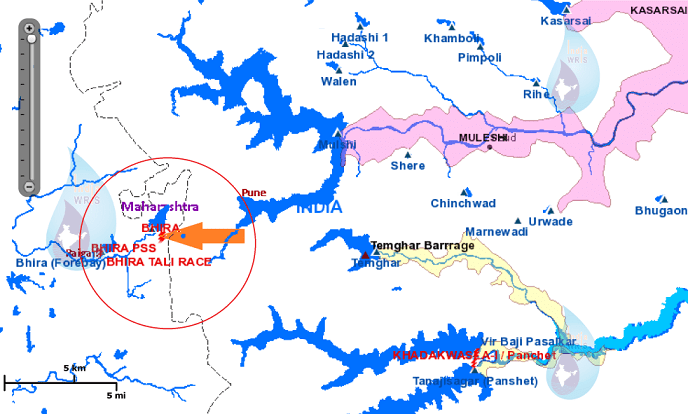
DRP 010424: As Krishna basin faces drought and scarcity, water diverted from the basin to Konkan
(Feature image: Map of Bhivpuri Hydropower Project, one of the Tata Dams)
Large parts of South India, including Maharashtra are facing depleted reservoir levels with the beginning of summer and water scarcity. However, the Krishna Bheema basin, the second largest basin of peninsular India, is diverting water to outside the basin to Konkan. The Krishna Bheema basin has the largest live storages of Maharashtra in Koyna dam (1347.5 MCM) and Tata dams (617.67 MCM), but the water in those storages won’t be available to the drought hit residents of Krishna basin in water scarce Maharashtra, Karnataka, Telangana and Andhra Pradesh.
This is because Koyna and Tata dams divert the water from Krishna Bheema basins to Konkan for power generation. Even in March, according to Maharashtra Load Dispatch Centre, Koyna had generated 128.87 Million Units (MU) of power and Tata Dams had generated 130.47 MU, both by March 30. This implies diversion of millions of Cubic meters of water from Koyna and Tata Dams during March 2024, which mostly gone down from Konkan to Arabian sea.
Continue reading “DRP 010424: As Krishna basin faces drought and scarcity, water diverted from the basin to Konkan” SANDRP