DRP News Bulletin

DRP NB 090123: Atal Bhujal Yojana just chaff without any wheat?

According to this detailed report, possibly the first independent review of the Atal Bhujal Yojana, a 5-year program of the Union govt for management of groundwater, India’s water lifeline, with over half of the project period completed, seems bereft of the fundamental aspects that the scheme itself says are necessary for any sound foundation of the scheme. The review describes it as a dish full of chaff, without almost any kernels of wheat for some sound reasons. It says hardly 18% of allocated money has been spent on Gram Panchayat level community-led Water Security Plan. Only 4% of the planned Gram Panchayat level trainings have been held, with Gujarat and Haryana holding none. Only 27% of money allocated for Gram Panchayat level Hydrogeological monitoring network has been spent. The data gathering instruments that were required from the beginning of the program have not been installed in over half the planned locations. On Information, Education and Communication activities, only 16% of allocated amount is spent.

More detailed independent review of the program implementation will help, but from the available information so far, the signs do not look particularly promising. Is it due to ineptness or lack of intention? Only time will tell.

Continue reading “DRP NB 090123: Atal Bhujal Yojana just chaff without any wheat?”
DRP News Bulletin

DRP NB 020123: Looking Back to Look forward to 2023

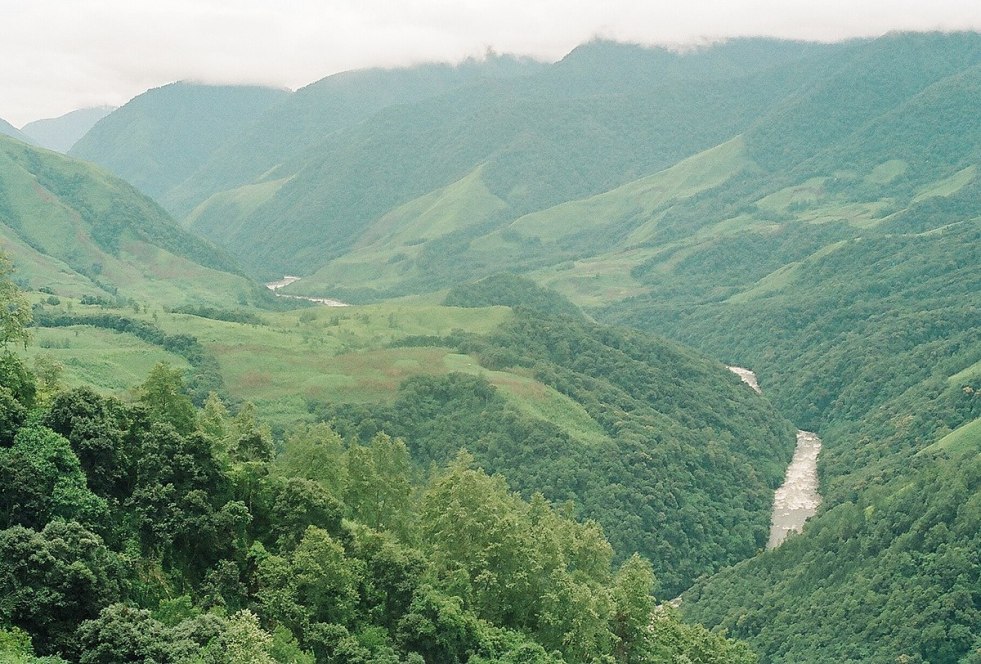
(Feature Image:-River Ken inside Panna National Park from River Stories, Walking Across India-I by Siddharth Agarwal)

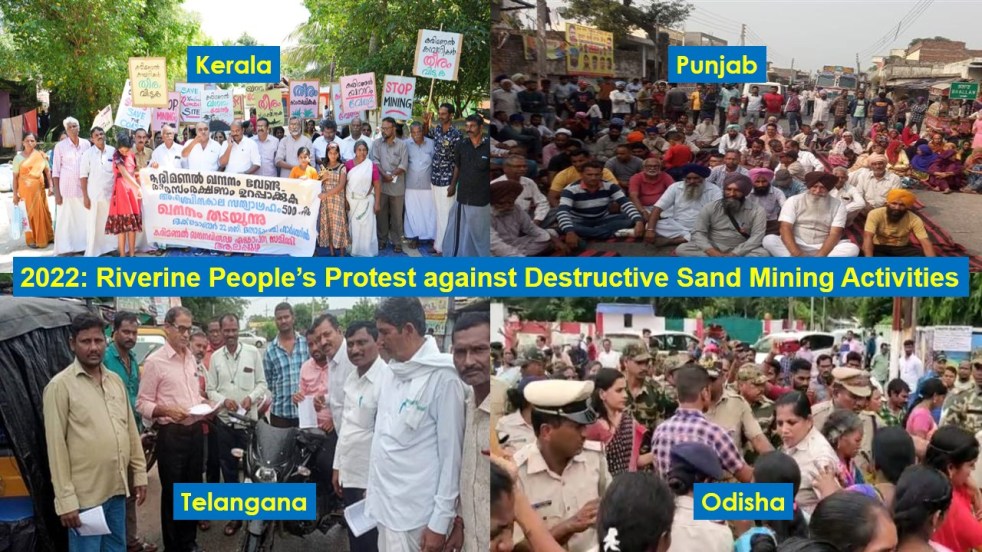
This is the first DRP bulletin of 2023 and we would like to begin on a positive note. But to remain grounded in reality we also need to look back at the events in 2022. We see a number of positives in 2022 and we hope that trend continues. The number of new dams and hydropower projects being started has remained on a declining trend. People and civil society has continued its protests against destructive projects and for more decentralised projects and governance.

Continue reading “DRP NB 020123: Looking Back to Look forward to 2023”
DRP News Bulletin

DRP NB 261222: People on roads against hydro projects that govt is pushing

(Joshimath residents staging protest against land sinking and damages to their homes demanding rehabilitation & halt in NTPC’s Tapovan Vishnugad HEP tunnel work on Dec. 24, 2022. Image source: Atul Sati, Joshimath)

People of at least four states are opposing hydropower projects that the central and state governments are pushing, ignoring all the ground realities. In Uttarakhand, the Joshimath residents are on roads to wake up the government that seems deaf to their protests due to their houses cracking and land subsiding due to the tunnels being blasted for hydropower projects and Char Dham highway being built ignoring the voices of not only the affected people, but also the experts.

In Arunachal Pradesh, people have been writing to the central govt authorities against the Etalin and Dibang projects being pushed in Dibang valley of Brahmaputra basin.

In Himachal Pradesh, the people of Kinnaur and Lahaul Spiti districts have made it an election issue the destructive hydropower projects being pushed there both by the state and central governments.

In Andhra Pradesh too people have been protesting against the pump storage projects being given permission in schedule tribe areas without their prior informed consent and ignoring the statutory requirements.

2022 is thus ending with people’s active protests across the country against destructive, disaster prone and unviable projects being pushed against their wishes and in violation of any proper consultations or even any credible impact assessments. In the escalating impacts of climate change, these projects are even more problematic as they not only worsen the adaptive capacity of people and invite more frequent, intense and spread of the disasters, but they also destroy the mitigation tools like forests and flowing rivers. This when all these projects are not even economically viable, and when better, cheaper options are available. It would be best if sooner the government listens to the people and stop pursuing such projects.

Continue reading “DRP NB 261222: People on roads against hydro projects that govt is pushing”
DRP News Bulletin

DRP NB 191222: Question marks over viability of pump hydro projects

(Feature Image: 1772 Mw PSHPs Spain. Photo courtesy of Iberdrola/ ENR)

The question marks over viability of huge number of pump storage hydro projects (PSHP) being pushed forward in India currently were flowing in the rivers for long. This week, Moody’s investors Service (MIS) seems to have strengthened this after it downgraded Greenko Energy Holdings’ corporate family rating. It may be noted that Greenko is the biggest investor in PSHPs in India from private sector and a major part of Greenko’s new investments are in PSHP.

This makes the implications of MIS’s downgrade all the more interesting. MIS has noted that PHSPs are capital intensive and each PHSP will generate cash flow only after at least 2-3 years of construction (in reality it can be much longer than 2-3 years, the operative phrase here is at least). It also noted that the additional debt to be raised from Greenko’s capital spending, coupled with a rising interest environment will put further pressure on “GEH’s already weak financial metrics” and that Greenko’s high financial leverage due to its substantial capital spending program will keep its financial metrics below its downgrade trigger “for an extended period of time”.

Continue reading “DRP NB 191222: Question marks over viability of pump hydro projects”
DRP News Bulletin

DRP NB 121222: Green Hydrogen from Hydropower is false solution

(Feature Image: Reservoir of Vyasi hydro project dam on Yamuna river in Dehradun. Credit: Varsha Singh/The Third Pole.)

A section of the hydro lobby has been trying to push hydropower in the name of producing green hydrogen as an alternative energy source. However, it has been known for a long time that this is a false solution. There cannot be green hydrogen when sourced from hydropower as not only hydropower projects have huge social and environmental footprint, they also have huge carbon footprint as the following article shows. It would be best to out rightly reject any such claim of green hydrogen when sourced from hydropower project.  

Continue reading “DRP NB 121222: Green Hydrogen from Hydropower is false solution”
DRP News Bulletin

DRP NB 281122: Justice Lokur at IRW 2022: We need to be vocally more aggressive to make a difference

In his key note address at the final session of India Rivers Week 2022, Justice Madan Lokur, former judge of Supreme Court of India said, “Time has come we need to be a little more active and aggressive vocally to ensure that we are listened to about the problems we all are facing. Farmers struggle, the CAA amendment etc. are good examples. There is need for a political will to bring about any change. How do we generate such a political will is the issue.”

Among other messages Justice Lokur gave in his key note address at the final session of India Rivers Week 2022 on Nov 27, 2022 included: “Rivers belong to all, not a select few… We need to ensure that we are effective in our work, our messages.”

The two day, five session India Rivers Week 2022 function focused on use of rivers as waterways, organized in collaboration between India Rivers Forum (IRF is constituted by ten organizations now) and Manthan Adhyayan Kendra ended on Nov 27, 2022. The IRW 2022 sessions had a number of highlights, we will try to bring them to you in separate articles.

Continue reading “DRP NB 281122: Justice Lokur at IRW 2022: We need to be vocally more aggressive to make a difference”
DRP News Bulletin

DRP NB 211122: IRF focus on Rivers as waterways as the World celebrates Fisheries Day

As the World Celebrates Fisheries day today, the India Rivers Forum (IRF) focusses this week on use of Rivers as waterways in its annual program. Spread over five sessions, the online event on Nov 26-27, 2022 is co-organised by Manthan Adhyayan Kendra and IRF. Riverine fisheries and fisherfolk are adversely affected by the current waterways program of the government, and as usual, the government does not even find it necessary to assess the impact of the program on these poorest, weakest, most neglected and most vulnerable section of our population, leave aside the question of compensating them or involving them in the program. The IRF program “Rivers as Waterways in India: Bane or Boon?” will highlight this and many other aspects of the waterways initiative of the government, which aims to include 111 rivers across the length and breadth of the countries.

The five sessions of the IRF program will be titled: “Overview of Indian Inland Waterways”, “Viability of Indian Inland Waterways”, “Impacts of Indian Waterways”, “Governance of Indian Waterways” and “Rivers as Waterways in India: Bane or Boon?”. The two event will have more than 25 speakers. The final session will be chaired by former judge of Supreme Court of India, Justice (Retired) Madan Lokur. Justice Lokur will also give away the Bhagirath Prayas Samman awards of 2022 and Anupam Mishra Medal 2022, the names of the recipients this year will be shared in that final session on Nov 27, 2022.

Continue reading DRP NB 211122: IRF focus on Rivers as waterways as the World celebrates Fisheries Day
DRP News Bulletin

DRP NB 14 Nov 2022: Jal Shakti Ministry says: Groundwater extraction down, recharge up???

(Feature Image: The report also states that the monitoring of the groundwater resources was affected by the Covid-19 outbreak in the country. Source: Bloomberg/TIE)

This sounds so counter intuitive. The Ministry Jal Shakti on Nov 9, 2022 made some findings of its latest “National Compilation on Dynamic Ground Water Resources of India, 2022 public, strangely, without making the report public. It is not clear why the govt did not make the report public, though the counter intuitive nature of the findings provide some hint. The report claims that at all India macro level, the ministry claimed that the groundwater extraction is the lowest in 2022 since 2004, or 18 years and that the groundwater recharge has gone up.

These are counter intuitive findings, even if at macro level for a number of reasons. It is also unclear what methodology is used to arrive at these conclusions and if there has been any independent scrutiny of the same. Since groundwater extraction has been going up for over six decades now, this reversal will need plausible reasons. There are no indications that there is any reduction in this groundwater use. Secondly, the groundwater recharge mechanisms are under attack all over India, and thus the finding that there is increase in recharge raises questions. Particularly since the efforts at groundwater recharge through rainwater harvesting are far from convincing.

More importantly, the real story is at micro level, since groundwater occurs in decentralised aquifers and any significant reduction in use, increase in recharge has to happen at the aquifer level and the assessment also needs to be done and made available at aquifer level for it to have any impact on future regulation of groundwater. In fact the only regulatory body working for groundwater regulation, the CGWA, works in a centralised way and its work has been far from confidence inspiring. That makes this whole findings questionable. Moreover, it would also be useful to see if the extraction has reduced in over exploited areas and if the recharge has increased where it is required most: in over exploited areas. Too many questions and no answers, unfortunately.

Continue reading DRP NB 14 Nov 2022: Jal Shakti Ministry says: Groundwater extraction down, recharge up???
DRP News Bulletin

DRP NB 31×22: Unviable Hydro Projects rejected in Himachal, Arunachal Pradesh, Assam

(Feature Image: Group photo during No Means No campaign in April 2022 against destructive hydro power projects in Kinnaur, Himachal Pradesh. Source: The Pahari Zone, You Tube)

A number of developments this week once again show how unviable large hydropower projects are facing rejection in a number of states. In Kinnaur (Himachal Pradesh) the local youth are demanding that the candidates in the state assembly elections to be held in November 2022 promise to work against the hydropower projects in the district.

In Arunachal Pradesh, the state government has told that High Court that they have cancelled all the 44 large hydropower projects proposed in Siang basin when locals alleged in the petition “the projects have been initiated in a reckless manner without any regard to the consequences of the same and without following any scientific research”.

In Assam with new accidents, the commissioning of the 2000 MW Lower Subansiri HEP has been pushed back further, making the over Rs 20000 crore project even more unviable. In J&K, the landslides killing 4 people at the under construction Ratel Hydropower project in Kishtwar district on Chenab River has again rung a warning as to what is in store for future if proper appraisal studies are not done. In Uttarakhand, the bid to take over the Lanco Hydropower project on Mandakini river, now undergoing bankruptcy case in the court have been rejected and same is likely to be the fate for the revised bid.

Continue reading DRP NB 31×22: Unviable Hydro Projects rejected in Himachal, Arunachal Pradesh, Assam
DRP News Bulletin

DRP NB2 24X2022: Stay on Shimla Draft Development Plan 2041 A Right Step by NGT

(Feature Image:- Locals gather near the debris of the building which collapsed at Kachi Ghati in Shimla. Credit Amit Kanwar/ The Tribune Oct. 2021)

In a welcome development, National Green Tribunal (NGT) has put Shimla Draft Development Plan (SDDP) 2041 on hold finding it ill-conceived and in directly violation of its earlier order of regulating haphazard construction activity in the state capital. This is a major set back of present government which had been hoodwinking the judiciary to provide relief to unauthorized structures with Shimla Planning Area in view of upcoming state assembly election.

To push the SDDP, the government went on to challenge NGT’s judicial power and even approached Supreme Court and chose to ignore the principle of sustainable development.  The NGT order is a validation of the crusade launched by environmentalists and social organizations to save the Queen of Hills from further concretization and degradation.

The government has failed to get any relief from NGT, High Court and Supreme Court on the issue. Its time, the government wake up to the gravity of concerns and fragility of the hill station which has also been struggling to meet potable water demand and performing poorly on solid and liquid waste treatment front.

Continue reading “DRP NB2 24X2022: Stay on Shimla Draft Development Plan 2041 A Right Step by NGT”