Groundwater

GW Overview 2023: Top Ten Judicial Actions

Continue reading “GW Overview 2023: Top Ten Judicial Actions”
Urban Water Sector

World Water Day 2023: Positive Urban Water Stories from India

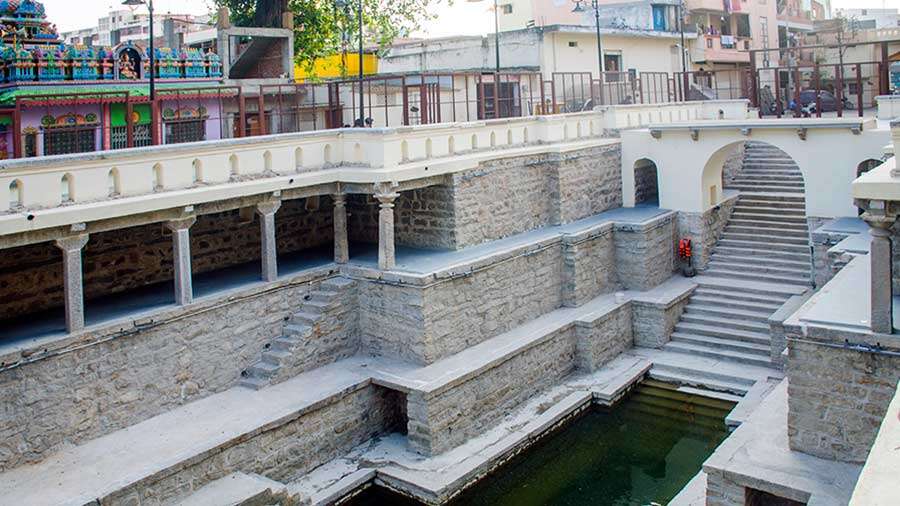
(Feature Image: Revived Bansilalpet stepwell in Hyderabad which has a capacity of over 20 lakh litres. Rangan Datta/Telegraph India.)

Marking World Water Day 2023; this compilation by SANDRP highlights top ten successful and worth replicable initiatives and actions being taken in Indian cities for revival of surface water sources and recharge of depleting groundwater table.

Continue reading “World Water Day 2023: Positive Urban Water Stories from India”
Wetlands

Wetlands Overview 2020: Judiciary is active, but remains ineffective

The highlight of the overview of wetlands in India in 2020 here (keeping aside the Wetlands related developments in Maharashtra in 2020 and Positive wetlands related developments in 2020, on both these subjects we have published separate reports), is that the National Green Tribunal (NGT), various High Courts and even the Supreme Court have been quite active on wetlands front, but there is very little impact of this on the wetlands and their governance in India. This is basically because, and this is the second key highlight of this overview, the central and state governments have shown almost no interest, understanding or will to protect the wetlands. This is in spite of the huge number of new Indian wetlands brought under the Ramsar convention in 2020, since experience and also this overview shows that Ramsar convention does not seem to particularly help the fate of the wetlands. The third highlight of the overview is that there is a lot of civil society effort, both in terms of advocacy and work on ground for the protection of wetlands in India. In fact the legal action that we see in the NGT and Courts is largely due to their efforts. In fact whatever little positive developments we see here is coming from community and civil society efforts.

Continue reading “Wetlands Overview 2020: Judiciary is active, but remains ineffective”
Fish, Fisheries, Fisherfolk

Inland Fish, Fisheries, Fisher-folks: 2020 Overview

Inland fisheries support millions of people and remains a major source of nutrition for a very large number of poorest people. This includes riverine fisheries, reservoir fisheries, wetland and local water body fisheries. Here we try to provide an overview of developments in this sector during the year 2020.

The overview has following sections: Policy & Governance in Centre, followed by in States, some positive developments, Covid-19 & Fishing Community, Fisher folks’ struggles, New Fish Species, Invasive fish, Fish Deaths & Pollution, Over fishing & Extinction, Studies related to inland fisheries.

Continue reading “Inland Fish, Fisheries, Fisher-folks: 2020 Overview”
Free flowing rivers

World Rivers Day 2020: Celebrating Rivers across the world

The World Rivers Day[i] (WRD) is celebrated annually on the fourth Sunday of September. The event strives to highlight the invaluable ecological, hydrological services and cultural, recreational values offered by the rivers. Indeed, the most of the once wild, scenic, free flowing rivers across the globe are facing existential crisis on account of various anthropogenic activities hastened over the past century.

However, there are small but significant steps being undertaken by individuals, organizations and governments to restore some of the flowing eco-systems. This account attempts to compile some such positive developments that have taken place in the one year.

We have already published a compilation of the positive river stories of India on the occasion of International Day of Actions for Rivers being held on March 14 2020. In addition to Indian rivers, this compilation also covers some remarkable development concerning river conservation worldwide. There could be many more stories and developments happening, we invite readers to send us such stories they know about. 

Continue reading “World Rivers Day 2020: Celebrating Rivers across the world”
Dams · Wetlands

India Ramsar Wetlands in Crisis in 2020

Ramsar wetlands in India require urgent intervention for central, state governments and Ramsar Convention as this 2020 report shows. The five regional reports from India in 2020 show that despite Ramsar tag, the fate of these wetlands has seen no marked improvement. This raises the question as to how helpful for wetlands in India is the Ramsar tag.

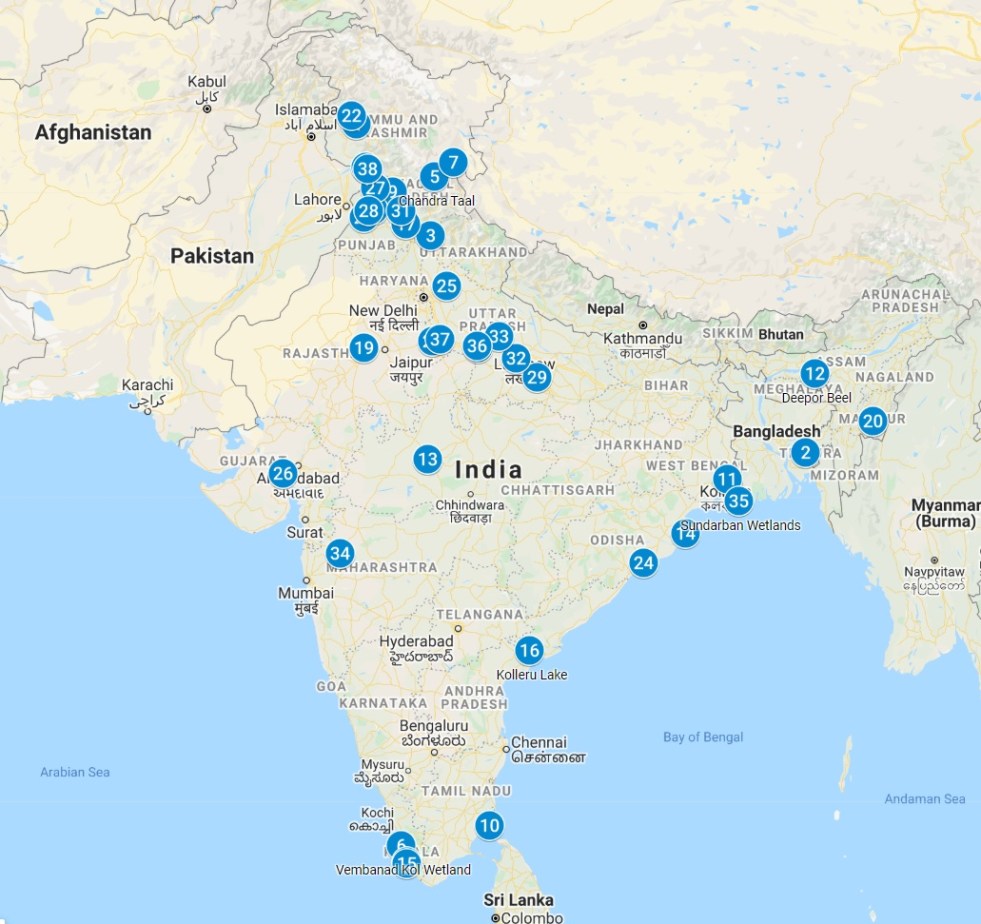
In 2019, India has added 10 more wetlands selected under Ramsar Convention taking total number of Ramsar wetlands in the country to 37 covering about 10,679.39 sq km area across 15 different Indian States and two Union Territories (UTs).  A description of each of India’s 37 Ramsar wetlands, as given on official Ramsar website is given in Annexure below. A decade after the first meeting at Ramsar in Iran for wetland protection in 1971, India got its first wetlands, Chilika lake (Odisha) and Keoladeo National Park (Rajasthan) registered as Ramsar wetland of global significance in Oct 1981.

Continue reading “India Ramsar Wetlands in Crisis in 2020”

Dams · Wetlands

Ramsar Wetlands in Crisis 2020: South India

Out of six states/ Union Territory in South India, three stares have five Ramsar wetlands sites which include one each in Andhra Pradesh and Tamil Nadu and three in Kerala. There are no Ramsar wetlands in Telangana, Karnataka and Puducherry. In order to understand and highlight the present day situation of Ramsar sites in India, SANDRP has compiled information on all 37 wetlands under North, West, North East and East zone. This account in the series describes the threats affecting the Ramsar sites in South Indian States.

Continue reading “Ramsar Wetlands in Crisis 2020: South India”

Dams · Wetlands

Ramsar Wetlands in Crisis 2020: East India

In East India there are four Ramsar wetlands: two each in W Bengal and Odisha states. There are no Ramsar wetland sites in Bihar, Jharkhand or Sikkim, the other East India states. Here we provide a status of these Ramsar sites of East India, along with the kind of risks and threats these Ramsar sites face. The objective is to ensure greater awareness about these issues and hope that this will help achieve better responses from Ramsar convention as also the governments at various levels.

Continue reading “Ramsar Wetlands in Crisis 2020: East India”

Dams · Wetlands

Ramsar Wetlands Crisis 2020: North East India

There are three Ramsar sites in eight states of north east India which includes Deepor Beel in Assam, Loktak lake in Manipur and Rudrasagar in Tripura. There are no Ramsar wetlands in remaining North East India states of Arunachal Pradesh, Nagaland, Mizoram, Meghalya, Sikkim. Here is an account of issues these Ramsar sites are facing.

Continue reading “Ramsar Wetlands Crisis 2020: North East India”

Dams · Wetlands

Ramsar Wetlands in crisis 2020: West India

The four state of West India have only five Ramsar sites of international importance. These includes Sambhar lake and Keoladeo NP in Rajasthan, Nalsarovar in Gujarat, Bhoj Taal in Madhya Pradesh and Nandur Madhmeshwar Wetlands in Maharashtra. There is no Ramsar site in Goa state.

Continue reading “Ramsar Wetlands in crisis 2020: West India”