There are at least four cases in this past week where the judiciary has used strong words or taken up crucial issues in water, dams, hydropower projects, wetlands and riverbed mining related issues. In the case related to the safety of Mullaperiyar dam on Kerala-TN border, the Supreme Court has prodded the Centre to wake up from the slumber to ensure that National Dam Safety Authority quickly forms a panel to examine the project. This case has wide ranging repercussions not only about this project, but also functioning of NDSA and other bodies under the Dam Safety Act 2021. Indeed, there is huge question mark as to what extent NDSA and DSA has made our dams any safer.
Continue reading “DRP 130125: Will Judiciary take these matters to logical conclusion?”Tag: CGWB
DRP 160924: Urban Flood lessons from Vadodara, Vijaywada
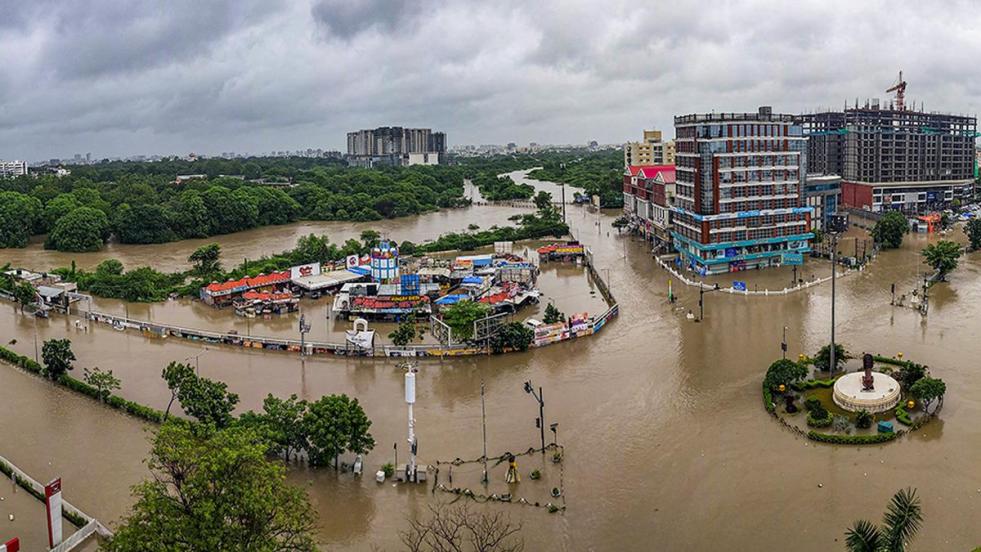
(Feature Image: Vadodara: A flooded area after heavy monsoon rainfall, in Vadodara, Aug. 27). Photo Credit: PTI/The Hindu)
Like every monsoon, a number of cities have faced catastrophic floods in SW monsoon this year. Vadodara and Vijaywada have got the media attention more than any other city for urban floods this year. In both cases a number of factors are common: role of upstream dams, encroachment on water bodies including rivers, lakes, streams, role of illegal sand mining particularly in Vijaywada, not having learnt any lessons from past flood disasters.
It is interesting to see Andhra Pradesh CM hinting at bringing HYDRAA like enforcement institution to remove encroachments on Budameru and other water bodies. Considering the nature of his politics and track record, it is doubtful if this NDA CM will take such a bold step, but it is certainly worthy of consideration for almost all urban areas in India.
Continue reading “DRP 160924: Urban Flood lessons from Vadodara, Vijaywada”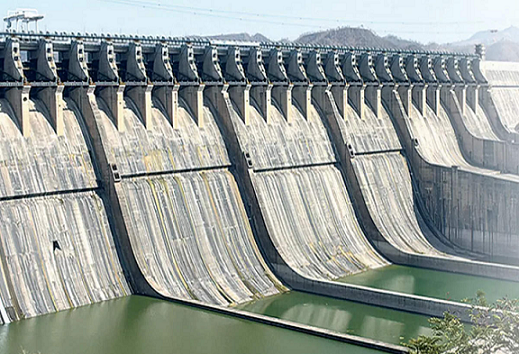
DRP 170624: Sardar Sarovar Power House to operate to reduce Dam Water level in anticipation of surplus rains: Welcome, but…
(Feature Image: Sardar Sarovar Dam. Image Source: The Economic Times, Sept. 2022)
The news this week that SSNNL has decided to operate the 1200 MW River Bed Power House and the 250 MW Canal Head Power house to reduce the water level in Dam from 122.28 meters on June 14 to around 115 m before the monsoon inflows start, in anticipation of the above average rainfall anticipated during SW Monsoon 2024 is welcome. One hopes this is sign of SSNNL, Gujarat Government and the Narmada Control Authority have learnt some lessons after the avoidable flood disasters brought by SSP in 2023 and earlier in 2019 and 2020, as revealed by SANDRP’s analysis in each of these years.
One hopes this is not just one-off ad-hoc decisions, but part of a systemic change. This will require an integrated basin level reservoir operation policy including all the major dams of the Narmada Valley and put it out in public domain along with clearly defined Standard Operating Procedure, and names of the responsible officials for each of such major dam in the basin. The Central Water Commission will also need to be held accountable for its flood forecasting including the 7-day advance forecasts.
Continue reading “DRP 170624: Sardar Sarovar Power House to operate to reduce Dam Water level in anticipation of surplus rains: Welcome, but…”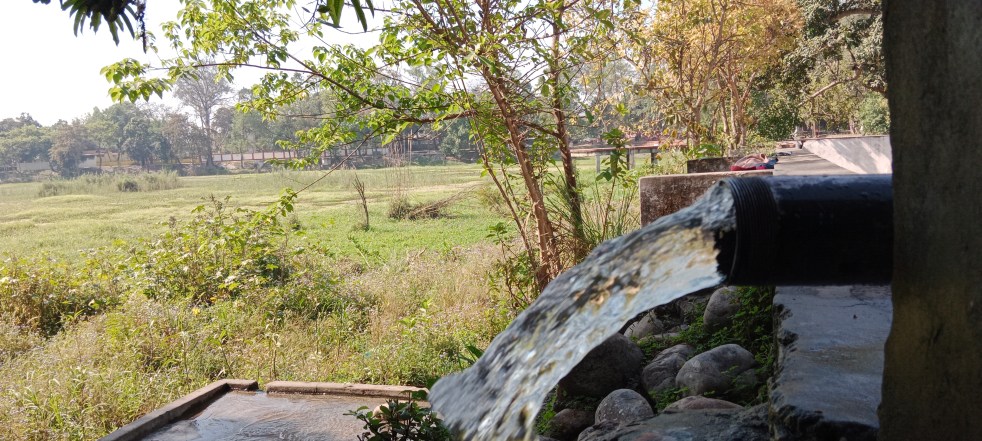
GW Overview 2023: Top ten Govt actions
(Feature Image: Drona Sagar Taal in Kashipur, Uttarakhand being filled with tubewell water in April 2023. Bhim Singh Rawat/SANDRP)
This second part of yearend overview on Groundwater issues in India lists top ten Government actions. While the groundwater has become backbone for all types of consumption including domestic water supply, irrigation, industrial use; depletion of the finite resource continue; the government efforts particularly of central government have been limited to mapping and monitoring. There is neither a recognition that groundwater is India’s water lifeline, nor is there any serious attempt at effective bottom up, decentralised regulation of groundwater.
The aquifer mapping scheme ongoing since 2012 has been extended till March 2026. The govt has planned to increase the number of monitoring wells and equipped them with digital sensors. Meanwhile the Parliament panel report has revealed that the National Water Mission (NWM) lacks adequate funds and autonomy. Several state governments have taken respective measures for protection of groundwater sources however they have largely shown no noteworthy results so far.
Continue reading “GW Overview 2023: Top ten Govt actions”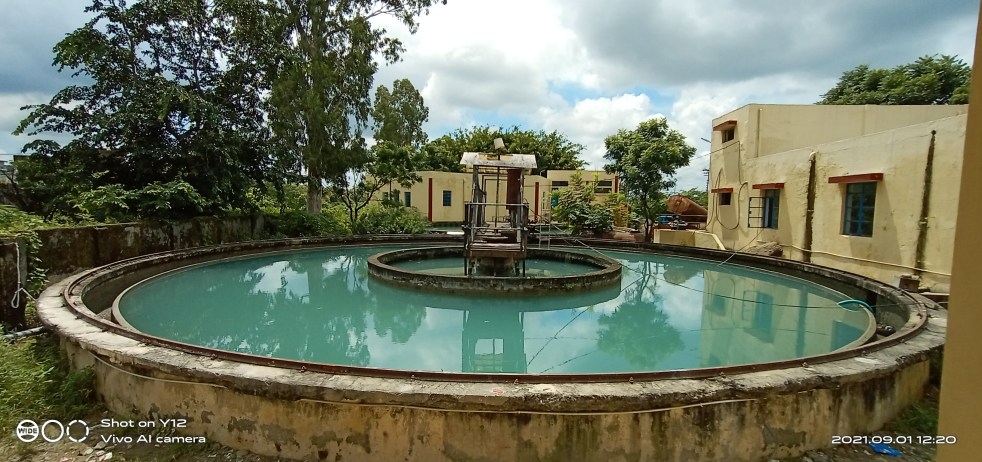
2022: Some positive reports on groundwater management
This second part of yearend overview, SANDRP highlights some positive reports and steps taken by various state governments in India for management and conservation of groundwater in 2022. In first part of the overview, we have tracked the situation of groundwater depletion and contamination in the country and in third part covered some remarkable judicial interventions regarding groundwater conservation in 2022.
Centre Recharge wells to power multi-city groundwater project. A pilot project on shallow aquifer management, initiated by the Union Ministry of Housing and Urban Affairs for 10 cities, under the Atal Mission for Rejuvenation and Urban Transformation (AMRUT), has identified recharge wells as key to improving groundwater availability. Experts have cited the non-availability of space to allow the percolation of rainwater as a major hurdle to recharging Bengaluru’s groundwater table. The Million Wells programme was launched by Biome Environmental Trust in 2015 to encourage citizens and communities to dig and maintain their own recharge wells. It also opened up employment for the traditional well-digger community, the mannu vaddars.
In Bengaluru, the Bruhat Bengaluru Mahanagara Palike (BBMP) will be the nodal agency for the project. Biome Environmental Trust and Advanced Centre for Water Resources Development and Management (ACWADAM) will be technical partners in the project, which is led by the National Institute of Urban Affairs, a national think-tank on urban planning and development. The pilot project also covers Chennai, Dhanbad, Gwalior, Hyderabad, Jaipur, Kolkata, Rajkot, Thane, and Pune. https://www.deccanherald.com/city/recharge-wells-to-power-multi-city-groundwater-project-1157262.html (28 Oct. 2022)
Continue reading “2022: Some positive reports on groundwater management “
DRP 14 March 2022: 25th Anniversary of International Day of Action for Rivers!
14th March is celebrated as International Day of Action for Rivers since 1997 after the resolution at the 1st International meeting of People Affected by Dams in Curitiba, Brazil. At this meeting of Dam affected people from 20 countries (including India) it was decided to celebrate this day as the International Day of Action Against Dams and For Rivers, Water and Life. It is thrilling to see the celebration continuing and spreading on 25th anniversary of that meeting. The focus this years is on Rivers for Biodiversity. To illustrate how the celebration of this day has spread, in 2021, even during pandemic, the day was celebrated with over 120 events in 32 countries. For details, see: https://www.internationalrivers.org/take-action/international-day-of-action-for-rivers/.
Continue reading “DRP 14 March 2022: 25th Anniversary of International Day of Action for Rivers!”
DRP 10 Jan 2022: Positive Groundwater stories from TN, Haryana
It’s rather rare that we have some positive stories related to groundwater. This week we have two: One each from Tamil Nadu and Haryana. A recent performance audit report, the CAG has lauded the Tamil Nadu Govt for regulating industry’s groundwater extraction. The CAG has also lauded TN for adopting ‘firka’(which are smaller than blocks and encompasses 10-15 villages) as the assessment unit in 2011 because this is expected to help in identification of pockets of groundwater potential within the over- exploited and critical blocks.
Continue reading “DRP 10 Jan 2022: Positive Groundwater stories from TN, Haryana”
DRP 271221: PM pushes unviable, destructive Hydro projects in HP
Feature Image: Renuka Dam Sangharsh Samiti members take out a protest march at Dadahu in Sirmaur district on Dec. 19, 2021. Tribune photo
What will be the realistic cost of power from hydropower projects being pushed by the Prime Minister during this visit today to Himachal Pradesh? One indication of that comes from the 111 MW Sawra Kuddu HEP that he inaugurates during his visit. The cost of this project is already over Rs 2080 Crores, likely to go up further. Which means per MW installed capacity, the cost is around Rs 20 Crores. At this cost, the cost of power from the project is likely to be over Rs 8 per unit even without factoring in the social, environmental and increased disaster vulnerability costs that such projects impose on the fragile Himalayan Mountains. As if to also remind the active seismic zone, on the eve of his visit, there were tremors, even if mild, in Mandi.
The Renuka dam that he lays the foundation for does not even have all the statutory clearances. Its EIA has been the most dishonest exercise, as came out in the NGT hearings. What signal is the government sending by laying foundation stone for such a project? Similar are the issues with Luhri I and Dhaulasidh HEPs. The government seems to be pushing such outdated, unviable, costly and destructive projects in fragile Himalayan regions, purely on political arithmetic assumptions, but possibly need to realise that these projects are not even popular and they are also most inappropriate in the climate change context. Or is it the lure of spending such huge sums of unaccountable public money that provide opportunities for getting election funds for the party that is driving such undemocratic decisions?
Continue reading “DRP 271221: PM pushes unviable, destructive Hydro projects in HP”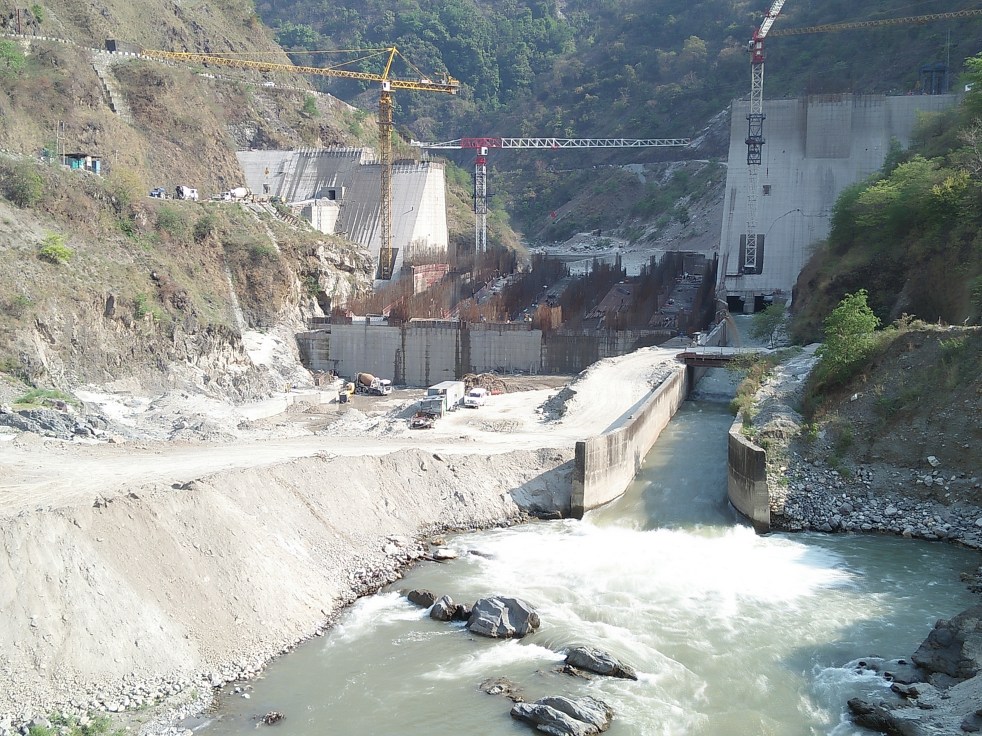
DRP 190421: Hydro lobby at work, but it won’t help forget the WCD guidelines
The Hydropower lobby continues to push unsustainable, unviable, destructive hydropower projects. They want everyone to forget about the World Commission on Dams report and guidelines and the lobby keeps bringing out its own guidelines which has zero credibility. They are looking for new voices to sing their song, and have appointed Ashok Khosla, as the Chair of the Hydropower Sustainability Assessment Council but Ashok Khosla already stands discredited. He or his organisation is not known to be doing any credible work in the area of hydropower projects. He or his organisation Development Alternatives has never taken a stand on any public spirited campaign against destructive hydropower projects in India. So that voice is neither independent nor credible. So this new move by the hydro lobby is not going to help the cause of the lobby either in India or beyond. The write up below, as expected does not mention the WCD report or guidelines. Mr Khosla possibly does not even know about the existence of the WCD report or guidelines because he had no credible role to play there or in any hydropower related work in the past. The write up has loads of misleading and wrong statements too. But all these attempts are not going to help forget people about WCD guidelines as the only globally credible and accepted guidelines on dams and hydropower projects.
Continue reading “DRP 190421: Hydro lobby at work, but it won’t help forget the WCD guidelines”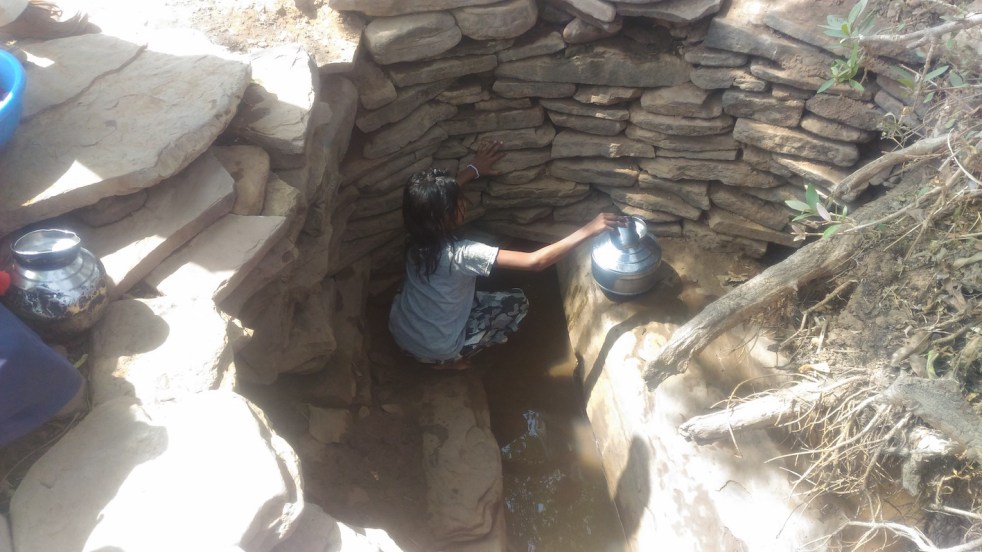
Groundwater in Bundelkhand: Unique geological features in upper Ken River catchment need to be conserved
Guest Blog by Seema Ravandale, People’s Science Institute, Dehradun
Kathayi (Shahnagar, Panna district), a ST (Scheduled Tribe) dominated village with 75 household amid the forested area of Shahnagar block, faces acute water scarcity during summer season – almost for 3-4 months. Under the government schemes, three wells and two hand pumps were installed in last 10-15 years, but most of them are dysfunctional. The problem becomes acute in the months of May-June, when there is a shortage of water everywhere and only perennial spring in the village supplies drinking water to 75 families. Women have to spend whole night queueing to fetch water. After a lot of perusal, water tanker was provided by Gram Panchayat, but supply is intermittent. Continue reading “Groundwater in Bundelkhand: Unique geological features in upper Ken River catchment need to be conserved”
 SANDRP