DRP News Bulletin

DRP 160123: Top Court appeals for EIAs for Urban Development: Welcome, but…

The Supreme Court of India, while disposing of a petition related Chandigarh, in its order on January 10, 2023 has said: “Before we part with this judgement, we observe that it is high time that the legislature, executive, and the policymakers at the centre and state levels take note of the damages to the environment on account of haphazard development and take a call to take necessary measures to ensure that the development does not damage the environment… We therefore appeal to the Legislature, the Executive and the Policy Makers at the Centre as well as at the State levels to make necessary provisions for carrying out Environmental Impact Assessment studies before permitting urban development.”

This is most welcome. And urgently required. That India’s urban development is happening at the cost of life sustaining environment resources including rivers, water bodies, forests, wetlands among others is well known. That the government sees all requirements of environmental scrutiny as road blocks is also well known. The consequences of this are clear for all concerned, not only in case of Bangalore as cited by the Supreme Court Bench, but also in case of Ahmedabad, Bhopal, Chennai, Delhi, Ernakulam, Faridabad, Gurugram, Hyderabad, Indore, Joshimath, Kolkata, Lucknow, Mumbai and so on. So is there a good chance that the apex court suggestion will be followed either in letter or in spirit? Unlikely. So what is clearly required is that the apex court emphatically directs the centre and states in this regard and follows it up with ensuring its implementation.

Continue reading “DRP 160123: Top Court appeals for EIAs for Urban Development: Welcome, but…”
DRP News Bulletin

DRP 020123: Looking Back to Look forward to 2023

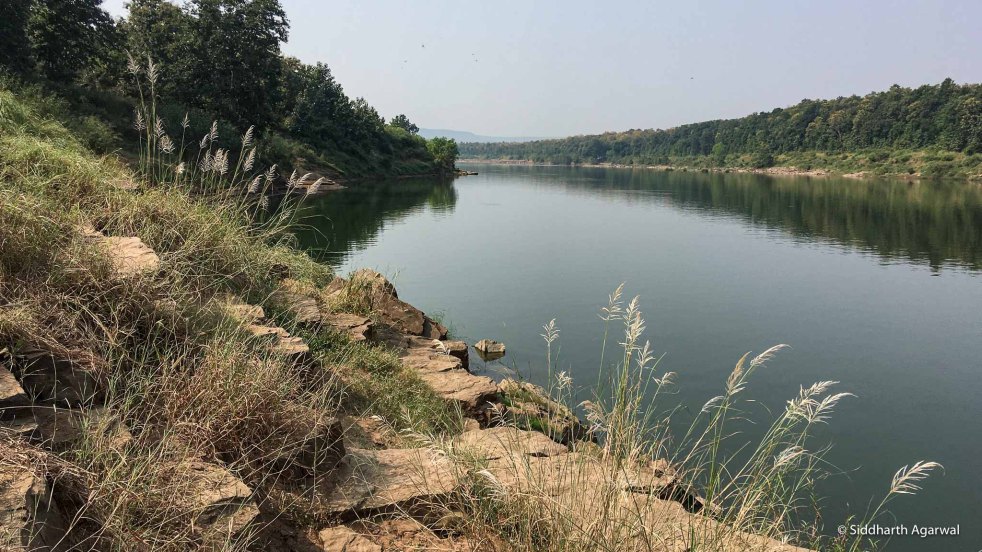
(Feature Image:-River Ken inside Panna National Park from River Stories, Walking Across India-I by Siddharth Agarwal)

This is the first DRP bulletin of 2023 and we would like to begin on a positive note. But to remain grounded in reality we also need to look back at the events in 2022. We see a number of positives in 2022 and we hope that trend continues. The number of new dams and hydropower projects being started has remained on a declining trend. People and civil society has continued its protests against destructive projects and for more decentralised projects and governance.

Continue reading “DRP 020123: Looking Back to Look forward to 2023”
Dams · Hydro Power Projects

2022: People’s Resistance against Unviable HEPs, Destructive Dams

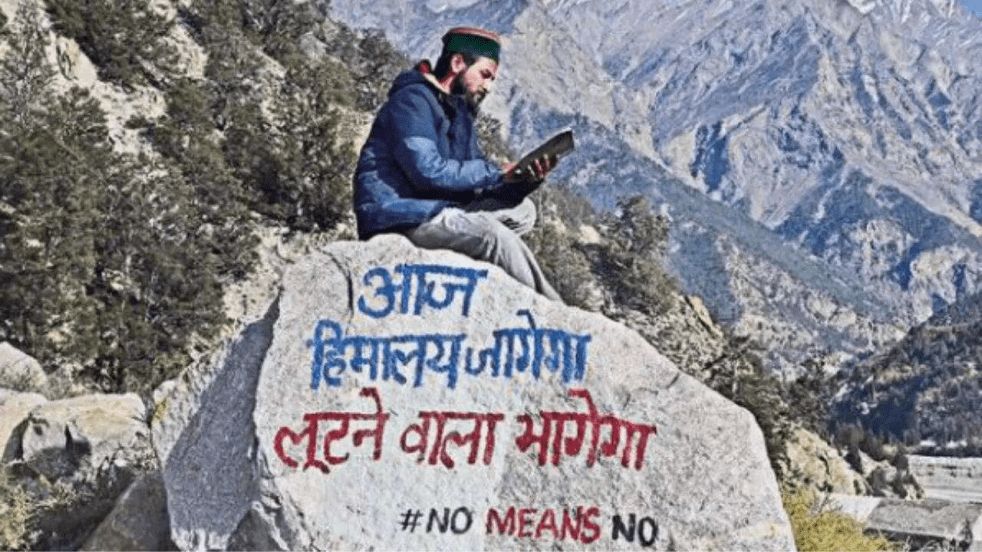
(Feature Image: No Means No Campaign message against hydro projects on a rock in Kinnaur. Source: ToI)

There have been many instances of opposition by local people, organizations and experts against unviable hydroelectric power (HEP) and destructive dam projects in 2022. Such instances of the resistance from across the country have been successful in a number of ways including leading to the funding agencies, corporate houses and government agreeing to withdraw from the project in many cases. This overview presents top ten stories highlighting successful opposition to hydro and dams projects in 2022 in India followed by some relevant reports on the issue. In first part of the annual overview, SANDRP has tracked the dam failures and dam induced floods incidents in India in 2022, along with separate report on unraveling of Polavaram project and another one on breaches of fly ash dams.

Continue reading “2022: People’s Resistance against Unviable HEPs, Destructive Dams”
DRP News Bulletin

DRP 191222: Question marks over viability of pump hydro projects

(Feature Image: 1772 Mw PSHPs Spain. Photo courtesy of Iberdrola/ ENR)

The question marks over viability of huge number of pump storage hydro projects (PSHP) being pushed forward in India currently were flowing in the rivers for long. This week, Moody’s investors Service (MIS) seems to have strengthened this after it downgraded Greenko Energy Holdings’ corporate family rating. It may be noted that Greenko is the biggest investor in PSHPs in India from private sector and a major part of Greenko’s new investments are in PSHP.

This makes the implications of MIS’s downgrade all the more interesting. MIS has noted that PHSPs are capital intensive and each PHSP will generate cash flow only after at least 2-3 years of construction (in reality it can be much longer than 2-3 years, the operative phrase here is at least). It also noted that the additional debt to be raised from Greenko’s capital spending, coupled with a rising interest environment will put further pressure on “GEH’s already weak financial metrics” and that Greenko’s high financial leverage due to its substantial capital spending program will keep its financial metrics below its downgrade trigger “for an extended period of time”.

Continue reading “DRP 191222: Question marks over viability of pump hydro projects”
Climate Change · Wetlands

Conserving wetlands to realize global climate and biodiversity goals

Guest Article by Mridhu Tandon [i]

The Sudd wetland in the Nile basin is one of the world’s largest freshwater ecosystems. Nourished by the White Nile-a tributary of the Nile, Sudd is a mosaic of open water and submerged vegetation, seasonally inundated woodlands, rain-fed grasslands, and floodplain scrubland. An integral part of Africa’s largest intact savannahs-the Jonglei plains, Sudd supports the world’s second-largest mammal migration after Serengeti. An estimated 1.3 million antelope: white-eared kob, taing, and Mongalla gazelles move from Sudd every year to reach Ethiopia’s Gambella National Park. Sudd has been in the international news recently. Revival of the 40-year-old 240-mile Jonglei canal will divert the waters of the White Nile around the Sudd wetland and send it to Egypt. The canal will desiccate the wetland, and end seasonal flooding of the Jonglei grasslands. Why is it necessary to protect Sudd from drying up? Why has the subject received global attention? More generally, why protect wetlands at all?

Continue reading “Conserving wetlands to realize global climate and biodiversity goals”
DRP News Bulletin

DRP 17×22: SSP Fails To Provide Promised Water, Rehabilitation: Former Gujarat CM from BJP 

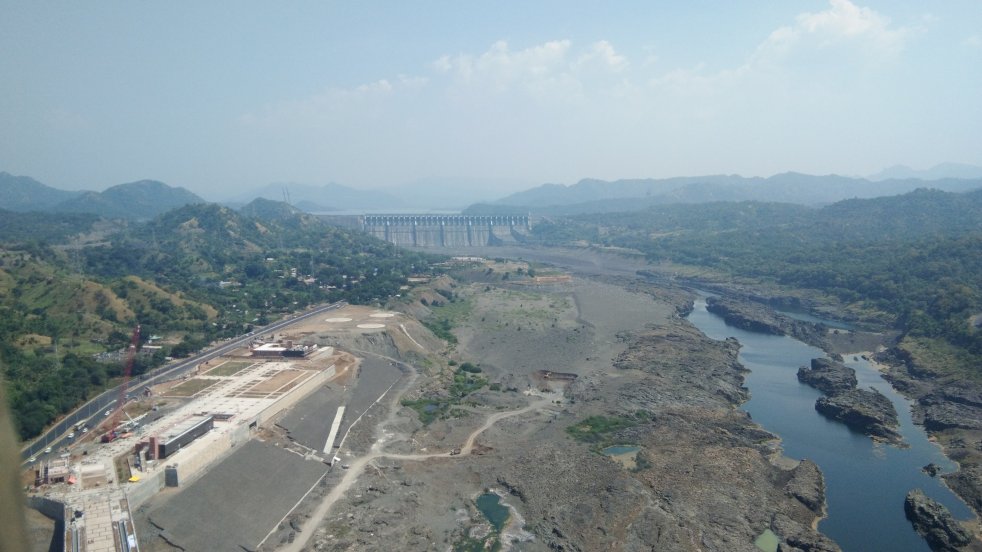
(Feature Image: An aerial view of Narmada river downstream Sardar Sarovar Project in Oct. 2018. Source: CMO Gujarat twitter handle)

With Gujarat state assembly election round the corner, Bhartiya Janta Party (BJP) the party ruling the state and Centre has been evoking the Sardar Sarovar Project as a big achievement in the face of contrasting ground realities as suggested by no less than former Gujarat Chief Minister of BJP Shri Suresh Mehta. The project has failed to provide promised irrigation water to farmers of Kutch and Saurashtra in whose name the dam was pushed as the canal system remains not fully built. The people of Kutch, in whose name Gujarat got 9 Million Acre Feet of water, disproportionate to its catchment area at SSP, were incidentally last to get the water and not first as it should have been. Kutch canals remains largely unfinished and command area largely unirrigated. Who stopped this area to get the water over a decade after the water started flowing from the dam is a question, Gujarat rulers refuse to answer.

Similarly, thousands of project affected people continue to struggle for rehabilitation and compensation despite court orders. The Gujarat rulers have gone silent over unending and unfolding ecological and hydrological impacts of the dam on Narmada river system downstream from the dam including delta area. Thousands of villagers living in miserable conditions submerged in backwater of the dam but have not been officially recognized as project affected people. At this moment, the timely, just rehabilitation and compensation of these villages and project affected families should be top priority of concerned governments including the Central government.

Continue reading DRP 17×22: SSP Fails To Provide Promised Water, Rehabilitation: Former Gujarat CM from BJP 
DRP News Bulletin

DRP 17 Jan. 2022: Urban Water Mess visible in advocacy for Renuka and Mekedatu dams

This week brings heightened advocacy for major dams in the name of Urban Water supplies for cities that have no water policy, no worthwhile good water governance, but are happy demanding more and more water projects from further off places to cater to its unjustifiable demands. This is the underlying theme both in case of Renuka dam for Delhi and Mekedatu dam for Bangalore.

Some media reports are talking about need for additional storages, but in this advocacy there is no place for either efficient use of existing water storages, nor place for decentralised water storage options or underground water storage options, leave aside inclusion of soil moisture, which is a major storage option too.

Continue reading “DRP 17 Jan. 2022: Urban Water Mess visible in advocacy for Renuka and Mekedatu dams”
DRP News Bulletin

DRP 200921: Policy needed for Urban Rivers, not Riverfronts

There is no doubt that India urgently needs a guidance note and policy for Environment Sensitive, Climate Adaptive and Socially inclusive Urban Rivers Planning and Development. But this is required for the Urban Rivers and not just Urban Riverfront. The NMCG attempt like that of Sabarmati and numerous other river fronts unfortunately are not bothered about rivers, they are only interested in grabbing land from the Urban Rivers and convert the rivers into concrete channels on two and in some cases three sides (include the sides and the bed of the rivers). That is clearly death knell for the rivers. There is no doubt that there is need connect the people with the rivers, not just river fronts. The NMCG and other government bodies know the difference, so it is not out of ignorance that they have come out with the guidance note for river fronts rather than one for rivers. Unless people, civil society, experts and judiciary raise these issues, the future of Urban rivers seem bleak in India, as can be seen from the stories of Urban rivers compiled here from this week. 

Continue reading “DRP 200921: Policy needed for Urban Rivers, not Riverfronts”
DRP News Bulletin

DRP 280621: Where is the impact of lessons of the water conservation efforts that PM praises, on his govt’s water projects & policies?

When the Prime Minister Shri Narendra Modi Mentioned some exemplary water conservation efforts in his Mann ki Baat on June 27, 2021, it was not for the first time he was doing it. These are certainly most welcome.

However, these mentions raise a number of questions. If the Prime Minister considers these local water options as exemplary, which they indeed are, where do we see the reflection of the lessons from such efforts in government programs and policies? In fact why there is no reflection of such lessons in what the government does in water sector? How can the government justify the destruction of Panna Tiger Reserve, over 9000 ha of forests, some 46 lakh trees, the catchment of Ken river and large part of Bundelkhand in the name of Ken Betwa Link Project, in the same Bundelkhand. How can his government justify the destructive projects like the Char Dham Highway, the big hydro projects and so on in the same Uttarakhand where Sachidanand Bharati (who was incidentally recipient of the Bhagirath Prayas Samman of India Rivers Week) works, whose efforts the PM praised? One hope the PM and his government will be awake to the implications and lessons of the works that PM praises.

Continue reading “DRP 280621: Where is the impact of lessons of the water conservation efforts that PM praises, on his govt’s water projects & policies?”
DRP News Bulletin

DRP 140621: IPCC-IPBES Scientists: Biodiversity protection & climate change action HAVE TO work together

In a remarkable new report, the 50 top scientists of Inter-Governmental Panel on Climate Change (IPCC) and Intergovernmental Science-Policy Platform on Biodiversity and Ecosystem Services (IPBES) have come together to deliver the first ever joint collaboration report with the message that Biodiversity crisis and climate change crisis are not independent of each other. The message from scientists is clear: The claimed Climate “solutions” that hurt biodiversity or their habitat are false solutions.

By protecting and restoring nature, the report said, we can safeguard biodiversity, help limit warming, improve human well being and even find protection from the consequences of climate change, like intensified flooding and storms.

Continue reading “DRP 140621: IPCC-IPBES Scientists: Biodiversity protection & climate change action HAVE TO work together”