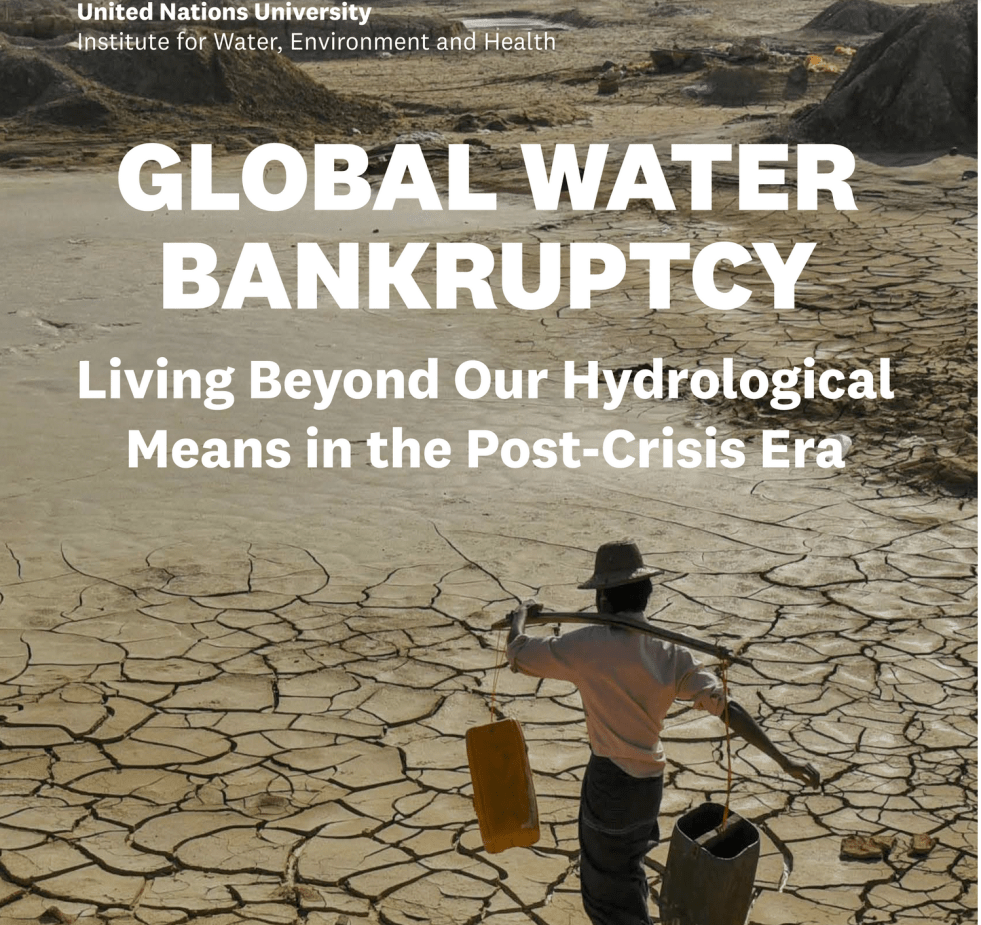
The new report released by United Nations University last week describing the global water situation in climate change context as water bankruptcy may seem like a bit of exaggeration for many places. In any case, it is not possible to describe the water situation across the globe in a couple of words.
Continue reading “DRP 270126: Climate Crisis and Water Bankruptcy”Tag: Bhutan
Oct 2025: Bhutan’s Tala Dam Overtopped
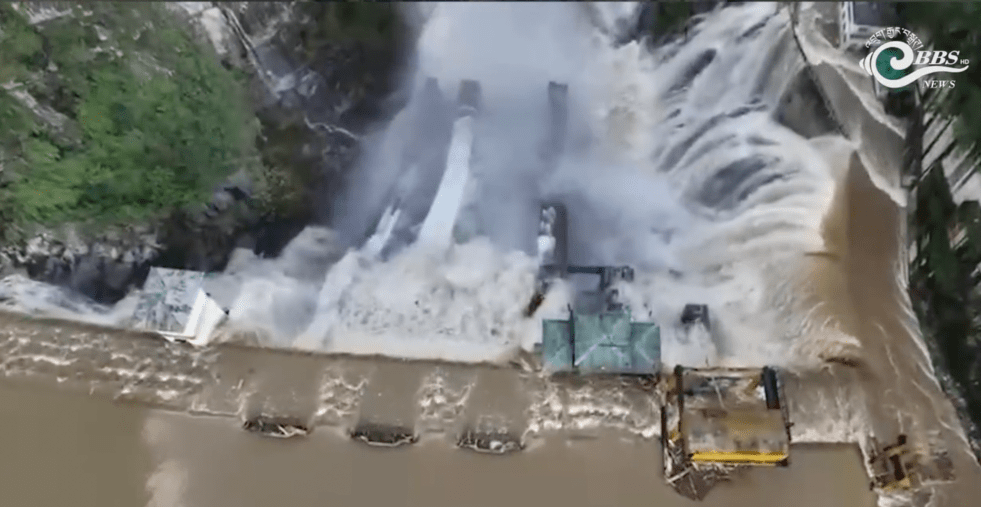
In a major scary incident, the Tala Dam on Wangchhu River in Chukha district of south Bhutan has overtopped for the first time ever, on Oct 5 following unprecedented rainfall in western Bhutan, prompting flood warnings for downstream areas in India’s north Bengal. Bhutan’s NCHM confirmed that DGPC reported that the dam gates failed to open, leading to river water flowing over the dam, considered most dangerous situation for any dam as dams are not designed for such an eventuality.
Continue reading “Oct 2025: Bhutan’s Tala Dam Overtopped”
DRP 290124: Wetlands and Human Wellbeing: So little reflected in wetlands governance
(Chest nut clutivators removing water hycinth from Giri taal of Kashipur in US Nagar, Uttarakhand in April 2023. Bhim Singh Rawat/SANDRP)
As the world approaches the World Wetlands Day on Feb 2, we notice a proliferation of news related to wetlands, but mostly bad news in this week’s DRP NB: Loktak lake in Manipur facing impact of inland waterways project, the Supreme Court having to intervene for the Futula lake in Nagpur, TN Govt telling NGT that 38% of Pallikaranai marshland is under encroachment, in Bangalore, NGT is asking for response from KSPCB and others regarding the lake buffer zone encroachment. There is also a lot of bad news about the worsening state of our rivers, including Ganga.
One piece of good news is that people have come out with their own plan for restoration of Ennore wetland in TN. In Assam, Maguri Motapung Bill is regaining biodiversity after earlier being polluted by oil spill, but that is only control of damage earlier. Similarly, while it is good news that SC has intervened to protect Futula lake in Nagpur, but the fact that the govt wanted to encroach on it in the name of “temporary” construction is not at all good news.
Continue reading “DRP 290124: Wetlands and Human Wellbeing: So little reflected in wetlands governance”
BHUTAN DRP 2023: Uncertain Fate of Mega Hydro
The Dams, Rivers & People overview of Bhutan here, mainly from media reports from Bhutan, highlights the failed hydropower goal of adding 10000 MW capacity by 2020. The fate of the 1200 MW Punatsangchu I remains uncertain, yet to be decided if the dam will be abandoned for barrage. The flood disaster in July 2023 that washed away 32 MW Yungichhu HEP and killed about 23 people was possibly sign of things to come, as shown by the washing away of the 1200 MW Teesta 3 project in neighbouring Sikkim in early Oct 2023 with GLOF. On positive side, Bhutan has decided to go for Solar and Wind. The Nikachhu HEP is likely to be commissioned soon, adding 118 MW to Bhutan’s installed capacity.
But let us begin with a postive story of a woman River Guardian.
Continue reading “BHUTAN DRP 2023: Uncertain Fate of Mega Hydro”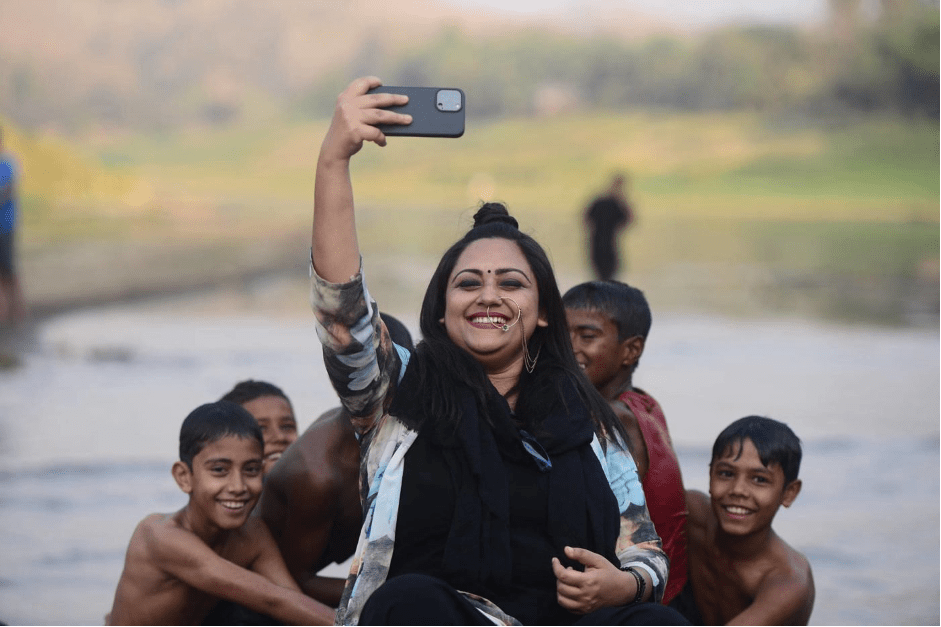
DRP BANGLADESH 2023: Rivers dominate in a River Intense Nation
In this overview of 2023 issues related to Dams, Rivers and People in Bangladesh, we see how rivers dominate the discourse in one of the most river intense nations of the world. As expected, as India and Bangladesh share the rivers in so many ways, the bilateral issues also dominate. These includes fisheries, power sharing, navigation, besides of course water sharing. As expected, Teesta water sharing issue dominates more than others.
Continue reading “DRP BANGLADESH 2023: Rivers dominate in a River Intense Nation”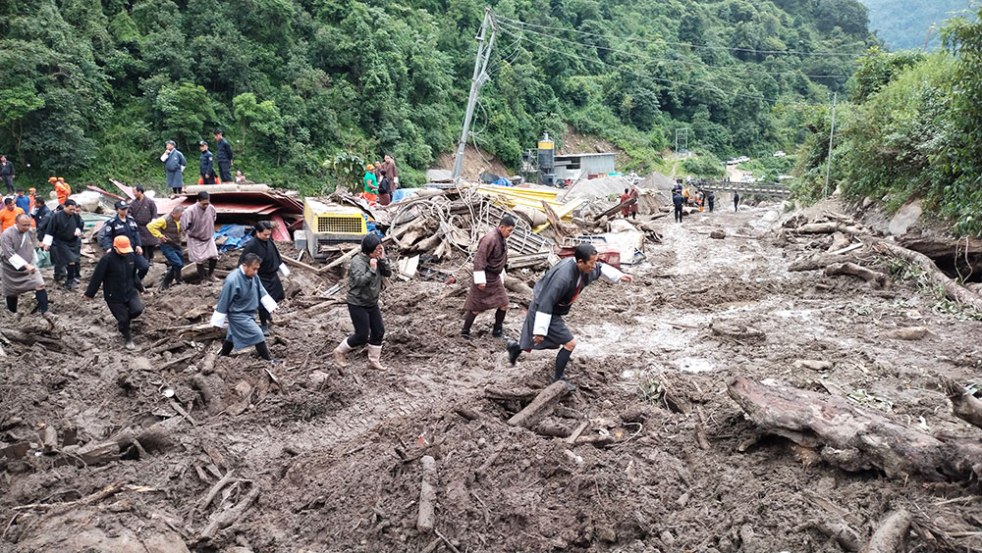
July 2023 Bhutan Hydro Project Disaster: 23 Dead and missing
At least seven people were killed and 16 others missing in Bhutan after flash floods and landslides triggered by heavy rains washed away a section of a hydroelectric plant on July 20 2023[i]. They were washed away by the sudden burst at the residential area next to the worksite at Ungar village, according to a press release from the Prime Minister’s Office. Prime Minister Dr Lotay Tshering, who is in Lhuentse, said the devastating flashflood presented one of the biggest loss of lives and properties in recent memory, and shook the core of the nation.
Continue reading “July 2023 Bhutan Hydro Project Disaster: 23 Dead and missing”
River Stories, Walking Across India – Part III
Guest Blog by Siddharth Agarwal
In the years 2018 and 2019, I spent months walking East across India with Paul Salopek on the Out of Eden Walk (For details, see: https://www.nationalgeographic.org/projects/out-of-eden-walk/#section-0). His trail started in the Great Rift Valley of Ethiopia in East Africa, roughly following the path of the early human migration out of Africa and across the globe.
The India trail of the Out of Eden Walk started from the India-Pakistan border at Wagah, Punjab. It then moved East through the Indus Basin, followed by the basins of West flowing rivers like Luni, then a large chunk through the southern Gangetic plains in Central India before crossing over to the Brahmaputra basin close to Siliguri in West Bengal. The crossover to Myanmar happened at Moreh in Manipur, also incidentally very close to the basin boundary of Brahmaputra and Irrawady. He entered India in March 2018, and crossed over to Myanmar in July 2019.
Continue reading “River Stories, Walking Across India – Part III”
Bhutan DRP Overview 2019
Plea to act to save the THIRD POLE In this TED talk in July 2019, former Prime Minister of Bhutan and President of the People’s Democratic Pary Tshering Tobgay makes impassioned plea to act on the melting glaciers of Hindu Kush due to climate change and among other things, form a Third Pole Alliance of eight countries of the region, including China, India, Pakistan, Nepal, Bhutan, Bangladesh, Myanmar to work collectively to avert the future catastrophe affecting 1.6 billion people. (https://www.ted.com/talks/tshering_tobgay_an_urgent_call_to_protect_the_world_s_third_pole#t-855110) Continue reading “Bhutan DRP Overview 2019”
DRP: 3 Dec. 2018: Ken Betwa Link-Push to Dilute Forest Clearance Conditions
Ken Betwa river interlinking project is back to drawing board with Union water resources ministry approaching the ministry of environment and forest to relax conditions imposed as part of forest clearance accorded in May 2017 for diversion of forest in the Panna Tiger reserve (PTR).
Forest Advisory Committee (FAC) while according Stage-I clearance to the project had recommended that the project proponent and state govt should consider equivalent non-forest area (6,017 ha) adjoining to PTR from the revenue and private land and add to the PTR as a part of core/corridor (for tiger movement) with other areas or satellite core area. According to water resources ministry, they are unable to find land adjoining to PTR.
Will the forest department buckle under pressure to dilute the forest clearance conditions? http://www.newindianexpress.com/thesundaystandard/2018/nov/25/first-river-linking-project-coming-undone-1902890.html (25 Nov. 2018)
Continue reading “DRP: 3 Dec. 2018: Ken Betwa Link-Push to Dilute Forest Clearance Conditions”
DRP: 16 July 2018: For Dam Safety, Can We Depend On CWC Engineers Alone?
India certainly urgently needs credible measures to achieve both structural and operational safety of dams. As the HINDUSTAN TIMES editorial emphasizes, we need much greater transparency, accountability and participation of independent, non government experts at every level of functioning of Dam Safety mechanism. Current Dam Safety Bill draft falls far short of that. This is also underscored by many of the news we bring in this July 16, 208 issue of DRP News Bulletin.
The Tamil Nadu CAG report, as Indian Express reports, has clearly said that the Chennai floods of Dec 2015 were majorly due to the wrong decision of dam operators to release 29000 cusecs of water for 21 hours, in violation of all safety norms, but no was punished for this wrong decision. The same has always been the case.
The Bulletin also brings the warning from, no less than Chief Minister of Assam to NEEPCO that if NEEPCO, the operator of the 405 MW Ranganadi Dam releases water from the dam without warning and when downstream areas are facing floods, they will have to bear the losses people suffer.
Continue reading “DRP: 16 July 2018: For Dam Safety, Can We Depend On CWC Engineers Alone?” SANDRP