Maharashtra

Maharashtra scraps River Regulation Zone : Pandering to industry at the cost of Rivers and People

Above: Pollution from a River Kasardi which was denotified as it was affecting some big businesses

When Devendra Fadnavis of BJP became the Chief Minister of Maharashtra, one would have thought that the chronically polluted and encroached Nag Nadi from Nagpur, as also other rivers in the state may see better days. This was not just an optimistic hope. The Government at the Centre was making all the correct noises about being concerned about rivers, it had launched the Namami Gange Program for rejuvenation of Ganga River and had changed the name of Ministry of Water Resources to Ministry of Water Resources, River Development and Ganga Rejuvenation. Continue reading “Maharashtra scraps River Regulation Zone : Pandering to industry at the cost of Rivers and People”

Maharashtra · Mumbai

Water Smart Mumbai is possible without river links and big dams! Open Letter to CM Devendra Fadnavis

Above: Forested Valley, now lost forever for the Middle Vaitarna Dam Photo: Parineeta Dandekar 

Respected Chief Minister,

At the outset we congratulate you for leading some progressive changes in the Water Resources Department of the State. These include decisions about continuing only with those dam projects which are more than 75% complete[1], appointment of independent people with a clean image like Shri. H.T. Mendhegiri as CADA Chief Secretary, changing norms of Economic Survey Report[2], stating that only hoarding water will not be counted towards increase in irrigation potential, etc. Continue reading “Water Smart Mumbai is possible without river links and big dams! Open Letter to CM Devendra Fadnavis”

Maharashtra · Marathwada

Can Marathwada afford to undertake Sugarcane Crushing in this terrible drought?

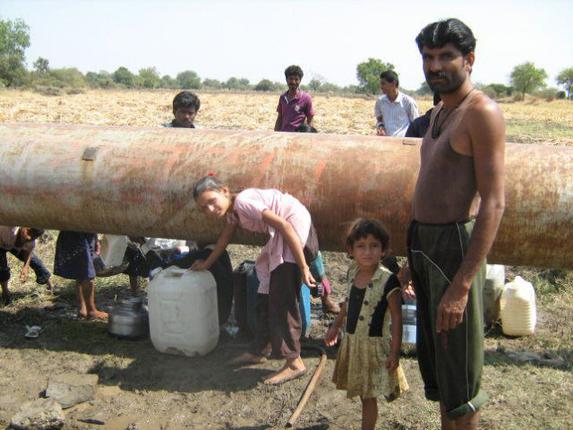
Since 2012, farmers in Maharashtra, especially in Marathwada and Vidarbha region of central and eastern Maharashtra are faced with unending mountains of crisis. What started as drought of 2012 went on in form of violent rains at places in 2013, hailstorms of February-March 2014, scanty monsoon in 2014 and unseasonal rains at places in November 2014, affecting lakhs of farmers. Agricultural production has suffered losses as impact of scanty rainfall has been compounded by absence of rains in critical time windows when soybean was filling and cotton bolls were forming. More than 8000 villages in Marathwada region which comprises of Aurangabad, Nanded, Parbhani, Latur, Beed, Hingoli, Jalna and Osmanabad have recorded crop losses of more than 50%.

Marathwada region in Maharashtra Map from: Marathi Wikipedia

The entire Winter Assembly of the newly formed Government seems to be clouded by discussions of drought package and increasing farmer suicides in Marathwada and Vidarbha. Since January 2014, more than 400 farmers have committed suicide in Marathwada region, and the pace is picking up worryingly since the past month. Hydrological, meteorological and agricultural droughts are becoming more pronounced in Marathwada.

But can this be attributed to vagaries of nature alone?

A brief analysis of the underlying reasons for the crisis in Marathwada and its future implications:

Truant Monsoon of 2014

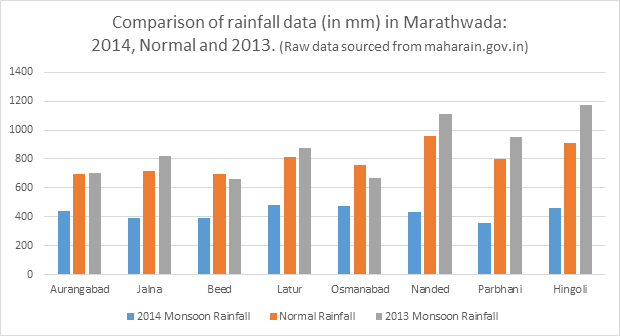
As per SANDRP’s analysis of district-wise rainfall figures of Marathwada in monsoon 2014, the picture which arises is dismal:

GRaph

For 2014, departure from normal rainfall for 6 out of 8 districts in Marathwada was more than 40% and rest two districts it was more than 50%, indicating a huge reduction in rainfall. However, contrary to what is being stated in the media, the region received satisfactory rainfall in 2013 monsoon. In fact, 6 districts of the 8 received more than 100% of normal rains and remaining two districts received 88% and 95% of normal rains last year. This is one of the reasons that the reservoir storage in 2014 did not fall as sharply as they did in 2012-13 drought. On 15th October 2014, Jayakwadi dam in Aurangabad had 42% Live storage, which was more than October 2013 storage of 33% and 2012, when it had reached dead storage already (http://www.mahawrd.org/). The entire Marathwada region too showed large reservoir storage of 47%, which is not extremely alarming.

Significantly, 2012-13 drought also unfolded in a similar manner, with highly satisfactory monsoons of 2011.

At the same time, the region is facing one of the worst droughts in recent history today.

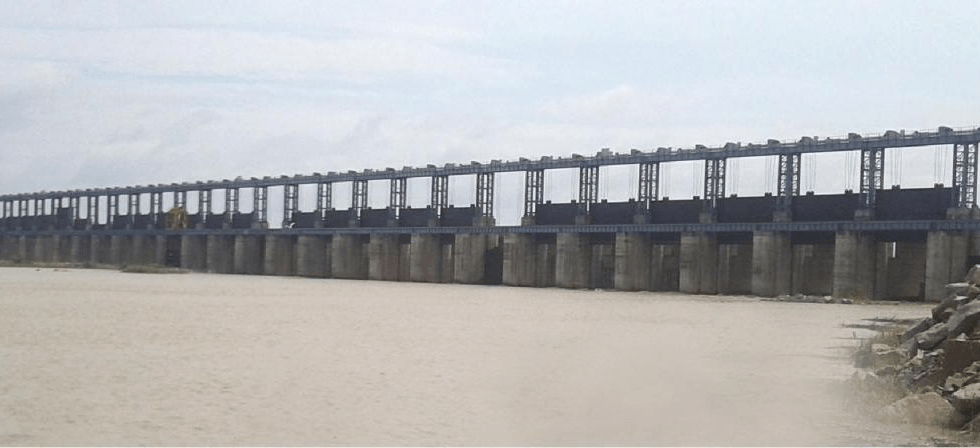
This seemingly contradictory situation underlines a number of things, most important being: large dams do not automatically equate with water in farmers’ fields. Work on many projects (most projects in Marathwada) is incomplete ( for example: canals of projects like Lower Dudhana, Jayakwadi Phase II, etc), while contractors and politicians have made a pretty packet from the contracts, many projects are ‘evaporation machines’ than a water supply systems, without canals and distributaries or systems to govern water management. The available impounded water is a valuable political tool, and is used as such. Water allocation and management is far from being sustainable, transparent and accountable.

Projects under the jurisdiction of Godavari Marathwada Irrigation Development Corporation

According to news reports, in the past 11 months, 454 farmers only in Marathwada[1] have committed suicide due to number of reasons, most linked to crop failure and debt. Strikingly, after late November 2014, 52 farmers committed suicides mainly from Beed, Nanded and Osmanabad regions.

District Number of farmer suicides since January 2014
 1. Beed 122
 2. Nanded 104
 3. Osmanabad 54
 4. Parbhani 49
 5. Aurangabad 40
 6. Jalna 22
 7. Hingoli 29
 8. Latur 34

The issue has been raised in the Winter Assembly by the enthusiastic opposition and the CM is yet to announce a drought relief package. It is expected to be close to 8000-9000 Crores or more.

At the same time, there is a huge tussle going on between Nashik and Nagar on one hand and Marathwada on the other, for waters Godavari which originates in Western Ghats flows through Northern Maharahstra and then becomes the lifeline of Marathwada region. Nashik and Ahmednagar have constructed slew of large dams on Godavari and have always been reluctant to release water for Jayakwadi dam in Aurangabad in the downstream. We saw this episode flaring up last year and we are seeing an action replay this year as the HC has ordered immediate release of water from upstream dams for Jayakwadi. (See:http://indiatogether.org/share-environment). (Notably, this is the first time I have witnessed that the Dam Storages data of www.mahawrd.org, the official website of the Water Resources Department is not updated with weekly Dam Storage Levels. This had not happened even at the peak of 2013-12 Drought. Our queries to WRD on this front have been unanswered till date.)

WRD officials and administration have taken cautious stand and water in reservoirs is now reserved mainly for drinking water purposes, any release in downstream for irrigation is being delayed and is being made only after strong negotiations, badly hitting rabi cultivation, which is already less than last year.

Even as conflicts flare up, protests rage and assembly is disrupted, sugarcane crushing goes on unhindered in Marathwada, in whopping 61 Sugar factories!

On the unfortunate and expected lines, the government has not said a word about restricting cane crushing in Marathwada this year, which itself guzzles massive amounts of water, apart from cane cultivation. On the other hand, the party president, Amit Shah himself attended first crushing day of some factories (one of which was reportedly captured by relatives of a BJP MLA by fraud![2])

A look at sugarcane cultivation and crushing season so far in Marathwada:

(All data obtained by SANDRP from Sugar Commissionarate, Maharashtra Government, December 2014)

Area under sugarcane in Marathwada in 2013-14 and Sugar factories

District Area under sugarcane (in hectares) Number of Sugar factories
1. Aurangabad 15,373 9
2. Jalna 11,083 5
3. Beed 27,299 10
4. Parbhani 25,567 6
5. Hingoli 18,037 3
6. Nanded 28,057 9
7. Osmanbad 43,635 16
8. Latur 61,479 12
TOTAL 2,30,530 Hectares 61 Factories
TOTAL SUGARCANE CULTIVATED IN MARATHWADA FOR CRUSHING 154.28 Lakh Tonnes  

So around 61 sugar factories will crush 154.28 Lakh Tonnes Cane in a period when drought is so bad that water will not be released from reservoirs for irrigation!

In doing so, the factories will use a minimum of 1500 litres of water to crush one tonne of cane. To crush 154.28 lakh tonnes, minimum amount of water used will be: 23,142,000,000 Litres or 23.1 Million Cubic Meters. This is the lowest estimate.

This amount would be sufficient to irrigate nearly 8,000 acres of high yielding groundnut, more of Jowar or can be sufficient for drinking water needs of nearly 15 lakh 85 thousand people[3] till the onset of 2015 monsoon!

This water will be used till the end of crushing season when the drought will be extremely severe if we look at current indices.

Is there a justification of doing so? Will a 10,000 Crore drought package come close to ameliorating the impact of water loss at the peak of drought?

In addition, the pollution control mechanism of most sugar factories is pathetic. Pollution Control Board has raised this number of times. Uncontrolled water and soil pollution by sugar factories will additionally pollute groundwater and water bodies, further affecting water security of the region.

This water may be sourced from dams and groundwater. SANDRP has witnessed in 2012-13drought, sugar factories in Marathwada, mainly Osmanabad region lifted water from dams even when water levels had dipped below dead storage. What will be the impact of this siphoning on local drinking water security?

We should not forget that one of the costliest political lesson for NCP came when Ajit Pawar uttered extremely insulting remarks on dry reservoirs, mocking people’s plight. This was in context of a protest by a lone farmer from Mohol, urging water for drinking, even as sugar factories on Mohol used lakhs of litres of water when the farmer, Prabhakar Deshmukh, was fasting in Mumbai! Needless to say, the ruling party’s defeat was sealed through such acts. (More about Sugarcane in Solapur here: https://sandrp.wordpress.com/2013/04/22/why-solapur-sugarcane-and-sustainability-do-not-rhyme/)

Even in terms of groundwater, Marathwada region has literally touched rock bottom. In a report by GSDA (Groundwater Survey and Development Agency) submitted to Government of Maharashtra,[4] it has been reported that in 249 villages of Marathwada, abstraction has been 100% and there is no more water to draw. Not surprisingly, the regions suffering largest groundwater problems are surrounded by sugarcane and sugarcane factories.

In the past too, SANDRP has underlined how sugarcane in drought affected areas contributed to worsening drought of 2012-13. Then Solapur was in crisis.  This year, the district which has 28 sugar factories two years back has 34 sugar factories!

All government announcements about bringing sugarcane under drip have remained on paper and sugarcane continues to rule the drought politics of the region, regardless of the political party. In fact, the Cooperation Minister BJP Government Chadrakant Patil has announced that the only clause which has been limiting further sugar factory rush (of having a minimum aerial distance of 15-25 kms between two factories[5]),  can be diluted “ to promote healthy competition”. 200 factories are lined up for licenses with the Sugar Commissionarate!  There is no thought about the impact of this decision on water profile of Maharashtra.

This defies logic. The work of Winter Assembly was disrupted several times yesterday (10th December 2014) by aggressive opposition asking for an immediate drought package for Marathwada and Vidarbha. How can a 4,000 or 10,000 Crore Drought Package address these systemic issues? How can this package address siphoning off water from a drought hit region in peak drought? The opponents are happy discussing help to sugar factories for drought relief, not raising any points about impending impacts of crushing cane in drought.

In the long term, there is a need to reduce area under sugarcane and provide proper incentives, fair support price, forward and backward market linkages and support for initiatives like horticulture under drip (and there are several success stories from Marathwada on this), dairying, oil seed and pulses cultivation and processing, dryland farming and importantly, equitable and transparent water management involving all farmers in the region, not restricted to a few.

It is high time that long term decisions are taken in order to make Marathwada truly drought proof and free from clutches of ‘drought packages’ and opportunistic politics, year after year. A start can be made by restricting cane crushing in the region immediately.

-Parineeta Dandekar, SANDRP, parineeta.dandekar@gmail.com

End Notes:

Marathwada Farmers need Water: http://72.78.249.126/Agrowon/20141013/5520233630699177815.htm

SANDRP Analysis on water issues in Maharashtra:

Open Letter to Devendra Fadnavis: https://sandrp.wordpress.com/2014/11/14/open-letter-to-devendra-fadnavis/

Why Solapur, Sugar and Sustainability do not rhyme: https://sandrp.wordpress.com/2013/04/22/why-solapur-sugarcane-and-sustainability-do-not-rhyme

[1] http://www.esakal.com/NewsDetails.aspx?NewsId=5611377824684291267

[2] http://www.loksatta.com/mumbai-news/bjp-leaders-closed-try-to-take-over-controle-on-sugar-factory-in-paithan-1049861/

[3] @ 80 litres per capita per day

[4] http://www.loksatta.com/maharashtra-news/no-rain-in-marathwada-1047256/

[5] http://www.business-standard.com/article/economy-policy/maharashtra-likely-to-abolish-25-km-limit-between-two-sugar-units-114112300348_1.html

Further work on SANDRP on Drought, Maharashtra and Sugarcane can be found in Category: Maharashtra

Maharashtra

Open Letter to Maharashtra Chief Minister Devendra Fadnavis

Above: CM Devendra Fadnavis Photo from: IBN Lokmat

Dear Chief Minister of Maharashtra,

Congratulations for becoming the Chief Minister of one of the progressive States in the country.

We would have felt better if this greeting was without the smudge of Voice Vote in confidence motion. We would have liked to see that while coming into power, you and your government had no links whatsoever with tainted politics of National Congress Party, which was named in a scam that affected Maharashtra’s weakest, but in many senses, its bravest populace: its farmers. But Voice vote has raised a question mark on this. Leader of your party had called NCP as Naturally Corrupt Party!

Nonetheless, you are known to have a great public image as a proactive, scholarly leader with integrity and intelligence.The last CM we had also had a scholarly and clean image, but after resigning from the CM’s post, which he held for more than four years, he admits to his mea culpa that he did not take the firm action in the irrigation scam because he wanted to save his government from collapsing. Maharashtra’s people, besides his own party, paid the price for this.

The crucial qualities the state seeks right now as it stands on the crossroad of political upheaval and natural calamities are not only a clean image, but forthrightness, commitment to democratic & accountable governance and, more importantly, capacity for an independent and clear judgement which is not swayed by the orders of higher ups or peers.

Natural calamities made worse by government’s mismanagement and inaction have racked Maharashtra in the past few years. Right on the heels of the dam scam, came the 2012-13 drought, dubbed by some (somewhat erroneously) as the worst drought in past forty years. After this came the delayed rains, droughts and excessive rainfall in Vidarbha, the hailstorms of February and March 2014, several agricultural diseases, crash of market prices of agricultural produce and fruits. In July 2014, the Malin Tragedy underlined how vulnerable, unprepared and fragile is our Western Ghats Region. Even now, Vidarbha region is reeling from late rains and extremely poor yield of soybean.

The calamities have affected the social and political milieu of the state; they have also literally broken the backs of its farmer. You have experience in disaster management and can appreciate how meagre our response has been to the natural calamities. To the manmade calamities, too, our response has been far from satisfactory. After more than two years after the so called exposé of the irrigation scam, we still have not brought a single irrigation official or politician or contractor to book. This scam and the sheer callousness of Congress-NCP government in handling the issue was one of the main factors behind its collapse. BJP did play an important role in following up with the issue in several parliament sessions and also with the media, but its actions and demands lacked conviction and seemed to save some of the culprits that were close to the BJP.

Irrigation Scam

Isn’t it surprising that being an opposition for 15 years, the BJP played such little real role in unearthing the scam? In fact, it was reported that when some people approached Nitin Gadkari with evidence of illegalities and irregularities, they were told that he is unable to take action against Congress–NCP as “Woh hamare char kaam karte hai, aur hum unke char kaam karte hai”.

The scam came into focus due to efforts of the then-serving chief engineer of Maharashtra Engineering Training Academy (META), Vijay Pandhare, media reports, CAG, courts, civil society and activists of the then-India Against Corruption (later renamed Aam Aadmi Party or AAP)—Anjali Damaniya, Mayank Gandhi, and others. The sheer extent and the impact of the unprecedented scam shocked the nation, after spending more than Rs 70,000 crore for over 10 years there was practically no increase in area under irrigation in Maharashtra. It needs to be remembered here that the scores of mega irrigation projects which were sanctioned and received their first administrative approval even without requisite water availability studies were initiated in the period when Sena-BJP was in power.

It needs to be acknowledged that Eknath Khadse, as the leader of opposition, and you, played a significant role in following up on the scam and pressurising the government.

At the same time, there were some notable contractors, close to BJP or even MPs and MLAs of BJP who were reportedly involved in the scam. Notable examples include Ajay Sancheti of SMS Infrastructure who is also the permanent National Executive Committee Member of the BJP. Media reports showed that Sancheti was not only implicated in Irrigation Scam, but in coal block allocation scam and Adarsh scam, too!

Damaniya, member of AAP, showed through RTI that Sancheti bagged 10 contracts from VIDC worth more than Rs 3,000 crore between his older company, new company and joint ventures with others (in 2005, Sancheti’s firm, Shaktikumar M Sancheti Ltd, changed its name to SMS Infrastructure Ltd and got a fresh certificate of incorporation, Vidarbha Irrigation Development Corporation was informed of this name change. But the two companies continued to exist together, bagging contractor between them and also additionally). These include almost all big projects in Vidarbha, including Gosi Khurd, Lower Penganga, Purna Barrage, Wardha Barrage, and Pedhi Project. This was when awarding more than three contracts to one contractor was illegal. Rules were bent, huge mobilisation advances were given, scope of work was increased and cost escalations were approved to help contractors. But BJP did not seem to take any action about this.

In case of BJP MLC Mitesh Bangadiya, it was his company MG Bangadiya Infrastructure which constructed the hugely flawed 23 left bank canal section of Gosi Khurd Project, which was recommended for complete demolition by Mendhegiri Committee in their report.

It is unfortunate that BJP took no action in this regard. It is also reported that in the midst of these exposures, it was Gadkari who specifically wrote to the water resources ministry at the Centre and sought early release of funds for these very contractors. It was stated that when BJP submitted “bullock cart full of evidence” to the Special Investigation Team headed by Madhav Rao Chitale to investigate the scam, incriminating evidence against these two groups were left out.

We hope that once in power, you will immediately order a judicial or CBI probe into the scam and full enquiry into the contractors who benefitted out of it, including the ones close to BJP, as also demanded by others.

SIT and White Paper

There was a need to reject the SIT Committee Report under the chairpersonship of Chitale as it was not an SIT—it had diluted TORs and Chitale is known to biased in favour of such projects, the department bureaucracy and status quo. The constitution of the committee was only a ploy to buy more time and show a semblance of taking action on the scam. We hope that you do order an immediate CBI probe into this or a judicially appointed SIT with independent members having track record of being able to take on issues upfront, with clear TORs and with power to summon and question.

The white paper brought out by the Water Resources Department (WRD) was also a shield for guilty to hide behind, and, unfortunately, other political parties, including BJP, failed to critically analyse it.

  • We hope that after coming to power, you will hold public consultations on the irrigation scam, white paper, at the dams in question to understand the local issues and real situation. There is also a need to include several dams left out of the white paper.
  • Post facto analysis of the performance and impacts of large dams is a need for the state as we continue to hanker behind more such projects for political and contractor benefit. Maharashtra, with the largest number of big dams in the country, has one of the lowest areas under irrigation.
  • We hope that you will take action against those involved in the projects named in the SIT Report (like Gosikhurd), responsible officials, ministers and contractors who benefitted unduly from the scam. Work on all such projects should be suspended till there is logical end to scam issue.
    Equity in water distribution

Maharashtra has the nation’s largest water infrastructure in terms of projects completed. There is a need to use this existing infrastructure in an optimum way for the benefit of the poorest, neediest, farmers and in a sustainable, equitable and democratic way.

  • We hope the new government will support equitable, sustainable cropping pattern, scrap secretive diversions to urban areas, industries and unplanned water intensive crops from dams meant for agriculture, and dismantle bodies like High Powered Committee immediately.

Environmental Governance

CAG report on irrigation projects in Maharashtra 2013-14 has exposed that works of more than Rs 7,000 crore were initiated by the WRD on nearly 249 projects without requisite forest and environmental clearances. Not only did it result in locking thousands of crores of public funds, it also damaged the meagre forest cover and environment of the state without justification or informed decision making process.

  • We hope the new government takes immediate action against projects mentioned unambiguously in CAG report and officials who initiated such projects.

Implement Gadgil report on Western Ghats

The Coalition’s stand on Western Ghats report under the leadership of Madhav Gadgil was escapist. The misinformation spread about Eco Sensitive Zone and the push for self-benefitting industries in the Konkan region seems to be one of the primary reasons for Narayan Rane’s defeat.

  • We hope the new government accepts the Gadgil report without losing more time and takes steps as per the report to democratise environmental governance in the Western Ghats. As Gadgil has reiterated many a time, the report is not a blueprint but a framework which can be modified by the people themselves.
    De-politicise sugar

Depoliticize Sugar

Water politics of Maharashtra is linked to the sugar politics. We grow sugarcane in the most drought affected regions, benefitting generations of political masters of NCP and Congress.

Maharashtra’s sugar crop is most inefficient user of water as per a study of Commission for Agricultural Costs and Prices (CACP). Although the sugar barons make the right noises about working for farmers’ benefit, that is a lame argument when you take into account thousands of poor farmers who are deprived of ANY irrigation benefits because of concentration of water in the hands of the sugar lobby. Apart from creating deep schisms in the social fabric of the state, it is also making the cane farmer vulnerable to climate change and the whims and fancies of sugar barons. Per tonne rates of cane are not commensurate with the cost of water, labour and fertilisers. Significant to note here that factories in Vidarbha belonging to politicians like Gadkari reportedly offer the lowest cane rates in the state to the farmer at around Rs 1,650 tonne when the average rate are about Rs 2,200 tonne.

  • There is a need to break the sugar shackles chaining the water and agriculture sector, to give more autonomy to the proposed Sugar Development Board, with more farmers on board, not sugar barons. There is also need to stop new licences of sugar industries in the drought belt; at present, the Sugar Commissioner has no such powers. Flow irrigation to sugarcane needs to be stopped, audit of sewage treatment of sugar factories needs to be carried out and the factories have to be made zero discharge, full water reuse models. SANDRP has witnessed that even factories of powerful politicians do not have functioning effluent treatment plants despite sugar industry being in the grossly polluting category (GPI).
    There was a time when the people concerned turned a blind eye towards ills of sugar factories as they were the engines of cooperative movement in Maharashtra. That is nearly in the past now. More and more cooperative sugar factories, set up with money from government, farmers and shareholders became dens of political manipulation and are being converted into private mills at a price which is a joke of their valuation. We have 168 cooperative sugar factories, but about 36 are being liquidated, 26 have been converted from cooperative to private entities and here too there is a strong political presence.
  • We hope that once in power, BJP conducts an audit of sugar industry including water efficiency of sugarcane in Maharashtra with respect to water use, release of water for sugarcane by dams, especially in drought affected Marathwada and western Maharashtra like Ujani, Lower Terna, Manjara, Mazalgao, lift irrigation schemes on Ujani and other scarcity-hit rivers, etc.
    Climate action plan

Action on Changing Climate?

While disasters like the February 2014 hailstorms affected more than 10,000 farmers in vulnerable Marathwada and Vidarbha, we still do not have a State Action Plan on Climate Change which should have been ready years ago through people’s participation.

  • We look forward to your government to complete work on State Action Plan for Climate Change in a community driven, bottom-up, transparent and democratic manner.

The problems of climate becoming more uncertain, extreme weather events increasing in frequency and rainfall failing when due, protective irrigation is becoming a dire need. Despite absence of irrigation, dryland farming and horticulture in limited water is thriving in Maharashtra. The recent example is of the phenomenal success of pomegranate cultivation which is nearly completely on drip and is grown in some of the driest regions of the state. However, the farmers still suffer losses in the absence of processing plants and state support, which is skewed in favor of sugarcane. Same is the case with oilseeds like groundnuts, coarse millets like jowar and bajra which offer livelihood and nutritional security.

We look to the new government in supporting marginal farmers and other farmers who grow such crops as ambassadors of climate change adaptation. We also hope your government will encourage system of rice intensification for various crops.
Urban areas continue to guzzle more water, polluting and killing rivers in their wake. Unfortunately, State Pollution Control Board (SPCB) does not have a single success story to its credit. It has not cleaned a single river since its inception although receiving hundreds of crores every year from state as well as the Centre.

  • We expect the new government to conduct an immediate and open audit of the work of Maharashtra SPCB and fix responsibility for this resounding failure, order complete change of the functioning of the SPCB to make its governance directly accountable to the victims of pollution and also involving participation of the vulnerable communities and independent groups.
    Revive rivers.

River Rejuvenation

In your city, Nagpur, too, the Nag River is chronically polluted and reduced to an open drain. It could not be rejuvenated although you were a Mayor of the city twice. Now there is a move to denotify the river, which will aid setting up category red industries at its very origin, killing the river. We don’t see any political party talking about this issue.

We hope you will stop this killing of rivers as your government at the Centre has been saying that river rejuvenation is their priority, we hope it is yours too.

Incidentally, Nagpur is one of the very few cities in the state with an operational PPP water supply model. There have been too many problems and protests on this issue, we will not go into the details here, but it is again notable that the Orange City Water Supply Limited is a joint venture between Veolia and Vishvaraj Infrastructure, which is closely linked to BJP leadership. There have been no post facto studies of the efficacy of this model and the way through which tendering was done was suspicious.

  • We hope the BJP Government will democratise the governance of water supply and waste water department of the municipal bodies rather than pushing for water privatisation.
    Innovative solutions

Encouraging Local Initiatives

The 2012 and 2014 drought saw some inspiring local initiatives from farmers across the state in terms of working on new watershed structures, desilting older structures and improving distribution systems. These emerged as more equitable and even efficient solutions than larger dams. A compilation of success stories with a clear view to support local led water conservation efforts will be a shot in the arm for the water sector in Maharashtra. Although the past government tried to support smaller structures by passing government resolutions (GRs) and building strings of cement nalla bunds, watershed management is more than just a quick fix solution.

There are several other issues ailing the water-environment-agriculture milieu of the state. The Congress-NCP alliance in power earlier was lampooned because of the absolute autocracy practised in the party, the insult of public opinion and concerns, and the leaders of the coalition proving too weak to steer the state into secure and transparent governance.

We hope that through you, Maharashtra will be astride on this path. We hope that together we can work towards equitable, sustainable, corruption-free, pro-people development and governance of Maharashtra.

All the very best.

Parineeta Dandekar parineeta.dandekar@gmail.com

(A slightly edited version of this was published in Down to Earth. Please find it here: http://www.downtoearth.org.in/content/open-letter-devendra-fadnavis)

CAG Report · Dams · Karnataka · Maharashtra

Press Release: 06.08.2014 Maharashtra and Karnataka Governments accept violating Environment Protection Act and EIA Notification for specific irrigation projects on affidavit; promise not to repeat

The Maharashtra and Karnataka governments have accepted on affidavit that they have violated the Environment Protection Act 1986 and EIA Notification. The violations have happened in taking up the work even before seeking environmental clearance and both governments have promised on affidavit that this will not be repeated. This has come to light following SANDRP writing to the MoEF’s Expert Appraisal Committee on River Valley Projects about the violations.

SANDRP monitors Environmental clearance (EC) process of hydropower, irrigation and river valley projects, and has come across several proposals from Government of Maharashtra and Government of Karnataka (& others) wherein the Water Resource Departments seek Environmental clearance from the MoEF, even as work on the said projects is well underway on ground, violating the Environment Protection Act (1986) and the EIA Notification.

There may be several such projects from other states too which are violating Environment Laws, but the MoEF does not seem to have the capacity to monitor such violations.

The next meeting[1] of the Expert Appraisal Committee (EAC) on River Valley Projects will consider a proposal from Maharashtra worth nearly Rs. 5000 Crores for Krishna Marathwada Lift Irrigation scheme, which plans to divert 23.66 TMC (Thousand Million Cubic Feet) water from Ujani Dam to irrigate over 100,000 hectares of land in Beed and Osmanabad districts. Ironically, work on Krishna Marathwada scheme is well-advanced, and the State has already spent nearly Rs 500 crores on it, without clearances. SANDRP had put these facts in front of the EAC on Dec 5, 2013, before the 70th meeting of EAC that was held on Dec 10-11, 2013. EAC had then asked the Godavari Marathwada Irrigation Development Corporation (GMIDC) to stop all on going work on the project and demanded an affidavit that no work will start without EC and that the EIA Notification and EPA will not be violated further. It also demanded a Board resolution to this effect.

In response, as per documents with SANDRP, in July 2014, the Governing Council of GMIDC, chaired by the State Water Resource Minister Shri Sunil Tatkare and Chairperson of GMIDC passed a resolution, that “There will not be any recurrence of violation”. The Superintending Engineer, Osmanabad Irrigation Circle has also signed an affidavit with an undertaking that all work on the project is stopped unless EC is secured.

Similarly, Sonthi Lift Irrigation Project from Karnataka was deliberated for clearance in the presence of officials from Karnataka, when the project was almost complete on ground. SANDRP brought this to the notice of the EAC which then issued notice to Krishna Bhagya Jal Nigam Limited. The EAC or MoEF did not take strong action against the proponent and in fact recommended Stage 1 Clearance for the project (April 2014) which is already nearing completion. This decision of EAC was without justification or legal mandate.

Karnataka Neeravari Nigam Limited’s (KKNL) Shiggaon Lift Irrigation Project too will be discussed during the upcoming 76th EAC meeting. The project was discussed in the EAC on September 2013, when as it was formally inaugurated by Karnataka CM in November 2012 itself! In case of Shiggaon too, SANDRP pointed out the violations to the EAC, MoEF, which them issued a notice to the KKNL to file an affidavit about the violation and an undertaking to stop work and not resume it unless EC is granted. The KKNL has filed an affidavit stating “there will be no recurrence of violations”, thus accepting preset violations.

Similar violations of EPA (1986) and EIA Notification (2006) have occurred in case of Singtalur Lift Irrigation scheme in Karnataka. The state has also willfully escaped Environment Appraisal for Yettinahole/ Netravathi diversion project under fraudulent claims.

In case of Maharashtra, the recent CAG report 2014 gave a list of 249 projects that do not have EC and more than 89 do not have Forest Clearance (FC), violating the Forest Conservation Act (1980), causing a loss of thousands of crores to the state. SANDRP has made submissions about many such projects undertaken by WRD, Maharashtra without requisite clearances. Some of these include Shirapur Lift Irrigation Scheme in Solapur, Lower Tapi Irrigation Project in Jalgaon and over 10 Lift Irrigation schemes based on Ujani Dam. MoEF has not taken any action for projects which do not approach the EAC for clearances, even when presented with evidence of violations, thus ignoring blatant violations.

Environmental Clearances are critical from environmental and social point of view and they are also important as a third-party expert appraisal of the project. The Expert Appraisal Committee (EAC) of the MoEF is supposed to look not only at the environmental and social impacts of the project, but also assesses the overall optimality, feasibility and justification, hydrologic soundness of the project, and also the veracity of the supposed benefits of the project. This is also the only platform which includes a Public Hearing through which local communities have a chance to put forth their concerns, BEFORE the project comes up. Escaping Environmental Appraisal thus does not only mean flouting a legal requirement, but an absence of any third party appraisal of the project.

In a state like Maharashtra which has seen huge scams and corruption in irrigation projects, such a third party appraisal is critical from environment as well as larger public welfare point of view.

In this context it is pertinent to note that para 5 of the MOEF’s Office Memorandum dated 12.12.2012 dealing with violations states:  “The State Government concerned will need to initiate credible action on the violation by invoking powers under Section 19 of the Environment (Protection) Act, 1986 for taking necessary legal action under Section 15 of the Act for the period for which the violation has taken place and evidence provided to MoEF of the credible action taken.” (Emphasis added)

We are glad that the EAC took cognition of our submissions and refused to clear some projects,  asking for affidavits on violations from Maharashtra and Karnataka governments on Krishna Marathawada LIS and Shiggaon LIS respectively. However, in case of Krishna Marathawada LIS in Maharashtra and Shiggaon Lift Irrigation Scheme in Karnataka, no action has been taken under section 19 or section 15, and hence we hope EAC and MoEF will ask for action as legally mandated. In any case, they have no mandate to consider these projects till such action is taken.

We hope rule of law will be followed in letter and spirit.


Parineeta Dandekar (parineeta.dandekar@gmail.com, 09860030742)

[1] 76th EAC meeting will be held on 11th August in MoEF, Delhi

Maharashtra

Local Initiatives for drought-proofing Maharashtra

Although infamous for the failure of its large dam approach and the recent dam scam, Maharashtra has also been one of the most progressive states in the country when it comes to watershed development, participatory water management and a pioneering discourse surrounding equitable sharing of available water sources. The state has had a number of remarkable stories like Ralegan Siddhi, Hiware Bazaar, Soppecom’s work on water users associations in Waghad and Palkhed, work of Paani Panchayat, Afarm, etc., in addition to a number of centrally funded and state funded watershed programs like Drought Prone Area Program (DPAP), Integrated Wasteland Development Program (IWDP), Adarsh Gaon Yojana, etc. The state has had its share of stalwarts like Late Dr. Vilasrao Salunkhe, Anna Hazare, Popatrao Pawar, Late Dr. Mukundrao Ghare, Smt. Kalpanatai Salunkhe to name just a few. They talked about not only increasing water availability, but also allocating and managing the available water resources equitably and sustainably and many other facets of participatory watershed management which were strongly rooted in equity, gender sensitivity, social realities and ecological sustainability.

Sarpanch of Hiware Bazar Popatrao Pawar Photo: Business Standard

This overall context had a role to play even as Maharashtra faced one of its worst droughts in 2012-13. The devastating drought pushed some unique watershed initiatives across the state, some of which were directly supported by the state, many without any support.

We looked at a few successful stories of increasing water availability locally, through watershed or other simple measures. The common thread running through these examples is ‘local initiative’. It was experienced again that having local communities at the driving seat, with encouraging guidance from the experts and help from government agencies can lead to positive results.

At the same time, we came across some quick-fix watershed measures which are currently supported by the government and discuss if these can replace the holistic and long-term effort of participatory watershed management and equitable water distribution. The examples below are taken from an agricultural daily “Agrowon” and they are indicative in nature[i]. We have talked with the key people behind the initiatives to understand how the work evolved.

Naigaon village in chronically drought prone Ahmednagar desilts its village tank

Naigaon is a small village of around 5000 people in Jamkhed taluka of Ahmednagar District of Maharashtra. Although Khairi Irrigation Project on Khairi River in Jamkhed is just 3 kms from the village, it does not save Naigaon from water scarcity. Since the past few years, Naigaon has been increasingly facing acute water scarcity in post-February months and its dependence on tankers has increased.

Dry landscape of Jamkhed Photo: jamkhed.wordpress.com

The village has a tank: The Naigaon Tank, constructed by the Water Resources Department after the great drought of 1972. It extends over 42 hectares of land. However due to lack of maintenance, the tank was silted and its water storage had decreased substantially.  The 2012-13 drought was the last straw for Naigaon. The tank, silted up and hardly holding any water was an eyesore for the villagers.  In the summer of 2013, more than 1500 people of Naigaon came together to desilt the Naigaon tank by hand and by machines. The collective effort resulted in removing over 3 lakh cubic meters of silt from the tank!

Being farmers, they realized the value of this silt and it was spread over more than 250 hectares of agricultural land. The Tahsildar of Jamkhed Taluk, seeing the enthusiasm and initiative of the farmers, waived royalty on the silt. But apart from this, the initiative did not take any help from the government. Why did they do that? We asked Watershed Committee Chair Suresh Ugale. “We decided to get together and do something in late 2012-early 2013. We were afraid that if government schemes like MNREGA take time in sanctioning, then we will lose the monsoon of 2013. We did not want to lose a single monsoon and did all the work entirely on voluntary basis.”

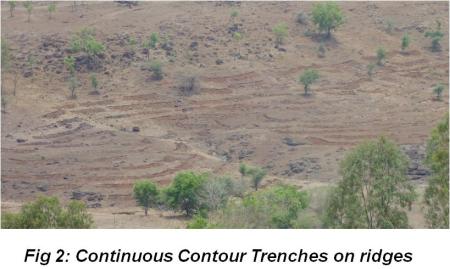
In addition to desilting, the villagers, along with agriculture department carried out watershed works in the surrounding region which included Continuous Contour Trenching, nallah bunding and gulley plugging.

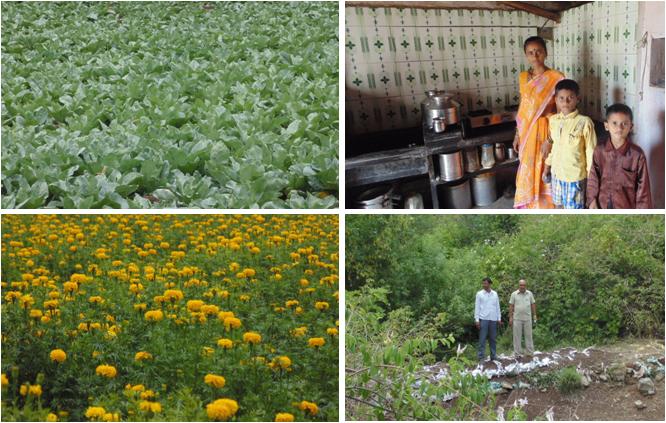
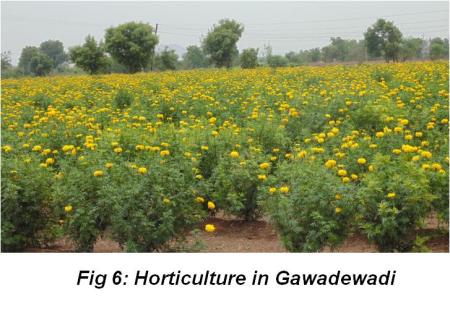
The results are evident. Due to desilting of the village tank, water levels for 30 to 40 surrounding wells have increased. Farmers have been lifting water directly from the tank too. Watershed works have also resulted in increase in water levels of other wells and an increase in soil moisture. This in turn has lead to more crop diversity. In kharif of 2013, 35 ha of additional land was cultivated with multiple crops like cotton, soybean, mung, urad, sugarcane and 18 ha of land was under horticulture. The villagers proudly proclaim that the lands where silt was spread are more productive. In the words of Yogesh Shinde, “My light soil did not allow me much crop choice. But the silt from the tank allowed me to grow jowar and udid ( black gram, a lentil) and fodder crops. We’ve indeed been fortunate this year.”

At the same time, it is worrying that area under sugarcane is also increasing. When asked about this, the watershed Committee chair says, “Yes, we’ve been trying to irrigate all new sugarcane by drip. But that is difficult. The subsidies don’t reach the poorer farmers who need it the most.” But it is clear that without active efforts, more water can mean more water guzzling sugarcane in Naigaon.

No tankers for Pingori village this year

Pingori village in Purandar taluka of Pune district is surrounded by hillocks from three sides. 80% of the land is hills and only 20% is cultivable. Although Pune region has a very high density of large dams, no canal water reaches Pingori. Veer dam lies about 15 to 20 km downstream of the village and plays no role in water supply to the village.

In 2013 the village faced acute drought. People who held lands on the hilly tracts were left with no option but to sell offs their lands. In the words of Babasaheb Shinde, a veteran from the village, ““There was hardly any income source in village without water. People were migrating to cities. We had to do something.”As the situation turned alarming, some villagers came together. It was accepted by all that the key to their challenge lay in water availability.  Pingori had a village tank which was badly in need of maintenance and desilting. Despite several follow ups with Water Conservation Department, no desilting was undertaken by the department, siting non-availability of funds as the reason.

Left with no choice, the villagers of Pingori came together. Hundreds of villagers raised funds for desilting the tanks by working on NREGS schemes. Though they raised a considerably sum, it was still not sufficient for the entire desilting operation. Here, they were helped by Dagdusheth Ganapati Temple Trust.

With some help like this, Pingori undertook desilting work for nearly 45 days in summer 2013 by manual labour and machines. Villagers told SANDRP that more than 200,000 cubic meter silt was removed from the single tank and spread on agricultural fields. Desilting not only increased water holding capacity of the tank, but also its recharge. Following the monsoon of 2013, the village tank held more water and water table in the surrounding areas also increased.

Desilted "Ganesh Sagar" of Pingori village Photo:www.dagdushetganapati.oeg
Desilted “Ganesh Sagar” of Pingori village Photo:www.dagdushetganapati.org

Several years ago when Pingori tank held more water, it had fish in it and fishery was existing, if not thriving. Silt and droughts killed this initiative. But with desilting, local youth introduced over 2 lakh fish seed in the tank and even formed a Fisheries Society. In addition to desilting, the villagers have also undertaken watershed works in nearby hills, especially continuous contour trenches (CCTs) which has helped significantly in raising water table and augmenting stream flows. Cumulative gain of desilting has been increased cultivation on over 300 acres of land and also increased fodder availability.

Pingori has a remarkable lady Sarpanch Ms. Pallavi Bhosale. Ms. Bhosale tells us “I know what it is not even to have drinking water in your home. As a Sarpanch in 2012-13 I was deeply saddened as I had to call for tankers every other day. I could see women from my village walk for miles for water. So many horticultural plantations had to be hacked. It was very disturbing. The entire village stood together and hence this could happen.”

Today Pingori has not called for a single tanker as yet, although the Purandar block has received less than 25% rainfall in this monsoon till date.

How does Pingori avoid water guzzling crops, now that Pingori tank has water? “As a gramsabha we don’t allow water guzzling crops like sugarcane in Pingori. Our water is very precious and we cannot give more water to a few.”

Medsinga village in Taluka & District of Osmanabad is a village of 2700 population. Drought and water scarcity is a regular feature in Osmanadabad in Marathwada and Medsinga is no exception. As SANDRP indicated during the rought of 2012-13, water from major dams in Osmanbad-Latur regions is almost exclusively diverted to sugarcane and sugar factories, leaving smaller villages high and dry.

The village has a tank built by the villagers themselves, 25-30 years ago. Villagers decided to desilt this tank and increase its water holding capacity.

Here, they built recharge shaft inside the tank bed to increase groundwater recharge. This was a 13m x 7m x 2m pit with 2ft x 2ft pit below that followed by a bore well 70 ft deep. Twine was wound around the borewell casing pipe before inserted into the shaft. The shaft was then filled with pebbles to facilitate water percolation.

The villagers also repaired about 16 cement bunds constructed about 10 years back. These bunds were leaking as parts of cement had washed away. The expenses of about Rs 7 lakhs was covered by Holistic Watershed Development and Mahatma Phule Water Conservation Programme.

The cumulative impact of desilting, recharge and repaired bunds was increased water availability in 27 wells and 32 borewells.  There are 2 percolation tanks in the village constructed by Water Conservation Department. They have however lost their capacity due to siltation. Next phase of work plan includes desilting of these tanks.

Is increased water availability an end in itself?

The leaders in Pingori, Naigaon, Sinnar, etc., accept that watershed development is a long and complex process and not simply synonymous with increasing water availability. While it is very positive that water availability is indeed impacted by even short term measures, it seems to be essential that there is long term vision and a watershed approach behind these initiatives. In the absence of a long term vision, water guzzling crops and mismanagement of available resources can lead to a zero sum game. As reviewed by Soppecom in their review on watershed development in Maharashtra,[ii] in itself, watershed development can accentuate inequity by favoring the landed and the lower reaches as well as those who have the capacity to use pumps, siphons, etc.

Unfortunately the May 2013 Government of Maharashtra resolution of supporting nallah widening and deepening known as Shirpur Pattern and raising cement nallah bunds indiscriminately cannot really count as participatory, bottoms up process. Unscientific deepening and widening of streams is not only wasteful, but can also expose the groundwater aquifer, rather than helping recharge. It also raises additional questions of water availability in the downstream, exclusive work by mechanical equipment and not human effort that provides employment to the local needy, Shramadan, etc. While watershed development entails a ridge to valley approach where measures are taken right from the mountain top and logically culminate in the valley in form of bunds or weirs, indiscriminate erection of cement nallah bunds cannot qualify as watershed development. As Seema Kulkarni, Soppecom says, “Watershed program is a culmination of a watershed plan for a village or micro watershed. In the absence of such a plan, it is doubtful whether ad hoc measures can help”.

It is no wonder then that in the contractor-savvy Maharashtra, mega-scale projects like building thousands of cement bunds is looked at as a business venture than a critical intervention. According to reports, Government of Maharashtra through Agriculture and Water Conservation Department built over 3000 bunds spending more than 700 crores just in the last two years. As it is recently reported, many of the cement nallah bunds built hastily in 2013-14 after the Government GR are not holding water, some are built at hydrologically wrong locations, some are already damaged, some are built without sufficient desilting affecting water storage, etc.  A Government inquiry has been constituted on the same in many districts.

From the experience of recent examples like Pingori, Naigaon, Devnadi or the older successes like Ralegaon Siddhi or Hiware Bazaar, it seems that Watershed Development is so much more than erecting some structures at the right places with the help of machines. As much as a technical process, it is also a social and ecological process. And it is indeed more effective that way.

– Parineeta Dandekar, Amruta Pradhan, SANDRP

POST SCRIPT:

1. This election time (Oct 10, 2014) report highlights the success story of similar local efforts in Jalna-Aurangabad area: http://indianexpress.com/article/india/india-others/bring-water-gain-goodwill/.

2. Since the implementation of Phad irrigation, a low cost and eco-friendly system that works without electricity, agricultural production has increased improving the situation of farmers in Yavatmal. (Sept 7, 2014) http://www.indiawaterportal.org/articles/oasis-hope-land-suicides

END NOTES

[i] http://www.agrowon.com/Agrowon/index.htm

[ii] A. Samuel, K.J. Joy, Seema Kulkarni et al, Watershed Development in Maharashtra: Present Scenario and Issues for Restructuring the Programme

Maharashtra · Ministry of Environment and Forests · NBWL · Western Ghats

Problematic functioning of Maharashtra State Wildlife Board

Maharashtra SBWL The State Board for Wildlife has been formed under the Section 6 of the Wildlife Protection Act (1972) (and its subsequent Amendment in 2002) in all states of the country. The main functions of this Board are conservation and protection of wildlife in Protected areas, selection and appraisal of areas to be declared as sanctuaries, etc. It also appraises proposals which affect Protected areas or buffer zones around Protected areas and only after the recommendation of the State Board for Wildlife (SBWL), is the proposal forwarded to the Standing Committee of the National Board for Wildlife.

In Maharashtra, Chief Minister is the Chairperson of the Board, while chief wildlife warden is the member-secretary. Forest minister is the vice-president of the board and minister of state for forest, FDCM (Forest Development Corporation of Maharashtra) managing director, head of forest force (HoFF), field directors of tiger reserves, principal secretary (forest), and principal secretary (tribal development) among others are on the board.

Apart from the government representation, the SBWL also has sizable representation from reputed Wildlife Experts and organizations, some of which have been the members of the SBWL for more than a decade now. Some members include: Sanctuary Asia editor Bittu Sahgal, Bombay Natural History Society’s (BNHS) Dr. Asad Rehmani, Satpuda Foundation’s Kishor Rithe, Bharati Vidyapeeth’s Dr. Erach Bharucha, Executive Director of Wildlife Protection Society of India (WPSI) Belinda Wright, Wildlife expert Anish Andheria, Wildlife Conservation Trust’s (WCT) Hemendra Kothari, Eco-Pro president Bandu Dhotre, MLAs Anandrao Gedam from Armori and Jagdishchandra Valvi, Honorary Wildlife Warden of Pune Anuj Khare etc.

SBWL minutes, Agenda not in public domain Due to some problematic projects considered in the NBWL from Maharashtra, SANDRP tried to access the minutes of the SBWL to understand it’s functioning and decision making. We could not find the minutes in the open domain, the minutes should have been available on the website. Even the agenda and minutes of the National Board for Wildlife which recommends Wildlife Clearance, Expert Appraisal Committee of MoEF which recommends Environmental Clearance or the Forest Advisory Committee which recommends Forest Clearance are available in public domain.

RTI gets no reply We wrote to the Principal Secretary, Revenue and Forests, and PCCF, requesting them to share the minutes but we received no response. We wrote to some members of the SBWL for the minutes, we received no response. ( We could not write to all members as the constitution of the Board and list if members too is not available in the open domain).We contacted the media persons who wrote on SBWL meetings, but they did not have access to minutes. In the meantime, many problematic projects like Gargai Project involving 750 hectares inside the Tansa Sanctuary, Nardawe Irrigation Project, Shirapur Lift Irrigation Scheme, which involved clear violations, were recommended by the SBWL. We wrote about these projects and violations involved to some members, but received no response.

Nardawe Dam is more than 60% complete and has violated EPA (1986), EIA Notification (2006), Forest COnservation Act (1980), FOrest Rights Act (2006) as well as WPA (1972). This project was recommended by the SBWL in its last meeting Photo: SANDRP

Finally we filed an RTI for all past agenda items and minutes of the SBWL. We filed this RTI in April 2014 with the Wildlife Department, Nagpur. Again we received no response. When we called the PIO, Wildlife Division, we were told “There are 32 PIOs in the department, How on earth would they know where our application is?”  We talked with the Principal Chief Conservator of Forests, but he asked us to file an RTI again as the original application was untraceable at the office. We filed a new application, even this time we did not get a response in the mandated 30 days. To cut the long story sort, we received half of the information we asked for 3 months after the application. In the meantime we were also told by the office that these proposals are considered by NBWL again, so why are you worried?

Of the 8 Meetings of the SBWL conducted, we received agenda notes and minutes for 4 meetings exactly over 4 years: from 4th meeting in 20.02.2009 to the 8th Meeting in 20.02.2014. The decisions of the SBWL in these meetings on WRD projects are compiled in the table at the end of this report.

As we will see below there are many concerns about the way SBWL is functioning.  This is worrisome because the current 33-member committee has ample number of non-government representatives, some noted wild lifers who are passionate about their work. Some of these organisations and individuals have been a part of the SBWL for more than decade now. Although the SBWL is not functioning transparently and accountably, we hear no protest from these members or demands that SBWL needs to function in a transparent way in the open domain. Neither is any dissent minuted in the SBWL meeting minutes.

At the same time, we are aware that some members are trying to fight this situation and have been raising issues, this too gets hidden due to lack of transparency about the functioning of the Board.

Some of the major issues about the functioning of SBWL include:

  • Many projects are cleared despite clear violations.  There is nothing in the minutes to reflect if SBWL members are aware of the ground realities.
  • Decisions taken in an earlier meeting are changed in the next with no explanations given.
  • Contradictory decisions being taken, no consistency in decision making.
  • SBWL Members do not respond to submissions, even if they outline serious issues.
  • Agenda and Minutes not in open domain. Forest Officials do not share these even when requested
  • Minutes of the SBWL meetings have no discussions, only decisions.

SANDRP analyzed agenda items of 4 meetings from 2009 to 2014 which were provided to us under RTI. During this period, the SBWL did seem to be taking some good decisions and initiatives about wildlife conservation. This mainly included declaration of new Protected Areas and some conservation reserves. This is commendable, although here too we see only a few members of the SBWL being active on these proposals.

On the other hand, SBWL’s decision making about sanctioning projects is seriously problematic. As SANDRP deals with issues concerning rivers and dams, we are specifically looking at these examples as illustrated below:

  1. Ignoring clear violations: In the  8th meeting the SBWL (on 20.02.14) recommended:
    • Alewadi Irrigation project in Buldana, 1 km from Melghat Tiger Reserve
    • Ar Kacheri Irrigation project in Buldana, 1 km from Melghat Tiger Reserve
    • Shirapur Lift Irrigation Scheme in Solapur parts of it inside Great Indian Bustard Sanctuary, Solapur
    • Nardawe Irrigation Project, Sindhudurg, 2.5 kms from Radhanagari Sanctuary
DSC02398
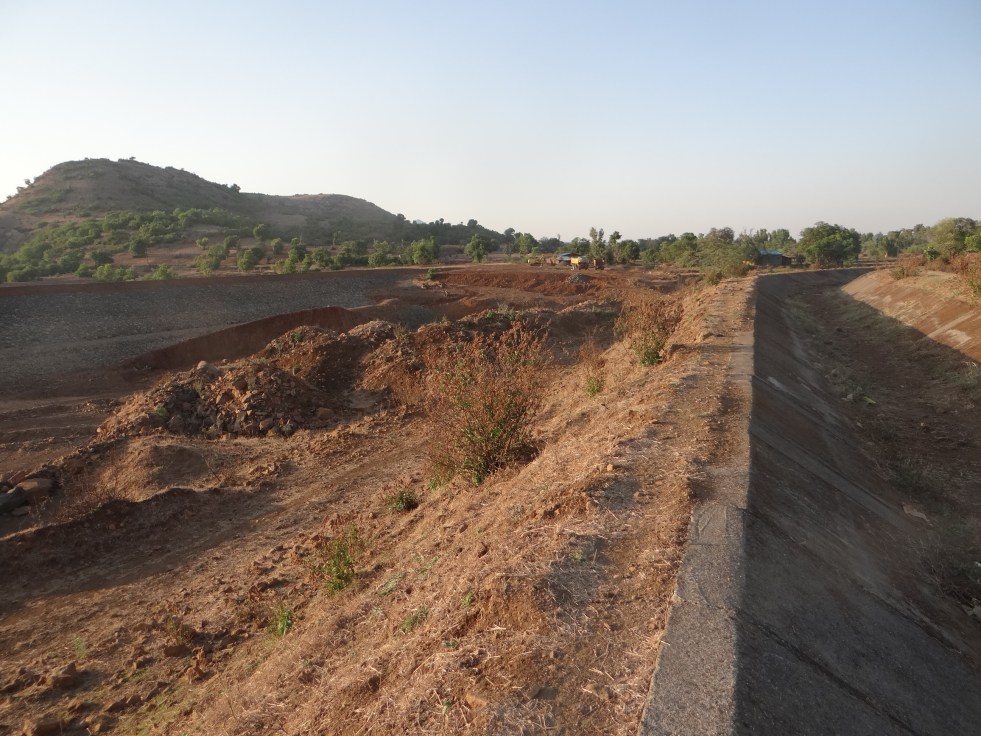
It can be seen that part of Shirapur Lift Irrigation Project was completed back in 2009. The project was considered by SBWL in its Feb 2014 meeting . Photo: SANDRP
DSC02408
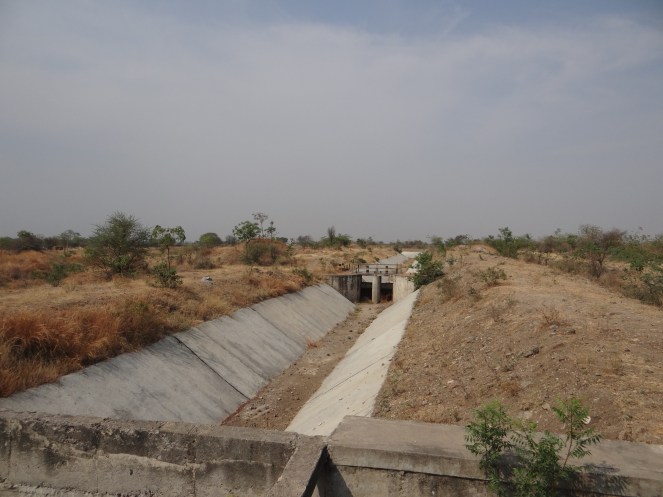
Canals of Shirapur LIS completed and close to Great Indian Bustard Sanctuary Photo: SANDRP


Shockingly, ALL of these projects are already under construction when they came before SBWL, in clear violation of WPA (1972) and Supreme Court Orders. Projects are supposed to obtain the Wildlife clearances before even starting survey works and of course before initiating the work. And the fact that no-one raised the issue of these violations seems to indicate that either the members did not know of this ground reality or they chose to ignore it.

In this case, all of the projects are in violation of the WPA and should undergo necessary punitive action. But what we see in the minutes is that all these projects are recommended for clearance!  This indicates the serious issues with the SBWL. When the same projects were considered for Environmental Clearance by the EAC of the MoEF, this committee did not clear these projects and passed strictures against GOM for violations. Note that this was BEFORE these projects were considered by the SBWL.

In April 2014, SANDRP sent an email to some members[1] of the SBWL as well as the Chief Minster, Principal Secretary and PCCF, drawing their attention to the violations, strictures passed on these projects by MoEF’s Expert Appraisal Committee on River Valley Projects[2], requesting the SBWL to take back their recommendation of clearance to these violating projects. But we have received no response till now.

  1. Hugely Contradictory Decisions:
  • While considering the Tambadi Irrigation Project in Roha, Raigad (Buffer Zone of Phansad Sanctuary) in the 7th SBWL Meeting on 24.1.13, the SBWL passed strict comments on the Water Resources Department , Maharashtra (WRD), stating that:

“All members were of the opinion that no proposal of Irrigation Department should be recommended as the department did not comply with the instructions about mitigation measures which should be taken up like construction of over passes and steps in canals within wildlife corridors. It was reiterated by the Board that unless required action is taken, no proposal would be considered by the board.”

Please note this is the part of the APPROVED minutes circulated to the members on the 7th March 2013. Reading this, anyone would get an impression that all further projects from WRD would not be considered. Shockingly, Action Taken Report for the same project attached to the Agenda of the 8th Meeting (20.02.14) states that: “As decided in the 7th meeting a committee comprising 4 members has been constituted to study this and….it came out with possible mitigation measures.”

Firstly, approved minutes do not reflect this decision and secondly, the approved minutes had taken a completely opposite stand than what is decided. This indicates serious problems in not only minuting the meetings but also inconsistency in decision-making.

  • Similarly, the committee considered diversion proposal of Savarde Irrigaton project in its 5th Meeting on the 28.06.11.

Dr Asad Rahmani after conducting a Site visit to the project recommended several strong conditions for the project which included:

  • Cumulative impact assessment of major and medium projects on Radhanagari Wildlife Sanactuary,
  • Permission from Western Ghats Expert appraisal Panel headed by Prof Gadgil and
  • WRD to give in writing that no new project impinging directly or indirectly or Radhanagari Sanctuary will be taken up.

WRD provided no responses on this.

When the proposal was discussed for the third time in NBWL on the 24th April 2011, the CCF told the NBWL that Maharashtra Government agreed with ALL conditions raised by Dr. Rahmani, except the one on sharing water[3]. The WRD had still not provided any response.

This indicates that the Maharashtra Government, especially WRD (Water Resources Department) is not bothered about any statutory clearance related processes surrounding its projects and that the GOM (Government of Maharashtra) has agreed that no new WRD projects will be undertake affecting Radhanagari Sanctuary.

Disturbingly, the same SBWL considered Nardawe Irrigation Project in its 8th meeting, which was affecting Radhanagari Sanctuary and also cleared it, without even mentioning its earlier commitment from WRD.

Add to this the fact that Nardawe Irrigation project was an ongoing project which had violated Forest Conservation Act (1980), Environment Protection Act (1986) and EIA notification 2006.

State Level Appraisal Bodies facing problems in Maharashtra Exactly one year back in July 2013, the Chairperson and majority members of the State Expert Appraisal Committee resigned together stating political and industrial pressures as the reasons.[4][5]

When SANDRP talked with some present and past SBWL members, it was clear that there are several serious issues and hindrances in functioning of SBWL. Agenda is not sent even a week before the meeting giving the members no time to understand the projects, in some meetings agenda was put on the table at the time of the meeting. It is significant to note that the  Agenda notes received by SANDRP under RTI do not carry dates.

Many of the meetings are “clearance” meetings where projects are set out, expected to be cleared, like the 8th Meeting before the Lok Sabha Election, which had a number of proposals from WRD, when it was stated by the SBWL itself that it will not consider any further proposal from WRD. Not surprisingly, 4 project considered and recommended by the SBWL in its last meetings were in violation of the WPA (1972) as noted above.

At the same time, some active members on the condition of anonymity stated that many members do not raise voice against problematic projects and it is left only to a few members, who raise issues all the time. Some members are happy being a part of a board which is headed by the CM and attend meetings where CM is present and will not raise issues. Some members and organizations have to be in the good books of the Forest and Environment Departments as well as the politicians.

We have stated upfront that the SBWL has also taken some commendable decisions, like the formation of new protected areas. However there is no denying the fact that functioning of SBWL is seriously problematic, opaque, non-transparent and contradictory.

It is high time that the Forest Officials, bureaucracy, politicians as well as the non-officials members take steps to improve the functioning of SBWL.  Many of their current decisions will not stand legal scrutiny. The SBWL is a regulatory body and its functioning needs to be governed with some ‘rules of business’, rather than be arbitrary. For starters, the SBWL needs to put their agenda notes and minutes in open domain and invite comments on the same, as is being done by several other decision making bodies.

-Parineeta Dandekar (parineeta.dandekar@gmail.com)

~~~~~~~~~

Dam projects considered in the past 4 Maharashtra SBWL Meetings

No Name District PA Affected Decision & issues Meeting
 1. Kukadi Left Bank Caal through GIB Santuary Ahmedanagar- Solapur Great Indian Bustard Sanctuary Recommended 4th20.02.09
 2. Survey & Invstigation for Savarde Irigation Project Kolhapur Radhanagari Wildlife Sanctuary RecommendedMinutes note no new projects of WRD to be considered 5th28.06.11
 3. 400 MW Humbarli Pumped Storage HEP Satara Koyna Sanctuary Recommended 5th28.6.11
 4. Baglinga Irrigation Project Melghat Sanctuary Recommended 6th7.6.12
 5. Survey and investigation Gargai Dam Project 750 hectares inside Tansa Sanctuary Recommended.No discussion of site visit, further studies, etc. 6th7.6.12
 6. Dams at Chena and Yeoor for drinking water of Thane Thane 80 hectares inside Sanjay Gandhi National Park Not recommended.Thane EE gave letter that after Shai, no new drinking water source will be required till 2031 6th7.6.12
 7. Survey & Investigation for dams at Deokhinpada Vasai. Water supply of Vasai Virar Tungareshwar Sanctuary Recommended.CCF refused recommendation, but SBWL recommend clearance for Survey and investigation 6th7.6.12
 8. Tambadi Irrigation Project Roha, Raigad Phansad Sanctuary Initially stated that no project to be considered from WRD, but later suggested mitigation measures for the project 7th24.1.13
 9. Khindsi Feeder Canal Pench Irrigation Project Nagpur Pench Tiger Reserve Recommended after site visit and mitigation measures 7th24.1.13
 10. Raperi Irrigation Project Washim Recommended 7th24.1.13
 11. Naradwe Irrigation Project Sindhudurg Radhanagari Sanctuary Recommendeddespite clear violation and ongoing work. Despite SBWLs decision of not considering projects in Radhanagari WLS 7th24.1.13
 12. KholsapadaIrrigation tank Wasai, Thane Tungareshwar WLS Recommended 8th20.02.14
 13. Patiya Irrigation Project Amravati Melghat Tiger Reserve Recommended 8th20.02.14
 14. Shirapur LIS Solapur Great Indian Bustard Sanctuary Recommended(Clear violation, nearly 75% scheme is complete) 8th20.02.14
 15. Alewadi Irrigation Project Buldana Ambabarva Sanctuary Recommended(Violation: Work has started, MoEF has passed strictures) 8th20.02.14
 16. Ar Kacheri Irrigation Project Buldana Ambabarva Sanctuary Recommended(Violation: Work has started, MoEF has passed strictures) 8th20.02.14

Current Constitution of the Maharashtra SBWL as per the RTI Response from Wildlife Department

Chief Minister

Chairperson
Minister, Forests Vice Chair
State Minister for Forests Member
Anandrao Gedam, MLA, Gadchiroli Member
Jagdishchandra Valvi, MLA, Member
Representative, BNHS (Dr. Asad Rehmani)
Representative from Sahyadri Nisarg Mitra, Chiplun, Ratnagiri Member
Representative from Satpuda Foundation (Dr. Kishor Rithe) Member
Dilip Yardi, Aurangabad Member
Anuj Khare, Pune Member
Devaji Tofa, Mendha Lekha, Gadchiroli Member
Dr. Erach Bharucha, Pune Member
Prakash Amte, Hemlkasa, Gadchiroli Member
Anish Andheria, Mumbai Member
Hemendra Kothari, Wildlife Conservation Trust Member
Ramratan Bhart Bapu Raut Member
Gopal Bodhe, Mumbai Member
Papa Patil, Sangli Member
Bittu Sahgal, Sanctuary Asia Member
Ms. Belinda Wright, WPSI Member
Principal Secy, Forests and Revenue Member
 PCCF Member
Principal Secy, Tribal Development Department Member
Managing Director, MTDC Member
Representative Police, not below the rank of Superintendent Member
Representative from Armed Forces ( not below the rank of Brigadier) Member
Commissioner, Animal Husbandry, GOM Member
Commissioner, Fisheries Development Member
Representative from WII, Dehradun Member
Representative from Botanical Survey of India Member
Representative from Zoological Survey of India Member
Principal Chief Conservator of Forests (Wildlife) Nagpur Member Secy
Forest_Gargai_Near-Ogade
Forests inside Tansa Sanctuary which will be submerged if Gargai Dam comes up. The dam has survey and investigation clearance from SBWL Photo: SANDRP


Balganga Dam, nearly complete in the buffer zone of Karnala Bird Sanctuary,without any permission from the SBWL or NBWL Photo: SANDRP
Canals of Shirapur Lift Irrigation Scheme, adjacent to Great Indian Bustard WLS. Photo: SANDRP

END NOTES:


[1] We could not send a letter to all the members as even the information about constitution of the Board and its present members is not available in the open domain.

[2] http://www.hindustantimes.com/india-news/mumbai/six-green-panel-members-resign-citing-interference/article1-1094262.aspx


[1] For details see: https://sandrp.wordpress.com/2013/04/26/eac-rejects-2-vidc-projects-from-buldhana-for-violations/

[2] http://envfor.nic.in/sites/default/files/NBWL-22-Mom.pdf

[3] http://epaper.timesofindia.com/Default/Scripting/ArticleWin.asp?From=Archive&Source=Page&Skin=TOINEW&BaseHref=TOIPU/2013/07/19&PageLabel=5&EntityId=Ar00501&ViewMode=HTML

CAG Report · Maharashtra

Clean chit by the Chitale SIT Report on Maha Irrigation Scam?

 Ye jo Public hai, Ye sab Jaanti hai!

The much debated SIT Committee Report headed by Dr. Madhavrao Chitale was finally tabled in the State Assembly on the last day of the Assembly in the evening on the 11th June 2014, reading it one gets a feeling of déjà vu. Following the uproar due to unprecedented dam scam in 2012, GOM constituted Special Investigation Team (SIT) on the last day of the promise, on 31 December 2012. Members of the Special Investigation Team (SIT), chaired by Dr. Madhavrao Chitale include AKD Jadhav, retd. IRS official and also the past Chairperson of MWRRA, Dr. Krishna Lavekar, Retd. Agriculture Commissioner, GOM and Dr. V. M Ranade, Retd. Secy, Command Area Development, WRD, GOM.

The committee report was submitted in March 2014, after some extensions and was kept under wraps for past three months by the government possibly keeping the Loksabha elections in mind. Not that it mattered as Congress and NCP fared terribly in Maharashtra, winning just 6 of the 48 seats in Maharashtra, and the irrigation scam seems to have had a massive role in this. Now the government, especially NCP’s former and current water resources ministers Ajit Pawar and Sunil Tatkare are claiming that they have got a clean chit from the report, keeping the State Assembly elections in mind.

These claims will not help the political parties. On the other hand, they are likely to harm their political prospects.

But first let us look at some basic aspects of the report. Does it really give a clean chit to the political parties? Is it above shortcomings? Will it play an important role in overhauling dam-centric water management in Maharashtra?

TORs of SIT The TORs of the SIT, laid down by the Water Resources Department of the GOM were as follows:

  1. Investigate irrigation potential created, actual irrigated area (pratyaksha sinchit kshetra) and water use for non-irrigation use. In the actual irrigated area, find the irrigated area by wells, farm ponds, water conservation department and water resource department
  2. To ascertain if the revised administrative approvals given to projects by Irrigation Development Corporations (IDCs) are according to the existing rules and regulations.
  3. Investigate the reasons for delay in completing projects
  4. Investigate reasons behind change in scope from original administrative approval and increase in cost due to change in scope
  5. Suggests measures to increase the usefulness of Lift Irrigation Schemes (LIS)
  6. Suggest ways for quality enhancement in WRD
  7. Suggest ways so that project is completed in said time span and costs
  8. Suggest measures to increase irrigated area
  9. If irregularity found in the inquiry, investigate it, fix responsibility and suggest suitable action

Are TORs inadequate? The Chairperson Dr. Chitale has reiterated over and over again, in face of requests and submissions from media, civil society, petitions filed in court (there are at this moment about 23 PILs (Public Interest Litigation) filed in Bombay High Court about irrigation projects between 2009-2013), that it was not a part of their mandate to look at the modus operandi of the corruption involved in the scam, in the process of calling tenders and accepting contracts. As per section 9.8 of  SIT report, issues it has NOT looked at include: Misuse of clause 38 in tenders for addition of component in the main tender without re tendering, Sanctioning mobilization advances without appropriate justification, Manipulating estimates for accepting tenders, inclusion of unjustified and unrelated additional expenses and Dam Designs made by contractors. The Committee says that these irregularities are outside their TORs but there is ‘scope for doubt’ and the “government would need to investigate into this separately within the legal boundaries.” This is not true and the SIT should have gone into these issues, particularly when it has found ‘scope for doubt’ in these issues because per se the TORs are broad enough to include these.

The committee also says that going into these would have been difficult due to absence of man power, resources and time at the committee’s disposal. However, looking at the centrality of these issues in the Dam Scam, due to which the committee was set up in the first place, and the respect Dr. Chitale garners in the WRD (Water Resources Dept) and political circles, it would not have been impossible to get the TORs modified if at all necessary and very easy to get additional resources. But there is no evidence of the committee asking anything in this regard, indicating that this was not even attempted by the committee.

Apart from that, the committee could have addressed many of these issues being in their TORs as corruption, political-influence and contractor-led processes have affected nearly all the aspects covered in the TORs. Not looking at these issues has resulted in a situation where Dr. Chitale says one of the main reasons for cost escalation of projects has been rise in market prices. Now consider this: costs of Kondane dam increased from Rs 57 crores to Rs 614 cores in just six months, and market prices had nothing to do with this. There are several such examples, where cost escalations, time increase, technical problems had nothing to do with the issues looked at by the committee. The  exclusion of political and corruption issues have affected the quality of conclusions and recommendations of the report.

The committee notes that it relaxed the TORs in accepting submissions from organizations and NGOs, keeping the bigger picture in mind. Strange to see that committee did not think of doing so in issues related to corruption and political links.

CONCLUSIONS OF SIT:

Some of the good conclusions:

  • Environmental and Forest Violations: The report says that there are 2 projects without EC (Environment Clearance) and 31 projects without FC (Forest Clearance) and which did not get FC for more than 5 years. Without clearance, work on some projects stopped midway or dragged on, resulting in a dead investment. If work was started only after permissions, these expenses could have been avoided and money instead could have been spent only on those projects with permissions. The SIT has recommended strict action against officials who floated tenders and issued work orders without these clearances, which is welcome.
  • It has also recommended action to be taken against officials responsible for starting working without acquisition of land for the project as well as canals. (9.3.2)
  • Initiating work without detailed design: Recommends action should be taken against the officials. (9.3.3)
  • Initiating work in the absence of finance: Committee recommends Strict action against IDC, Chief Auditor and Executive Director of the IDC (9.3.4.) which started work without requisite finances.
  • River plugging without creation of irrigation potential: There are around 23 projects where the river plugging (ghal bharni) was done but there was no irrigation potential created then or even two years later. Committee recommends strict action against officials.
  • Projects with serious faults, suspicious transactions: Committee recommends that projects with multiple flawed parameters should be checked by an independent committee and recommends action against Executive Director for the respective IDC. Such projects include: Ujani, Krishna Koyna LIS, Seena Medium Project, Bembla Project, Lower Painganga, Jigaon, Kurka Wadoda Project (TIDC), Sulawade, Bodhawad Praisar, Lower Tapi, Mukatinagar LIS, Manjra, Vishnupuri (Godavari Barrages), Brahmangaon LIS, Upper Godavari Project, Krishna Marathawada project
  • The committee also notes serious irregularities in the following projects: Dhamani (Kolhapur) Kukadi (Seena Tunnel), Jigaon (Buldana, Kondane (Thane) and Chanera (Thane) and recommends special attention and investigation into these projects.

But many conclusions are flawed, unacceptable and some are even illegal:

  • Irrigated area in the State: The report relies only on data collected by WRD. It also states that WRD collects seasonal field data. However, this is not true. The WRD currently has no system in place for admeasuring irrigated area. Irrigation Status Reports and Benchmarking reports are also not available for the past three years. Chitale Committees’ conclusions based on data from WRD are not reliable.
  • TOR 9: Investigation and fixing responsibility The committee holds the entire state machinery including the Planning and Finance Department for not providing enough checks and balances on the work of WRD and classifies most blunders as “systemic errors” (9.04). While fixing clear responsibilities of these sectors could have helped, sweeping generalizations and repeated conclusion of “systemic errors” ensure escape route to all offenders.
  • The punishments are classified into mild and strict punishments, but even strict punishment is limited to departmental inquiries. The committee has also taken the circuitous route of not naming the offenders, but alluding to their posts and duration. Even this is extremely vague. So while the committee refuses to look at most contentious issues, it also refuses to name offenders and also does not name political hand behind the decisions. It does not seem to be an investigation team in any way. Also, when fixing responsibility is a part of the TOR, the committee cannot shirk from the responsibility and state that it will not name offenders. This is a public issue and committee does not have the privilege of overriding the TORs for its idea of leniency.
  • The committee says that investigation into irregularities indicates that major driving force has been stress to reduce backlog, pressure from ‘local’ political leadership, centralized decision making in the IDCs and conscious ignorance of rules and social responsibility. This lenient generalization washes any responsibility from the political leadership of the state and the contractor-engineer nexus.
  • Section 10.9 of the report states that the blunders committed by decision makers were not intentional and were mostly ‘errors of judgment’.
  • MWRRA: Committee reports that 12 Projects are without MWRRA permission. Mild action is recommended against responsible Executive Director. (9.4) While the committee recommends action even against Finance and revenue departments, it does not mention any strict action against MWRRA, which, as pointed out by the CAG Report 13-14 cleared 189 projects during 2007-2013 though the State Water Resource Plan, based on which the projects were required to be cleared, was not prepared, violating the MWRRA Act (2005). Significantly, CAG mentions that: “Authority also failed to perform its role as a regulator as envisaged in the Maharashtra Water Resources Regulatory Authority Act, 2005.”
  • On functioning of IDCs The report states that in 2004, at a meeting of the governing council and IDC members, it was decided that the rights of giving Revised Administrative Approval (RAA) will be given to the Chairperson (WRD Minister). Only a few members of the governing council were present for this meeting. The SIT notes that while the IDCs should have been going towards decentralization, this was a regressive step towards centralization and concentration of power and authority, however, the committee does not suggest ANY action against the Chairman!
  • As per a 2003 GR (Government Resolution) regarding Krishna, Godavari and Vidarbha IDC, all rights to provide RAA were given to the Chairperson and Executive Director by the Governing Council of the IDCs, thus concentrating power (and also scope of corruption related to RAA hikes).
  • CAG Report (2013-14) says regular monthly meetings of the Governing Council of IDCs were not held, in violation of Maharashtra Irrigation Development Corporation Acts. The Chairman (WRD Minister) is directly responsible for this. But the SIT Report does not mention this!

Action Suggested with respect to Specific Projects:

GoseKhurd: There should be action against respective officials who did not visit the canal works due to which concretization was to be done again. The SIT does not suggest any departmental inquiry or anything new other than the recommendations of the Mendhegiri committee report.

Barrages on Godavari: Several question marks have been raised about these projects, their utility and safety. Kulkarni Committee appointed to look into irregularities has come up with strong measures against defaulting officials. But rather than upholding Kulkarni Committee’s recommendations, the SIT asks for constituting one more committee to look into the irregularities!

Illegal suggestion of SIT Shockingly the committee says: (Page 210) for Human Project Forest and Forest Clearance was incorporated in project tender and recommends “it would have been good if a separate tender was issued for this” This is very disturbing. The entire process of Forest Clearance happens through the State Government Forest Department and there is NO role for any other agent here. Any such role indicates violation of the Forest Conservation Act, and SIT recommends precisely such a violation!

Similarly, Environmental Appraisal is supposed to be an unbiased process looking at the social and environmental impact of projects. There is again no scope for tendering here. The SIT’s recommendations in this regard are illegal.

WHY THE PEOPLE OF MAHARASHTRA WILL REJECT THIS REPORT

After pursuing the 600 pager main report and its 32 pager Executive summary made by WRD[1], and keeping in mind all the other available information, one is left with little doubt that Chitale Committee has not only refused to unravel the truth, but has tried to protect political parties.

The unprecedented Dam scam in Maharashtra highlighted massive corruption in tendering process, a collusion of politicians contractors, engineers and bureaucrats, shockingly poor quality of work endangering lives of people in the downstream, a huge number of incomplete projects, nonexistent increase in irrigated area, etc. Some of the main whistle blowers of this scam included Anjali Damaniya of erstwhile IAC, organisations like Shramik Mukti Sangathana and SANDRP and most notable, Vijay Pandhare,  who was then the serving Chief Engieer of META, WRD. Mr. Pandhare’s letters to Chief Minister, WRD Officials, his engagement with the media etc., was remarkable and helped people of Maharashtra in understanding the scope and impact of the scam. In the past too, reports from forthright officials like Kulkarni, Vadnere and Upase had exposes parts of the scam and raised public awareness. This is apart from the systemic problems of dam-based water management in Maharashtra on which many individuals and organisations like Lokabhimukh Pani Dhoran Manch, NAPM, etc have been working for many years.

Considering this, people of Maharashtra are not going to look kindly upon any vague report that gives escape route to corrupt politicians, engineers and bureaucrats, without seizing the opportunity available to it. Unfortunately Chitale Committee Report (referred to as Chitale report) does just that. 

In fact, in the minds of people of Maharashtra who have followed this scam and listened to people in power insulting the plight of the common man in the absence of water (like Ajit Pawar’s remark about urinating in the dry dams or cutting water supply of villages that do not vote for NCP),  the report has seriously discredited Dr.  Madhavrao Chitale and the team of past bureaucrats themselves for:

  • not being clear and forthright about the main causes of the problems,
  • basing their data on the same WRD which has proved to be incorrect,
  • not seizing the historic opportunity available which could have altered the course of the Maharashtra irrigation through exemplary recommended actions,
  • not questioning the merits of mega irrigation projects which have been eating into Maharashtra’s public expenditure, concentrating water and power, impacting communities and ecosystems without benefits,
  •  being shockingly protective of the political class that was at the driving seat of this scam at public expense, by ignoring proofs against political leaders and parties even when it was available to the committee,
  • by maintaining escape routes in the report through which political leaders can escape
  • mollycoddling most of the issues as ‘systemic failures’ when it was their responsibility to fix precise responsibility and there were specific known culprits and institutions,
  • making some suggestions which are in fact illegal.

The committee shows how protective it is of the status quo in irrigation department when it talks of possible negative impact of exemplary punishments (and even departmental inquiries!) on the morale of WRD officials and says that irregularities other than financial ones are due to systemic failures and a large scale investigation into these will affect the morale of the officials. What will really affect the morale of good officials in WRD is NOT fixing responsibility on the guilty, thus maintaining a poor public image of the entire department, while putting the burden of political decisions exclusively on WRD officials. This will foster the feeling that no one can touch the political class and hence, officials better toe the line. This is sending a completely wrong signal.

All Political Parties in it together: While members of BJP are saying that the SIT Report indicts some leaders like Ajit Pawar and Sunil Tatakare, these parties too are not stating upfront that there are serious flaws in the report & the projects, processes and systems the report was supposed to investigate and that neither the report, nor the flawed projects can be accepted. Neither do they raise the basic questions of the merits or lack of merits of having hundreds of irrigation projects without benefits at such huge expenses, and mostly unassessed social and environmental costs.

Nor do they talk about the real changes needed with the Water Resource Department, MWRRA (Maharashtra Water Resources Regulatory Authority), IDCs (Irrigation Development Corporations like the Konkan, Tapi, Kirshna Valley & Godavari basin) and related government machinery, to make them accountable, transparent and participatory.

The reasons for this are clear. The opposition parties are not untouched in this scam. Right now, they want to score political brownie points through the chaos while not aiming for any lasting changes or suggesting measures in the interest of people of Maharashtra. It should also be remembered that many of the current 600+ on-going irrigation projects under investigation were initiated at the time of Shiv Sena- BJP rule in the state.

The report protects political parties: While it has been shown by several reports, individuals and organisations that many decisions affecting projects were driven by financial and political interests, the report does not utter a word about political influence on WRD officials.

It should also be remembered Dr. Chitale, through his various roles as Chairman of Maharashtra Irrigation Commission, Secretary Water Resources for Government of Maharashtra & India, Secretary General of International Commission on Irrigation and Drainage, Chairperson of the Expert Appraisal Committee (EAC) of River Valley and Hydropower Projects MoEF[2] has been entirely pro dam in his approach. He has never questioned the basic need and merits of large dams, despite their poor performance, multiple safety issues, environmental and social impacts, hazy and unattained benefits, etc. His pro-dam attitude is very convenient for and coincides with government of Maharashtra’s push for large dam agenda: pushing dams at each and every possible location, without a thought about their performance and impacts. As a result, as pointed out by CAG report 2013, in June 2013, WRD has as many as 601 projects under execution with estimated balance cost of Rs 82,609.64 crore which is nine times the capital grant of the Water Resources Department for the year 2012-13.But the Chitale Committee Report does not say a word about  this.

The report protects the Central Government In sanctioning, monitoring and financing irrigation projects in Maharashtra, there is a huge role for several arms of the Central Government, including Union Ministry of Water Resources, Central Water Commission, Planning Commission and Union Ministry of Environment and Forests. Thousands of crores of money comes from the Center to this state each year. The scam could go on unhindered also due to the failure of these agencies. For example, large irrigation projects are funded through Accelerated Irrigation Benefits Programme that is supposed to be monitored by CWC and Planning Commission. The Planning Commission is supposed to release first installment only after projects have all the clearances and every next installment only after previous installment has been used as per required norms and necessary results achieved. The SIT should have looked into the role of these agencies and their failures, but by not doing so, SIT has again favoured status quo and protected these bodies.

Dr Chitale, Ignorance of law is not a valid legal defense In the most crucial section of the report, dealing with fixing responsibility in grating Revised Administrative Approvals (RAAs), the report says that the Irrigation Development Corporation (IDC) does not have the right to sanction RAA and the Managing Director and CAFO (Audit and Finance Officer) of the IDC did not bring this to the notice of the IDC and hence the responsibility lies with them. In addition it says that: “Permission of Finance Department is needed for issuing RAA and it seems improbable that the GOM does not know this. This clearly implies that although the committee knows that Chairperson of the IDC knows this, being a part of the GOM, it is not ready to say so, shifting the responsibility on the officials.

In the very next point on action suggested, however, the report says: “In cases where expense made exceed approval, the Executive Director of IDC did not have power to grant RAA. CAFO and Executive Director of IDC are responsible for not bringing this fact to the attention of the Governing Council. If they had brought this to the notice of the governing council of the IDCthen responsibility comes to members and Chairperson. GOM should take appropriate decision in this regard.”

This is the only place where the SIT mentions the Chairperson of the IDC (Water Resources Minister) in the entire report!

This is possibly the most dishonest part of the report. The committee implies that WRD Minister of the State not knowing the norms of WRD is fine, and the responsibility for minister’s ignorance should lie with the officials. But, ignorance of laws and orders is not an excuse for violating laws. It is clear that SIT should have firmly indicted the WRD Ministers and recommended strong action against them. The SIT has done nothing of this sort and has transferred the responsibility on the WRD officials, also keeping a clever escape route for the politicians. Sunil Tatkare is already exploiting this escape route. (Interview)

This is shocking, blatant and unacceptable.

RECOMMENDATIONS OF SIT The Chitale Committee has made following recommendations, translated by SANDRP from original Marathi:

1. Through Remote Sensing (RS) find the actual siltation of major, medium and some minor projects

2. Cities and industries should treat their sewage and effluents to 100% level to reduce non-irrigation water demand

3. Water charges should be levied on wells in command which have not been handed over to WUAs

4. Performance evaluation of minor irrigation projects and recommendations for betterment

5. In cases where perennial crops like sugarcane are taken on major projects and canals their area should ascertained by RS and water charges levied accordingly.

6. Revenue and Agriculture Department is causing extreme delay in collating irrigated area. This needs to be looked into urgently.

7. In depth assessment of why water use is less in Konkan, Amravati and Marathwada and undertake works accordingly

8. Study through MERI: why has carrying capacity of canals decreased?

9. Do not declare irrigation potential created unless distribution systems are in place and ascertained

10. Proper account of irrigated area should be kept with the Agriculture Commissioner

11. Any fraudulent use of non-irrigation water should be checked and detailed audit published every year

12. Methods of collecting data for Economic Survey Report should be improved.

13. Data in benchmarking report should be collated at project level and not Division level as it is done now.

14. The actual cost of projects (original cost + escalation) should be considered as Administrative Approval cost and if cost of the project exceeds 12% of this only then it should be considered for Revised Administrative Approval (RAA) according to CWC guidelines

15. In RAA while finding the benefit ratio, the expenses should be modified as per the escalation

16. WRD needs to have its own code of conduct and rulebook

17. LIS Projects should have a separate rate list, separate from the contractor

18. The WRD should publish escalation rates based on rates every year

19. Construction work should be audited at various stages.

20. After the project construction has been completed, the project should be handed to the management division, WUAs, distributaries work should be done asap (As soon as possible)

21. Some period before and after the project should be designated as project related time

22. Before clearing any further LIS, it should be checked whether it has complete financial support and its electricity expenses should also be considered

23. Separate maintenance fund for pumps, rising mains and other LIS equipment should be considered

24. Rather than giving water to PA’s through LIS, smaller WUAs should be formed and water should be given through smaller LIS

25. Manual for LIS needs to be developed which includes all aspects of LIS management, implementation and command area development

26. Quality control parameters for WRD Department are now out of date and new ones should be developed

27. Damaged and dysfunctional equipment on states dams should be immediately made functional and it should be seen if any changes in these are needed

28. A committee should be formed under MERI to implement and manage the recommendation of the Dam Safety Organization

29. Special training session on Colgrout masonry should be organized by META and only the certified employees should be used for overlooking related works.

30. Proper management of projects as per methods like PERT or CPM should be undertaken at Project formulation stage. Activity time considered should be from the start of initial work to the initiation of irrigation from the project

31. Limits of the five year plan should also be laid on project

32. Work on large projects needs to be broken down in smaller pieces and projects with irrigation potential higher than 1 lakh ha should be termed as Mega projects.

33. Investment made for non-irrigation use should be clearly indicated as such

34. Irrigation potential of the project should be adjusted as per the water used for non-irrigation uses.  Requisite area should be reduced from irrigation potential of the project. Not doing so bloats the irrigation potential created.

35. A separate cell should be set up for coordinating mandatory clearances in IDCs (Irrigation Development Corporations)

36. Help should be taken from Social scientists, NGOS etc in rehabilitation, water distribution and WUA formation

37. Completion report of the project should be prepared in which the responsible officer writes the history of the project and looks at future. A separate cell for this need to be created

38. Separate set up for Project related survey and this should have responsibility of awareness creation in beneficiaries.

39. All IDCS should have separate rules as they have separate regional needs.

40. To achieve the scope and participation of IDCS, noted non-government representatives heading financial institutions/ orgnaistiaons, MLAs and MPs etc should be deputed. There should be a quorum for IDC decision making meetings.

41. Steps should be taken to make IDCs self-sufficient through things like fisheries sale, water charges for HEPs, the water charges should be deposited with the IDCs. This will encourage the IDCs

42. High tech and region specific irrigation methods should be used like drip, sprinkles, piped supply, cropping pattern and volumetric water supply norms.

Suggestions Offered: Can they improve the current situation? While some suggestions of the SIT are indeed good, they still continue with the same status quo,  doing tinkering here and there.  When there was a need for substantive increase in transparency, accountability, independent oversight and participation in WRD, the suggestions largely remain at the superficial level. They follow the same system that was so easily manipulated by the officials as well as politicians, while blacking out the affected communities as well as local stakeholders from the decision making processes.

As it was pointed out by several groups (Example: Manch, NAPM, SANDRP, experts like Pradeep Purandare) at the time of appointing the committee, there were several fundamental flaws in the appointment of the members, the TORs of the Committees, the powers it had to take any meaningful action against the guilty. It was clear from the outset, and also vindicated by the report that the SIT committee Report under Dr. Chitale mainly protects the political masters.

However, after witnessing and sometimes even bearing the burden of the irrigation scam and political interference in water management,the people of Maharashtra know how deep the roots of this scam go. They also understand that any report which the political parties use as an escape route is not credible. To that effect, the SIT Committee Report under the chairpersonship of Dr. Chitale will not help the political parties. Ye jo Public hai, ye sab jaanti hai…

Parineeta Dandekar (parineeta.dandekar@gmail.com)

END NOTES:

[1] Exe Summary by WRD and not the SIT committee. Strangely committee report does not have an executive summary

[2] The EAC under the chairpersonship of Dr. Chitale gave environmental clearance to 2000 MW Lower Subansiri Project in Arunachal in 2002, which has been stalled for more than 2 years now for the want of comprehensive studies. When the EAC sanctioned the project, it was designed to release 6 cumec water for nearly 20 hours and suddenly 2000 cumeces for 2-4 hours to generate electricity, which would have disastrous impacts on downstream Assam. The environmental clearance and approval to this project caused a huge uproar and protests in downstream Assam and these are still continuing.

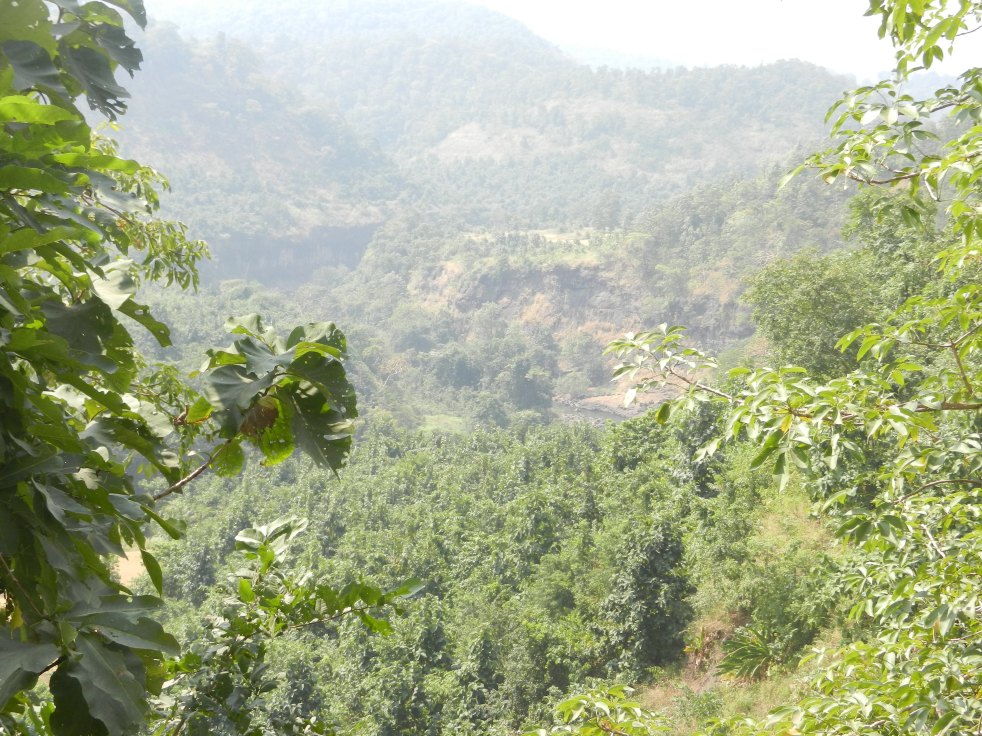
CAG Report · Forest Advisory Committee · Maharashtra · Ministry of Environment and Forests

Press Release:21.06.14: RAMPANT ENVIRONMENTAL VIOLATIONS OF MAHARASHTRA WATER RESOURCE DEPARTMENT

Press Release:                                          ___________                                                                21.06.14

RAMPANT ENVIRONMENTAL VIOLATIONS OF MAHARASHTRA WATER RESOURCE DEPARTMENT: STATE FOREST AND ENVIRONMENT DEPT AND CENTRAL MOEF NEED TO TAKE URGENT ACTION

A shocking expose by the CAG Report on Management of Irrigation Projects in Maharashtra, 2014, highlights the repeated and rampant Environmental Violations in Maharashtra which have led to huge impacts, environmental issues, stoppage of work, wastage of funds and violations of multiple laws.

CAG states that as many as 249 projects in Vidarbha Irrigation Development Corporation (VIDC) alone started work without receiving the legally required Environmental Clearance (EC) from the Central Ministry of Environment and Forests or the State Environment Department. There are large number of projects also from Konkan IDC, Tapi IDC, Godavari Marathawada IDC and Maharashtra Krishna Valley Dev Corporation. In test cases, an expenditure of Rs 376.96 crore was incurred up to March 2013 without obtaining EC by VIDC alone. In addition, work was started in 89 projects and Rs. 7,129.76 crore were spent without Forest Clearance, in violations of Forest Conservation Act by all IDCs. Issues due to this led to an additional expense of nearly Rs. 2000 Crores. Some of the important CAG findings:

  • There was no mechanism in the WRD to monitor compliance of environmental clearance conditions. However, the responsibility of monitoring compliance also falls with the State and Central Environment Departments and Ministries and the Pollution Control Board. They too have violated the laws by not taking any action against the WRD and are to blame for the terrible state of affairs. Following indicates that some of these agencies refused to take action even when SANDRP and other organisations pointed out the violations in the past.
  • Some examples of projects without Environmental clearance are: Surya, Virdi, Nardawe, Kondane: Konkan IDC, Janai Shirsai LIS and Chaskaman extension by MKVDC (Maharashtra Krishna Valley Development Corporation), Katepurna barrage, Lower Dnyanganga, Januna, Pangrabandhi, Warajahangir, Sukli and  Lower Wardha Major Project by VIDC, Kurha Vadoa project by Tapi IDC and Vishnupuri Project Phase II by Godavari Marathawada IDC which includes 13 barrages on the Godavari.

After the CAG report, the Environment Department, GOM has issued notices to 38 projects without EC. Director, Environment Department told SANDRP that Forest Department may issue a separate notice to projects violating the FC Act.

Violations of Forest Conservation Act (1980). Some of the important CAG findings:

  • 188 projects valuing Rs 46,652.44 crore under the jurisdiction of five IDCs remained incomplete (June 2013) because of pending forest clearances by GoI and GoM. 18 projects were not granted forest clearance due to violation of Forest Act.
  • 139 projects from above mentioned 188 projects needed 19,489 hectares of forest land.
  • An expenditure of Rs 7,129.76 crore was incurred on 89 projects out of these pending clearances under the Forest Act in violation of Forest Conservation Act (1980). For 61 projects and 7636 ha land, no NPV (Net Present Value, required to be deposited for use of forest land) was deposited.
  • In 19 out of 89 projects, commencement of work without forest clearances necessitated changes, stoppage of work etc. resulting in blocking of funds to the extent of Rs 1,944.92 crore.

While the CAG report has done a comprehensive assessment of the violations of Environmental Act, Chitale Committee Report, also brought out around the same time misses many of these projects and violations. However, the Chitale Report also recommends strict action to be taken against Executive Engineers for starting working without clearances.

SANDRP had tried to bring several such violations from bigger projects to the notice of both Govt of Maharashtra and Ministry of Environment and Forests, Government of India consistently. However, most shockingly, no action was taken about these violating projects by these bodies. Letter about irregularities in Nardawe Medium Irrigation Project to Mr. A. Rajeev, Principal Secretary Environment Department, GOM in July 2013, as also to the MoEF, has been unanswered till date.

  • Additional HUGE projects which have commenced without EC include the Krishna Marathwada Lift Irrigation Scheme in Solapur, Lower Tapi Project in Dhule, and as many as 9 lift irrigation schemes based on Ujani.
  • SANDRP had sent relevant information on the above projects in form of submissions to MoEF time to time, but NO ACTION WAS TAKEN BY THE MINISTRY.
  • The State Wildlife Board, Maharashtra, under the Chairpersonship of the Chief Minister has cleared violating projects in its last meeting which were under construction and had already violated the Supreme Court Orders as well as the Environment Protection Act 1986. These projects include Nardawe Medium Irrigation Project and Alewadi and Ar Kacheri Nallah Projects in Buldana. Here too, SANDRP had pointed out the violations to the SWB, but it chose to take no action.
  • Additional Environmental and Forest violations are documented by SANDRP in projects including: Balganga, Kalu, Shai, Talamba and Sarambale Dams of KIDC, Upper Godavari Interbasin Transfer and Manjarpada Phase I project and Components of Gosi Khurd in GMIDC.
  • Lift Irrigation Schemes like Shirapur LIS, Sangola LIS, Barshi LIS, Bhima Seena Link Canal, Dahigain LIS and Seena Madha LIS based on Ujani. All information about these has been given by SANDRP in January 2013 to the Expert Appraisal Committee of the MoEF which grants Environmental Clearance to these projects. But no action has been taken by MoEF.

This points to the inescapable conclusion that the state forest and environment department and ministry as well as the MoEF, Delhi, are equally responsible for consciously turning a blind eye towards violations by WRD, Maharahstra.

Any action taken  by these agencies following the CAG report is only to save face and is too little too late, as environment and forests are already impacted and huge amounts of public funds are already spent or locked in these projects without even basic impact assessments or appraisals. This shows that the government, politicians and bureaucrats have no respect for environment and forest clearances, appraisals, impact assessments & affected community’s opinion through public consultations. Strict action should be taken against all those ministers, officials, engineers & contractors, who are responsible for sanctioning and starting such work. Action also needs to be taken against agencies which have looked the other way and have failed to take necessary action, along with WRD Maharashtra for violating laws of the land and affecting forests, environment, people, society and economy of the state.

While the responsibility of ruling coalition of Congress and NCP is greater, the opposition alliance of BJP and Shiv Sena is also equally to blame for not raising these important issues which are crucial for the people of Maharashtra.

-Parineeta Dandekar (9860030742) parineeta.dandekar@gmail.com, Himanshu Thakkar (09968242798) ht.sandrp@gmail.com

South Asia Network on Dams, Rivers and People (SANDRP), https://sandrp.wordpress.com/, https://sandrp.in/

Climate Change · Maharashtra

Gawadewadi: A success story of participatory small scale water conservation

Background

Clean roads, lush green farms and wells having water even at the peak of summer is what one notices when one enters Gawdewadi Village of Ambegaon Taluka in Pune Distrct.

Ralegan Siddhi and Hiware Bazar villages of Maharashtra are two widely discussed success stories of sustainable village development through soil and water conservation works. There are however lesser known success stories of equal caliber. Gawadewadi is possibly one such story. Participatory soil and water conservation work started for improving water availability in the village for drinking and agricultural purposes has led to multiple other initiatives like cooperative dairy, gobar gas plants for the households, horticulture etc. A chain of benefits has unfolded over more than ten years of hard work put in by the villagers. The village is now tanker free, crops have diversified, agricultural production has gone up and so have income levels. Most rewarding benefit has been the homecoming of more than 165 families which had migrated to Pune or Mumbai in search of work.

Gawadewadi has successfully demonstrated how small scale ‘active solution’ of participatory soil and water conservation works can become a successful alternative to large scale ‘passive solution’ such as building dams.

The success story is even more important in the context of changing climate. The Working Group II of Inter-governmental Panel on Climate Change (IPCC), in its report titled Climate Change 2014: Impacts, Adaptation, and Vulnerability’released on 31st March 2014[i][ii], acknowledges that Ecosystem Based Adaptation (EBA) to Climate Change (such as soil and water conservation works) is a lower risk option as against engineering solutions (such as dams) as their application is more flexible, more responsive to unanticipated environmental changes and is more cost effective & sustainable. It also acknowledges that building large dams is not a climate friendly option. The report further states that EBA may contribute to achieving sustainable development goals (e.g. poverty reduction, sustainable environmental management, and even mitigation objectives), especially when they are integrated with sound ecosystem management approaches.

In this regard the success story of Gawadewadi assumes greater importance.

Journey towards sustainability

Gawadewadi (Ambegaon taluka, Pune district) with a total area of 1243 Ha is a village located about 10 km away from Manchar on the Pune-Nashik road and 70 KM away from Pune city. It is a rainfed watershed lying in the rainshadow region of Maharashtra state (Figure 1[iii]). Average annual rainfall is about 500 mm. The terrain is mostly flat. Southern boundary of the village is hilly which flatten in central and northern portion. Out of 1,243 ha of land 878 ha is cultivable. Most of the families in this village are small land holders. Current population of the village is about 3190. After drought of 1972-73 the village was dependent on tankers for drinking water during summer, agricultural productivity was low and a large number of people had migrated to Pune and Mumbai in search of employment.

Gawadewadi Figure 1

In 1985, residents of Gawadewadi with local leadership of Anna Pimpale visited Ralegan Siddhi village in Parner taluka of Ahmednagar District. Impressed by the holistic development of the Ralegan Siddhi the residents were determined to transform Gawadewadi. Vanarai, a voluntary organization based in Pune that was approached by the villagers agreed to act as a catalyst in this process of development. Soil and water conservation works started in 1991. Technical inputs needed for the watershed development works were given partly by Irrigation Department and partly by Agricultural department. Along with these funds no grazing and no cutting of trees was diligently followed. Since there are no landless cattle breeders following no open grazing regulation was easier.

Sr. No. Structure Number
1 Soil bunds 18
2 Loose Boulder Bunds 03
3 Underground Bunds 03
4 Gabion Structures 01
5 Check dams 03
6 Percolation Tanks 05
7 Vanrai Bund 01

There are four catchment areas spread over 1400 Ha. Adopting top to bottom approach for watershed treatment Continuous Contour Trenches (CCT) (Figure 2), loose boulders and stone bunds were constructed on the ridges; soil bunds, cement bunds, gabion structures and percolation tanks were constructed at the bottom of the catchment. CCT works on the ridges is carried out by forest department. Under social forestry programme Village Panchayat has planted 1,10,000 trees on 34 acre land. Table above lists the existing watershed structures.

Gawadewadi Figure 2


Gawadewadi Figure 3

Total expenses incurred for the project were Rs 60 lakh for construction of watershed structures and Rs one lakh for trainings. This money was spent during first 5 to 6 years of work during 1991-97 and funded by various government departments like Agriculture Department, Social Forestry Department, Ground Water Survey and Development Agency and also by Vanarai.

Water availability has slowly increased. After the great drought 1972-73 the village survived entirely on tankers post February every year. Government had to send two to three tankers per day to cater for drinking water. The village is now completely tanker free. Wells that had no water after December earlier now have water even at May end (Figure 4). Earlier the only crops harvested were bajra and jowar. Farmers could barely cultivate once a year. Now the crop diversity includes tomatoes, potatoes, groundnut, wheat, sugarcane etc. Village also produces export quality custard apples, pomegranates and grapes. Farmers take three rounds of crops in a year instead of one. The village now has irrigated area of 150 Ha. In 1991, 500 people from the village were daily wage labourers. Now there are nil. Area under horticulture was 11 Ha in 1991 which has now increased to 142 Ha (Figure 5 & 6). Increased fodder development resulted in increased milk production. Milk collection which was 200 lt per day in 1991 has gone up to 12000 lt per day. The village experienced no scarcity of water in drought of 2012. Domestic demand for water was unaffected by drought. For agriculture the usual round of water is once in 10 days which had to be adjusted to once in 20 days during the drought. “We did not even realize that there was a drought” says Jaywant Gawade a villager.

Gawadewadi Figure 4

Gawadewadi Figure 5

Gawadewadi Figure 6Vanarai has played a role of facilitator. It coordinated the local officers of various ministries & departments and pooled different resources to make them available to the village. Vanarai awakened the local leadership and conducted training programmes for developing different skills and also worked for empowerment of women and youth.
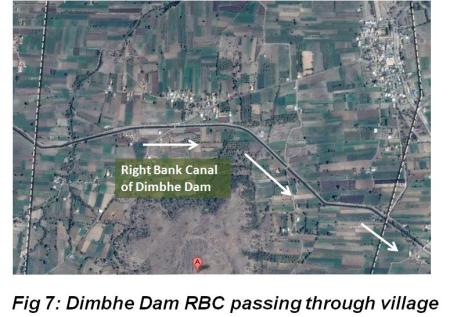
Watershed development worked as a platform for the villagers to come together. With resources made available from Vanarai the participatory initiatives soon diversified to other livelihood generating and development initiatives. Following footsteps of Ralegan Siddhi the village followed the principles of ban on alcohol, no use of axe, no grazing, shramdan and family planning. Latrines were constructed in all the households. Biogas plants have been constructed in 265 households and latrines have been connected directly to the biogas plants. Entire cooking for all these families is taken care of by biogas. Increased fodder availability has made it feasible to rear cattle and thus has ensured the availability of cow dung. There are 13 women Self Help Groups (SHGs) involved in activities like sericulture, vermi composting etc. The village now has nine dairies. These dairies were actively functioning till 2-3 years back. The milk collected was sent to Katraj Doodh Sastha (Pune). Since last two three years private milk product companies collect milk from individual households and pay for the same. Villagers opted for this as it is a more convenient option. In 1994 the villagers established Hirkani Vidyalay, a local school with contribution from village. The momentum of village development which geared up 10-12 years back is still very much alive. Currently Vanarai is involved in improving the marketing of agriculture produce. The villagers now want to focus on improving the agricultural practices. After increase in the water availability the cultivated area under sugarcane has also increased. Currently the area for sugarcane cultivation is 60% of the total cultivated land. The sugarcane is sent to Pargaon Cooperative Sugar Factory. The factory has been existing for last 15 years. About 90% of the sugar cultivators from the village are members of this sugar factory.

This is a matter of concern in such low rainfall area and it has intensified the water use. With this realization the villagers are slowly shifting towards drip irrigation. They are also keen on learning sound crop water management and organic farming practices. Data for the current water use and ground water levels for past few years could not be available for this study.

Dynamics with Dimbhe dam

The village was self reliant in terms of water availability four to five years prior to irrigation canal provided by the government. Right Bank Canal (RBC) of Dimbhe dam which was constructed in 1997 passes through the village (Figure 7[iv] & 8). Dimbhe dam was filled to capacity in 2000, submerging 2202 hectares land of tribals in the Ambegaon taluka. 1253 families had to shift out, 11 villages were submerged fully and another thirteen villages were partially affected. Villagers inform that there is no fixed schedule followed for releasing water in RBC of the dam. The Left Bank Canal (LBC) constructed in 1987 has water throughout the year since it carries water downstream to Yedgaon dam[v]. However RBC receives water only thrice a year. The latest round of water release, as I write this was in February 2014. The water lasted for crops for about 30 to 35 days. The next round of water was due in May 2014 which is yet to be released. Agricultural fields only in the belt of 200 ft on both the sides of canal are benefitted. Villagers inform that in absence of watershed development work, coping with summer solely with canal irrigation was impossible.

Gawadewadi Figure 7

Gawadewadi Figure 8

Dimbhe Dam and its RBC share some more interesting dynamics with the village. Gawadewadi has hosted more than 70 families which were displaced because of Dimbhe Dam. Villagers point out that these families are a classic example of how the displaced families often remain away of benefits of the dam. The displaced families stay more than two KM away from the RBC and have no access to water from RBC. They were given land for land around 20 KM away from the houses that were built for them in Gawadewadi. Many of them sold the lands given to them under rehabilitation package as commuting was a problem. Problems of Dimbhe dam that have interface with Gawadewadi may just be a tip of ice berg. Even so these links with the government irrigation projects further highlight the need for participatory and decentralized water conservation.

Conclusion

Taking a close look at the development of Gawadewadi shows that the essential element behind success was the active public participation. This participation and ownership of the work resulted in completion of soil and water conservation works on 1400 Ha of area when no funding was available. This participation was also responsible for spurring of other allied developmental initiatives in the village which almost took a form of movement. Villagers voluntarily participated in various training programmes and diversified their livelihood options, improved farming practices, increased crop variety, increased milk production and in turn increased their income. In this sense such eco-system based works for conservation of natural resources like land and water become ‘active solutions’ as against the ‘passive solutions’ such as dams which come at a tremendous social and environmental cost.

It is worth noting that over 40% of India’s under construction dams are in Maharashtra. The state has spent about Rs 75000 crores over the last decade and will need to spend about Rs 76000 crores to complete the under construction projects[vi]. When Maharashtra is on such an irrigation spree, highlighting and replicating stories like Gawadewadi which demonstrate success of small scale solutions is definitely the need of the hour.

Amruta Pradhan, SANDRP, amrutapradhan@gmail.com, Photos by Author

 Note: This article is based on field visit, accompanied by Vanrai in early June 2014.

END NOTES:

[i] http://ipcc-wg2.gov/AR5/report/final-drafts/

[ii] https://sandrp.wordpress.com/2014/04/03/dams-are-not-climate-friendly-readings-from-ipcc-wg-ii-report/

[iii] Base map adopted from Wikipedia

[iv] Base map adopted from Google Maps

[v] Water from Yedgaon dam is further carried to Visapur dam and then to Karmala Dam.

[vi] https://sandrp.in/irrigation/MAHA_Irrigation_Scam_Nov2012.pdf