
Forum for Policy Dialogue on Water Conflicts in India (Forum hereafter) has published its latest compendium titled ‘Water Conflicts in Northeast India – A Compendium of Case Studies.’ Forum since its inception has been working towards documenting water related conflict in the country. Forum has already earlier published a book titled ‘Water Conflicts in India: Million Revolts in the Making’ where they published 63 case studies of conflicts related to water from all over India.
In the NE compendium, Forum has put together water related conflict case studies from the northeastern region of India. This is the first document from northeast where issues related to water sectors has been put into the framework of conflict and analyzed. Northeast is already witnessing a lot of hue cry regarding water issues. These issues include annual flood havoc in the Assam valley, the unprecedented rise in hydropower construction in Arunachal Pradesh, the threat of water diversion by China in the upstream of Brahmaputra, shortage drinking water in towns and hill areas etc. The northeastern region is surrounded by international boundaries and linked to mainland India though a 27 km wide Siliguri corridor. The Brahmaputra and BarakRivers, two of the major rivers in the region along with many of their tributaries are international rivers. Therefore water related conflicts in the region carry a lot of geo-political importance. However, from the side of government of India the thrust today is for hydropower development and bargain for water sharing with China.

Different Cases with Inherent Conflicts:
This compendium has 18 case studies which covers several important issues related with water in the region. This compendium also has 3 chapters along with the note from the editors which brings to fore the rationale for this compendium. Out of the 18 case studies nine case studies deal with hydropower development. Rest of the nine case studies brings to light other burning issues related with water in the region.
The introductory chapter is an article titled ‘Damming of rivers and Anthropological Research: An Introductory Note’ written by Dr. A.C. Bhagbati, a renowned social anthropologist from northeast. Dr. Bhagbati wrote this article in 1983 but there are several issues which are still relevant. The time when he wrote this, the feasibility report for Ranganadi Hydroelectric project was prepared and lower Subansiri project was still in papers. During that time possibly he was the only one who expressed concerns for the social-ecological consequences of dam construction in the region. He said that no anthropological research was incorporated in development planning of the country at that time and impacts of dam on local inhabitants receives attention as a mere technical question in the survey report prepared for the dams. The situation has not changed much even though 30 years have passed.
Natural Resources and Impact on Water:
There are two case studies, which analyse the process of natural resource extraction in the region and how it is affecting the water resources in the area. The first case study “Seismic Survey for OIL in the Brahmaputra River Basin: Scientific Understanding and People’s Perceptions” deals with how lack of transparency of concerned authorities regarding the technologies used for seismic surveys as well as oil exploration and their likely negative impacts coupled with uneven sharing of costs and benefits have resulted in differing perceptions and contestations in Assam.
The other case study named “The Barak River: Conflict around the impending Oil Extraction in Manipur” talks about the impending oil extraction in Manipur and how it can worsen the conflicts in the region around the Barak river from its source in Manipur through Assam and up to Bangladesh. The case study also brought the issue of water contamination through oil extraction.
Drinking Water Safety and Security:
The next set of two case studies ‘Water Quality in Assam: Challenges, Discontent and Conflict’ and ‘Conflicts over Drinking Water in Tripura’ brings to fore the problems of drinking water safety and security in the region. Even though the first case study is not focused on a specific area, it discusses the overall situation of water quality and the problems of water contamination due to arsenic, fluoride & other heavy metals along with bacteriological contamination. The second case study discusses how drinking water shortage becoming acute in the state of Tripura and how it is impacting the people living in urban areas as well in the refugee camps.
Embankment and Erosion – Failure of structural measures:
The case study ‘Jiadhal River Catchment: Conflicts over Embankments’ by Partha J Das discusses issue of frequent changing of river course Jiadhal river and how it is failing all the structural measures taken in the state. This case study also presents the dynamic and unpredictable nature of the rivers in the region and how human interventions in the river, e.g. embankments can do no good to ‘protect’ the people from the fury of the river.
The case study by Sidharth Kumar Lahiri ‘Riverbank Erosion in Rohmoria: Impact, Conflict and Peoples’ Struggle’ is focused on the worst erosion affected area of Assam, Rohmoria (in Dibrugarh district in upper Assam) which has witnessed the loss of 30 revenue villages, 5 huge tea gardens and 1 state government run sericulture firm along with 7 schools, police station and post office buildings. The rapidity of erosion in the region was such that no structural measures did any good to stop this. This case study also shows the nature of resource orientated state as government started giving attention to this area only after the oil-blockade, started in 1999. In both these cases there were open confrontation of people and government forces as the people staged protests, dharnas and road-blocks demanding solutions.
Transboundary River issues:
The two case studies ‘The Kurichu Project in Bhutan: Transboundary Hydropower Projects and Downstream Impacts’ and ‘Uncharted Waters: Navigating the Downstream Debate on China’s Water Policy’ details about the transboundary nature of rivers in the northeast and how this is adding to the complexities of water conflicts in the region. The first case study talks about the catastrophic flash floods which occurred on 10 July 2004 due to the bursting of the Tsatichu landslide dammed lake in Bhutan. This had led too flash floods in the Manas and Beki rivers and submerged parts of the Barpeta and Nalbari districts in downstream Assam.
The latter case study by Nimmi Kurien, discusses the Chinese plans of hydropower development and water diversion and its role in the water dynamics of northeast. This case study analyses the China’s water resources choices in its overall water policy directions, the possible conditions under which the China is planning to exercise these choices, the ripple effects they are likely to have across the borders and some key concerns that have flown downstream. This case study indicates that hydro-power projects in China has given an impetus to Indian government to build mega dams in the sub-basins of the Siang, Lohit and Subansiri rivers to establish first-user rights over the water. In doing so, India has kind of sidelined all the environment and ecological concerns.
Case studies on Hydro Power Projects:
The next set of nine case studies is focused on issues related with hydropower dams in the northeast. These nine case studies are from Manipur, Sikkim, Arunachal Pradesh and Assam. This region has been identified as the future powerhouse of the country and as a result the region is witnessing rapid increase in the proposals for construction of hydropower dams in the region. In fact MoUs for 157 dams in a single state of Arunachal Pradesh has been signed, damming almost all the free flowing rivers in the state. Due to the staggering number of MoU former Union Minister of Environment and Forests Jairam Ramesh had once opined that the state was infected by ‘MoU Virus’.
It can be observed that though these case studies are located in different states, they bring together similar issues or instances which in a way lead to the larger critique of the hydropower development regime in the region.
Impacts of Tipaimukh Dam in Manipur:
The case study by R. K. Ranjan Singh titled “Tipaimukh High Dam on the BarakRiver” states that construction of the Tipaimukh dam will lead to permanent displacement and loss of livelihoods of indigenous communities, mostly belonging to the Zeliangrong and Hmar people. This dam was originally planned for flood control but later on a hydropower element was added to it. The constriction of the dam has been questioned due to several critical grounds which include geological and seismic factors, environmental impacts, downstream impacts which extends up to Bangladesh, conservation of socio-cultural heritage, impacts on health and hydro dynamics of the dam itself. The case study states that a total of 25,822 hectares of forest area in Manipur will be affected by this which will lead to felling of 7.8 million trees. If this happens this will invite serious climate change impacts.
Impacts of Hydropower projects in Sikkim:

The three case studies on hydropower development in Sikkim presents situation where the indigenous people of the state have been shown a false dream of development through hydropower generation. The three case studies brings an in depth analysis of the fall out of hydro-development on the rivers and environment as well as how it is impacting the lager political arena in this small Himalayan state.
In the case study ‘Hydropower Projects on the Teesta River: Movements against Mega Dams in Sikkim’ the author Tseten Lepcha discusses the detrimental impacts of many hydropower projects on the ecosystem, livelihoods, religion, cultural identity, political rights of the people and demographic changes due to influx of outsiders for dam construction. The story of the valiant struggle of the project affected people under the banner of Affected Citizens of Teesta (ACT)’s can also be found here.
The case study by Ghanashyam Sharma and Trilochan Pandey titled ‘Water Resource Based Developments in Sikkim: Exploration of Conflicts in the East and West Districts’ describes how the government’s strategy of increasing state’s revenue through the hydropower route has been putting a huge stress on the local environment, the people and the culture.
The case study ‘Hydropower in Sikkim: Coercion and Emergent Socio-environment Justice’ by Amelie Huber and Deepa Joshi, brings to light that the new hydropower development discourse is couched in ostensible win-win scenarios: securing energy for the rapidly developing national economy, accelerating development hitherto ‘backward’ but hydro-potent areas; and generating ‘clean’ energy and thus taking the discourse away from the earlier dam related critique.
Four Case studies on Hydropower Development in Arunachal Pradesh:
There are four case studies on the hydropower development in Arunachal Pradesh and these case studies show the extent of damage which the construction of dams will do to the environment, society, culture and economy of the state. The greed of the state government for hydro-dollar is actually eroding societal values and rich bio-diversity of the state.

The case study by Raju Mimi, titled ‘The Dibang Multipurpose Project: Resistance of the Idu Mishmi’ is focused on the Dibang Multipurpose project in the Dibang basin in Arunachal Pradesh and discusses two main issues of conflict. Firstly, the underlying justification of the project on grounds of economic viability as the displacement is considered to be negligible. Secondly the fear of Idu Mishmi’s of demographic imbalance in the Dibang valley due to huge influx of outside labourers for dam construction. The case study highlighted that total population of Idu Mishmi’s is only about 11,000 whereas the planned 17 projects in the Dibang basin will bring about 100,000 outsiders.
In this compendium there are two case studies on the Demwe Lower Hydro-Electric Project which is the lower most project of the 11 projects in the Lohit river basin and will be constructed near Parshuram Kund, culturally significant site. The LohitRiver enters the plains leaving the hills just after this site.
The first case study by Girin Chetia titled ‘Damming the Lohit: Claims and Counter Claims’ brings to light that even though there are 11 hydropower projects proposed in the Lohit river basin but no cumulative impact assessment study has been conducted for the river basin. Besides, the Demwe Lower project is situated in the border of Arunachal Pradesh and Assam but no downstream impact assessment have been taken up to assess the impacts on densely populated plains in Assam.
The second case by Neeraj Vagholikar ‘Demwe Lower Hydroelectric Project in LohitRiver Basin: Green Clearances Bypass Ecological and Socio-Cultural Concerns’ analyses this project from the perspective of environmental governance. The author shows that this proposed project violates various environmental and wildlife related laws in the country. The Expert Appraisal Committee (EAC) had prescribed a cumulative impact assessment of multiple projects in the Lohit river basin; it delinked the environment clearance of the Demwe Lower and Demwe Upper from the results of the Lohit river basin study. There was also no public hearing held for this project in downstream Assam.
The case study by Azing Pertin titled ‘The Lower Siang Hydropower Project: A Peaceful Valley Erupts’ is focused on the proposed 2700 MW Lower Siang HEP one of the series of projects proposed in the Siang Basin. The project faced vehement opposition, led by Adi Student Union(AdiSU), Siang People’s Forum and Forum for Siang Dialogue on the grounds of social and ecological destruction – submergence of large tracts of forests and agricultural landscapes, destruction for rivers, massive socio-cultural and demographic changes, very little opportunity of sustainable livelihoods, increased seismicity in the region, and other major downstream impacts.
Dam induced Flood in Assam:
The case study titled ‘The Kopili Hydro-Electric Project: Downstream People Rise in Struggle’ is the only case study of a dam located in Assam. This case study presents how the excess water released from the Kopili Hydro Electric Project, led to floods in the downstream on 21 and 22 July, 2004. Due to this flood nearly one lakh people had to flee from their homes and the economic loss was immense. The calculations presented for a single farmer in the case study shows the extent of damage. This case study is very significant in order to present the situation of people leaving in the downstream of a dam.
The last case study ‘State Water Policy of Assam 2007: Conflict over Commercialising Water’ by Chandan Kumar Sharma shows that the draft State Water Policy 2007 bears clear signal for commodification of water and provides for river linking and construction of big dams. The author argues that this draft of state water policy was made by the state government under the pressure of the union government to fall in line with the National Water Policy where not much civil society participation was allowed. But civil society’s vehement objection and pressure on draft had resulted in making the community as the primary repository of rights to water, says the paper. While this may be true, this is difficult to ascertain since the state government has not finalised the water policy and final water policy is not available in public domain.
The compendium has two concluding chapters. The article ‘Water Conflicts in Northeast India: The Need for a Multi-track Mechanism’ by N.G. Mahanta is focused on the approach to be adopted in order to engage with water conflicts in the northeastern region. The author opines that large dams can further intensify the conflicts over water in the region.
The article by Sanjib Baruah titled ‘Whose River is it, Anyway? The Political Economy of Hydropower in the Eastern Himalayas’ was first published in Economic and Political Weekly and it is reproduced here. Though article focuses particularly on the Lower Subansiri project, but it also discusses most of the issues which have been addressed by various case studies in the compendium. In the article the author highlights that the government of India is aiming to take the ‘great leap forward in hydropower generation’ in the coming years and this will be done majorly on the basis of the hydropower projects in northeast. According to a vision document of Central Electricity Authority, by 2025-2026, India aims to add 400 hydropower dams with a total capacity of 107,000 MW. Out of this, according to CEA estimates Northeast India could generate as much as 58,971 MW of hydropower. Arunachal Pradesh alone has the potential of producing about 50,328 megawatts of hydropower – the highest in the country. A report published in Down to Earth in September 2011 stated that government of Arunachal has signed memoranda of understanding for 148 hydropower projects. An estimate done by Human Rights Law Network shows that, in a ten-year period, Arunachal Pradesh proposes to add hydropower capacity which “is only a little less than the total hydropower capacity added in the whole country in the 60 years of Independence.” In his article Baruah concludes that with so many dams in the upstream people of northeast, specially Assam have to live with the risk of sudden floods and at the mercy of the dam authorities.
Critical Issues:
The issues mentioned in this compendium bear great significance for the economy, polity and society of the northeastern region. This compendium was an opportunity to bring together water related issues of the region under one umbrella and the Forum has been successful in doing so. However there are a few critical issues which we would like to point out.
In the concluding chapter by Sanjib Baruah and as well as in the editorial it was highlighted that there is a fundamental difference “between the hydropower projects of postmillennial India and the multipurpose river valley projects of an earlier period in India’s postcolonial history. In the mid-20th century large multi-purpose river valley projects were taken up, to develop river basin region. They were driven by the spirit of decolonization itself…. by contrast, what is bring designed and built these days are almost all single-purpose hydropower dams with power to be produced and sold for profit by private as well as public sector companies.” It is clearly a wrong proposition that in mid 20th century large multi-purpose RVPs were the best options before the society than or were taken up in any participatory democratic way. History shows that the dams have actually created more flood disasters where there need not have been any. There are many other serious issues of performance of large dams in post Independent India.
In the concluding chapter by Sanjib Baruah, I also find it difficult to agree with the opinions made citing John Briscoe. The author said quoting him ‘In the Brahmputra Basin, there are large benefits from multi-purpose storage projects that are being forgone because power companies are licensed to develop “power only” projects, which are typically run-of-the river projects with few flood control or navigation benefits’. The idea that multi-purpose projects can be an optimum option for northeast is very problematic. Some of the issues with such projects can be found in the case study by Raju Mimi in the same compendium. In the conclusion part again quoting Briscoe (in fact quoting Briscoe, a senior officer of the World Bank who served for long in India and Brazil in early years of current millennium is seriously problematic since he stands discredited for his rabidly pro large dam views and who campaigned to ensure that the World Commission on Dams report was not adopted by the World Bank) Baruah writes, “unfortunately, despite there being a history of successful multipurpose projects in India, the Government of India now does not have an enabling framework which facilitates the same socially-optimal outcomes.” Here again we fail to find where is the successful history of multipurpose projects in India. There are detailed critiques available of some of Independent India’s biggest multi-purpose river valley projects, including those for Bhakra(“Unravelling Bhakra” by Shripad Dharmadhikary), Hirakud (by Prof Rohan D’Souza and others), Damodar Valley Projects (“One Valley and a Thousand: Dams, Nationalism, and Development, Studies in Social Ecology & Environmental History” by Daniel Klingensmith among others). SANDRP has been monitoring dam related concerns for more than a decade now and we find it hard to agree with this statement. For more details of SANDRP’s work one can look at the our website https://sandrp.in/ and our blog https://sandrp.wordpress.com/.
Though the case studies of the compendium have brought out several important concerns, some of the case studies need more detailed analysis.
The case study on seismic survey for oil exploration in the Brahmaputra brings to light a new dimension of water issues but could not justice to it. The case study said more about oil then water or river. There are several boxes which talks about the impacts of the seismic survey in a haphazard manner but those cannot be substantiated as an analysis of water conflict.
The case study on conflicts over drinking water in Tripura should include data of drinking water availability in the state. The author can dwell upon on each issue with more detailed emphasis or can take up one area out of the areas mentioned in the case study. The case study can also be substantiated through an analysis of policies on drinking water and sanitation in Tripura.
The case study on Kurichu dam project in Bhutan views the issue of trans-boundary conflicts between the two countries from a narrow perspective. The case study should have covered several more aspects of the Trans-boundary water issue. Specifically the case study does not give any detail of how much damage actually happened on the ground. The larger political and economic rationale for hydro-development in the small Himalayan state could have given better idea of the conflict.
Besides, this case study should have also included the element of flash floods which could help in broadening the scope of the case study. In fact flash flood is one of the important water related issues in northeast. There was a severe flash flood in GaiRiver in Dhemaji district in upper Assam on 15 August, 2011. This was due to breaching of the earthen dam[1] in the upstream of the river. This flash flood had submerged 17 villages and diverted its path making its way through the villages. In fact the cover page of this compendium (photo by the author of this review) depicts the guide bundh of the Gai river railways bridge which was washed away by the same flash flood.
The case study on floods in KopiliRiver could have elaborated more on the aspect how dams were constructed with false promises to people. As the whole region is speculating about the impacts of hydropower development in Arunachal Pradesh, this case study actually brings to light the after effects of dam construction. However this case study too could have elaborated its scope by bringing a comparison with the Ranganadi river floods which submerged the Lakhimpur town and other areas on 28th June 2008. This flood too was the result of water release from the upstream Ranganadi hydroelectric project.
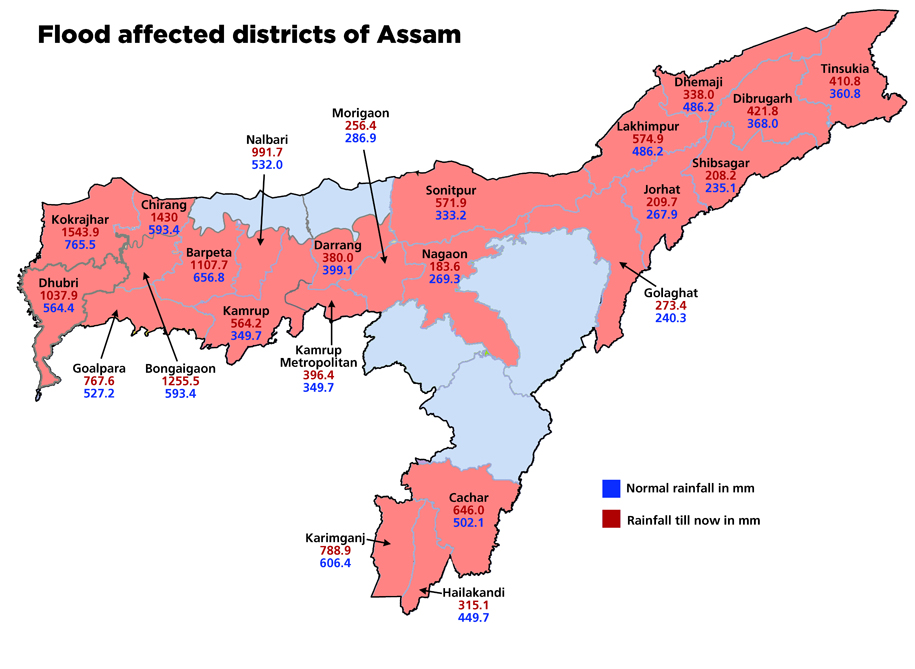
The compendium overlooks some major issues related to floods which severely affect Assam every year. As the compendium wishes to cover water related issues in the region there should been a case study or a chapter dedicated to the overall situation of floods.
The compendium should have include issues related to climate change and impact on water in northeast, the trans-boundary issues with Bangladesh where India will be upstream state and hydropower dams which government of India wants to build in Mizoram. Though the impacts on Bangladesh was mentioned in some of the case studies, keeping the magnitude of the issue there should have been either a separate chapters on this. Analysis of water issues in northeast India from the perspective of gender is also missing in the compendium.
The compendium can also include a case study on the Pagladia dam project which was proposed in 1960s but faced strong opposition from the people. This project was seen as a multi-purpose project but even then people opposed it as they were aware of the inherent nature of the river. The name ‘Pagladia River’ means ‘mad river’ because it changes its course widely, drastically and suddenly.[2] This can also be taken as an example of how multipurpose river valley projects cannot be the answer to floods. According to the government records the project was supposed to be completed by 2008 but many say this project is out of the government’s priority list for now.
This compendium was released on 21st June, 2013 in a public function organized in Guwahati[3] and it was announced that this compendium will soon be out in the form of a book which will be useful. As first of its kind of initiative for northeast this compendium is very welcoming and we hope that the book will be able to bring the issues raised in the compendium in a more comprehensive and updated manner.
Parag Jyoti Saikia
South Asia Network on Dams, Rivers & People (www.sandrp.in)
Email: meandering1800@gmail.com
[1] According to local people living in the villages of the Gai river basin, the high amount of sand in river bed had formed an artificial lake in the upstream which got breached on the day the flash floods occurred.
[2] Bharali Gita, “Pagladia Dam Project in Assam: A Case Study”, Conference on Redressing Inequalities of Displacement by Development: Dams and Mines. Ranchi: Council for Social Development, November 6-8, 2004.

 SANDRP
