Agriculture · Chenab · Fish Sanctuaries · Groundwater · Hydropower · Indus

The Moon River: People’s Story of Chenab

Chenab, which translates as the Moon River is the largest of the five tributaries of River Indus. It flows for about 974 kilometers from the High Himalayas of Lahaul to the forests of Jammu and Kashmir and onto the plains of Pakistan. Its main tributaries in India include Miyar, Marusudhar and Tawi. In the vast plains of Punjab in Pakistan, it is met by Jhelum, Ravi and Sutlej to form the mighty Panjnad before it meets the Indus. Its catchment, spread across 67,430 km2, is shared between the two countries.
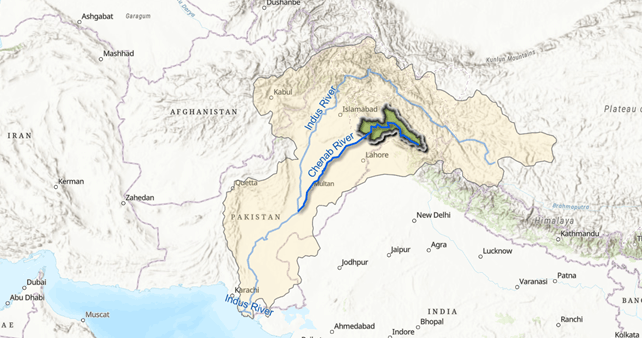
Chenab is Chandrabhaga (Crescent Moon) in its headwaters. It was the River Asikni in Rigveda, and the Acesines for the ancient Greek. From sparse mountain settlements of Lahaul to the bustling urban centers of Sialkot, more than 10 million people live and prosper along the Chenab. Hydropower projects operational and under constructions on the river have an installed capacity of more than 5000 MW (Central Electricity Authority 2024), and its canals irrigate hundreds of thousands of acres in Pakistan and India (Shakir et al).

Continue reading “The Moon River: People’s Story of Chenab”
Beas · Culture · Fish Sanctuaries · Wetlands

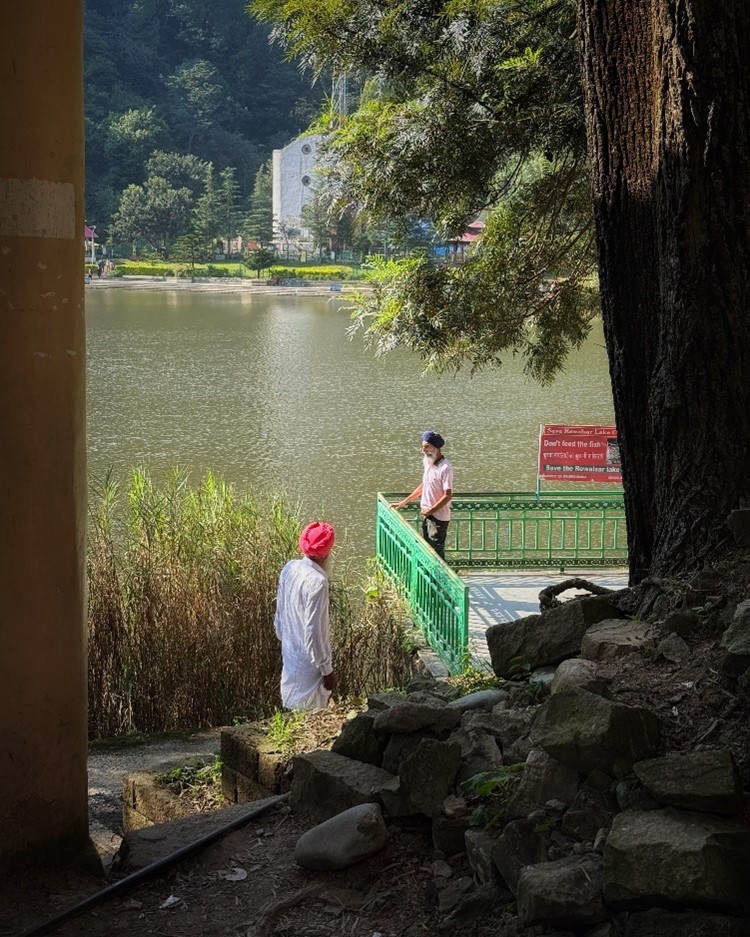
Rewalsar Lake: Where Faiths, Ecosystems and Communities Meet

Rivers and lakes of the Indus basin have been at the crossroads of civilizations, trade routes, and ecosystems for centuries. They are surrounded by stories and songs from many religions, languages and tribes. One such river is Beas, celebrated as Vipash[1] or the ‘breaker of chains’ in the Rigveda, circa 1500 BC. Beas originates at 4361 meters near Rohtang Pass[2] and flows through the Himalayan state of Himachal Pradesh before meeting River Sutlej in the plains of Punjab, literally “the land of five rivers’. Beas flows for about 470 kms to water some of the most fertile valleys in the world.

Continue reading “Rewalsar Lake: Where Faiths, Ecosystems and Communities Meet”
Dams · Fish Sanctuaries · Fish, Fisheries, Fisherfolk · Hydropower · Western Ghats

MoEF Committee Rejects the Adani Application and asks to apply afresh for Warasgaon-Warangi Project!

In a respite to forest dwelling communities, fragile biodiversity and community conservation areas in the Western Ghats, Expert Appraisal Committee (EAC) of the Union MoEF (Ministry of Environment and Forests) rejected Adani Energy’s application for 1500 MW Warasgaon-Warangi Pump Storage Project. The committee has asked the proponent to apply afresh for Stage I Clearance, adding several conditions to assessment.

Continue reading “MoEF Committee Rejects the Adani Application and asks to apply afresh for Warasgaon-Warangi Project!”
Dams · Fish · Fish Sanctuaries · Fish, Fisheries, Fisherfolk · Hydropower · Western Ghats

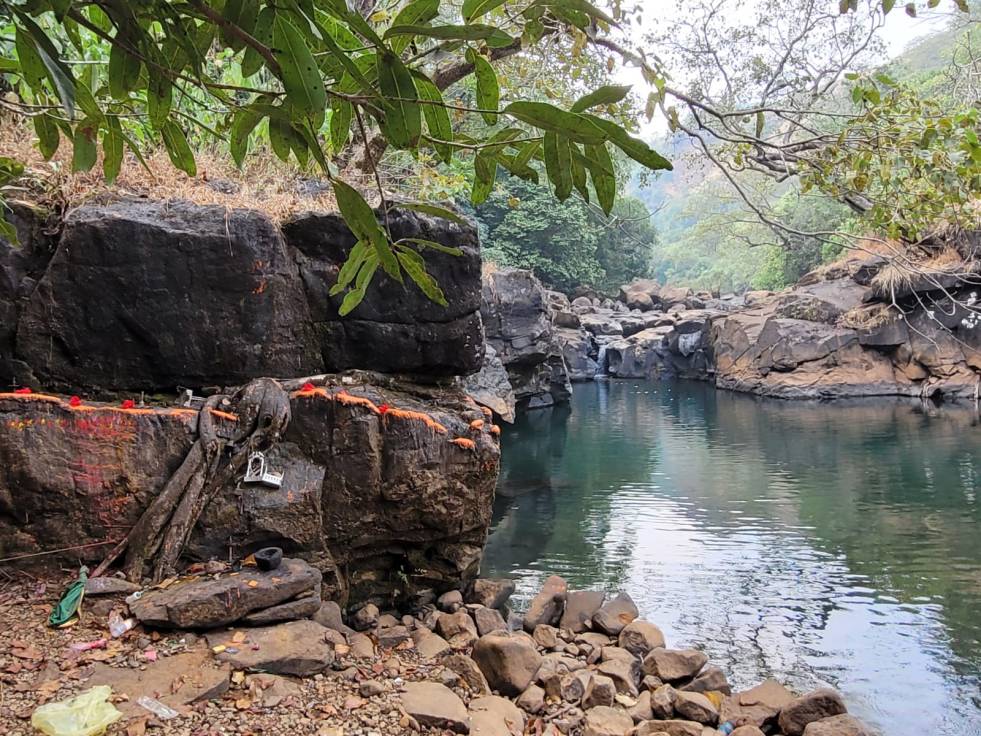
Adani Pump Storage Dams: Defiling sacred pools and fish sanctuaries in the Western Ghats

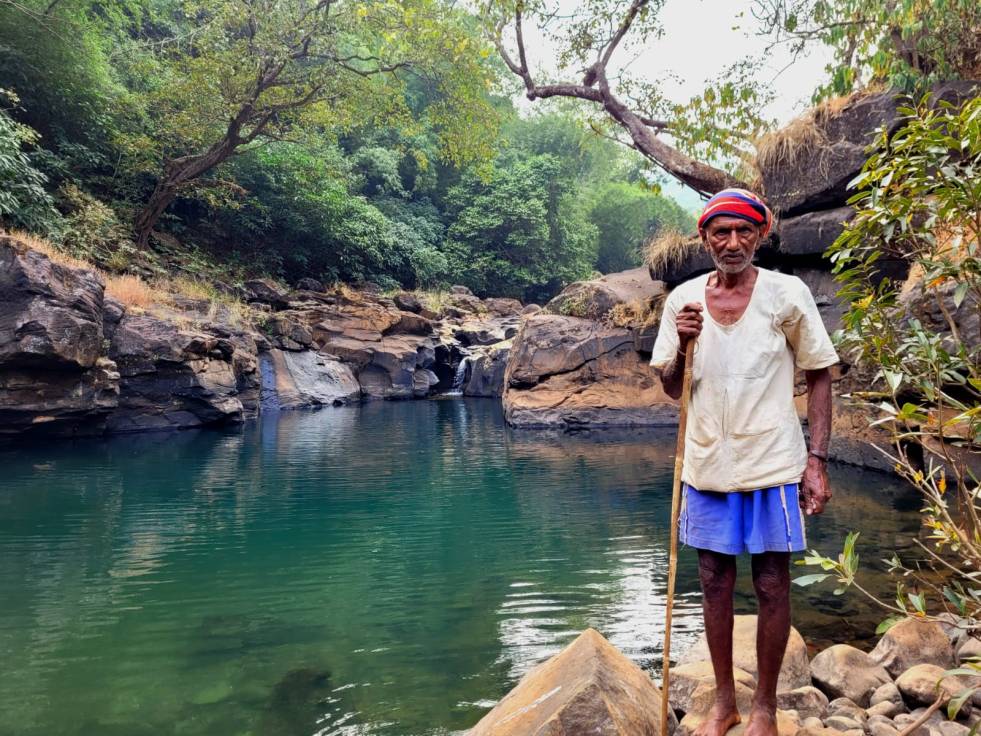
Adani Energy proposes to build two large dams in the heart of Western Ghats as a part of Warangi-Warasgaon Pumped Storage Project. One of the dams will be located in Tekpowale Village, about 65 kms from Pune.  

I actually could not believe my eyes when I read the name Tekpowale.

Continue reading “Adani Pump Storage Dams: Defiling sacred pools and fish sanctuaries in the Western Ghats”
Art, Literature, Culture · Fish · Fish Sanctuaries · Fish, Fisheries, Fisherfolk

Vaitarna’s Community-Conserved Tilase Fish Sanctuary needs protection

When I first heard about a beautiful fish sanctuary right off the highway on Vaitarna river in Maharashtra, I was skeptical. Vaitarna river, despite flowing through dense Western Ghats forests, is highly polluted and encroached upon as it enters the Mumbai Metropolitan Region. Vaitarna river stretch off a highway is not the most idyllic of spots for a thriving fish sanctuary. But I was spectacularly wrong.

Continue reading “Vaitarna’s Community-Conserved Tilase Fish Sanctuary needs protection”
Climate Change · Dams · Environment · Fish · Fish Sanctuaries · Fish, Fisheries, Fisherfolk · Free flowing rivers

Photoblog: Mangroves of the Aghanashini: Linking the River, Land and the Sea

This photoblog by Abhay Kanvinde takes us to mangroves of Aghanashini River Estuary in Kumta Taluk of Uttar Kannada, Karnataka. This is a special place as Aghanashini is a free flowing river with good forest cover in its entire catchment. This means that the mangroves get unhindered supply of freshwater as well as nutrients from the riverine system. This has resulted in the highest area under mangroves in Honnavar Forest Division at 169.4 hectares. Forest Department has also planted about 6 sq. kms of mangroves here, which are thriving. Continue reading “Photoblog: Mangroves of the Aghanashini: Linking the River, Land and the Sea”

Dams · Fish Sanctuaries · Fish, Fisheries, Fisherfolk · Free flowing rivers · Karnataka · Western Ghats · Wetlands · Wild and Scenic Rivers Act

People of the free-flowing Aghanashini

“I don’t know my age. But I know that I have been coming to this river since I was a child everyday to collect bivalves.” Janaki Amma told us while wading waist-deep in the Aghanashini estuary. Janaki Amma is at least 70 years old and has the agility of a ballet dancer as she plunges inside the limpid water one more time, and comes up with a new haul of bivalves in a wicker basket tied to her waist.

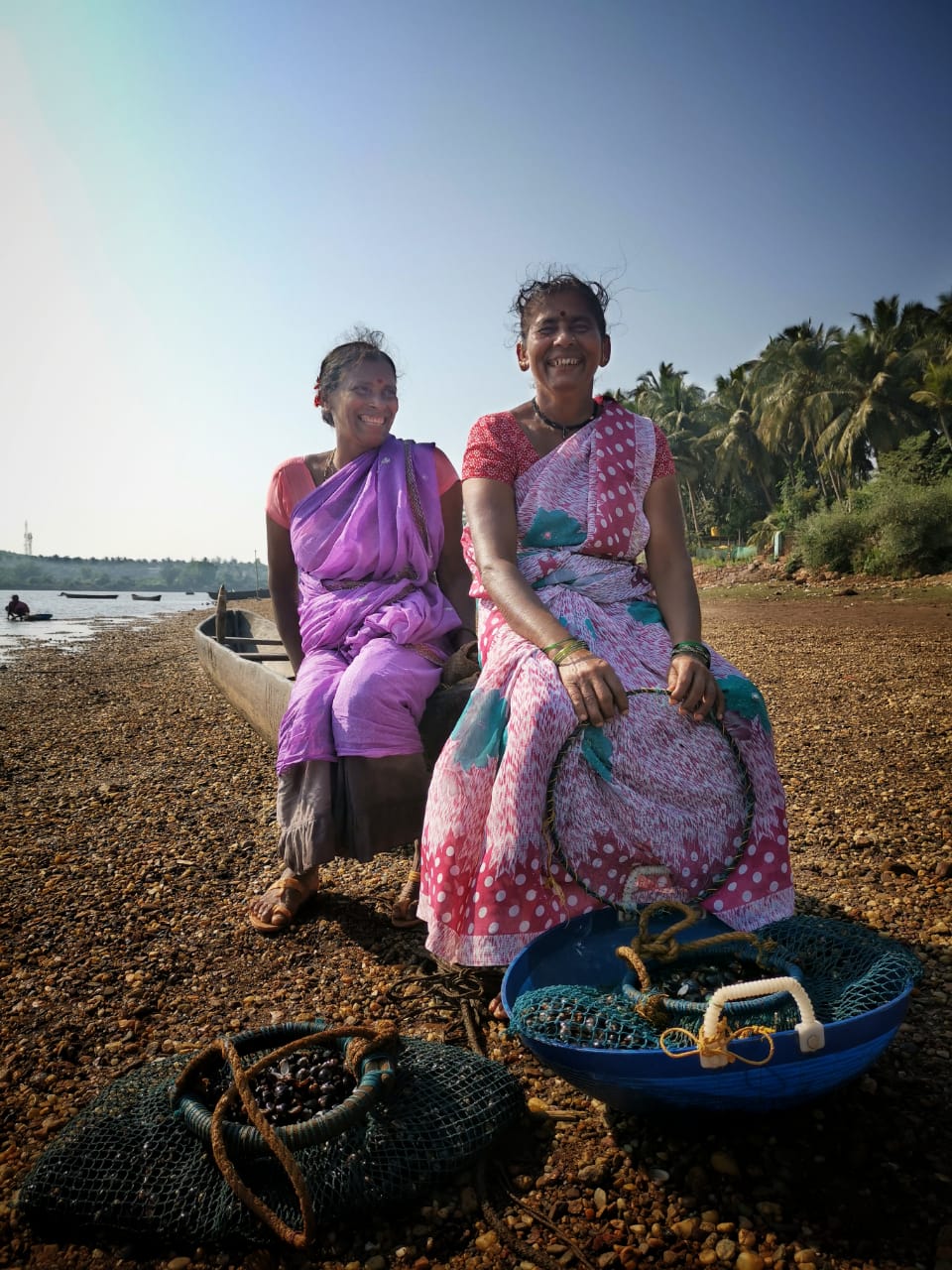
On the banks of the river, Thulasi and Sumitra sit laughing on an old wooden boat, as only old friends can. They collect bivalves too. They have never seen the river not having the shiny, black bivalves. Throughout Aghanashini Estuary, we hear this again and again: fisherfolk and rice farmers, priests and devotees, older women and solid middle-aged men: all echoing the sentiment: “Our lives are entwined with the river.” Continue reading “People of the free-flowing Aghanashini”

Beas · Fish · Fish Sanctuaries

Beas Dolphins: A Flash Of Fin, A Glimmer Of Hope

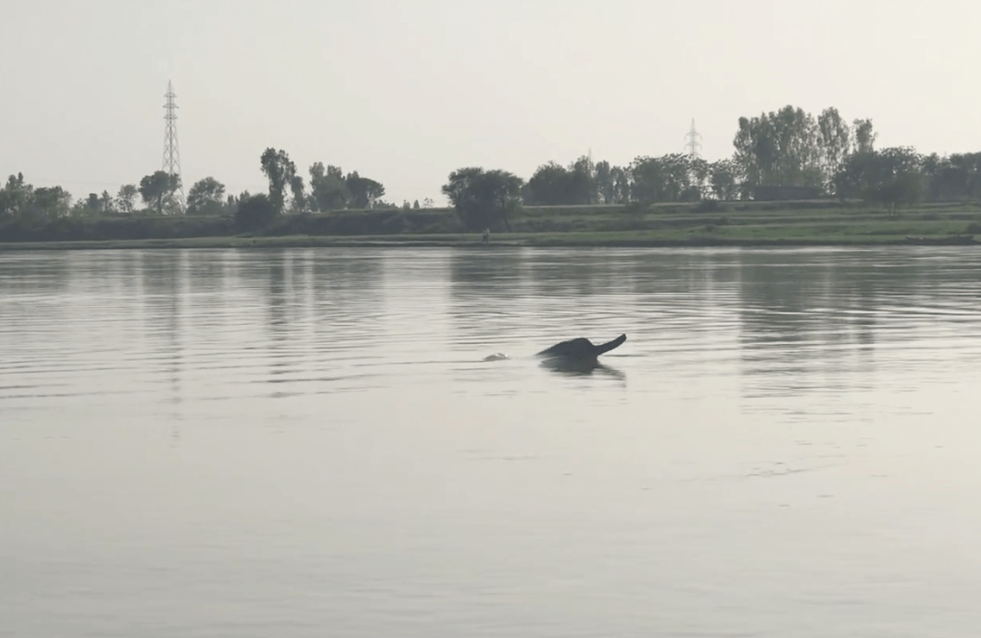
Above: A female Platanista gangetica minor breaks the surface of the Beas (Photo by Arati Kumar Rao)

India’s few remaining Indus river dolphins are confined to one short, beautiful stretch of the Beas. They have a fighting chance at survival only if we ensure a healthy river

Guest Blog by Arati Kumar Rao

A dark shape cleaves the Beas river, leaving a long wake in its trail. From the way it moves, it is neither a human, nor fish, nor even a river dolphin. The shape swims strongly, shrugging off the strong current. It holds its line and makes straight for a sandbar, hauling itself up on a buff-coloured spit.

A black dog, probably feral. It shakes itself free of water and, running across the sand, begins tugging at the beached carcass of a cow. Another bigger dog appears out of nowhere, and the two begin to snarl and gorge, yanking and tearing flesh off the arcing ribs.

River sandbars contain multitudes. I was upstream of Harike, the largest wetland in north India. The critically endangered gharial (Gavialis gangeticus), the fish-eating, long-snouted crocodilian, of which no more than a few hundred survive in the world, bask and nest on these sandbars. Freshwater turtles like the red-crowned roofed turtle (Batagur kachuga) and the Indian narrow-headed soft-shell turtle (Chitra indica), among the most endangered of freshwater species, use sand islands extensively to breed and to bask. Hundreds of thousands of birds — some transient visitors from China and Siberia and Central Asia wintering here, some resident — forage, nest, breed, raise chicks. Many of these creatures have this in common – they are all threatened, to greater or lesser degree.

The sight of predatory, feral dogs in this delicate ecosystem comes with chilling implications. Continue reading “Beas Dolphins: A Flash Of Fin, A Glimmer Of Hope”

Dams · Environmental Flow · Fish Sanctuaries · Free flowing rivers · Ganga · Inland Waterways · Interlinking of RIvers · Karnataka · Kerala

Riverine Fisherfolk as Mascots of flowing rivers and how 4 projects treat them today

When I was documenting a tiny, free-flowing river in Maharashtra Western Ghats named Shastri, the common thread from headwaters to estuary was Fishing! It was everywhere, in all forms, including dozens of fish species and fishing practices, including everyone: men, women, children, otters, crocs, storks. Across the country, buzzing, diversified fisheries with old, complex narratives indicate a rich river. And the palette just gets more vivid, nuanced and colorful with the size of the river.

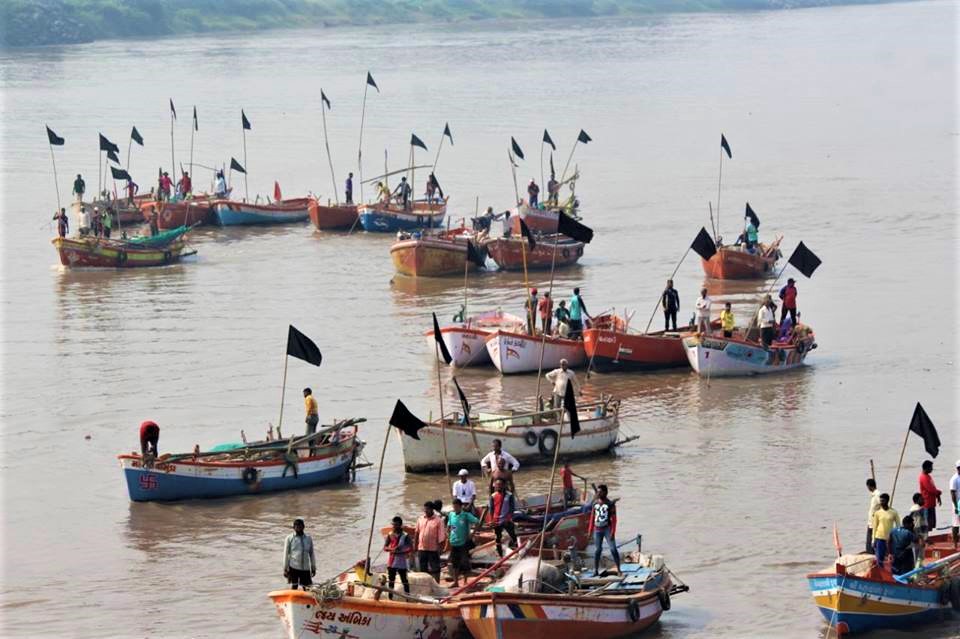
More than 10 million Indians from some of the most vulnerable groups depend on rivers for their livelihood and nutritional needs. This staggering number can be an underestimate as several riverine fisherfolk do not bring their produce to the market and our livelihood census hardly captures the intricacies of riverine fisheries sector. Despite the huge dependence and critical importance of riverine fisheries, the sector continues being ignored and abused. The reasons behind the exploitation are at the heart of a deeper, more troubling discourse: ownership and appropriation of the river as a natural resource. Continue reading “Riverine Fisherfolk as Mascots of flowing rivers and how 4 projects treat them today”

Fish Sanctuaries

Fish Sanctuaries in Western Ghats of Maharashtra

Above: Near the fish Sanctuary at Tekpowale, Pune Photo: Sarosh Ali

Introduction .

In India, there has been a rich tradition of communities trying to conserve a part of their ecosystem as a microcosm for the rest. The Western Ghats in particular was home to myriad of such community sanctuaries. These, however, diminished as government policies from the time of the British, and even post-independence, did not realize the importance of community involvement.

There are many community conserved areas (CCAs), some that have existed from ancient times, and some which have emerged in recent times, after having observed some form of degradation, related to local communities are trying to salvage the ecosystem in Western Ghats. While Sacred Groves, or protected patches of forests are relatively well documented, sacred fish sanctuaries which protect the fish as well as rivers, are lesser known. This is an attempt to briefly document a few such sanctuaries in Western Ghats of Maharashtra. Continue reading “Fish Sanctuaries in Western Ghats of Maharashtra”