A typical irrigation project comprises of dam, reservoir, main canal, distributaries, minors, sub minors, field channels & farms. Components from reservoir to minors/sub minors are termed as Irrigation Main System [IMS]. The main purpose of IMS is to store & convey water to irrigation outlets. IMS, at present, is up-stream controlled, manually operated, mostly open channel system. Water Governance of projects critically depends upon IMS. Good governance of irrigation projects is practically impossible without compatible physical system & adequate legal support. This paper makes an attempt to highlight this basic fact with particular reference to M&MIP in Maharashtra.
Water Resources Development in Maharashtra Water sector in Maharashtra is passing through a difficult period. Following exposure of the irrigation scam in 2012, the Maharashtra Government had to publish white paper on irrigation. But that created more problems. Appointment of Special Investigation Team (SIT) further aggravated the controversy. Several public interest litigations have been filed. Investigation by CBI is being demanded. And opposition political parties have been keeping the issue alive in legislative council & assembly. The message is loud & clear. Water Governance is conspicuous by its absence.
One of the several incomplete Lift Irrigation schemes in Vidarbha, Maharashtra. Courtesy: Wikipedia
Issues that have become controversial are listed below & they do substantiate the absence of water governance.(1,4,6,7)
1) Validity of water availability certificates
2) Completion of irrigation projects in the truest sense of the term
3) Accurate, credible figures of Created Irrigation Potential (CIP)
4) Reduction in CIP
5) Truth about Actual Irrigated Area (AIA)
Present Scenario of Water Management in Maharashtra: The present scenario of water management in irrigation projects in the State is equally disturbing (2,3,4,5). Cropping pattern dominated by perennial & hot weather crops, inefficient water use, illegal lift irrigation schemes, diversion of water from irrigation to non-irrigation, absence of water – & crop area – measurement and non implementation of water laws are some of the important challenges before water governance.
Infrastructural Constraints Water governance demands compatible infrastructure. Infrastructure, in irrigation sector, includes reservoirs, canals & distribution network (DISNET), that is, mainly Irrigation Main System (IMS). Better the IMS better will be the water governance. IMS comprises of earthwork, structures & measuring devices. Earthwork & structures help store & convey water. Gated structures, in addition, facilitate control & regulation of water. Measuring devices, measure water & make possible other three most important & basic things of water governance, namely, monitoring, evaluation & water audit. Control, regulation & measurement together create “Water Control Situation” (WCS).WCS facilitates water level- & discharge- control which is the heart of canal operation. WCS, at least in Maharashtra, is largely conspicuous by its absence. That is a big infrastructural constraint from Water Governance point of view. Listed below are the highlights WCS in Maharashtra. The list is indicative & not exhaustive.
(1) IMS is an open channel system which, by its very nature, is difficult to control & regulate.
(2) IMS is an upstream controlled system. Such a system, by design, works as per the logic of supply side management & is operator – friendly. Here, the operator means officials of WRD. Participatory Irrigation Management is, not provided for in the design.
(3) IMS is basically designed for flow irrigation purposes. Lift irrigation & non-irrigation have not been considered in the original design. But IMS, in practice, is used for all purposes.
(4) Actual capacity of canals & DISNET is significantly less than design capacity; defective construction & lack of maintenance & repairs (M & R) being the main reasons.
(5) Actual conveyance losses of canals & DISNET are far more than generally expected. Overall Project Efficiency (ratio of water received at root zone & water released at canal head) is hardly 20-25% in most of the systems.(2,3)
(6) Less carrying capacity & more losses make mockery of irrigation schedules. Timely & predictable water supply remains on paper. Inordinate delays & grossly inadequate water supply inevitably lead to water conflicts.
(7) Gates of different type & size at strategic locations in canals & DISNET are of vital importance to control & regulate water supply. But most of the gates are either out of order or simply missing. Poor M & R, tampering & vandalism are common.
(8) Gates at present are cumbersome to operate. Their manual operation limits flexibility of canal operation. In absence of real time data, gate operation becomes ad-hoc. There is hardly any water level- & discharge-control.
(9) Measuring devices are generally not provided at the head of canals & DISNET. Wrong design, improper location, defective construction & poor M &R of measuring devices and moreover, no reliable staff to record measurements are some of the features of the volumetric supply. Both officers & influential irrigators simply don’t like the idea of water measurement for well known reasons.
Even if the WCS does not exist as described above, WRD used to religiously publish Water Audit, Benchmarking & Irrigation Status Reports regularly. The author of this paper sent some objections in 2011(5). WRD did not respond.
Poor quality work at Gosekhurd Canals, Vidarbha Photo: Tehelka
Story of crop area measurement is similar to that of water measurement. It is not being measured. On the background of Irrigation scam, white paper & SIT, though GOM published its Economic Survey, it does not give statistics of irrigation. That is just “Not Available-NA”!
In view of above, one is compelled to agree with following two well known comments which have serious implications for Water Governance
(i) There is no management in irrigation, its only administration.
(ii) Whatever irrigation takes place, it is not the result of any planning as such. Its irrigation by accident.
Water Laws Maharashtra has enacted several Irrigation Acts. But those are not being implemented. Maharashtra Water Resources Regulatory Authority (MWRRA), the first of its kind in India, has proved to be a failed institute. It has simply lost an opportunity to streamline water governance in the State in spite of having quasi-judicial powers. Lawlessness has become a hallmark of water sector in Maharashtra. Rule of Law is WANTED! (8)
Sugarcane growing in Solapur at the height of 2013 drought, April 2013. Photo: SANDRP
Water Governance Constraints listed above lead to mismanagement in water sector which in turn gives rise to water conflicts. Absence of Rule of Law increases both number & severity of water conflicts. Given the situation, water governance then becomes virtually impossible. Good water governance is possible only if the infrastructure in water sector is improved & modernized and water laws are scrupulously implemented. Most importantly, when there is bottom up participatory process with key role for the local people. Implementation of water laws depends on political will & awareness amongst water users.
It’s time to switch over from “administration to management” in water sector & say good bye to “irrigation by accident”.
Till then good water governance may have to wait!
-Pradeep Purandare (Retd. Associate Professor, Water and Land Management Institute (WALMI), Aurangabad. E-mail: pradeeppurandare@gmail.com)
REFERENCES:
1) WRD,GoM(1999): “Report of Maharashtra Water & Irrigation Commission”
2) WRD,GoM(2011): “Report on Benchmarking of Irrigation Systems in Maharashtra State, 2009-10”, Mar 2011, www.mwrdc.org
3) WRD,GoM (2011): “Report on Water Auditing of Irrigation Systems in Maharashtra State, 2009-10”, Mar 2011, www.mwrdc.org
The Simang River is a tributary of the Siang River which originates at an elevation of 2950 m. The river is 44 km long (as mentioned in the EIA/EMP reports done by consultant R S Environ Link). Total catchment area of Simang River is 554 sq km. There are two projects proposed on the Simang River. The first one is Simang I with an installed capacity of 67 MW (3 x 22.33 MW) and catchment area of 494 sq km. The second one is the upstream project Simang II with an installed capacity of 66 MW (3 x 22 MW) and catchment area of 422 sq km. These two projects were jointly discussed in the 19th meeting of EAC in October 2008 for the first time. Then these projects were subsequently discussed in the 21st, 36th, 66th and 67th meeting of EAC. A diagram of the two projects on the Simang River is given below.
Diagram of Simang I & II projects on Simang River
Troubled Figures of EIA/EMP
In order to prepare the above diagram EIA/EMP reports of both Simang I and Simang II has been consulted. A detailed analysis of the numbers and figures mentioned in the EIA/EMPs for the river shows serious inadequacies in both the EIAs and raises questions on the authenticity of the EIA studies being done on the river.
1. EIA Wrong about Length of Simang River: It is surprising to find that the EIA studies for the two projects cannot give the correct the length of Simang River and contradicts each other (e.g. paragrapgh 4 page 1.14 of EIA of Simang I). Even though the total length of the river has been mentioned as 44 km in EIA studies of both the projects, lengths of the river over different parts do not add upto that.
The EIA report of Simang I in map of ‘Figure 1.3: Project in Simang Basin’ of page 1.16 shows that the distance between the origin of the river and reservoir of Simang II HEP is 22.27 km. The EIA report of Simang II states that the distance between barrage axis of Simang II and Simang-Siang confluence is 19.66 km (paragraph 1 page 5.2). The stretch of the Simang River used by Simang II barrage is 1.05km (from page 4.6 paragraph 1 & 2 of Simang II EIA report). If we take the total of these three parts of the Simang River, the total length of the river will be 42.98km and not 44 km.
On the other hand if we take some other figures given for different parts of the river, then we get another length for the Simang River. The Simang I EIA shows that the distance between the barrage axis of Simang II and TWL of Simang I is 15.75 km (Figure 1.3). The distance between the TWL of Simang I and it’s confluence with Siang river is given as 3.29 km. From this the total length of the river comes out as 41.31 km excluding the Simang II reservoir area. The stretch of the Simang River used by Simang II reservoir is 1.05 km. So including this total length of the Simang River is 42.36 km, not 44 km.
This is a serious inadequacy on the part of the EIA studies since the studies are not clear even about the river length across different parts of the projects. Either the EIA consultants do not know the rivers or they are fudging figures. In either case, these EIA reports should not be accepted.
2. Incorrect Assessment of River Use for the Projects The EIA reports of both Simang I and II projects gives incorrect figures for stretch of river used for the projects. The stretch of the Simang River submerged by Simang II barrage is 1.05 km (from page 4.6 paragraph 1 & 2 of Simang II EIA report), stretch of river bypassed between Simang II barrage and TWL is 7.75 km. The EIA report of Simang I states that the stretch of river submerged by Simang I barrage is 1.48 km and stretch of river bypassed between Simang I barrage and TWL is 7 km. This concludes that the total length of the river used by the two projects is 17.28 km and not 15.75 km as claimed in the EIA reports. Not giving the correct information about the stretch of the river used for projects is a major lacunae on the part of the EIAs and hence these EIA should be rejected.
3. Incorrect Assessment Distance between Simang-Siang Confluence and Power House of Simang I: It seems the EIA/EMP consultant has no knowledge of the area since the distance stated between the Simang-Siang confluence and Power House also seems to be incorrect. The Simang I EIA in states that distance between barrage axis of dam and Simang-Siang confluence is 9.34 km. It also stated that the distance between barrage axis and power house is 7 km. This leaves the distance between the Simang-Siang confluence and Simang I power house as 2.34 and not 3.29 as shown in Figure 1.3 in page 1.16 of the EIA. This again proves that the EIA report prepared by the consultant is inadequate and it should not be accepted.
4. Assessment of river length for diversion is doubtful The diverted river length for Simang II HEP given as 7.75 km in the EIA seems to be doubtful. But tunnel lengths mentioned in the same document for Simang II are as follows:
Tunnel
Length (km)
HRT
7.4
Surge Shaft
0.017
Pressure Shaft
0.225
Penstock
0.056
TRC
0.202
Total
7.9
In fact the bypassed length of the river is likely to be longer than this length of the various tunnel components since rivers do not flow in straight lines, unlike the tunnels.
Critical Issues Not Addressed by EIA/EMP The projects on the Simang River were first considered for TOR in 2008 in the 19th EAC meeting. The proposal that time was to construct three hydro electric projects (HEPs) on the river. In reply to this the EAC had asked, “Secretary (Power) and Secretary (Environment) of Government of Arunachal Pradesh should attend the next meeting to clarify the reason for allotting a series of hydroelectric projects on a river which subsequently flows only through tunnels and damage the aquatic ecology.” The Power secretary and Environment secretary attended the 21st meeting of EAC. Going through the minutes of that meeting, it becomes very obvious that Arunachal with its aim to generate more revenue was ready to dam every river or stream in the state. This strengthens the impression that the Simang I or Simang II HEPs are not going to be much beneficial for the local people, environment or the state.
After going through the EIA/EMP of both the projects we have found that there are several critical issues with these studies. There are several issues which are common in both the studies and several others which are particular to each project. Reading these documents thoroughly gives a feeling that the documents don’t have much of a difference from each other and lot of ‘copy-pasting’ has been done. Some of them are also mere replications (e.g. section 4.2 page 4.7 of Simang I EIA and section 4.1.8 in page 4.6 Simang II EIA). There are also many instances where names and words have been confused, e.g. in page 1.15 of Simang II EIA, in the title of the Table 1.1 “Simang I” has been mentioned instead of “Simang II’. This kind of issues raises question on the validity and authenticity of the EIA/EMP studies done. Some of the critical issues are listed below as an example, this is not exhaustive list.
1. EAC Recommendations not Followed: The EIA/EMP studies of these projects have not followed several of the EAC recommendations. EAC in its meetings had recommended the project proponent to address several important concerns but those were no followed.
“To maintain the aquatic life, a study to be conducted by National Institute of Hydrology, Roorkee. Methodology followed for measurement of water flow to be given.” (19th EAC Meeting) – There is no mention of any study done on environment flows. The EIA/EMP report of both the projects does not give any details of how the environment flow was measured except mentioning what will be the environmental flow.
Between dam and power house how many streams/ tributaries join and what is their contribution in turn of water in the lean season and monsoon? (19th EAC meeting) – The EIA/EMP of none of the two projects responded to this. There are no accurate details about number the flow contribution of different streams or river joining Simang.
Seismic Studies, Slope Stabilization measures, Reservoir Rim Treatment should be included in the EIA/EMP studies. (36th EAC meeting) – The EIA/EMP studies of the two projects do not have any details ofseismic studies done in the project area.
Disaster Management Plan should be included in the EIA/EMP studies. (36th EAC meeting) – This is very surprising because none of the two projects in Simang River has any disaster management plan in their respective EIA/EMP documents.
Pareng Village located in the upstream of Simang I barrage Siteand near the power house of power house site Simang II HEP. Source: EIA/EMP report of Simang I & II
2.Impact of Migration of Outside Workers on Local Communities not Assessed The EIA/EMP reports estimates that there will be migration of nearly 1000 persons for each project during the peak construction period to this very sparsely populated area. People who live in this area belong to several ethnic tribal groups with unique social, economic, political and cultural values. The EIA/EMP reports do not discuss what will be the impact of such migration on the social, political, economic and cultural lives of the people. Influx of such migration will also have impacts on their human rights as well on women. The EIA/EMPs make no mention of these impacts of migration and that is why the EIA/EMP report is incomplete. Besides, even though the projects had been considered together by EAC, no cumulative impact assessment of migration was done.
3. Shoddy Socio-economic Impact Study: The property surveys which the consultant claim to have done for both these projects are inadequate and shoddy socio-economic impact assessment studies. For Simang I a property survey of project affected families in 5 villages was done but it was found incomplete since it does not take into account two of the project affected villages. On page 6A-10 of the EIA report, these 5 villages are stated as Dosing, Lileng, Pareng, Rengo and Boleng. But out of these villages, there are only three villages mentioned in the property survey – Pareng, Rengo and Boleng. The two villages Dosing and Lileng were not found in the list and instead there were two different villages mentioned in the list – Yingku and Sine.
But after reading through the EIA study of Simang II, it becomes clear that project consultant had done only one survey for both the projects. The two villages Yingku and Sine are also found in the property survey list for Simang II EIA with the same number of affected families (page 6A-16).
It is also surprising to see how the opinions can be exactly similar for both the projects when the affected families are different for each project (See page 16A-15 of Simang I HEP EIA and page 16A-17 of Simang II HEP EIA). Besides, in the list mentioned in page 6A-17 of Simang II EIA, village named Yingku is mentioned twice but there is no justification provided for that.
This brings to light how recklessly these EIAs had been prepared. In fact, the whole concept of property survey is questionable. It takes into account very limited concerns related with the projects ignoring many serious issues. One important aspect of what is the value of the river and other common property resources for the people of the area finds no mention in the property survey. Such property survey cannot be taken as a full proof socio-economic impact assessment and hence EIA/EMP is incomplete and cannot be accepted.
4. Options Assessment not Done The EIA/EMPs of the proposed projects have not done any options assessment study. For example, the option of sub megawatt micro hydro project for a sparsely populated and pristine area like this has not been assessed. For ethnic tribal communities with small population micro hydro project is a better option. The option of solar power generation has also not been assessed by the EIA/EMPs of the projects. Options assessment is an important part of the EIA/EMP document and since this is not done the EIA/EMP reports are incomplete and cannot be accepted.
Intermediate zone near Sine Village between barrage and power house of Simang II Source: EIA report Simang II
5. Environmental Flows Assessment not Done: The EIA/EMP reports of the two projects do not give any detail of how environment flow was calculated and how environment flow will be released. We have already mentioned that in the 19th EAC meeting, EAC had suggested that in order to maintain the aquatic life, a study should be conducted by National Institute of Hydrology, Roorkee and the methodology followed for measurement of water flow should be made available in the EIA. But there is no mention about any such study in any of the documents.
EIA reports of both projects mentioned about the environment flow release exercise but that should have been done already and should have been a part of the EIA. Since the EIA reports do not mention about any study done on environment flow as asked by the EAC this EIAs cannot be taken as a complete impact assessment.
6. Socio-Economic Impacts of Reduced Flow Ignored: None of EIA/EMP reports mention about the socio economic impacts of reduced flow in the intermediate stretch between the barrage axis and power house. Besides, in questionnaire of the primary survey/property survey which the EIA consultants claim to have done, there is no question on impacts of the reduce flow of water in the river. Besides, the EIA/EMP studies do not discuss the importance of the river for the local people. This proves that EIA report is inadequate and cannot be accepted.
Power house site of Simang II HEP Source: EIA report of Simang II
7.Impacts of Non-monsoon Peaking Power Generation not Assessed: EIA/EMP reports of the two projects do not assess how peaking power generation during non-monsoon period will impact the flow in the river downstream from power house. Peaking power generation will have significant impact in the downstream since there will be sudden flow of water in the river for a short period of the day and rest of times it will remain almost dry. This sudden release of water holds threat for the people living downstream as well as their livestock. There are many instances where large number of people and livestock dying due to sudden release of water from upstream dam. Most recently, on Oct 7, 2013, one person was washed away in Arunachal Pradesh due to sudden release of water from the Ranganadi HEP.[1] Besides, this fluctuation in river water on everyday basis will have severe impacts on aquatic bio diversity of the river and use of the river by the people. EIA study ignores all these issues and that is why this study cannot be accepted as a complete study.
8. Impact Assessment of changing sediment releases not Done The EIA/EMP reports do not talk about how sedimentation will impact the reservoir. The EIAs should have included detail analysis of two main impacts – 1.Impact of changing silt flows downstream from desilting chamber and 2. Impacts of silt flushing in monsoon season on the downstream areas. The EIA/EMP report should also do a cumulative study of reservoir sedimentation because the sediment released from the upstream reservoir will affect the reservoir downstream.
9. Socio-economic Impact Assessment of Quarrying not Done: EIA/EMP of any of the two projects on Simang does not talk about the socio economic impact of quarrying on the local people and environment. EIA/EMP reports also have not assessed how the quarrying in a fragile hill range like Eastern Himalayas will increase the risk of landslide and disaster. Ignoring the disaster risk of quarrying in the hills can have disastrous impacts and the recent Uttarakhand disaster is a proof of that. Since EIA/EMP studies ignore all these issues, they cannot be accepted as complete and that is why EIA/EMPs of Simang I and II should be rejected.
10. False Claim about Height of the Dam: The claim made by the EIA/EMP of both the projects that 18 m high dam reservoir is “very low height” is misleading and false. In the 2nd paragraph of page 10.2, the EMP report of Simang I states “Because it is a run of the river hydro project with a small barrage with very low height (18 m), the inundation will be minimized during reservoir filling.” The same claim has been made in the same page of Simang II EMP. This claim is baseless because according to international standards any dam with a wall height of 15 m or above is a big dam.
11. Climate Change Assessment Not Done EIA/EMP studies of both the projects have not done any climate change impact assessment for the proposed projects. Today when climate change impact risks are increasing day by day, it is very essential for studies like these to do an assessment of possible climate change impacts on the project as well as impacts of the projects on local climate. In fact the word “climate change” is nowhere to be found in the EIA or EMP of the two projects. Without climate change risk assessment, an environment impact assessment cannot complete and that is why this report is unacceptable.
The EIA/EMP studies should also have done an assessment of methane release from the reservoir of the project. Since these important issues are not addressed by the impact assessment study, it cannot be accepted as a complete study.
12. False Claims about Flora and Fauna The EIA/EMP of the two projects makes a completely baseless claim that “There will be no negative impact on flora of region during the operation phase.” This cannot be accepted as truth since during the construction phase of Simang I and II, the forest area diverted will be 29.86 ha and 22.02 ha respectively. After such a diversion forest, the impact on flora and fauna is inevitable because the area is covered by dense forest. The EIA report of Simang I states that forests constitute the predominant land use in the 10 km area which was studied for this project and 67.66% of this area is covered by dense forests. Besides, none of the two EIA studies provide any data on how many trees will be cut down for the project. These are serious lacunas on the part of EIA/EMP of these two projects and that is why this report cannot be accepted as a comprehensive study.
14. Barrage Location not Clearly Stated for Simang I The EIA report of Simang I is not clear about where the barrage of proposed Simang I HEP will be located. In page 1.5 the EIA report states “The reservoir created by the barrage located near Boleng town will operate between FRL 339 m and MDDL 334 m.” But the same report in page 5.2 says “The proposed Barrage axis is situated about 9.34 Km upstream of confluence of Simang river with Siang river. The river Simang joins the SiangRiver near Boleng township.” Besides, the maps show that Boleng area is located near the confluence of two rivers not near the barrage site. This is a significant error of the EIA study and hence this study is inadequate and cannot be accepted.
Barrage site Simang I HEP Source: EIA report of the Project
15. Simang II does not assess the project impact on Protected Area EIA states that the distance between Mouling National Park and the reservoir tail at Subbung Nala and Simang River are 5.6 and 5.7 km respectively (page 1.2, paragraph 2). Being in so close proximity of a protected area there should have been impact assessment of the project on the protected area but the EIA/EMP does not mention any such assessment.
16. Threat to Nearly Threatened Mammals The Simang II HEP is a threat to some of the endangered mammal species listed in IUCN Red List. Common leopard (Panthera pardus) and Assamese macaque (Macaca assamensis) which falls in the “Near Threatened” and Gaur (Bos frontalis) falling in “Vulnerable” category of IUCN Red List are found in the project area of Simang II. There are 13 more species of mammals falling under the “Least concern” category of IUCN which are also found in the area. This has been stated in the EIA study of Simang II.
On the other hand, the EIA study of Simang I ignores some the species falling under IUCN Red List. Rhesus macaque, Indian Porcupine and Asiatic Brush Tailed Porcupine which are found in the area fall under the “Least concern” category of IUCN Red List but the EIA report completely ignores this.
The EIA/EMP reports of the two proposed HEP projects on Simang River have significant lacunas and those cannot be ignored. The EIA consultant also had not consulted the local people in preparing the EIA report. This is another significant lacuna on the part of the EIA because it is the local people who are more aware of the local environment and river as they have lived in that place for generations. It is shameful that on the basis of such studies and reports, public hearing for the two HEPs was held without even announcing the Public hearing dates on the AP Pollution Control Board website. If these dams are constructed on the basis of such shoddy reports and flawed public hearings then it will invite an uncertain future for the people of the area and people have to live at the risk of disaster. The EAC should consider these issues seriously and must not accept these reports. The EAC should also consider recommending the black list of the consultants for the serious lacunae in the reports.
Fresh water inland fisheries in Maharashtra contribute to over 1 lakh MT fish catch each financial year and generate around ₹ 600-800 Crores for dependent fisher folks[i]. As per the economic surveys (2011-12) for Pune region i.e. Pune, Satara, Sangli, Solapur and Kolhapur districts, there are over 20 thousand fisher folks supported by inland fisheries generating ₹ 8,722 Lakh for the fishing community in the entire Pune region.
Table 1. Status of Inland fisheries in Pune region (Source: Extracted from District economic surveys of respective districts produced at the financial year end of 2011-12, available at: http://mahades.maharashtra.gov.in/publication.do?pubCatId=DSA)
District
length of the river stretches (km)
Total area under inland fisheries (including river, lakes, and dams)- ha
Inland fisheries production (MT)
Economic wealth (Lakh Rs.)
Number of cooperative societies
Fisher folk supported
Pune
1252
24721
22000
6600
87
3762
Solapur
772
27200
3000
750
133
4341
Satara
676
14504
1950
683
60
2470
Sangli
392
4678
1547
232
83
4701
Kolhapur
955
4266
2285
457
47
4747
Total=
4047
75369
30782
8722
410
20021
Though these are in the Bhima-Krishna Basin, the above records are only for reservoir fisheries! The fisheries department does not collect or maintain any data on riverine fish or fisheries in this region. In fact, the Fisheries Department clearly mentions that it concerns itself only with reservoir fisheries and not riverine fisheries.
Figure 1. Fishing in Khodshi Dam region
Why is this a problem?
Across India, the potential of riverine fisheries is decreasing rapidly. At the same time, it is the rivers which form the backbone of the nutritional and economic security of over 10 million marginal fisher folk in India. But, neither are the riverine fisher folk counted by Fisheries Department, nor is their fish catch is monitored.
This has resulted in chronic downplaying of riverine fisheries sector and concentration of attention on aquaculture and marine fisheries.
No regulation or appreciation of riverine fisheries also means that no attention is being paid to the crisis of riverine fisheries, fisher folk and fish diversity. Across the nation[ii] dams and barrages and related changes in hydrology: Dry rivers, stagnant reservoirs, increasing sedimentation in rivers, rising salinity of estuaries, have adversely impacted the fisheries and dependent people. But this is not very well documented and no attention is being paid to address these issues.
Fisheries Department and Riverine Fisheries in Maharashtra
Highlights of The Maharashtra Fisheries Act (1961)[iii]: The Act applies to inland, riverine as well as marine fisheries. However, the act does not have anything specific to offer to riverine fisheries. It does not talk about traditional fisher folk, their rights, water levels that need to maintained downstream dams, fish biodiversity etc. at all. It is only an Act about edible fisheries, mostly applicable for marine and reservoir fisheries.
The act is said to provide for protection, conservation and development of fisheries in Maharashtra
The word “fish” includes fishes, crustaceans, oysters and shell fish
The act provides for the appointment of “fisheries officers”, person not below the rank of sub-inspector to look after the welfare of the fisheries in the jurisdiction
It prohibits use of nets, gears or anything that is fixed in the soil for catching the fish, use of explosives, toxic chemicals, obnoxious material and arrows for catching the fish
The State Government is empowered to make rules to regulate or prohibit any discharge of solid or liquid material deleterious to fishes as long as it does not affect the powers of local bodies to discharge sewage water
Interestingly, the Act also empowers the State Government to enact rules for protection of fish in selected waters to “prohibit or regulate the construction temporary or permanent or weirs, dams and bunds.”
Unfortunately, the Act does not offer any specific protection to riverine fisheries or conservation of fish.
How does the fisheries department work?
SANDRP discussed issues surrounding riverine fisheries and fisher folk with Fisheries Development Officer of Pune Region. The Fisheries Development Officer said that fisheries department transfers fishing rights for a period of 5 years at a stretch, either to a fisheries cooperative society or contractors. Fishing rights[iv] on dam reservoirs with area more than 200 ha and less than 200 ha are leased out for the period of 5 years to fishing cooperative societies or to contractors if no cooperative society approaches to the department. The fishing rights on the tanks with less than 200 ha area are preferably leased out to local fishing cooperative societies.
According to the Fisheries Development Officer, Pune District alone has 87 water bodies, on which fishing rights are controlled by fisheries department. Out of them, 17 water bodies are more than 200 ha in area. On 7 of those 17 water bodies, there are local cooperative fishing communities while 10 are leased out. On the other hand, there are 70 water bodies which are less than 200 ha. Out of those, 38 are controlled by local fishing cooperative societies, while 32 are leased out to contractors.
He said that in case of marine fisheries in Maharashtra, annual reports[v] are available giving details of about species, fish catch, fish landing stations, number of mechanized boats and so on. However, the picture about fresh-water fisheries is very dismal with complete lack of basic data about number of fishermen, species, yearly fish catch, distribution and abundance of fish species etc. In the section of fresh water fisheries, the department only controls leasing out fishing rights in lakes and dams. Therefore, the aspects related to conservation and protection of riverine diversity remains untouched.
In fact, the fisheries development officer went to the extent of saying that we should not ask more questions about riverine fisheries as the mandate of the Fisheries Department is only to look at fisheries in reservoirs and not rivers!
There has been some research on fish diversity in various parts of the Pune region. For Warna basin, an exhaustive fish species abundance and cause-effect analysis is done by Dr. Mohite and Dr. J. Samant[vi]. For the Pune district, an organization named RANWA attempted to study riverine fish diversity. Interestingly, their initial records indicate that rivers flowing through Pune, once had over 110 fish species![vii]
The department breeds the healthy fishes (called as brood stock) in the controlled conditions and sells the young fires or fingerlings to the contractors or local fishing cooperative societies operational in the jurisdiction. The ponds are seeded with the cultures and the fishing continues to the next season.
The rare riverine fisheries cooperatives
Though the fisheries department of the state concerns itself with fishing in the dams and tanks, there are some rare exceptions, which provide a brief glimpse of the potential and richness of riverine fisheries.
In case of Sangli, Kolhapur and Nanded, the fishing rights on Krishna, Warna, Panchaganga, Dudhaganga, Bhogawati (Sangli and Kolhapur) Godavari (Nanded) are leased to the local fishermen. The reason is that, such leasing was being carried from the times of Patwardhan sansthaniks of Sangli and Shahu Maharaj of Kolhapur. Even after the princely states were annexed by the British, such leasing of fishing rights in the open river continued and is going on till today.
However, in these cases too, the department has no clue about the distribution of fish species or the status of fisher folk.
Example of Kolhapur We interacted with 3 cooperative societies in Kolhapur which operate in the rivers to understand the situation and problems the fishermen face. We interacted with 1. Daulat Sahakari Macchimar Sanstha, Shirol, 2. Hatkanangale jalakshetra macchimar sahakari sanstha, Hatkanangale, and 3. Shirol Taluka Sahakari Macchimar Sanstha, Kurundwad
Figure 2. Fish catch in the Sangli Market. Credit:Mandar Paingangkar
Atmaram Apate, Chariman of Hatkanangale jalakshetra macchimar sahakari sanstha elaborated that “In the Kolhapur district alone, there are 52 different fishing cooperative societies fishing in the open river and there are around 4-5 thousand fishermen from the region. All the fishermen are traditional fisher folks who are genuinely familiar with the waters. Each fishing cooperative society has fishing rights decided traditionally on the rivers of Krishna and Panchaganga”.
Figure 3. Fishermen casting his net in Krishna River. Credit: Mr. Nerlikar
On a different note, Shirol taluka macchimar sahakari sanstha wrote a letter to Assistant Commissioner, Fisheries (Technical) of the Kolhapur district seeking “process of collecting revenue from the fishermen of the open river is unjustifiable and should be stopped. Fishermen are aggravated by the fact that such practice is followed in no other district of Maharashtra except these three, so they want such measure to be discontinued.”
However, there are some contrary opinions to this demand too. Atmaram Apte of Hatkanangale fisheries cooperative society feels that “it is by the very process of leasing, rights of fisher folks on the river are recognized and protected. If the process of such leasing is stopped, anyone could come in our area and do fishing while the local fishermen will not be able to make their ends meet”.
In fact, simply recognizing fisherfolk and leasing fishing rights is still an important function, as per Mansih Rajankar, who has worked extensively on fisheries in Vidarbha. According to Rajankar, “At least some user right of these fisherfolk on the rivers is thus recognized. In Vidarbha, dams like Gosi Khurd will destroy downstream fisheries and fisherfolk do not even have nominal user rights on the river and hence, are not even counted as being affected by the dam!”
Pollution It is important to understand that the significant problem fishermen face is about water pollution. The Shirol, Hatkanangale and Jaisingpur MIDCs release highly untreated and toxic effluents which results in fish kills and thereby hampers the fish catch. The fish death have been alarmingly high in the district and the causative agents are sugar mills as well which release their stored wastes in the water on the onset of monsoon[viii].
In Dec 2012 and January 2013, Kolhapur taluka fisheries cooperative society, Bhoiraj fisheries cooperative society, and those from Shirol, Shridhon, Awali had written to fisheries development officer of the Kolhapur district, seeking compensation against the reduced fish catch. The same request was forwarded to Kolhapur district collector by the fisheries department. The district collector dodged the ball in the respective Tehsildar’s court. Tehsildars said that they don’t have enough money to grant for compensation. However, no concrete action was taken against the polluters. Maharashtra Pollution Control Board did not intervene in the matter either.
Unfortunately, no government department is ready to act for betterment of riverine fisher folks in the district.
The fishermen from Shirol Taluka (which has Dutta Cooperative sugar mill, and Shriol MIDC) say that about a decade ago, they used to receive around 10-12 kg of fish catch a day, now they only get 4-6 kg of fish catch per day. They attribute this reduction to the polluted discharges.
Most of the seeding done in reservoirs is exotic fish. Although Tilapia is an exotic pest species which competes with native fish, Fisheries Department is using Tilapia seeds in many reservoirs, from where they enter into river systems, contaminating the rich gene pool. For information on exotic fish invasion in our rivers: http://www.downtoearth.org.in/content/silent-invasion
In fact, Mr. Suneel Koli from Daulat Macchimar Sangathana, Shirol, Kolhapur told us that they get around 60-65 fish varieties in their catch, indicating the richness of riverine fisheries. Dr. Nilesh Dahanukar of Indian Institute of Science, Education and Research (IISER), Pune has recently[ix] discovered a new fish species in the Krishna river basin of Maharashtra section of Western Ghats. Experts believe that fish diversity in the rivers of Western Ghats is highly understudied and more focus needs to be given to the same.
In conclusion
Maharashtra state government and the Maharashtra state Fisheries Department needs to pay urgent attention to welfare of riverine fish diversity, fisheries and fisher folk. When the Fisheries Act 1961 clearly states that it provides for conservation and improvement of fisheries in the state, why is state government turning a blind eye to riverine fisher folks? It is important that the state fisheries department starts identifying the fishing communities (at least-if not the individual fishermen) of the open river. This will also help in understanding the plight of fisher folk in Maharashtra. Inland fisheries should not just be confined to the seeded fishing in dams and reservoirs.
Riverine fisher folk also need to get user rights on the rivers in which they fish. They should also be part of social impact assessment when dams and other structure are built on rivers and also part of Rehabilitation plans.
Rules under the Fisheries Act 1961 about “prohibit or regulate the construction temporary or permanent or weirs, dams and bunds” need to be formulated and enacted.
The polluters (including municipal corporations) and sugar mills need to be penalized as per the Fisheries Act 1961 to safeguard the livelihoods of riverine fisher folk.
The fisheries department needs to acknowledge local biodiversity of fish fauna and take efforts to conserve and promote them instead of only focusing on common carps and major carp varieties of the fishes. The department is not entrusted to protect only these varieties.
It is crucial that the fisheries department and State Department shows some will and initiative to protect riverine fish diversity against the onslaught of more, taller and bigger dams, polluting industries, law defying barons so that riverine fishery would survive for generations to come. With Climate Change becoming a reality, biodiversity and resilience of small scale, riverine fisheries can provide an important adaptation measure, which needs to be promoted urgently.
Damodar Pujari
(damodar.sandrp@gmail.com)
[i] Maharashtra District Economic Survey 2011-12, page number 100
Gangtok, 9 October 2013: Deemed as the greenest state in India, the government of Sikkim has drawn flak of the national board of wildlife (NBWL) for blatant violation of the environmental norms and the standing order of the Supreme Court in implementation of several hydro power projects under different stages of construction.
The background: In its 28th meeting held on 20th March 2013, the proposal for 520 MW Teesta Stage-IV Hydroelectric Power Project, on River Teesta in North Sikkim to be developed by NHPC Ltd, was placed before the SC-NBWL (Standing Committee-National Board of Wild Life) for consideration. The Member Secretary had informed the SC-NBWL that the project location falls 4 km away from the Fambonglho Wildlife Sanctuary and was recommended by the State Board for Wildlife.
Photo from SC-NBWL committee report has this caption: Construction of the Teesta III project at Chungthang on the edge of Khangchendzonga National Park proceeding without SC-NBWL clearances. Note the extensive forest cover and large landslides at the site
Following discussions, the SC-NBWL decided that a team comprising Dr M.K.Ranjitsinh, Kishor Rithe, Dr A.J.T Johnsingh and Dr M.D. Madhusudan would carry out site inspection and submit a report to the committee for its consideration. Following this decision, the above committee visited the project site and nearby areas from 15th to 21st May 2013. The committee met the representatives from the Sikkim Government’s Forest, Environment and Wildlife Management Department (FEWMD), the user agency, NHPC Ltd, and people from local citizens’ groups. The report of the committee dated Aug 2013 is now available online (http://envfor.nic.in/division/wl-orders).
The report raises serious concerns about a number of hydropower projects in Sikkim under construction without wildlife clearance in contravention to the Supreme Court order[1] (in the Goa foundation case). The Chamling government in Sikkim has allowed blatant violation of the Supreme Court order, a situation compared by the report with what had happened in Goa with respect to mines which were operating without wildlife clearance in violation of SC orders (the subject of the Shah Commission report). The Union Ministry of Environment and Forests is equally responsible for allowing continuing construction of these projects without legally mandatory clearances. The decision based on this report in the NBWL Standing Committee is still pending.
Map with locations of projects and protected areas from the SC-NBWL committee report
Both before and during site inspection, multiple stakeholders brought to the notice of the NBWL team that there were other proposed and ongoing hydel projects in the Teesta Basin located within the eco-sensitive zone (as defined by the Supreme Court in the Goa Foundation case), of the Khangchendzonga NP and Fambonglho WLS, which had not obtained the Supreme Court mandated clearance from the Standing Committee of the National Board for Wildlife.
Besides this, the team in their journeys saw two projects under active construction—the Dik Chu[2] and the Teesta III[3]—that were clearly within the Supreme Court mandated eco-sensitive area. For Dik Chu HEP, the report says, “However, the accompanying FEWMD officials informed us that these mandatory wildlife clearances from the SC-NBWL had, apparently, not been obtained.” For Teesta III HEP, FEWMD officials were not aware of the SC-NBWL clearance, and the committee noted, we “must therefore conclude, on the basis of information available with us, that such a clearance was not obtained… we are deeply concerned about the advisability of this project.”
Deeply concerned about the likelihood of various hydel projects coming up in violation of the Supreme Court’s order in the Goa Foundation case, the team has requested the MoEF to write to the government of Sikkim, seeking a comprehensive list of completed, ongoing and proposed hydroelectric projects within the Supreme Court mandated 10-kilometre zone of the Khangchendzonga National Park (KNP) and Fambonglho Wildlife Sanctuary (FWLS). For each project, details sought included: (a) location (latitude-longitude) and distance from KNP and FWLS; (b) current status of the project; and (c) if and when they had obtained the required Environment, Forest and Wildlife Clearances. Even after waiting for 10 weeks, the NBWL team did not receive either an acknowledgment, or a response from the Pawan Chamling government to their query.
The committee, left with no option was compelled to use publicly available information on Environmental Clearances (EC) (http://environmentclearance.nic.in), submissions and information provided by other stakeholders, and to examine minutes from the SC-NBWL’s meetings, to ascertain if there was merit to the allegations made about the violations of the Supreme Court’s order of 12/2006.
Key recommendations Based on examination of available information on legal compliances required for the projects in the Teesta basin, the committee concluded that, with the notable exception of the Teesta IV project (which has currently approached the SC-NBWL for clearance), none of the other projects appear to have sought/obtained this compulsory SC-NBWL clearance, as mandated by the Supreme Court. While the SC-NBWL is fully aware that there are many more proposed/ongoing hydroelectric projects situated within the Supreme Court mandated 10-km eco-sensitive zone of wildlife sanctuaries and national parks in Sikkim, it has not been able to ascertain whether Supreme Court stipulations in their regard are being followed, or being violated, and if latter be the case, the MoEF should take due cognizance of the same urgently.
“We are of the unanimous considered opinion that it is absolutely essential to assess the overall impact of these projects, both from the recent past and those in the pipeline, rather than deal with them in a piecemeal fashion. Hence, we urge the Standing Committee not to consider the Teesta IV project’s request for clearance separately, but treat it as part of a larger set of hydroelectric projects in the Teesta Basin, with vast ecological, social and legal portents”, the committee has recommended.
It further recommend that the Standing Committee direct the MoEF to write to the Government of Sikkim asking them to immediately investigate and submit a detailed report listing hydroelectric projects in Sikkim that are being constructed prima facie in violation of Supreme Court’s order. Based on the list provided by the government of Sikkim, if it is indeed ascertained that the projects are proceeding in violation of the said Supreme Court ruling, it further adds that the MoEF initiate action by asking the State Government to suspend ongoing work on those projects immediately and to direct user agencies to formally seek clearance for these projects from the SC-NBWL. It adds that the MoEF and the Government of Sikkim thoroughly investigate the circumstances under which the seemingly widespread bypassing of Supreme Court orders in the construction of dams within the 10-km ecosensitive zone of Sikkim has taken place, fix responsibility for the transgressions and violations, and punish the guilty.
About Teesta IV proposal from NHPC, for which the committee visited Sikkim, the report recommends, “Finally, in the light of the devastating June 2013 Uttarakhand floods, we are deeply concerned about the wisdom of such large-scale manipulations of mountain river systems that are being implemented, against all reasonable scientific advice (and thedisregard of the CISHME’s recommendation against the construction of Teesta III, is a case in point)… Hence, we urge the Standing Committee not to consider the Teesta IV project’s request for clearance separately, but treat it as part of a larger set of hydroelectric projects in the TeestaBasin, with vast ecological, social and legal portents.”
The report also recommends that projects already in the pipeline and that may be proposed in future in Sikkim, be placed before the Standing Committee, “chaired by a very senior official of the MoEF, Besides senior officials of the MoEF and the Sikkim Government, this committee must include legal experts as well as experts in hydrology/ geology/ seismology/ social science/ botany/ riverine ecology/wildlife ecology, from reputed research institutions and some representatives of local communities” whenever they fall within the purview of the Supreme Court-mandated 10 km eco-sensitive area around PAs. The committee report adds that much of the summary and recommendations section of Justice Shah’s report (pp. 189-200) is extremely relevant to the case of the hydroelectric dams in Sikkim, and that any committee constituted to examine hydroelectric dams in the eco-sensitive areas of Sikkim, pay close attention to this report.
No ecological flows from NHPC’s Teesta V What the report says about this subject makes disturbing reading: ”On 16th May 2013, driving upstream of the Teesta V powerhouse, we noted extremely low flow in the river, which was particularly so in the stretch of the river directly downstream of the Teesta V dam (Figure 1), where the river was diverted through a tunnel. Such low flows, where River Teesta has been diverted through tunnels, are a cause for serious concern in the context of maintaining the ecological function of a river. We enquired from NHPC officials about how details of ecological flows were determined, and learnt that ecological flow was not a parameter that was optimised in the planning process. We were told that downstream flows were effectively a consequence of maximising hydropower potential of various river basins as determined jointly by the Central Electricity Authority and the Central Water Commission. These values, in turn, were used as the basis for soliciting proposals for hydroelectric power projects. In other words, we learnt to our great dismay that absolutely no ecological consideration whatsoever was used in the process of determining the hydropower potential of river basins.”
Violations galore, government unresponsive In a submission made by Tseten Lepcha in his capacity as the then Honorary Wildlife Warden of North Sikkim to Jayanthi Natarajan in 8th October 2011, Lepcha had contended that how the 1750 MW Demwe Lower by the Athena group is being considered by the SC-NBWL for wildlife clearance, when a project by the same promoters (1200 MW Teesta III) is under construction in violation of Supreme Court orders (without wildlife clearance). The current NBWL report confirms that the 1200 MW Teesta III is under construction illegally, violating SC orders. In an earlier submission he had made to the SC-NBWL on April 19, 2011 he mentioned violation of the WLPA (killing of a Serow – Schedule I species) in the 1200 MW Teesta III project being developed by the Athena group. The developer of the project, Teesta Urja Ltd (a special purpose vehicle of M/S Athena Pvt. Ltd.), through its sub-contractor, SEW Infrastructure Ltd, was involved in the death of a Serow (Capricornis sumanntraensis), a Schedule I animal, at the project site on June 4, 2008.
Photo from SC-NBWL com report with this caption: The Teesta V dam showing the virtual absence of flow in the river downstream of the dam, which can have devastating consequences for river-dwelling and river-dependent species
Several attempts by this correspondent, to contact the PCCF –cum-Secretary of the FEWM department of Sikkim Mr. Arvind Kumar on his cell phone, and his official e-mail address to get the Sikkim government’s official version on the controversy, remained unanswered.
How IPPs are cheating by flouting norms Sikkim Bhutia Lepcha Apex Committee (SIBLAC) convenor Tseten Tashi Bhutia, while speaking to this correspondent expressed immense joy at the NBWL report. “We have been protesting cultural and religious genocide being committed by the Sikkim government in the name of developing hydro power, apart from severely degrading the environment, this is a moral boost. I hope GOI takes strong action”, he said. Bhutia added that there are violations of the Places of Worship (special provisions) Act 1991, extended to Sikkim, and the gazette notifications of the Chamling government, in allowing the Tashiding project on holy river Rathong Chu.
SIBLAC along with another apolitical group Save Sikkim on September 28th, 2013 filed FIRs against an IPP, Shiga Energy Pvt ltd, developer of the 97 MW Tashiding hydro power project for alleged cheating, distortion of facts and violation of environmental norms and the SC order. This is in addition to an ongoing PIL at the Sikkim High Court.
The facts revealed by Tseten Tashi Bhutia in his FIR are startling and shocking. As per the requirement of the Environment Ministry (MoEF, Government of India), the executing agency i.e. Shiga Energy Private Limited, is required to submit a Six-monthly compliance report[4] on the status of the 97 MW Tashiding HEP to the stipulated environmental conditions in a prescribed format .However, while going through the latest Six monthly report dated 22.11.2012[5] submitted by the executing agency to the concerned authority i.e. North Eastern Region Office, Ministry of Environment & Forest, Government of India , it is found that as against the IX necessary conditions required in the prescribed format, the executing agency have intentionally deleted Stipulation No. VIII, jumping to the next condition.
The Monitoring report of MEF regional office (signed by DR S C KATIYAR, SCIENTIST ‘D’) dated Oct 2012[6] says about Stipulation VIII: “the proposed site is about 5 Km away from the buffer zone of the Khangchendzonga Biosphere Reserve as per Supreme Court order clearance from NBWL may be obtained (if required).” Status of Compliance: “Not complied with” and further writes; “the project also falls within 10 Kms from the Fambomgla Wildlife Sanctuary, as such; NBWL clearance needs to be obtained.”
Thus the agency has not complied to nor has obtained NBWL clearance yet as evident from the Monitoring Report on the Implementation Status of Conditions of Environmental Clearance dated Oct 4th, 2012. In other words, the executing agency has simply and swiftly been misleading and cheating the authorities till date by submitting wrong report to Ministry of Environment and Forest, Govt. of India. More surprising is to witness the lack of action by the MoEF on these manipulations and lack of action even after the Monitoring Report clearly reports non compliance.
Rathongchu is a sacred river according to the Denjong Neyig and Nesol texts having its source at various secret and sacred lakes at Khangchendzonga, Sikkim’s supreme guardian deity and runs independently till it meets River Rangit at the lower reaches; This sacred Rathongchu is the source to the annual Tashiding Bumchu ceremony which is held in the first lunar month, corresponding to the months of February and March. In fact, this Bumchu (Sacred Water) ceremony has been continuing for centuries and attracts thousands of devotees and pilgrimages from far across including Bhutan, Nepal, and entire Himalayas.
Ironically, a one-man Professor P S Ramakrishnan committee, of the JNU School of Environmental Sciences, submitted a report titled Ecology and Traditional Wisdom, on October 9th 1995, to the government of Sikkim where he categorically stated, “on social, cultural, and religious considerations, apart from the rich bio-diversity and fragile ecology of the Yuksom valley region, I strongly recommend that no hydro power or other projects should be allowed on River Rathongchu, deemed extremely sacred by Buddhists”. Under the circumstances, how was the Tashiding HEP allotted to the Shiga Energy Ltd by the Sikkim Government and cleared by the MoEF is moot question.
Some of the other proposed projects that are mentioned in the SC-NBWL committee that are also coming up requiring the SC-NBWL clearance include the 300 MW Panan HEP, the Ting Ting HEP, besides the ones mentioned above, see the accompanying map from the SC-NBWL report. Other hydropower projects of Sikkim that are being considered by the MoEF for clearances and that are also close to the protected areas include: 63 MW Rolep HEP on Rangpo river in E Sikkim (5-6 km from Pangolakha and Kyongnosla WLS), 126 MW Ralong HEP (4.05 km from Kangchendzonga Biosphere Reserve and 1.8 km from Maenam Wildlife Sanctuary), 96 MW Chakung Chu HEP inn North Sikkim district (1.8 km from Kangchendzonga Biosphere Reserve). Other such possible projects include: 71 MW Sada Mangder, 60 MW Rangit III, among others.
Let us hope now following the SC-NBWL report, the MoEF will promptly order stoppage of illegally ongoing construction of the guilty HEPs, not waiting for the SC-NBWL committee to meet, since the new Standing Committee of the NBWL remains to be constituted after the term of the earlier committee ended. The evidence provided by the SC-NBWL committee is sufficient to take prompt action. The fact that the MoEF has not take action yet, weeks after submission of the SC-NBWL report speaks volumes about the possible collusion of the MoEF in this murky affair.
[1] WP 406/2004, Goa Foundation vs. Union of India, Order dated 04/12/2006: “The MoEF would also refer to the Standing Committee of the National Board for Wildlife, under Sections 5 (b) and 5 (c) (ii) of the Wild
Life (Protection) Act, the cases where environment clearance has already been granted where activities are within 10 km. zone”
[3] The Six monthly compliance report for Teesta III dated June 2013 also is quite on the issue of compliance with SC-NBWL clearance, see: http://environmentclearance.nic.in/writereaddata/Compliance/57_Teesta%20HEP-III%20_june2013.pdf, the condition for this was mentioned in the MoEF letter dated 30-04-2010 with additional condition: “Considering the proximity of Khangchendzonga National Park from the project site, clearance from the Standing Committee of theNational Board for Wildlife (NBWL) should be obtained”.
Rivers in our times are facing many threats, most rivers are facing existential threats. This blog is a way of starting some conversation on Rivers and the threats that they face.
Since February 2013 (the blog was launched in June 2012, but till Feb 2013 there were just about six blogs, posted in June-July 2012, none after that) we at SANDRP have taken this blog a little more seriously in communicating conversations around rivers.
This is the 100th blog!
During the past about 9 months, we (SANDRP team as well as invited authors) have tried to write about issues surrounding our rivers. We’ve written about Large Dams (and mini hydels), Hydropower Projects, their impacts, their decreasing efficiency, the innumerable issues related to infrastructure projects affecting rivers, dependent communities and ecosystems and the governance process.
We’ve talked about Climate Change and its impacts on rivers and communities, topical issues like Maharashtra drought in 2012-13, the Uttarakhand disaster in June 2013, India’s flood forecasting and disaster management, Eco sensitive areas like Himalayas and Western Ghats and threats that relatively pristine rivers of North East India are facing. Most institutions and sections of society remain oblivious, unaffected by the fate of our rivers.
Looking at the crisis that our rivers, dependent communities and freshwater ecosystems are in, the need for increased and consistent engagement with the governance processes around rivers is becoming stronger. Most of the rivers in Himalayas are being dammed multiple times, riverine fisheries and fish diversity is severely affected, dam scams are surfacing from across the country: from Maharashtra to Andhra Pradesh to Karnataka to Arunachal Pradesh.
Looking at this, we sincerely hope that more and more people will get involved with issues surrounding our rivers.
We request you to share stories and issues surrounding your rivers.
CONVERSATIONS WITH RIVERThis is equally important, but more difficult. Hermann Hesse’s Siddhartha provides one of the rare instances of conversations WITH rivers. So we have reproduced some quotations from that most remarkable novel along with some photos that provide, hopefully, instances of conversations AT rivers.
The Mighty Ganga Photo: with thanks from Ganga Action Parivar
A small boy by the Bhama River when water was released into the river after a long dry spell. Photo: SANDRP
Boat by the Brahmaputra Photo: SANDRP
Floods in Uttarakhand Photo with thanks from Times of India
The lovely Souparnika River in Karnataka Photo: SANDRP
Ferryman at Varanasi Photo: with thanks from Gavin Gough gavingough.photoshelter
Child at Ganga Photo with thanks from:gnarlysunset.com
The river has something special to tell to all of us… only if we pause and listen…
The question is how many rivers we have with us still, to have such converstaions? How many rivers will the next generation have?
Do tell us about your conversations with rivers. In the meantime we will get back to conversations on rivers.
National Institute of Hydrology (NIH), Roorkee, an organisation under Union Ministry of Water Resources (MoWR) is organising a workshop on Assessment of Environmental flows (E-flows) in Rivers in Roorkee on the 2-3 October 2013.
Any serious engagement with e-flows, from any quarter is a welcome sign. However, NIH’s engagement with eflows is a bit ironic, looking at its past work and support for hydroelectric and large infrastructure projects, without any consideration for environmental flows.
Not surprisingly, NIH has refrained from inviting almost any voices that have been critical about MoWR’s Large Dam agenda. On the other hand, main ‘stakeholders’ invited are representatives from Hydroelectric dam projects! Expectedly, the workshop is looking at environmental flows in a role adversarial to “development”, without understanding the role the rivers play in a society. In fact there is no session on value of rivers, which forms the basis of the concept like eflows.
Let us have a quick look at NIH’s track record and its response to the concept of eflows so far.
Following the Uttarakhand Disaster, Supreme Court on the 13th of August, 2013 said in no uncertain terms that the Cumulative Impact Assessment Study done by AHEC, Roorkee on Upper Ganga Projects “has not made any in-depth study on the cumulative impact of all project components”, practically rejecting AHEC Study. Even the members of the MoEF’s (Ministry of Environment and Forests) EAC (Expert Appraisal Committee) on River Valley Projects have said that e-flows estimated in the AHEC report are unclear. Inter-ministerial Group Report (The BK Chaturvedi Committee) on Upper Ganga Projects has rejected most of the AHEC recommendations for eflows.
National Institute of Hydrology, Roorkee (NIH Roorkee) was a part of the study team of the AHEC Report on Upper Ganga[I] and hence, what this SC order and other agencies have said about AHEC report applies to NIH too.
NIH is supposed to be India’s premier institute on hydrology, but a closer look at the research and projects its done so far makes it clear that NIH is a also an integral part of the lobby that pushes large dams as the only solution to all of India’s water-related problems. The lobby includes the Ministry of Water Resources and the Central Water Commission. These organisations form an integral part of NIH’s organisational structure. Chairman of the governing body of NIH[II] is Secretary, MoWR. Its members include MoWR Joint Secretary and planning commission members. Its Standing Committee is comprised exclusively of MoWR representatives.
NIH introduces Environmental Hydrology as its area of specialisation. One of its tasks is[III] “Estimation of surplus and deficit water availability considering water demand and available water supply”. This concept of surplus and deficit has been used to support Interlinking of Rivers, which is ecologically one of the most destructive water projects in India. This too is explicitly supported by NIH. Note that while doing the studies related to ILR, NIH has assumed NO water for the environment!
It has estimated[IV], “In India, the estimates put a requirement of 10 BCM (billion cubic meters) for the year 2025 and 20 BCM for the year 2050 for EFR purpose.” This estimate, coming from an institute which is supposedly India’s Premier institute on hydrology lacks any ecological, social and scientific justification.
NIH’s thrust on ‘Water Resource Projects’ is so strong that its ‘water resources section’[V] pushes projects like the 2000 MW Lower Subansiri HEP, in Brahmaputra basin, without even mentioning that work on the project has stalled since Dec 2011 and it is facing the biggest anti dam protest in India, mainly due to downstream impacts and non-transparent decision making processes.
As hydropower projects are being built in cascades in vulnerable regions, NIH has been conspicuously absent from the discourse. It has not taken a stand about e-flows, distance of free flowing rivers between projects and other environmental measures when hydropower projects are being built from Kashmir to Arunachal Pradesh with high disaster potential. On the other hand, through its studies like GLOF Analysis for Jelam Tamak Hydropower project [2] in Alaknanda basin in Uttarakhand, NIH has been largely supporting these projects, underplaying their impacts.
In fact, NIH did a eflows study for Loharinagpala HEP in Bhagirathi, where it assumed that Bhagirathi is a highly degraded river and recommended that 10% MAR will suffice as e-flows[VI], using the Tennant Method. Bhagirathi, which is hailed as the original stream of Ganga is not a ‘highly degraded’ river by stretch of imagination upstream of Maneri Bhali projects, but it will be ‘highly degraded’ if projects pushed by institutes like NIH are implemented. Significantly, Loharinagpala HEP was scrapped because of issues related to e-flows and aviral dhara of Ganga.
Strangely, NIH workshop on Assessing E-flows program starts not by addressing the importance of e-flows, but by stressing the importance of dams! The first session will be on Water Resources Development in India – need for power, irrigation, water supply and dams, to be conducted by NIH itself. It seems that this workshop is an attempt to get more eflows consultancies from private and government hydel projects.
Groups like WAPCOS (also a MoWR institute) and CIFRI have been churning out studies after studies with shoddy analysis and wrong biodiversity assessments, helping the project proponents and destroying the river further. However, communities, groups, and even judiciary are now putting its foot down about these shoddy studies.
NIH should realise that eflows are not one more of their studies which can be carried out excluding wide range of stakeholders: from communities to ecosystems. NIH has poor track record on eflows and it will have to do much more than organising workshops on eflows, if it is looking to establish its credibility on the issue.
END NOTES:
[1] Environmental flows or E-Flows are defined as: ‘Environmental Flows describe the quantity, quality and timing of water flows required to sustain freshwater and estuarine ecosystems and the human livelihoods and well-being that depend on these ecosystems.” (Brisbane Declaration 2007)
[2] which has been rejected by Wildlife Institute of India and even BK Chaturvedi committee has suggested that the project should be taken up only after Ganga Basin Management Plan from IIT Consortium
[VI] “The E-Flow value computed by the Tenants method, considering it as 10% of the MAR, is 3848 Cumec Days for a calendar year” (NIH: Concluding Remarks No 10): Source: Dr. Bharat Jhunjhunwala’s Letter to IITR xa.yimg.com/kq/groups/8723444/2093659328/name/iitr
Indians and South Asians dont need a reason to celebrate our rivers. Rivers, in their myriad avatars, are celebrated and worshipped across the Indian subcontinent, by religions like Islam, Hinduism, Buddhism, Jainism, Sikhism alike.
Most of our rivers are dying and the living, healthy and free flowing rivers are increasingly threatened. Indian Rivers have NO legal protection and there is no law that says that rivers should have freshwater! In the absence of political will and transparent and democratic governance more and more rivers are being damaged, diverted, destroyed and dried.
The species of flowing rivers are dwindling, the communities that depend are them are becoming increasingly vulnerable, governance surrounding rivers is becoming more and more non-transparent, strait jacketed and ecologically destructive. Decision makers are refusing to accept the dynamics, linkages, interdependencies and LIFE of rivers.
Religions too, have FAILED miserably in protecting rivers that they seem to worship so publicly.
We need to understand and appreciate the meaning and value of a healthy, flowing and giving river. Is river only a channel supplying drinking water? Is it only an irrigation canal? Is it only a powerhouse of electricity? Is it only an open drain to transport our sewage and effluents? Is it only an abstract religious idea in which we wash our sins?
What is the worth of a flowing river for us and the decision makers?
We do need every excuse to celebrate, nurture and contemplate our rivers. We need to take time and think more deeply about our connected future.
Last sunday of Sepetmeber has been celebrated as World Rivers Day by a small province in Canada since the past 33 years. Down the years, many countries, organisations and groups have joined in and this year, World Rivrs Day is being celebrated in over 60 countries across the world. (http://worldriversday.com/) Link to SANDRPs Note on World Rivers Day last year: https://sandrp.in/rivers/World_Rivers_Day_PR_Sept_30_2012.pdf
On this occassion, we look at some of our most spectacular, generous and threatened rivers and hope that the coming year will give us more reasons to celebrate our rivers!
Mighty Ganga at Rishikesh Photo: Himanshu Thakkar, SANDRPGanga, completely dry downstream Bhimgouda Barrage, Haridwar Photo: Parineeta, SANDRP
DevPrayag, confluence of Alaknanda and Bhagirathi Rivers, forming Ganga, threatened by Kotlibhel dam projects. Photo: trekearth.com
The beautiful Baspa River, a tributary of Satluj in Himachal Pradesh. A river renowned for its scenic beauty and spectacular fish. Now threatened by 300 MW Baspa II Hydel Project, without fish ladders or passes. Photo: Debashsih DeyThe beautiful Nyamjangchu River, Tawang, Arunachal Pradesh, now threatened by the 780 MW Nyamjangchu Hydel Project. Photo courtesy: Tenzing Rab MonpaBreathtaking floodplains of the Lohit River, an important tributary of the Brahmaputra, threatened by the 1750 MW Lower Demwe Dam. Photo: Neeraj Vagholikar
The Brahmaputra during monsoon in Matmora, Dhakukhana Sub-division, Lakhimpur District, Assam.
Photo – Parag Jyoti Saikia, SANDRP
A woman weaving below a ‘Chang ghar’, a house made on an elevated platform. People from Mishing ethnic community live on chang ghars which is traditional way coping with floods. This photo taken in Matmora area of Dhakukhana subdivision also shows the backwaters of the river Brahmaputra. Photo – Parag Jyoti Saikia, SANDRP
Railway track washed away in the flash floods of Gai River in Dhemaji district of Assam of 15th August 2011. Photo – Parag Jyoti Saikia, SANDRP
Fish, preserved in nets along the mighty Brahmaputra. Photo: Himanshu Thakkar, SANDRP
Gundia River and surrounding forests threatened by the 200 MW Gundia Dam and Yettinahole Diversion Photo: SANDRP
Estuary of the free flowing Shashtri River in Maharashtra, one of teh last remaining free flowing rivers of the country Photo: SANDRPSeetha Nadi, free flowing river in Karnataka Western Ghats. Photo: SANDRPFishing in Vashishthi Estuary, Western Ghats. Photo: SANDRPThe beautiful Cauvery, shackeled in many small hydel projects at the gaganchukki falls, Karnataka. Photo: SANDRPThe lovely bharachukki falls on Cuavery, also shackeled by many mini hydel projects. Photo: SANDRPEstuary of the Karli River in Western Ghats. Photo SANDRPThinking like a River at Athirappilly Falls on Chalakudy River, threatned by 164 MW Athirappilly Hydel Project Photo: SANDRPCelebrating RIvers!! The Kumaradhara in Karnataka, near site for Kukke Stage II Mini Hydel Proejct Photo: SANDRP
Kerala Govt Agrees to Change Operation of Chalakudy River Hydropower Project:
Public Pressure Leads to Changes in Dam Operation
The decision to increase off-peak generation at Poringalkuthu Left Bank Hydro Electric Project (PLB HEP) in Chalakudy River, taken at a meeting convened by the Hon Chief Minister of Kerala in the fourth week of April (PRD – Thrissur, 25-04-13) was a partial success to the sustained campaign for dams re-operation at Chalakudy river. The meeting was attended by the Ministers for water resource and power, River Basin MLAs and officials of state electricity board and irrigation department. The decision however falls short of the demand for reverting the operation of PLB HEP into base load.
Chalakudy River Basin Physical Map
Normaly the summer water availability in the river below Poringalkuthu HEP should be between 1.3 – 1.5 MCM / day. The failure of both monsoons in 2012 and violation of Kerala-Tamil Nadu interstate Parambikulam – Aliyar agreement (1970) condition that the Kerala Sholayar reservoir shall be kept at full reservoir level by Tamil Nadu on the 1st of February every year (Sch. II.3 – PAP Agreement), reduced the water availability in 2013 summer to less than 1 MCM per day resulting in severe water stress in the river basin. On top of the water shortage, intra-day as well as inter-day flow fluctuations in tail-race discharge from PLB HEP had worsened the situation. Anticipating water shortage the river basin MLAs as well as Local Self Government (LSG) heads had been demanding action from the State Government since December 2012.
Background: The river – dams and flow regime Chalakudypuzha (ChalakudyRiver), the fifth largest river in Kerala with a length of 144 kms and catchment area of 1704 Sq.kms is one of the heavily utilised rivers in the state. Major tributaries of this west flowing river originate from the Anamalai hills, Parambikulam Plateau and Nelliyampathy hills of Southern Western Ghats. The river/ its tributaries have been dammed at six places. The dams and diversions have completely altered the natural hydrological regime in the river. The river is the life line of about 30 Local Self Governments (LSGs) and about ten lakh people. Apart from the dams and diversion structures, numerous drinking water schemes and lift irrigation schemes are also dependent on the river. The table below provides details of existing major projects on the river.
Existing dams/ diversions in Chalakudypuzha
Sl. No.
Project
Commissioning Year
Purpose
Storage MCM
Developer
1
Poringalkuthu LB HEP
1957
Hydro Power
32
Kerala SEB
2
Thunakadavu (PAP)*
1965
Diversion
15.77
Tamilnadu
3
Kerala Sholayar (PAP)
1966
Hydro Power
153.49
Kerala SEB
4
Parambikulam (PAP)
1967
Diversion
504.66
Tamilnadu
5
Peruarippallam (PAP)
1971
Diversion
17.56
Tamilnadu
6
TN Sholayar (PAP)
1971
Hydropower + diversion
152.7
Tamilnadu
7
ChalakudyRiver Diversion Scheme
1959 **
Irrigation
0,218
Kerala-Irri Dept
8
Idamalayar Augmentation Scheme
1990s
Diversion
NA
Kerala SEB
*PAP- Parambikulam Aliyar Project **Partially operational since 1952
Almost 75 percent of the catchments of the ChalakudyRiver were forested at the turn of 20th century. Hence the river had a fairly healthy flow even during summer months. However, at present, the natural summer flow in the river has reduced drastically due to forest degradation and dams and diversions. Consequently, the present river flow in non-monsoon months is almost entirely dependent on the storage at Kerala Sholayar and Poringalkuthu reservoirs. The downstream major irrigation project, the Chalakudy River Diversion Scheme (CRDS) does not have storage of its own. It is completely dependent on the tailrace discharge from the PLB – HEP. Over the last two decades, the daily flow fluctuation due to the semi-peaking operation of the PLB-HEP is affecting the functioning of CRDS. Incidentally, the campaign against the proposed Athirappilly hydroelectric project (AHEP) had first brought this issue into focus. One of the major issues with regards to AHEP, a peaking power station, was the downstream impacts of drastic intra-day flow fluctuation (to the tune of 1:17).
Incidentally, Western Ghats Ecology Expert Panel had recommended not to give clearance to the project after conducting field visits and detailed and transparent consultations. However, the High Level Working Group formed to look into the WGEEP report acted in a non-transparent manner. They conducted a field visit with the project proponent (The Kerala State Electricity Board – KSEB), without informing the public, press or the Grama Panchayath and not providing opportunity for the organisations opposing the project to present their case before the committee. The HLWG recommended that the project proponent can approach the Ministry of Environment and Forest (MoEF) for fresh clearance, if it so desired, after some studies despite identifying the project location as ecologically sensitive area.
Analysis of hydrological data for AHEP as well as debates on the issue revealed the existing flow fluctuations due to changed operation pattern of PLB HEP since early 1990s. As the capacity of the PLB HEP was enhanced from 32 MW (8 MW X 4) to 48 MW with the commissioning of a 16 MW generator in 1999, the peak generation and the resultant flow fluctuation increased. The field assessment in the CRDS command area had confirmed the impacts due to the flow fluctuations.
As part of an action research done by the Kerala State Centre of Forum for Policy Dialogue on Water Conflicts in India, an attempt was made to find possible solutions to the conflict of interest between power generation and downstream needs. The conflict between CRDS and other downstream uses due to total diversion of water at its head works at Thumboormuzhi was also taken up. An alternate reservoir operations management (ROM) strategy that aims at sustainable and equitable sharing of available water resources was prepared as part of the study.
ROM strategy for Chalakudy River The ROM strategy tried to synchronise the operations of Kerala Sholayar and PLB HEPs with the downstream requirements. Secondary data regarding the river flow, rainfall etc. was collected from concerned agencies like KSEB, Water Resources Department etc. Issues with respect to the present flow regime were assessed through field surveys and stakeholder consultations. After analysing the available data and assessing downstream irrigation needs through people’s perception and based on the suggestions/ comments by the experts, the draft reservoir operations strategy was prepared. ROM strategy is attempted for water available to the basin after diversions to Tamil Nadu and Idamalayar with focus for non-monsoon months.
In the proposed ROM strategy, the summer water availability for the downstream needs is suggested to be increased through modifications in the operation pattern of Kerala Sholayar and Poringalkuthu HEPs. At Kerala Sholayar, the total utilisable quantity of water is fixed as per the PAP agreement. The monsoon discharge is proposed to be reduced by about 15 % of the average flow (data period – 1979 to 2006) so that the non-monsoon water availability can be enhanced. At Poringalkuthu, the ROM strategy proposes that the water level in the reservoir shall be kept at close to the full reservoir level up to the end of January. The change in the operation of the two HEPs is expected to ensure water availability of not less than 1.5 MCM/ day for the downstream uses. The ROM strategy proposes to operate the Poringalkuthu HEP, the lower dam, that discharges water into the main river as a base load station (as it was operated before 1990s) in non-monsoon months. This can ensure a steady discharge of over 17 m3/sec.
Peringal Dam Photo: CPSS
At present the entire flow reaching Thumboormuzhi weir, the head works of CRDS is being diverted to the canals, except for some overflow during peak hours. This is affecting the downstream areas including the ecological functions of the river. The ROM strategy proposes a minimum flow of not less than 2 m3/sec to be released from Thumboormuzhi weir in to the river. This may be increased later after improvement in natural summer river flow through eco-regeneration of the upper catchments and by reducing the irrigation demand through adoption of ‘more crop per drop’ approach in the CRDS command.
The revised operation pattern is not expected to have significant impact on the power front. The non-monsoon power generation from the river basin is expected to slightly increase, whereas, the peak power generation will be reduced by 8 MW to 16 MW, which is about 0.25-0.5 % of the present summer peak demand of Kerala of about 3400 MW.
Building public awareness and public pressure The ROM strategy was widely discussed with the LSGs and other stakeholders. As the LSGs, farmers and Irrigation and Agriculture departments were active partners in the action research (2008 – 2012) they readily accepted the proposed ROM strategy. Many LSGs demanded the state government to implement this, through resolutions. With the shortage in rainfall during 2012 monsoons, severe water stress was anticipated and a series of steps were taken to put pressure on the state government for dams re-operation so that the summer water shortage for downstream areas can be reduced.
A meeting of the LSG representatives organised by Chalakudy Puzha Samrakshana Samithi (CPSS) before the start of irrigation season discussed the anticipated scenario for the 2012-13 season and decided to step up campaign for changing the operation pattern at PLB HEP.
The project advisory committee meeting of CRDS, in December 2012 also took a similar decision.
In December 2012, five MLAs of the ChalakudyRiver basin, cutting across party lines, jointly demanded the Chief Minister to convene a meeting of the concerned ministers, MLAs, LSG heads and officials to discuss the issues with regards to the summer water availability in the river basin. This was the result of a series of interactions with these MLAs by the CPSS team.
In the second week of January 2013, 25 LSG heads gave a submission to the CM demanding action by the government to ensure water availability at Kerala Sholayar as per the PAP agreement and changing the Poringalkuthu HEP to base load station.
Even as no action was taken by the state government and the situation was becoming grim, the project advisory committee meeting of CRDS decided that a delegation must go to Thiruvananthapuram and meet the CM and other concerned ministers. A meeting of LSG heads organised jointly by CPSS and Chalakudy basin Block Panchayaths also decided to take necessary actions.
On March 19th 2013, four MLAs and 10 LSG heads from ChalakudyRiver basin met the Chief Minister and Minister for Water Resources. Rajaneesh from CPSS was also part of the team. The people’s representatives wanted the Govt to take necessary steps to ensure better water availability for Chalakudy basin. The main points raised were regarding violation of Parambikulam – Aliyar Agreement condition and ensuring steady flow from Poringalkuthu HEP for the downstream needs. The CM agreed to convene a meeting of all concerned immediately. However, the meeting was delayed by more than one month and when the meeting finally took place, the LSG representatives were not invited for the same.
Meanwhile a detailed discussion was held with the KSEB Chairman in the first week of April 2013. The Chairman promised to look into the issue.
All along the campaign, the print as well as visual media reported these developments and published / telecast stories on the issue.
Partial re-operation The daily average generation at Poringalkuthu in January 2013 was 0.4481 MU (Million Units, as per Kerala State Load Despatch Centre website) and the corresponding discharge was about 1.2 MCM per day. Due to the non-compliance of PAP agreement condition, the combined storage at Kerala Sholayar and Poringalkuthu reservoirs on the 1st February was only around 115 MCM against an anticipated volume of 160 -170 MCM. Consequently, the generation was less in the following months. The average generation and discharge in February, March and April were 0.3457 MU / 0.93 MCM, 0.3237MU / 0.87 MCM and 0.3343 MU / 0.9 MCM respectively. The semi-peaking operation at PLB HEP continued resulting in intra-day fluctuations. The off-peak generation was mostly limited to 8 MW with a corresponding discharge of around 6.5 m3/sec, which is highly insufficient to meet the irrigation demand of the CRDS command. There were also instances of practically no generation during off-peak hours, especially during night times.
Upper Sholayar Dam Photo: CPSS
Apart from the intra-day fluctuation the inter-day flow fluctuations was also a major cause of worry. The situation was particularly bad in the second half of March and first half of April. On 4 days between March 21st and April 10th, the generation was between 0.158 MU and 0.182 MU. The corresponding discharge was less than 0.5 MCM. On a few other days, the generation was between 0.2 -0.3 MU.
Since the decision of the meeting convened by the CM, the situation has slightly improved. The inter-day fluctuation was less since 25th of April with the discharge of 0.9 -1 MCM on most days. More importantly, the off-peak generation was at least 16 MW (except on a couple of days). The average discharge since the last week of April has also slightly increased in comparison to the previous months.
The change in operation pattern does not seem to have had any negative impact on power front. Initially the KSEB had increased off-peak generation without reducing peak generation. The generation figures as per the SLDC website shows the generation at PLB HEP on 25th, 26th and 27th April (after the decision at Ministry level meeting) as 0.425 MU, 0.402 MU and 0.412 MU respectively, corresponding to discharge of around 1.1 MCM. Later only one machine was available and the peak as well as total generation reduced. The average generation during this period was around 0.35 MU corresponding to a discharge of about 0.95 MCM. The generation figure shows that the station was running continuously as a base load station (by default?) for two weeks. Even though the rate of discharge was less than the actual requirement, we have requested the irrigation officials to assess the effect of steady inflow at CRDS.
The decision for increasing off-peak generation is significant since it is acknowledgement by the government that the downstream requirement should be given priority over power generation. However, the long delay in taking such a decision even after the river basin MLAs and LSG heads unanimously demanded for the same cannot be justified. Also, the steps taken so far are not sufficient. The storage position as on 27-04-2013 at Kerala Sholayar and Poringalkuthu reservoirs (33.78 MCM and 9.23 MCM respectively) could have supported a daily discharge of upto 1.3 MCM till May 31st, especially since the catchments traditionally get good pre-monsoon rains and an inflow of 100 cusecs from Tamil Nadu Sholayar was anticipated, on the basis of inter-ministerial discussion on PAP agreement.
The campaign / advocacy for further changes in operation will have to be continued as the present decision is of a temporary nature. Until and unless the non-monsoon discharge from Poringalkuthu HEP is enhanced to around 17 m3/ sec, sufficient river discharge from CRDS head works is not likely to materialise. (The suggested discharge rate from Poringalkuthu HEP as per the ROM strategy, based on anticipated water availability, is 17.25 m3/ sec and the corresponding generation will be 24 MW.) The fact that the Chalakudy MLA protested against closing down all generators of old powerhouse together since May 7th shows that the people’s representatives are now more vigilant on the issue and this should help in stepping up the campaign. Moreover, a collective of Local Self Government heads is emerging for the cause of the river and this collective, if it becomes active, can really help take forward the efforts for the revival of ChalakudyRiver.
Days after walking down the Gori, we go to the Sub-Divisional Magistrate of Dharchula sub-division, Pramod Kumar, who is busy coordinating rescue and relief on a war-footing, but still has the courtesy to meet. On being asked by me regarding the sudden release of water by the 280 MW National Hydro-Power Corporation (NHPC) Dhauliganga Hydro-Electric Project (HEP, see below the layout of the project given on NHPC website) at Chirkila and the ensuing damage downstream, he confirms that he received an emergency call on the night of 16th June, 2013 from the NHPC, asking that they be permitted to release the impounded water in their reservoir, because it was in danger of breaching. Under normal circumstances they do not need his permission. He also confirms that he had refused, because the water level in the Mahakali main-stem was already flowing at danger-mark. NHPC went right ahead and opened their gates at full on the night of 16th June, without authorization or any prior warning to anybody[1] but their own office-residence complex 20 km downstream, at Dobat.
Map of Dhauliganga Dam Source: NHPC
Was this really an emergency, or was this purely opportunistic on the part of NHPC to take this opportunity early in the season to flush their reservoir that had been filled almost to half with bed-load and silt? We went looking for clues and information. I went to the NHPC office complex at Dobat, and met Bhuvan Chand Joshi, their Public Relations Officer. After giving me the spiel on how safe, and how green this so called run-of-the-river (ROR) project was, constructed by no less than the Japanese, the Germans and the Koreans put together[2], he admitted that their underground power-station was entirely flooded. Housed in a gigantic underground cavern about 100 meters long, four-storeys high at 40 meters and about 16 meters wide, river water had filled it right upto the control-room on the fourth floor. I had already been told by Kesar Singh Dhami, taxi owner of Dharchula, that on the 16th June itself, when he was ferrying the first batch of Kailash yatris to the road-head on their way up to Tibet, he had noticed the reservoir was filled high already with flood-waters, with large uprooted trees and other woody debris floating at the damsite. He confirms that water was being released, but only a small release, despite the dam being fuller than he had ever seen it.
I was also told by another employee of NHPC (who did not wish to be named) that what had gone wrong was that despite the high flows on the 15th and 16th June, the power-station continued with production of electricity as usual. In what seems to be an unbelievably short-sighted and poor design, the Tail-race Tunnel, from where water is released back into the river after having turned the turbines, is flushed into a tributary stream, the Ellagad. It was when Ellagad also pulsed, that it sent a train of bed-load debris down its lower reaches, effectively blocking the exit of the Tail-race Tunnel coming out of the powerhouse. The power house continued to take in water from the Head-race Tunnel intake to work their turbines, unaware that the exit for water had been blocked. It is only when the water blocked in the Tail-race Tunnel surged back up, burst through the turbine units and began flooding the powerhouse, that NHPC even know that something was wrong. It was then that the massive curved steel gates of the intake were slid shut, and the powerhouse evacuated. This was further confirmed by Joshi, PRO, who also said that the ‘matter was under investigation’ by their own team for organizational detail. The General Manager and the Chief Engineer of the Dhauliganga HEP had meanwhile been transferred out. It is not clear yet how soon after the powerhouse was flooded, that they opened the sluice gates at the bottom of the reservoir. Draining it was clearly beneficial for NHPC, but catastrophic for roads, bridges and habitations downstream, both in India and Nepal.
Dhauliganga before the disaster, with zero water flow downstream from the dam, killing a perennial river. Source: Author
If you look closely enough, there are two separate events here. The flooding of the powerhouse, and the ’emergency’ release of reservoir water. The powerhouse was not flooded because of too much water in the reservoir, but because it was in operation when its tail-race exit seven km downstream, is blocked-off because of poor short-sighted design[3]. They are then forced to close the gates of the intake, and abandon the powerhouse where water has reached the control-room on the fourth floor. The intake gates are now shut, but the flood waters continue to fill the reservoir further. They have already allowed the dam fill to a very high level, and here is the other curious factor.
The design of the Dhauliganga dam, is such that the dam has no provision for water to ‘overflow’ the dam safely, should undesired (even if foreseeable) levels be reached as they did this year. Or say if giant boulders block the narrow sluice gates at the bottom of the reservoir. Or in the real-time situation of what actually happened this year, the blocking of the tail-race tunnel leading to flooding of the powerhouse, hence requiring the shutting off of the intake, and losing the option of reducing reservoir levels more gradually and safely through two simultaneous releases. They then open the flood-gates. Clearly, one of two things have led to this decision:
One, letting the reservoir fill to a very high level is not out of the ordinary for NHPC; they do it every monsoon, as they had done on 16th June as well. It is not for many months in the year that they have enough water to run all four turbines. Despite the run-of-the-river label, Joshi confirmed that they were unable to let anywater to continue to flow un-diverted in the river-channel during the winter-spring months (we have photographic evidence of this as well), or they would not have water to turn even one turbine! The mandatory requirement that every hydro-power dam in Uttarakhand be required to release at least 10% of the river’s minimum flows at all times (as greatly insufficient as such a small flow is for downstream life), it seems neither a consideration while justifying the economics of such projects, and neither is it complied to here. The use of the term run-of-the-river here, is plain deception.
The Dhauliganga Hydro-power dam, after being flushed of bed-load sediment Source: Author
Their regular annual schedule for flushing the reservoir of bed-load and sediment is normally the 15th of July and the 31st of July every year. Here again, when the reservoir is full, and there is enough water to provide the pressure for increased and accelerated flow to flush the reservoir on a twice-annual basis. Both flushing schedules follow each other closely at peak-flow season, so that the flushing is as complete as possible, and there is enough of a monsoon season ahead to fill the reservoir up again before the winter-lean. The probable reason for preponing the flushing could be the chance of flushing some of the unusually high accumulation of bed-load debris that had come down in this years flood. What this meant to the efficiency of the power-station is one thing, but what it means to all life in and along the river, is quite another.
Two, that the faulty design of the dam, both in location of its tail-race exit as well as no provision for over-topping, in combination with the carelessness of allowing the reservoir to fill to such levels at the start of the monsoon, was responsible for the ’emergency’ catastrophic release.
Stitched photo of the bed of the drained Dhauliganga reservoir Source: Author
The Dhauliganga HEP is located on the Darma–yangti river, re-christened the Dhauliganga river, just a couple of kilometers upstream of the confluence with the Mahakali at Tawaghat. In these two kilometers, the rivers flows (twice a year when it is allowed to, for a few hours) down steeply to the confluence which it meets at right-angles. With the Mahakali already in spate, coupled with the sudden release of more than 6 million cubic meters of stored water (Gross Storage Capacity), plus the flow of the river in flood (steadily increasing from 398 cubic meters a second on 15th June), as well as millions of tonnes of bed-load boulders and sediment, the damage downstream is clear to see. If you look at the fresh scour-level on the banks downstream of the dam, it is in places more than 15 meters higher than the flood-level flow of the DhauliRiver. The river added thousands of tonnes of even more debris when, because of the flood level it reached, it tore through, plucking high at the talus-cones on either bank, and at every turn. At the confluence at Tawaghat, there must have been something of a back-flood for some time (a common flood phenomenon where the high-flowing main-stem creates a temporary water-dam), because the water-level seems to have risen very high, taking away the bridge that connects the entire Kuti valley and the trade route to Tibet, tearing away almost the entire village-market complex at Tawaghat, and destroying the road as well. The flood waters had clearly reached the top of the road because of the deposition of river-sand on it. When I walked this section days later, the river was only less than a meter below danger mark. Even so, it was flowing about 12 meters below the road! Further downstream, the destruction was more serious.
In order to understand the magnitude of this flood event, I ask Joshi of NHPC for flow-data of the Dhauli river between the 12th and the 18th of June. He goes off for some time and returns with a sheet of paper that has hand-scrawled 6 hourly flow volumes from 12th June, but stops short at 15th June. All the flow volumes between the 12th and the 15th were below 150 cubic meters a second (cumecs), and at 12 am, on the night of the 15th June it jumps up to 389.92 cumecs. This is just the start of the flood. Joshi seems to balk right here, and says that they have not received data for the 16th June yet (the day I speak to him was the 8th of July), and that he may get it after a week or so. And anyway, he says, the powerhouse was abandoned from the night of the 16thJune, so getting data beyond that would be out of question. It is clear that Joshi was unwilling to give me flow-data for the duration of the flood-pulse. He had only minutes before informed me of how automated the whole operation was, and that it was possible for them to even operate the power-house sitting in their Dobat office-complex itself. The real scenario will be clear when we get flow data for the 16th and 17th of June.
According to NHPC, the Peak Flood Design for the Dhauliganga HEP is 3,210 cumecs, at a return interval of 100 years. That is the flow volumes that the dam is designed to be able to take without damage, at flood levels expected at least every hundred years. It is unlikely that flow volumes had reached almost 10 times the flow volumes of the flood on the 15th June at the damsite (389.92 cumecs). NHPC gets its flow data from an automated level-gauge at the reservoir, so it did not require anyone to take readings manually, even prior to abandoning the station. If unprecedented levels had indeed been reached, then why had they held on to water in the reservoir right till the night of the 16th June? Please see the accompanying photographs, of the dam reservoir, empty of water. You can see at least two levels of cut-away terraces. The lower ones are alluvial terraces, consisting clearly of coarser gravels and cobbles deposited by the flowing river. The higher terraces, more visible high on the upper true-left bank in the photo, are remnant lacustrine (lake-bed) terraces, consisting of finer silts and sand, deposited by the stilled waters in the reservoir when it was full. This was the highest point of sediment accumulation in the reservoir prior to being flushed out. Clearly, at least 45% the reservoir was full of debris and sediment before NHPC flushed it. And if you look at the brown line on the concrete face of the dam, you see the level that the reservoir was allowed to fill upto, marked by the ‘bath-tub ring’ of floating bark and woody debris stuck there after draining.
Joshi tells me that when a delegation of people from Nepal came to NHPC to talk about the possible role that NHPC’s sudden release of water might have had on the flood that devastated Khalanga bazar at Darchula, he had told them that to the contrary, the dam had saved Nepal from great damage. “See how much debris is still behind our reservoir!” This was bare-faced misinformation. There are two aspects being denied here. One, that great masses of debris were actually flushed out from the lower-end of the reservoir on the night of 16th June, leading to greatly increased flood levels as well as erosive potential downstream, especially on the Nepal bank at Darchula, which bore the brunt of flushed debris centrifuged on the curve. As is evident from the photo of the dam-site above, most of the debris that has been flushed, is from the front-end of the reservoir only. And two, that all dams and reservoirs, despite some being able to flush out debris from a section of the reservoir, do actually hold back a great deal of bed-load as well as suspended sediment in the upper end of the reservoir. They impede the very essential flow of sediment down to the oceans. Look now at the geometry of bed-load debris in the stitched photo. Distortions from the wide-angle lens apart, it clearly shows a gradual slope, and a filling up of the bed-rock channel to form a wide, sloping flood-plain. Had it not been for the dam, the bed-load would have continued to fill up the bed-rock channel downstream at about the same angle, slowing the entire flow of water and entrained debris. It would not have been washed down catastrophically all the way down to Darchula, without the force of an additional 6 million m³ of stored water released suddenly.
[1] NHPC never gives warning of sudden releases. There is a notice painted on a board at Tawaghat, the first river-side habitation downstream, that warns people not to go anywhere near the river, because water may be released anytime.
[2] Kajima Construction Corporation Ltd of Japan, Daewoo Engineering and Construction Company of Korea, and Bauer Maschinen of Germany.
[3] How a tail-race exit could be planned on the Ellagad stream which is very steep and unstable, full of debris from a service tunnel, and highly ‘flashy’, is indicative of poor design and of lax design approval mechanisms.
The Lower Kopili Hydro Electric Project(HEP) will be considered for TOR clearance in the forthcoming Expert Appraisal Committee(EAC) meeting on September 23-24, 2013. This project was first discussed in the 63rd EAC meeting held on 12-13th October, 2012. It was again discussed in the 65th meeting of the EAC held on 26-27th December, 2012 for approval of Terms of Reference (TOR) for the Environmental Impact Assessment (EIA). EAC had sent back the project proposal seeking additional information/clarification on several issues. There were several critical issues which were not raised by the EAC. We have made a submission to EAC pointing out issues which need urgent attention.
Background of Hydroelectricity Generation on Kopili River
The Kopili River: Kopili is a south bank tributary of Brahmaputra which originates in the Borail range mountains in Meghalaya at an altitude of about 1600 m and has a total length of 290 km up to its confluence with Brahmaputra. Its basin is bound by the Jaintia Hills in the west and the South Cachar and Mikir Hills in the east. Kharkor, Myntriang, Dinar, Longsom, Amring, Umrong, Longku and Langkri are its major tributaries in its upper reaches.
After entering Assam the Kopili separates the Karbi Anglong district from the Dima Hasao North Cachar Hills district up to its confluence with Diyung River on its right at 135 km. After the confluence with Diyung, Kopili flows into the Nagaon district in a north-westerly direction. The Jamuna River with a catchment of 3960 km2 flows to the Kopili at Jamunamukh. The river then flows in western direction, and further downstream, the Umkhen-Borapani River which rises in the Shillong plateau and drains an area of 2038 km2 joins Kopili at a distance of 254 km from the left. The Killing River, known as Umiam in its upper reaches draining an area of about 1445 km2, flows into Kopili from the left at about 280 km. The Kopili River finally flows to Kalang, a spill channel of Brahmaputra, near Hatimukh after traversing a distance of 290 km2. The total catchment of Kopili River is about 16,421km2.
Kopili HEP: The Kopili Hydro Electric Project (HEP) has two dams, one on the Kopili River and one on its tributary Umrang stream. This project was developed by NEEPCO (Northeast Electric Power Corporation Ltd.). The first dam with 66 m height on the Kopli River is known as Khndong dam and the second one with 30 m height is known as Kopili dam located at Umranso. Water from the Khandong reservoir is utilised in the Khandong power station through a 2852 m long tunnel to generate 50 MW (2 X 25 MW) of power. The tail water from this powerhouse is led to the Umrong reservoir. The water from Umrong reservoir is taken through a 5473 m long tunnel to the Kopili power station to generate 200 MW (4 X 50 MW) of power. An additional 25MW was added to the Khandong dam in the Stage two of the Kopili HEP, making the total power generation 275 MW. Both Khandong and Kopili dams are concrete gravity dams. The first unit of this Kopili HEP was commissioned in March 1984. Additional unit under stage two was commissioned in July, 2004.
Proposed Lower Kopili HEP: The proposed Lower Kopili HEP is coming up in Boro Longku village in Dima Hasao district. The project is developed by Assam Power Generation Corporation Limited (APGCL). The Lower Kopili dam will be a concrete gravity dam with 70.13 m high dam wall. This project will also have two power houses and the first power house, or the main power house will have an installed capacity of 110 MW (2X55MW). An auxiliary Power House with an installed capacity of 10 MW (2×2.5 MW+1×5 MW) has been planned at the toe of the dam for utilizing the mandatory releases for ecological purposes, making the total installed capacity 120 MW. The Head Race Tunnel(HRT) of the project will be 7.25 m in diameter and 3.6 km long. The total land required for this project will be 1577 ha out of which according to the revised PFR and Form-I 552 ha will fall under submergence. But the old PFR and Form-I had mentioned the size of the submergence area as 620ha. The free flowing river stretch between Full Reservoir Level (FRL) of Lower Kopili HEP and Tail Water Level (TWL) of upstream Kopili HEP is about 6 km.
The water available at Lower Kopili dam site will consists of the following components:
1. Tailrace releases from Kopili Power Station (4 x 50 MW)
2. Inflow from intermediate catchment between Khandong and Longku Dam site
3. Spill from Khandong and Umrong Reservoir.
Projects in Cascade on Kopili River
Some Key Issues Requiring Urgent Attention
After thoroughly going through Pre Feasibility Report (PFR) and Form-I of the proposed Lower Kopili HEP we have found that following issues have not been adequately dealt with by the project authorities. Infact some of them have not even been mentioned at all. EAC should not give TOR clearance to the project without satisfactory resolution of these issues.
Dam induced Flood: Experiences of the people living in downstream suggest that floods have become more recurrent after construction of the dam. The Kopili dam has changed the character of flood in the river downstream for the worse. Before the construction of Kopili dam, floods occurred mainly during monsoon season. Increase in water volume due to heavy rains used to be the reason for flood. These were normal floods which occurred not more than two or three times a year. But after the construction of the dam, number of artificial floods occurring in a year has gone upto 5- 6 times. These floods mainly occurred from the month of August to the first one or two weeks of November. Government of Assam never made an attempt to investigate the source of these floods (this information is from a field visit done to the area).
In the catastrophic floods of 2004, out of 140 revenue villages of Kampur circle of Nagaon district 132 were affected by floods with area of 135.12 sq. miles. Due to these floods 1,92,000 people were temporarily displaced. These floods also took the lives of 4 people. Even government had confirmed that the main reason for the devastation in these Nagaon and Morigaon districts was the release of the water from the NEEPCO’s Kopili project. The team that was deputed by the government found that water level of the Khandong reservoir went up to 727.70 meters against the FRL of 719.30 meters on 18th July 2004, which rolled down and led to catastrophic disaster. Flood release from the dam happened without prior warning and affected the whole valley. Kampur is one of the towns located in the downstream of Kopili dam where people were give only 2 hours to evacuate the area and move to nearby relief camps. July 18 is less than midway through the monsoon and questions arise why was the dam allowed to be filled up so soon which had led to such disaster. Had the dam operations were conducted properly the disaster could have possibly been avoided.
The issue of flash floods in Kopili River was raised in the Assam state assembly. On 8th November, 2010 former Chief Minister of Assam Mr. Prafulla Kumar Mahanta, an MLA from Nagaon district made a call attention motion in the Legislative assembly on the issue flash floods in Kopili. He stated the NEEPCO is responsible for the flash floods in the Kopili River.[1] Then Water Resource Minister Prithvi Majhi in his reply accepted this claim by saying that “the government would take up the matter of providing prior warning before release of excess water with the NEEPCO authorities.” From the above experiences of flood in Kopili River, it is clear that after the construction of the Kopili HEP (Hydroelectric Project) flood ferocity had increased in the downstream. In such situation construction of another dam in the immediate downstream of previous dam can worsen the flood scenario.
Besides, The Kopili reservoir of the Khandong dam is located at 82.5 km downstream from the origin of Kopili River. A major tributary Myntang with 512 sq kmcatchment joins Kopili at 86 km from origin[2]. This is one of the tributaries in the upstream of proposed Longku dam site. In rainy season excess of rains in the catchment of these streams can also lead to spillovers in the proposed dam itself. The PFR does not look into the cumulative impact of the operation of the two dams on the downstream riverine area.
Spillway Capacity Inadequate at Lower Kopili HEP: As per the PFR, the design spillway capacity of the proposed Lower Kopili project with catchment of 2106 sq km is 16110 cumecs. Compare this with the spillway capacity of the upstream Khandong dam on the same Kopili river with catchment area of 1256 sq km being 15471.3 cumecs. It is clear that the design spillway capacity of the proposed Lower Kopili Project is inadequate.
Acid Contamination due to Opencast Mining threatens Viability of Lower Kopili: In the item 9.9 of the Form-I it has been mentioned that the acidic mine discharge in the upper reaches of the Kopili catchment is posing serious threats to the existing Kopili HEP. The PFR states “The identified acid mine discharge has been reported to cause constant erosion/ corrosion of critical hydropower equipments leading to frequent outages of the power plants under Kopili HEP.” The minutes of 9th TCC (Technical Coordination Committee) & 9th North East Region Power Committee Meetings held on 11-12th August, 2010, stated “The Kopili HE Plant has faced an extraordinary and unprecedented situation owing to acidic nature of the reservoir water. Prima facie, the acidification of the reservoir water is caused due to unscientific coal mining in the catchment area as revealed by study through GSI, NER, Shillong. The increased wear and tear on the underwater metal parts of the Plant due to corrosive action of the acidic water has led to the increase in the number of breakdowns.” The minutes also mentioned “It is pertinent to mention here that, although massive repairing work has been carried out by NEEPCO as temporary measures; an integrated, interdisciplinary approach for preventing / tackling acidification at source must be opted for survival of the Plant.” The acidic contamination due to open cast mining is such that no living organisms could be found in the downstream of Kopili river up to Kheroni.[3] The situation is quite alarming as the PH value of the water has come down from 5.5 to 3.2 due to acidic contamination which is unfit for human consumption. State Power Minster was very much aware of the situation and expressing concerns over this he had asked the center to take up this issue with Meghalaya.[4] The PFR should have given detailed account of implication of this on the proposed Lower Kopili HEP and further downstream, but has not done that.
PFR overlooks Kopili Fault Line: The PFR of the proposed Lower Kopili HEP does not mention about the Kopili fault line[5]. In recent studies done in the Kopili river basin it has been found that the Kopili fault extends from western part of Manipur up to the tri-junction of Bhutan, Arunachal Pradesh and Assam, covers a distance of about 400 km. During the last 140 years, the Kopili fault has experienced 2 earthquakes of magnitude greater than 7 in R.S., three of magnitude 6 to 7 in R.S. and several of magnitude 4.5 to 6 in R.S.[6] The study concludes that the North East region, more specially the Kopili Fault area is a geologically unstable region, surrounded by faults and lineaments and seduction zones in the east. But the PFR of Lower Kopili, overlooking this issue states that there are only two minor faults in this area and both of them are much beyond the project area. This clearly wrong and misleading on the part of Lower Kopili PFR.
Besides, some of the EAC statements are not complete and stand in contradiction to each other. The EAC said that as the site specific seismic study had been completed by IIT Roorkee and considered it appropriate for 120 MW project. But it also mentioned “The project specific geo-morphological and neo-tectonic mapping has not been done so far. As the project area falls under the active seismic zone where the Disang-Naga Thrust and Dhauki fault merge which triggers high seismic risk, the proponent is to monitor the MEQ studies by installing a 3-4 seismograph network for a period of one year.” When EAC is aware of these site specific details, allowing an additional big dam in the area will only to increase disaster potential in the area. EAC needs to keep this in mind while considering this new dam.
Issues Tribal Land Relations: In the item 2.1 of the Form 1 the project authorities have stated that the 620 ha that will be submerged due to this project consists of medium to high density vegetation, scrubs open and barren land etc. But Dima Hasao people have expressed their fears of not getting proper rehabilitation.[7] The project seems to ignore this fact in the form 1. There can another reason also for the stating the submerged land as government land because the land holdings may not same as the ‘patta’ lands.[8] Besides, the area which has been considered for the construction of the dam is inhabited by Dimasa people who mainly depended on the system of shifting cultivation.[9] It is to be noted that in shifting cultivation there a cultivator cannot exercise permanent ownership over the land.
Defining ‘Other Forests’: The project as stated in item 1.1 of form 1 will also submerge 65 ha cultivation land. In the same item it is mentioned that an area of 585 ha will be submerged and this area has been mentioned as ‘other forests’. But the Form 1 did not define what this ‘other forests’ are or what they consists.
Impact on the Local People: In a memorandum submitted jointly by the Karbi Students’ Association (KSA), Sominder Kabi Amei (SKA) and Karbi Nimso Chingthur Asong (KNCA), to the State Power Minster Mr. Praduyut Bordoloi, the association demanded first preference in terms of employment should be given to the locally affected people. But the track record of dam building companies is very poor in this regard. The local people did not get promised employment and other benefits the in the Kopili project which came up in 1970s, 1980s and 1990s. On 20th March 2012, the Dimasa Students’ Union, Dimasa Welfare Association, Karbi Students’ Association and Sengia Tularam Club called for a 48 hours Umrangso bandh seeking “60 per cent of technical and non-technical posts in the project should be reserved for the local tribal populace, 100 per cent reservation for local tribal youths for Grade III and Grade IV posts, free electricity for locals, free treatment facilities in NEEPCO-run hospitals and so on.”[10] This is very crucial issues but surprisingly it finds no place in the PFR document.
Why the size of forest area significantly reduced: In the revised Form I and PFR, submitted on 23 August 2013, Section 1.1 mentioned that out of 1577 ha which is the total land required for the project, 552 ha will fall under submergence and 340 ha forest land will be submerged in the reservoir. But the previous Form I and PFR, submitted on 14th November 2012, stated in the same section that the land falling under submergence and land converted into reservoir area is same i.e. 620 ha. The revised document does not give any rationale for reducing size of submergence area and reservoir area. It is also surprising to note that in the revised document, under the section “Impacts due to damming of river” in page 55, the old figures of submergence has been reiterated – “The damming of river Kopili due to the proposed hydroelectric project in creation of 620 ha of submergence area.” So the new documents submitted in Aug 2013 have serious contradictions.
Issues Need to be Included in EIA report
Since several critical issues were not included in the previously submitted document, we have listed out the following issue which should be included in the Environment Impact Assessment (EIA) study of the proposed Lower Kopili HEP. Without detail analysis of all these issues EIA cannot be considered as complete.
Downstream Impact Assessment: Downstream impact assessment is a burning problem in Assam. The state has already witnessed huge protests against dams due to lack of proper downstream impact assessment. In case of proposed Lower Kopili HEP, the EIA document should do a proper downstream impact assessment. In order to do a thorough downstream impact assessment, the EIA will have to go beyond the 10 km radius and assess the full downstream area. In case of Lower Kopili, going beyond 10 km downstream becomes all the more significant because major part of the Kopili river basin is in the downstream of the dam. The downstream impact assessment should specifically focus on the impacts of the dam on fisheries and livelihood of the people who are dependent on fisheries, change in character of flood and impacts thereof, change in sedimentation and impacts thereof, change in geomorphological issues, change in groundwater recharge, among others. The EIA should find which section of people will be affected the most by the dam and how to compensate those people.
It has been reported that bank erosion by the Kopili River has increased after the construction of the Kopili dam. The EIA report of Lower Kopili HEP, should do an analysis to find what will be impacts of the new project on river bank erosion.
Impacts Peaking Power Operations: The EIA should do a detail assessment of impacts of peaking power operation during non-monsoon months. Due to peaking power generation in non-monsoon months the river stretch downstream from power house will have very little water for most hours of a day with sudden flows in the river only for a few hours. This flow fluctuation leads to many severe impacts including on aquatic bio-diversity, on safety, on river bed cultivation, on erosion, among others. This has severe socio economic impacts along with issues of safety of the people and their livestock in this stretch of the river. Therefore the EIA should do a detail assessment of impacts of peaking power generation.
Assessment of Optimum Reservoir Operation: The EIA should do an assessment to prepare an optimum reservoir operations plan for the project in order to minimize the downstream impacts if a disaster occurs. It is also highly recommended that the local people should be made a part of the reservoir operations process. Then only the dam authorities can be expected to be more responsible to in reservoir operations.
Impacts of Silt Management operations: The EIA should include detail analysis impact of changing silt flows downstream from desilting chamber, from silt flushing in monsoon, on the downstream areas. The EIA study should give detailed account of how the silt from the dam will be flushed out annually and what will be the impact of this in the downstream. The EIA should also include how the desilting chamber will be operated and what will be its impacts.
Detailed and Thorough Options Assessment: The EIA should do a thorough options assessment for the project. There can be several other cost effective options for power generation in that area and options assessment should look into al those.
Here we can take the case of solar power. A recent example of proposed 1000 MW solar power generation in Rajastan[11] has showed that for 1 MW installed capacity only 2 Ha of land is required and the cost per megawatt installed capacity will be 7.5 crores and electricity will be provided at Rs 6.5 per unit. Another proposed 25 MW solar power project in Assam[12] has similar figures.
At this rate, for a 120 MW (the target capacity of the proposed Lower Kopili HEP) solar power plant, the land required will be 240 ha. But for Lower Kopili HEP the land required is 1557 ha of land out of which nearly 900 ha will be used for the project even if we subtract 680 ha projected to be used for compensatory afforestation. This implies that for 1 MW installed capacity for the proposed dam the land requirement will be about 7.5 ha, about 3.75 times the land required for solar project of same capacity. Besides, the total cost for the Lower Kopili project is expected to be Rs. 1489.64 crores implying cost per MW installed capacity will be Rs. 12.41 crores, compared to Rs 7.5 cr for solar plant. Even if we were to put up 240 MW installed capacity of solar project, it would require 480 ha land, will not have impacts on the river, on people’s livelihoods, on forests, on climate change, and so on.
Increased Costs: It is important to note here that EAC in its 65th meeting in March 2013 discussing this projects had noted “In comparison to other HEPs being examined recently, the cost per unit of installed capacity of this project is almost double!” and this was said when the cost per megawatt installed capacity was Rs. 9.79 crores. Now in the revised document, the cost has gone up further to Rs 12.41 cr, the project proponent need to explain this further escalation from the earlier already high cost.
Groundwater Depletion in Downstream areas: People in the downstream of Kopili dam have reported that there has been depletion of groundwater in the downstream areas of Kopili dam. From a field visit done in the downstream areas of Kopili dam, it was reported that the ground water level at certain areas had reduced to 140 feet. River like Borapani, Kopili and Nisari dry up in the winters affecting the winter cultivations. Besides, wetlands which are known as Beel or Duba locally have disappeared. The reduction in groundwater can also be due to reduced groundwater recharge due to the dam. Impact of the dam on groundwater recharge should be a part of the EIA study.
Impacts of Tunneling and Blasting: The EIA should analyze the impacts of tunneling and blasting as these activities can increase in risk of landslide and disaster in a hilly area. Blasting in hilly area also will have impacts on water and people. These impacts should be thoroughly assessed by the EIA of the proposed project.
Impacts of Mining: The project will require large quantities of sand, coarse and fine granules and boulders. These are likely to be mined from the nearby areas. The EIA should include a study on the impacts of mining on the people as well on the local environment. Mining for the project will be done in the nearby areas and it will have severe impact on people as well as on the river, bio-diversity, hills, flora-fauna and aquatic bio-diversity etc. The study on the impacts of mining should include all these issues.
Impacts of Backwater Effects: The PFR of proposed Lower Kopili HEP states that Maximum Water Level (MWL) of the river is 229.60m where as the FRL of the reservoir is 226.0m. The MWL is thus 3.6m higher than FRL and this will have serious back water effects during the times of monsoon. The EIA must do an assessment of the submergence at MWL level and backwater effect measured at MWL and follow it up with an impacts analysis.
Detailed analysis about the existence of wetlands, watercourses and other water bodies: The revised PFR in page 17 under section ‘Environment Sensitivity’ states that there are no wetlands, watercourses and other waterbodies reported within the 15 km of the project. This statement seems incorrect. The EIA should do a detailed and thorough analysis regarding the existence wetlands, watercourses and other water bodies within 15 km of the project site.
Impacts of Climate Change: The EIA of the proposed Lower Kopili dam should do a study of possible impact of the climate change on the dam as well as on the Kopili river. Besides, it should also include the impacts of the dam on adaptation capacity of the local people.
Smaller Size Documents should be Uploaded for Public Dissemination: The EIA and other documents which would be uploaded on the internet should be about the size of 10 MB or less. The Revised Form I and PFR which uploaded on the MoEF website was 114 MB and it was difficult to download such a huge document even in a metropolis. These heavy documents will nearly be impossible to download from a small town or a village. The MoEF should insist from projects proponents that PP should be careful about this and should reduce the size (less than 10MB) documents for uploading from next time.
Parag Jyoti Saikia
with inputs from Himanshu Thakkar and Pooja Kotoky
[2] Patowary, A., “The Kopili Hydroelectric Project, Downstream People Rise in Struggle” published in “Water Conflicts in Northeast India – A Compendium of Case Studies” edited by Das, Partha J. et. all, 2013
[5] Mahanta, K. and et all (2012): “Structural Formation & Seismicity of Kopili Fault Region in North-East India and Estimation of Its Crustal Velocity” International Journal of Modern Engineering Research,Vol.2, Issue.6, Nov-Dec. 2012 pp-4699-4702
[8] It is to be noted that in many of the tribal areas of Assam and India’s north eastern states, the tribal law of land is community of ownership of land and there are no government ‘patta’ system.

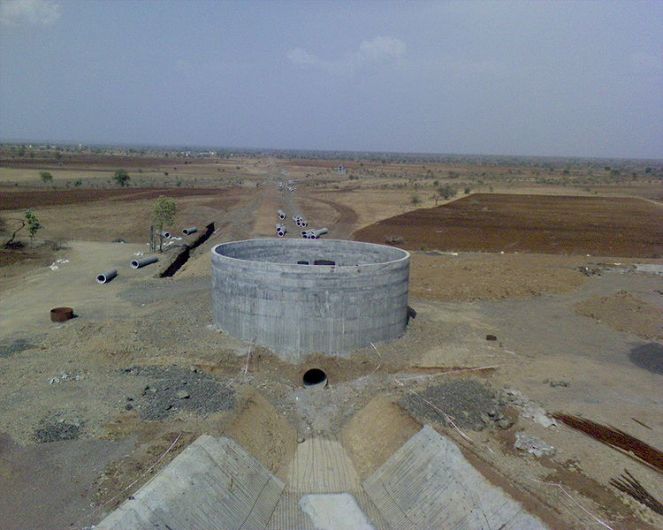


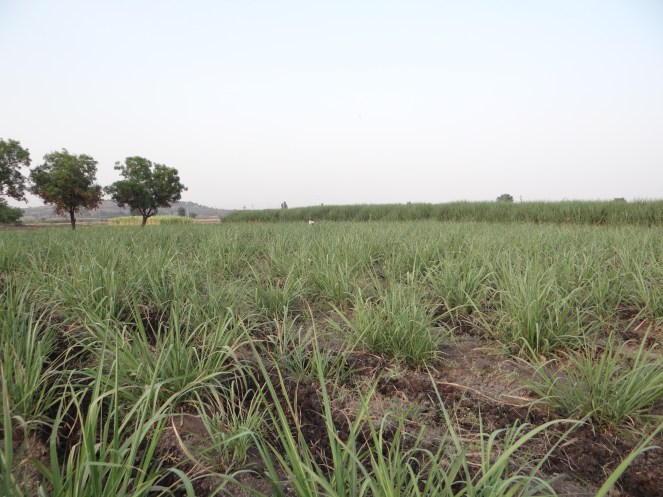

 The Simang River is a tributary of the Siang River which originates at an elevation of 2950 m. The river is 44 km long (as mentioned in the EIA/EMP reports done by consultant R S Environ Link). Total catchment area of Simang River is 554 sq km. There are two projects proposed on the Simang River. The first one is Simang I with an installed capacity of 67 MW (3 x 22.33 MW) and catchment area of 494 sq km. The second one is the upstream project Simang II with an installed capacity of 66 MW (3 x 22 MW) and catchment area of 422 sq km. These two projects were jointly discussed in the 19th meeting of EAC in October 2008 for the first time. Then these projects were subsequently discussed in the 21st, 36th, 66th and 67th meeting of EAC. A diagram of the two projects on the Simang River is given below.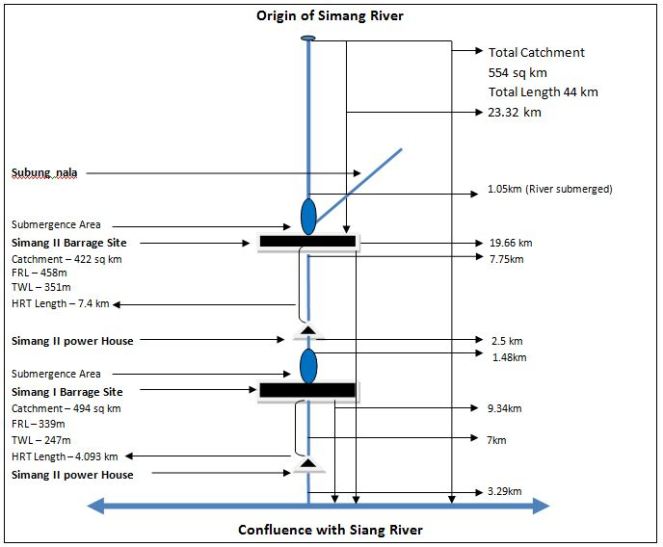

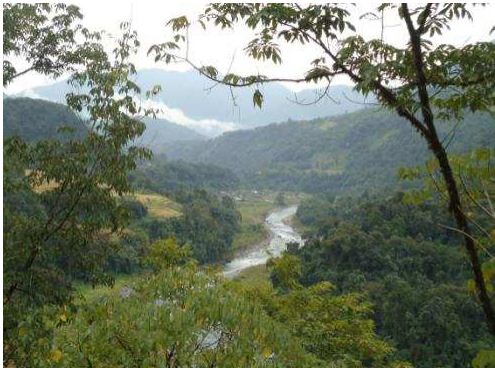


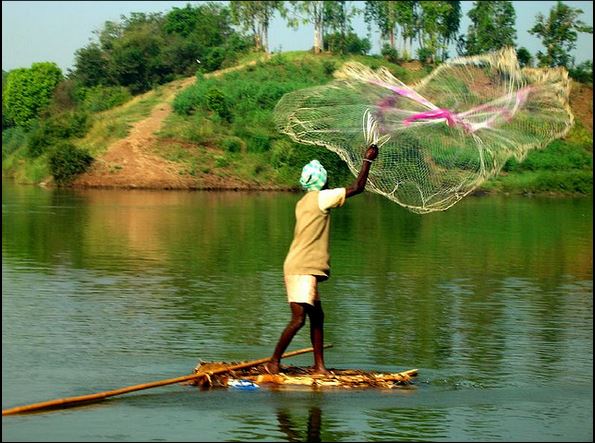


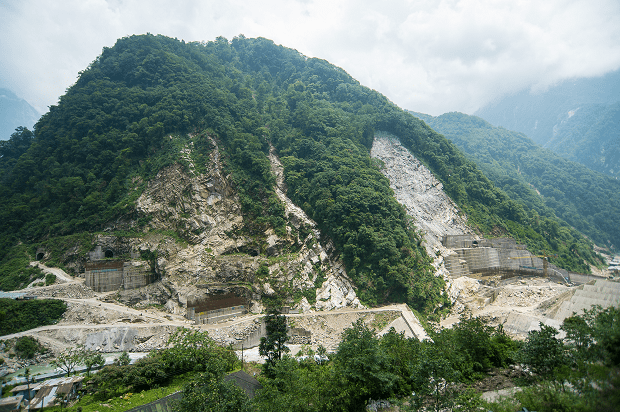




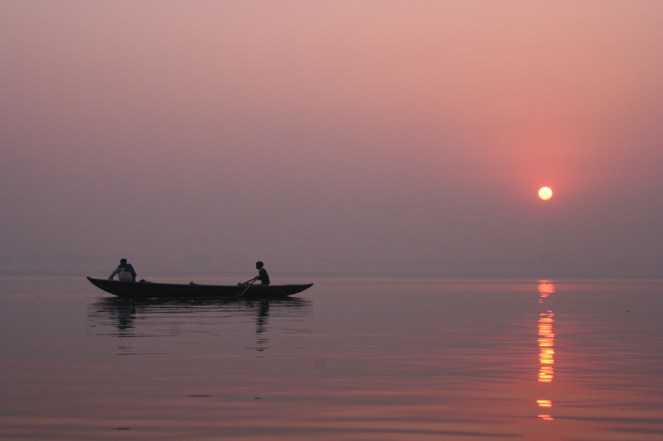



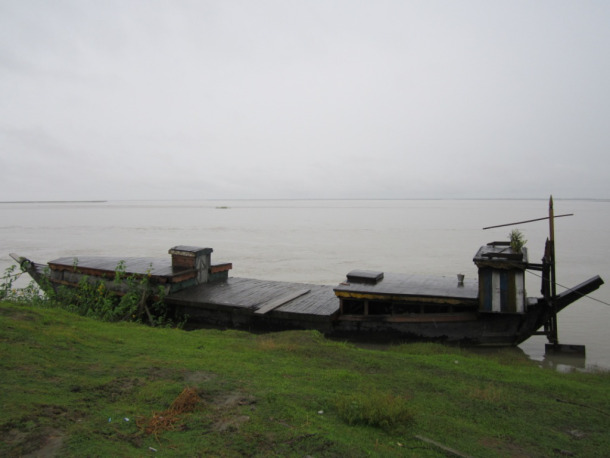


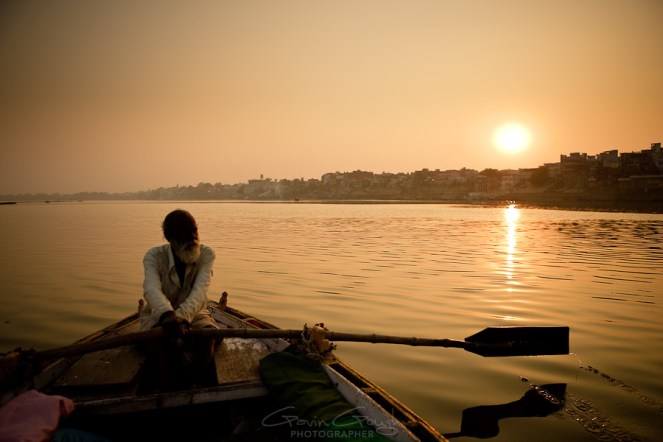


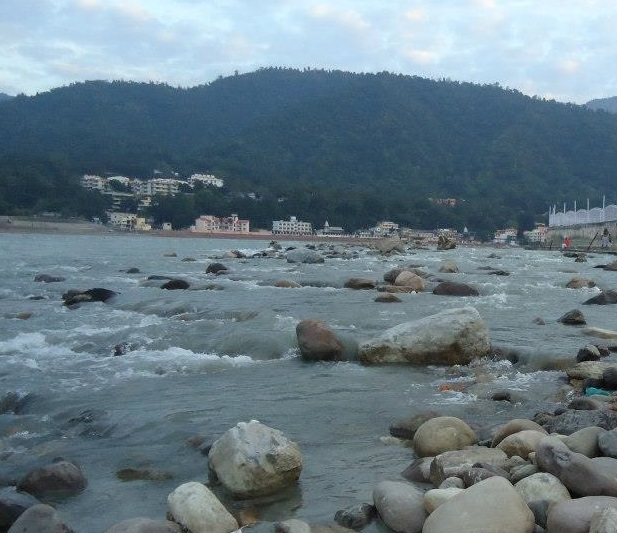

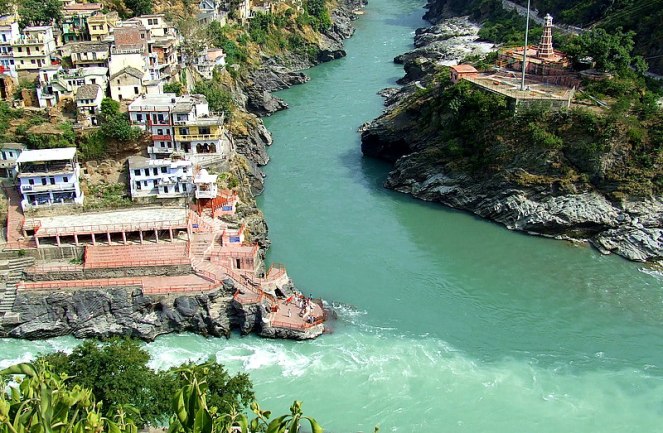


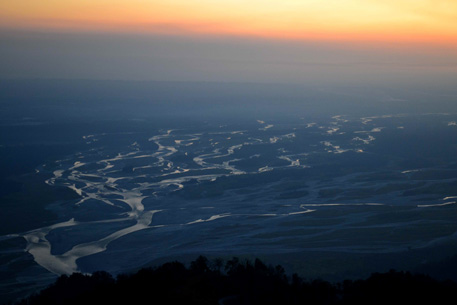
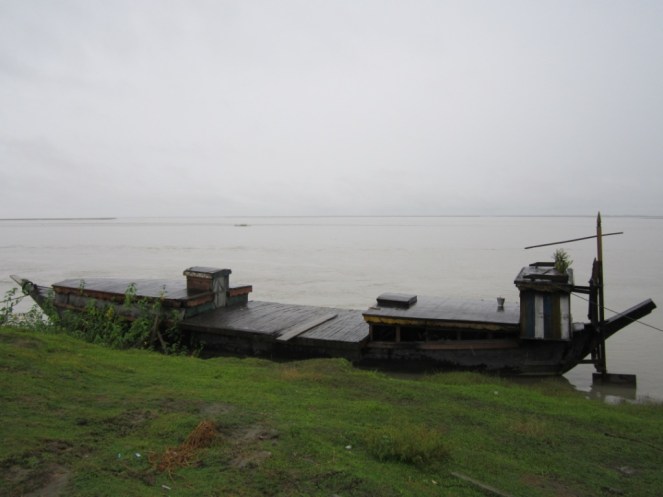


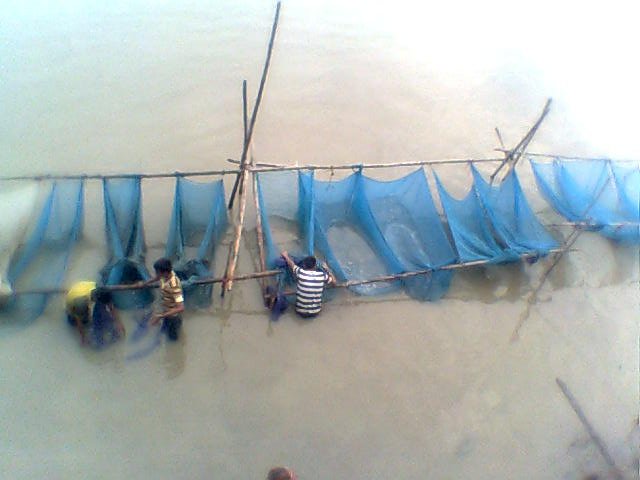

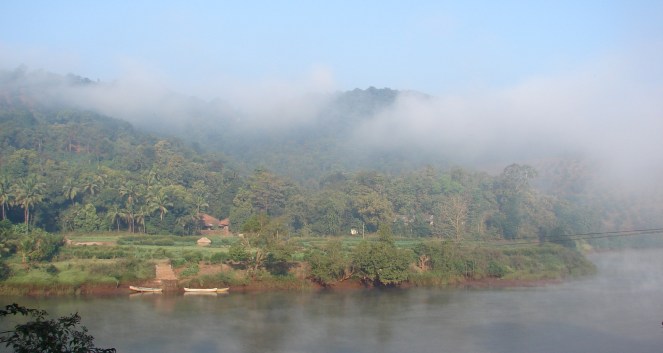

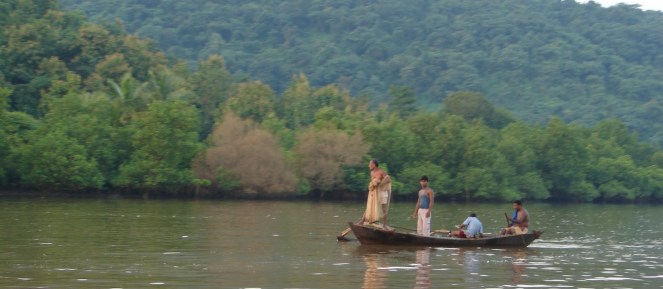


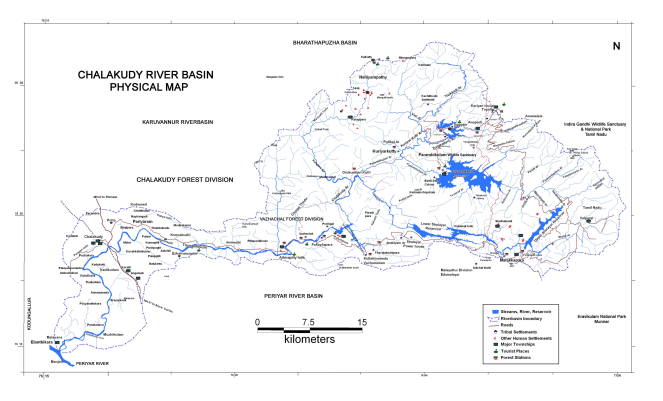
 Agreement), reduced the water availability in 2013 summer to less than 1 MCM per day resulting in severe water stress in the river basin. On top of the water shortage, intra-day as well as inter-day flow fluctuations in tail-race discharge from PLB HEP had worsened the situation. Anticipating water shortage the river basin MLAs as well as Local Self Government (LSG) heads had been demanding action from the State Government since December 2012.
 healthy flow even during summer months. However, at present, the natural summer flow in the river has reduced drastically due to forest degradation and dams and diversions. Consequently, the present river flow in non-monsoon months is almost entirely dependent on the storage at Kerala Sholayar and Poringalkuthu reservoirs. The downstream major irrigation project, the Chalakudy River Diversion Scheme (CRDS) does not have storage of its own. It is completely dependent on the tailrace discharge from the PLB – HEP. Over the last two decades, the daily flow fluctuation due to the semi-peaking operation of the PLB-HEP is affecting the functioning of CRDS. Incidentally, the campaign against the proposed Athirappilly hydroelectric project (AHEP) had first brought this issue into focus. One of the major issues with regards to AHEP, a peaking power station, was the downstream impacts of drastic intra-day flow fluctuation (to the tune of 1:17).

 readily accepted the proposed ROM strategy. Many LSGs demanded the state government to implement this, through resolutions. With the shortage in rainfall during 2012 monsoons, severe water stress was anticipated and a series of steps were taken to put pressure on the state government for dams re-operation so that the summer water shortage for downstream areas can be reduced.
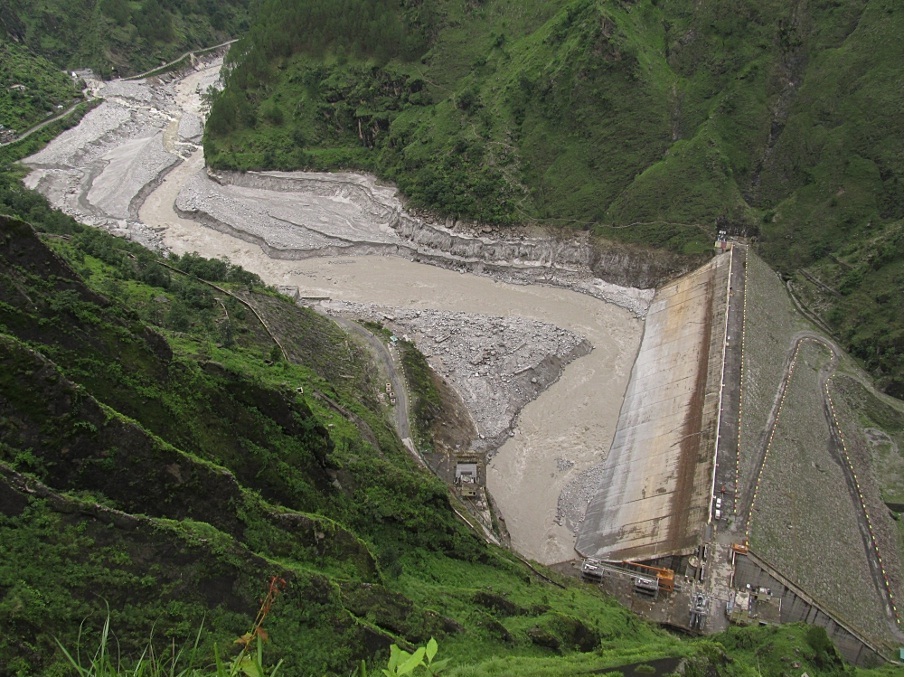
 Days after walking down the Gori, we go to the Sub-Divisional Magistrate of Dharchula sub-division, Pramod Kumar, who is busy coordinating rescue and relief on a war-footing, but still has the courtesy to meet. On being asked by me regarding the sudden release of water by the 280 MW National Hydro-Power Corporation (NHPC) Dhauliganga Hydro-Electric Project (HEP, see below the layout of the project given on NHPC website) at Chirkila and the ensuing damage downstream, he confirms that he received an emergency call on the night of 16th June, 2013 from the NHPC, asking that they be permitted to release the impounded water in their reservoir, because it was in danger of breaching. Under normal circumstances they do not need his permission. He also confirms that he had refused, because the water level in the Mahakali main-stem was already flowing at danger-mark. NHPC went right ahead and opened their gates at full on the night of 16th June, without authorization or any prior warning to anybody
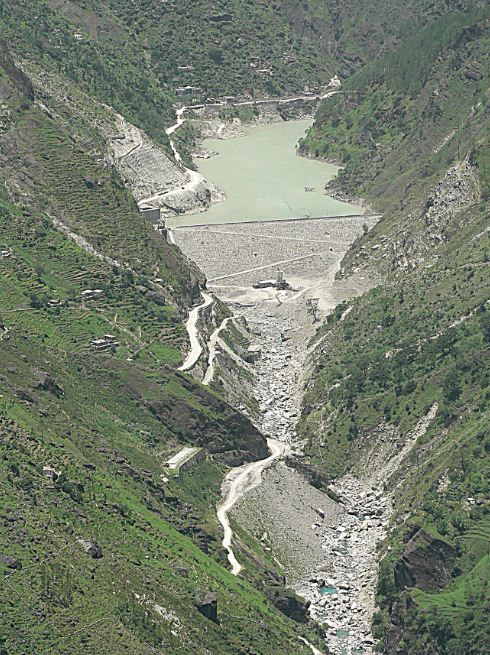
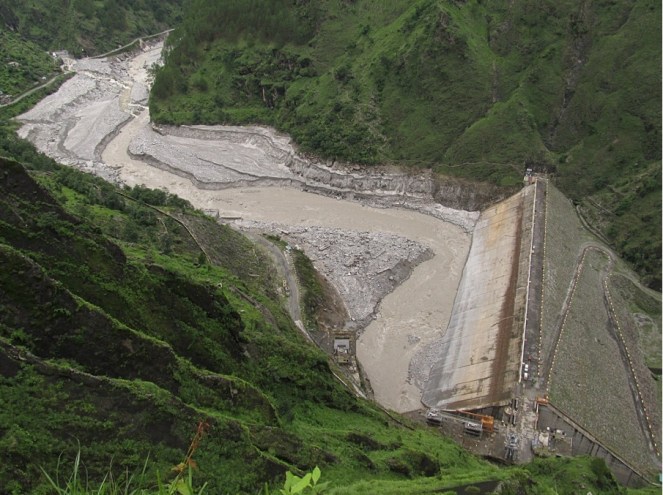

 second (cumecs), and at 12 am, on the night of the 15th June it jumps up to 389.92 cumecs. This is just the start of the flood. Joshi seems to balk right here, and says that they have not received data for the 16th June yet (the day I speak to him was the 8th of July), and that he may get it after a week or so. And anyway, he says, the powerhouse was abandoned from the night of the 16thJune, so getting data beyond that would be out of question. It is clear that Joshi was unwilling to give me flow-data for the duration of the flood-pulse. He had only minutes before informed me of how automated the whole operation was, and that it was possible for them to even operate the power-house sitting in their Dobat office-complex itself. The real scenario will be clear when we get flow data for the 16th and 17th of June.

 SANDRP