Flowing under many names: Vedic Parushni, Puranic Iravati, Greek Hydraotes, River Ravi is arguably the most storied of the five rivers meeting the Indus.
Ravi’s flow from the glacial heights of Himalayas to the fertile plains of Punjab has been embellished in songs and stories for centuries. Heth Vage Ravi Dariya or “Below flows the River Ravi” is a ubiquitous phrase in songs and poems.[1] On the banks of Ranjit Sagar Dam on Ravi, Manbhavan Singh Kahlon, himself a poet-activist muses, “We Punjabis have always written poetry around our rivers. Perhaps even too much, I sometimes think. But most of Ravi’s poetry has been left back in Pakistan.” Pakistan, on the other hand, thinks most of Ravi’s water has been left back in India.
Unlike other rivers of the Indus basin, Ravi is fed more by monsoon than the glaciers. It has a modest yield, even besides the shortest rivers of the Indus system, Beas. And yet, through thousands of years, Ravi’s impact on the ecology and on human societies has been deep and nothing less than spectacular.
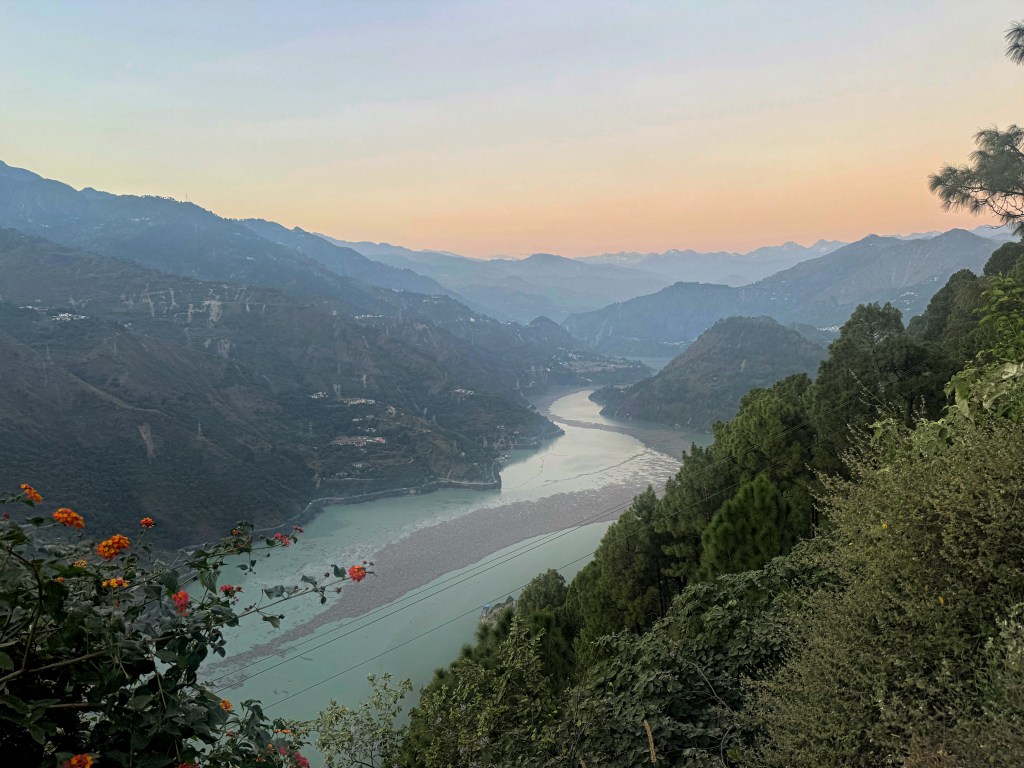
Through the River Ethnographies project, we journeyed along the length of Ravi in India to understand and experience its connection with the people in its basin- the people of Ravi who use the river, worship it, fear it and who are invariably forgotten when decisions affecting their river are taken.
So, before getting into the past 70 odd years of Indus Water Treaty, hydropower projects and the extensive canal system which dries up the river before it reaches Pakistan, this is an attempt to understand the legacy of Ravi, which stretches back to thousands of years.
River of borders and conflicts
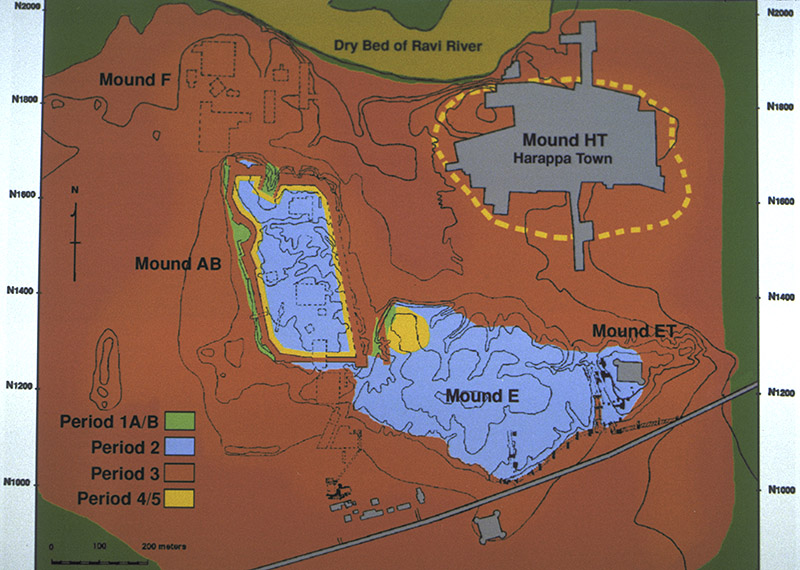
For generations, Ravi has stood at the epicenter of conquests. Its recorded legacy goes back to the Indus Valley Civilization circa 3300-2800 BC — so central to the river that the first phase of Harappan urban development is simply called the Ravi Phase. Astounding discoveries talk of rosewood and deodar logs floating down the river 5000 years back.[2] Fish caught in its paleo channels[3] forming of an important part of the diet and curiously advanced urban development adapting to floods rather than merely fighting them. The fall of urban Harappa is also traced to the decisive avulsion of the river away from the settlement.
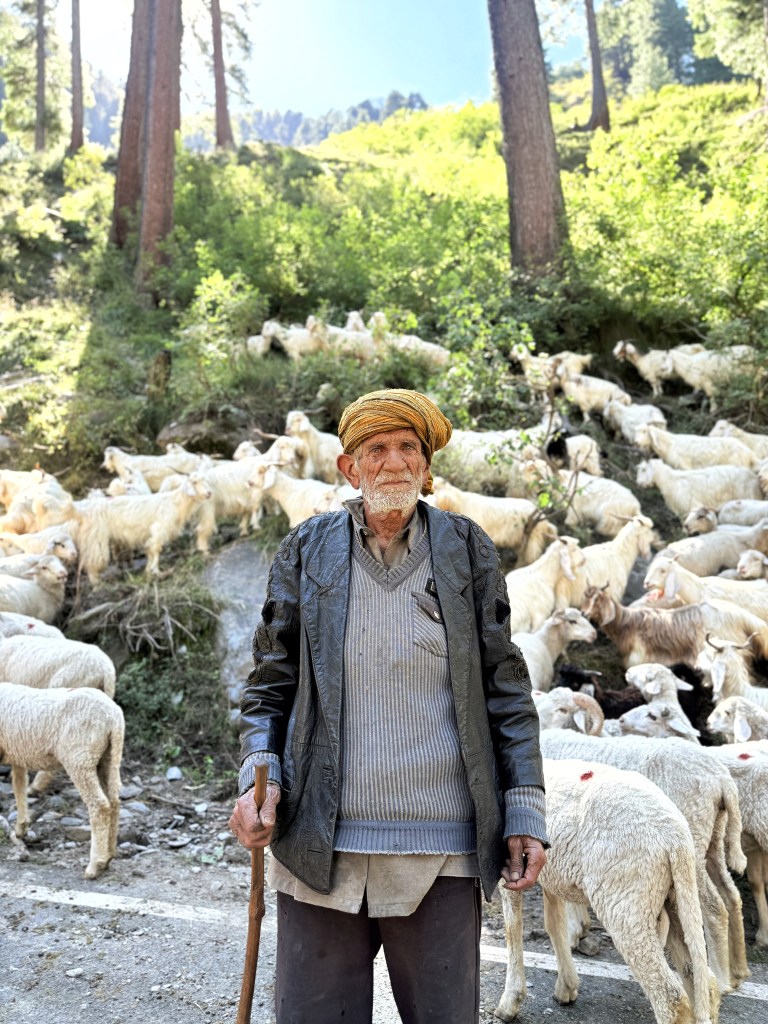
As River Parushni in Rigveda, circa 1500 BC, Ravi’s banks were the battleground for Dasharajna or the War of the Ten Kings. Indra, the lord of free-flowing rivers is described as crossing the “wooly foam” of Parushni. And even today, Gaddi shepherds set off on their long-remembered migratory routes with wooly sheep along this river.
Somewhere around 5th Century BC ancient grammarian Yaska, recorded that the Parushni of Rigveda is same as Iravati. It is Iravati that is found in Ramayan and Mahabharata.
Yaska says, इरावतीं परुष्णीत्याहुः । पर्ववती कुटिलगामिनी ।[4]
“They call Iravati as Parushni: a mountain river with a sinuous path”.
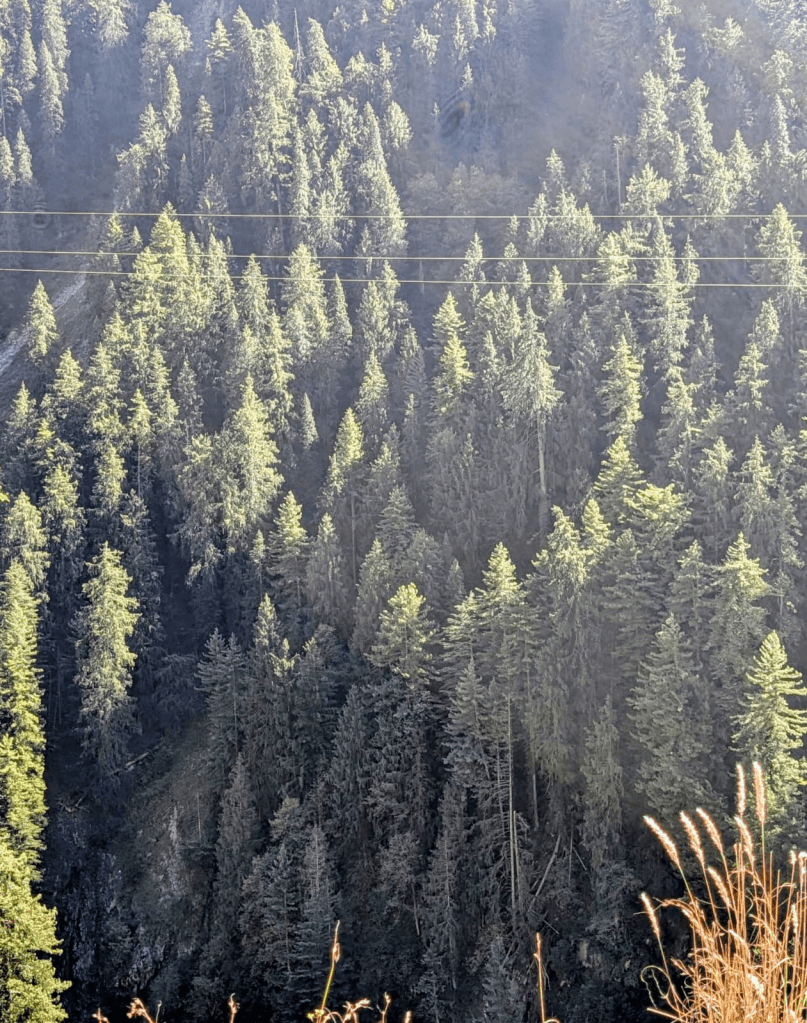
In the headwater forests of Ravi Anup Varma shows me a conifer and says, “This is the Rei tree. Ravi originates from the roots of Rei and hence the name.”
In the 4th Century BC, Alexander of Macedonia sailed along the Ravi several times, forded it, and, as was his habit, drove the native tribes to the river[5] in a bloody battle. The Greeks recorded the river as Hydraotis or Hyarotis then.[6]
Further upstream, beyond the reach of armies and empires, the headwaters of Ravi were always the lifeline of the relatively isolated kingdom of Chamba in the Himalayas. The river and its tributaries connected the high mountain passes and fierce deities with the capitals of Bharmour and Chamba. The ancient Manimahesh Kailash pilgrimage still traces the origin of Ravi headwaters, step by step.
In the 9th century, the Minjar festival unique to the Chamba region began when the victorious King Sahil Varman crossed Ravi. Till date, the festival commences with the immersion of fragile minjars (corn tassels) in the flow of Ravi. Aijaz Baig Mirza, a muslim craftsman for a Hindu festival says, “In Chamba, unity is not just a value but a living tradition. This syncretism is the enduring spirit of the land.” [7]
The plains of Punjab in the 16th century saw the rise of Sikhism on the banks of Ravi. Guru Nanak Saheb spent 18 years here and established Kartarpur Sahib on the right bank, which is now in Pakistan. Dera Baba Nanak grew on the left bank, where he crossed the river. On the fertile banks of Ravi, Guru Nank himself tilled the land, irrigated the fields and sowed the message of Kirat, or good, honest work. The well or Khuu where Guru Nanak Saheb rested with his friend still yields cool waters drawn up by Persian Wheels. At this well, the sewadar of Dera Baba Nanak tells us, “Guru Padshah’s footsteps are everywhere along the Ravi. It is a sacred river.” The river was also the final resting place of Guru Arjan Dev who said, “A virtuous soul must be a courageous soul[8]”
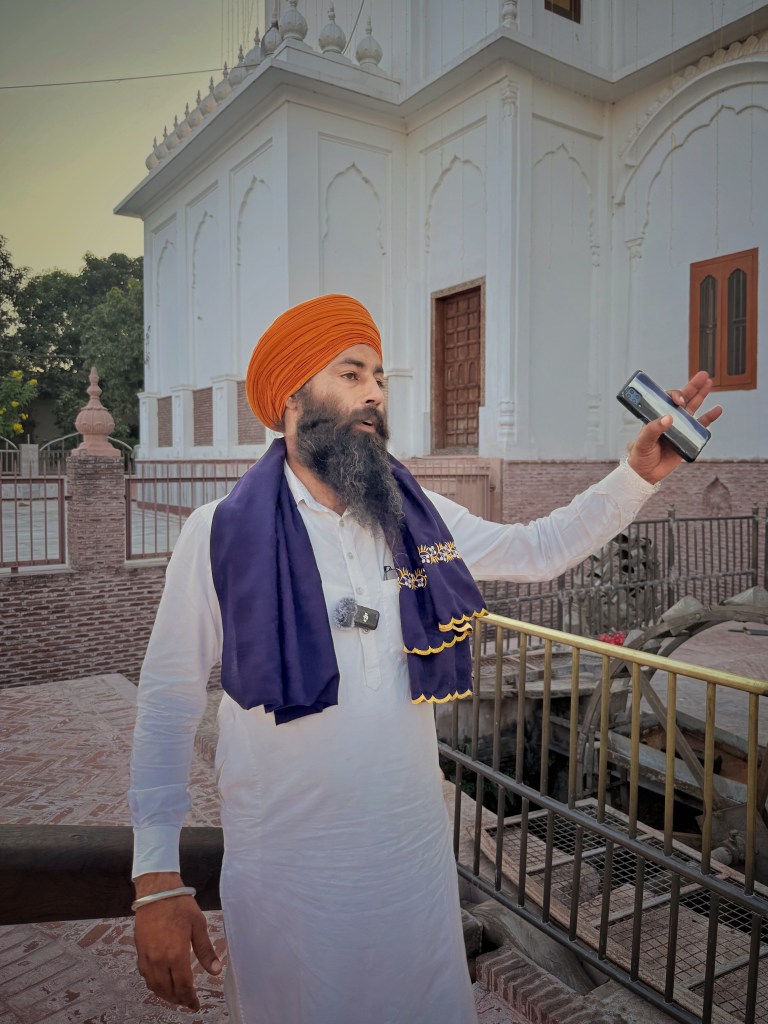
17th Century saw some of the earliest canal systems on the river. Shah Nehr, which was later reinstituted as Upper Bari Doab Canal was an extensive canal built on Ravi from the present day Madhopur Barrage. It took water over 150 kilometers to Lahore to irrigate the vast Shalimar gardens. The canals of Ravi were a place for lovers meetings, immortalized in several songs. [9]
Lahore, which now seldom sees water in its river, was once the jewel of Ravi. It was a hub of progressive literature and art, home to an extraordinary concentration of artists and thinkers: Faiz Ahmed Faiz, Shiv Kumar Batalvi, Manto, Iqbal, the list is long. In 1929, the riverbanks of Lahore bore witness to a historic event. It was here that the first pledge of Poorna Swaraj (Total Independence) was taken by a fledgling Congress party. A young and hopeful Jawaharlal Nehru, who went on to become the first Prime Minister of Independent India reportedly said, “On the banks of this sacred river we pledge, as did our ancestors thousands of years earlier, to remain free.”[10] Little did he know that after independence, the same river would become a hastily drawn border between two young and angry nations.
No river embodies the pain and strife of partition as Ravi. Thousands of families crossed the river, never to return to their homes.
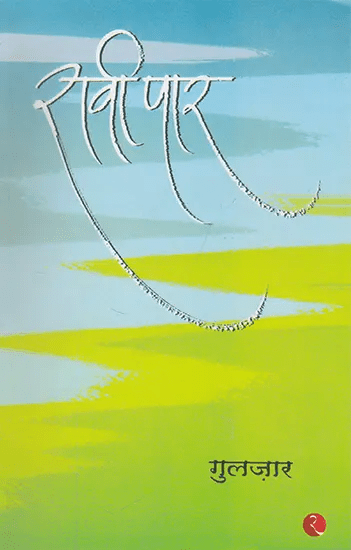
Works like Gulzar’s short story Ravi Paar [11] (Across Ravi), Amrita Pritam’s Ajj Aakhaan Waris Shah Nu bear witness to this period. Poems of Punjab changed color, from love they spoke of separation. Akhtar Sheerani, who died in Lahore in September 1948 just weeks after Partition wrote: “Ravi ka kinara kaisa hai?” How do the banks of the Ravi look?[12]
From here on, Ravi and its irrigation infrastructure became strongly contested. While the headworks like Madhopur were in India, its vast canal network was in Pakistan. The villages across the border who grew crops on the reliability of Ravi were suddenly separated from their river.
In his short story ‘Yazid’ based on the 1948 conflict, Saadat Hasan Manto writes about a family grappling with the meaning of “turning the river off’. The heavily pregnant Jeena does not believe her neighbor when she says that the river will be closed. Her husband Karimdad rebels against the idea in his own way though. He holds his newborn son for the first time and says, “He is Yazid. One Yazid closed the waters of a river. He will be the Yazid who will open the river.”[13]
And today, after the long winding road through history of place and time, we have returned to the same situation. The headwaters of Ravi are fettered in cascade of hydropower projects. So much so that Anup Varma says, “Ravi is extinct in its birthplace.” In the plains, Ranjit Sagar, Shahpur Kandi and Madhopur barrage entirely divert the river.
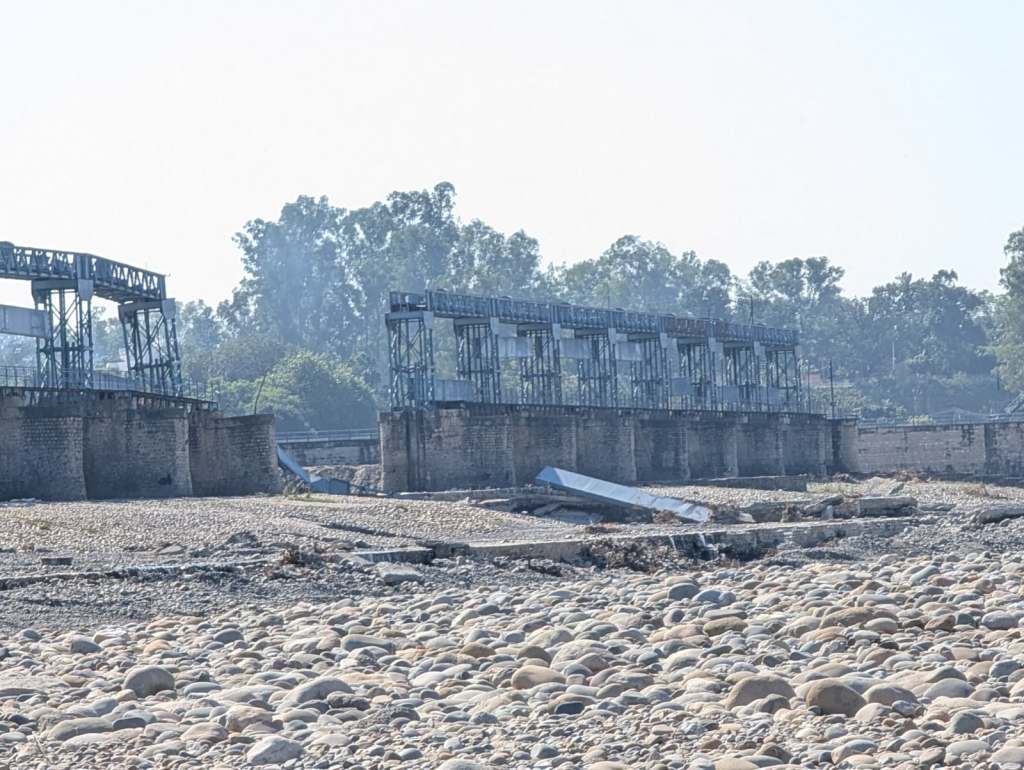
The river is being turned off in India and heavily polluted and encroached upon in Pakistan. There is again limited space to talk about the beauty of Ravi. Media on both sides is not helping the situation.
The living Ravi
Through the journey along the river, we heard multiple voices speaking about “their” river and realized that Ravi’s story is more complex and nuanced. It cannot be appropriated by the last 70 years or the conflict narrative.
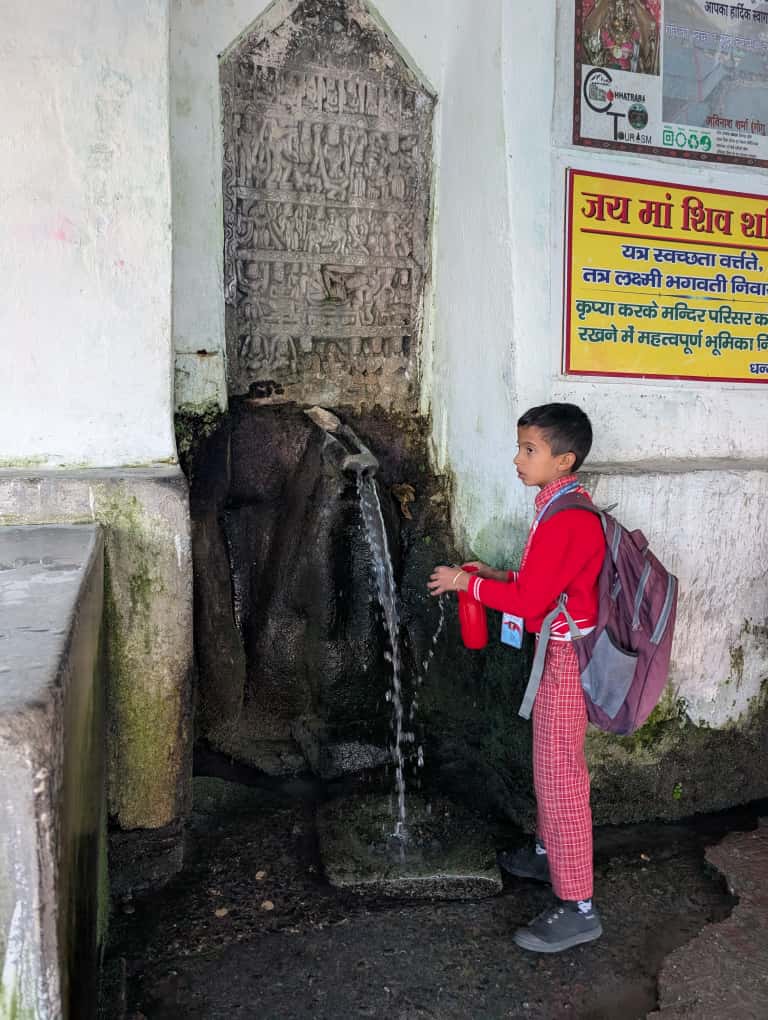
It is as much the story of Gaddi migration through high passes, of dense forests and sacred trees lining Himalayan rivers. It is the story of Van gujjars who move from meadow to meadow in search of fresh grass and farmers who sculpt terraces on steep hills. It is the story of carved spring fountains that bring groundwater to the fore and women who weave river stories on silk. It is the story of Punjab where basmati sways on the wind and where thousands of people come together to help each other in floods.
Climate change is severely affecting the known nature of the river. Garibdas Gaddi, who has a flock of a hundred sheep tells us about 2025 floods, “Our ancestors have not seen such floods. The river is behaving in ways we don’t recognize.”
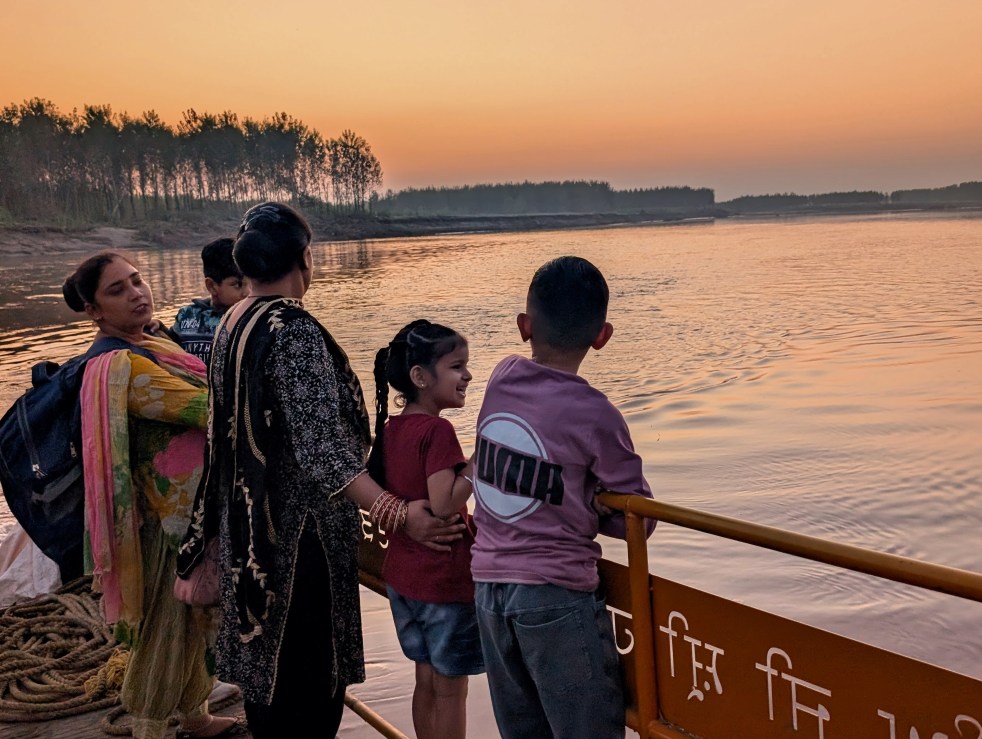
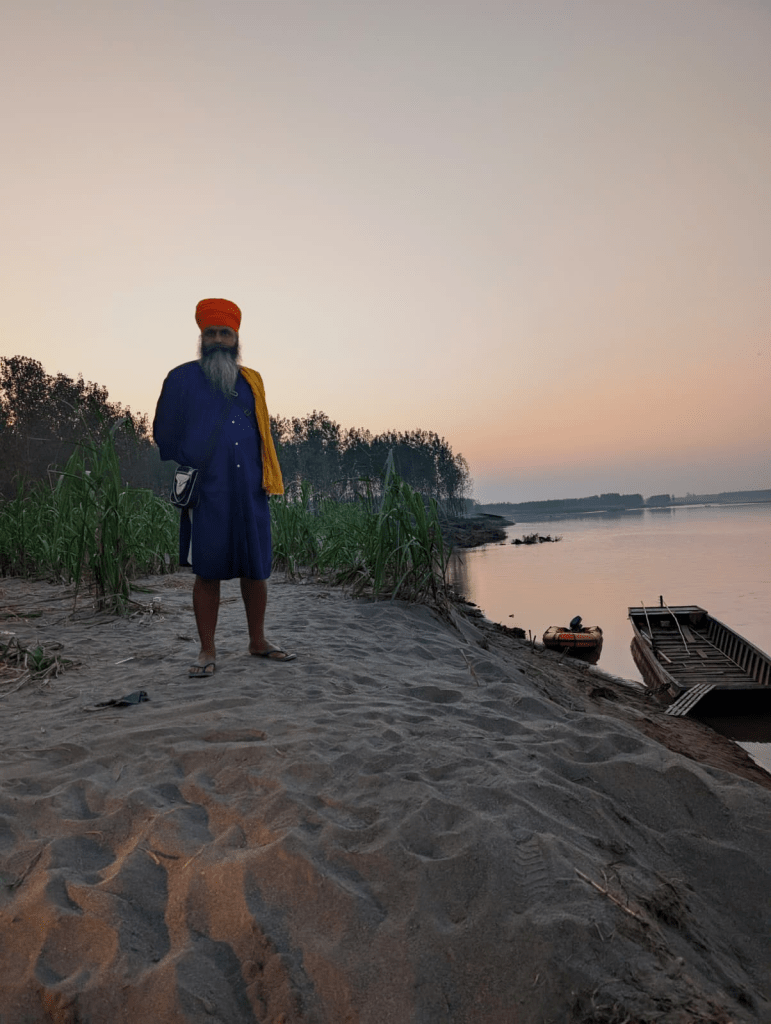
At Makora Pattan where Ravi leaves India to enter Pakistan, seven villages on right bank of Ravi are routinely cut off from the mainland India, without a bridge. In the 2025 monsoon, the flooded villages were cut off from the country for 11 days. When we visited the vast river here, I was introduced to Baba Lakhvinder Singh ji who put together a barge for the villagers. Even as the head of the village thanked him, Baba stood silent, looking out to the river in his ink blue robes. Beyond lay fields, farmers, some security guards, a boatman and children on the far bank. Silver fish leapt in the river occasionally. Mechanized sand mining went on unabated in the main channel while volunteers cleared away river sand from the fields to help the farmers.
Ravi’s story, it turns out, cannot be owned by any treaty, any dam, or any border. It belongs to the people who call it home. The far away poet asked: Ravi ka kinara kaisa hai? How do the banks of the Ravi look? This report is our attempt to answer the question, as seen through people of Ravi.
Parineeta Dandekar, with inputs from Madhumita Dutta
Photos: Abhay Kanvinde
This project is a part of River Ethnographies, supported by the Ohio State University. Ravi River Report will be published in parts.
End Notes:
Stretching about 720 kilometers across India and Pakistan, and draining a basin of 40,769 km²[14], the Ravi yields an approximate average of 6.4 million acre-feet at Madhopur Barrage,[15] as it reaches the plains of Punjab, India. This is where almost all of flow of Ravi is appropriated: through the historic Upper Bari Doab Canal, the Ravi-Beas link, the Ravi Tawi link and the Kashmir canal. Waters of Ravi move away from the river and are spread far across from Kashmir to Rajasthan. The river is nearly wiped off until it gets a sudden infusion of Ujh river just as it crosses over into Pakistan. As per the now suspended Indus Waters Treaty, Ravi is considered an ‘eastern river’ and all of its water is allocated to India. The river flows into Pakistan only when it carries floods.
[1] Radha Kapuria & Naresh Kumar (2022) Singing the River in Punjab: Poetry, Performance and Folklore, South Asia: Journal of South Asian Studies, 45:6, 1072-1094, DOI: 10.1080/00856401.2022.2124680
[2] K.A.Chodhary, S.S Ghosh, Plant remains from Harappa, 1946, https://ignca.gov.in/Asi_data/18146.pdf#:~:text=The%20Harappa%20conifer,Products%20Research%20Bulletin%2C%2022%20(1948)%2C
[3] Belcher, W.R. 1994. Riverine fisheries and habitat exploitation of the Indus Valley Tradition: an example from Harappa, Pakistan. In: A. Parpola and P. Koskikallio (eds.), South Asian Archaeology 1993. Annales Academiae Scientiarum Fennicae, Series B, Vol. 271. Suomalainen Tiedeakatemia, Helsinki, Finland, Belcher , W.R. Fish Resources in an Early Urban Context at Harappa, Harappa Excavations 1986-1990 A Multidisciplinary Approach to Third Millennium Urbanism Edited by Richard H. Meadow
[4] https://www.wisdomlib.org/hinduism/essay/nirukta-and-the-vedic-interpretation-study
[5] The Invasion of India by Alexander the Great as described by Arrian, Q. Curtius, Diodoros, Plutarch and Justin: Being Translations of such portions of the Works of these and other Classical Authors as describe Alexander’s Campaigns in Afghanistan, the Panjâb, Sindh, Gedrosia and Karmania,
[6] Ibid
[7] https://timesofindia.indiatimes.com/city/chandigarh/centuries-of-unity-muslim-family-in-chamba-crafts-sacred-minjars-for-iconic-festival/articleshow/123079771.cms#:~:text=Chamba%3A%20In%20a%20shining%20testament,the%20internationally%20acclaimed%20Minjar%20fair.
[8] Barnes, Michael (2012). Interreligious learning: dialogue, spirituality, and the Christian imagination. Cambridge University Press. pp. 245–246. ISBN 978-1-107-01284-4.
[9] https://www.youtube.com/watch?v=1xcqpZ-ItP8
[10] https://www.dawn.com/news/1283420/harking-back-two-ends-of-ravi-road-and-how-our-freedom-fared
[11] https://hindikahani.hindi-kavita.com/Ravi-Paar-Gulzar.php
[12] This line is also attributed to Ahmed Faraz.
[13] https://www.rekhta.org/stories/yazeed-saadat-hasan-manto-stories?lang=hi
[14] Iqbal et al, Modeling Approach for Water-Quality Management to Control Pollution Concentration: A Case Study of Ravi River, Punjab, Pakistan, 2018 https://www.mdpi.com/2073-4441/10/8/1068
[15] https://www.google.com/url?sa=t&rct=j&q=&esrc=s&source=web&cd=&ved=2ahUKEwjZmfm0tuaSAxWpmWoFHalUHj4QFnoECDMQAQ&url=https%3A%2F%2Fojs.jdss.org.pk%2Fjournal%2Farticle%2Fdownload%2F1594%2F1503%2F2635&usg=AOvVaw3QRNrJSXG-WRwWyksorZ73&opi=89978449

 SANDRP