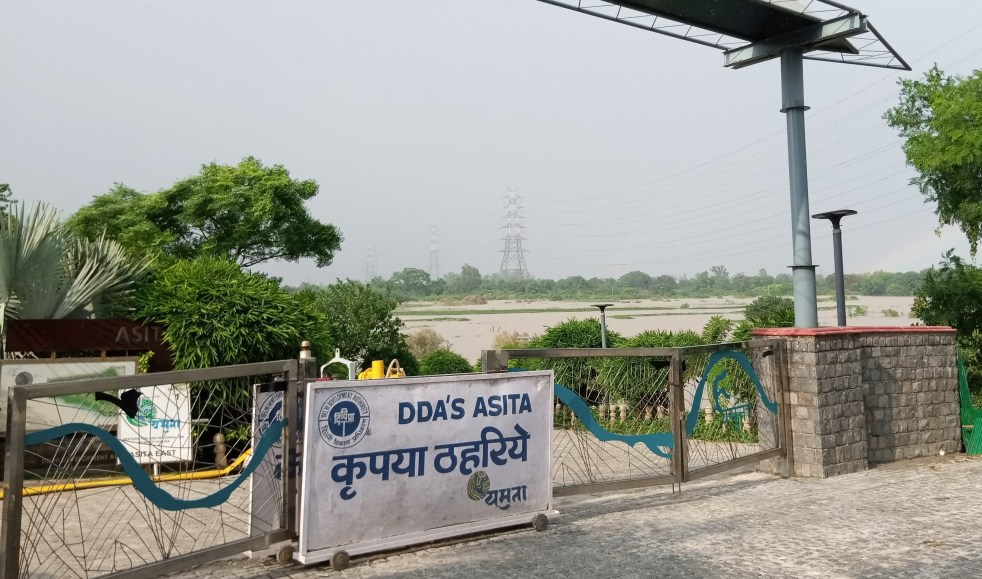
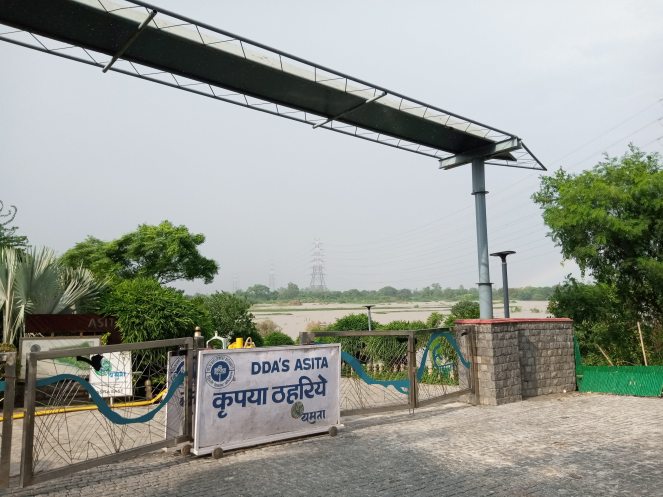
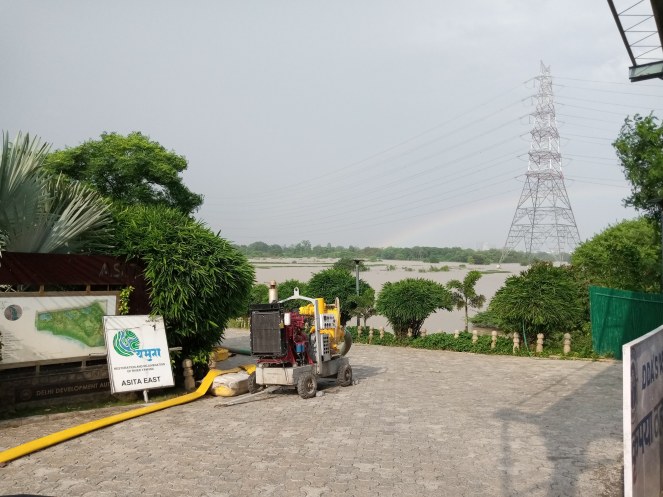
(Feature Image: Entrance of flooded Asita East project site on Sept. 05, 2025. Credit: Surendar Solanki)
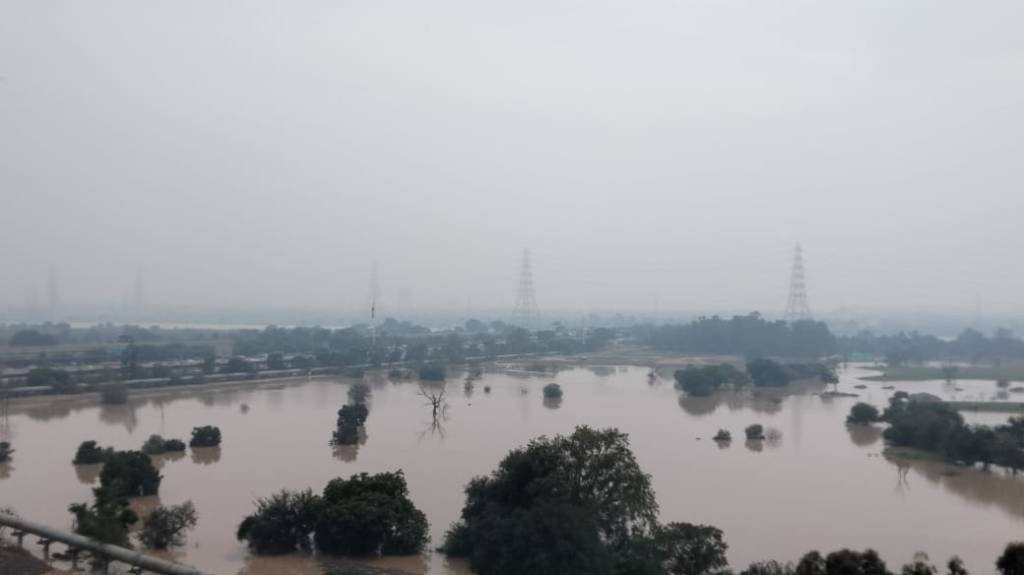
First the July 2023 and now the September 2025 flood spells in Yamuna has inundated and affected several of DDA’s beautification projects being developed on the Yamuna floodplain over past 8 years. These projects were earlier labelled as part of floodplain rejuvenation but now are being termed as riverfront projects. The violations of norms, ambiguity in progress, potential detrimental impacts on floodplain eco-system, vulnerability to flood damages make it necessary that DDA critically review the projects at this stage rather than continue to waste public money and damage to floodplain in an ad-hoc manner. A photo blog showing impact inf Sept. 2025 floods on these projects can be seen here.
History: It was in 2015 when the DDA planned to develop 10 such projects in phase wise manner and in 2017 started working on them under the banner of Yamuna floodplain rejuvenation. Initially, cost of these projects covering about 1500 hectares floodplain was reported to be Rs. 800 crores. Some of the projects themed as eco-tourism sites, heritage zones, biodiversity parks, were scheduled for completion by the end of 2021 which was extended to September 2022 and then to the end of 2023.
| SN | Project title | Stretch |
| 1 | Ghat Area -66 Ha | Wazirabad Barrage to Old Railway Bridge |
| 2 | Asita West -200 Ha | Old Railway Bridge to ITO Barrage |
| 3 | Eco-tourism area -30 Ha | Geeta Colony Bridge to ITO Barrage |
| 4 | Kalindi Aviral -100 Ha | Nizamuddin Bridge to DND Flyway |
| 5 | Kalindi Biodiversity Park -115 Ha | DND to proposed Kalindi By-pass |
| 6 | Yamuna Vanasthali -236.5 Ha | Wazirabad Barrage to ISBT Bridge |
| 7 | Asita East -197 Ha | Old Railway Bridge to ITO Barrage |
| 8 | Amrut Biodiversity Park -108 Ha | New Railway Line to Nizamuddin Bridge |
| 9 | Mayur Nature Park -397.75 Ha | Nizamuddin Bridge to DND Flyway |
| 10 | Hindon Sarovar -45 Ha | Nizamuddin Bridge to DND Flyway |
| Total 1495.25 Ha |
Table showing name, size and location of 10 riverfront projects (excluding the 163 ha. Kalindi Aviral Extension). The first five projects are on western bank and remaining five are on eastern floodplain of the river. Source: DDA.
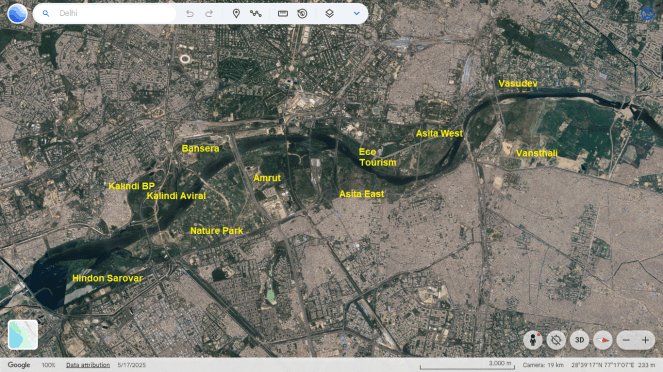
In between, the DDA has added one more project, namely the Kalindi Aviral Extension (163 ha.) in the list increasing the total number to 11 covering more than 1600 ha of O zone of the floodplain. Meanwhile, the first phase of some projects including the Vasudev ghat, Asita East, Asita West (Yamuna Vatika), Vansthali, Amrut Biodiversity Park, Kalindi Aviral Extension (Bansera) were completed in the past two years.
Decision Making Process: DDA has taken up all these projects, but it is not clear who has taken the decisions about these, what has been the process of decision making. The decision-making process should have been transparent, participatory and accountable, involving people of Delhi, sharing the feasibility reports and impact assessment studies, cost benefit analysis and conducting a public hearing for each project. None of these has been done, unfortunately.
Rejuvenation to Riverfront: After a high-level meeting in May 2025, the govt has planned to link all the 11 projects into a single riverfront project which is part of govt’s broader plan to replicate the controversial Sabarmati riverfront model in the national capital.
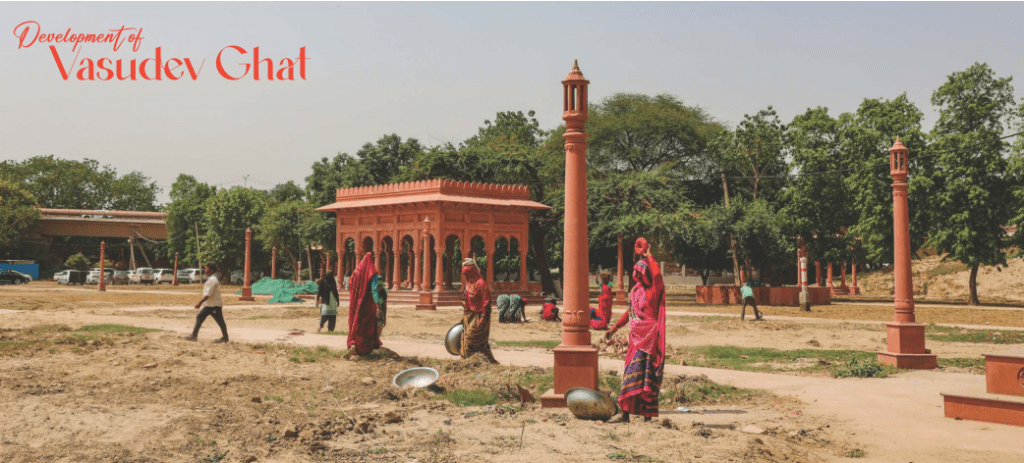
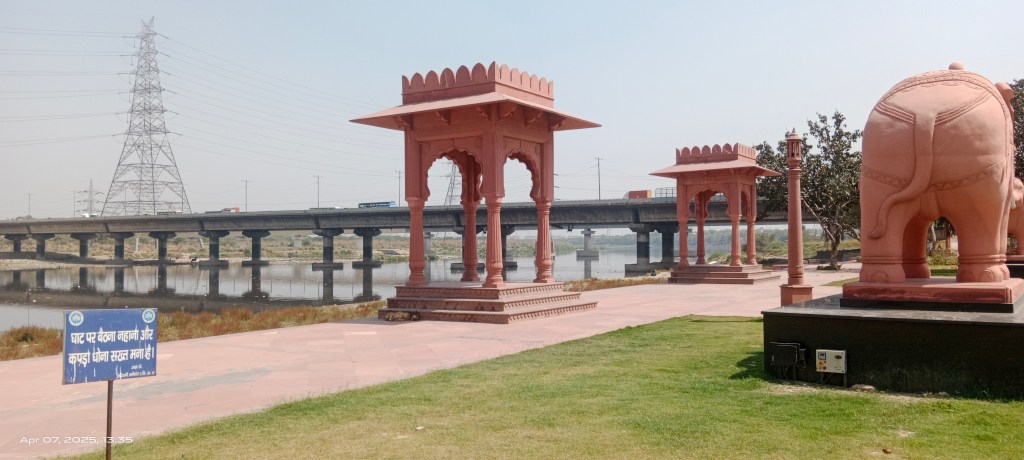
Separately, there is plan to develop a riverfront on 45 hectares of floodplain land vacated after a decade by Millennium Bus Depot near Sarai Kale Khan. The plan includes building several permanent structures for commercial activities including shopping, parking and big events along the 200 meter stretch of the floodplain. It will be completed by June 2026.
Ambiguity: It is clear that the DDA has been pursuing the projects in an ad-hoc manner. There is no dedicated webpage revealing the actual status of the projects along with the cost incurred so far. There is no information on team of experts and planners who have been developing and monitoring the progress of the projects.
The issues related to the projects are known to the public only through occasional reports in media. For example, the Oct 2024 report sheds light on frequent delays the projects have faced. Similarly, the cost of largest project, namely the Mayur Nature Park is stated to be ₹136 crore and it will be completed by October 2026 from earlier target of March 2026.

As per May 2025 report, the Kalindi Aviral project was complete but suffered some damage due to construction work by the agency. There is no detail on the kind of damage, financial loss and action taken against the agency. It is also learnt that a budget of ₹82 crore was allocated for floodplain rejuvenation work in financial year 2025-26.
However, be it cost, progress, delays or damage and losses, the DDA has maintained a total secrecy on these important factors. There is no updated information about these projects on DDA’s website. While one page Rejuvenation of river Yamuna floodplain on its website shows a Google map marking the location of these projects with incomplete details. Another page Yamuna Riverfront just shows a table mentioning the names and areas of the 10 projects along with the same google map.
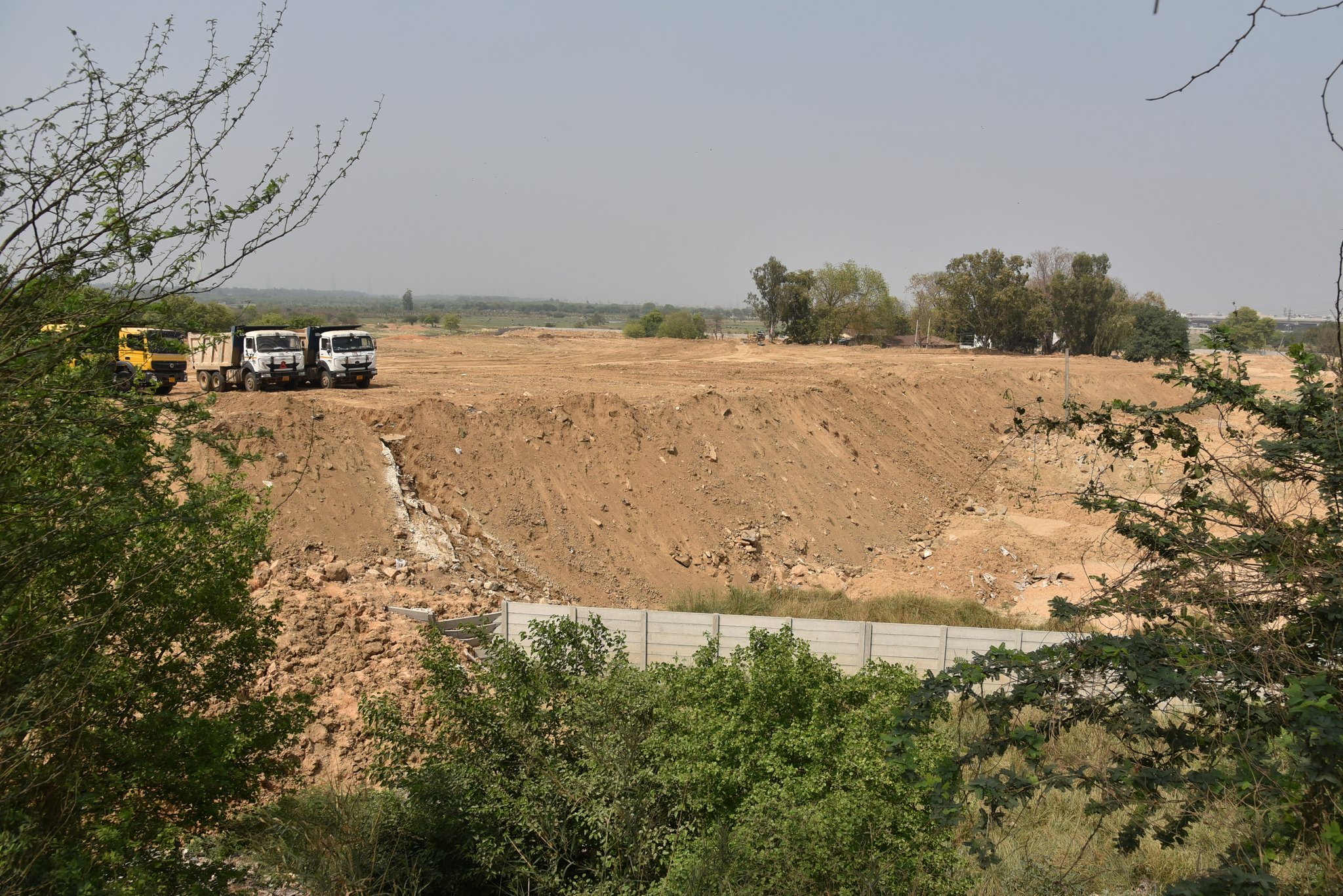
Violations: There have been several grave violations of norms in building the projects which includes levelling and raising of floodplain by dumping soil; unabated use of marble, red stone, red sand, rocks, cement blocks, concrete and metal materials for building permanent structures in the floodplain. In April 2024, a NGT committee had found these violations at Vasudev and Bansera projects.
Around the same time, about 19 hectares of floodplain land was raised by several feet by dumping hundreds of trucks of soil near Vansthali project site. About 50 acres of floodplain land close to the project site has also been levelled by huge amount of soil dumping and has been converted into vehicle parking and event gathering site. Additionally, DDA has planted ornamental plants in large number to beautify the projects and tree plantation along sandy banks of the river and marshy land of the floodplain. Moreover, the DDA has been privatizing and commercializing the common natural resource.
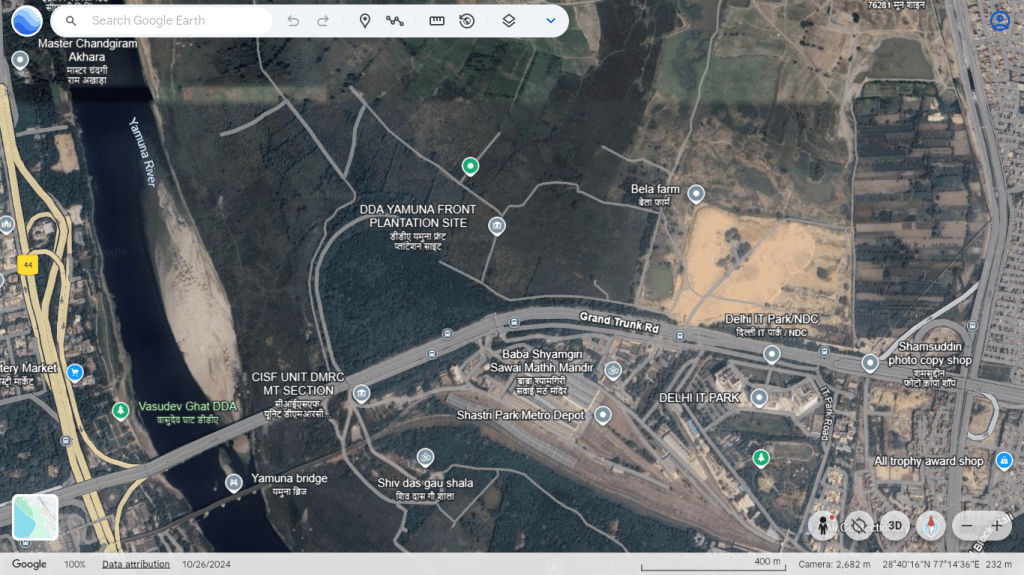
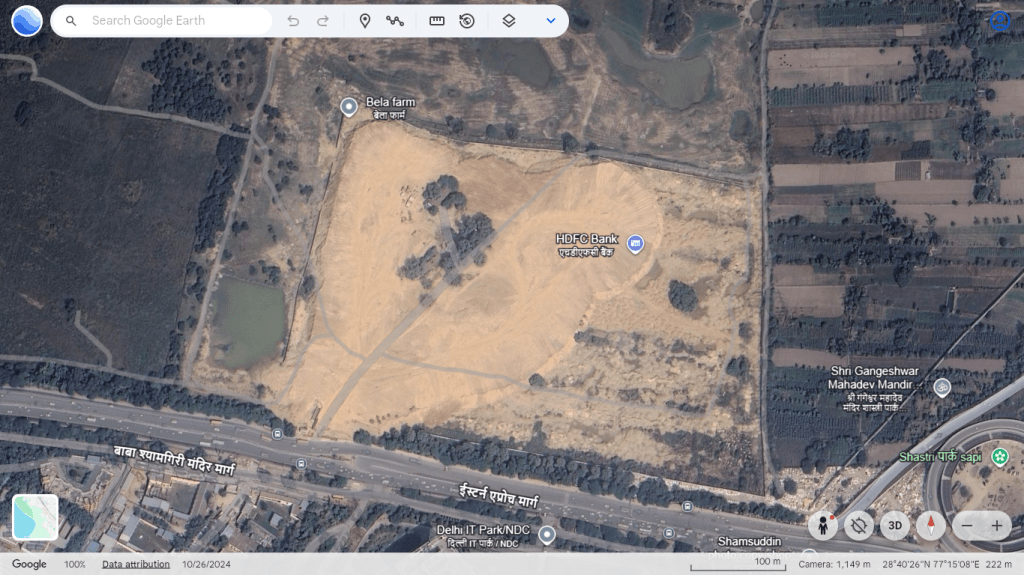

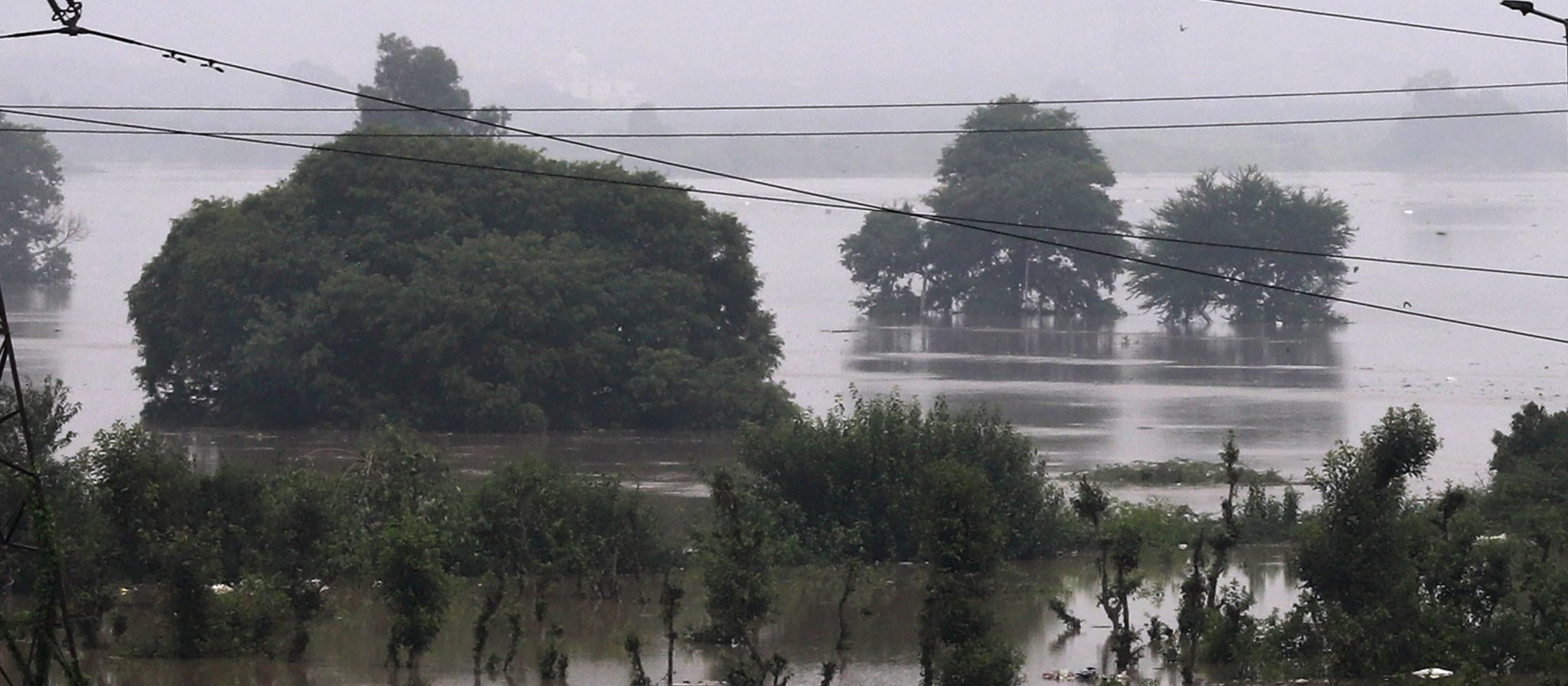
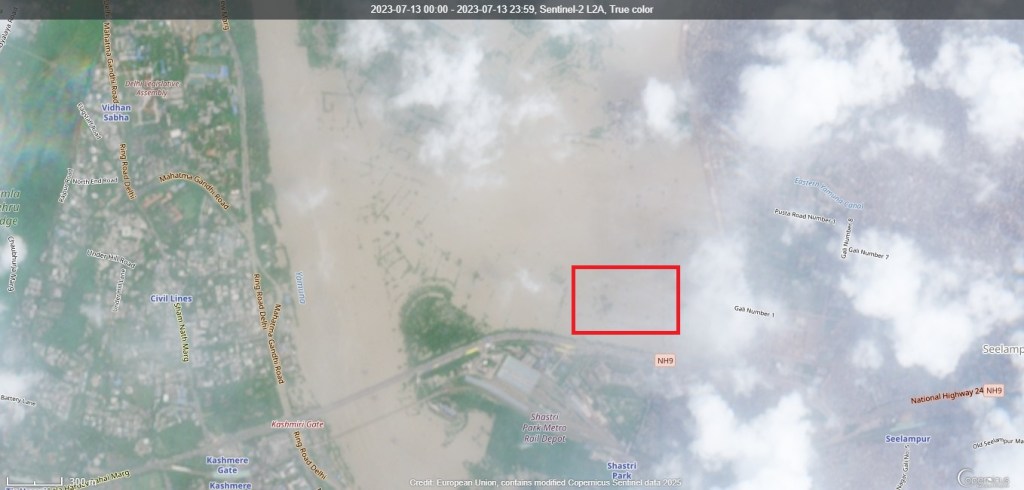

Flood Damage: In addition to ambiguity and violations, the riverfront projects have also been severely affected by the two flood spells in Yamuna in past three years. The July 2023 deluge submerged all the 10 projects sites and washed away about 90 percent of saplings planted undoing the years of beautification efforts.
Again, DDA made no official disclosure on scale of damage. However reports mention that DDA had invested about ₹40.6 crores in 3 near completed Asita East, Kalindi Aviral, and Yamuna Vatika projects and the flood spell had necessitated the revamp of these projects. Instead of learning any lessons, DDA continued with the same approach.
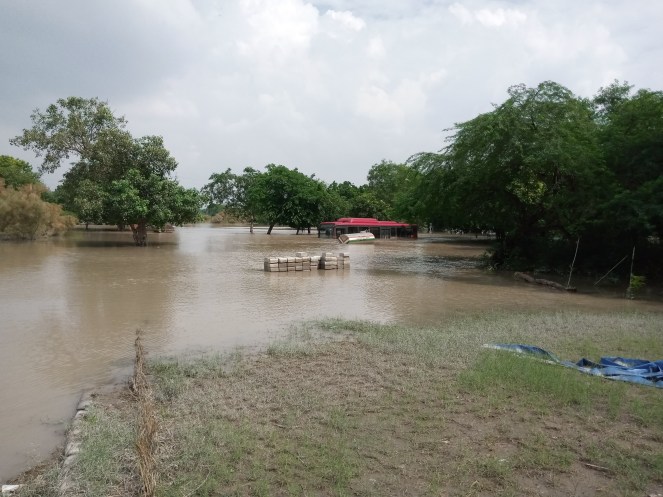

And now in September 2025 most of the projects have again been affected by the deluge greatly undoing the plantation, decorative works and progress made in the past two years. Interestingly, DDA has opened the Vasudev ghat and Amrut projects for the public in March 2024 and March 2025 after repairing the damages caused in July 2023 floods.
So far, there is no official report in public domain detailing the impact of the flood, losses incurred and lesson learnt. Ironically, all through the past 8 years DDA kept claiming that these projects were meant to restore the floodplain but now states that it would shift focus from building concrete structures to green landscapes.
Damage to Floodplain Eco-system: The riverfront projects have also been adversely impacting the floodplain ecology and hydrology. The levelling and raising of floodplain land has altered the natural landscape of floodplain. Plantation of ornamental plants in project sites, tree saplings along sandy riverbank and swampy floodplain have negative impacts on floodplain biota. The rampant use of concrete, metal materials and building of permanent structures have only compromised flood absorption capacity of the floodplain. The logic of creating waterbodies in active floodplain is beyond common sense.
Notably, both the July 2023 and September 2025 flood spell are consequences of comparatively moderate peak flood volume from Hathni Kund barrage. If these projects can’t withstand these and face submergence and damages due to such an event, the inevitable bigger scale floods are bound to cause greater submergence and destruction to these projects in future.
Summing Up: As the DDA has chosen to maintain secrecy over the decision-making process, ground status of these beautification and riverfront projects, there is confusing and contradictory information in every aspect of these projects be it the total numbers, sizes, concepts, progress status, developing methods, agencies involved, money invested and accountability fixed for delays and damages. This only indicates the abysmal status of floodplain governance in the national capital.
Under such a situation, it needs to be re-iterated that the Yamuna floodplain is a common natural resource offering multiple eco-services to the people of Delhi. DDA is merely a custodian and has been destroying the floodplains and its eco-services by investing public money in these projects. The citizens of Delhi are entitled to be involved in decision making process, besides having right to know each and every information concerning the projects which DDA must immediately put in public domain including the decision-making process for each project, the feasibility reports and impact assessments, the overall money invested so far, extent of damages suffered in two floods and essential learnings to avoid the loss and damages further. There should have been a public consultation process before starting any of these projects.
The decision makers and planners especially LG, DDA, NMCG and Delhi government need to take a timely call whether they wish to continue in non-transparent, non-participatory, unaccountable way and in the manner of ad-hoc experiments with precious Yamuna floodplain at the cost of its eco-system services, future benefits and public money or in the wake of ground realties, they contemplate to correct and reverse the course and prioritize actual restoration of floodplain over detrimental beautification and riverfront projects which are only aiming at privatizing and exploitation the natural resource for commercial interests.
And yes, if allowed, the river and floods are capable of rejuvenating the floodplain in natural, cost effective and sustainable manner. All that is required is maximum protection and minimum human intervention.
SANDRP

 SANDRP