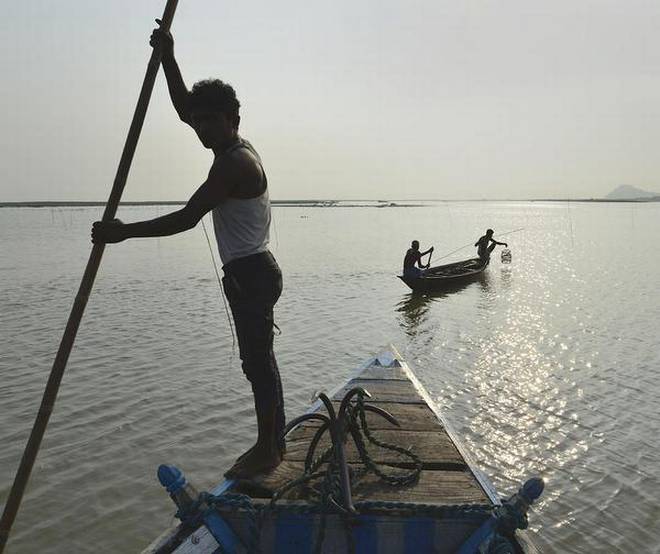
The Brahmaputra is believed to have two mythological fathers – Lord Brahma and sage Shantanu. In the 16th-century text Yogini Tantra, dedicated to the worship of goddesses like Kali and Kamakhya, the river is linked to an ancient ablution ritual with the following invocation:
O Son of Brahma! O Son of Shantanu! O Lohit! O Son of Lohit!
I bow before you, wash away my sins of the last three births.
According to eastern folklore, sage Shantanu and his wife Amogha live near Lake Lohit in the Himalayas. One day, attracted by her beauty, Lord Brahma approaches Amogha when she is alone. But Amogha locks herself up in a hut. Fearing her curse, Brahma sheds his seed and departs in shame. When Shantanu learns of this, he asks Amogha to consume the seed. From her nostrils later flows the son of Brahma, ergo the name Brahmaputra.
According to Tibetan folklore, the river originates as a small stream from Mount Tise (the Kailash Parvat–abode of Lord Shiva). At the site of its birth, the river is guarded by four divine entities—a lion, an elephant, a horse, and a peacock.
For the indigenous communities of Assam and Arunachal Pradesh, such as the Mising, Bodo, and Adi, the Brahmaputra is a living deity. In The Tribes of Assam (B.N. Bordoloi), the Mising people refer to the river as “Father River” or a manifestation of Abo Tani, their ancestral deity.
In Assam, the Brahmaputra is celebrated during festivals like Bihu, where communities honour the river for its bounty. The legendary singer Bhupen Hazarika’s ode to the river – Mahabahu Brahmaputra – is considered one of the greatest Assamese songs.
Brahmaputra and Chinese plans Assam CM Himanta Biswa Sarma
@himantabiswa (1300 hrs on June 3 2025): https://x.com/himantabiswa/status/1929600503614230554
“What If China Stops Brahmaputra Water to India? A Response to Pakistan’s New Scare Narrative After India decisively moved away from the outdated Indus Waters Treaty, Pakistan is now spinning another manufactured threat: “What if China stops the Brahmaputra’s water to India?” Let’s dismantle this myth — not with fear, but with facts and national clarity: Brahmaputra: A River That Grows in India — Not Shrinks. China contributes only ~30–35% of the Brahmaputra’s total flow — mostly through glacial melt and limited Tibetan rainfall. The remaining 65–70% is generated within India, thanks to: •Torrential monsoon rainfall in Arunachal Pradesh, Assam, Nagaland, and Meghalaya •Major tributaries like Subansiri, Lohit, Kameng, Manas, Dhansiri, Jia-Bharali, Kopili •Additional inflows from the Khasi, Garo, and Jaintia Hills via rivers such as Krishnai, Digaru, and Kulsi
➤ At the Indo-China border (Tuting): Flow is ~2,000–3,000 m³/s
➤ In Assam plains (e.g., Guwahati): Flow swells to 15,000–20,000 m³/s during monsoon The Brahmaputra is not a river India depends on upstream — it is a rain-fed Indian river system, strengthened after entering Indian territory. The Truth that Pakistan should know – Even if China were to reduce water flow (unlikely as China has never threatened or indicated in any official forum), it may actually help India mitigate the annual floods in Assam, which displace lakhs and destroy livelihoods every year. Meanwhile, Pakistan — which has exploited 74 years of preferential water access under the Indus Waters Treaty — now panics as India rightfully reclaims its sovereign rights. Let’s remind them: Brahmaputra is not controlled by a single source — it is powered by our geography, our monsoon, and our civilisational resilience.
Experts agree that China cannot significantly change Brahmaputra flows This article provides detailed perspective of a former official of Union Ministry of Water Resources which supports that contention that China cannot significantly change Brahmaputra or other river flows into India.

Indo-China Water issues on Brahmaputra According to an interview, Prof Nayan Sharma of Guwahati University claims that China can anytime chock the water flow from Yarlung Tsangpo to Siang. He misleadingly calls it Super dam, while it is super hydro projects, not necessarily super dam.
He contends, “The Chinese are saying that it will be a hydropower project. But there is every possibility of China unilaterally diverting the stream flow, especially during the lean season which will choke India.” But such diversion cannot be done clandestinely without necessary infrastructure and satellite monitoring can show when China builds such infrastructure.
He contends, “If China chokes the Brahmaputra, India will face a huge issue to fulfil the dry season water demand” without providing figures to substantiate this. Just variability in Brahmaputra flow cannot substantiate this.
His statement “As regards total water resources volume, only about 14 per cent of the Brahmaputra’s total annual water yield (AWY) is present in the river before it enters Indian territory from Tibet, with the remaining 86 per cent being contributed by rainfall and monsoon activity in India” answers many of this contentions. He also says: As regards water discharge in CUMECs, India accounts for 34.2 per cent of the Brahmaputra river basin area & it contributes the largest percentage of the total discharge, with an estimated 39 per cent. Analysis on recent climate studies indicated that snowmelt contributed about 6 per cent of the total AWY (Annual Water Yield) of the whole Brahmaputra, 21 per cent of the upper Brahmaputra, and 5 per cent of the middle Brahmaputra. Due to global warming, the basin-wide average AWY is projected to increase by a whopping 8 per cent, with the maximum percentage increase in the pre-monsoon season. In the end he says: “Let me clarify that I am not talking about any huge mega dams but numerous smaller storage dams in the hundred-odd tributaries of the Brahmaputra.”
Storage capacity of SUMP vs. Chinese Great Bend Project As per a report, Parong, a remote hamlet in Arunachal Pradesh’s Siang district, has been earmarked as the likely site for India’s ambitious 465-m high Siang Upper Multipurpose Project, with drilling machines for pre-feasibility studies expected to arrive at the location next month. The estimated storage capacity of the dam in China is 5.5 bcm. Vast swathes of land across more than 30 villages, including Parong, Sitang, Riga, Geku and Dite Dime, will be submerged, necessitating the relocation of displaced residents to alternative sites. The entire region where both dams are set to be located, lies within a highly seismic zone.
HYDROPOWER PROJECTS
SUBANSIRI LOWER HEP GETS NDSA APPROVAL? According to one report dated June 1, 2025, the National Dam Safety Authority (NDSA) has given approval to commissioning of the 2000 MW Subansiri Lower HEP and following which reservoir filling has been started. The NDSA permission came after slope stability issue has been addressed. Government of India has sanctioned Rs 470 crore for taking up schemes for the benefit of the people living in the downstream of the project, of which, Rs 140 crore was used for taking up erosion protection scheme in 30 kilometers from the project site. That work has been completed. But Assam Government requested the NHPC to take up erosion protection work up to 60 kilometers from the project and the Centre has sanctioned an additional amount of Rs 180 crore for the same. The erosion protection schemes were planned by the Indian Institute of Technology (IIT), Roorkee and the work is being monitored by the IIT Guwahati.
Assam-Meghalaya Plan Kulsi HEP The governments of Assam and Meghalaya have discussed to build 55 Mw Kulsi HEP cum irrigation project after consultations with the local people. Kulsi river is a tributary of the Brahmaputra to the west of Guwahati. It flows down from the West Khasi Hills district of Meghalaya. The river is a major nesting site for the Gangetic river dolphin. It’s worth mentioning that the endangered species has already been threatened by infrastructure projects and unsustainable sand mining activities.
Trash dumped by Munnar delays Pallivasal HEP in Kerala Over the years, technical issues and even geographical challenges have contributed to delays in the 60 MW Pallivasal Extension hydel project in Idukki district. Now when the project is nearing completion, a new problem – garbage menace – has cropped up, forcing the Kerala State Electricity Board (KSEB) to put off the commissioning from June to September. Trash dumped into the river from Munnar town and its neighbourhood are clogging the trash rack gate at the project’s intake point, affecting water flow, and consequently, full-fledged power generation.
According to KSEB officials, the lasting solution to the problem is linking the intake pool of the Pallivasal extension scheme to the intake channel of the older Pallivasal hydel project. Work on it has started. Manual removal of wastes from the trash rack gate is also underway to ensure maximum power generation. And as a temporary measure, steps have also been taken to install a fully-automated trash gate cleaner.
Joshimath lessons ignored in elevated Doon Mussoorie Road The proposal to widen VIP Road from Dila Ram Chowk to Raj Bhawan, taking a toll of 3,000 trees, and the proposed road from Rishikesh to Dehradun have been partially stalled only after thousands of citizens and environmentalists gathered to protest. The fire has still not been extinguished, but a new controversial chapter of an elevated road from Dehradun to Mussoorie has been opened. It is clear that it has been mooted only with the aim of minting money through contracts. Because even today, the agency is not clear about who will finance and execute the proposal. It has raised more questions than it has answered on vital issues concerning environmental degradation, rehabilitation, and the real benefit of the project. The project is going to be an environmental and ecological disaster. We are going to add another Joshimath to the list.
Himachal Pradesh In wake of impending monsoon, the HP state government in a high-level meeting with senior officials from 23 concerned dam authorities, have directed them to ensure strict compliance with established safety norms and to maintain high alertness throughout the monsoon. Emphasizing on robust inter-agency communication, real-time monitoring, the government has asked them to ensure prompt dissemination of warnings to vulnerable downstream communities.
MNRE incentives for small hydro Developers may receive up to 30% of project costs as assistance under the Ministry of New and Renewable Energy’s new scheme. This initiative aims to double the installed capacity to 10 GW in a decade. Small hydro projects offer benefits like lower environmental impact and local job creation.
DAMS
Polavaram CWC is to conduct backwater/ drainage congestion studies for six streams (Turubaka Vagu, Yetapaka, a local stream, Edullavagu, Peddavagu and Domalavagu) flowing through the erstwhile Khammam district in Telangana. CWC has asked for data including detailed cross-sections of the streams at specified intervals, along with latitude and longitude coordinates at their confluences with the Godavari river and, for Domalavagu, its confluence with the Kinnerasani river.
Medigadda disaster: Vigilance indicts L&T, 30 officials The Telangana Vigilance Commission in report dated March 5 2025, has indicted L&T, the company that built the Medigadda dam and 30 to 50 irrigation dept officials including serving and retired, for their alleged roles in the structural collapse of block 7 of the Medigadda dam.
Vigilance report says major financial conspiracy in Medigadda barrage A detailed report by the vigilance and enforcement (V&E) department has uncovered what it termed a “major financial conspiracy” in the construction of the Medigadda barrage and failure of quality control department officials. The report covers construction activities from April 2015 to Oct 2023 and alleges a series of ‘intentional’ violations, procedural lapses, and unauthorised financial decisions. Senior officials in the irrigation and command area development (I&CAD), and finance departments are accused of colluding to push through flawed approvals and irregular payments, resulting in serious structural failures.
Medigadda tests delayed due to high Godavari inflows The Irrigation officials said that considering the NDSA report, the irrigation officials said that the Pune-based Centre for Water and Power Research (CWPRS) has been asked to make some recommendations for tests at the barrages. CWPRS suggested to conduct eight tests which includes parallel seismic, geo physical study, metal gates and the status of concrete structures. It requires at least one year to complete all the tests and prepare a report on the entire structure. Officials said that the irrigation officials in consultation with the quality control wing visited the barrages but they could not move forward due to heavy inflows in Godavari under the influence of heavy rains in the monsoon season. “It takes a lot of time to conduct the tests in view of the requirement of technical expertise and big logistical support. Identifying seepage and the estimation of impact of craters under the raft are the major tasks in the tests”. The authorities said that the seismic tests also required a lot of time. The technical teams will not conduct the tests unless the barrages are empty and dry. Water storage in the barrages will not give accurate results in the tests.
Will Kaleshwaram project be junked? The speculation that Keleshwaram project may be junked gets strength from media reports like this one that says: “But as things stand, the Kaleshwaram project’s future under the Congress government looks bleak. Irrigation minister N Uttam Kumar Reddy said that the project has “collapsed”, blaming the BRS for it. He added that if the original plan for Rs 38,000 crore (with the project originating at Tummidihatti village and not Kaleshwaram) was followed, then the cost would not have gone up to an alleged Rs 1.2 lakh crore now.” Statements like “The Kaleshwaram project is important for Telangana” show the consistent slant of pro dam thinking of this media house.
Kaleshwaram Project While the Vigilance & Enforcement report and the Vigilance Commission’s recommendations along with the National Dam Safety Authority (NDSA) report on the Kaleshwaram barrages were expected to come up on June 05 meeting of the state Cabinet, the findings were becoming ‘too much to handle’ for the government.
There are speculations that the government might slow down on taking action on the vigilance report citing the ongoing Justice Ghose probe and raising questions whether taking action now would be the right thing to do, given the view that a judicial commission holds primacy over an investigation report by a government agency.
The government seems to avoid taking strict actions on the officials found responsible in the already completed probe reports as it could result in shortfall in irrigation department, particularly in light of two more ongoing V&E investigations on Kondapochammasagar, and on Mid-Manair project.
As per the TVC report, the field engineers and quality control personnel showed consistent negligence. Only one inspection report was issued by the chief engineer and superintending engineer of the quality control & inspection circle, Warangal, over the course of the entire project. This was despite the prestige and complexity of the construction, the report said.
According to the report, payment to the contractor was cleared without conducting compressive strength tests for 17.6% of the concrete, resulting in Rs 241 crore being released without required quality checks. This failure was part of Rs 1,342 crore billed for barrage concrete work alone. Registers were backdated and potentially fabricated. Quality control certificates were issued with one sample per 400 cubic metres for all grades of concrete, contrary to the agreement, it said.
The charges include corruption, criminal conspiracy, and gross dereliction of duty, with officials accused of blindly approving flawed designs and allowing substandard execution, resulting in massive public money loss. The commission’s recommendations come even as the Justice (Retd) PC Ghose one-man Commission of Inquiry continues its probe into the irregularities.
The commission’s report, submitted in March 2025, was made public on June 02. The state government had ordered a Vigilance probe into the scheme’s irregularities in January 2024. The panel issued guidelines for future projects. It faulted the department for engaging newly recruited, inexperienced engineers in the KLIS works.
Meanwhile, the irrigation department, in a strongly worded letter to L&T PES-joint venture (JV), has asked the agency to stop cherry-picking the contents in the NDSA report on Medigadda and other Kaleshwaram project barrages. It has asked the company to accept that it did not provide documentation or seek approvals for the quality of concrete used, and focus on providing, as instructed, comprehensive rehabilitation proposals to save the Medigadda barrage.
Almatti Dam Expressing shock over Maharashtra CM’s objections to increase the height of Almatti dam, the DCM DK Shivakumar said that Maharashtra government had never raised objections to the project earlier. As per him Maharashtra in past had submitted an affidavit to the Krishna tribunal seeking to increase dam height. He said, as per the tribunal’s order, Karnataka could increase the height of the dam to 524 metres from the current 519 metres.
In a letter to Karnataka CM on May 9, the CM of Maharashtra Devendra Fadnavis asked for re-evaluation of the plan stating that the Sangli and Kolhapur districts would face flooding if the dam height is raised.
Planning to seek intervention from PM and MoJS, Shivakumar said that the Centre was yet to issue the gazette notification related to increasing the dam height, though the Tribunal had given its final order in 2013. Last month, Siddaramaiah had stated enhancing the dam height would help in completing the third phase of the Upper Krishna Project (UKP). A meeting of water resources ministers of the Krishna Valley states, which was to be convened by Union Jal Shakti Minister C.R. Patil in New Delhi on May 7, was postponed.
In another development from Karnataka, the Minister of Women and Child Development Laxmi Hebbalkar has denied that she was behind diversion of Ghataprabha river water from Hidkal in Belagavi to the industrial area in Dharwad. Asked why she was not opposing the diversion of water from Hidkal to Dharwad, she claimed not having proper information about the scheme to have any opinion about the issue.
Tungabhadra Dam Gujarat-based Hardware Tools and Machinery Project Company, which secured the Rs 1.9 crore tender, procured materials from Vizag Steels and is currently working on constructing the 19th gate near Gadag. It is expected to be installed by the end of June.
The company was also awarded the contract for the installation of the remaining 32 crest gates at the TB dam. The Tungabhadra Board officials are also considering starting work on the remaining 32 gates. The Board officials directed the company representatives to ensure that the gate is constructed according to the specified design and installed promptly.
Due to the ongoing gate work, the authorities are unable to hold most of the inflows because all the 33 crest gates of the dam are weak. It may be recalled that the experts’ committee led by Kannaiah Naidu, had advised the board not to store water beyond 80 per cent of its capacity, as the condition of the crest gates is poor. The dam is expected to hold not more than 80 TMC feet of water against the reservoir’s total capacity of 101 TMC feet. The dam authorities will also meet on June 11 to finalize allocations of water into canals of AP and to Karnataka.
Renuka Dam The MoEF has given final forest clearance to Renuka dam project on Giri river a tributary of Yamuna in Sirmaur district in Himachal Pradesh. The project will cost around Rs. 10,000 crore and provide 23 cumecs water to Delhi and 40 Mw electricity to Himachal Pradesh.
SW MONSOON 2025
IMD has blocked free access to real-time weather data from its AWS stations, affecting public weather tracking and forecasting. This change impacts farmers, meteorologists, and communities relying on live updates.
Monsoon starting early does not mean the rain will be strong or spread out evenly. Some early-onset years ended with less rain than usual, while some late-onset years finished with more rain than usual. Even when the rainy season is “average” across the country, some places can still get too much or too little rain. It’s not just when or how much it rains that counts, but also how evenly it falls in different places and at different times. For farmers and other related industries, steady rain at the right time is much more valuable than rain that comes early or in large amounts during the season.
The declaration of the onset of monsoon over Kerala has often sparked debate in the past. Heavy rainfall in the state during some years such as 1967, 1979, 1986, 1995, 1997 and 2002 tempted officials to declare the monsoon onset, but the weather soon cleared up leading to a ‘bogus onset’. A monsoon onset is deemed ‘bogus’ when atmospheric conditions mimic the monsoon but are short-lived or incomplete. Such premature declarations in the past led to the implementation of a formal set of criteria in 2006.
Since rainfall variation across India is not coherent, it is not the all-India average rainfall but the rainfall over the monsoon core zone (MCZ) that is used to define active and break phases in the monsoon. Rainfall across the MCZ is coherent and strongly correlates with all-India summer monsoon rainfall. Thus, the MCZ is a critical region for studying interannual rainfall variation in India.
Rainfall over India is likely to remain subdued for over a week as the annual monsoon’s progress stalled after its earliest onset in 16 years.
Punjab has been witnessing extreme weather conditions, with four severe thunderstorms, freak rain spells, and cool mornings and nights that feel like autumn. Punjab received 35.5 mm of rainfall from May 1 to 25, a surplus of 135 per cent compared to the long-period average of 14.3 mm. Punjab experienced its warmest January in six years, with daytime temperatures higher than usual. Punjab has concluded the traditional ‘Nautapa’ period—typically the year’s hottest nine days—without experiencing a single heatwave day.
Northeast Most of the unusual rain in the region took place over the course of five days: from May 30 to June 3. The rain in this five-day period was the highest since 1901 across six of the eight states in NE; and in six states this rain was worth more than the rain of 15 days.
The Indian Ocean is warming faster than any other body of water on Earth. The same waters that gave us the monsoon system are now turning against us. (John Kurien)
DAM FLOODS
NEEPCO’s Ranganadi HEP brings floods in Assam This report integrates data from the 2008 flood and the 2017 IIT Guwahati study to analyze the causes of the 2025 flood and assign responsibility for the downstream devastation. The primary trigger was the North Eastern Electric Power Corporation’s (NEEPCO) release of excess water from the 405 MW Panyor Hydro Electric Project (PHEP), compounded by heavy monsoon rainfall, recurrent embankment failures, and ongoing environmental degradation. Historical floods in 2008 (695.20 cumecs, 22 deaths), 2017 (1,412.57 cumecs), and incidents between 2009 and 2015 highlight persistent vulnerabilities and systemic issues in dam management, inadequate warning systems, poor embankment maintenance, and ecological neglect, all contributing to the 2025 disaster.
The Ranganadi River, originating in Arunachal Pradesh’s Dafla Hills, flows through Assam’s Lakhimpur district. The PHEP, operational since 2001, is a run-of-the-river hydropower project with a 68-meter-high dam generating 405 MW. Its inter-basin transfer diverts 160 cumecs to the Dikrong River, reducing Ranganadi’s natural flow and increasing flood risks during spill releases. The primary cause of the May 31, 2025, flood was NEEPCO’s excessive water release from the PHEP dam. Gate openings escalated from 50 mm on May 29 to 1,250 mm by May 30, exceeding the Ranganadi’s carrying capacity of 1,291 cumecs. This led to a peak discharge that caused the river to overflow by 1:00 AM on May 31.
Heavy rainfall on May 30–31, 2025, in Lakhimpur and Dhemaji amplified the flood’s severity. Had downstream water level data been monitored, the combined impact of rainfall and releases could have been predicted. This highlights the persistent gap in downstream water level monitoring, unaddressed by 2025. The breaching of the Mora Singra guide bund at Atichuk and the Embankment at Aamtola in 2025 inundated 243 villages and National Highway 15.
The May 31, 2025, Ranganadi flood, like those in 2008 (695.20 cumecs, 22 deaths) and 2017 (1,412.57 cumecs), was a preventable disaster driven by NEEPCO’s mismanaged dam releases, heavy rainfall, and inadequate infrastructure. The 2017 IIT Guwahati study’s recommendations to improve inflow forecasting, operationalise sirens, and upgrade embankments were largely ignored, perpetuating vulnerabilities. NEEPCO’s primary responsibility, compounded by administrative and policy failures, demands urgent implementation of these measures to protect downstream communities in Lakhimpur.
The Assam Chief Minister on June 2 2025 ordered an inquiry into the role of releases from NEEPCO’s Ranganadi dam in Lakhimpur floods. He also asked NEEPCO to explain its role.
An editorial in “The Sentinel” on this issue notes: This “lays bare critical gaps in managing flood risks associated with hydropower projects in the Northeast region.” A probe “will bring to light if there was laxity on the part of NEEPCO in issuing the alert well in advance that would have given adequate time to the district administration to disseminate it to the people in vulnerable areas to shift to safer locations. The aftermath of the sudden release of water has also raised questions about adherence to standing guidelines on the release of water which are aimed at reducing downstream flood intensity. Chief Minister Sarma rightly pointed out that there was a lack of communication from NEEPCO’s end to the Lakhimpur district administration when they had already come to know from weather bulletins that there was a possibility of heavy rainfall on the night of May 29 at 7.30 pm. NEEPCO released water from the reservoir on May 30 at 1.40 am. The review meeting also brought to light that a suggestion given by Chief Minister Sarma during his earlier visit to the project site to set up a hotline communication between NEEPCO and the Lakhmipur Deputy Commissioner so that an emergency situation at the reservoir can be directly and instantly communicated to the district administration is yet to be implemented… Chief Minister Sarma suggested a pragmatic solution to NEEPCO: that instead of allowing the incoming flood level to rise to a very high level at the reservoir, the release of water during heavy rain should start well in advance so that a flood cushion can be kept at a safer level and prevent turning into a “water bomb” and triggering an emergency situation.”
Kabini Dam near full in May First time in 45 years, Kabini Dam in Cauvery basin in Karnataka is near full in May 2025. On May 30, the water level stood at 2,278.84 feet, just shy of the maximum storage capacity of 2,284 feet. Inflow was 18000 cusecs and outflow 5000 cusecs. This surpasses the previous May record set in 1980, when the reservoir reached 2,275 feet, though this is not a good record as it can signify possibilities of dam creating avoidable floods for downstream areas.
Idukki level high on June 1 According to KSEB dam safety wing data, the storage level in Idukki reservoir on May 31 was 2,343.78 ft (40.82%) as against 2,332.56 ft (32%) on the same day last year. The water year is considered from June 1 to November 30. The high storage in hydel dams in the early days of the monsoon poses a threat in view of Aug 2018 experience. “From June 10 to June 30, the rule curve remains fixed at 2,373 feet. The rule curve in Edamalayar is 161 metres, and Banasurasagar is 975.36 metres until June 30,” said a KSEB dam safety wing official.
FLOODS
Assam CM on Barak floods Assam CM has called for wetlands conservation in Silchar in view of the Barak river floods. “We are facing a situation where every time the Barak River rises and it rains heavily, Silchar comes under water. One of the major reasons is wetland encroachment within Silchar town,” CM Sarma said. The Chief Minister also noted that sluice gates like the one at Betukandi cannot be opened due to the elevated river level, leading to water accumulation.
In Arunachal Pradesh, the Mati Nallah HYDRO POWER PROJECT Chingwinti building washed away by flooding river Hawai, Anjaw district.
GROUNDWATER
Tamil Nadu The WRD has been awaiting government’s approval for nearly seven months to sanction Rs 6.3 crore for a pilot study on village-level aquifer mapping in the districts of Ranipet, Tiruvannamalai, and Krishnagiri—areas classified as “over-exploited”.
Madhya Pradesh As per Dynamic Ground Water Resources of Madhya Pradesh 2024, several locations in the districts of Alirajpur, Chhindwara, Dewas, Dhar, Katni, and Mandla have reported fluoride levels in groundwater exceeding the permissible limit of 1.5 mg/l, making it unsafe for human consumption. The report also highlights concerns regarding groundwater hardness, which is mainly due to the presence of calcium and magnesium bicarbonate, sulfate, and chloride ions.
Opinion India’s groundwater story is at a crossroads. The way forward lies in sustainable management. Adopting supply side interventions like rainwater harvesting, artificial recharge, and the revival of traditional water systems. Equally critical is the need to enhance irrigation use efficiency. And adopting a cropping pattern commensurate with the local climate and terrain. (Bishwadeep Ghose, Dipankar Saha, Water for People India Trust).
WETLANDS, LAKES, WATER BODIES
Rajasthan On the eve of the World Environment Day Khichan in Phalodi and Menar in Udaipur have been designated as Ramsar sites. In 2023, the State Wetland Authority recommended Khichan and Menar, along with three other sites in Rajasthan, for Ramsar designation.
Kerala Sarovaram Prakrithi Samrakshana Samithi & the Vazhathuruthi Residents’ Association successfully stopped an attempt to continue the landfilling of Kottooli wetlands. This is the same area where they had spotted ongoing landfilling in Nov 2024 & obtained an order from the Kerala high court to maintain status quo.
URBAN WATER BODIES
Revival of Hauz Shamshi Lake in Delhi The story of how Hauz-i-Shamsi, an ancient waterbody in Mehrauli in Delhi, has been revived using nature-based solutions, involving local communities. According to Vavre, SEEDS India is already working on solutions to ensure Hauz-i-Shamsi has enough water to provide ecological services. “We had to stop untreated wastewater from flowing into the water body as it was killing the tank. But lakes need water to stay alive. We are in discussion with authorities so that treated sewage can be fed into the lake,” she said.
A tale of vanishing marshlands Once spread over acres, only isolated pockets of north Delhi marshlands currently host grasses, such as Phragmitis, indicating a high groundwater level.
Restoring Urban Lakes key to Urban Water Security Himanshu Thakkar, coordinator, South Asia Network on Dams, Rivers & People, warns against over-reliance on river dams, citing the Hemavathi water sharing dispute between Tumakuru, Ramanagara and Hassan districts as an example.
“Drawing water from far off sources such as dams like Hemavathi dam and supplying it to several districts will only result in escalated cost, increased carbon footprint and more disputes,” said Thakkar. “The source of water for any district should preferably be local and rainwater should be used to the maximum extent.”
AHMEDABAD ENCROACHING ON WATER RECHARGE ZONES A new report by a high-level committee set up by Gujarat’s urban development and housing department has identified the issue of the city’s flood vulnerability and ways to mitigate urban flooding. The report, citing earlier studies, indicates that Ahmedabad has seen a 33% increase in built-up environment in 0-20km from its city centre and 91% within 20-50km since the year 2000. In all, 47% of new development within a 50km range from city centre is located on “high and very high recharge potential zones”. These zones are crucial for natural water absorption and groundwater replenishment.
The case study in the report cited the example of Ahmedabad city where lakes and minor waterbodies in Bodakdev and Naroda have “vanished” over the years and how these areas have been developed as land parcels. Moreover, the “blue cover” or water surface area has shrunk in lakes of Vastrapur, Memnagar, Thaltej and Sola. The share of reduction ranged from 53% in Sola to 10% in Vastrapur. Both Thaltej and Sola recorded encroachment, according to the report.
Thane On the occasion of World Environment Day, over 100 residents of Thane participated in a protest against the “beautification” of Kavesar lake, saying construction activities were destroying the pristine environment and the trees being planted as part of the beautification drive were not suited for wetlands. The Municipal Commissioner took note of the protest and halted the scheduled plantation event.
URBAN WATER SUPPLY
Chennai In a shift towards demand side water management, smart water meters will soon be introduced in nearly one lakh buildings to track consumption in real time and promote efficient water use. Chennai Metrowater is set to finalise tender by this month end or early July for the project.
Bengaluru All nine zones in Bengaluru have witnessed a steady and alarming fall in groundwater levels in the past decade, according to the Karnataka’s Groundwater Directorate. The crisis, hydrologists argue, stems not just from climate variability, but years of unchecked borewell drilling, urban concretization, drying up of lakes and policy inertia. Another major cause of groundwater depletion is the drying up of lakes. In the 1970s, Bengaluru had 68 percent green cover. Today, that figure has shrunk to just 3–4 percent, with 86 percent of the city covered in impervious surfaces.
Hyderabad Despite clear rules, a majority of households in Hyderabad are failing to build rainwater harvesting structures (RWHS). The Greater Hyderabad Municipal Corporation (GHMC) has issued nearly 69,575 building permits over the last five years (2020–2025), but only 23,239 homeowners constructed the mandatory soak pits. On the other hand, private water tanker operators are thriving in the GHMC areas, due to an utter lack of coordination among key govt agencies, including the Ground Water Department, HMWSSB, Revenue, and Road Transport Authority (RTA), leading to unbridled exploitation of groundwater. Of the 16 mandals in the Hyderabad district, 11 have been categorized as ‘overexploited’, four as ‘critical’, one as ‘semi-critical’.
Pune A major conflict is brewing between the Pimpri Chinchwad Municipal Corp (PCMC) and several housing societies over non-functional STPs. The civic body has announced to disconnect the water supply to 184 housing societies that have failed to operate their STPs, despite repeated notices and warnings, from June 1. Claiming the decision as unjust, residents have decided to hold a protest if such an action is taken.
Haryana Despite repeated promises made by the local municipal council to solve the problem of waterlogging and raise the groundwater the problem persists in the city. Every monsoon, residents struggle with waterlogged markets and parks. At the same time, the rainwater harvesting systems built to save water and recharge the underground water are lying defunct.
Gurugram A city-wide survey by the Municipal Corp of Gurugram (MCG) has revealed that around 367,000 out of 552,000 households have illegally connected their sewer lines to municipal pipelines, prompting CM Nayab Singh Saini to order urgent regularization and infrastructure upgrades. The findings, shared during a high-level review meeting chaired by the CM in Chandigarh on May 28, point to the unauthorised discharge of wastewater for years—sometimes decades—without approvals or payment of civic fees, overwhelming the city’s sewer system and draining municipal revenue.
While the MCG claims it is fully prepared for the monsoon, residents of Wards 19 and 20 continue to face chronic waterlogging, with large areas lacking even basic drainage infrastructure five years after being brought under the civic body’s limits, according to residents. Despite MCG spending ₹13.62 lakh in Ward 19 and ₹10.82 lakh in Ward 20 last year for water disposal over the years, residents say the flooding situation remains dire. Neither stormwater drains nor sewer lines exist in many parts of these wards, leading to 2-3 feet of stagnant water that takes days to clear after rainfall, locals allege.
Delhi After 30% of water samples tested in Janakpuri’s A Block were found contaminated with E. coli and faecal coliform, the NGT pulled up the DJB for inaction, observing that even after three months of deliberation, the water utility has failed to take meaningful remedial measures. The NGT directed that clean drinking water be supplied to residents of A1 Block through alternate sources until the issue is fully addressed. The tribunal also ordered fresh sampling to be carried out on June 30, with a report due ahead of the next hearing on July 16. The DJB has informed NGT that it will repair the peripheral sewer lines by June 30 so that people do not receive contaminated water. However, for a permanent solution, DJB will later replace both the water and sewer lines which are 40 years old.
JAL JEEVAN MISSION
CAG initiates JJM Audit The Comptroller and Auditor General of India (CAG) is conducting the first extensive performance audit of Jal Jeevan Mission (JJM), the government’s flagship scheme aimed at providing tap water connections to all rural households. The CAG picks up a scheme for audit usually after 70-80% expenditure is over. The JJM started in 2019-20. In the initial years, the expenditure was low. Therefore, the CAG selected it for audit after the first phase was completed in 2023-24. The CAG had conducted a performance audit of the National Rural Drinking Water Programme (NRDWP) of which a report was presented in 2018. It covered the period from 2012 to 2017. In 2019, the Centre subsumed the NRDWP to launch the JJM.
WATER OPTIONS
Goa 76-year-old Balakrishna Aiya resident of Loliem in Canacona worked through rock to bring water to the tiny community. The geological challenges were formidable, but Aiya saw possibility where others saw only stone.
RIVERS
Northeast People’s Biography of Rivers Communities in Northeast India are building a digital archive to document their rivers – capturing local knowledge, histories, and environmental changes. For example, in Gauripur, Lower Assam, the proximity to the Brahmaputra river inspired the popular Goalparia folk songs and an entire boating industry. These riverine communities have passed down lore, cultural traditions, music, and oral histories inherited from their ancestors. Embedded in these is a storehouse of knowledge systems relating to the landscape and ecologies in and around the rivers. This knowledge provides relevant, historical insights into the river system itself. The riverine communities also bear witness to shifts in climate patterns given their closeness to the natural world.
In 2023, documentary film-maker Debashish Nandi and Vandana Menon started The River Project (TRP) to document these histories and knowledge. TRP is an interactive multimedia archive that is accessible both offline and online. This article shares learnings from designing the people’s archive, details the participatory process, and elaborates on the challenges that came along the way.
The 200 km long Nayar River Yatra in Uttarakhand The Nayar river, a non-glacial lifeline in Uttarakhand’s Garhwal region, is in quiet crisis. Once the pulse of local ecosystems and pastoral livelihoods, this Himalayan river is now a symbol of policy neglect and ecological fragmentation. In March 2025, a 200-kilometre foot march—from the river’s alpine origins in the Doodhatoli meadows to its confluence with the Ganga at Vyas Ghat—brought together researchers, students, and activists in a journey to understand this decline. Organised as an offshoot of the historic Askot-Arakot Yatra, ongoing since 1974, the Nayar Yatra focused not just on rivers, but on the interconnected policies governing forests, grazing, water systems, and agriculture. Its message was clear: conservation must reconnect with communities and adapt to Himalayan realities.
Book Review: IS A RIVER ALIVE? by Robert Macfarlane The book recounts author’s journeys across three landscapes: a cloud forest in Ecuador; a cluster of poisoned waterways in Chennai, India; and a river that the Innu people call the Mutehekau Shipu, about 600 miles northeast of Montreal. By the end of the book, he is a man transformed. “Days on the water have produced in me the intensifying feeling of somehow growing together with the river: not thinking with it, but being thought by it.”
The main character in “Is a River Alive?” lends itself to grand pronouncements. “Rivers have long existed in the threshold space between geology and theology” — mighty forces of nature that elicit worship and awe. Macfarlane weaves in plenty of factual information, including vivid passages on the biodiversity of cloud forests and the destruction caused by metal mining. But his method of persuasion isn’t primarily scientific; it’s affective and moral. He cites the Rights of Nature movement, inspired by Indigenous cosmologies, that is urging governments to recognize rivers’ “legal personhood”.
He ends the book in a single unbroken sentence that winds its way across nearly two pages: “I’m just jotting words in ink that’s blotting in curls as phrases whirl into the notebook from a source vastly greater than the sphere of my skull and I find tears in my eyes that I did not put there but the river did. …” He’s crying again? The core of this book is not argument but surrender.
We often think of time in terms of our own lives: school years, careers, deadlines, five-year plans. But rivers do not think in five-year plans. They think in centuries, thousands of years, millennia. Deep time is the time of riverbeds shifting, of monsoon patterns forming, of mountain ranges rising. It’s the time a river takes to shape a valley. To become home for somebody. Or to become a God for somebody living along it. They don’t move according to our policies. They move with the wind, the monsoon, the mountains. They’ve shaped everything around us, to see a river through deep time is to see it as a teacher. A master moody sculptor. A spirit living on through time. And when we ignore this, when we try to force a river to follow our rules, we forget that we are just a moment in its long story, mere sediments in its vast unbounded flow. (Mirza Zulfiqur Rahman)
Sabarmati; Ahmedabad Water samples collected from multiple locations along the river on June 02 indicated the continued discharge of pollutants into the water body, despite several reprimands from the Gujarat High Court. About three and a half years ago, lab tests on water samples from the river revealed that the water was not only harmful to humans but also dangerous to the soil.
RajasthanWomen of Melba village in Dhava block of Jodhpur district have demanded cleaning of Jojari river first instead of organizing World Environment Day program.
YAMUNA DelhiAfter the Uttar Pradesh government’s refusal to share the Ganga water for cleaning up the Yamuna, the Centre is reportedly engaging with state officials through bureaucratic channels regarding this matter. According to sources, Rajeev Kumar Mital, the DG, NMCG is currently drafting a proposal to convince the UP government that sharing a certain amount of water with Delhi will not impact the state’s riparian rights.
On the other hand, DDA plans to complete river front project by June 30, 2026. The DDA is also planning to auction commercial spaces in various green areas in the city in order to attract more visitors. The sites include a concept-based bus kitchen cafe at the Yamuna Vatika in central Delhi’s Old Rajinder Nagar, Garden Cafe and Container Cafe inside the Asita Park in ITO, and a temporary market in Baansera near Birsa Munda Chowk. Meanwhile, the government is also planning to reach out to the CPCB to assess the output of wastewater being released from all STPs in the future.
RIVERS AS NATIONAL WATERWAYS
Delhi The ferry service on a 4 km stretch between Sonia Vihar and Jagatpur along Yamuna river may start from December 2025. While the Inland Waterways Authority of India (IWAI) awarded the work to build two jetties along the river at Sonia Vihar, north of Wazirabad, Delhi Tourism and Transportation Corporation Limited has selected the operator to run the cruise facility. The boats are likely to be procured in the next 3-4 months.
FRESHWATER FISHERIES
Jharkhand plans The Jharkhand government plans to build model ponds for fish farming in every block, every panchayat & fish farming will be done through cage culture methods in all the dams across the state. A target of producing 10 tons of fish in one hectare has been set in the next 5 years. At present, only 3 tons of fish is being produced in one hectare, said Agriculture, Animal Husbandry and Cooperative Minister.
Madhya Pradesh The Narmada River and its tributaries have lost 80 species of fish in just two decades, experts say. Excessive mining of sand is the reason behind such a huge loss, they said. According to them, 140 species of fish were available, but only 60 are available now. But many of these species are also on the verge of extinction.
Haryana State’s annual fish production stands at 11,000kg/hectare whereas the national average is 3,000-5,000 kg/hectare. The state is producing more shrimps than Punjab, its biggest competitor in north India. Sirsa alone is farming on 1,700 acre of land whereas the whole of Punjab has dedicated around 1,300 acres.
SAND MINING
Maharashtra Revenue Minister Chandrashekhar Bawankule has said drones will be deployed to survey minor mineral mining zones as part of the government’s efforts to curb illegal sand mining and quarrying. The minister said that the data collected through the drone surveys will be submitted to the district collectors and uploaded to the Mahakhanij’ portal, an integrated mining lease management system.
Rajasthan A 33-year-old man was shot dead on June 1 by a group of armed men at a hotel in Chittorgarh, with police suspecting that an old dispute over bajri (sand) mining to be the motive behind the attack.
Odisha Pahala police arrested a man who allegedly assaulted a whistleblower after the latter exposed unlawful sand quarrying activities by posting photographs on Facebook.
Jharkhand In a tragic incident, 3 people lost their lives after river water entered an illegal coal mine in Hazaribagh on May 23. The incident took place in the Bariatu Khawa area of the district. The workers were swept away in the Khawa River evening following heavy rains. The bodies of workers were found nearly two weeks after the incident which has brought back grim memories of mining accidents that have claimed hundreds of lives in the state.
A man identified as Saurabh Kumar drowned while bathing in a water-filled mine behind the firing range under Sector 12 police station on May 1. The deceased had come from Motihari to Bokaro with his mother to attend a janeu ceremony (Hindu ritual).
CLIMATE CHANGE
Flow of millennial or older carbon through rivers from land to atmosphere Abstract: Rivers and streams are an important pathway in the global carbon cycle, releasing carbon dioxide (CO2) and methane (CH4) from their water surfaces to the atmosphere1,2. Until now, CO2 and CH4 emitted from rivers were thought to be predominantly derived from recent (sub-decadal) biomass production and, thus, part of ecosystem respiration3,4,5,6. Here we combine new and published measurements to create a global database of the radiocarbon content of river dissolved inorganic carbon (DIC), CO2 and CH4. Isotopic mass balance of our database suggests that 59 ± 17% of global river CO2 emissions are derived from old carbon (millennial or older), the release of which is linked to river catchment lithology and biome. This previously unrecognized release of old, pre-industrial-aged carbon to the atmosphere from long-term soil, sediment and geologic carbon stores through lateral hydrological routing equates to 1.2 ± 0.3 Pg C year−1, similar in magnitude to terrestrial net ecosystem exchange. A consequence of this flux is a greater than expected net loss of carbon from aged organic matter stores on land. This requires a reassessment of the fate of anthropogenic carbon in terrestrial systems and in global carbon cycle budgets and models.
Carbon in Himalayan Glaciers A recent study shows that black carbon concentration on Himalayan glaciers rose significantly between 2000 and 2019. The analysis showed that the emission levels were relatively stable between 2019 and 2023, suggesting a possible plateau in emissions or a change in atmospheric conditions. According to a 2019 research article Acceleration of ice loss across the Himalayas over the past 40 years, “glaciers across the Himalayas experienced significant ice loss over the past 40 years, with the average rate of ice loss twice as rapid in the 21st century compared to the end of the 20th century.”
Drought Higher temperatures caused by climate change are driving complex processes that make droughts bigger and more severe, new research shows.
POWER ISSUES
Goa CM says no option of floating solar Goa Chief minister Pramod Sawant said that govt is not considering the proposal for setting up four floating solar projects in Goa. Instead, solar panels would be installed on both sides of the canal to generate solar power.
SOUTH ASIA
Bhutan BUNAKHA HEP The work on this ADB supported project is to start in Aug 2025 in Chapcha, Chukha. It will also support power generation at Chukha, Tala and the proposed Wangchhu HEPs. It has faced implementation and financial problems.
IWT If future agreements are to emerge, India can anchor Bhulan or Susu in ecological thresholds — not as acts of goodwill, but as expressions of clarity and principle. Minimum environmental flows for species like the Indus dolphin must be non-negotiable. Within our own borders, action can begin immediately. The Beas is still home to a few dolphins. India could establish a conservation corridor. Pollution control, sand mining regulation, and seasonal flow assurance could offer the species something it has not had in decades—a chance to breathe again.
The strategy to stop the flow of Indus water might actually end up damaging India’s interests in several ways. (Dr. Biksham Gujja)
Pakistan has written to India for the fourth time, requesting it to reconsider its decision to put the Indus Waters Treaty (IWT) on hold, according to multiple reports.
SANDRP

 SANDRP