Rivers and lakes of the Indus basin have been at the crossroads of civilizations, trade routes, and ecosystems for centuries. They are surrounded by stories and songs from many religions, languages and tribes. One such river is Beas, celebrated as Vipash[1] or the ‘breaker of chains’ in the Rigveda, circa 1500 BC. Beas originates at 4361 meters near Rohtang Pass[2] and flows through the Himalayan state of Himachal Pradesh before meeting River Sutlej in the plains of Punjab, literally “the land of five rivers’. Beas flows for about 470 kms to water some of the most fertile valleys in the world.
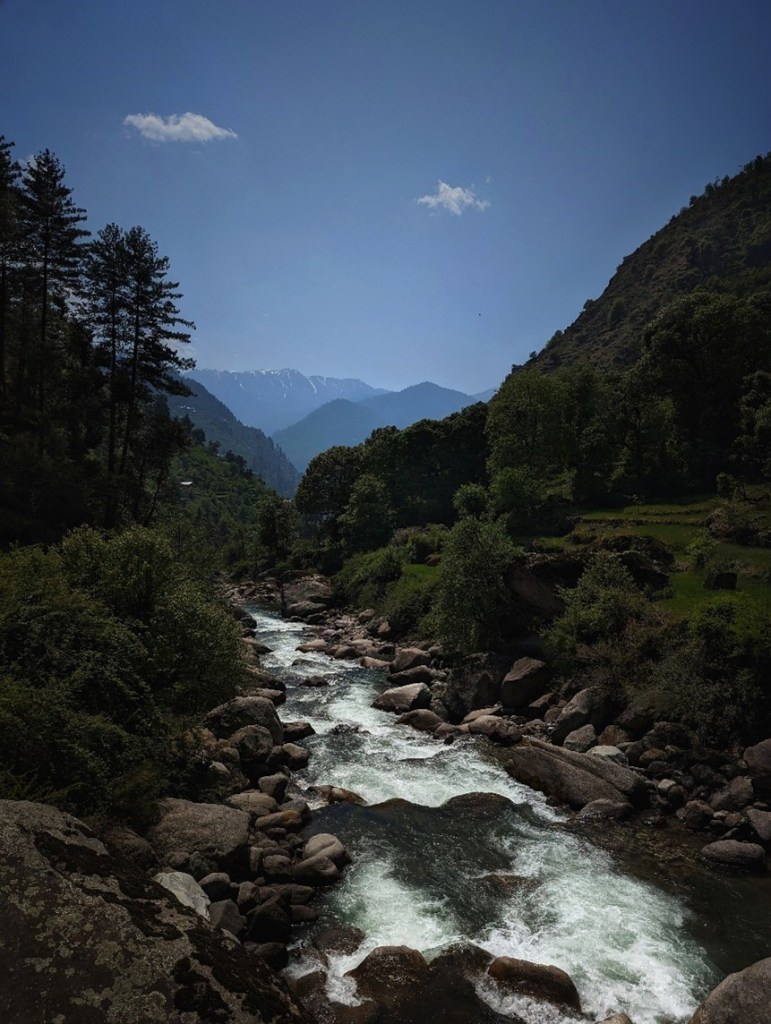
In Himachal Pradesh, the free, “breaker of chains” Vipash is now chained by 22 commissioned hydropower projects, 5 projects under construction and more than 20 projects planned.[3] The basin is riddled with disasters due to crowded hydropower projects.[4] Climate change has made rainfall and snowfall patterns erratic.[5] And despite this, there exist hidden tributaries, streams and springs which flow free and bring together communities with stories, lores and festivals. Almost every stream in this region is worshiped. Every groundwater source and spring is consecrated with offerings like walnuts, apples, harvest of rice and bunches of wildflowers. The basin holds a sacred lake dedicated to the rain god: Kamru Nag. In November 2024, hundreds of villagers flocked to this lake to pray for more winter rains.
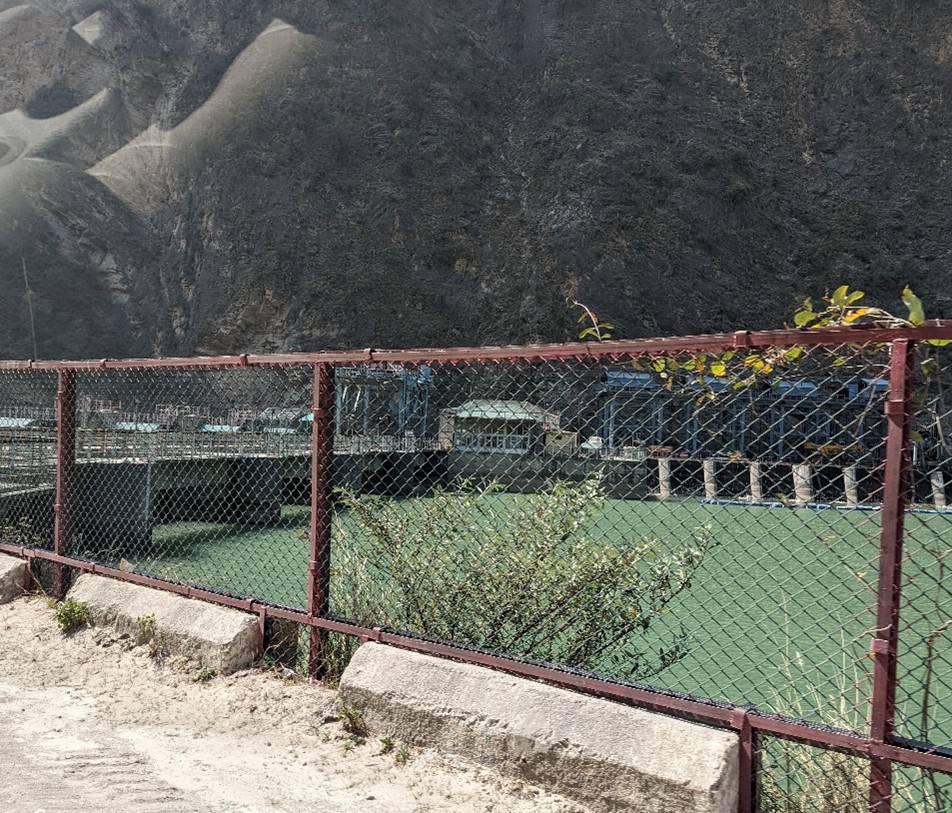
A unique characteristic of the region is its cultural and religious syncretism. Comings and goings of rulers, tribes and religions for thousands of years has resulted in a diverse and immensely rich culture. As ecologically important sites are held sacred in many of these traditions, they emerge as the altar where cultural practices come together.
Rewalsar Lake
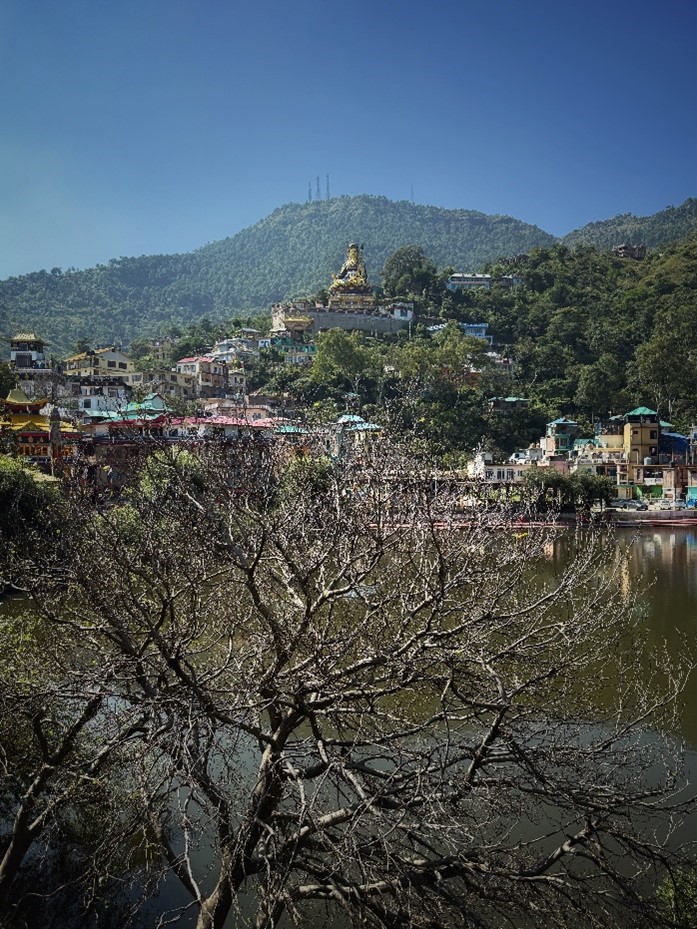
The gem of this region is a tiny lake and wetland complex draining into Beas, with an area of barely 2.6 hectares[6]. Rewalsar Lake, located at an elevation of 1360 meters, about 24 kms from Mandi, has a shoreline of less than one kilometer. And yet, this emerald lake has been held sacred by three major religions of Asia. It is also designated as a “Wetland of National Importance” by the Government of India. It holds several fish species and unadulterated native brood stocks of carps, which have been used for stocking fish farms hundreds of kilometers away. Today, although cultural syncretism flourishes, the ecology of the lake is in peril. On the occasion of World Wetlands day, this is the story of Rewalsar, a natural lake in Beas Basin, bringing three religions together.
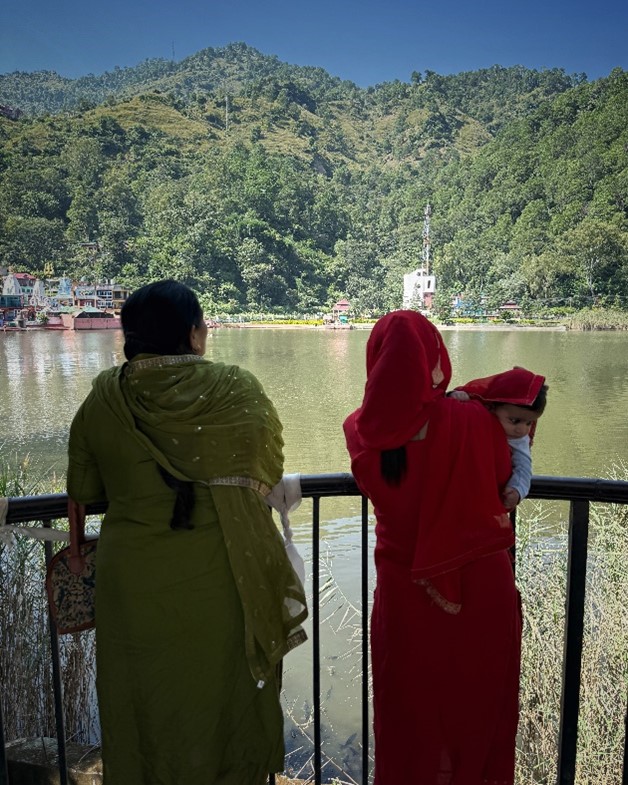
Tso Pema: Where Padmasambhava floated on a Lotus
In Tibetan Buddhism, Rewalsar is known as Tso Pema or the Lotus Lake. According to Indo Tibetan Buddhist scholars[7], various texts tell the story of Mandarava, beautiful princess of Jahor, who was a Yogini with immense knowledge and self-restrain. Refusing suitors across the land, she lived the life of an ascetic nun until Guru Rinpoche or Padmasambhava came to Jahor. Padmasambhava[8] is revered as the second Buddha by Tibetan Buddhists world over.
When the King of Jahor, Princess Mandarava’s father, came to know of the union, he was enraged and ordered Padmasambhava to be burnt at stake. The pyre burned for two weeks and in the end, the flames gave way to a serene lake. In the middle of the lake was Guru Rinpoche, Padmasambhava sitting in a lotus.[9] In some stories, Padmasambhava manifested as a series of floating islands in the lake. The reed, Phragmites still grows in profusion along the borders of Rewalsar Lake.
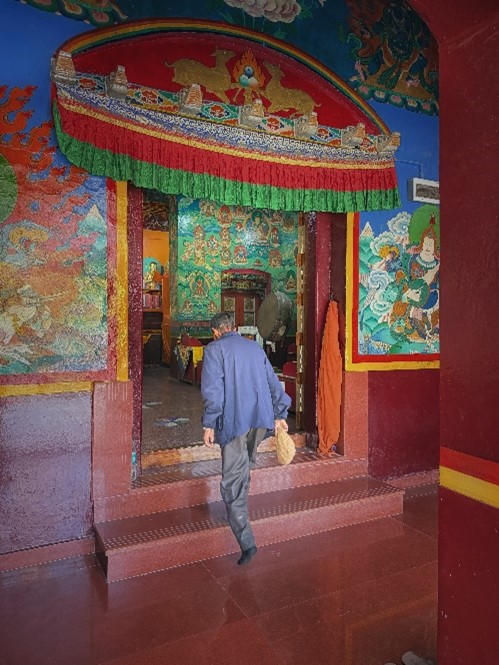
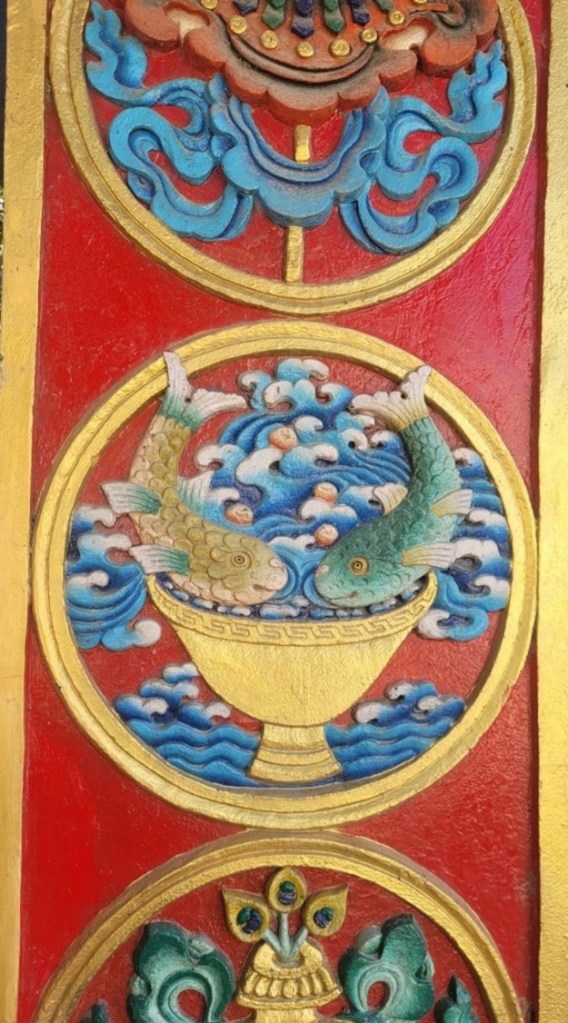
Tso Pema is an important site for practitioners of Vajrayana Buddhism and on its banks stand four colorful monasteries including Tso Pema Orgyen Heruka Nyingmapa Gompa[10], Drikung Kagyu monastery and Zangdok Palri Palace Monastery. A colossal statue of Padmasambhava erected on the hill looks down upon the lake. Prayer flags sway in the wind as the lamas circumambulate Rewalsar nonchalantly. The largest monastery[11] is adorned with ashtamangala (eight auspicious symbols) symbols of Buddhism, and the symbol of two entwined fish shines in the sun.
On the banks of Beas in Mandi stands a slate-roofed temple of “Mata Kuan Rani” “Goddess of the Well” where Princess Mandarava was imprisoned by her father. In a tradition unique to this land, the sanctum of this shrine has a Buddhist statue of Mandarva as well as Hindu idols of Mata Kuan Rani. Buddhist butter lamps glow akin Hindu mud lamps and devotees from both religions come together on the banks of the Beas.
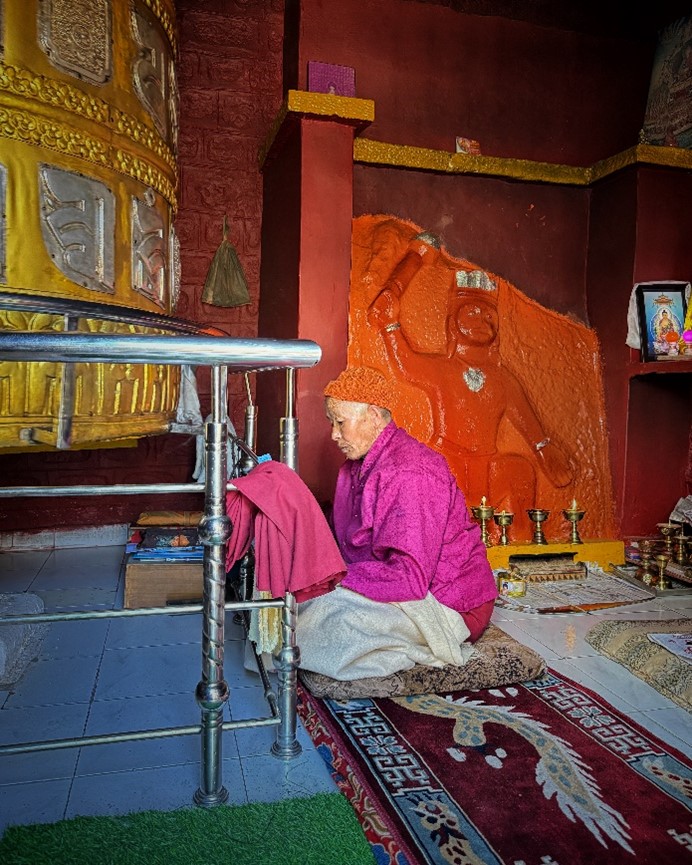
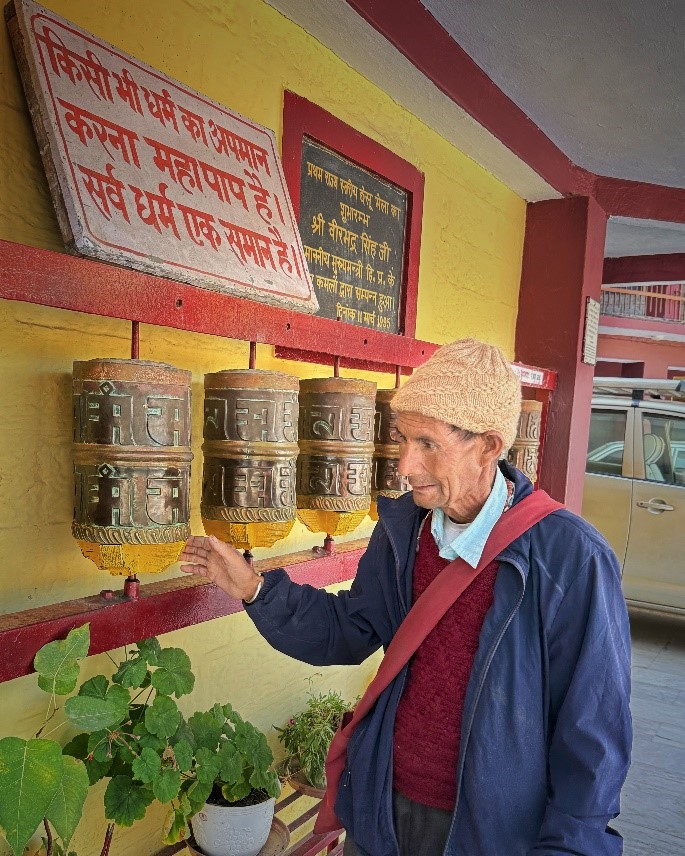
As we entered the Rewalsar Monastery on the banks of the lake, an old Lama was stoically pushing a large prayer wheel inside a dimly lit cave. Walls of the cave glowed saffron and next to the Prayer Wheel stood a statue of a the Hindu deity Hanuman: a petroglyph (a rock carving that’s created by chipping away at the surface of a rock to expose the lighter rock underneath) raising from the floor to the ceiling. A hymn to the god, Hanuman Chalisa was kept next to the statue. Buddhist Prayer Wheel and the Hindu god were worshiped by the same Lama!
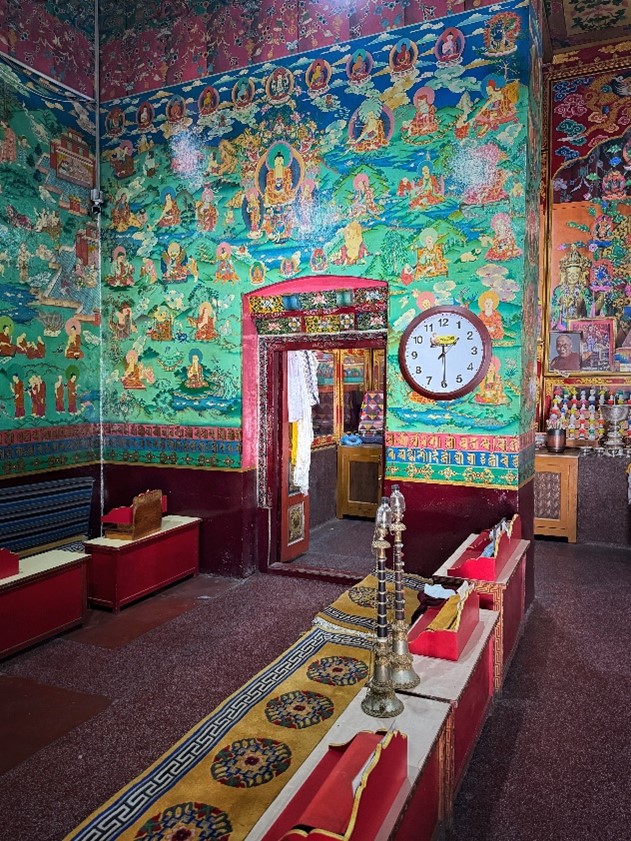
Temples with bathing ghats and a temple for water
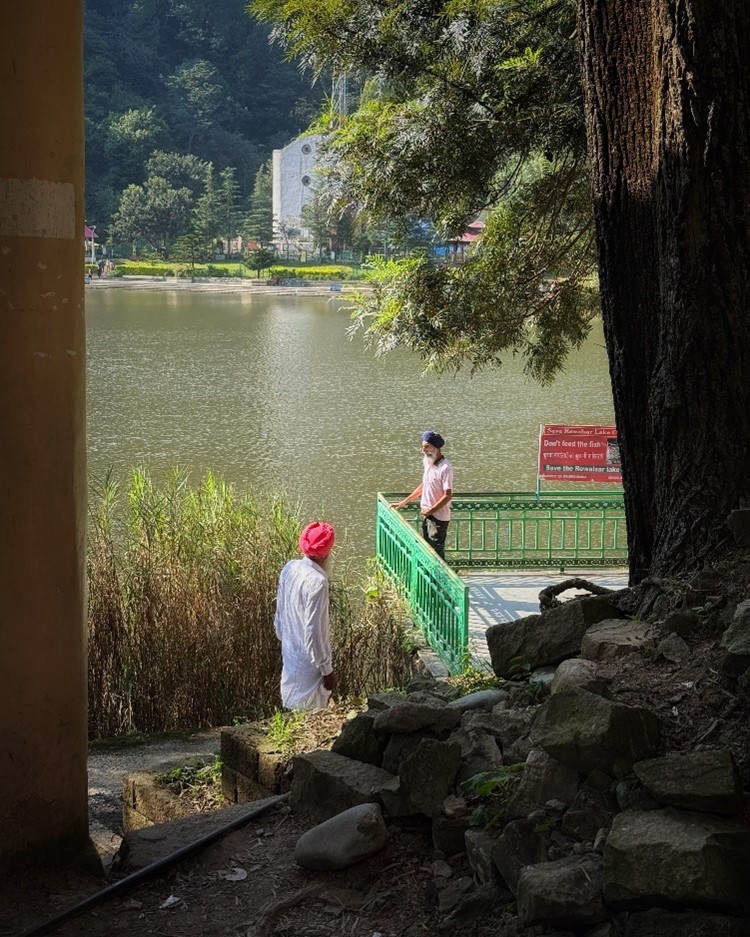
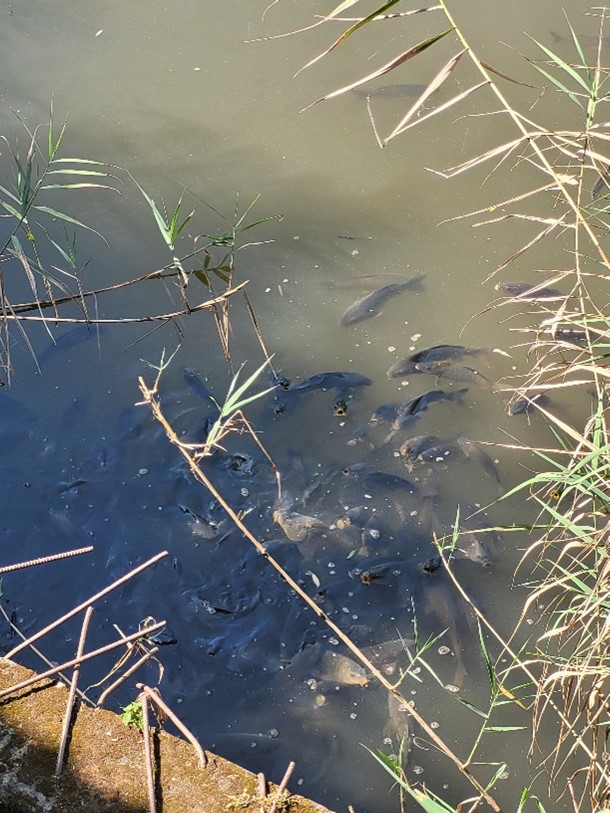
The Monastery shared its boundary with a colorful temple of Hindu Rishi Lomash. There are several temples in the vicinity of Rishi Lomash Temple: An ancient Shiva Temple, a Laxmi Narayan Temple and a Krishna Temple, all facing the lake. Lake banks have bathing ghats, where the fish swim up without any sign of fear. As we looked at emerald light reflecting in a partially-enclosed bathing chamber, a lady slipped into freezing waters amidst the fish for a holy dip.
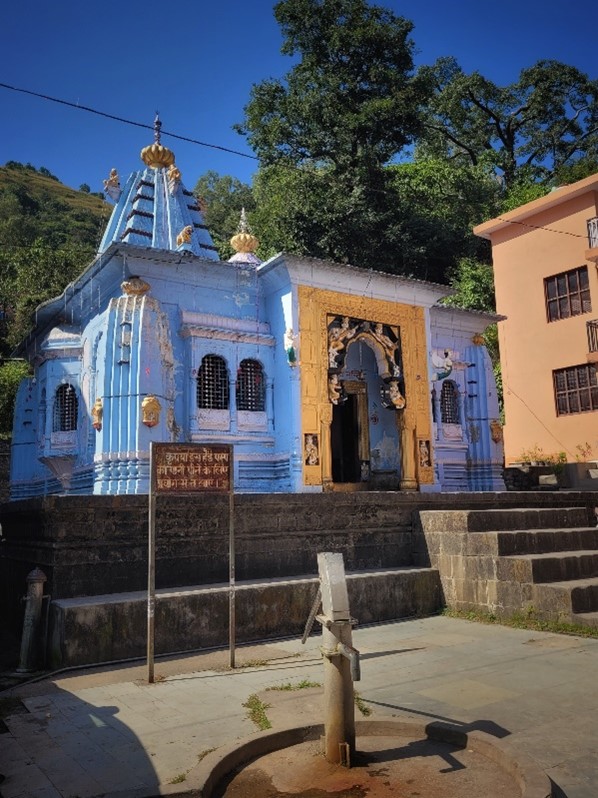
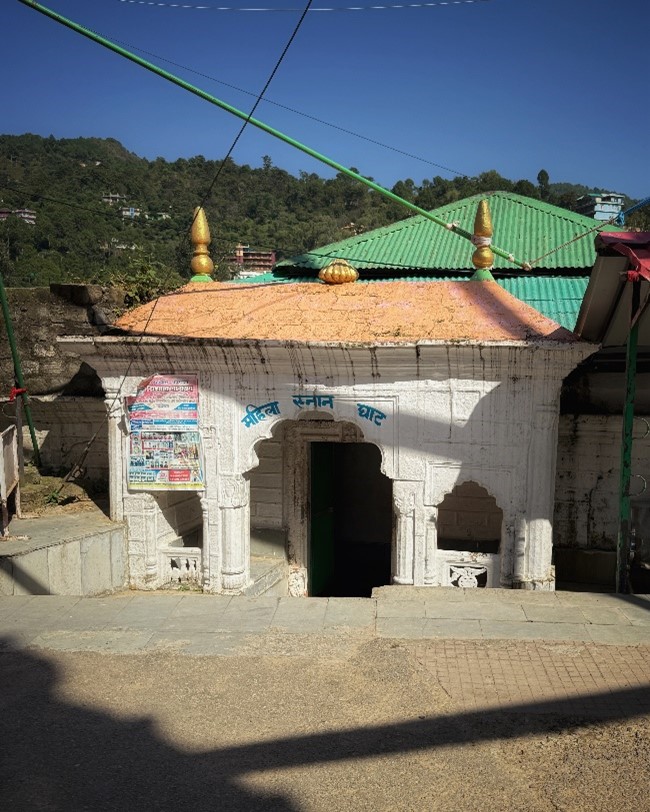
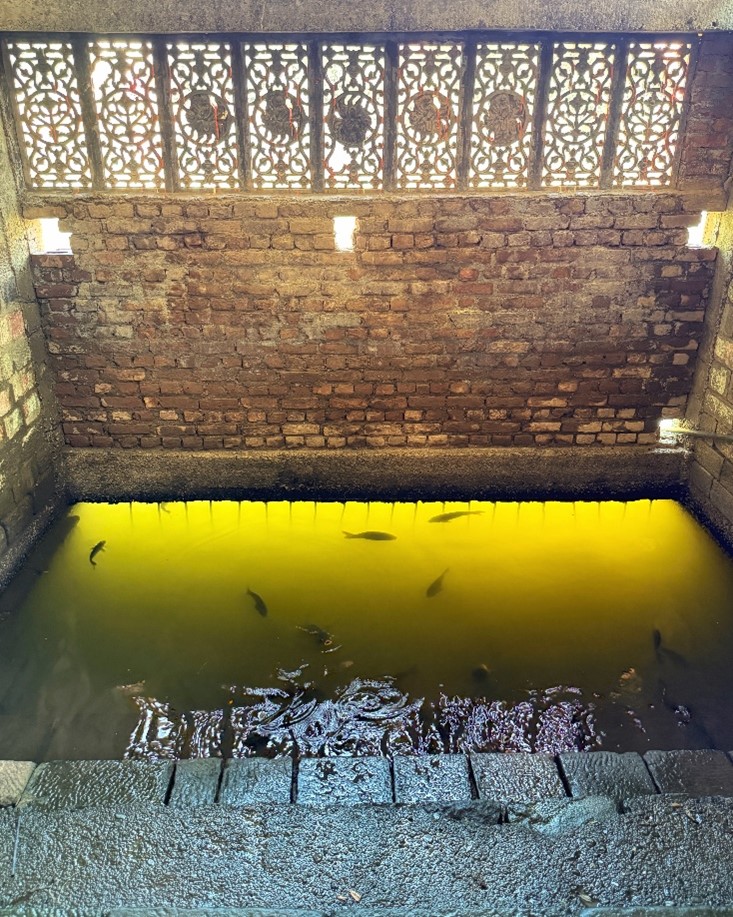
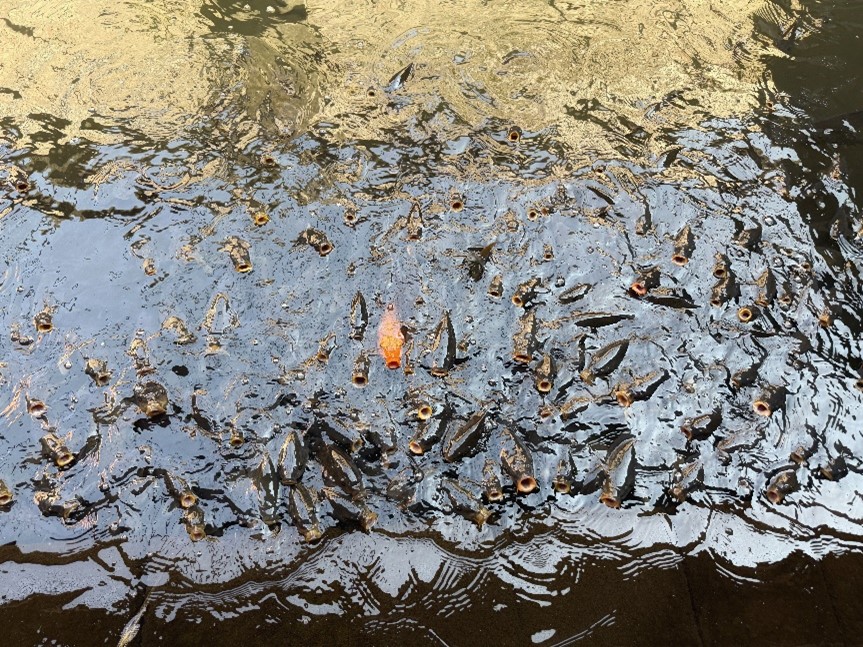
Next to the Ghats was a Bawdi: A small groundwater source trickling into the lake, protected by a stone structure. It looked like a temple of water itself.

Gurudwara Rewalsar Sahib
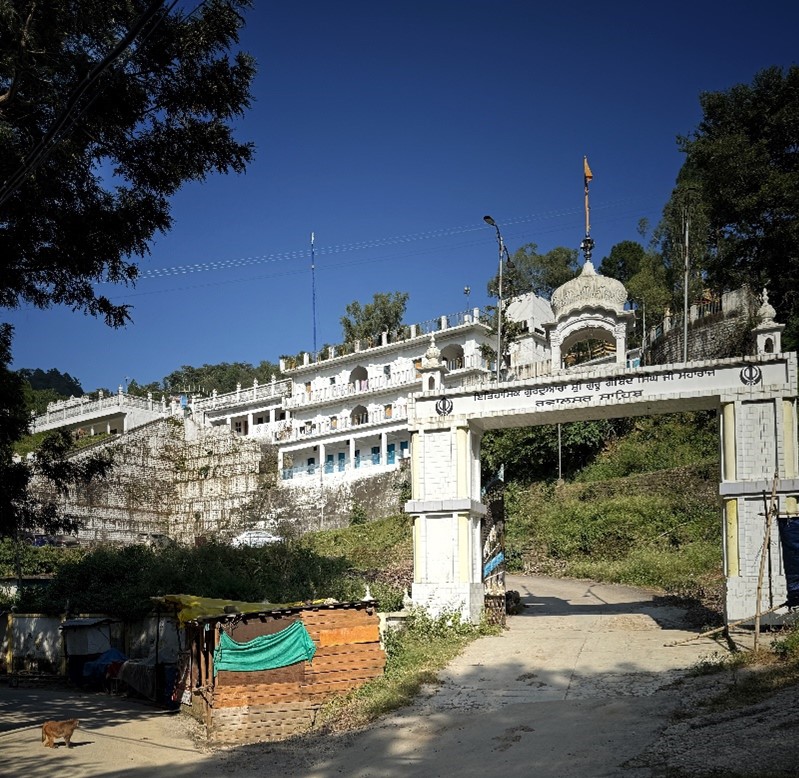
As if a Monastery and Temple sharing boundaries were not enough, across the lake stood a stately white Gurudwara: Gurdwara Rawalsar Sahib: place of worship of the Sikhs. It is said that Guru Gobind Singh visited Rewalsar lake in the seventeenth century to meet Raja Siddh Sen of Mandi. The lake is especially sacred to the Sikhs as a sanctuary, thus mentioned in Sau sakhi,[12] an anthology of one hundred stories of Sikhism. It is recorded that folk singers and poets used to recite Guru Sahib’s revolutionary challenge from the banks of Rewalsar. Several Sikh devotees line up on the banks for a holy dip and Baisakhi, a harvest festival, is a busy, festive time.
Connected Groundwater and surface water
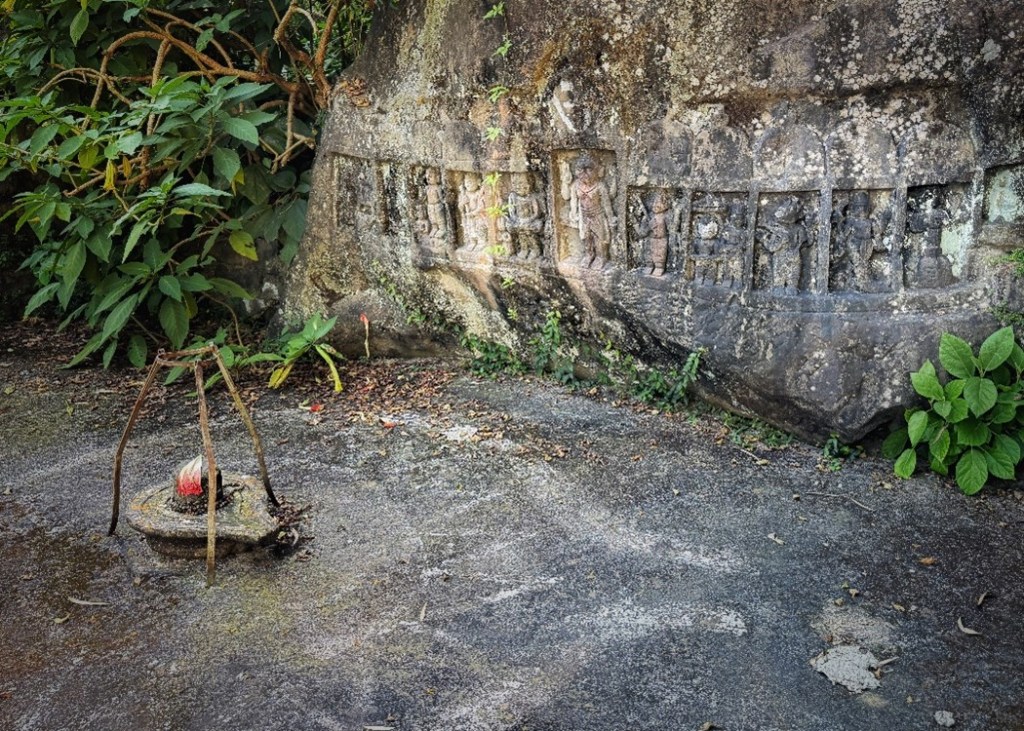
As we talked with the villagers about the lake, we were told to look at the “bawdi” or sacred groundwater source, some distance up the hill. The location was “under the huge cottonwood tree, you will not miss it.” After a steep hike, a group of teenagers showed us the bawdi, which was, in keeping with the times, under lock and key. But above the bawdi, on the face of the cliff were the most beautiful carvings of deities. Perhaps it was the hindu deity Vishnu. The Bawdi was brimming with crystal waters, used strictly for drinking and religious purposes. The place is kept impeccably clean.
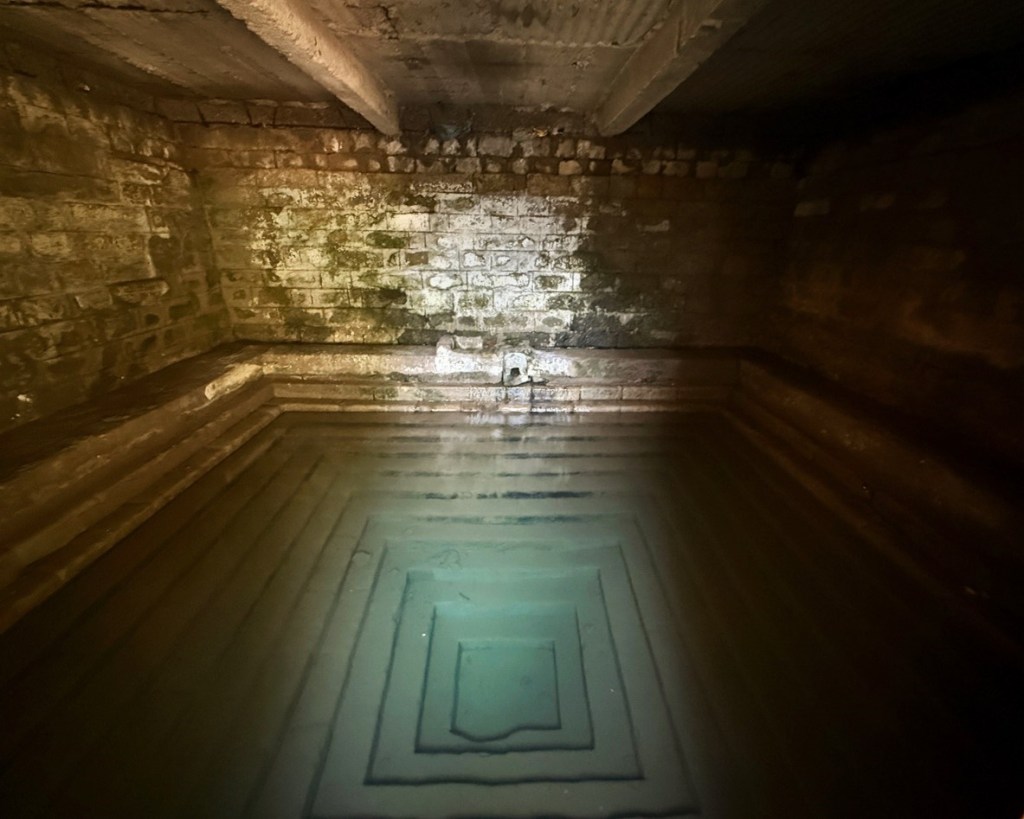
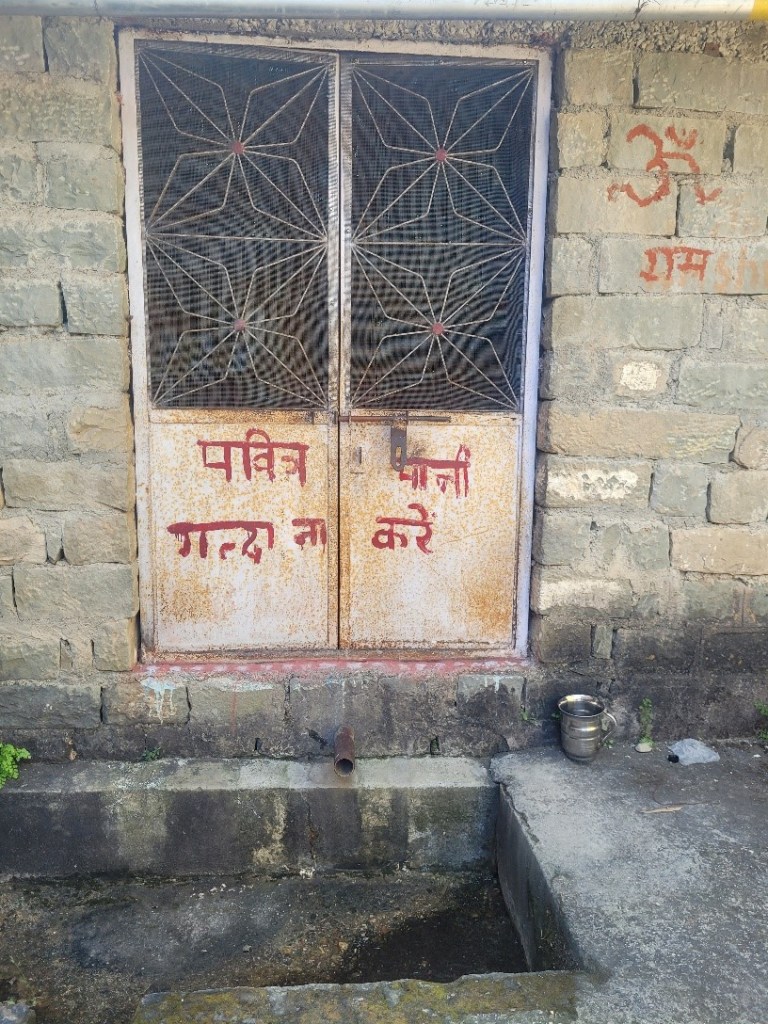
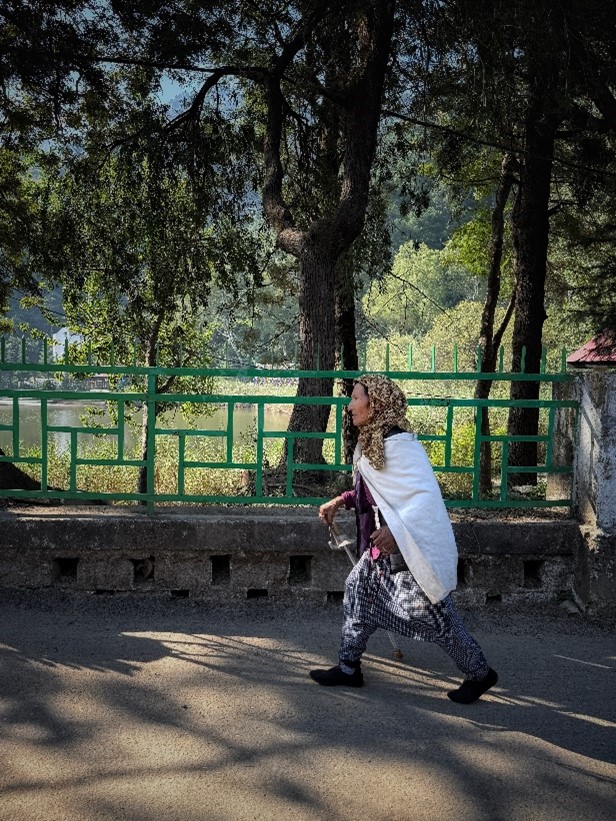
Throughout Rewalsar, we witnessed people brought together by water: from varied lands, from varied religions. We met women statue-makers from Nepal, jewelers from Tibet, cutlers from nearby villages, women tailors selling prayer flags. We saw pujaris joking together with lamas and Namdhari Sikhs circumambulating the lake next to women selling their wares. As a Buddhist studies scholar writes, “The lake (Rewalsar)constitutes the ritual (as well as historical and mythological) center of the village: all day, pilgrims, tourists, and local people can be seen doing ‘kora’ – circumambulations around the lake.”[13]

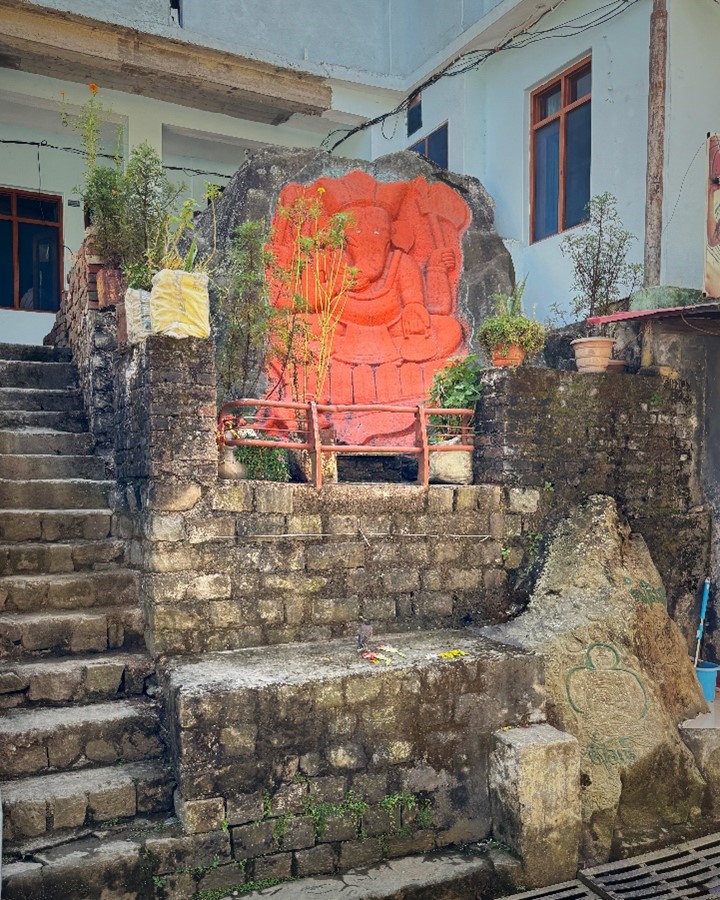
In many senses, Rewalsar Lake is an embodiment of the Indus basin: Water has brought tribes, communities and religions together and continues to unite them along with their diversity and differences of dress, prayer and song.
Current situation
Waters from Rewalsar Lake irrigate fields downstream, while the sacred waters are also used for drinking. The lake is threatened today by erratic weather patterns and increasing pollution. It has been included in the Himachal Pradesh’s list of State Designated Wetlands as per the State Wetland Policy and is also designated as a Wetland of National Importance.[14]
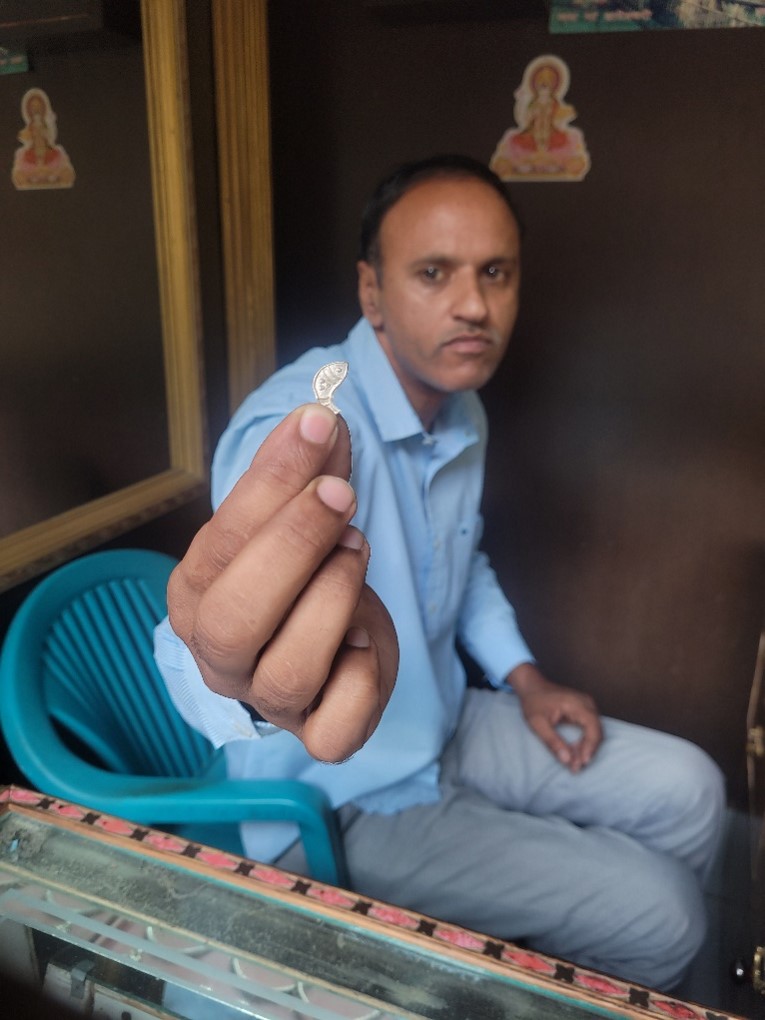
In 2017, the National River Conservation Directorate sanctioned Rs. 5.3 million for setting up a sewage treatment plant of a capacity of 0.35 Million Liters per day (MLD) and sewerage lines for Rewalsar town.[15] However, hotel owner and President of the Development Action Group, Ajay Kumar Sharma told us that the STP is not functioning, neither are the sewerage lines fully laid. He talked about the frustration locals feel witnessing the excruciatingly slow pace of work on the STP. In the absence of a functioning STP, all the sewage eventually ends up in waterbodies including Rewalsar Lake.
During its meeting in August 2023, Divisional Forest Officer (DFO) reported to the Himachal Pradesh Wetlands Authority that work on the Sewage Treatment Plant has been “successfully undertaken by the Jal Shakti Vibhag” and that the fish feeding has stopped.[16] However, during our visit, devotees were feeding the fish and the locals showed us numerous letters written to the authorities about the non-functioning STP.
In 2017 April, 45 tonnes of fish had died in the lake due to low water levels, low dissolved oxygen and increased siltation. Experts claim that siltation in Rewalsar is higher than its counterparts in Himachal Pradesh.[17] Fish kills are a recurring phenomenon due to the combined effect of heat, pollution and increased siltation. [18]The lake supports over 45 species of fish[19] which they are considered sacred and not hunted.

Rewalsar Lake and wetlands hold immense importance to devotees across the world. With a few simple steps like a well-planned and functioning STP and local participation in the upkeep of the lake, Rewalsar can shine brightly as an ecological hotspot that brings communities together.
Across and within the borders, Rivers and lakes of the Indus basin have been associated with conflicts, disasters, dam protests and discord. But if one looks closely, the predominant character of these rivers and waterbodies is bringing humans and non-humans together, not apart. The emerald lake of Rewalsar with its sacred fish and diverse deities stands testimony to this.
Text: Parineeta Dandekar (parineeta.dandekar@gmail.com), Photos: Abhay Kanvinde
NOTE: We would like to acknowledge Mershon Center, Ohio State University for their support, enabling travel and research for this piece.
[1] https://archive.org/details/the-rigveda-the-earliest-poetry-of-india-all-3-volume-sets
[2] https://www.researchgate.net/figure/Study-area-of-Beas-river-basin_fig1_333372617
[3] https://nieindia.org/Journal/index.php/ijees/article/viewFile/2116/576
[4] https://sandrp.in/2023/08/09/himachalis-blame-nhpc-dams-for-flood-disaster-in-sainj-valley-in-july-2023/, https://www.hindustantimes.com/chandigarh/students-drowned-in-just-two-minutes/story-KOekwcV9qIpKoKIEP7MV3O.html
[5] http://dest.hp.gov.in/sites/default/files/PDF/Climate_Change_Vulnerability_Kullu_HP.pdf
[6] https://hppcb.nic.in/NGT/APOANO325.pdf
[7] https://treasuryoflives.org/biographies/view/Mandarava/9, Samten Lingpa The Lives and Liberation of Princess Mandarava, 17th Century
[8] https://treasuryoflives.org/biographies/view/Padmasambhava/P4956
[9] https://www.jstor.org/stable/43305793
[10] https://treasuryoflives.org/institution/Tso-Pema-Orgyen-Heruka-Nyingmapa-Gompa
[11] https://www.hathajoga.lt/the-lotus-born-the-life-story-of-padmasambhava-yeshe-tsogyal.pdf
[12] https://www.sikhiwiki.org/index.php/Gurdwara_Rawalsar_Sahib
[13] https://buddhiststudies.utoronto.ca/2019/01/14/pilgrimage-circumabulation-sacred-buddhist-geography-himalayas/#_edn3
[14] https://himcoste.hp.gov.in/Wetland%20Authority/Wetland_pdf World%20Wetland%20day%202018%20report.pdf
[15] https://himcoste.hp.gov.in/Wetland%20Authority/Wetland_pdf/Rewalsar%20sanction.pdf
[16] https://indianwetlands.in/wp-content/uploads/2023/09/Proceedings%20of%20the%201st%20meeting%20of%20HPSWA.pdf
[17] https://timesofindia.indiatimes.com/city/shimla/sacred-rewalsar-pollution-threat-to-aquatic-life-lakes-existence/articleshow/100541733.cms
[18] https://www.divyahimachal.com/2022/09/rewalsar-lake-going-through-bad-phase-of-history/

 SANDRP