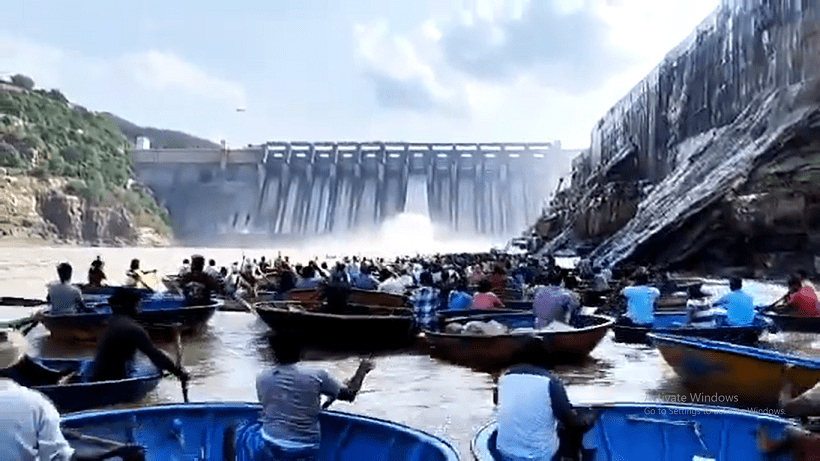
(Fature Image: Telangana fishermen fishing downstream Srisailam project after closing of dam gates in Aug 2024. Source: Social Media)
On the occasion of World Fisheries Day 2024 which is celebrated on November 21 annually, we compile top ten positive developments during the last one year on the issues of fish, fisheries and fisherfolks from India.
1 A new roadmap A national platform of fishers met to assert the inalienable right of fishers and fishworkers to access water bodies, campaign for climate justice, and become a federation of unions through a new constitution. The national council meeting of the National Platform for Small-Scale Fish Workers (NPSSFW) was held in Kolkata on Nov 6-7, 2023. The main objectives were to discuss the challenges faced by small-scale fishworkers & strengthen the organization’s efforts to address them. Another objective was to adopt the constitution of NPSSFW so as to provide a clear definition of small-scale fishworkers and indicate how the organization should operate at the state and national levels, with defined objectives and mechanisms. https://www.icsf.net/samudra/a-new-road-map/ (Dec. 2023)
Freshwater Blues At every step of the governance of the inland fisheries, small-scale fishers and fish farmers must be consulted since their engagement in inland fisheries is directly linked to the health of the freshwater biodiversity. Extension of rights to water bodies and inclusion of unions & organizations of small-scale fishers in planning and management of fisheries resources can be a step forward. It will help build up the adaptive capacities of small-scale fishers, also facilitating conservation & rejuvenation of aquatic and fish resources in freshwater ecosystems. Further, the relevant state departments and governing bodies must monitor that all small-scale fishers engaged in inland fisheries are identified and registered in the national statistics. That will pave the way to cover them under a comprehensive social security framework, ensuring the delivery to fishers of the benefits accruing from state and central fisheries policies and schemes. https://www.icsf.net/samudra/freshwater-blues/ (Dec 2023)
FAO A review of India’s inland fisheries in 2024 India has abundant water resources including rivers, canals, ponds, lakes, reservoirs, upland lakes, and floodplain wetlands covering over 5.8 % of the country. These environments harbour a rich fish fauna of 1 035 species that constitutes the basis for the inland fisheries sector, which annually produces 2 144 452 tonnes of fish – if enhanced and culture-based fisheries are included – corresponding to 21% of total fish production. https://www.icsf.net/resources/a-review-of-the-inland-fisheries-of-india-by-fao-2024/ (04 Oct. 2024)
WFFP 8th general assembly officially begins The 8th General Assembly of the World Forum of Fisher Peoples (WFFP) commenced on Nov 14, 2024, in Brazil, marking the beginning of a week-long gathering that unites members from across the globe to discuss and address critical issues facing ocean, water, and fisher peoples. This year’s assembly, running through Nov 21, includes a diverse range of activities and sessions designed to foster solidarity, exchange knowledge, and develop collective solutions to challenges such as ocean grabbing, the climate crisis, and food sovereignty. https://wffp-web.org/the-8th-general-assembly-of-the-world-forum-of-fishers-peoples-wffp-officially-begins/ (15 Nov 2024)
2 Maharashtra EAC asks Adani to apply afresh for Warasgaon Warangi PSP In a respite to forest dwelling communities of Western Ghats, fragile biodiversity and community conservation areas, the Expert Appraisal Committee (EAC) for River Valley Projects of the Union MoEF&CC in its Sept 27 meeting Rejected Adani’s application and asked to apply afresh for the 1500 Mw Warsagaon Warangi Pump Storage Project. https://sandrp.in/2024/10/03/moefs-committee-defers-stage-i-clearance-to-adanis-warasgaon-warangi-project/ (03 Oct. 2024)
Adani PSP Dams: Defiling sacred pools & fish sanctuaries Multiple dams, mushrooming resorts, creaking cities like Lonavala and townships like Lavasa have pushed Western Ghats Forests to a corner here.
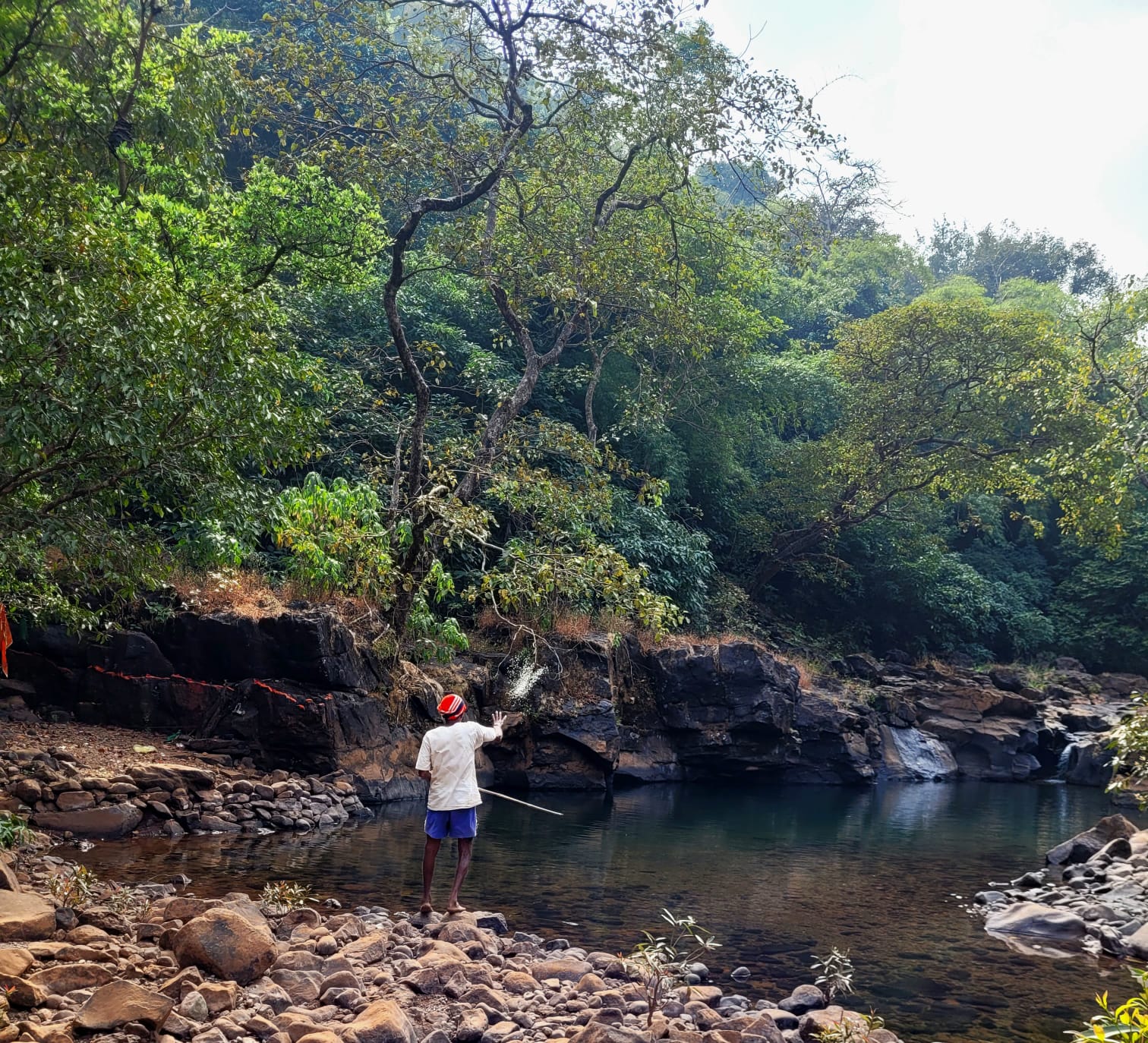
And yet, the region is speckled with community conservation spaces like sacred groves, temple forests, sacred river origins and that spectacular gem of culture and conservation: community fish sanctuaries. https://sandrp.in/2024/09/25/adani-energy-dams-defiling-sacred-pools-and-fish-sanctuaries-in-western-ghats/ (25 Sept. 2024)
EAC to visit all W Ghats PSP sites before clearance In another welcome decision, the EAC has decided to visit sites of all the PSPs that have applied for environment clearance before giving any further clearances. We hope that the site visits will expose the perilous siting of over 15 pumped storage projects in the Western Ghats. https://sandrp.in/2024/10/03/moefs-committee-defers-stage-i-clearance-to-adanis-warasgaon-warangi-project/ (Oct 3, 2024)
Appreciating the move, Parineeta Dandekar of SANDRP said, the EAC not just “rejected” the application but “decided to visit sites all the PSPs that have applied for environment clearance before giving any further clearances”, hoping, “The site visits will expose the perilous siting of over 15 pumped storage projects in the Western Ghats.”
In a detailed analysis on Sept. 24 on SANDRP’s website, Dandekar had pointed to how the upper dam of 1500 MW Warasgaon Warangi Project “was set to destroy a sacred fish pool and sacred grove of Goddess Varadayini in the village Tekpowale.” This followed an SANDRP submission to the EAC outlining the impacts of this project on the “ecologically sensitive area” and the “wider cumulative impact” of the multiple PSP schemes in the Western Ghats.
The submission was signed by more than 200 individuals and organizations, including Parineeta Dandekar and Himanshu Thakkar of SANDRP; Suniti SR and colleagues of the NAPM, Shailaja Deshpande and colleagues of the Jeevit Nadi; Priyadarshini Karve of the Indian Network on Ethics and Climate Change; Jaideep Baphana of Pune River Revival (a group with over 1000 members in Pune); and Shripad Dharmadhikary of the Manthan Adhyayan Kendra, Pune. https://www.counterview.net/2024/10/modi-govt-distancing-from-adanis-moefcc.html (04 Oct. 2024)
3 Madhya Pradesh Narmada Valley fishermen community unite In Barwani, fishermen affected by the Sardar Sarovar Dam demanded full rights over Narmada Valley water bodies. At a conference at Arjun Karaj Bhavan on Nov 9, fishermen demanded legal rehabilitation & full fishing rights like in Maharashtra. Medha Patkar stressed the need to organise fishermen & fight against unconstitutional processes so that they can play a role in water body management & development. https://www.deshgaon.com/voices/narmada-fishermen-demand-their-rights/ (10 Nov 2024) https://www.bhaskar.com/local/mp/barwani/news/fisherman-association-conference-in-barwani-133932762.html (09 Nov. 2024)
4 Demand to include River protection measures in election manifestoes Some key components of the demand include strengthening of decentralized river governance, role in decision making related to rivers for the fisherfolks, boats people and other river dependent communities. A draft of the People’s River Protection Bill has also been sent to the political parties. The NAPM also opposed indiscriminate construction of dams, hydro projects, embankments, barrages, river front developments, illegal sand mining, dumping of solid and liquid waste in the rivers and also interlinking of projects, all being done in the name of development, with least concern for the rivers. https://sandrp.in/2024/04/08/drp-nb-080424-demand-to-include-river-protection-measures-in-election-manifestoes/ (8 Apr 2024) The proposed River Protection Bill called for an urgent need to address unjust encroachments (especially dams & embankments) and impact on rivers, emphasizing the importance of aligning with existing laws and constitutional values. It stresses on defining rivers by their water flow to protect riverine ecosystems and ensure distributive justice in resource allocation/ sharing. The draft bill emphasizes continuous and unpolluted flow of rivers as a priority, with measures to prevent drying even in non-monsoon months. It calls for afforestation & protection of forest cover in river catchments, by stopping illegal sand mining, strict control of pollution from urban areas, industries & agriculture. https://timesofindia.indiatimes.com/city/kochi/demand-to-include-river-protection-in-poll-manifesto/articleshow/109098380.cms (7 Apr 2024) https://www.downtoearth.org.in/hindistory/river/dam/demand-to-recognize-rivers-as-living-entities-across-the-country-draft-sent-to-all-political-parties-95426 (06 April 2024)
5 Western Ghats A new genus of freshwater fish discovered A team of researchers have discovered Koima, a new genus of freshwater fish endemic to the Western Ghats encompassing two known species that were previously assigned under the genus Nemacheilus. While its discovery highlights the importance of Western Ghats as a biodiversity hotspot and a centre of endemism, it also underscores the need for a comprehensive taxonomic revision of many freshwater fish groups including nemacheilid loaches. The new genus was described by V.K. Anoop & Rajeev Raghavan, of Kerala University of Fisheries and Ocean studies, and Neelesh Dahanukar, of Shiv Nadar Institution of Eminence, Delhi.
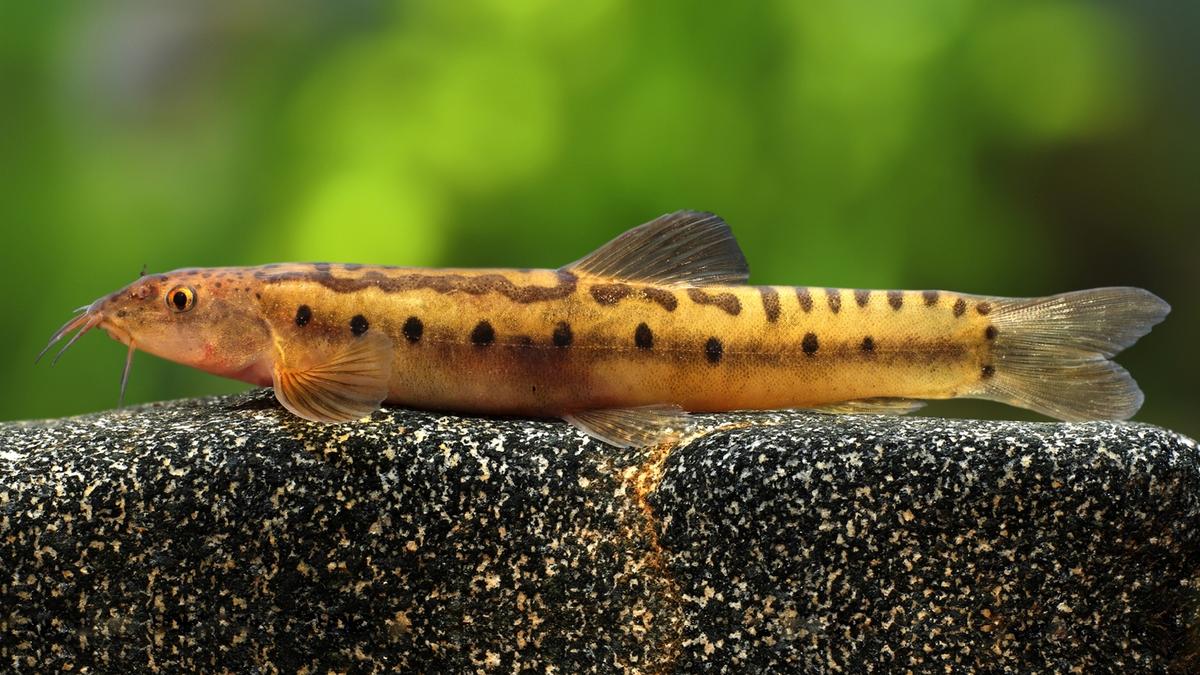
The study employed an integrative approach to re-evaluate the taxonomic status of two enigmatic nemacheilid loaches of South Western Ghats: Mesonoemacheilus remadevii & Nemacheilus monilis. The research showed that both species were misclassified until now & require placement in a new genus. Koima, the new genus is distinguished from other Western Ghats & Indian subcontinent nemacheilids based on a combination of characters. Specimens for this study were collected from the Kunthi, Bhavani, Moyar, Kabini & Pambar rivers.
Currently, Koima remadevii is only known from its type locality in the Kunthi river inside Silent Valley National Park. Meanwhile, Koima monilis inhabits various tributaries of the Cauvery river, occupying microhabitats ranging from large rivers to small, fast-flowing streams at elevations between 350 and 800 m. The generic name, Koima is derived from Malayalam and is the vernacular word used for loaches. https://www.thehindu.com/news/national/kerala/a-new-genus-of-freshwater-fish-discovered-in-western-ghats/article68872417.ece (15 Nov 2024) The finding is especially significant as the addition of a new genus in the nomenclature is comparably a rare event. Both species are endemic to the Western Ghats & found in the tributaries of the Cauvery river. Neelesh Dahanukar said the biodiversity of the Western Ghats is unique & remains largely unexplored, especially with regards to loaches. https://www.downtoearth.org.in/wildlife-biodiversity/cauvery-basin-new-genus-of-freshwater-fish-registered-from-western-ghats (18 Nov 2024)
6 Kerala HC constitutes expert panel to study fish kill, pollution of Periyar The court issued the order when a batch of writ petitions filed by activist K.S.R. Menon, Green Action Force, and others came up for hearing. The counsel for Green Action Force, A.X. Varghese, submitted that fish kill had occurred several times in the past. But the PCB had not taken steps to prevent them. He submitted that most industries located on the banks of the Periyar did not have proper effluent treatment plants. In fact, the river was the main source of drinking water for people in Kochi and its suburbs. The PCB had also not initiated any prosecution against companies that discharged untreated effluents into the river.
A continuous real-time monitoring of the water quality at the Pathalam regulator and its downstream areas where fish kill incidents are a regular phenomenon has been mooted. An analysis by the Kerala University of Fisheries and Ocean Studies had recommended a real-time monitoring and regular sampling system on the 3-km Eloor-Edayar stretch of the river. The allegations that industrial units were discharging wastewater through illegal channels and tunnels had to be inquired in a scientific manner, using equipment like ground penetrating radars. https://www.thehindu.com/news/cities/Kochi/kerala-high-court-constitutes-expert-panel-to-study-fish-kill-pollution-of-periyar/article68274081.ece (10 Jun 2024)
NGT takes suo motu cognizance of Periyar fish kill The Petition is registered suo-moto on the basis of the news item of 07.06.2024. This mass fish kill in the Periyar River is the ninth such incident in 2024. The incident has brought to light uncontrolled pollution of the river and the misery it heaps on the fish farmers who depend on this lifeline for sustenance. https://www.indialegallive.com/constitutional-law-news%20/ngt-periyar-river-fish-kill-notices-authorities-pollution-crisis (15 July 2024)
Real-time water quality sensors to monitor Periyar Ernakulam district administration has recommended a continuous real-time monitoring of the water quality in the 3-km Eloor-Edayar stretch of the Periyar river to check incidents such as mass fish kill and discolouration of the waterbody. The Kufos report has also suggested the need to maintain a minimum flow in the river during the lean period to prevent hypoxia (oxygen depletion) due to water stagnation. It has recommended periodical operation of regulators in order to maintain the minimum flow. This was part of the action plan for the rejuvenation of the river prepared as per the directives from the NGT. https://www.thehindu.com/news/national/kerala/real-time-water-quality-sensors-recommended-to-check-pollution-along-edayar-stretch-of-periyar-river-in-kerala/article68276893.ece (11 Jun 2024)
7 Tamil Nadu Ennore residents release ‘people’s plan’ to restore wetlands & livelihoods A couple of weeks after the State govt announced allocation of ₹40 crore for the restoration of Ennore Creek as part of the Tamil Nadu Coastal Restoration Mission, a ‘People’s Plan for Eco-restoration of Ennore Wetlands’, prepared by Coastal Resource Centre, a Chennai-based non-governmental organisation, with inputs from residents and fishers of the region, was released on Jan 27, 2024. At an event organised by Ennore People’s Protection Group, the first copy of the plan was received by retired Odisha High Court Chief Justice S. Muralidhar, Justice (retd) K. Kannan of Punjab & Haryana High Court, and Justice (retd) D. Hariparanthaman of Madras High Court. They will also head a people’s advisory committee to gather people’s suggestions to restore Ennore and convey them to the State government.
The retired judges said that the people’s plan could guide the govt in aligning its plans for the region with the aspirations of local communities. The plan draws from stories and anecdotes from local fishers, salt pan workers, and other Ennore residents about people’s way of life, their culture, rituals and beliefs, cuisine, and the Kosasthalaiyar river — all of which have been lost due to the takeover of the region by industries. https://www.thehindu.com/news/cities/chennai/ennore-residents-release-peoples-plan-to-restore-wetlands-and-livelihoods/article67783639.ece (27 Jan. 2024)
Public hearing panel recommends urgent govt action At a recent public hearing organised on Jan 1 at the Ennore Vyabarigal Sangam Thirumana Mandapam by the Ennore People’s Protection Committee – a campaign front bringing together representatives of all 32 villages/localities in the Ennore/Ernavur region – people living in these villages recounted how the extreme climate and hazardous environment have affected their families for decades, and the recent events have only added to their fear and trauma.
The public hearing panel headed by Justice (Retd) K. Kannan, Punjab & Haryana High Court has recommended that the govt should notify Ennore backwaters as a special wetland, as directed by the NGT’s July 2023 order. The panel, in its report also recommended that criminal cases be filed against Chennai Petroleum Corp Ltd and Coromandel International Ltd for “reckless negligence leading to harm to human health and the environment.”
The panel report observes that the residents lament the lack of government action and the adverse reaction to the peaceful protests by villagers to draw attention to their suffering, wherein 18 residents were booked under various criminal charges for highlighting their problems during protests. https://citizenmatters.in/public-hearing-panel-recommendations-ennore-industrial-disasters-oil-spill-gas-leak-40491 (5 Jan. 2024)
Govt announces schemes for Manali-Ennore area The govt on Jan 14 announced a slew of schemes to strengthen the safety, health, and livelihood of residents in the Manali-Ennore area. The govt will establish a Manali-Ennore Restoration and Rejuvenation Company, which will focus on identifying the gaps in infrastructure development in the region and work to solve them. A special fund will be created for undertaking various development activities, and the money will be provided through various schemes of the govt and CSR funds of companies. https://www.thehindu.com/news/national/tamil-nadu/tn-government-announces-schemes-to-improve-safety-health-and-livelihood-of-residents-in-manali-ennore-area/article67741618.ece (15 Jan. 2024)
Pallikaranai marsh & Ennore Creek to be restored The coastal restoration mission will be implemented with World Bank assistance at an estimated cost of Rs.2,000 crore in the next 5 years. A Special Purpose Vehicle, Tamil Nadu Blue Carbon Agency, will be set up to ensure focused attention on preservation and restoration of coastal ecosystems, including mangroves, corals, seagrass and salt marshes. The govt will spend Rs 275 crore for restoration of coastal wetlands, including Pallikaranai. Ennore Creek, home to about 100 species of fish, is another zone under threat due to pollution from heavily polluting industries.
Jayaram Venkatesan, of NGO Arappor Iyakkam said the govt should first restore about 1,000 acres of vacant land, which are classified into different categories for use by various institutions, into marshland. “This is the first step. The remaining land should be converted as marshland besides clearing encroachments areas where there is major blockage. Once there is a free movement of water, the chances of flooding will come down. The govt should also revoke conversion of marshlands into land for other uses granted after 2015 to ensure that the wetlands are protected,” Venkatesan said. https://www.deccanherald.com/india/tamil-nadu/chennais-pallikaranai-marsh-and-ennore-creek-to-be-restored-2853315 (17 Jan. 2024)
8 Film Matsyanyaya Hrutika Patole’s latest film ‘Matsyanyaya’ takes viewers on an uncomfortable journey of the widespread infrastructure development across India. The 15-minutes documentary gets its name from the Indian political philosophy of the ‘law of fish’ and shows us the negative consequences of rampant development and how it is affecting low-income groups. https://india.mongabay.com/2024/11/matsyanyaya-a-journey-through-indias-landscapes-swallowed-by-urbanisation/ (12 Nov. 2024)
9 Tamil Nadu IT professionals want invasive fish out of lakes The presence of invasive fish in Chennai’s Korattur Lake has now reached the environment court with the NGT taking suo motu cognizance of a media report that mentioned the survey findings by IT entrepreneur Kharthickeyen and Mahatvaraj. The survey highlights a silent problem being faced by freshwater fish species that are at risk of extinction. The court has asked the state government to take necessary action to remove the invasive species. Korattur is not an isolated case.
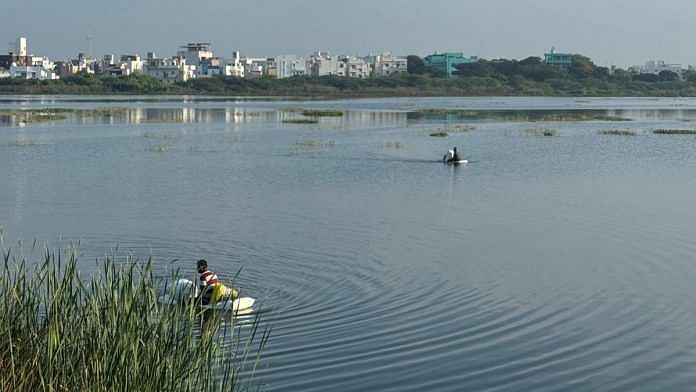
Mahatvaraj has been documenting and studying fish in the Western and Eastern ghats area, particularly in Tamil Nadu and Kerala. He undertakes such exercises both independently and in collaboration with different groups such as the CIFRI.
The challenge of identifying invasive fish in local ecosystem becomes difficult because even the fishers’ knowledge of the fauna is not authentic. “We are trying to contribute what we know to build a community knowledge,” said Kharthickeyen. The study was aimed at empowering the local fishermen community as their lives are directly dependent on it.
Scientists say that only Rajasthan and Kerala had done this till now in India, but there too they didn’t continue to do it after the first time. Rajasthan introduced a 10-year project to remove African catfish in 2016. In Kerala, the Periyar Tiger Reserve did the removal project independently. https://theprint.in/feature/chennai-it-professionals-want-invasive-fish-out-of-indias-lakes/2276790/ (21 Sept. 2024)
Meenkaran YT channel giving freshwater fish a starring role For 18 years, Beta Mahatvaraj has run the Facebook page and YouTube channel Meenkaran (Tamil for fisherman), where he documents some of the varied species of freshwater fish found in Tamil Nadu, Karnataka and Kerala. He now has 380 videos on his YouTube channel that feature more than 100 native species of fish, and he has accumulated 18,000 followers on Facebook. “When I started, there was no YouTube, and all the books that existed, especially on Indian fish, had artworks or descriptions in the text, but no colour photographs,” he says. “I want to now spread the knowledge I have gathered, because it is only if we know about something, that we will feel the need to conserve it. I believe that children should know as much about our endangered fish as they know about tigers and rhinoceroses.”
It worries him, for instance, that the Eastern and the Western Ghats are home to scores of endemic and critically endangered species, and little attention is paid to the risks they face. It upsets him that so few people know, or care, about the mysteries and threats moving through our waters. Take the elusive Etroplus canarensis, he says. Found only in Karnataka, it was first documented in 1877, then lost to science and thought extinct. It was rediscovered in 1992. It is one of three cichlid species endemic to India.
He dreams of coming upon the Channa amphibeus, first documented in 1845 in the Chel river in present-day W Bengal, but not seen there for about 100 years. Meanwhile, he plans to put together a multimedia awareness and outreach programme aimed at children. “They have a deep interest in the core issues of conservation, and I think if they are guided the right way, they can be instrumental in conserving our freshwater fish in the future,” Mahatvaraj says. https://www.hindustantimes.com/lifestyle/art-culture/catch-of-the-day-meet-the-man-giving-freshwater-fish-a-starring-role-on-youtube-101709991455056.html (11 March 2024)
10 Report State, Cities fast adopting fish as mascots The first ever official compendium of national and state fish — “State Fishes and Aquatic Animals of India 2024”, launched in Delhi on Sept 11, tells you that 22 of India’s 36 states and UTs now have officially designated state fish and the trend of fish as city mascots is catching up. Gujarat’s seven municipal corporations have adopted the Whale shark as their mascot and Guwahati city recently declared the Ganges River dolphin — national aquatic animal — as its mascot. The publication, piloted by the National Fisheries Development Board, to coincide with the fourth anniversary of the Centre’s “Pradhan Mantri Matsya Sampada Yojana”, documents aquatic organisms’ habitat, distribution, IUCN (International Union for Conservation of Nature Red List of Threatened Species) red list status and conservation trends. It traces the conservation history of the Ganges River Dolphin to the 3rd century BCE and cites its listing as a protected species in the Edicts of King Asoka. The compendium — a treat for marine researchers — also details the Ganges River dolphin’s unique behaviour tactics.
Himachal Pradesh, Uttarakhand, Jammu &Kashmir share the Himalayan mahseer as their state fish. Famous for its athleticism, the mahseer is better known as the “tiger of the rivers”. Haryana’s designated state fish is the Black rohu, a popular food and game fish and Punjab’s official aquatic animal is the Indus river dolphin, marked endangered on the IUCN red list. The two dolphins are separated by the number of teeth they have. https://pib.gov.in/PressReleasePage.aspx?PRID=2053756 (11 Sep 2024)
Maharashtra Govt declares silver pomfret as official state fish The state govt has on Dec 11 2023 officially declared the silver pomfret as the “state fish, signaling a commitment to its conservation and protection. The decision, announced by the minister for fisheries, Sudhir Mungantiwar, came in response to concerns raised by legislators Ramesh Patil (BJP) and Jayant Patil (PWP) regarding the declining numbers of silver pomfret in the region. The state issued a govt resolution (GR) designating the silver pomfret as the state fish and outlined measures to combat juvenile fishing. “This step will aid in preventing the fishing of undersized pomfret, contributing to the growth of mature pomfret,” he emphasised. https://www.hindustantimes.com/cities/mumbai-news/maharashtra-declares-silver-pomfret-as-official-state-fish-101702321009678.html (12 Dec. 2023)
More Positive Reports On Fish, Fisheries & Fisherfolks
West Bengal Dying Ichhamati turns into poll issue During its 288 km journey in W Bengal, Ichhamati river basin supports more than 30 lakh people. A part of National Waterway 44, Ichhamati also forms a 21km border with Bangladesh. The river courses through four Lok Sabha constituencies — Ranaghat, Bangaon, Basirhat, and Barasat (last two in North 24 Parganas). The sizable fishermen and farmers’ populace to boatmen as well as fish and vegetable vendors make a loud outcry on the river’s decline. A political campaign spearheaded by Nadia Nadi Sansad, a coalition of 14 diverse organisations, has been launched, pressing parties to take a decisive action. Nadia district, for instance, was once blessed with 33 tidal rivers but now has only 10 that are struggling for survival. The rest have just disappeared.
– Nadi Sansad members have taken matters into their own hands. They engage with candidates from all political parties to find out their plans and commitment to revive Ichhamati. A fixed ritual accompanies these encounters now — the offering of a garland followed by a barrage of questions from villagers demanding accountability on issues like Ichhamati’s restoration and the cleanup of Mathabhanga and Churni. Jyotirmoy Saraswati, a veteran Ichhamati crusader, laments the lack of understanding among many candidates regarding the river’s dire situation and its devastating impact on people. “Ichhamati had a wide variety of fish stock, known for their unmatched tastes. Now people in Duttapulia, one of the major trade centres on its bank, survive on fish from Andhra Pradesh,” said Nadia Nadi Sansad secretary Sabarna Saraswati, who led a 140km walk along the banks of the Ichhamati to save the dying river. Sabarna and local villagers cleaned up more than 12km of the river. “Farmers grow crops on 30,000 acres of floodplain of Ichhamati spreading across these four parliamentary constituencies. As many as 40,000 fishers are dependent on the river,” said Jyotirmoy.
– Amit Kumar Biswas, a schoolteacher and river activist from Bongaon, highlighted the ripple effects. “The drying of Ichhamati has impacted other water bodies like tanks and ponds, exacerbating water crises in summer. The numerous unlicensed brick kilns lining the riverbanks are causing extensive pollution.” Downstream, beyond Berigopalpur ghat in Basirhat, the river does not resemble its dying upstream. “But it is completely tidal saline water from the sea,” said Bishnupada Mridhha, who works with farmers and fishermen at Hingalganj in Basirhat parliamentary constituency.
– “There was an attempt to dredge from Tentulia to Kalanchi for 23.4km to achieve a navigable depth of 1.5 metres all along the river. A budget of Rs 3.77 crore was sanctioned. But only a little could be achieved. The state govt decided to prepare a master plan for the restoration of the river,” said an officer in the state water resources investigation and development department. https://timesofindia.indiatimes.com/city/kolkata/once-a-lifeline-for-30-lakh-dying-river-turns-into-poll-issue/articleshow/110547852.cms (30 May 2024)
Tamil Nadu Revise incomplete coastal zone maps, verify ESZ: NGT The Southern Bench of the NGT has directed the Tamil Nadu State Coastal Zone Management Authority (SCZMA) to rectify the incomplete draft Coastal Zone Management Plan (CZMP) maps, and carry out ground truthing of ecologically sensitive areas before holding a public hearing. Delivering the judgment on a case filed by a fisher, Jesu Rathinam, the Bench — comprising Justice Pushpa Sathyanarayana and expert member Satyagopal Korlapati — on Oct 17 instructed the SCZMA and the National Centre for Sustainable Coastal Management to verify the ecologically sensitive areas, as specified in the earlier orders of the Madras HC and the NGT.
The petition, filed by Ms. Rathinam in July 2023, highlighted the lack of essential components in the draft maps, including fishing zones, breeding and spawning grounds, communal properties of fishermen, and a comprehensive plan for the long-term housing needs of coastal fishing communities — all of which are legally required under the Coastal Regulation Zone Notification, 2019. Subsequently, the Bench stayed the public hearing scheduled for Aug 18, 2023. https://www.thehindu.com/news/national/tamil-nadu/revise-incomplete-coastal-zone-maps-verify-eco-sensitive-locations-says-ngt/article68766123.ece (18 Oct. 2024)
Star-rating for SEIAAs not operational yet -Through affidavit the MoEF has told the NGT’s Chennai bench, where the proposal has been challenged, that it is still in the process of upgrading and operationalizing the website that would facilitate this ranking of the State Environment Impact Assessment Authorities (SEIAAs), a source told The Indian Express. The Ministry had introduced the star-rating system in January 2022, but it was challenged in the NGT by Meenava Thanthai K R Selvaraj Kumar Meenavar Nala Sangam, a Tamil Nadu-based organisation working for the rights of fishermen.
-The petitioners argued that it was arbitrary and would result in a dilution of scrutiny during the environmental impact assessment (EIA) process. The petitioners also argued that the Ministry’s order was contrary to the EIA notification of 2006 which mandates detailed scrutiny of all the impact of all projects. The plea has now been listed for a final hearing on May 13. https://indianexpress.com/article/india/star-rating-for-state-environment-bodies-not-operational-yet-ministry-tells-ngt-9221587/ (19 March 2024)
Kerala Mitogenome of one of most enigmatic fish species decoded Scientists have decoded for the first time the mitochondrial genome of Lepidopygopsis typus, a unique freshwater fish species of the Western Ghats, known to occur only inside Periyar Tiger Reserve. Known locally as ‘Brahmanakenda’, it is an example of a monotypic species (a genus having only a single species), signifying its evolutionary importance.
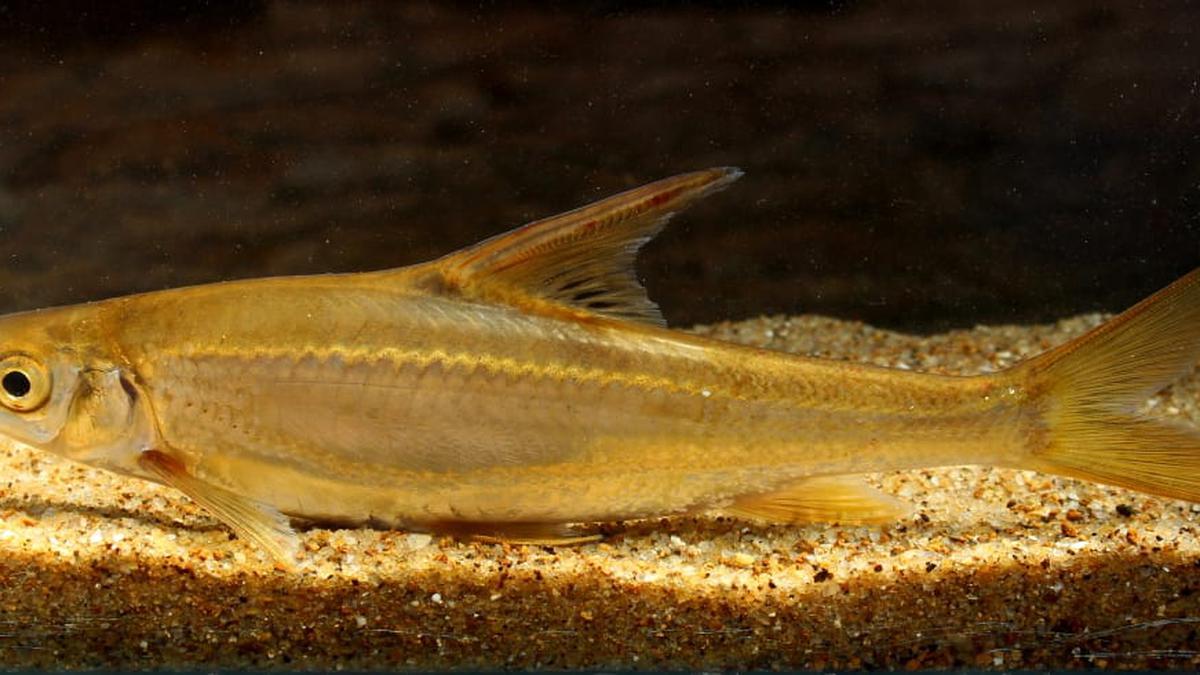
The purpose of mitogenome sequencing is to help understand the evolution of a species and how different they are from its relatives. Lepidopygopsis typus is also a species that has been listed as ‘endangered’ on the IUCN Red List owing to its narrow distribution and threats from alien invasive species such as common carp, tilapia, and African catfish.
“Lepidopygopsis typus is an example of an EDGE species — a species that is evolutionarily distinct and globally endangered. Our study reveals how the mitochondrial genome and functions of the species are distinct from other freshwater fish species of the Western Ghats, and how we can use this information to design effective conservation strategies to secure its future,” said Rajeev Raghavan. “Lepidopygopsis typus is also a relic species that could unravel the evolutionary past of the Western Ghats & is considered our living heritage,” he added. https://www.thehindu.com/news/cities/Kochi/mitogenome-of-one-of-keralas-most-enigmatic-fish-species-decoded/article67679701.ece (27 Dec. 23023)
First time govt brings out ‘Environment Budget’ In a first, the Kerala govt has introduced an Environment Budget as a separate document along with the State Budget. The Environment Budget was also tabled in the Assembly on Feb 5 alongside other Budget documents. The 59-page document highlights 81 schemes in 9 sectors and their Budget allocations in environment-related areas. The sectors selected for the first Environment Budget are agriculture, livestock, fisheries, forests and wildlife, environment, water resources, cooperation, soil survey, and the energy sector. The total outlay for environment-related schemes in the Budget for these sectors is ₹668.88 cr for 2024-25. https://www.thehindu.com/news/national/kerala/kerala-budget-2024-25-kerala-brings-out-environment-budget-as-a-separate-document-for-the-first-time/article67814868.ece (5 Feb 2024)
Kufos, Fisheries dept to boost native fishery resources in reservoirs The Kerala University of Fisheries and Ocean Studies (Kufos) has announced an extended collaboration with the Fisheries department to enhance native fishery resources in reservoir. The announcement was made by Vice-Chancellor T. Pradeep Kumar on Aug 29. He also distributed native fish seeds. The distribution is part of the Fish Production and Development Project in Dams 2024-25, which is being implemented by the Department of Fisheries in reservoirs in Thrissur district. The department has chosen Manjakuri, an endangered species listed on the IUCN Red List, as the initial candidate for stocking in the Peringalkuthu reservoir of the Chalakudy river.
The first phase of the ceremony was marked by handing over fish fingerlings to Tasleema, Fisheries officer at Chalakudy Malsya Bhavan, during the event held at the university headquarter. The Vice-Chancellor pledged full support to the department in expanding the scheme to more dams in the State. Registrar in Charge Dinesh Kaipilli, M.K. Sajeevan, project investigator, Anvar Ali P.H., Rajeev Raghavan, and farm manager Bindumol Abraham were present on the occasion, said the release. https://www.thehindu.com/news/cities/Kochi/kufos-fisheries-dept-to-work-together-to-boost-native-fishery-resources-in-reservoirs/article68581161.ece (29 Aug. 2024)
Maharashtra An unsung patronage of fishermen by Pranahita river Pranahita, a tributary of Godavari river, is silently patronizing around 1000 families living on some border villages of Maharashtra by providing livelihood for 50 years. Come October, fishermen hailing from Mulchera, Yella, Nagulwavi, Machigatta, Marpalli, Oddigudem, Bori, Aheri, Devalamarri, Chinna Watra, Pedda Watra, Venkatapur, Sinchugondi, Regunta, Moyaddinpet, Tekda, Nemda, Bamni Sironcha, etc, villages in Aheri Vidhana Sabha or Assembly constituency in Gadchiroli district of Mah move to selected spots on over 100 kms long riverbed of Pranahita to find a livelihood for eight months.
The fishermen along with their family members camp in the riverbed by erecting wooden huts and make-shift tents, facing unfavorable climatic conditions like chilly weather, unseasonal rains and sweltering heat wave conditions. They occupy the riverbed near villages during Dasara festival and leave it following the onset of the monsoon that usually occurs in the first week of June. While men cast nets woven by themselves to catch fish mostly at night, women do household chores including taking care of their children and cutting leftover fish at day. They travel by boats risking their lives. https://telanganatoday.com/an-unsung-patronage-of-fishermen-by-pranahita-river (03 May 2024)
NGT fines Sangli civic body Rs 90 cr NGT has imposed a penalty of Rs 90 crore on Sangli Miraj Kupwad Municipal Corporation over toxic discharge from distilleries into Krishna river in Aug 2022, leading to deaths of a large shoal of fish. A lawyer described this as the “highest” such fine on any civic body. NGT had formed a panel to carry out an investigation and it concluded that the civic body was responsible for the pollution. NGT has directed MPCB to ensure the penalty is paid. J S Salunkhe, regional officer MPCB (Kolhapur), wrote to civic chief Sunil Pawar on Feb 17 to deposit the money in 15 days, failing to which recovery action will be initiated. A civic official described the fine as unrealistic and illogical. “We will make an appeal before the Western Zone bench of the NGT at the earliest,” the official said. https://timesofindia.indiatimes.com/city/kolhapur/ngt-fines-sangli-civic-body-rs-90-crore/articleshow/107862710.cms (21 Feb. 2024)Sangli Municipal Corporation and some factories in Mah fined Rs 90 crore by Pollution Control Board for Krishna river pollution. But will there be any impact on the guilty officials? This is following NGT appointed committee’s report regarding a petition following mass fish death in July-Aug 2023. https://www.loksatta.com/maharashtra/municipal-corporation-fined-rs-90-crore-for-krishna-river-pollution-mrj-95-4217815/ (19 Feb. 2024)
Meghalaya Oreichthys warjaintia, new species of cyprinid fish Abstract: Oreichthys warjaintia, new species, is described from the Pyrngang stream (Surma–Meghna basin), Meghalaya. It can be distinguished from all known species within the genus Oreichthys in having the following combination of characters: complete lateral line with 25–27 pored scales, 13 branched pectoral-fin rays, 5–5½ branched anal-fin rays, 14 rows of papillae on suborbital, ½3/1/2½ scale rows in transverse line on body, presence of a black blotch on caudal-fin base, and in the coloration of dorsal, caudal, and anal fins. Oreichthys warjaintia is distinct from all known Oreichthys species for which mitochondrial cox1 sequence data are available by a raw genetic distance ranging from 8.3% to 11.1%. https://onlinelibrary.wiley.com/doi/abs/10.1111/jfb.16001 (18 Nov. 2024) http://novataxa.blogspot.com/2024/11/oreichthys.html (19 Nov. 2024)
Manipur A new labeonine fish Abstract: Garra hexagonarostris, a new member of the ‘proboscis species group’, is described from the Chakpi River of Chindwin basin in Manipur, India. The new species is distinguished by the following combination of characters: a prominent hexagon-shaped unilobed proboscis with five large-sized conical tubercles on anterior margin, and three or four medium-sized conical tubercles on anteroventral region; transverse lobe with 13−35 small- to medium-sized conical tubercles; lateral surface of snout swollen with 8−18 small- to medium-sized conical tubercles; 31−32 lateral-line scales including three pored scales on caudal fin; and a large arch-shaped black spot on each side of opercle, immediately anterior to upper angle of gill opening. The taxonomic status of several species of Garra from Arunachal Pradesh and Mizoram is reviewed and accordingly Garra minimus is considered as a junior synonym of G. quadratirostris; G. nigricauda as a junior synonym of G. arunachalensis; G. alticaputus and G. kimini as junior synonyms of G. birostris; and G. tyao as a junior synonym of G. rakhinica. https://mapress.com/zt/article/view/zootaxa.5419.2.2 (06 March 2024)
Uttar Pradesh NGT orders action against illegal breeding, farming of African catfish The green body was hearing a plea claiming two people were breeding the banned fish variety in the Shahpur Nij Morta village of Ghaziabad district. In a recent order, a bench of NGT Chairperson Justice Prakash Shrivastava noted a 2019 order of the tribunal, according to which, “Breeding of exotic magur (catfish) is not allowed without the approval of the national committee on exotic fishes and also the state government concerned because of its potential to cause ecological damage.”
The bench said the matter concerning the breeding of exotic catfish or its hybrid Thai magur had been settled by the tribunal by banning it. “We dispose of the original application, directing the director, fisheries dept, to duly consider the complaint and take necessary action following the (previous) order of the tribunal. The director will get the site inspection done and will find out if the allegation of the applicant is found to be correct, then necessary action will be taken by him,” the bench said. https://www.deccanherald.com/india/uttar-pradesh/ngt-orders-action-against-illegal-breeding-farming-of-african-catfish-in-uttar-pradesh-3260302 (3 Nov 2024)
Relevant SANDRP Blogs on the Issue
Clueless about fish passes: CIFRI’s Review of fish pass research in India Parineeta Dandekar of SANDRP takes a critical look at CIFRI’s (Central Inland Fisheries Research Institute’s) Review of Fish Pass Research in India. The review suffers from several serious shortcomings. The report does note several fish ladders of India, global discourse about fish ladders on dams, governance problems of fish ladders, project proponent’s reluctance to invest in fish ladders, lack of political and administrative will to monitor fish ladders, importance of ladders especially in low dams and barrages, etc. Our messages to two of the authors have remained unanswered. https://sandrp.in/2024/08/06/clueless-about-fish-passes-cifris-review-of-fish-pass-research-in-india/ (06 Aug. 2024)
Dam Removal as a River Restoration Tool Parineeta Dandekar of SANDRP presented a paper on Dam Decommissioning at the World Fisheries Congress at Seattle, USA last month. Here she talks about the sessions at WFC on this theme. https://sandrp.in/2024/04/12/dam-removal-as-a-river-restoration-tool-world-fisheries-congress-2024/ (12 April 2024)
Compiled by Bhim Singh Rawat (bhim.sandrp@gmail.com)

 SANDRP